

line+NEWS
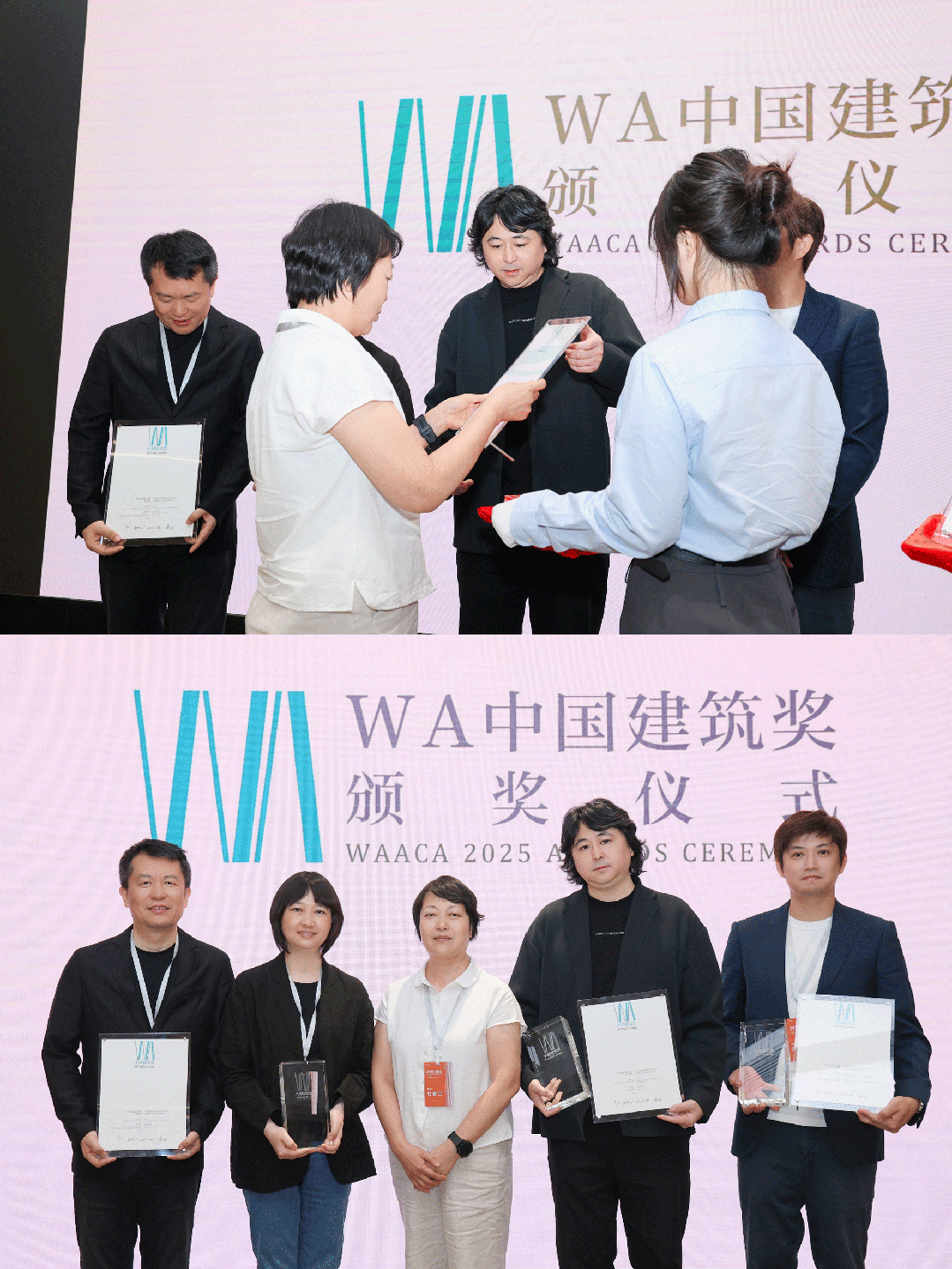
On May 30, Fanhao Meng, Co-founder and Chief Architect of line+, was invited to attend the 2025 WA China Architecture Awards Ceremony, where he received the WA Social Equity Award – Highly Commended for the Chaishan Island Elderly Care Home. During the event, he was also invited to join the “WA Award Winners’ Dialogue” roundtable forum, engaging in discussions with fellow architects on what is changing and what remains constant in the architectural profession under the theme of “future intelligent construction.”
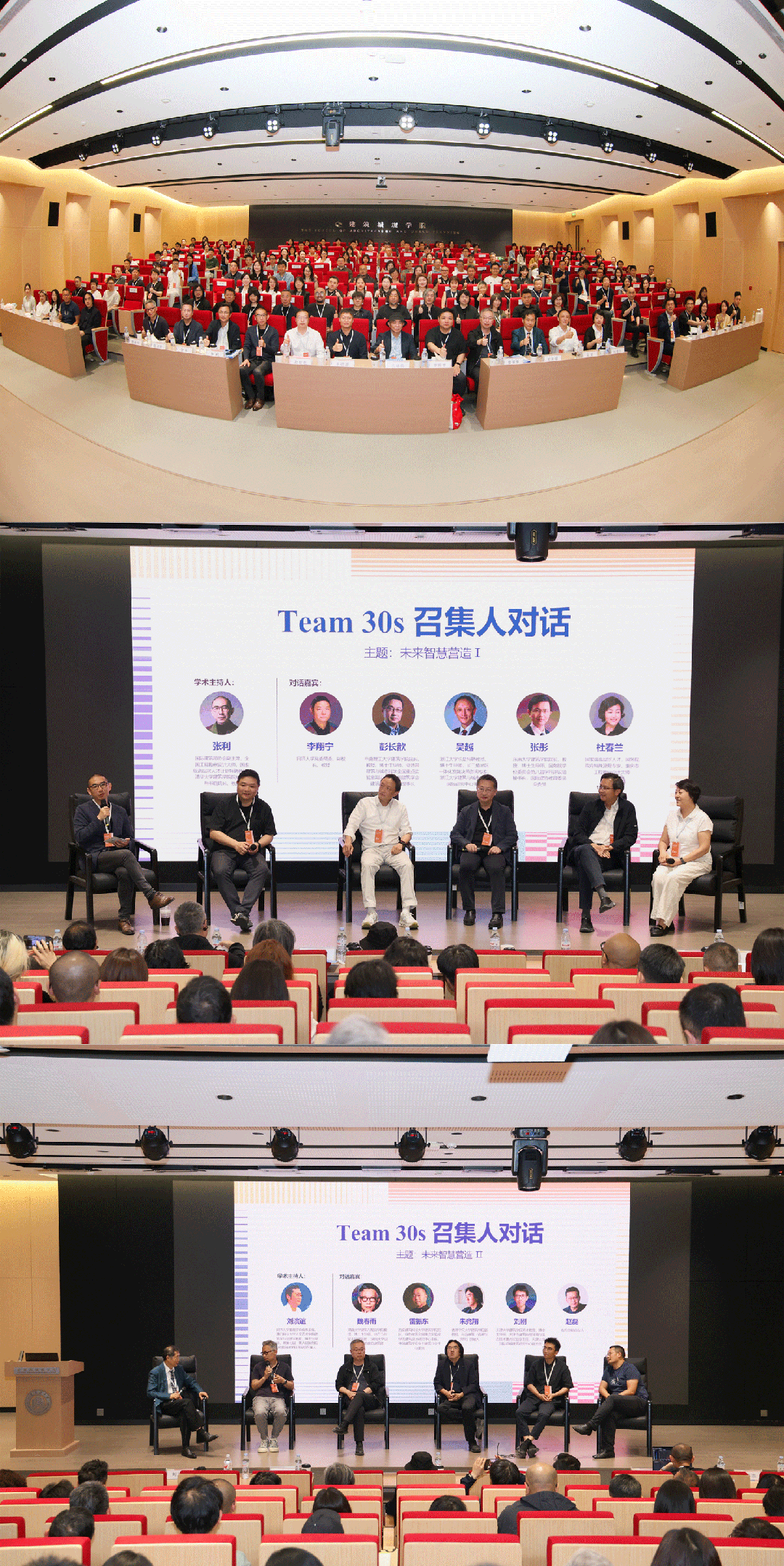
As an important academic event in China’s architectural field, the conference was held at Shandong Jianzhu University. Organized by Team 30s and co-organized by World Architecture magazine and other institutions, the event centered on the theme “Future Intelligent Construction: Transformation, Evolution, and Paradigm Shift.” It focused on the profound changes currently reshaping the architecture industry. Meng Jianmin, Member of the Chinese Academy of Engineering; Zhang Li, Vice President of the International Union of Architects and Dean of the School of Architecture at Tsinghua University; Li Xiangning, Member of the Standing Committee of the CPC Committee and Vice President of Tongji University; together with many other leading scholars and experts in architecture, gathered to discuss topics including urban and rural development over the next thirty years, green construction, intelligent living environments, and disciplinary transformation.


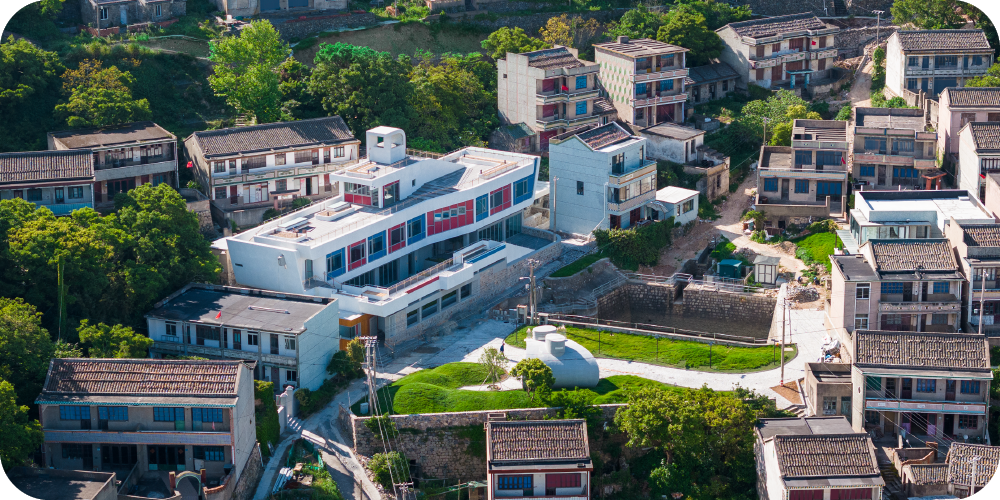
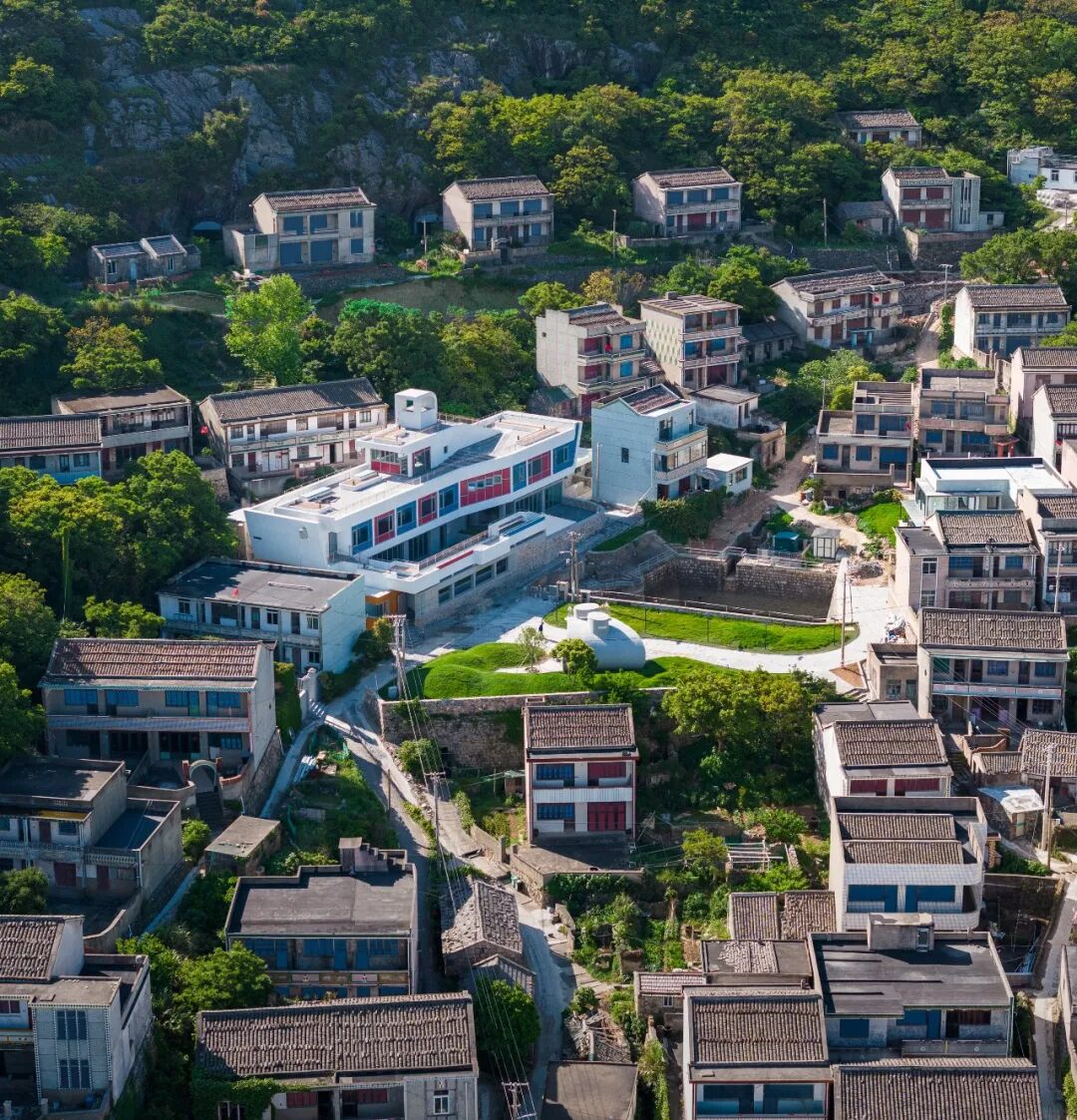
The award-winning Chaishan Island Elderly Care Home by line+ is located on Chaishan Island in Putuo District, Zhoushan, Zhejiang Province. Once a thriving island village sustained by the fishing industry, Chaishan Island has seen its permanent population decline due to outmigration and aging. Today, only 96 elderly residents remain on the island. In response to the increasingly urgent need for elderly care, the design transformed an abandoned primary school into a day care home for the elderly. While preserving the memory of the site, the project creates a comfortable, warm, and emotionally resonant home for the island’s left-behind elderly residents.

Jury Comment of the WA China Architecture Awards
Taking the “fishing boat” as its imagery, the project skillfully employs cantilevered forms and local red-and-blue colors to transform the building into a carrier of memory, rebuilding emotional connections between the elderly residents and the community. In response to the limited site area and height differences, the design efficiently integrates medical care, elderly care, and public functions through strategies including the three-dimensional organization of public space, the reconstruction of accessible circulation, and the insertion of multi-level rooftop terraces. As a result, the project has become a vibrant node shared by the entire island. With a low-intervention yet highly perceptible design approach, the project provides a valuable and human-centered model for rural elderly care, illuminating a future of shared community care.
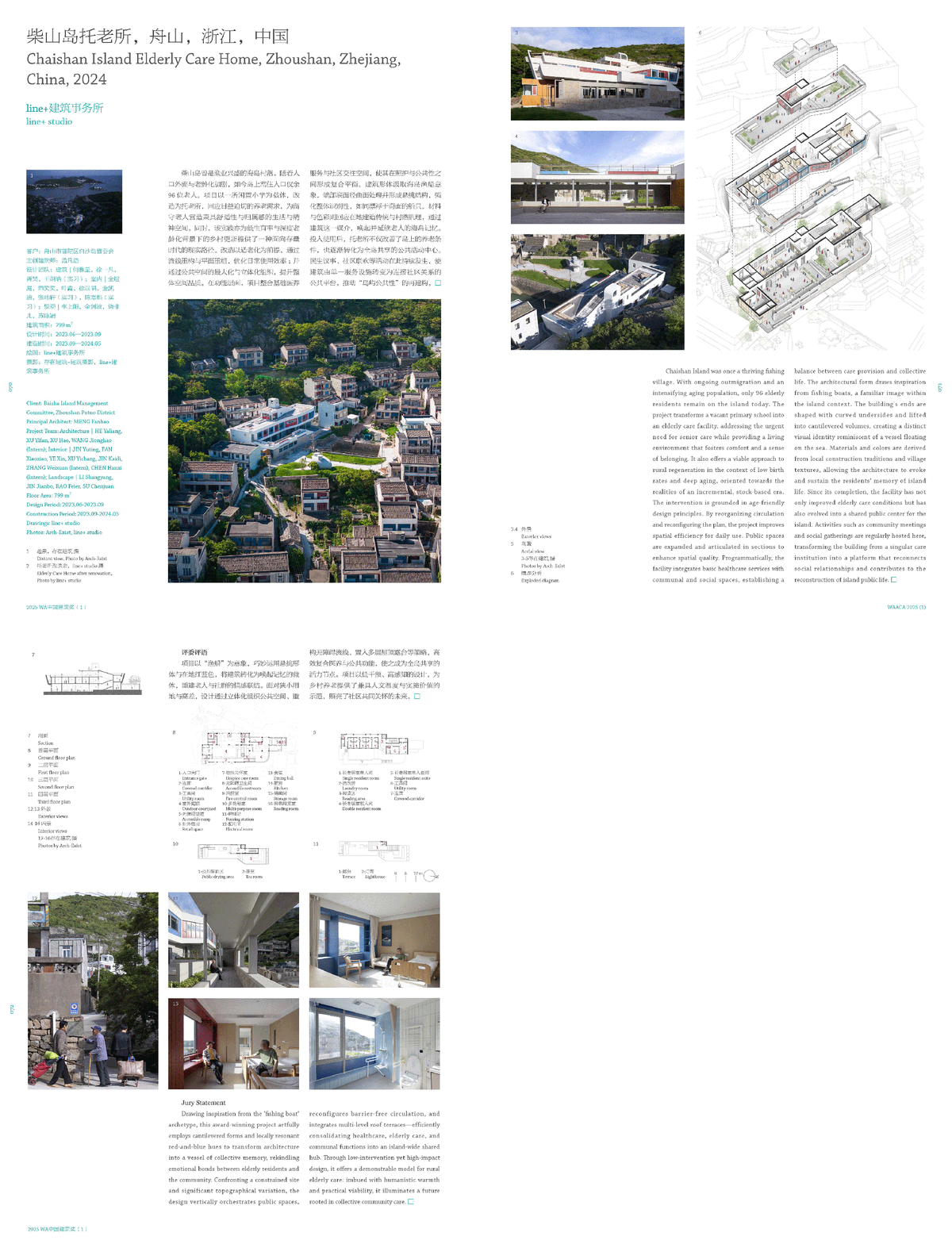
△ The full article is published in World Architecture, Issue 05, 2026.
The project goes beyond the functional improvement of an elderly care facility, seeking instead to respond to broader social issues. In the context of low fertility rates and an increasingly aging society, the design reorganizes public services through the renewal of existing space, exploring the possibilities of reusing idle resources and restructuring community functions. It offers a practical and meaningful model for future elderly care systems in island and rural areas.
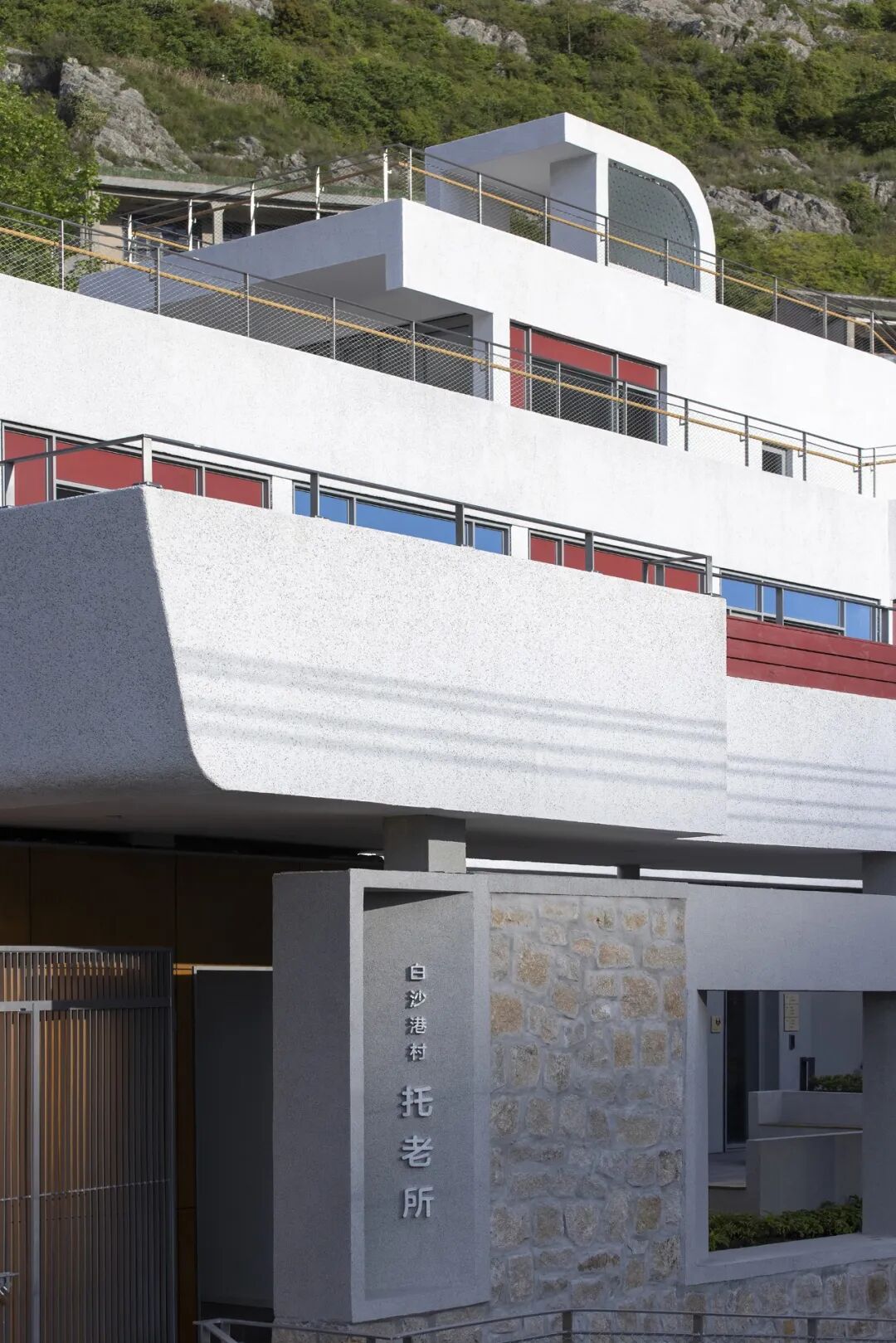
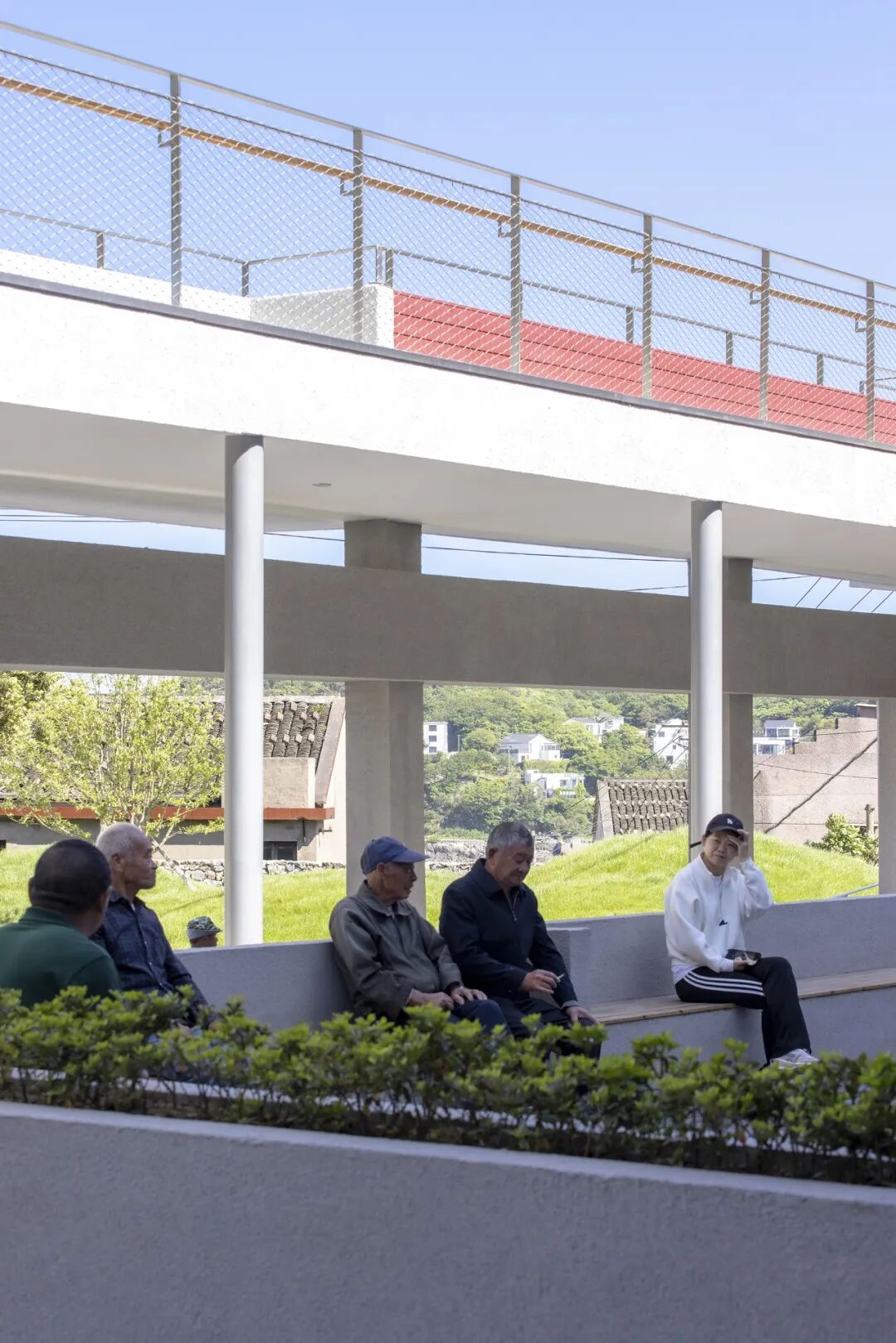
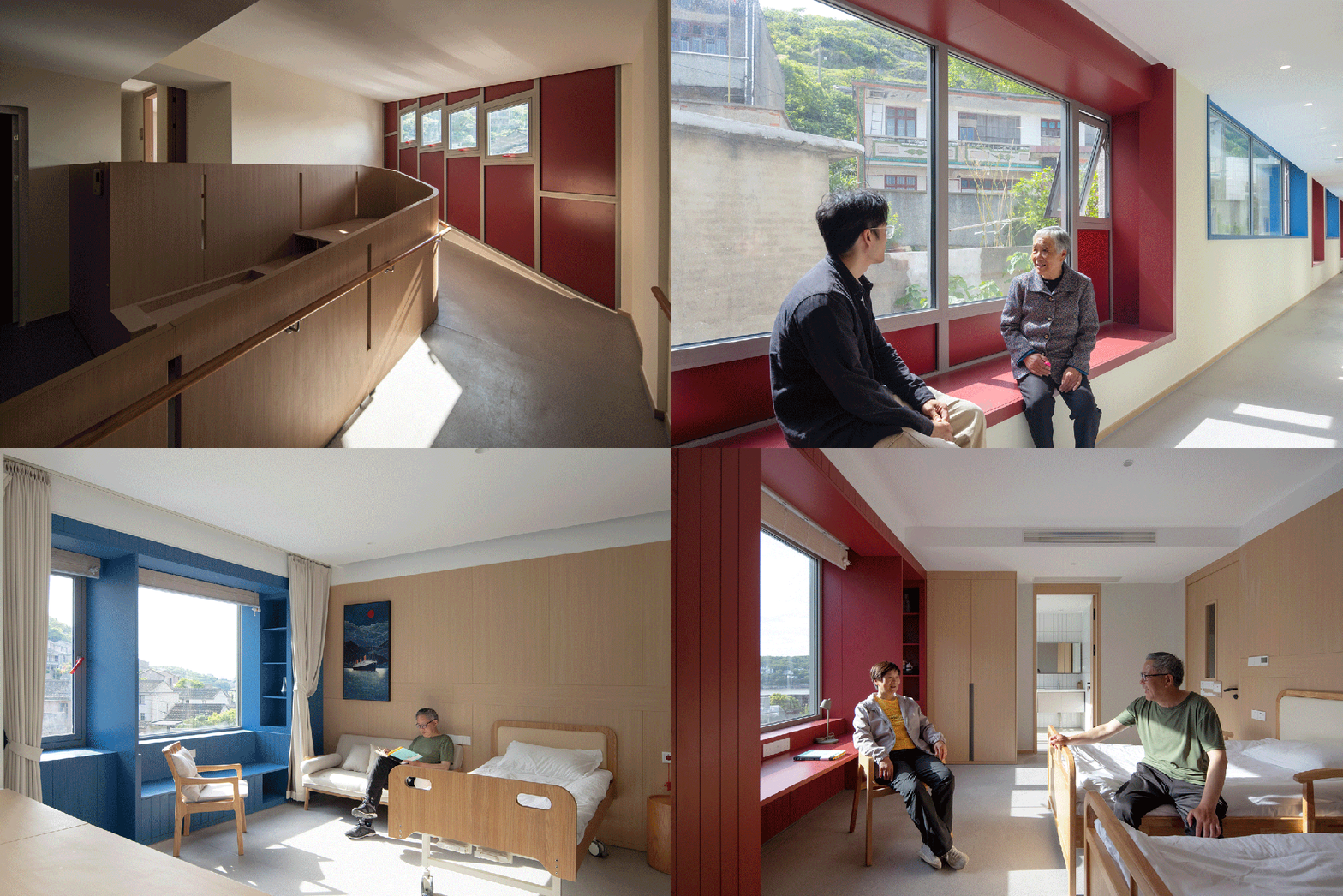
As the finale project of the tenth anniversary season of Dream Home, the elderly care home has gradually moved beyond the role of a single care facility after being put into use. Public affairs and community activities such as local livelihood meetings, community gatherings, and festive events continue to take place here. The building has become an important place for reconnecting residents’ emotions and community relationships, transforming from a service space into a public platform, while also rebuilding the island’s gradually fading public life.
About the WA China Architecture Awards
Founded by World Architecture magazine in 2002, the WA China Architecture Awards are held biennially. The awards have long focused on architectural practices that respond to real issues in China and offer social inspiration, and are regarded as one of the most influential professional awards in contemporary Chinese architecture. This year, the awards received 377 valid entries, among which 64 projects competed in the Social Equity category. The final results included one Winner, three Highly Commended projects, and five Finalists. The jury was composed of leading experts including Academician Chang Qing, Academician Zhuang Weimin, Academician Wu Shuoxian, Li Xiangning, Li Cundong, and Gui Xuewen.
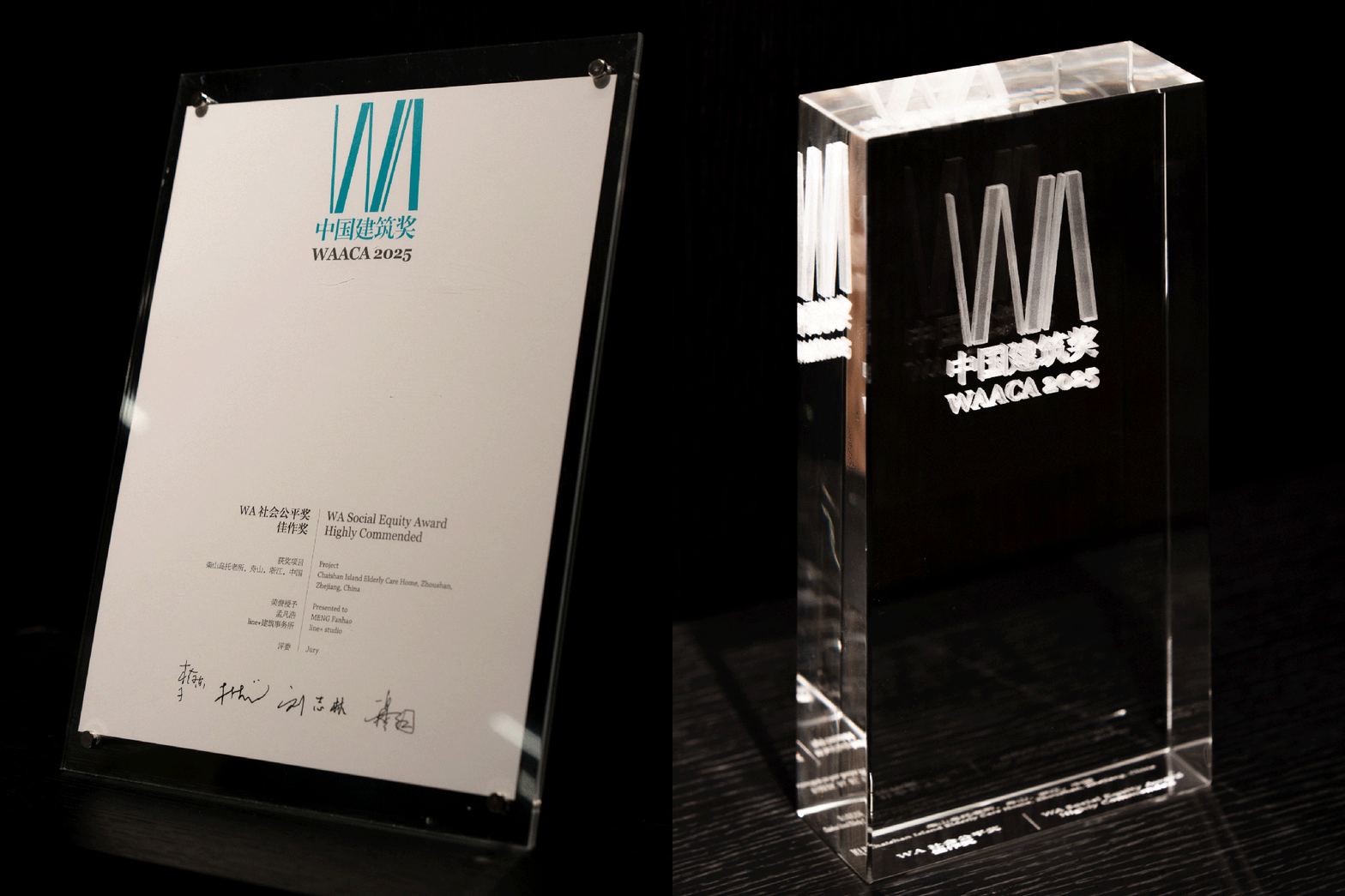
From rural revitalization and community building to the construction of public service facilities, line+ has consistently focused on the relationship between architecture and changes in social structures. In the face of contemporary issues such as aging, population mobility, and stock renewal, architecture should not only construct space, but also serve as an important medium for activating public life and fostering social connection.
This award is not only a recognition of the practice embodied in the Chaishan Island Elderly Care Home, but also an affirmation of architecture’s ability to respond to real-world issues and rebuild community publicness. Moving forward, line+ will continue to take “spatial empowerment” as its core concept, exploring more possibilities for architecture within an ever-changing social context.
Further Reading