


“Our goal is not to ‘save’ the countryside but to reimagine it in a form that resonates with contemporary life. By doing so, we restore its core identity as a home place of sanctuary and spiritual solace.”
——Meng Fanhao
Project Name: Guangzhou Ji Yun Yao Resort
Architectural and Landscape Design: line+
Chief Architect/Project Principal: Meng Fanhao
Design Team: Tao Tao, Yuan Dong, Yang Hanyue, Xing Shu, Chen Bin, Li Xingguang, Hao Jun, Shi Yuhang, Shen Rui (Architecture); Li Shangyang, Rao Feier Chi Xiaomei, Li Jun (Landscape)
Client: Guangzhou Tianyu Cultural Tourism Co., Ltd.
Interior Design: TOMO DESIGN
Construction Drawing Design: Huzhou Jianchen Architectural Design Studio
Landscape Enhancement: Guangzhou Tianhong Real Estate Developmnt Co., Ltd., Firefly Landscape Technology Development Co., Ltd.
Exterior Rammed Earth Finishing: Zhejiang Teliyu Industrial Co., Ltd.
Location: Conghua, Guangzhou
Building Area: 2,230 m²
Design Period: 2021.3-2022.1
Construction Period: 2022.6-2023.9
Structure: Reinforced Concrete, Steel Structure
Materials: Glass, Rammed Earth Plaster, Rough Stone, Clay Tiles
Photography: Dong Image, line+
Guided by the philosophy of "Retreat to Nature, Return to Community," line+ Co-Founder and Principal Architect Meng Fanhao led the team in creating Ji Yun Yao Resort. Rooted in a thorough analysis of the terraced landscape and a nuanced understanding of Hakka cultural heritage, this project reconstructs a spiritual retreat, offering a secluded sanctuary far removed from urban life. It provides visitors with an immersive experience that fosters a deep reconnection with nature and an intrinsic sense of homecoming. In this setting, the countryside evolves beyond a nostalgic memory, embodying instead a seamless continuation and revival of contemporary living.
01
Urban-Rural Flow:
The Revival of Rural Idealism
The countryside, as the bedrock of Chinese cultural and ethical life, embodies deep emotional and historical significance. Amid the steady advance of urbanization, the boundary between city and countryside is becoming increasingly indistinct, giving rise to a new social dynamic characterized by fluid movement between the two realms. This shift extends beyond the mere migration of people and capital; it encompasses the convergence and interplay of cultures, lifestyles, and values.
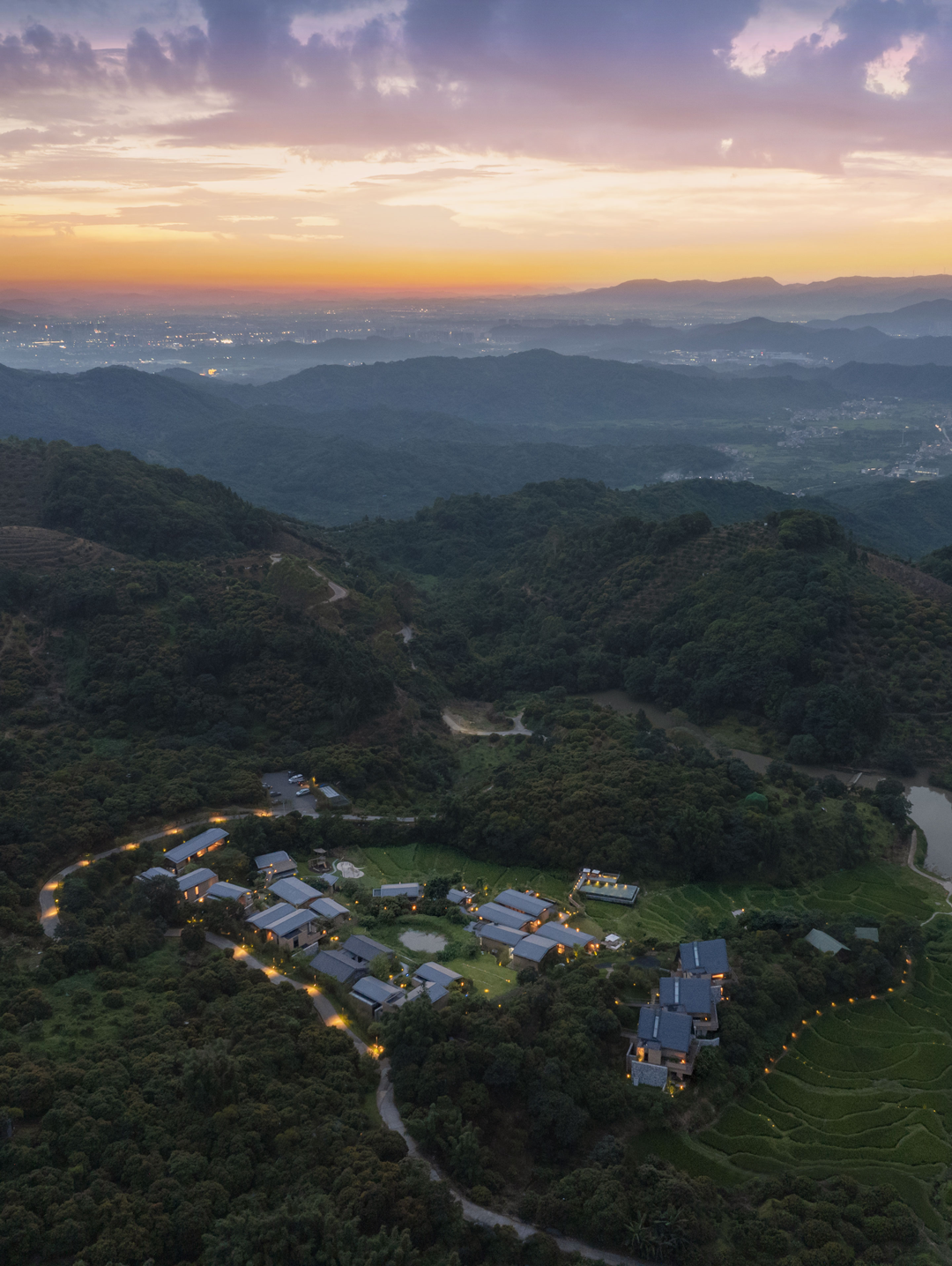
In this context, the revival of rural idealism acquires renewed significance: the countryside is no longer positioned as the antithesis of the city but instead acts as a bridge within the urban-rural continuum, embodying the ideals of reconnecting with nature and self. This shift, moreover, introduces new opportunities for rural development.
02
Planning as the Foundation:
Constructing Multi-Layered Spatial Narratives
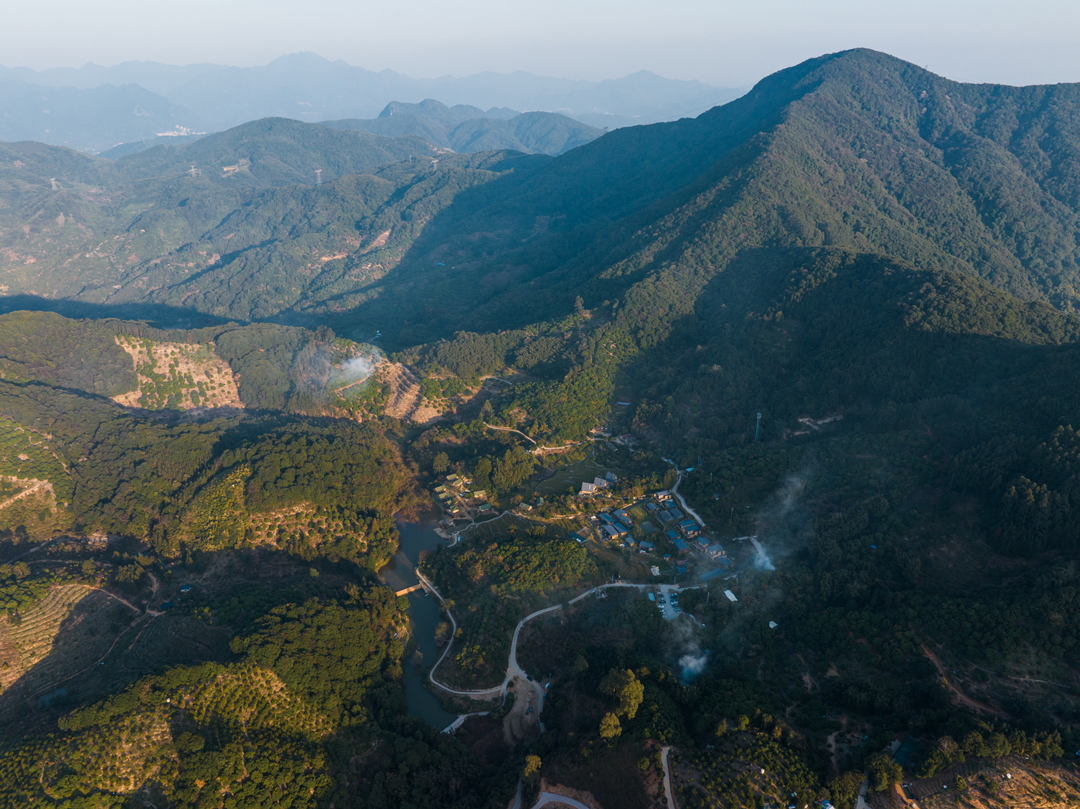
Ji Yun Yao is located in Yaoshan Village, Conghua District, Guangzhou—a historical settlement of Yao ancestors that dates back over 300 years. As time passed and transportation limitations grew, the villagers gradually moved away, leaving behind a landscape of verdant mountains, secluded valleys, terraced fields, and traditional rammed-earth structures, quietly awaiting renewal.
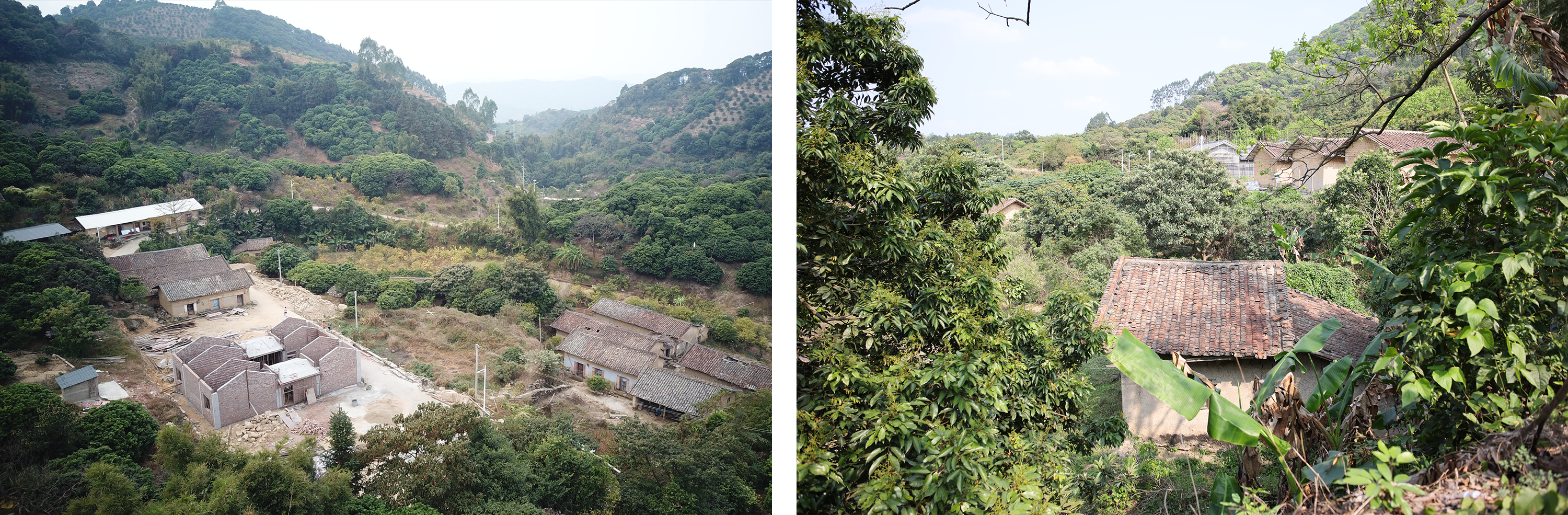 △ The site's original character
Accessible only via winding mountain roads, this secluded valley settlement draws upon its natural surroundings and historical remnants as foundational elements of the design. These features establish a poetic sanctuary, imbuing the project with its initial inspiration and profound sense of purpose.
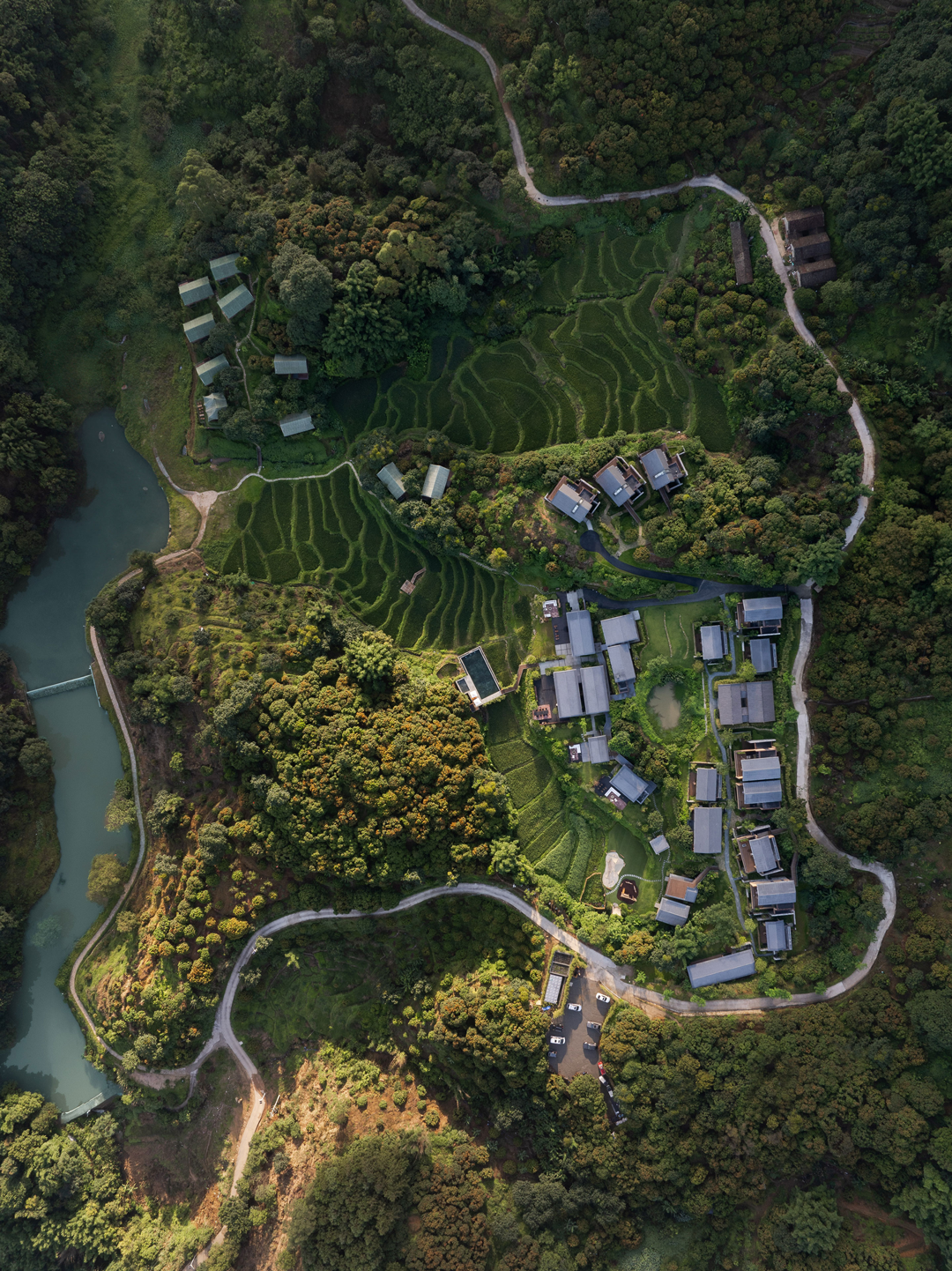
At the heart of the design is a "planning-first, nature-respecting" approach, where the extended entry path leads visitors through the forest and progressively into the village. This carefully orchestrated route initiates an immersive journey, guiding guests from the natural landscape toward a profound sense of homecoming.
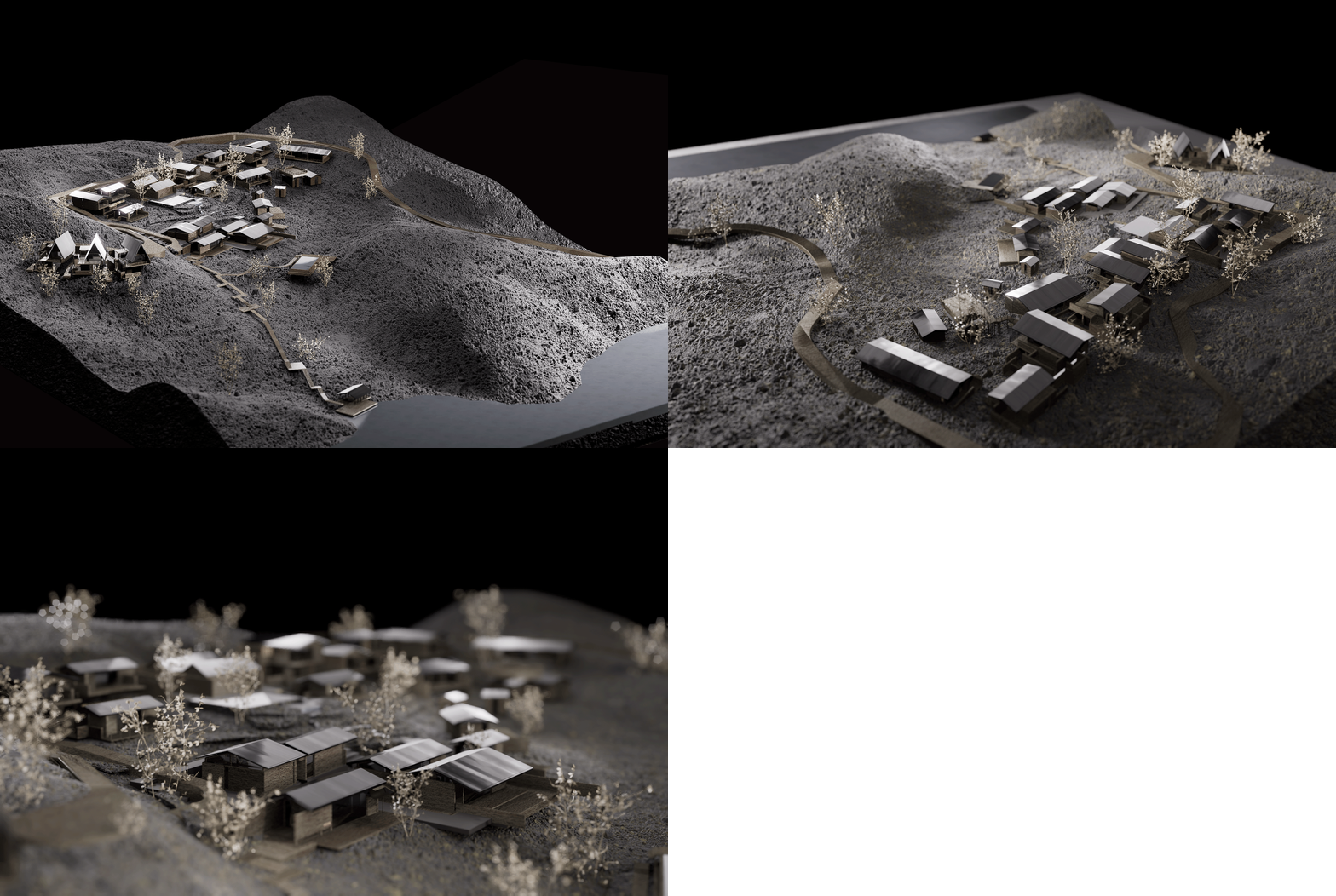
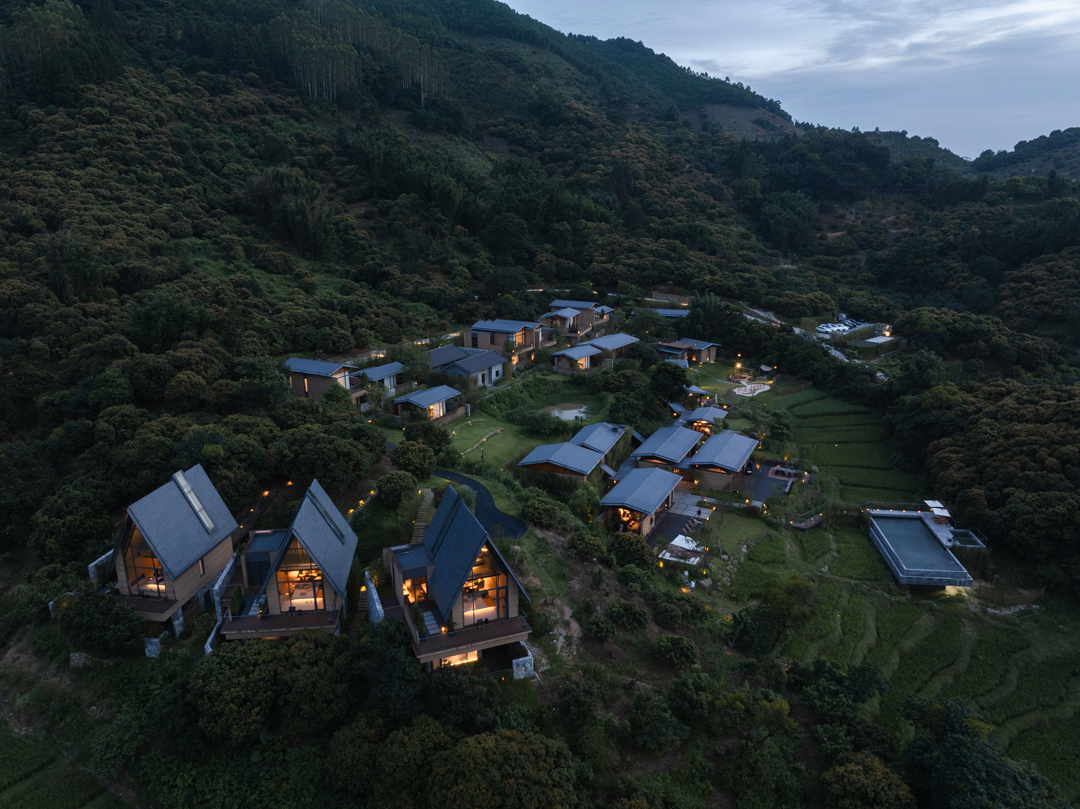
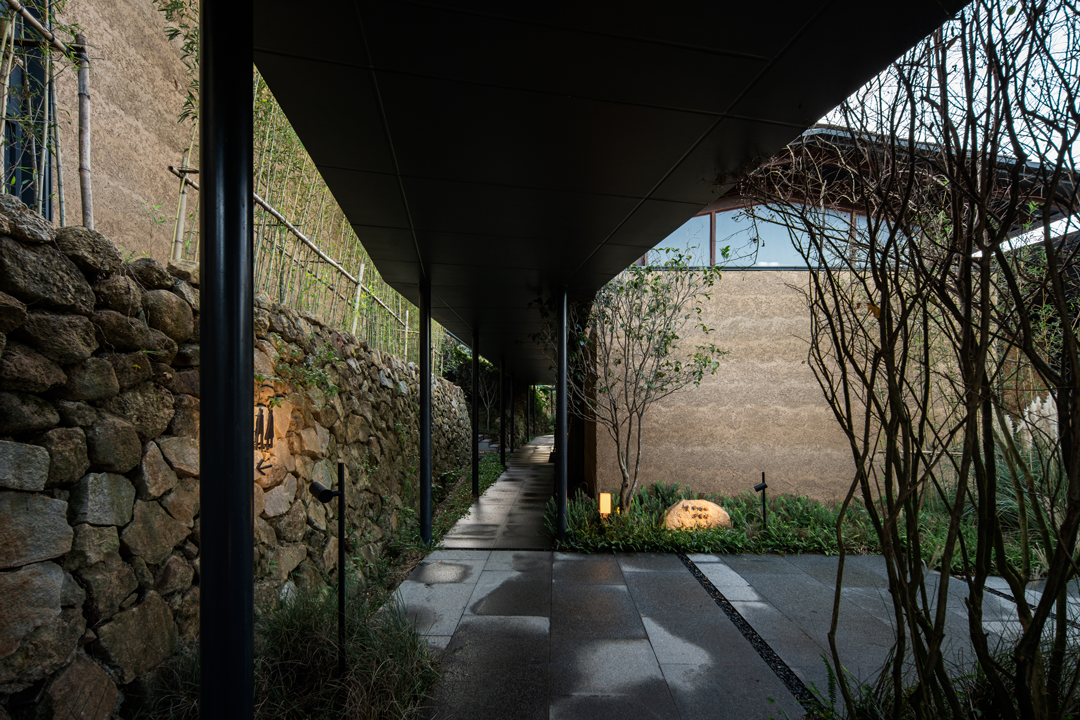
Based on an analysis of the terrain, two distinct routes were developed: one for electric vehicles, providing direct access to the guest rooms, and a scenic pedestrian pathway that traces the lakeside, passes through foothills, and continues along boardwalks to the main hotel area.
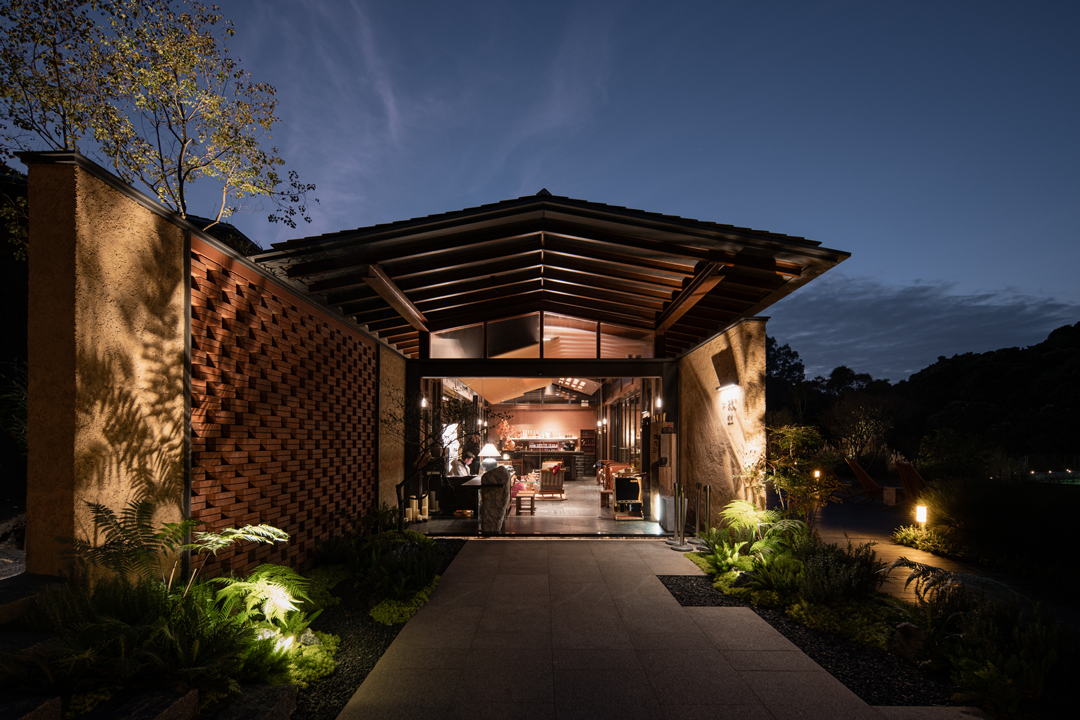
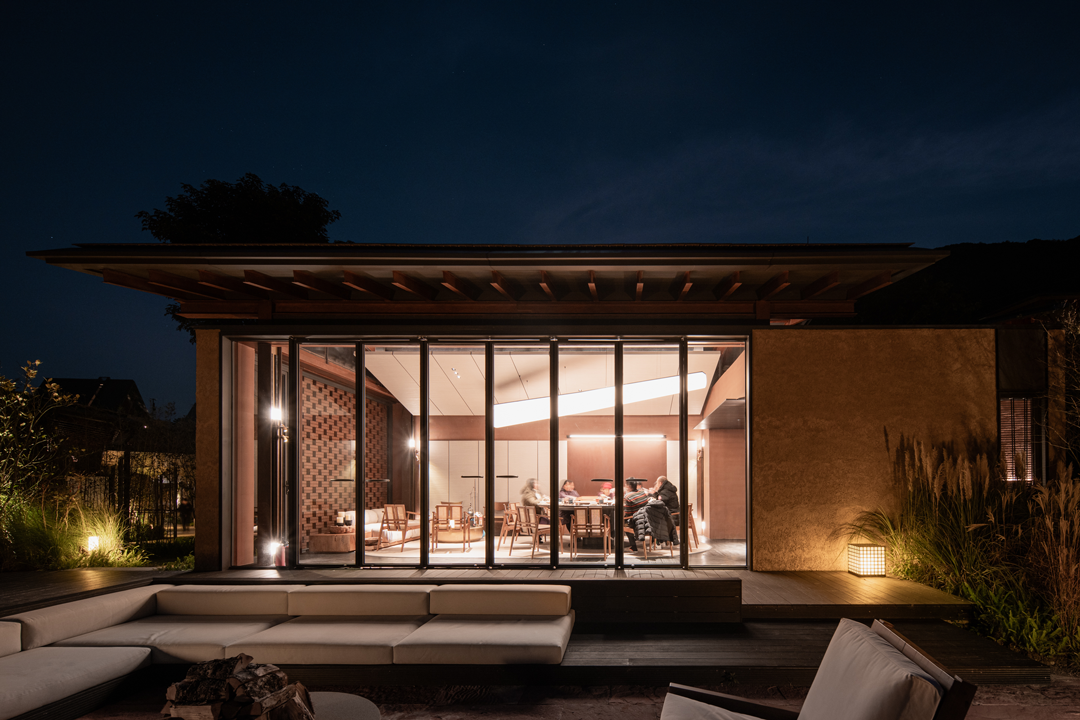
The design preserves the site’s ancestral hall, which, despite local opposition to its inclusion in the hotel’s main area, has been reorganized to enrich the spatial complexity and historical character of the site.
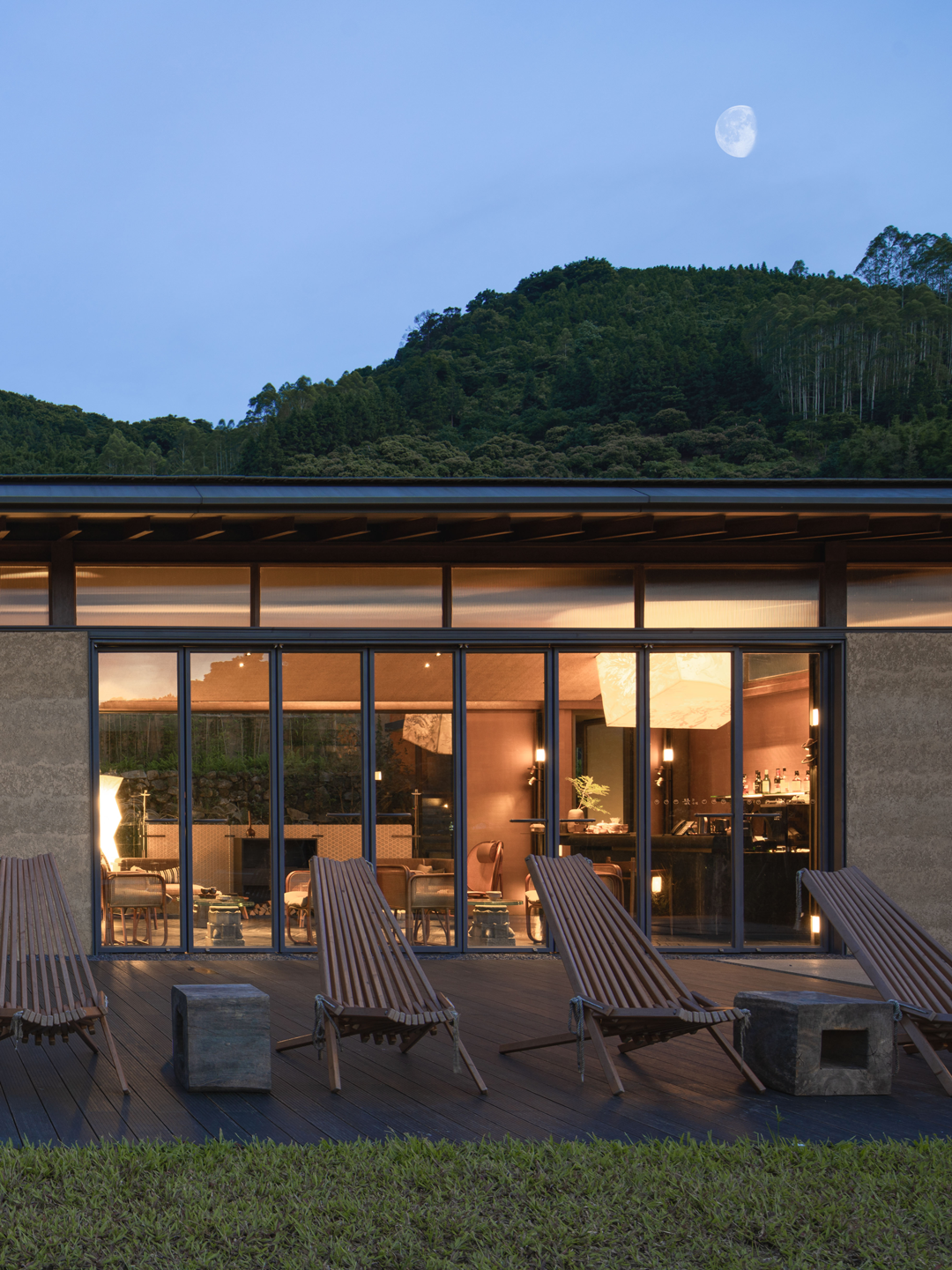
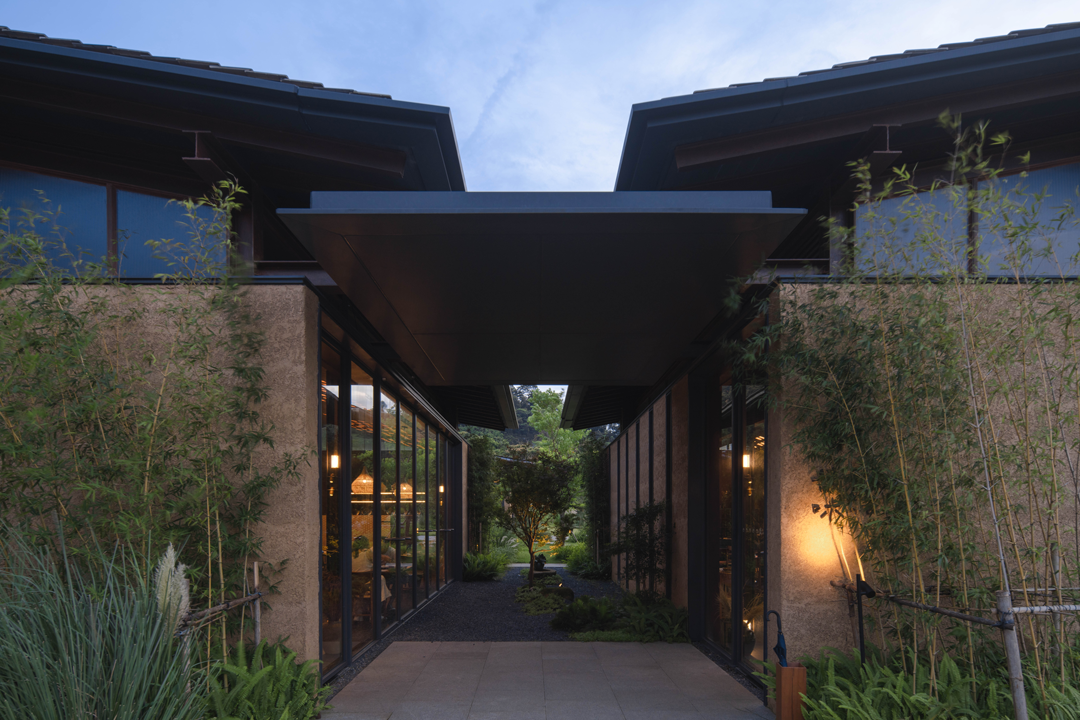
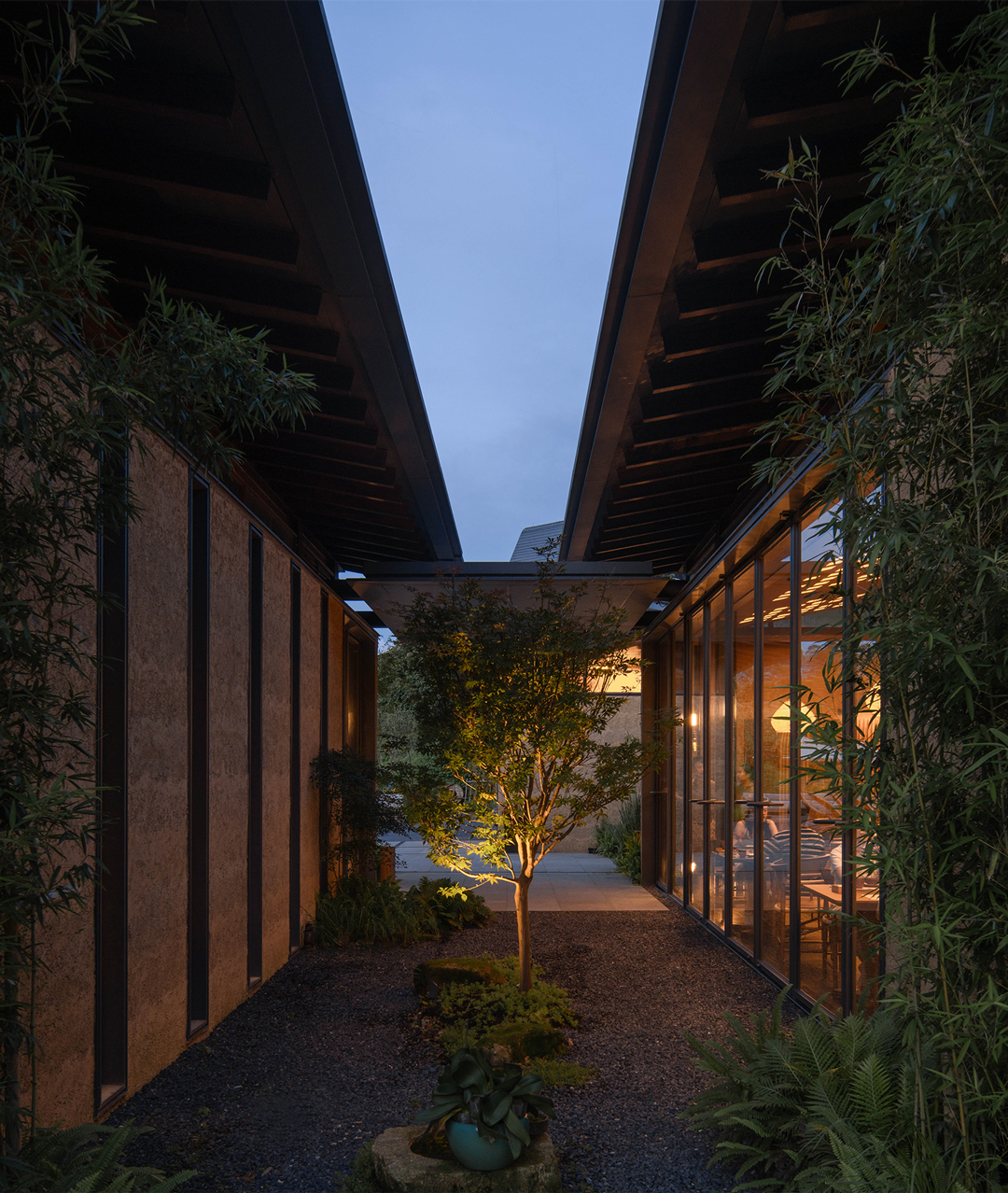
To elicit a sense of the original village, the architectural volumes are organically arranged and interlinked by water features, pathways, and vegetation. This layout allows each cluster to offer an independent experiential framework while maintaining a cohesive and dynamic landscape interface.
03
Engaging with Nature:
Crafting Unique Scenic Experiences
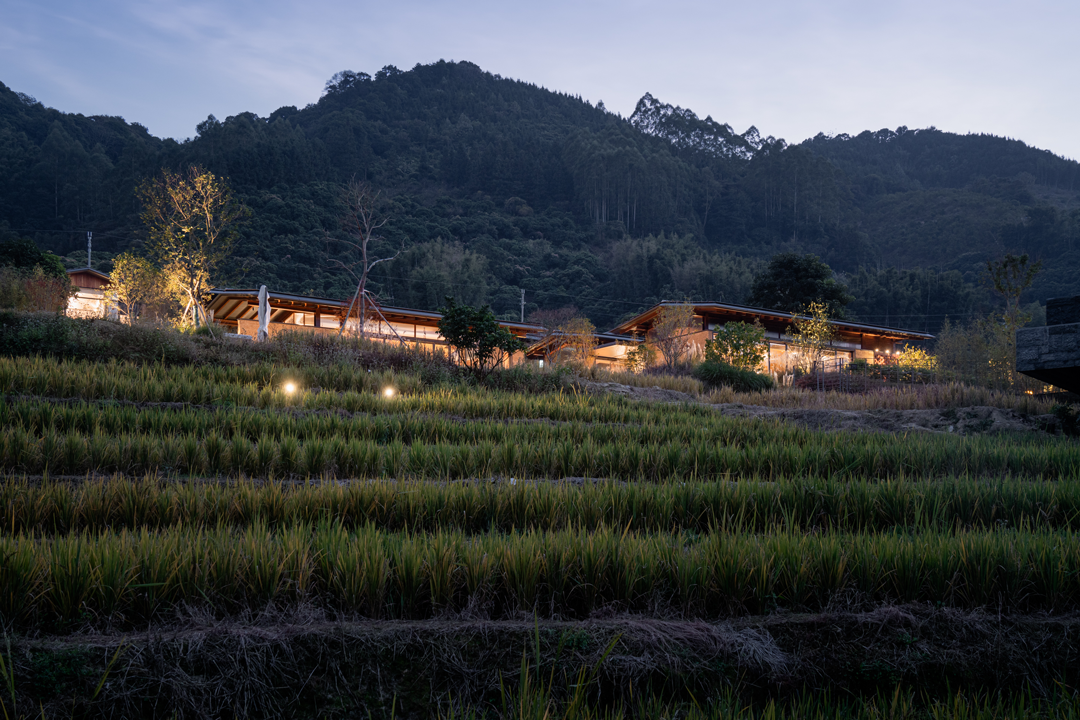
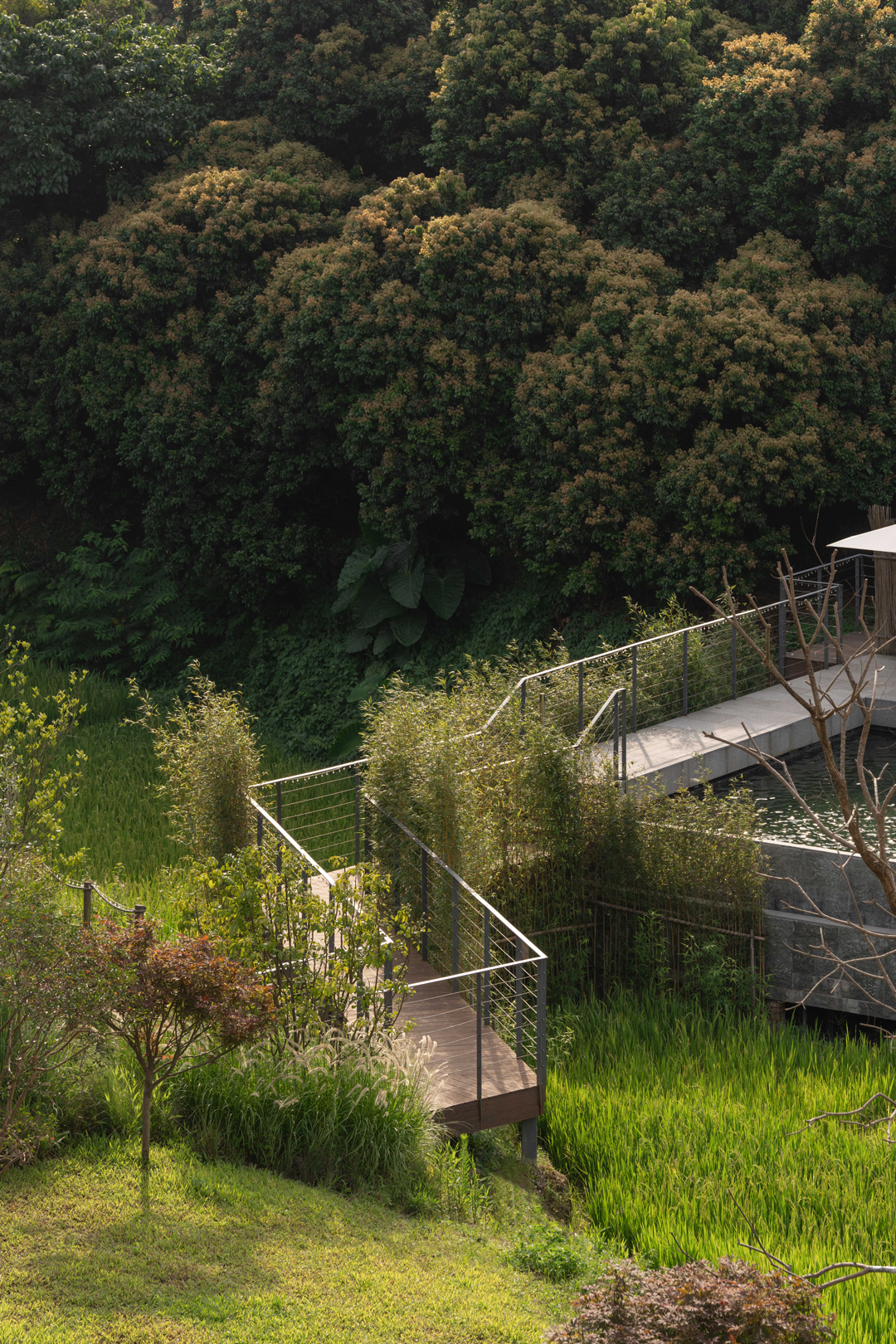
Supported by the natural landscape, the walking route unfolds along the lakeshore, utilizing the terrain’s elevation with features such as wooden bridges and boardwalks to interconnect various functional zones. This arrangement allows guests to move freely between courtyards, forest trails, and observation decks, immersing themselves in the unembellished charm of pastoral simplicity.
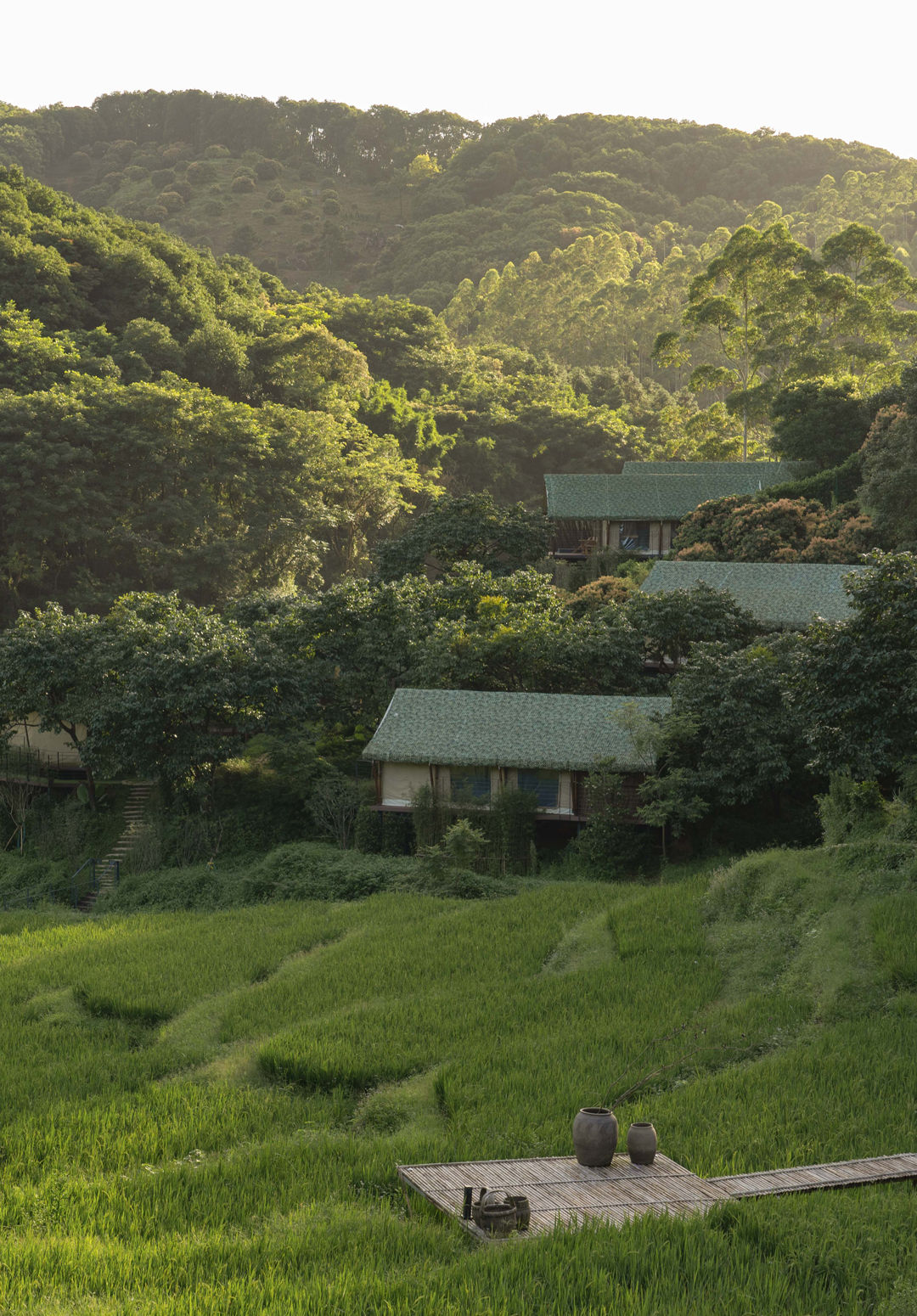
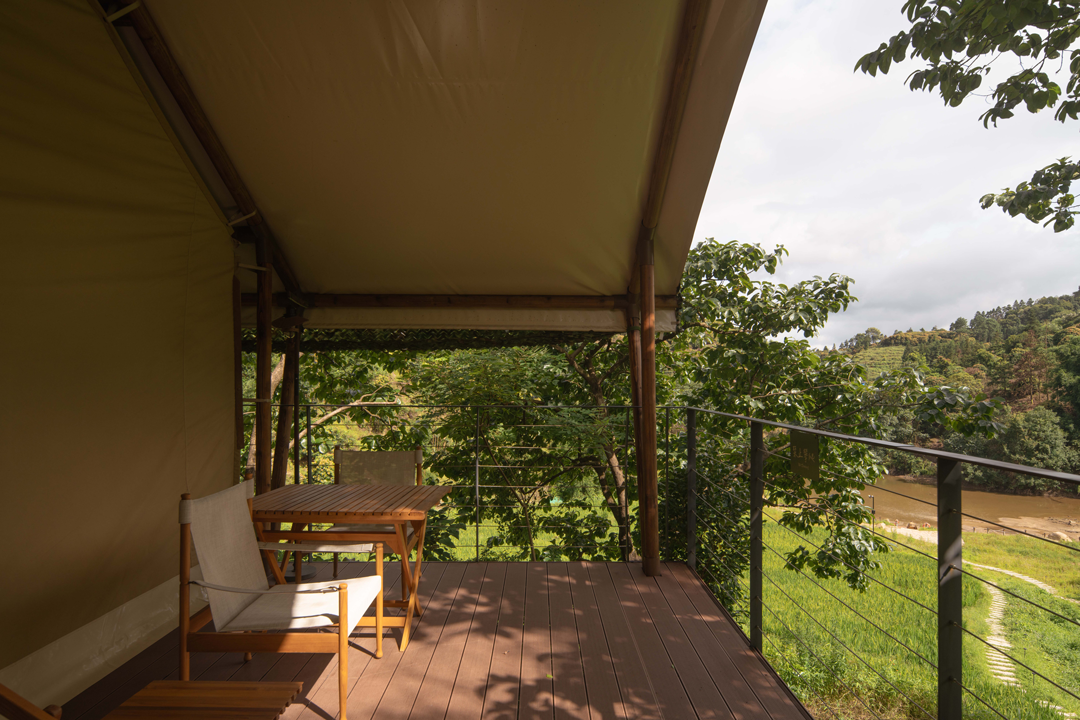
In this setting, architecture and nature do not exist in isolation but grow harmoniously together. Visitors are enveloped by the countryside environment, experiencing an array of rich and diverse spaces that reinforce the ritual of retreating into the mountains and rediscovering a connection with nature.
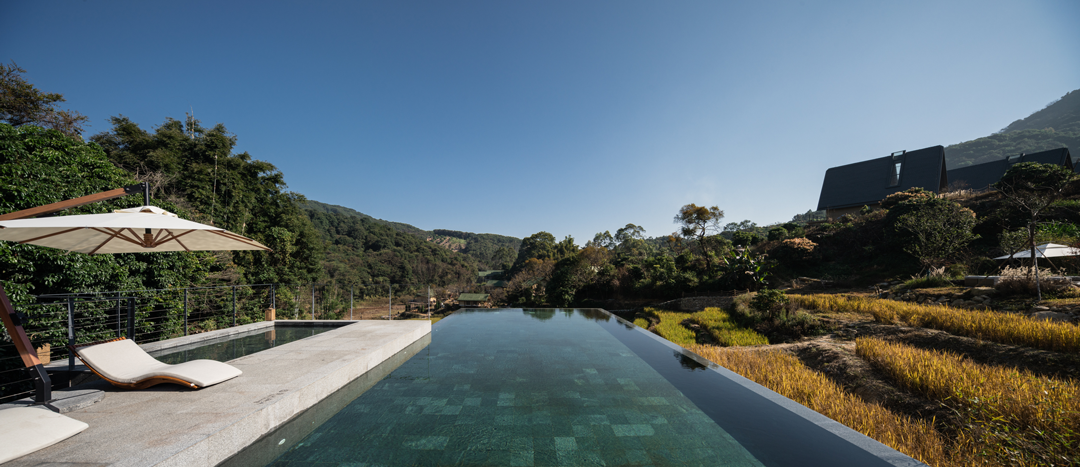
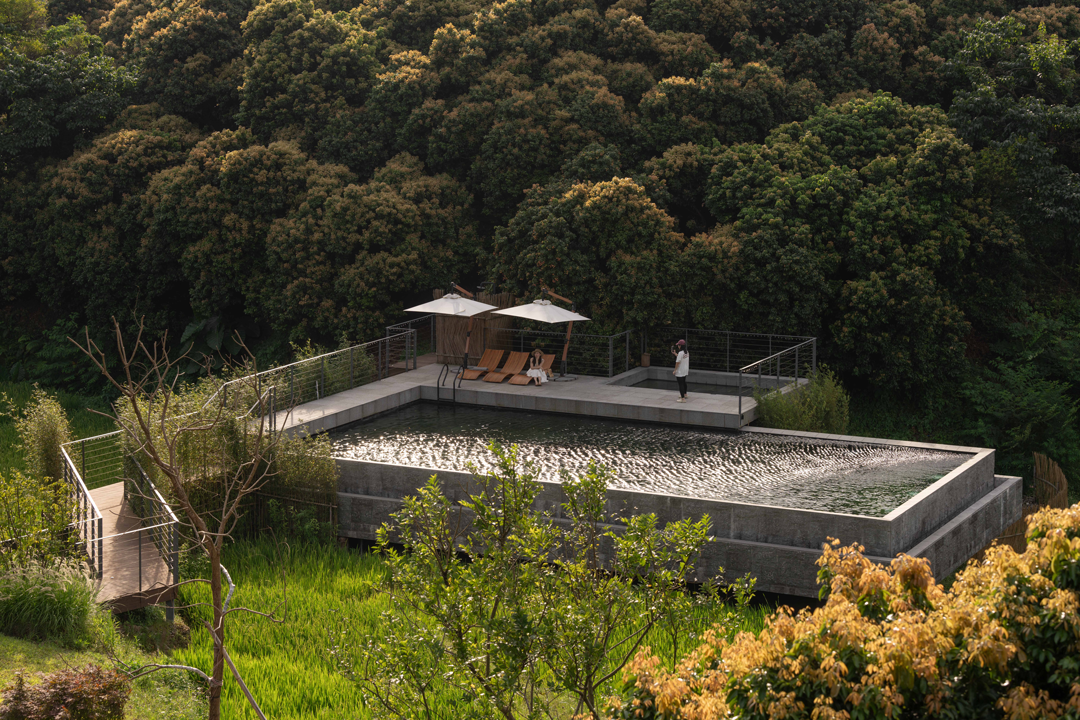
04
Return to Community:
Showcasing Diversity in Guestroom Design
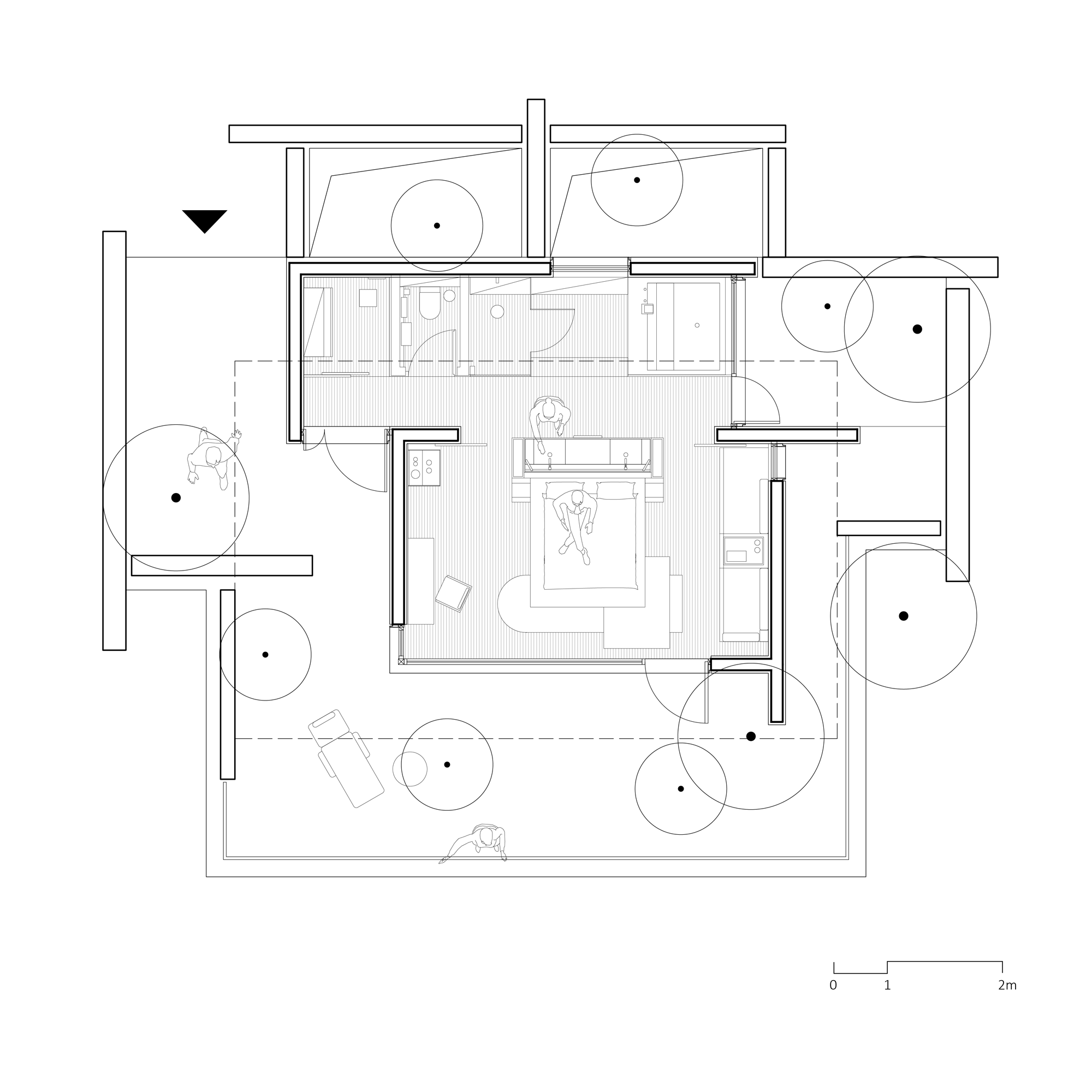
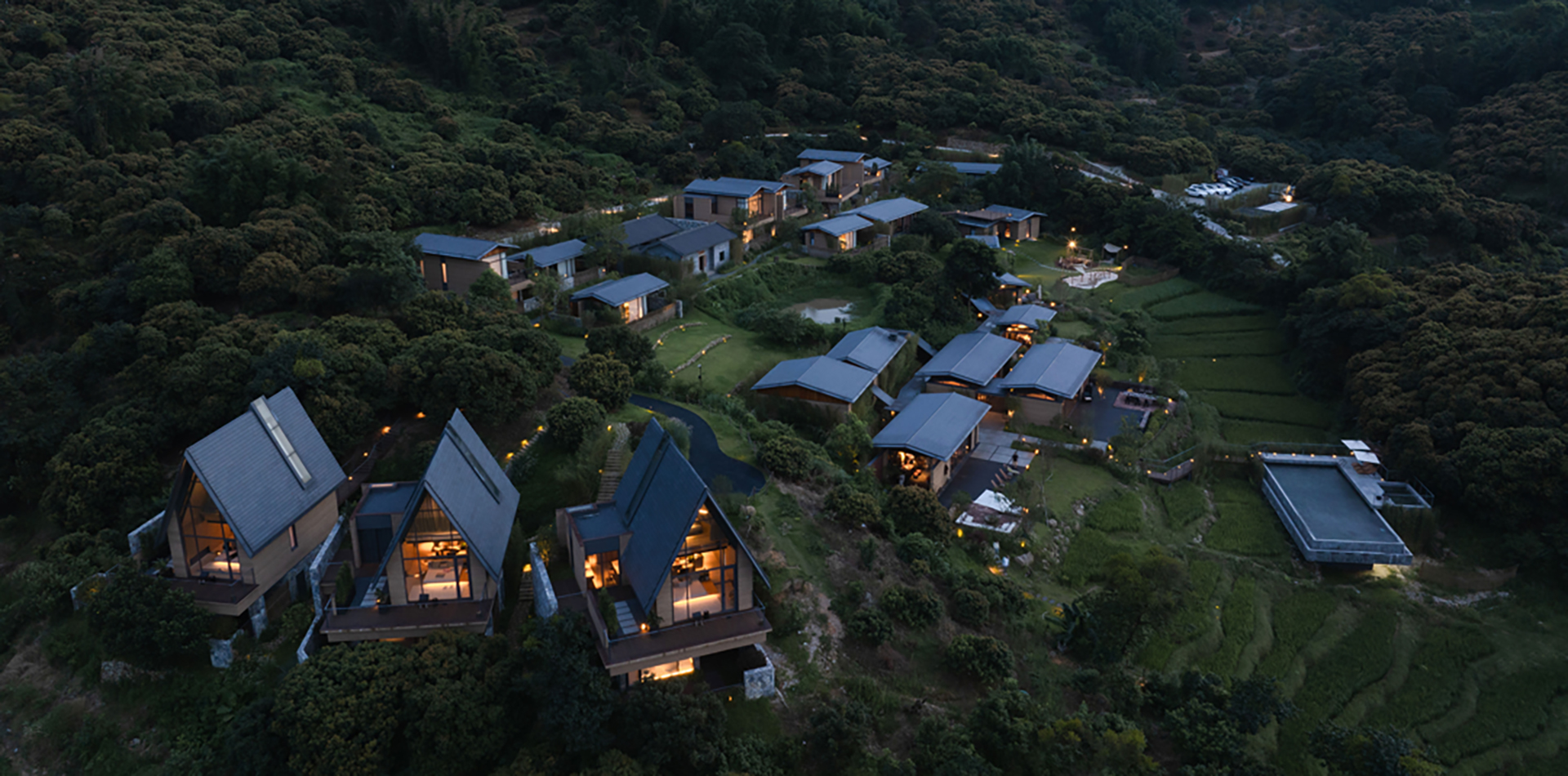
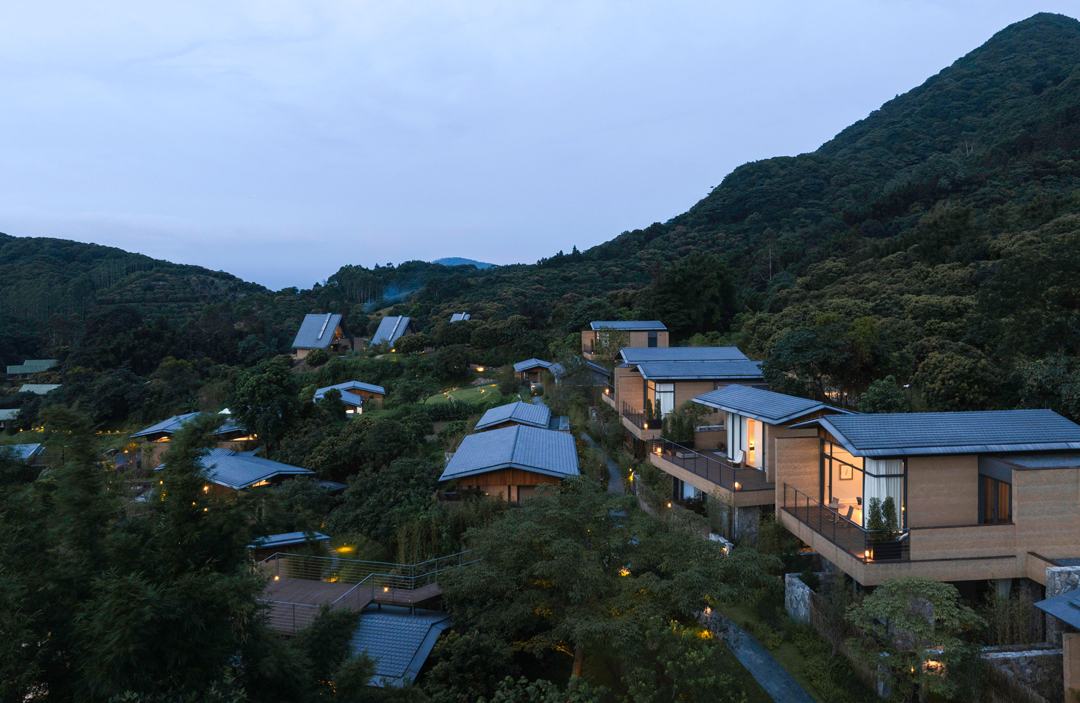
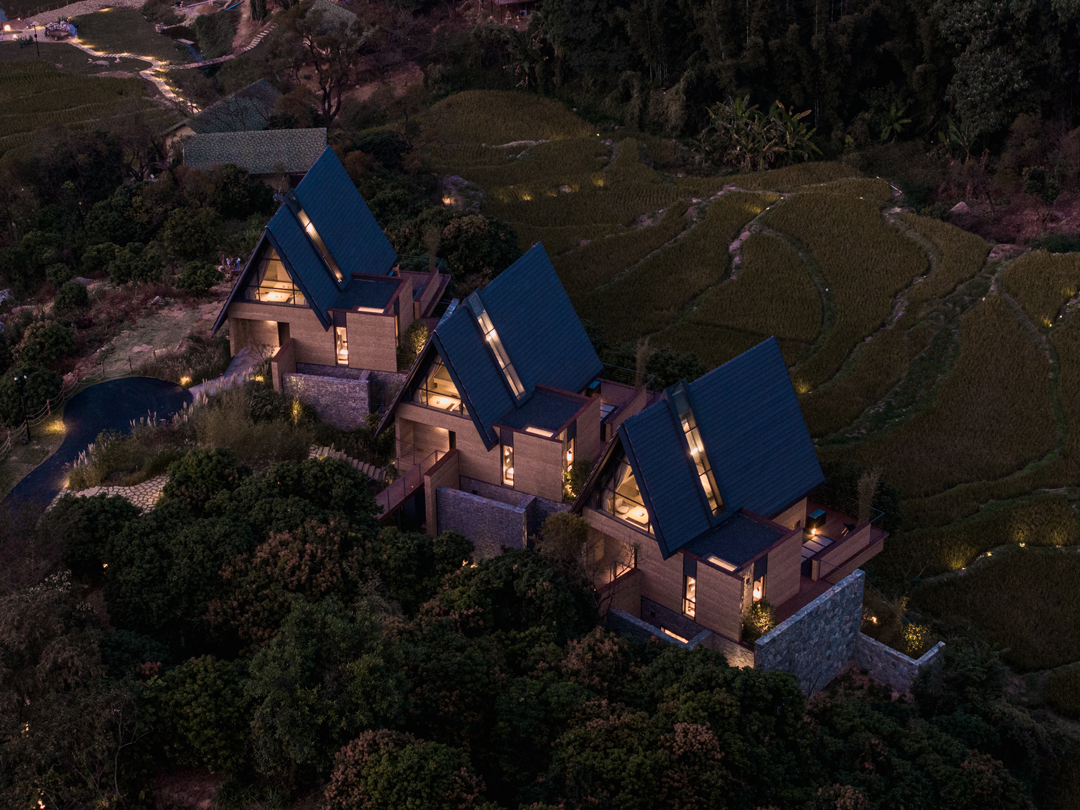
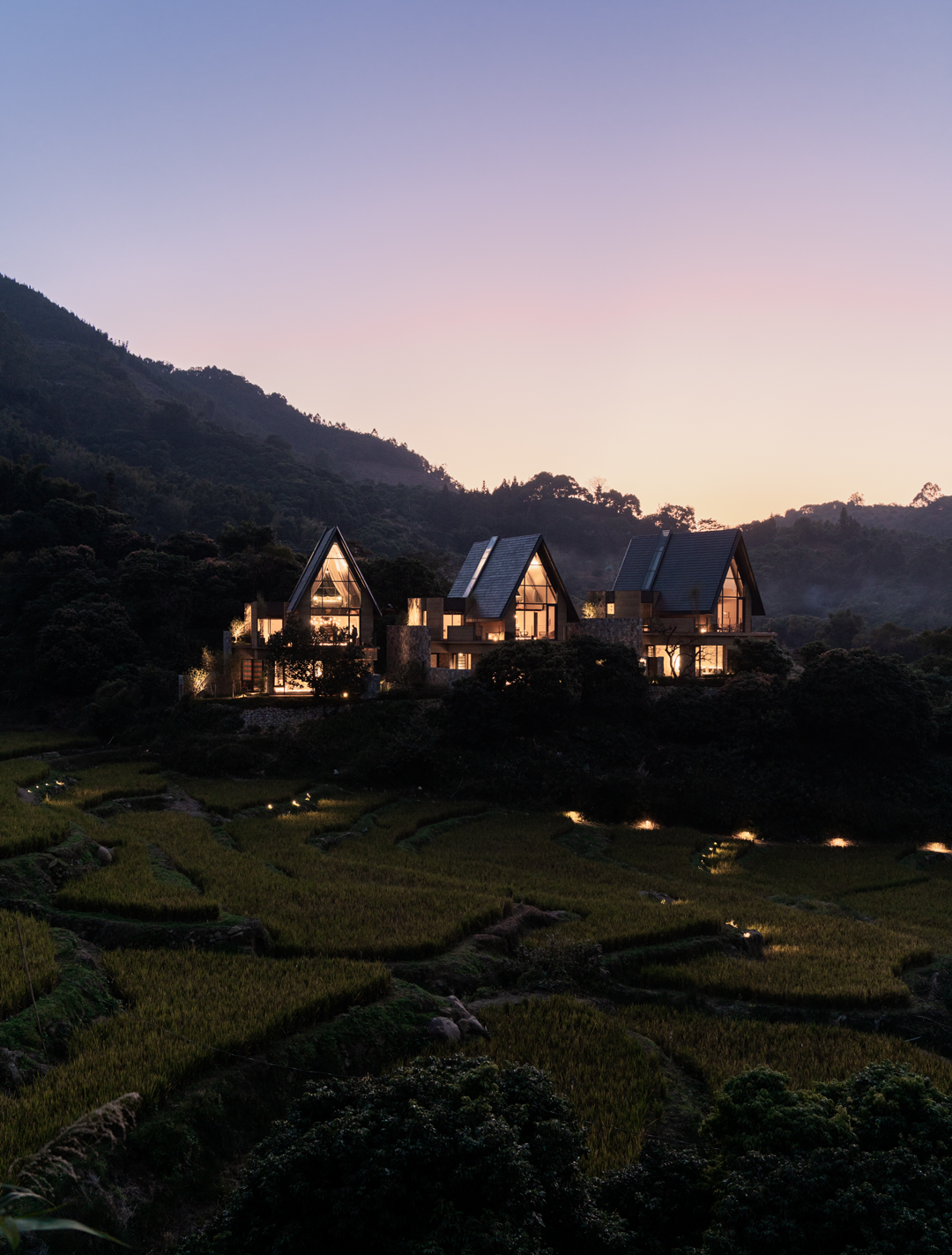
The design establishes a hierarchical arrangement from individual units to clusters, and finally to the entire community, leveraging the natural elevation changes across forests, water bodies, and terraces to flexibly organize the hotel’s public spaces and guestrooms. Each cluster is thoughtfully positioned at different heights and orientations, ensuring unobstructed views and a distinctive spatial character for every guestroom.
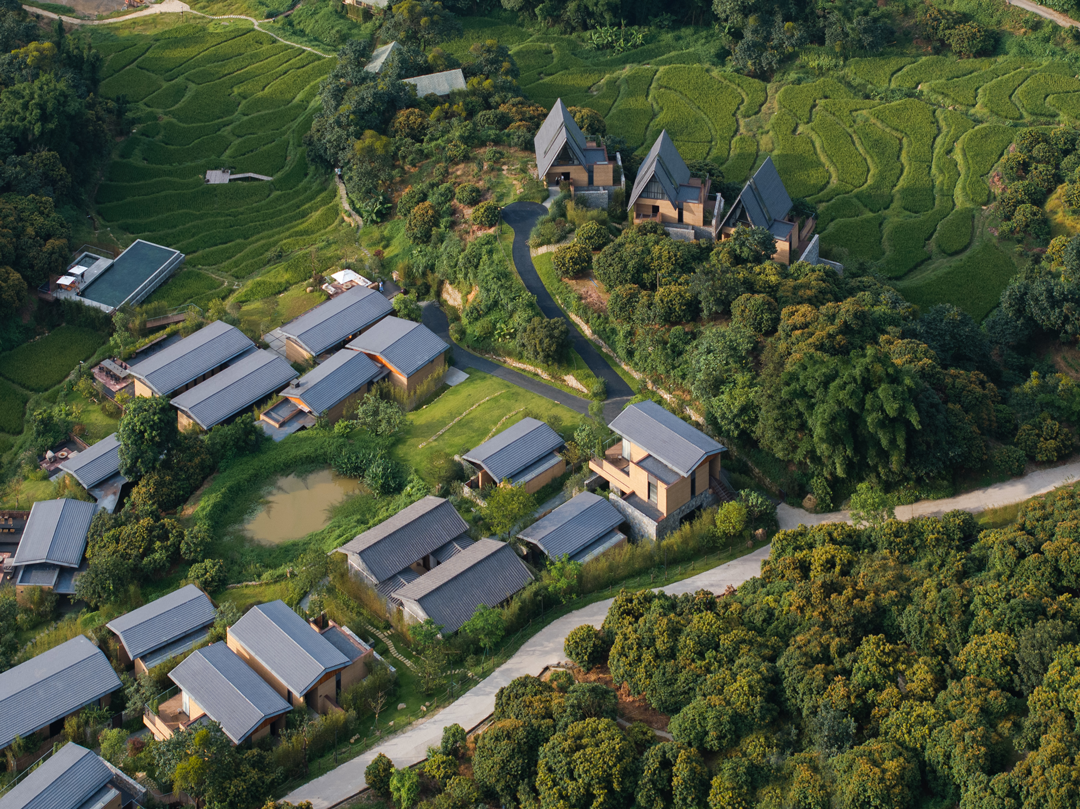
The dispersed layout of the guest units is interconnected by multi-level landscape platforms, which create flexible entry experiences and form an organically cohesive overall plan.
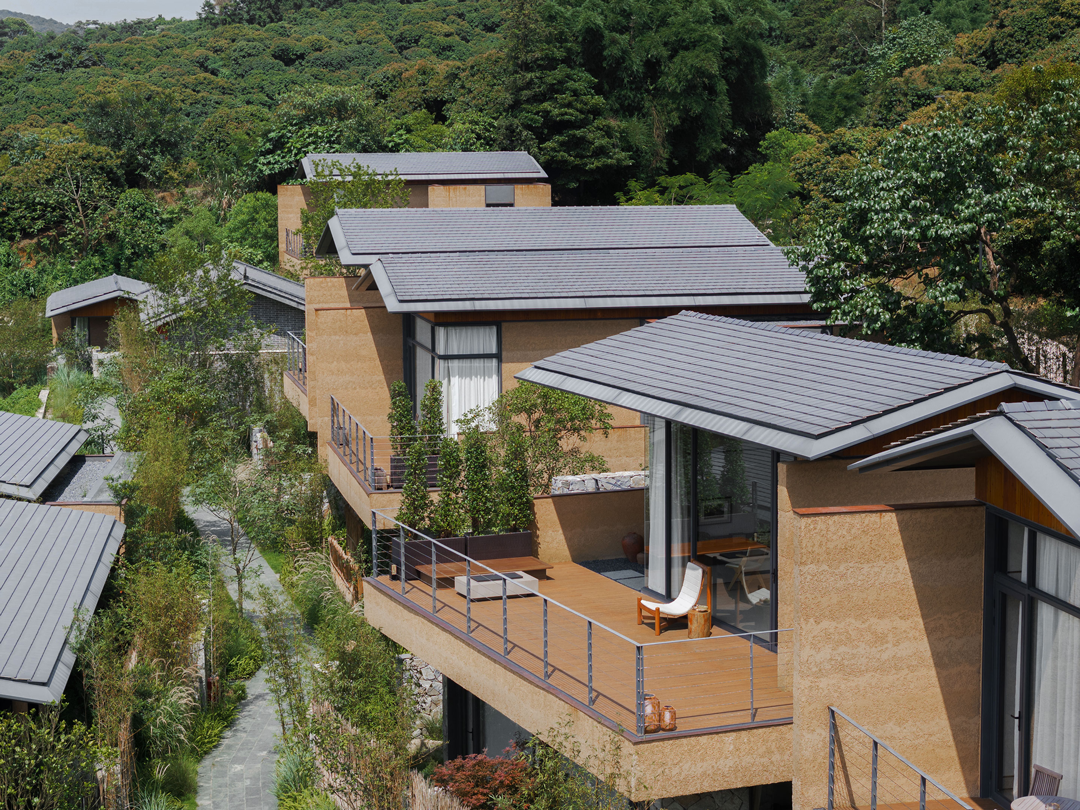
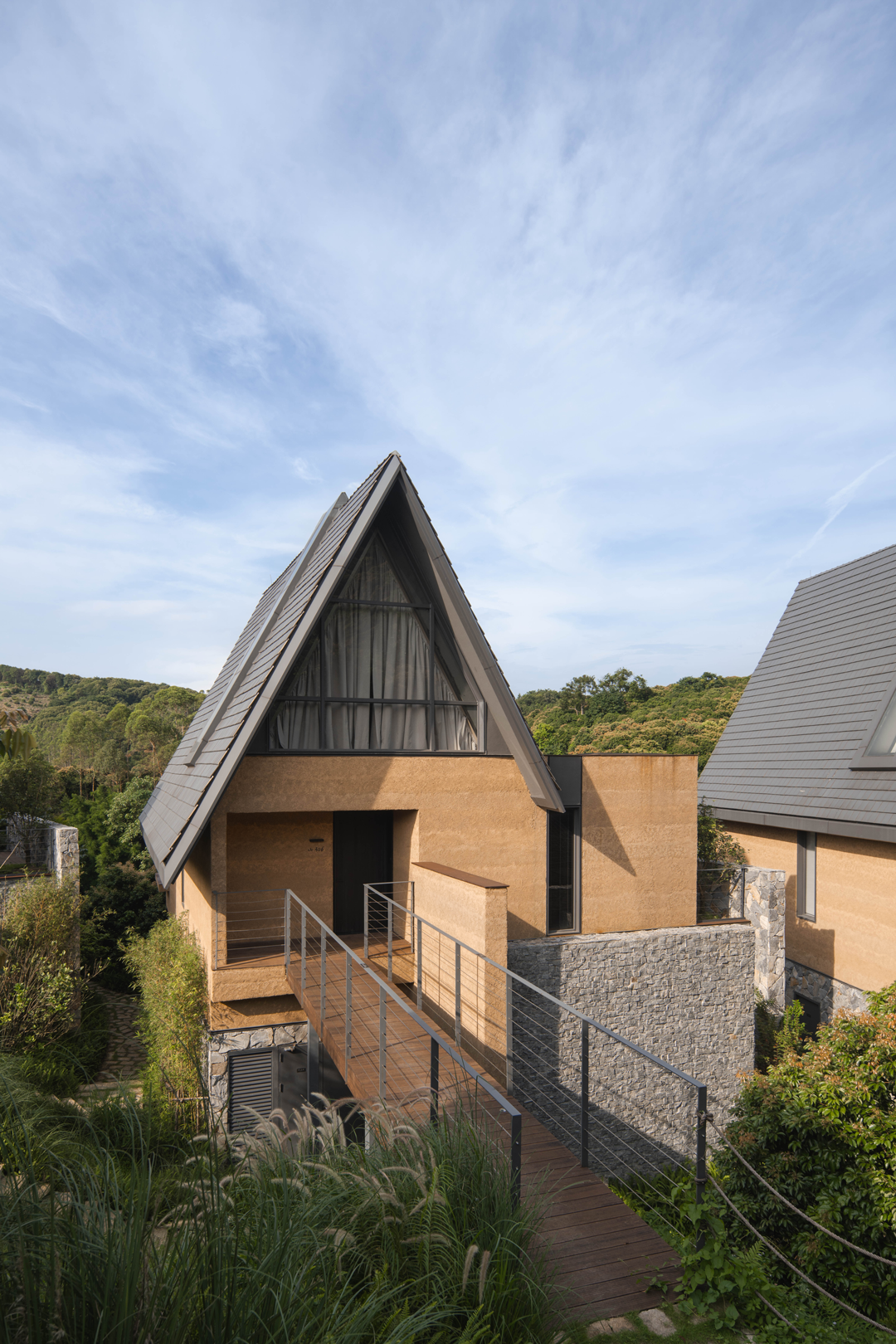
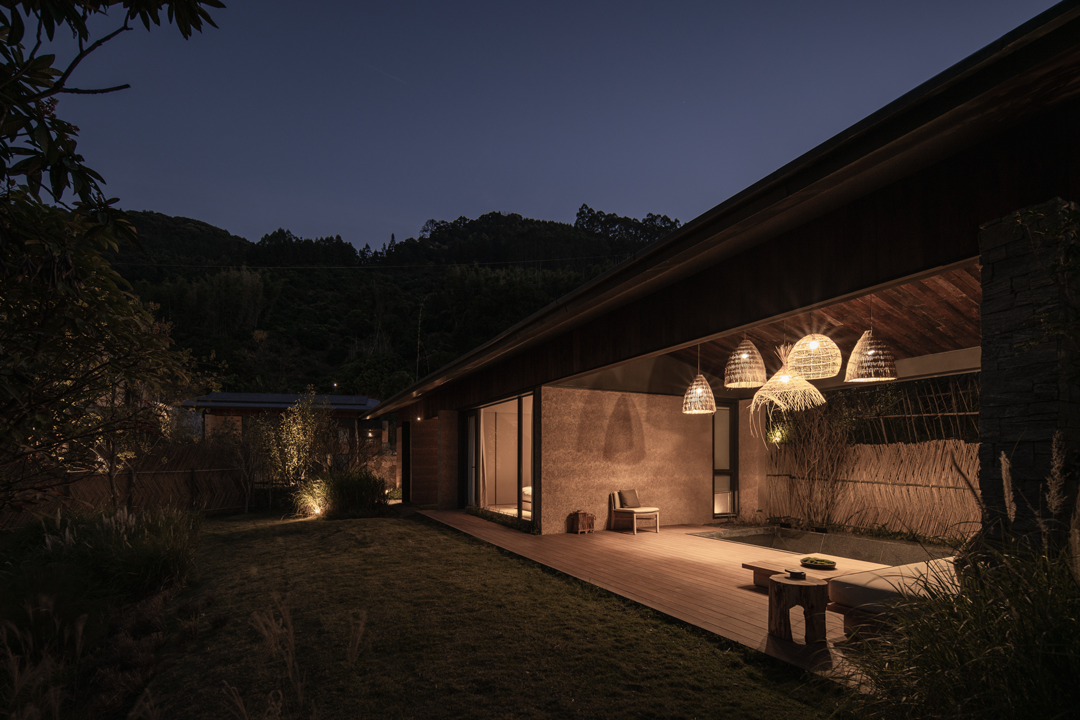
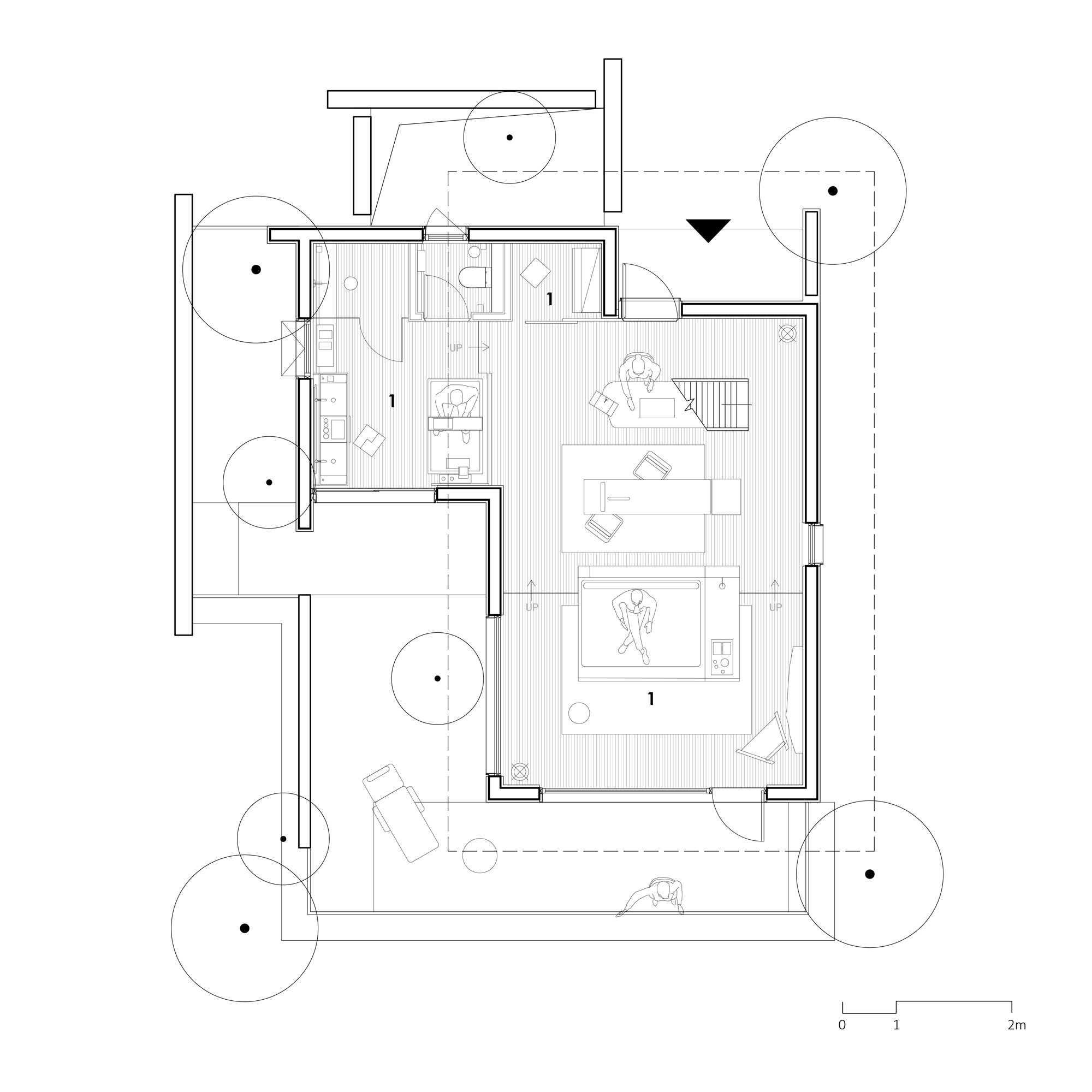
A diverse spatial palette emerges from the combination of varying room types, sizes, and courtyard configurations. Lower-level rooms are nestled within private courtyards, offering seclusion, while upper rooms open up to expansive views of the surrounding landscape.
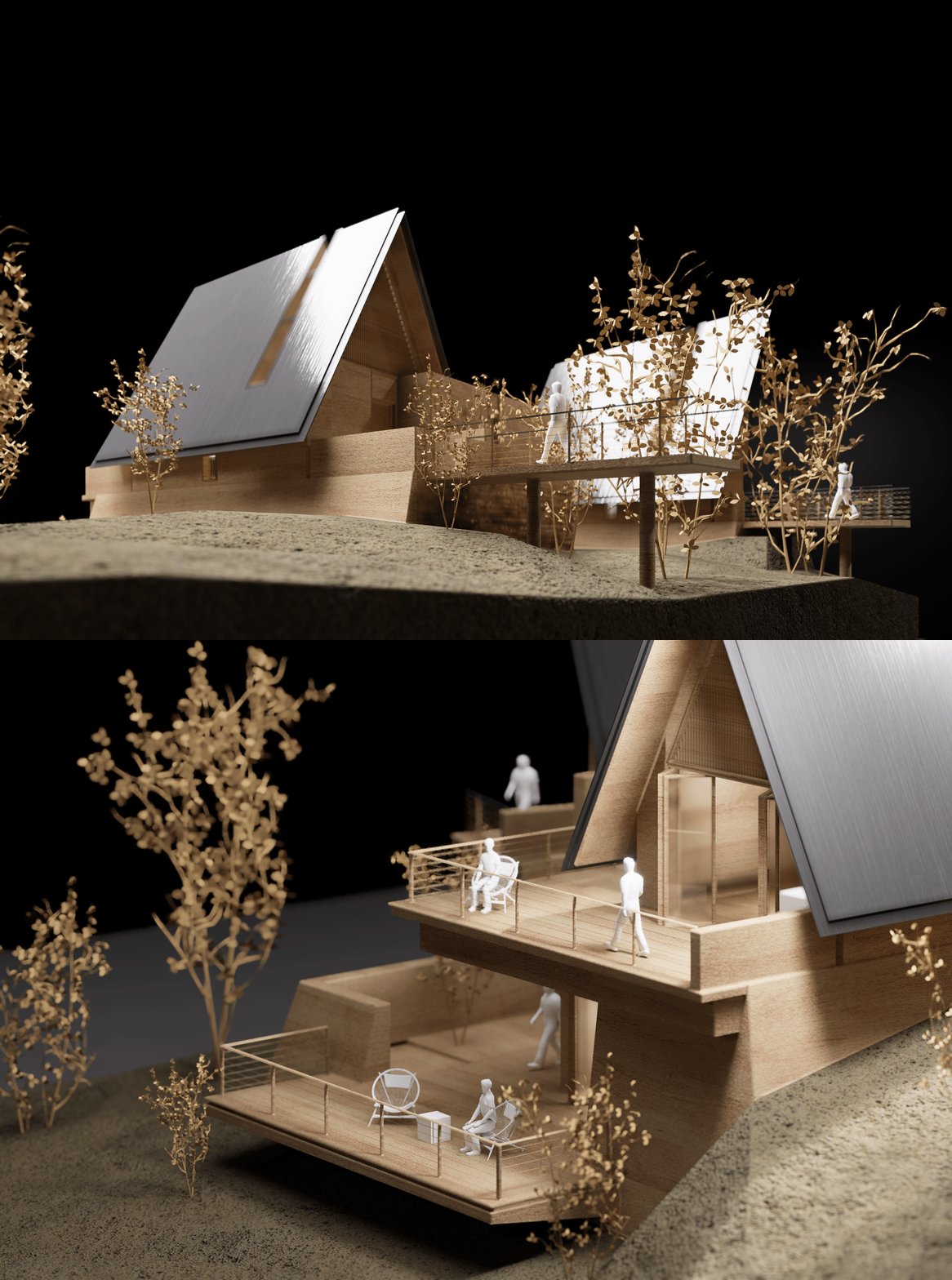
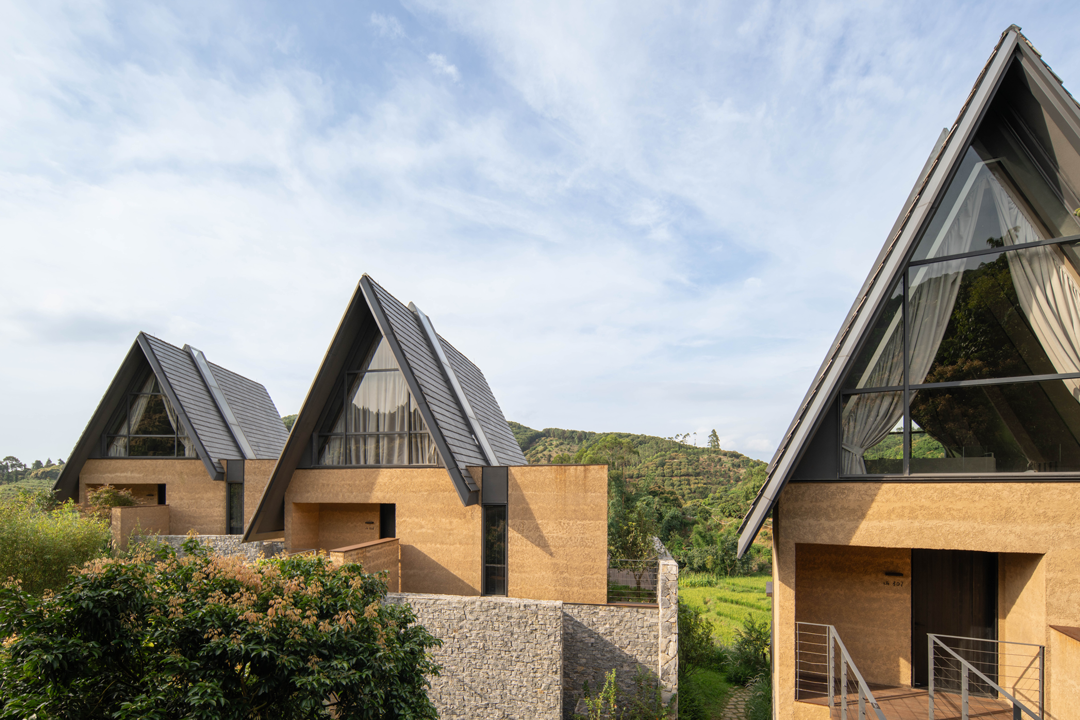
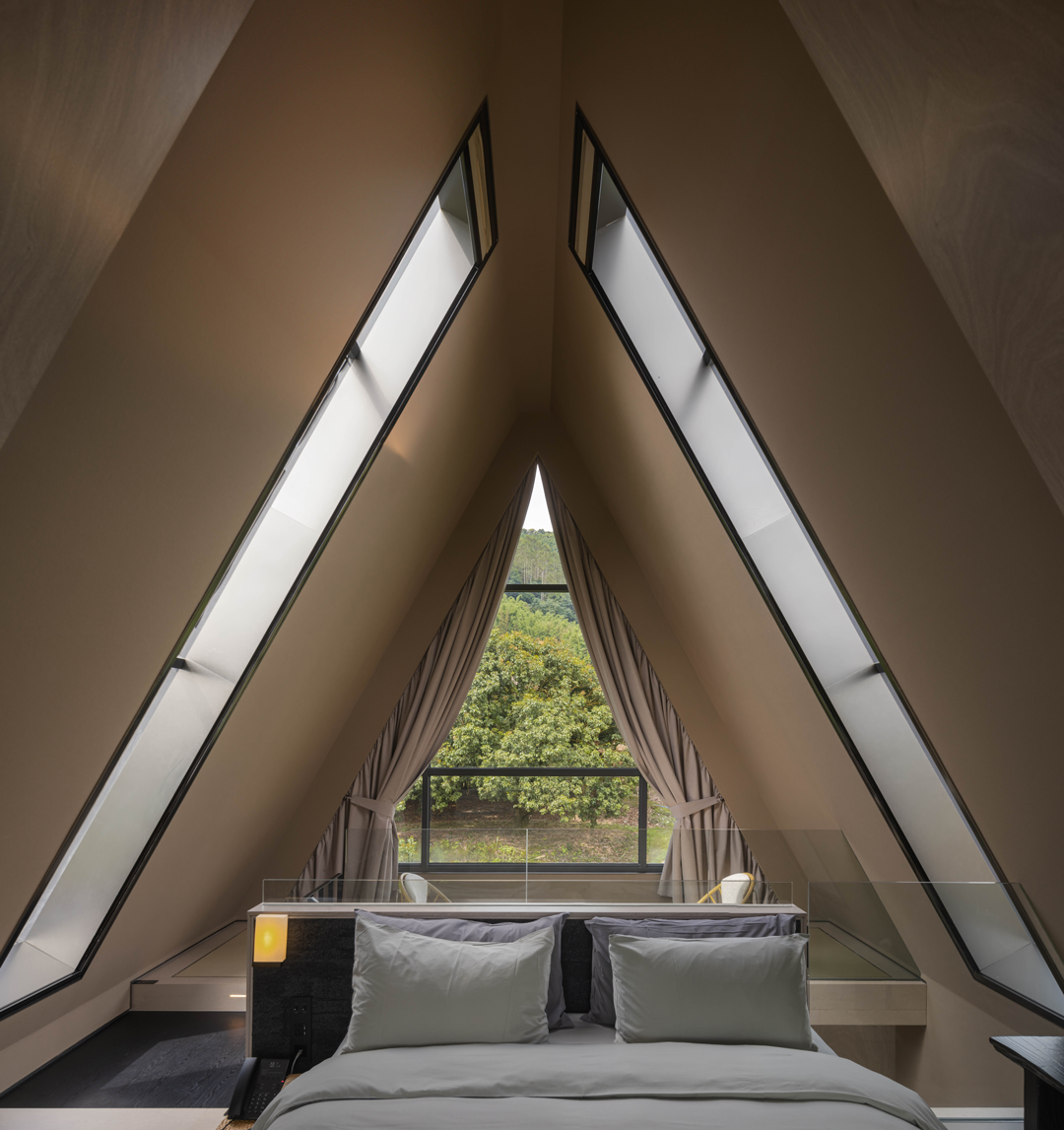
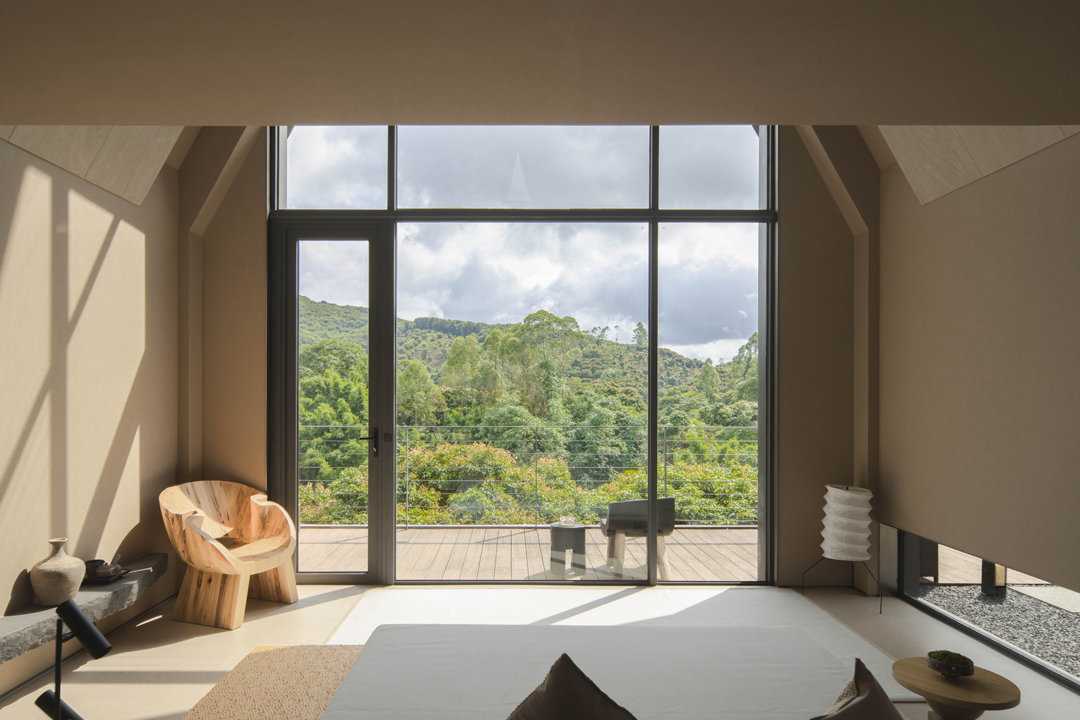
This layered spatial design orchestrates a dynamic journey where each scene transforms as one moves through, fostering unique patterns of social interaction within each distinct setting.
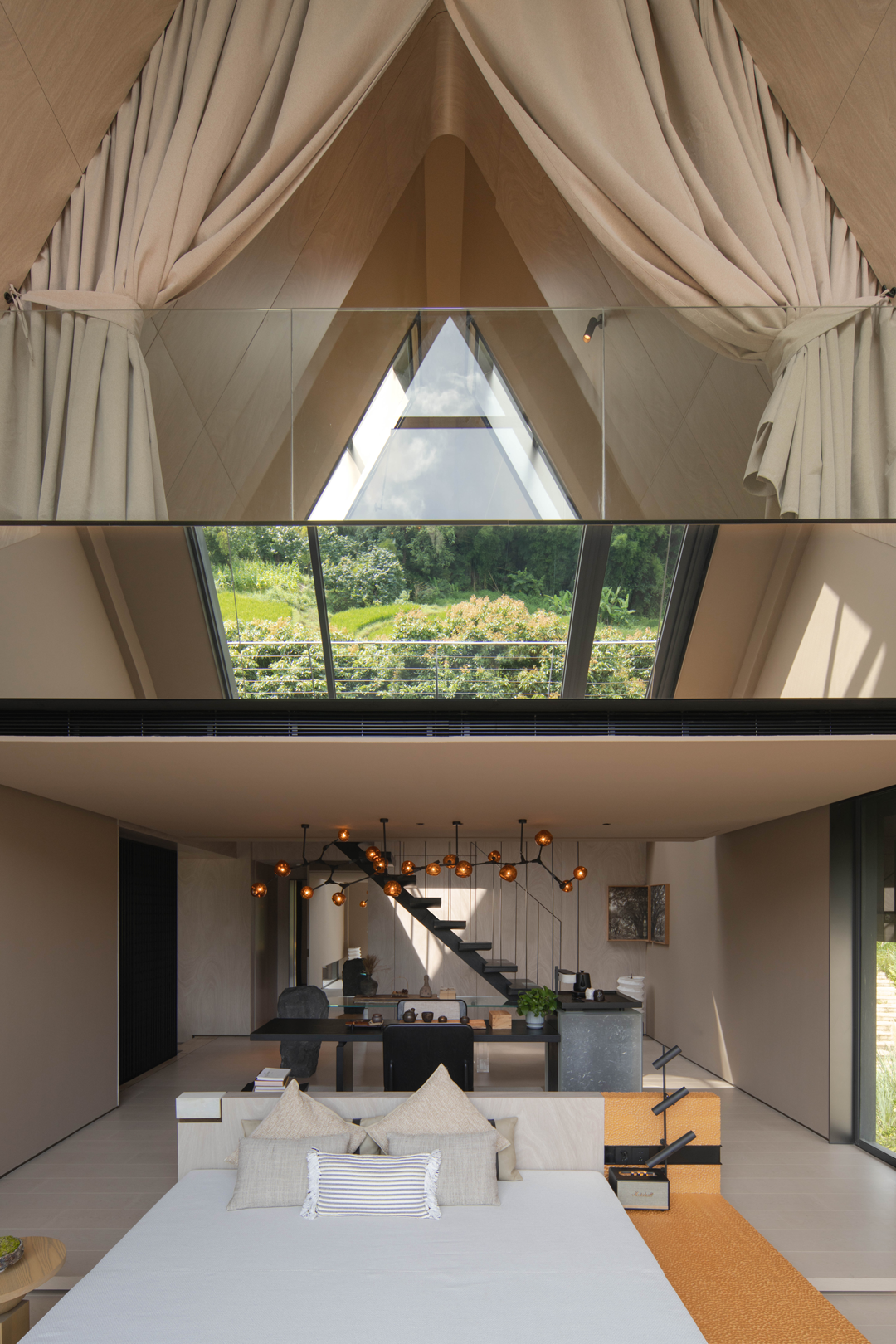
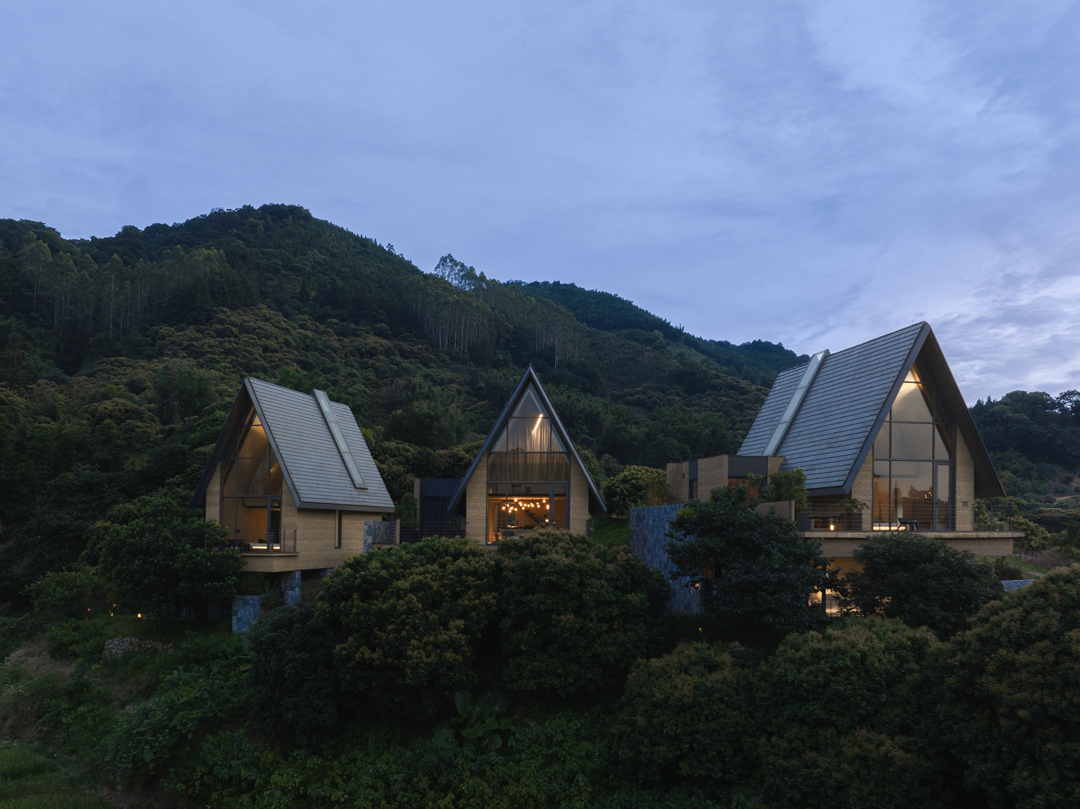
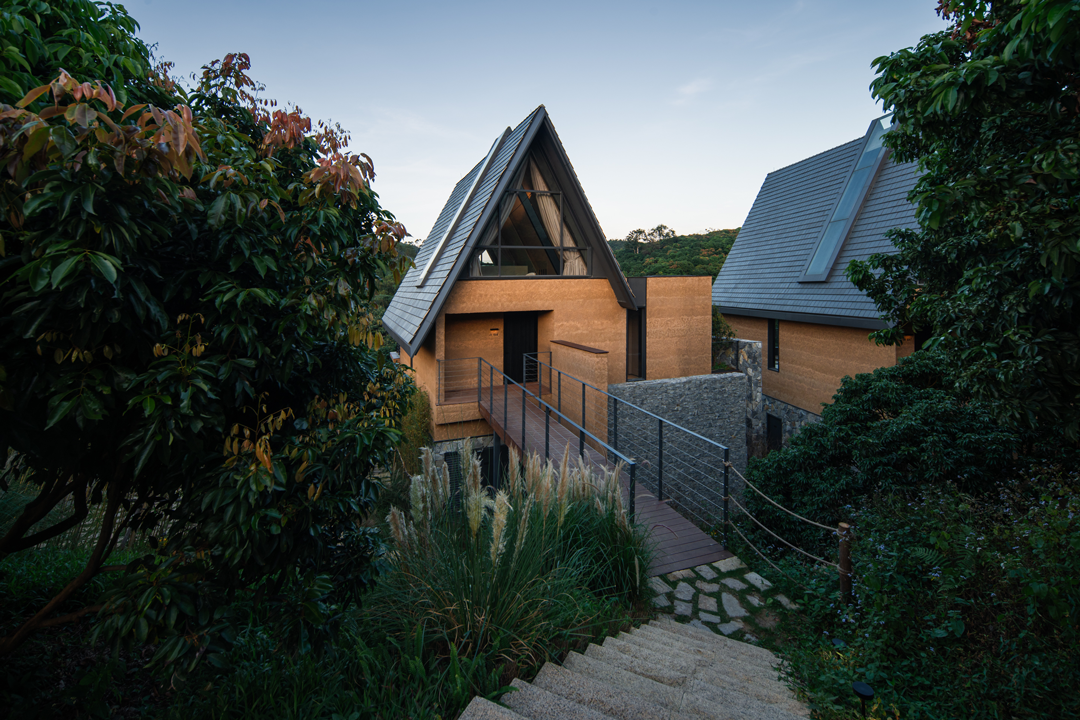
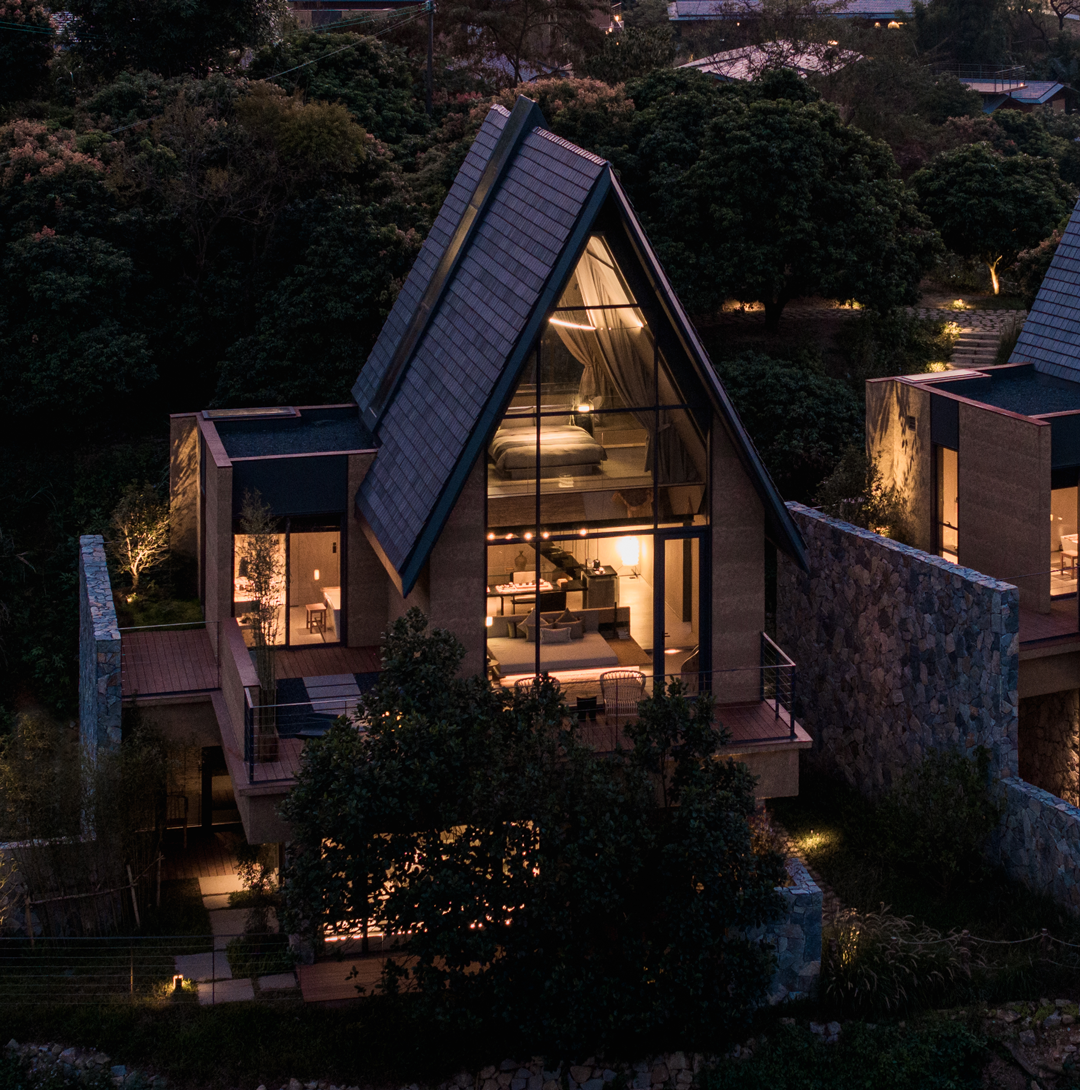
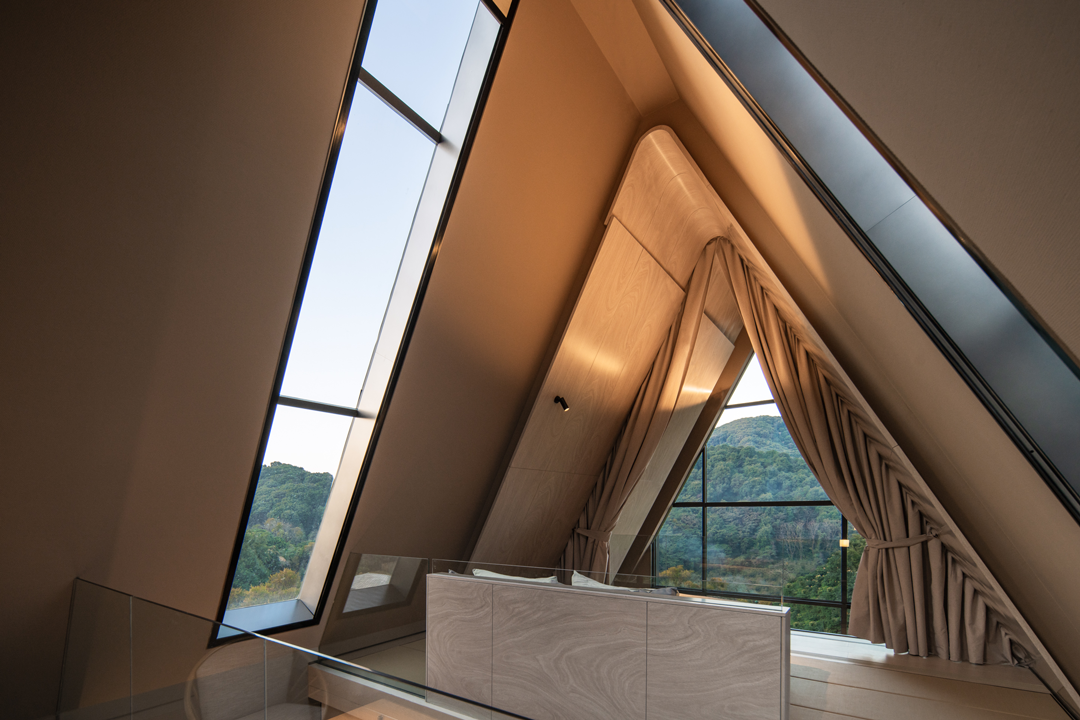
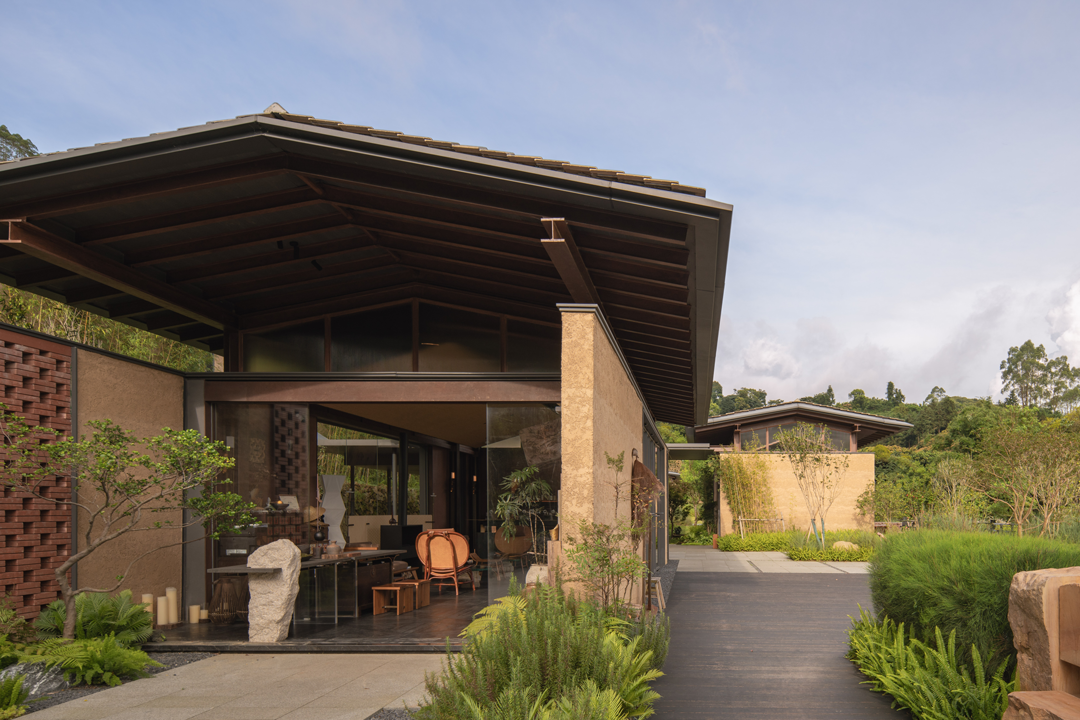
Roof designs incorporate varied slopes, evoking the architectural character of traditional village structures. These forms make bold use of different angles and inclinations, including geometric triangular slopes, which enrich the architectural expression.
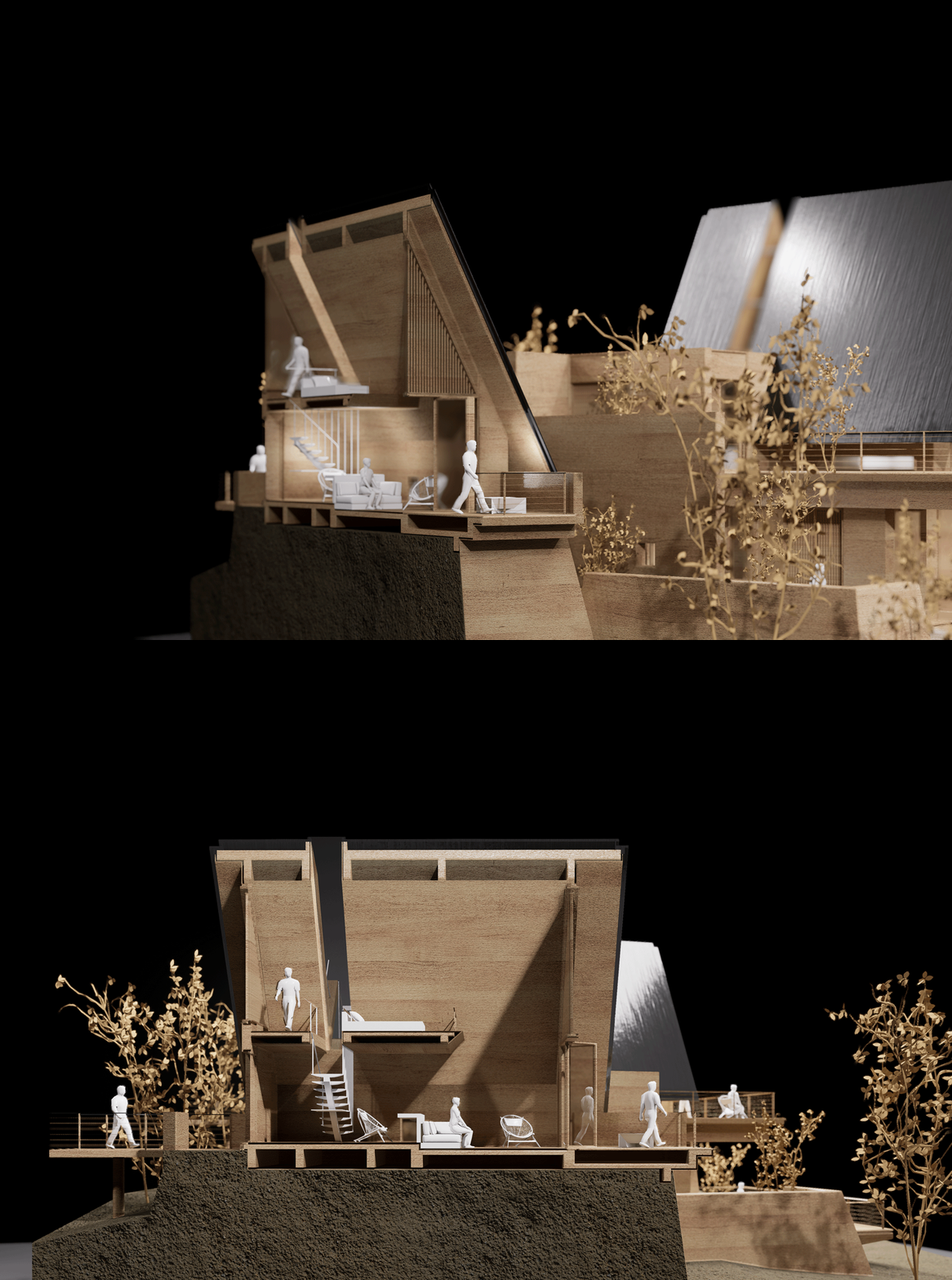
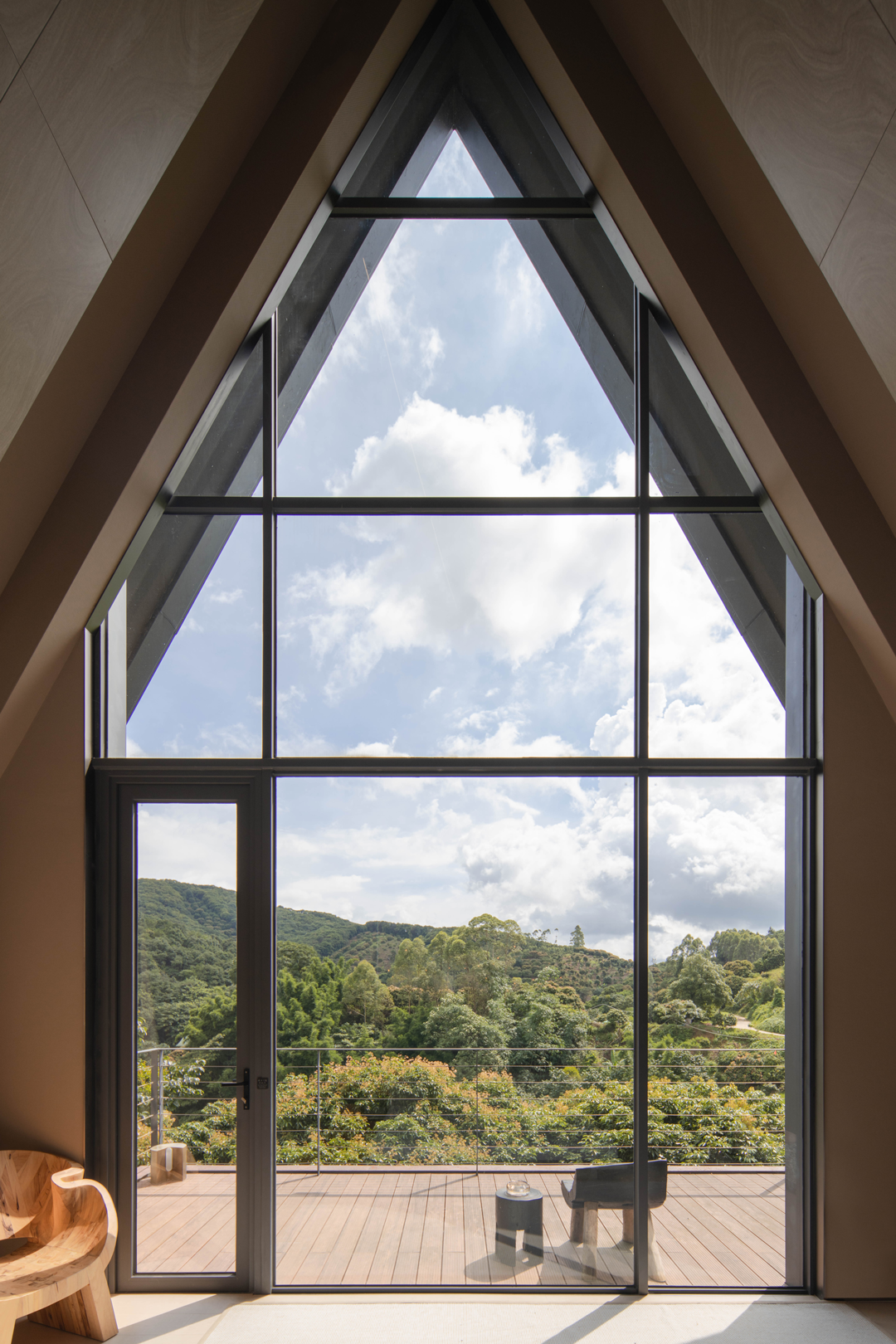
In striving for a harmonious balance of unity and diversity, the architectural composition presents a rhythmic and tiered landscape from any perspective. Each guestroom cluster resembles a micro-village—standing independently yet seamlessly blending with the natural surroundings, collectively forming a richly dynamic and cohesive whole.

05
Interwoven Breaths:
A Dialogue Between Modern Techniques and Indigenous Materials
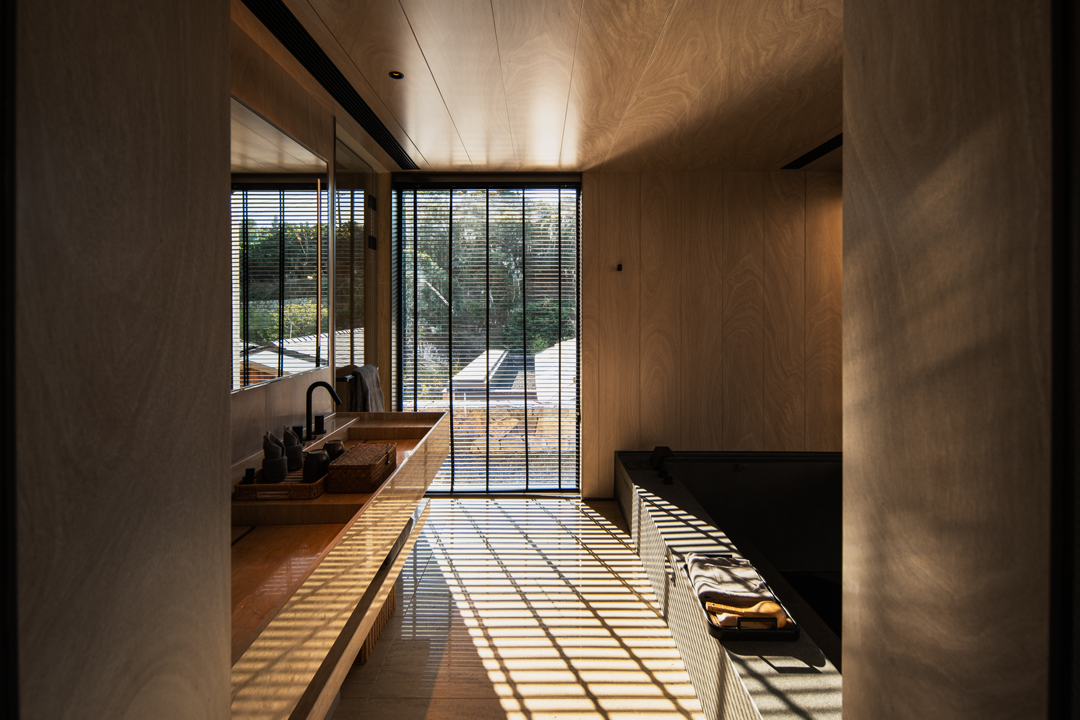
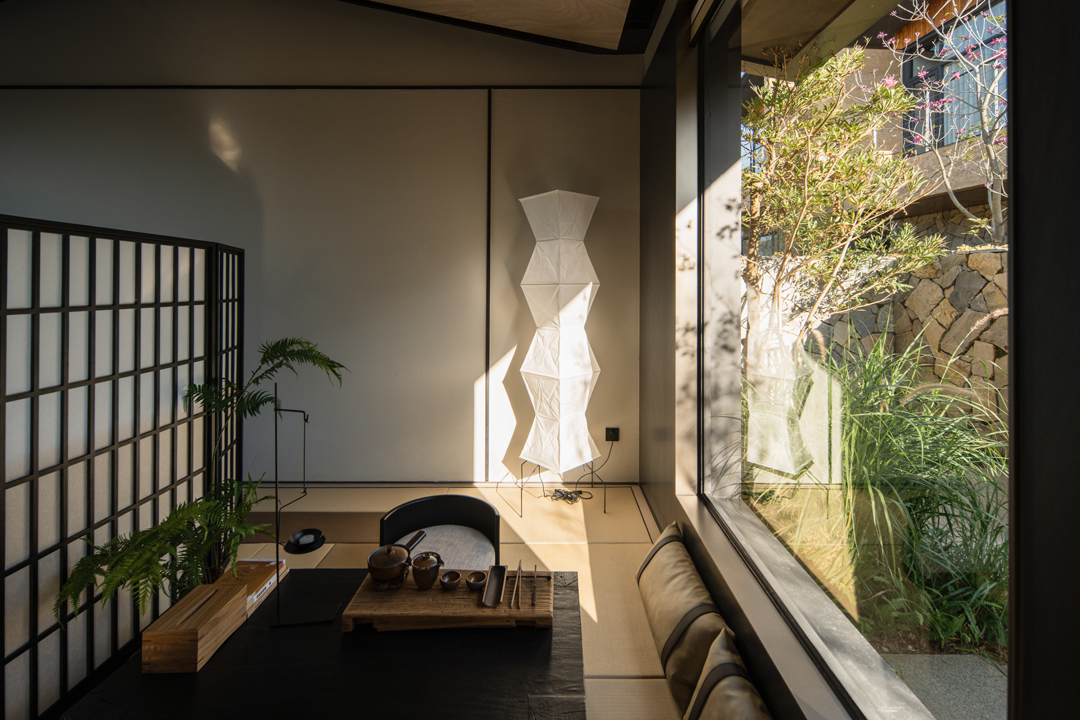
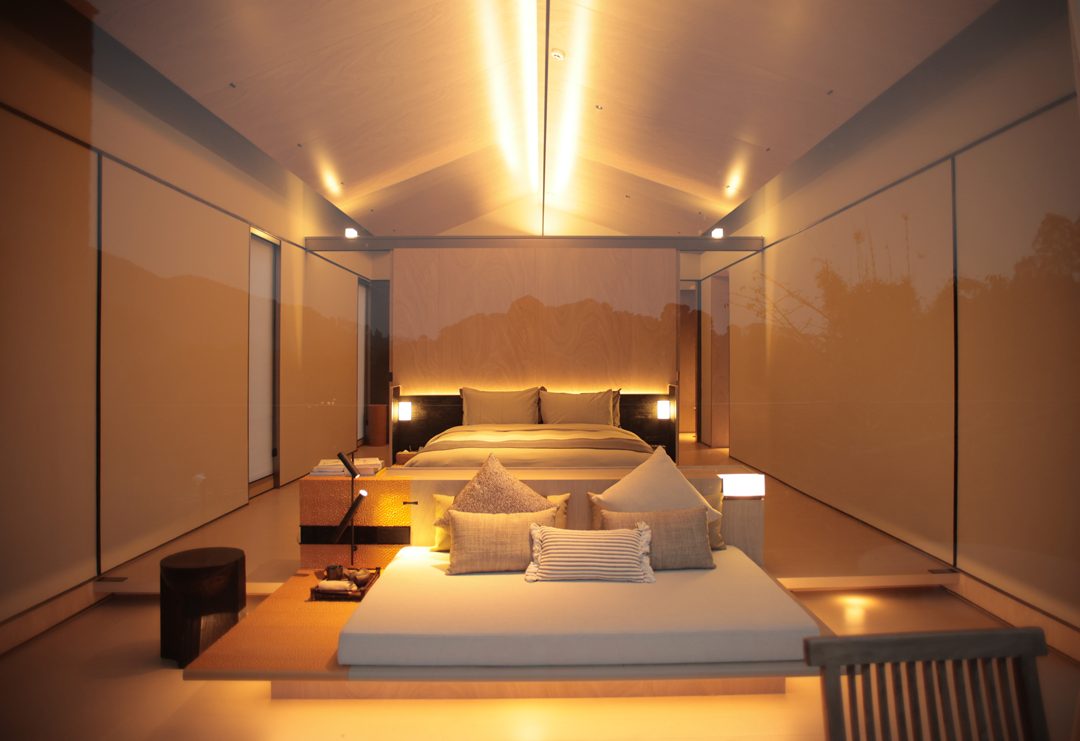
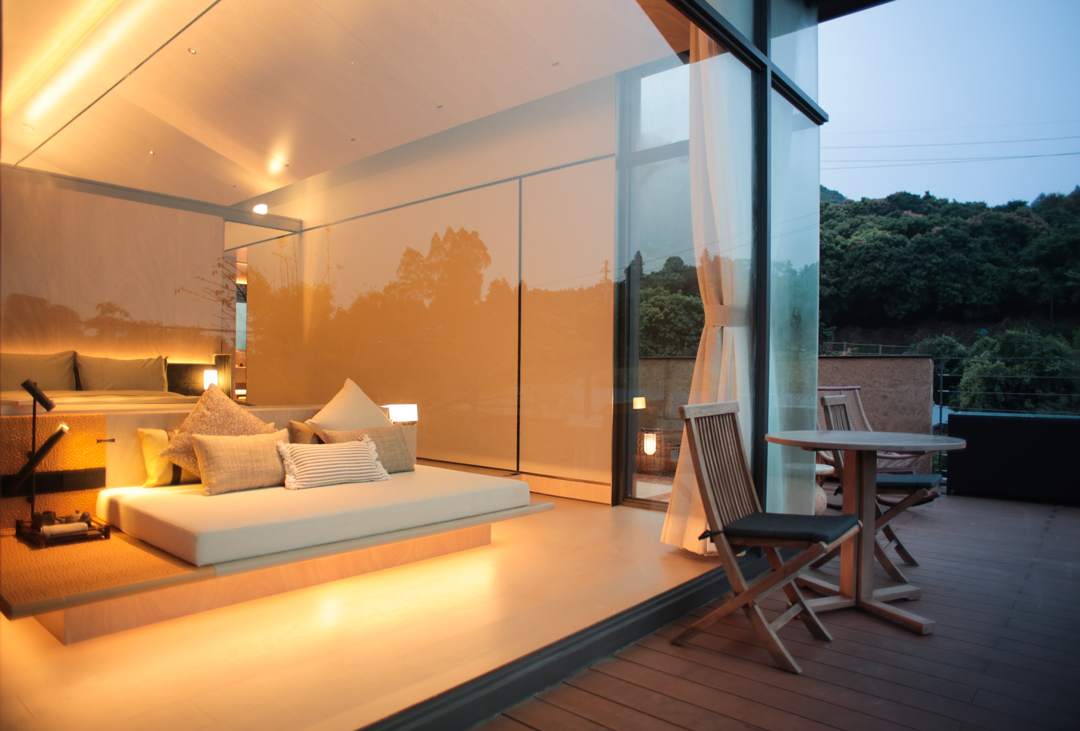
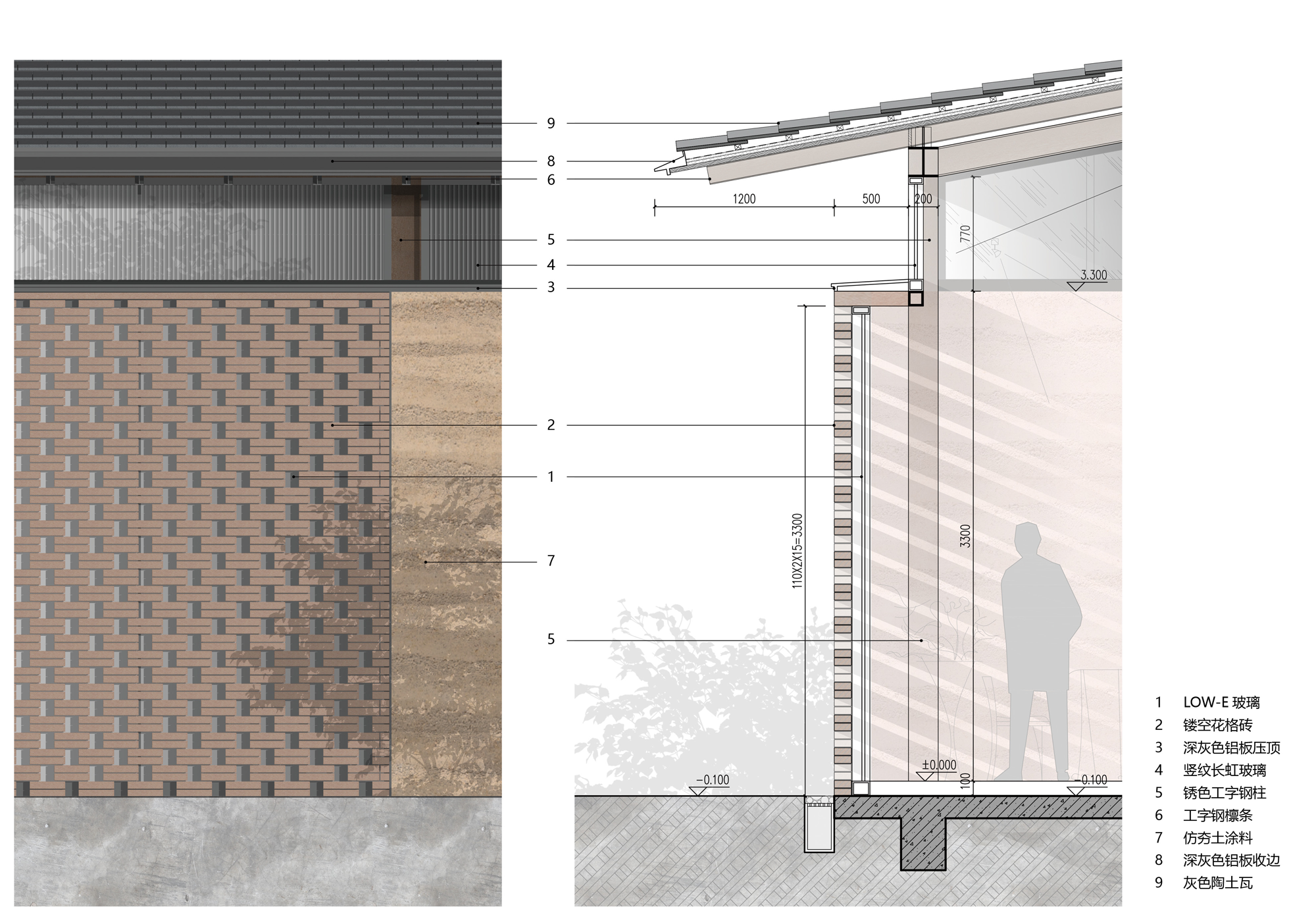
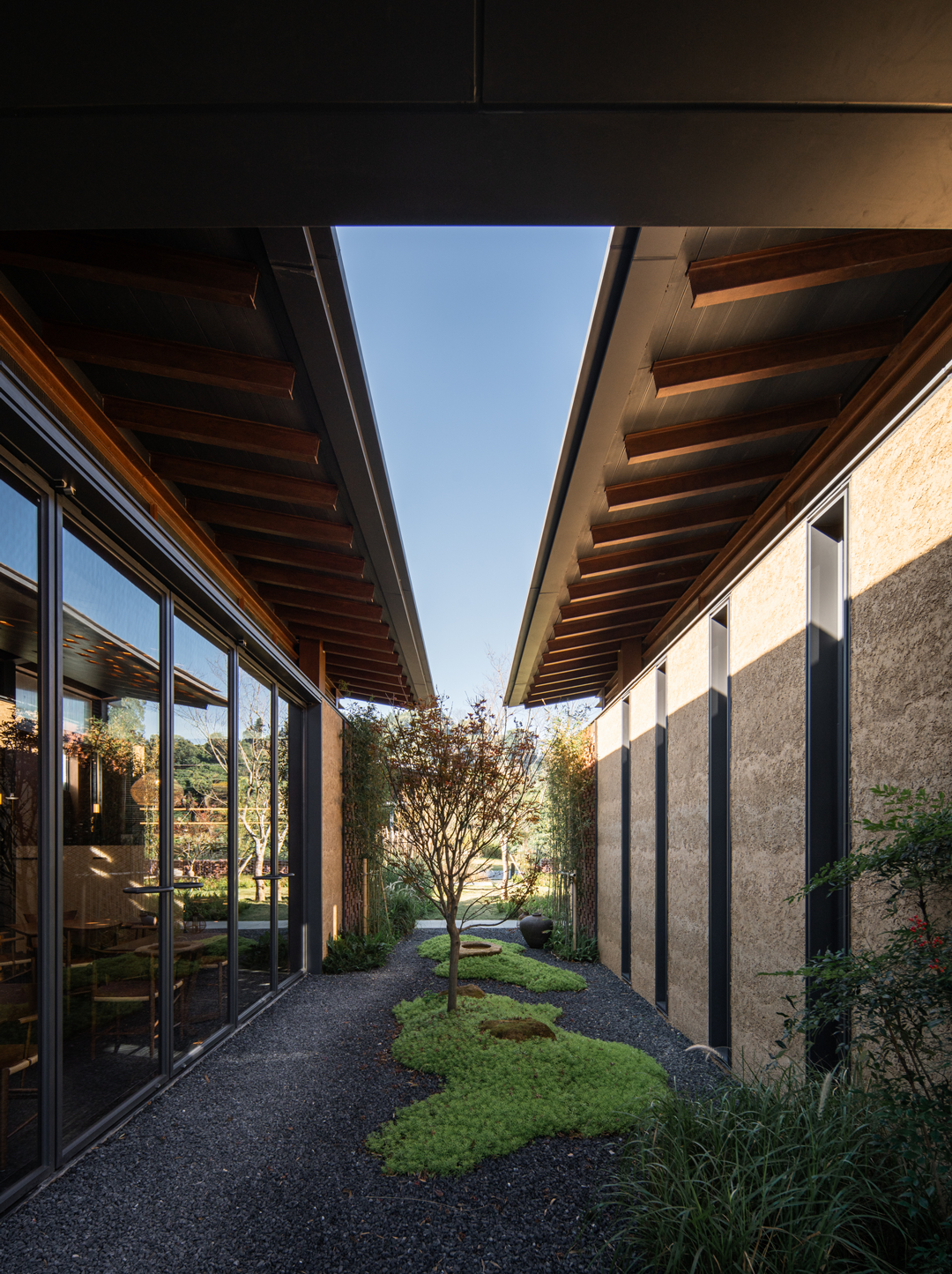
To evoke the authentic character of traditional Hakka villages, the guestrooms incorporate natural materials such as earth-toned plaster, clay tiles, and wood-colored flooring. These elements establish a harmonious connection with the surrounding environment, creating a retreat atmosphere that departs from everyday life.
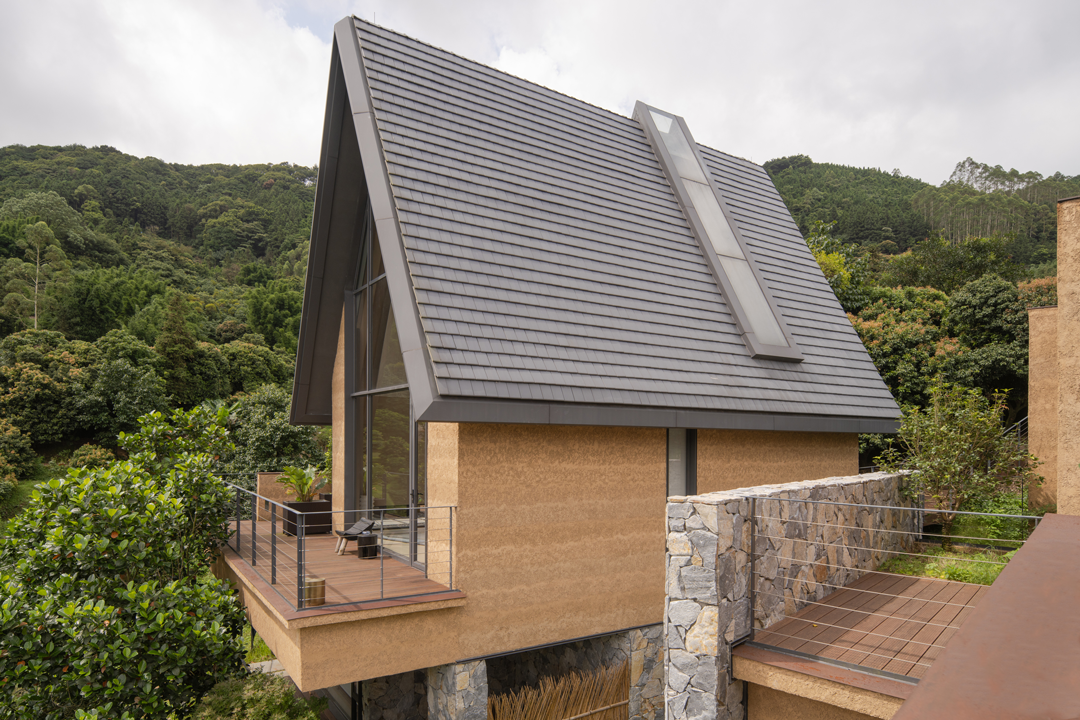

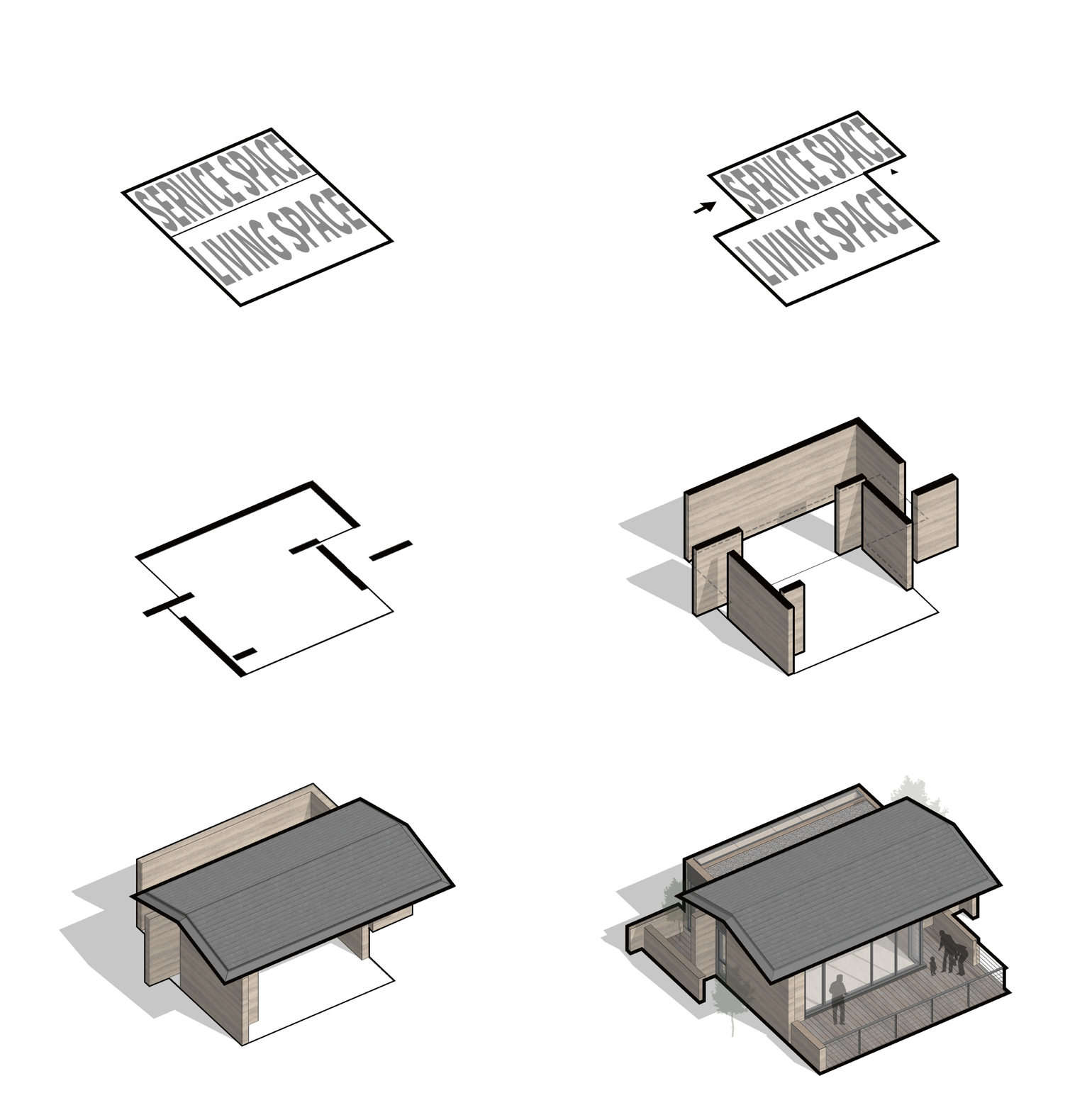
The structural system employs reinforced concrete, with slab walls supporting the roof in a manner that reinforces the architectural coherence. Expansive glass windows further dissolve the boundary between interior and exterior spaces, enabling guests to immerse themselves in views of the mountain and forest landscapes from within.
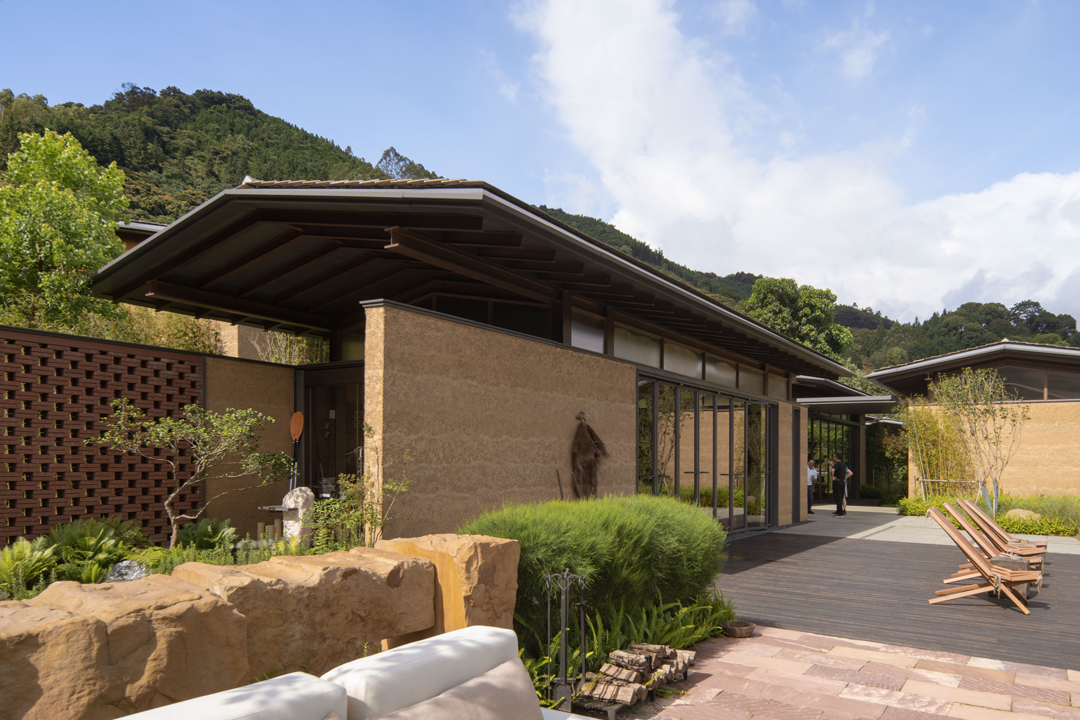
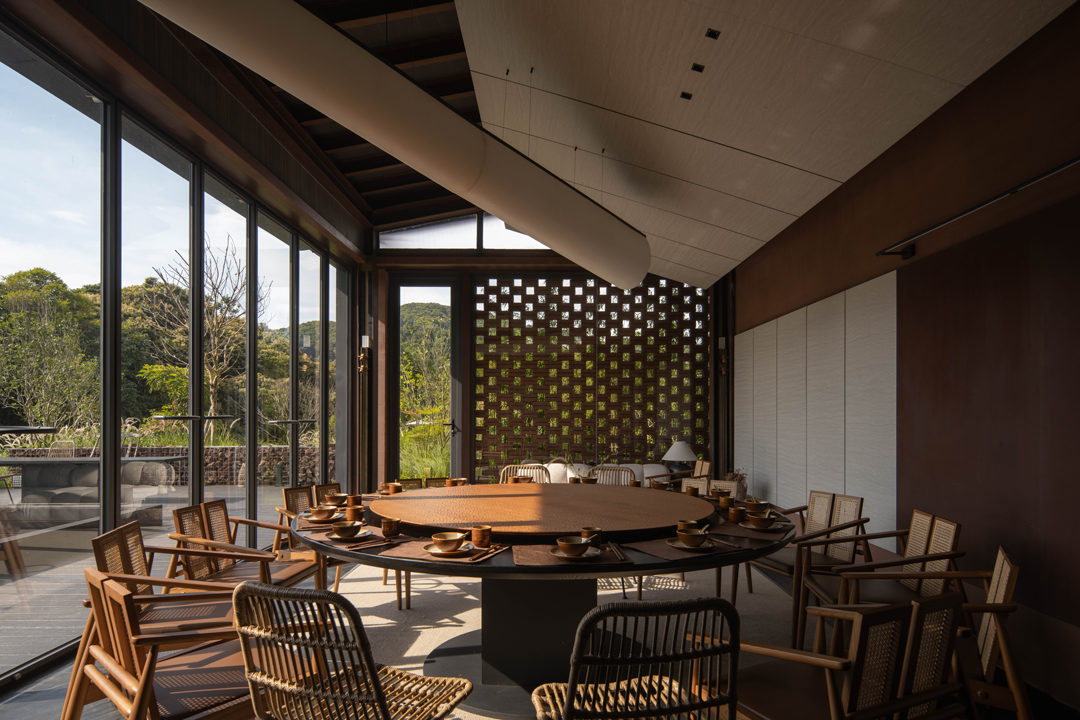
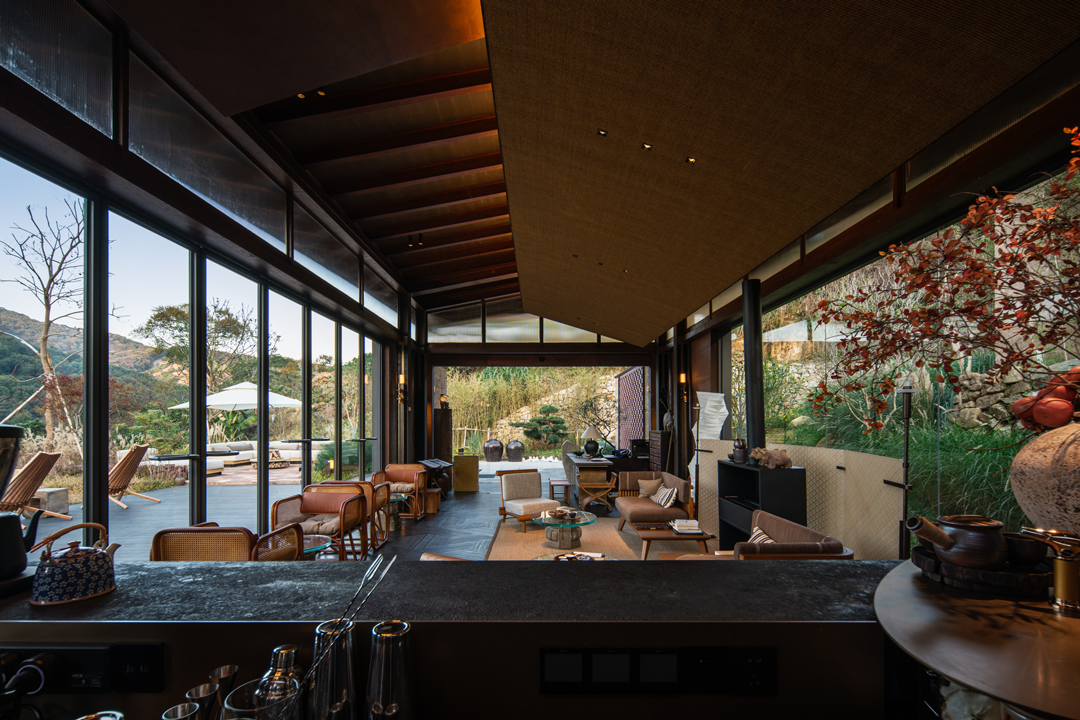
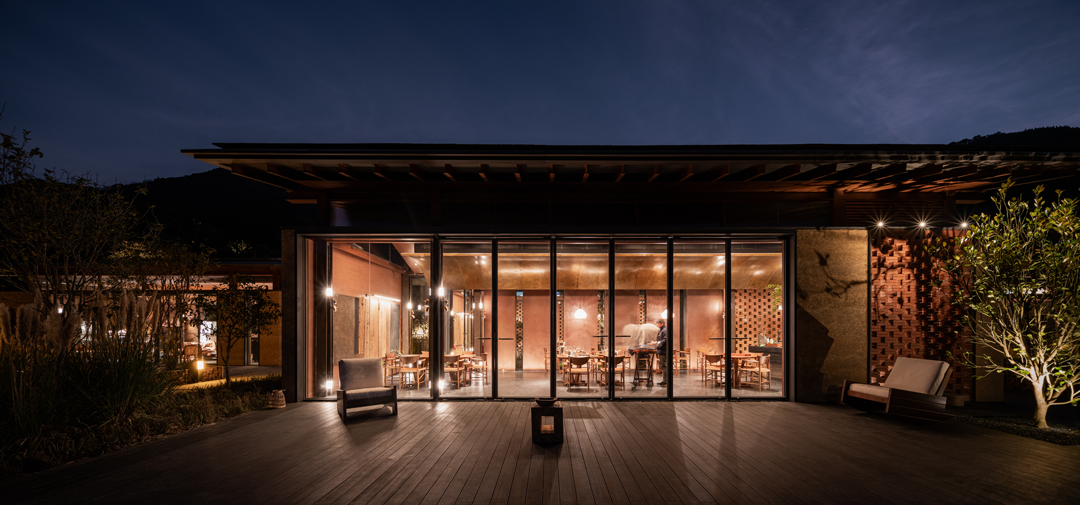
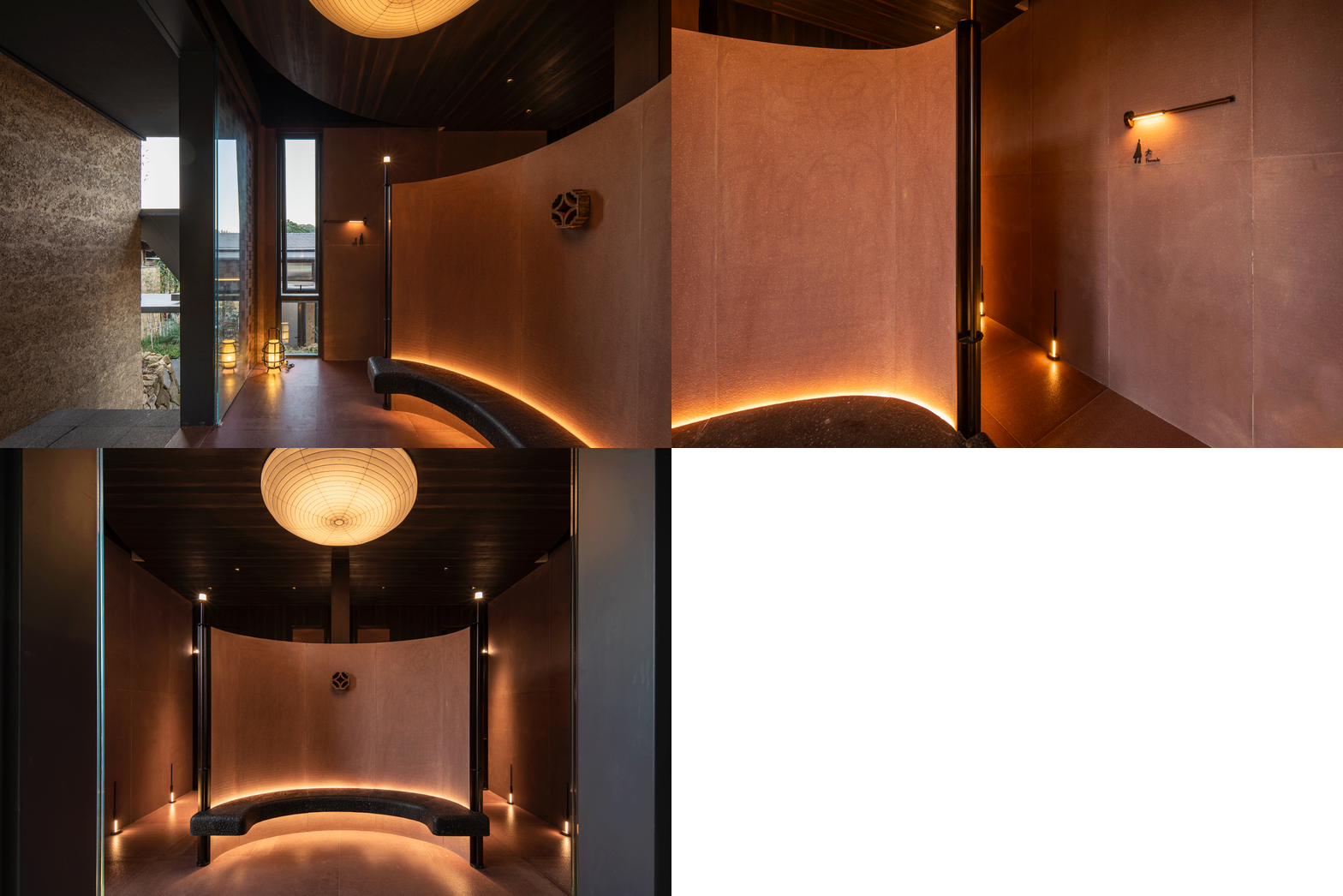
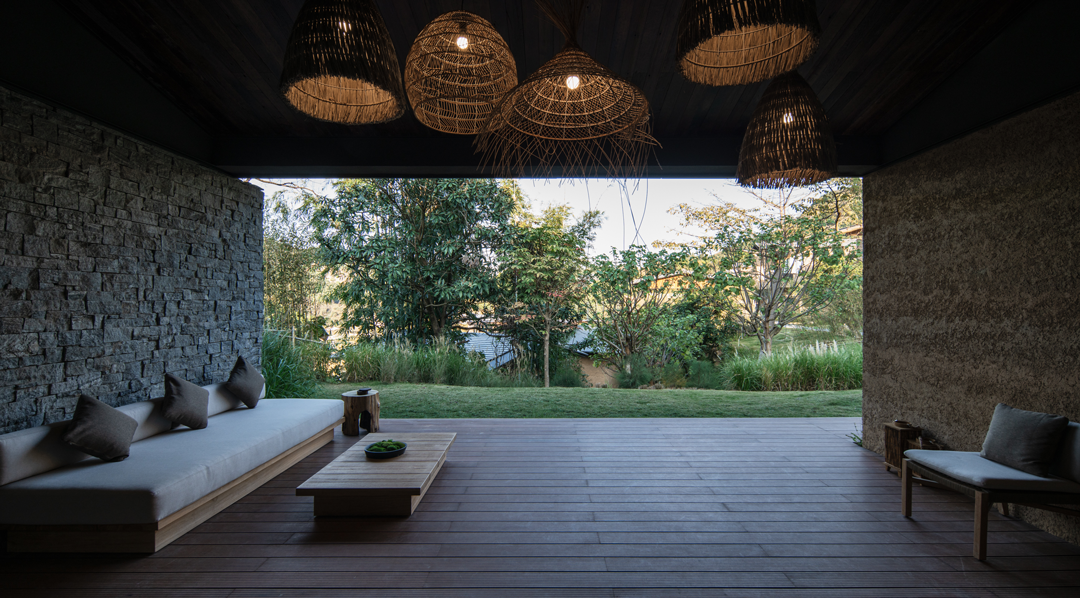
In the public areas, original village structures are repurposed to accommodate functions like the lobby, dining rooms, and private suites. The use of lightweight steel frameworks and glass façades not only enhances thermal comfort but also facilitates a fluid interaction between the buildings and the village landscape, fostering a seamless architectural dialogue.
06
Conclusion
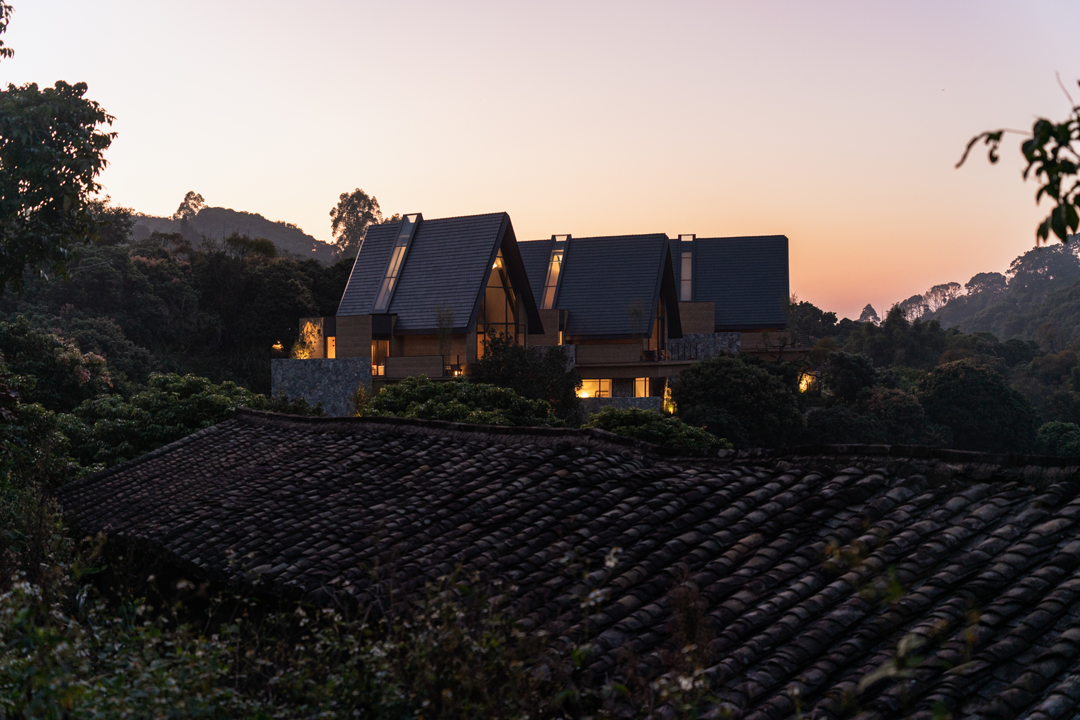
Before we unfold the expansive panorama of Yaoshan, with Ji Yun Yao nestled seamlessly within the mountains. The vision of line+ extends beyond the creation of a mere resort; it aspires to embark on a profound exploration of the interplay between tradition and modernity, nature and architecture. This project also serves as a dynamic re-evaluation of the relationship between urban and rural spheres.
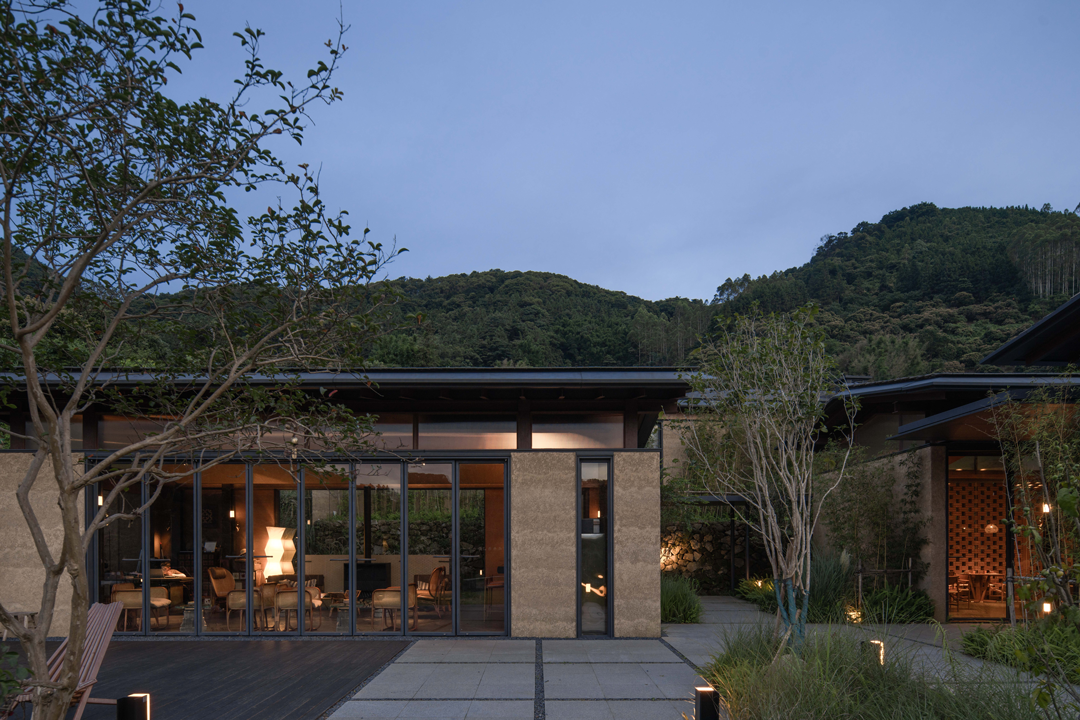
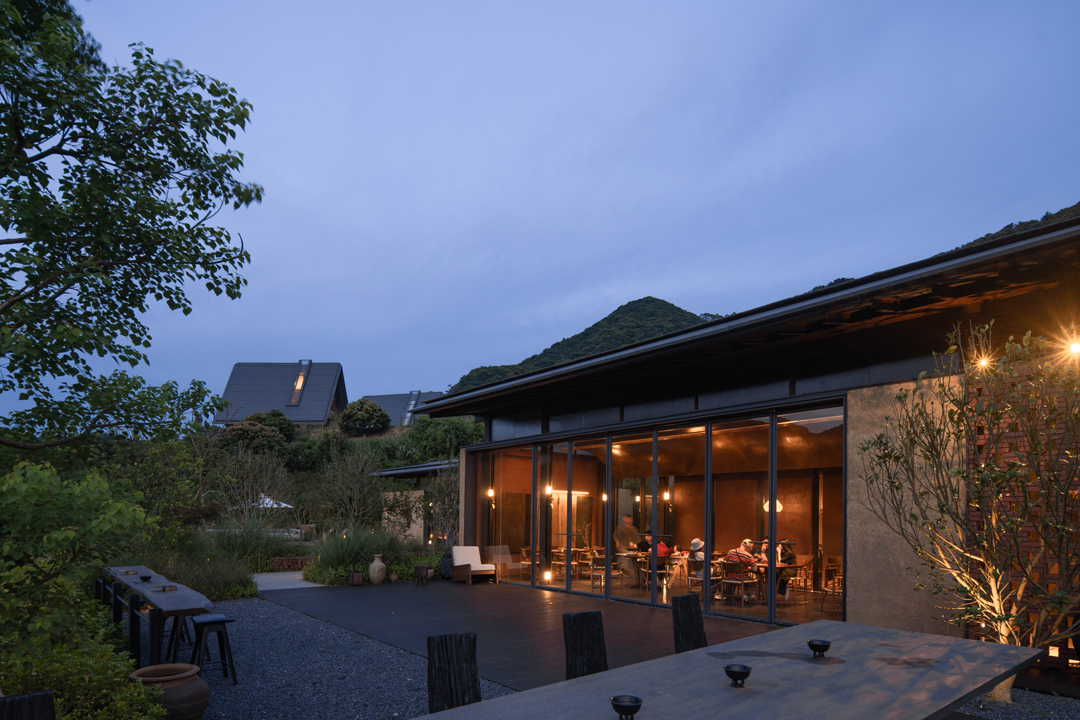
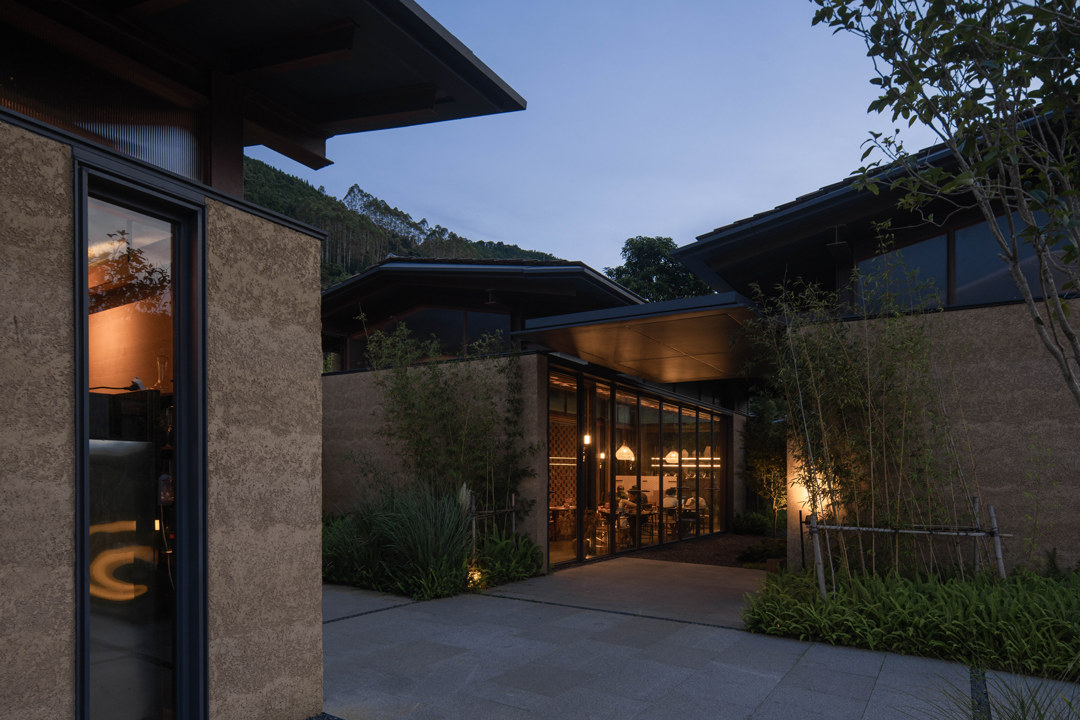
Our aim is to craft a rich sensory journey and a variety of immersive environments, providing modern urban dwellers with a serene retreat that fosters a renewed connection to nature. Here, the countryside transcends its role as an antithesis to the city, becoming a cultural, emotional, and lifestyle bridge that fulfils the contemporary desire for tranquillity and a sense of belonging.
Drawings
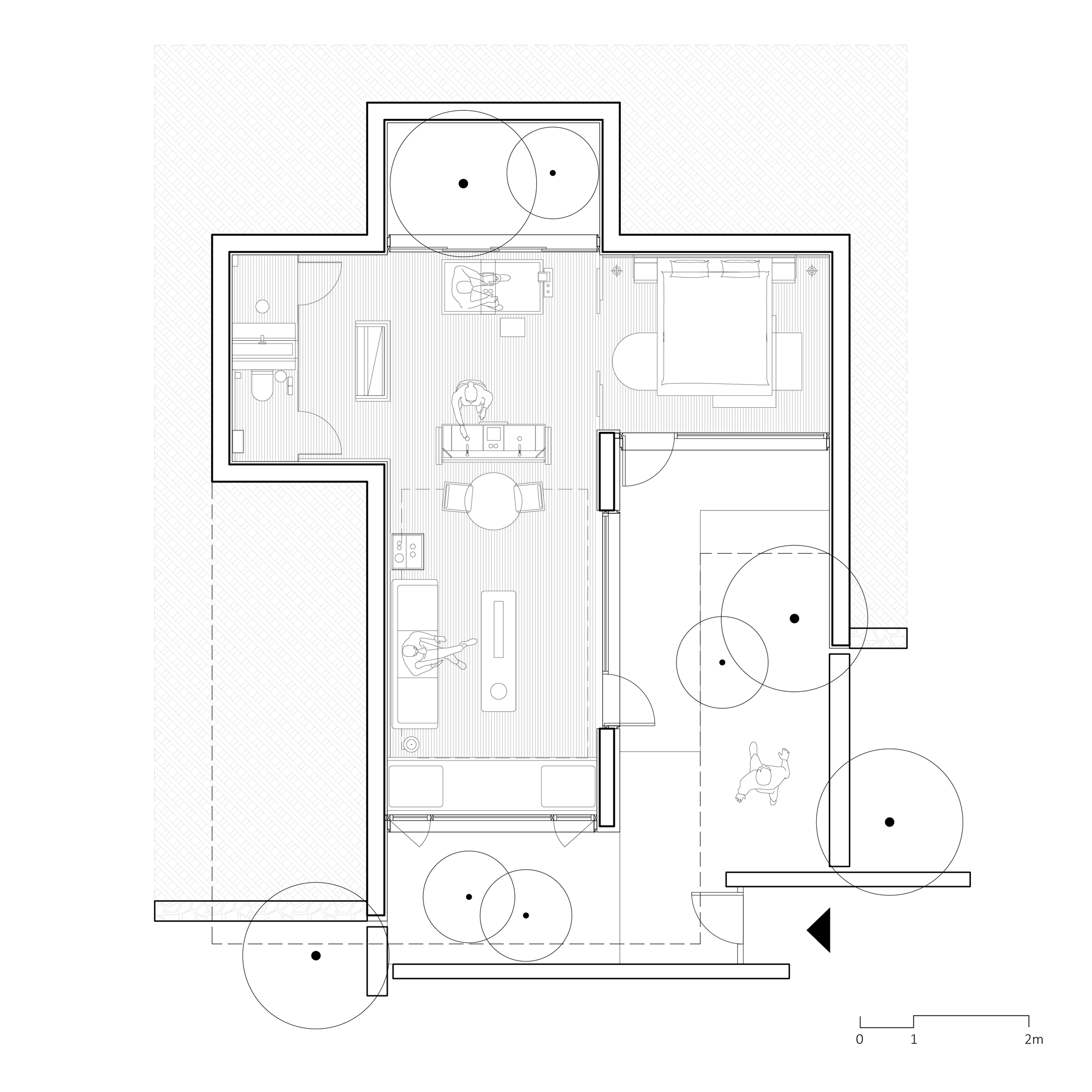
△ Typical Room Plan 2