


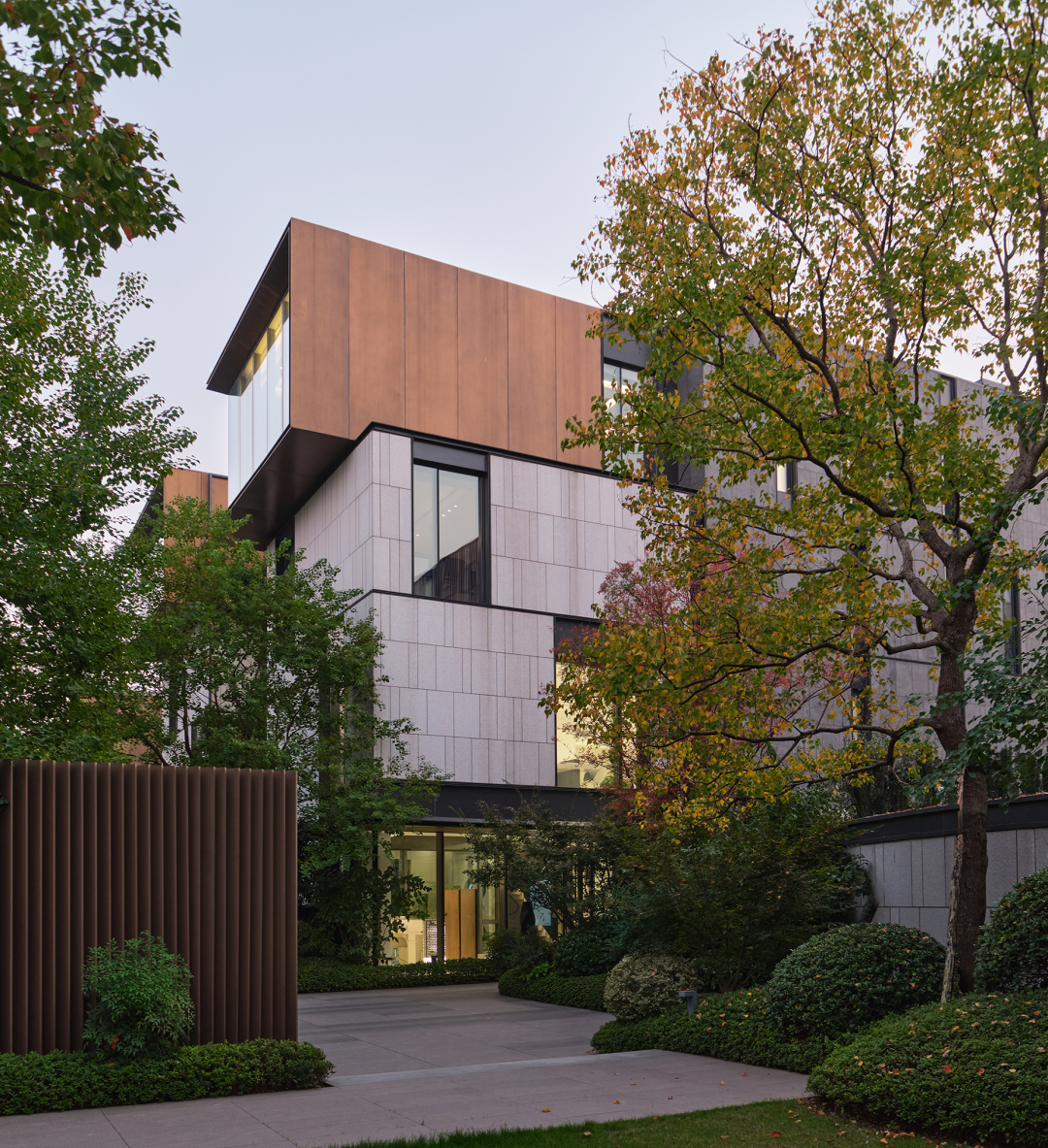
"XIXI‘IN is a spatial experiment in high-density, multi-scenario integration. Situated at the intersection of urban infrastructure and natural ecology, the project folds the densely woven hydrological patterns of the Xixi Wetland into the site itself. Through a modular, grid-based architectural layout, it engages in a dialogue with the surrounding ecological fabric."
— Meng Fanhao
Project Name: Hangzhou Moonstar XIXI'IN
Design Firm: line+ studio
Chief Architect / Project Principal: Meng Fanhao
Project Lead: Zhu Mingsong
Design Team: Su Kelun, Zhu Min, Zhu Xiaojing, Ding Jian, Zhang Erjia, Xu Tianju, Zhang Hanqi, Tu Dan, Xie Yuting, Shen Rui, Yuan Dong, Miao Chunle, Zhang Hongliang, Yang Xuejian, Liang Xi, Hu Qipin, Fan Zhen, Dai Shengxuan, Huang Yukun, Wang Xiaokun
Client: Moonstar Investment & Beijing Science and Technology Park Construction
Landscape Design (Phase 1): line+ studio
Design Team: Li Shangyang, Jin Jianbo, Rao Feier
Landscape Design (Phase 2): GTS
Construction Drawing Consultant: Zhejiang Industry Design & Research Institute Co., Ltd.
Location: Hangzhou, Zhejiang
Gross Floor Area: 82,515㎡(above ground), 169,073.6㎡(underground)
Design Period: 2019.05 – 2023.10
Construction Period: 2019.12 – 2024.05
Materials: Brushed aluminum panels, stone, ceramic panels, curtain wall glass
Photography: AOGVISION, line+, Chen Xi Studio
Designed by line+ studio’s Co-Founder& Chief Architect Meng Fanhao, the Hangzhou Moonstar XIXI'IN topped commercial real estate transactions in Hangzhou in February, with Q1 sales exceeding RMB 800 million. The block-style campus consists of 71 three- to four-story garden villas, crafted to accommodate a new hybrid model of work and living. Initiated in 2019 and spanning the era of the pandemic, the project also invites reflection: What defines an ideal live-work environment today? How should the boundaries between life and work be redefined?
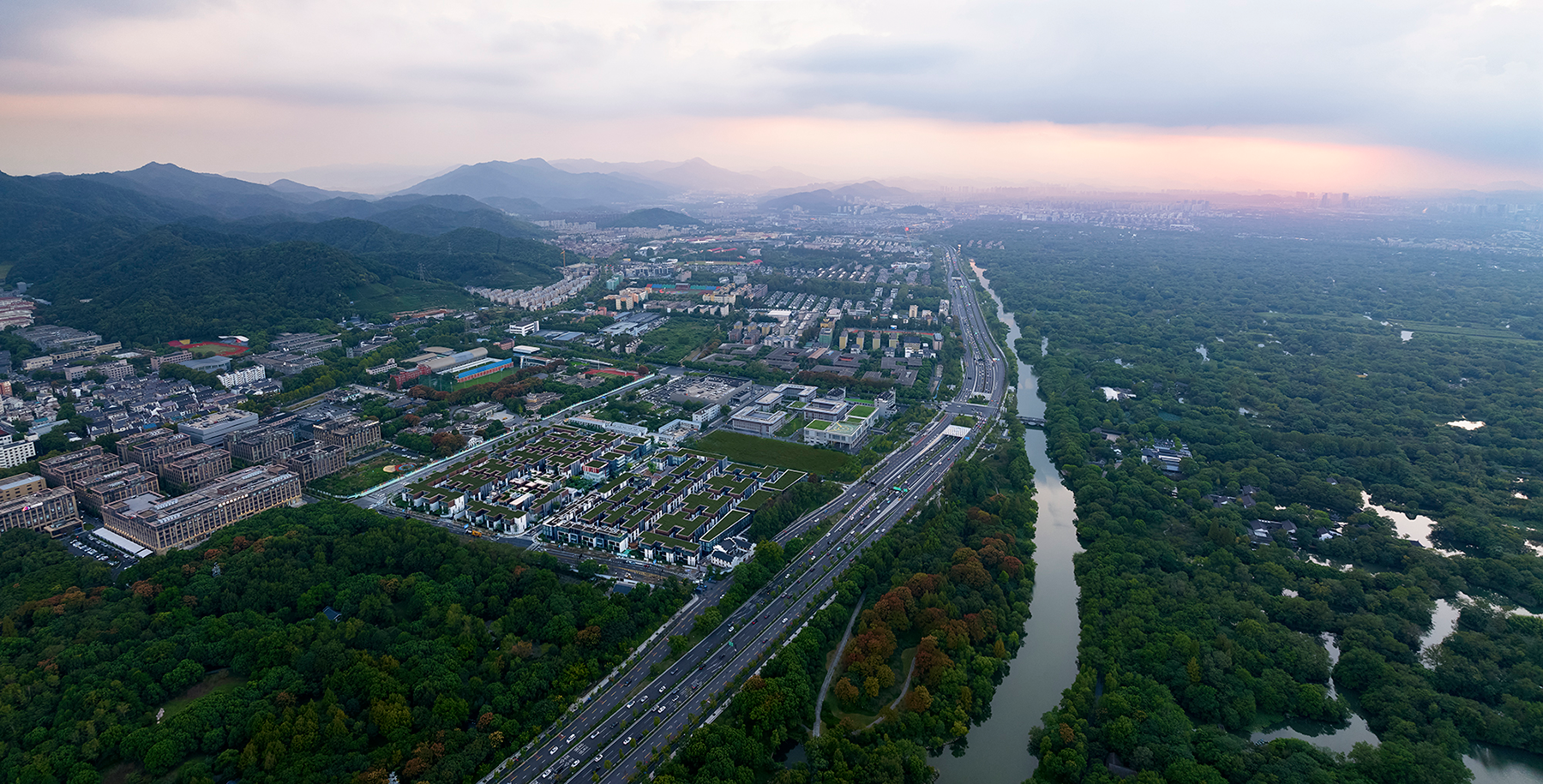
Situated just north of the Xixi Wetland and facing the southern West Lake mountain range, XIXI'IN occupies a strategic location at the forefront of Hangzhou's Internet Finance Hub and the western Innovation Corridor. Its unique ecological setting and urban prominence naturally elevate expectations for its spatial and architectural quality.
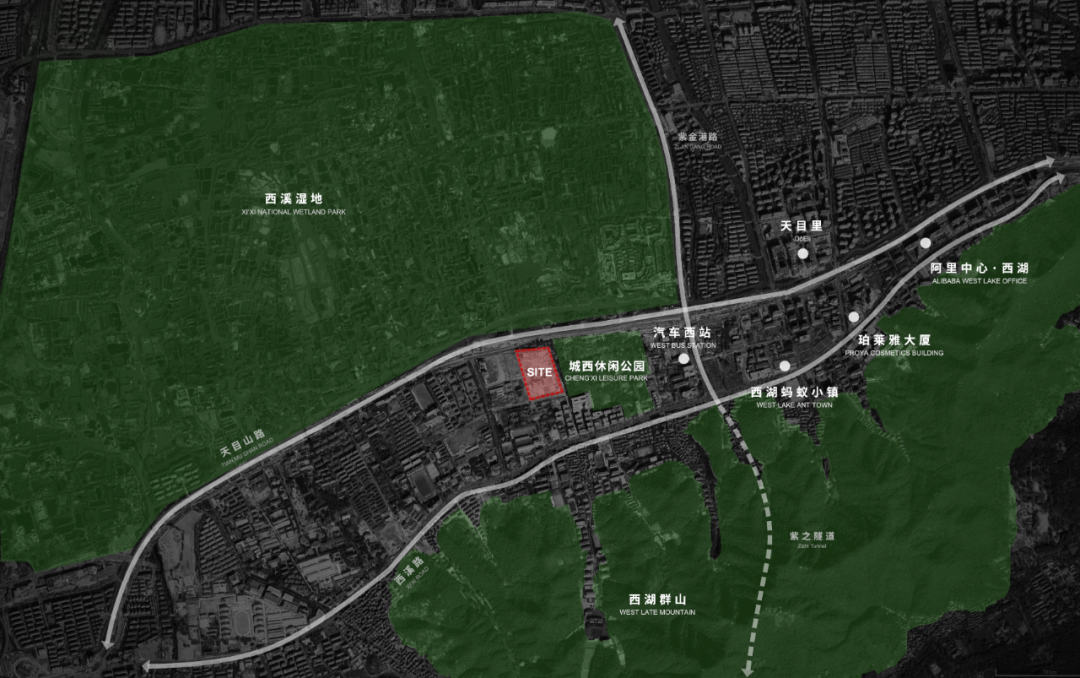
△ Location analysis
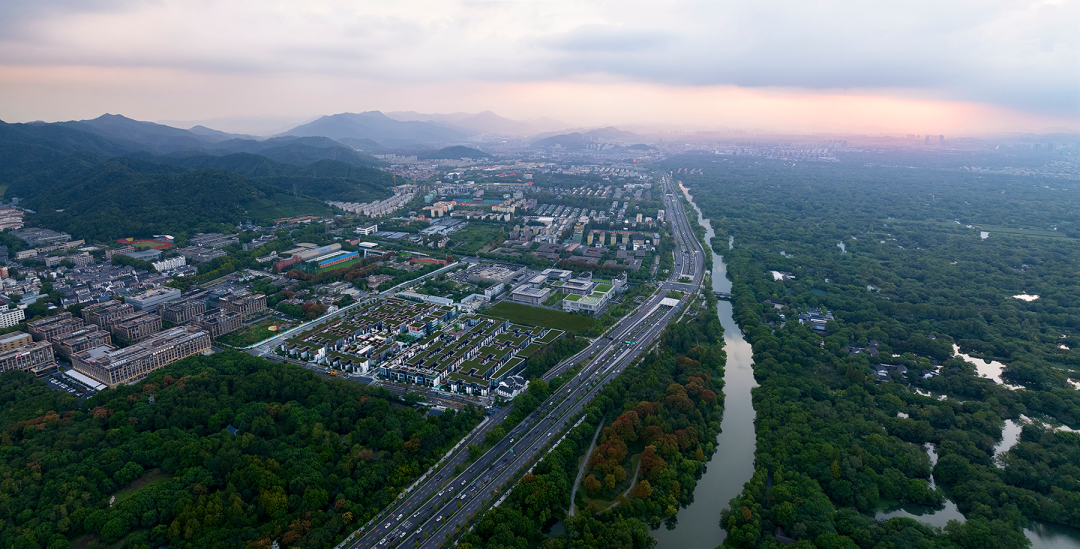
For the architects, the primary challenge came from the site's rigid constraints: a maximum FAR of 1.4 and height limit of 16 meters. Within these tight parameters, the design had to meet hybrid live-work functions while ensuring a comfortable spatial scale, privacy, and public vibrancy. It also needed to balance brand identity, coherent district recognition, construction costs, and architectural quality.
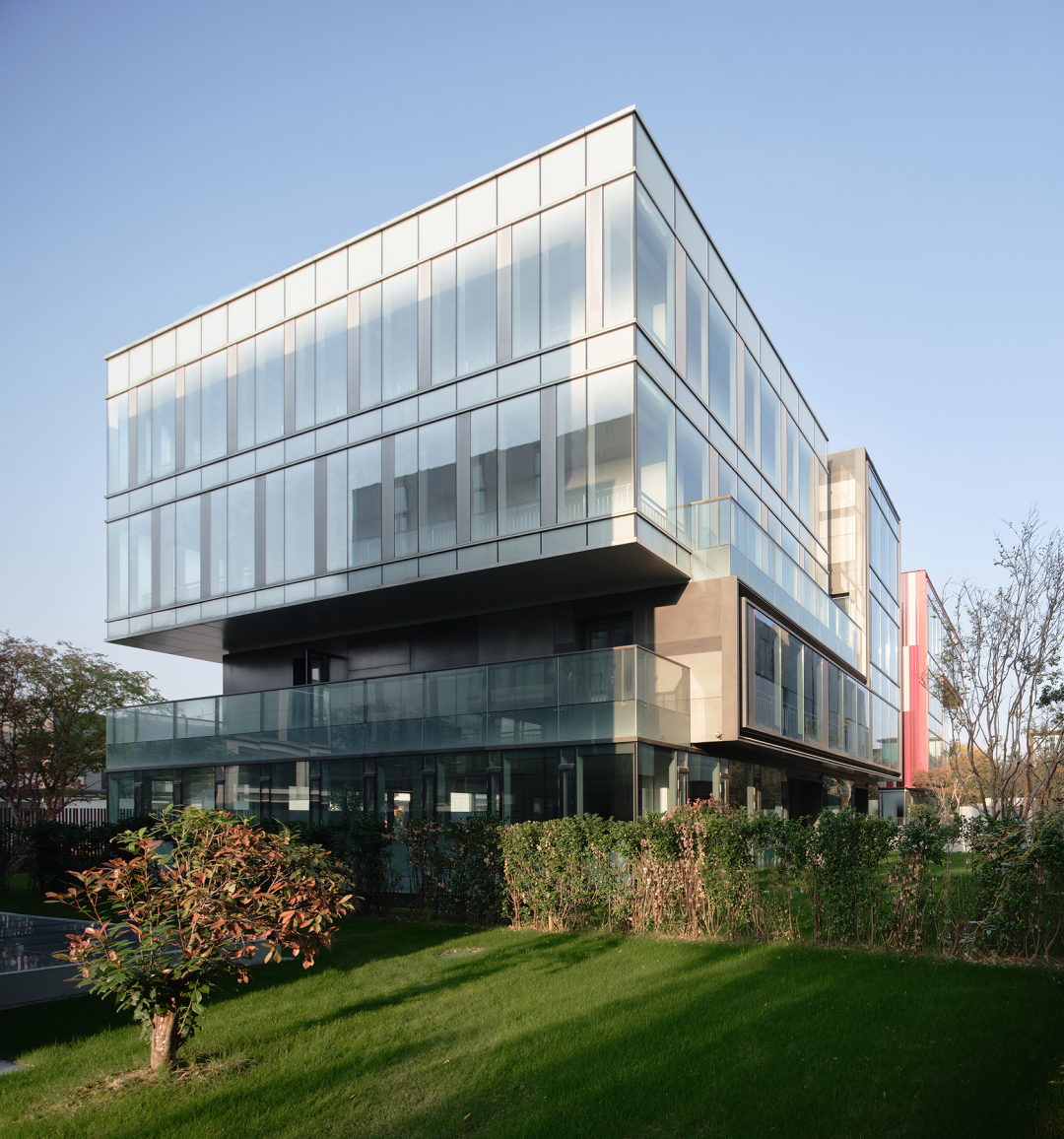
Inspired by the self-organizing model of the Xixi Wetland's water network, the team developed a "flexible capacity grid" strategy. This translated the ecological logic into an architectural layout system defined by: establishing a grid, allocating capacities, and introducing buffering connections. The result is an efficient, comfortable, and layered spatial experience tailored to a high-density urban context.
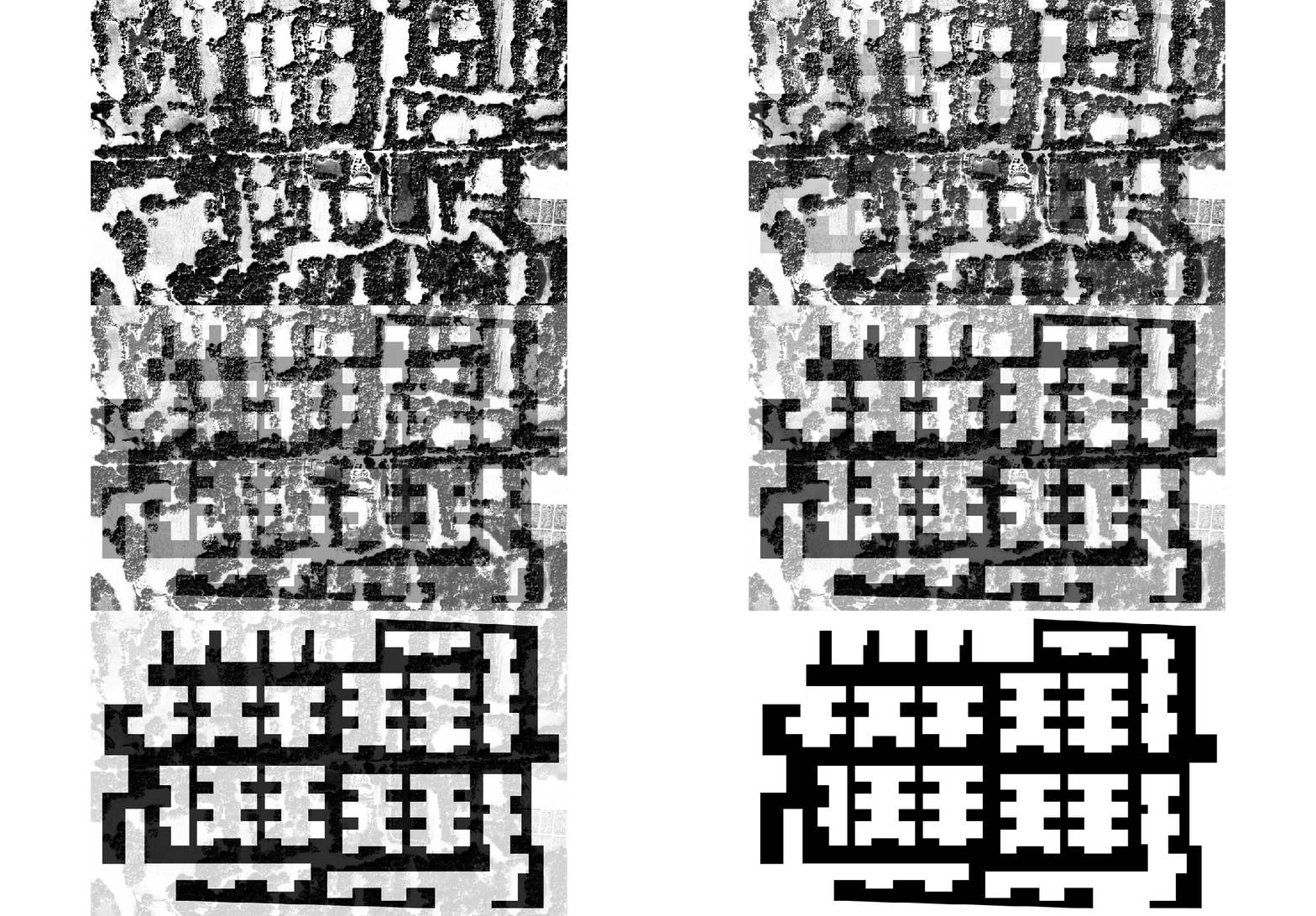
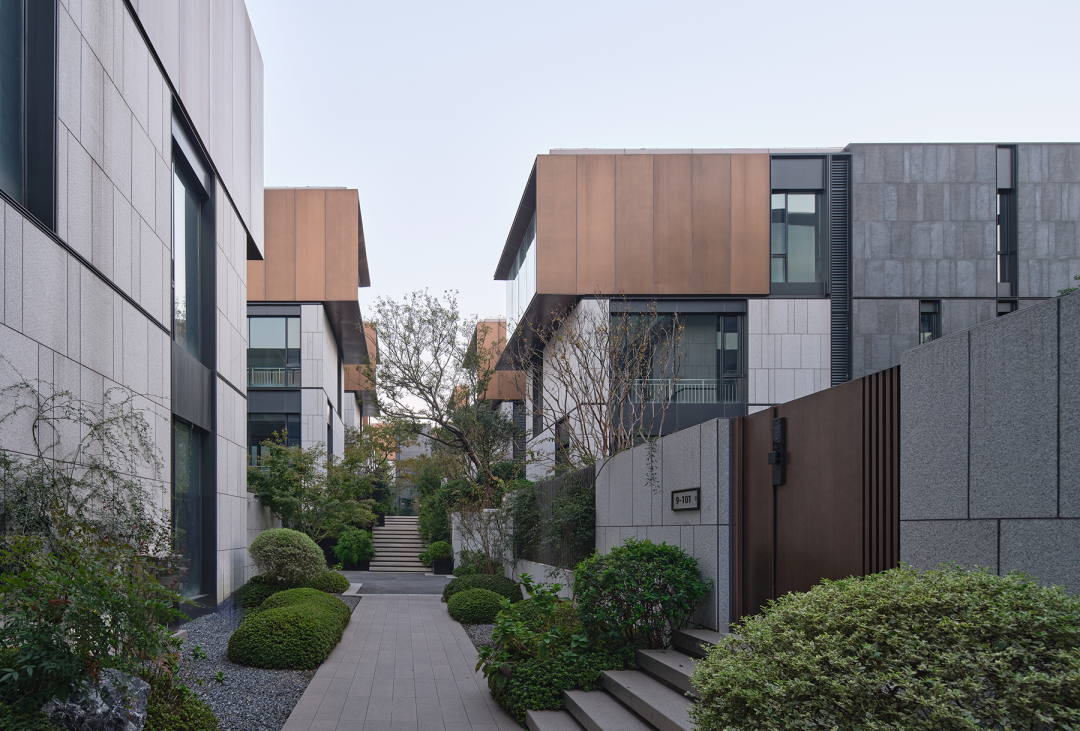
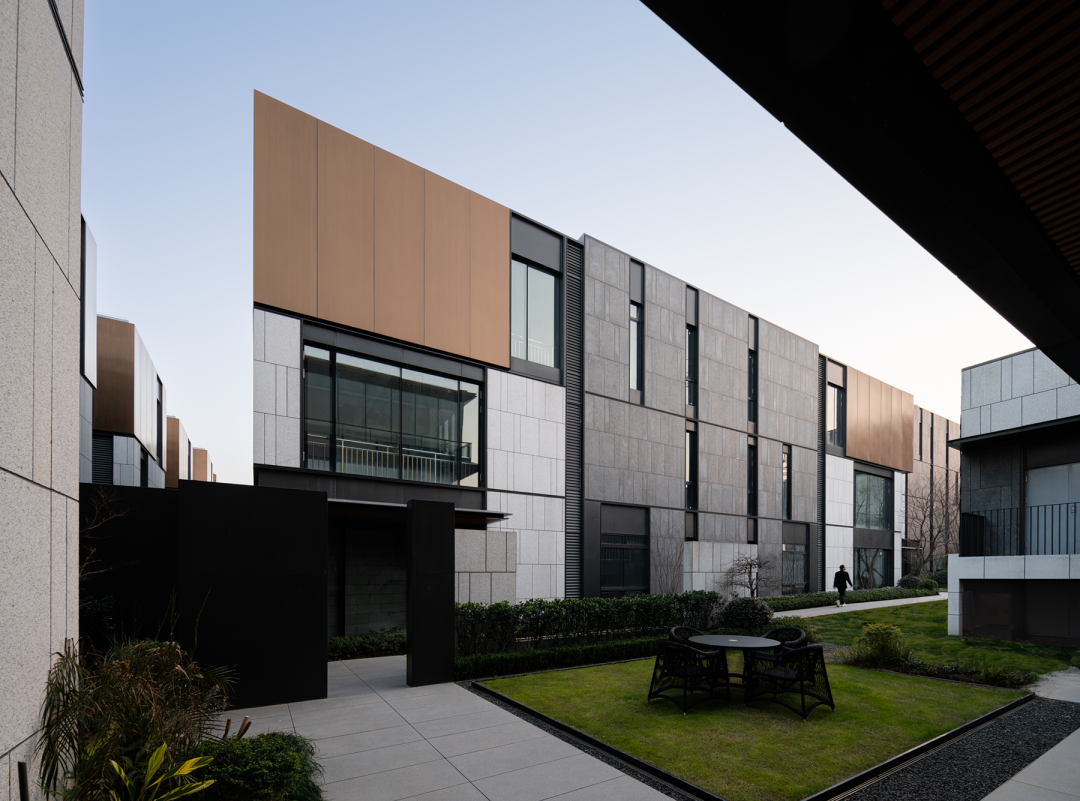
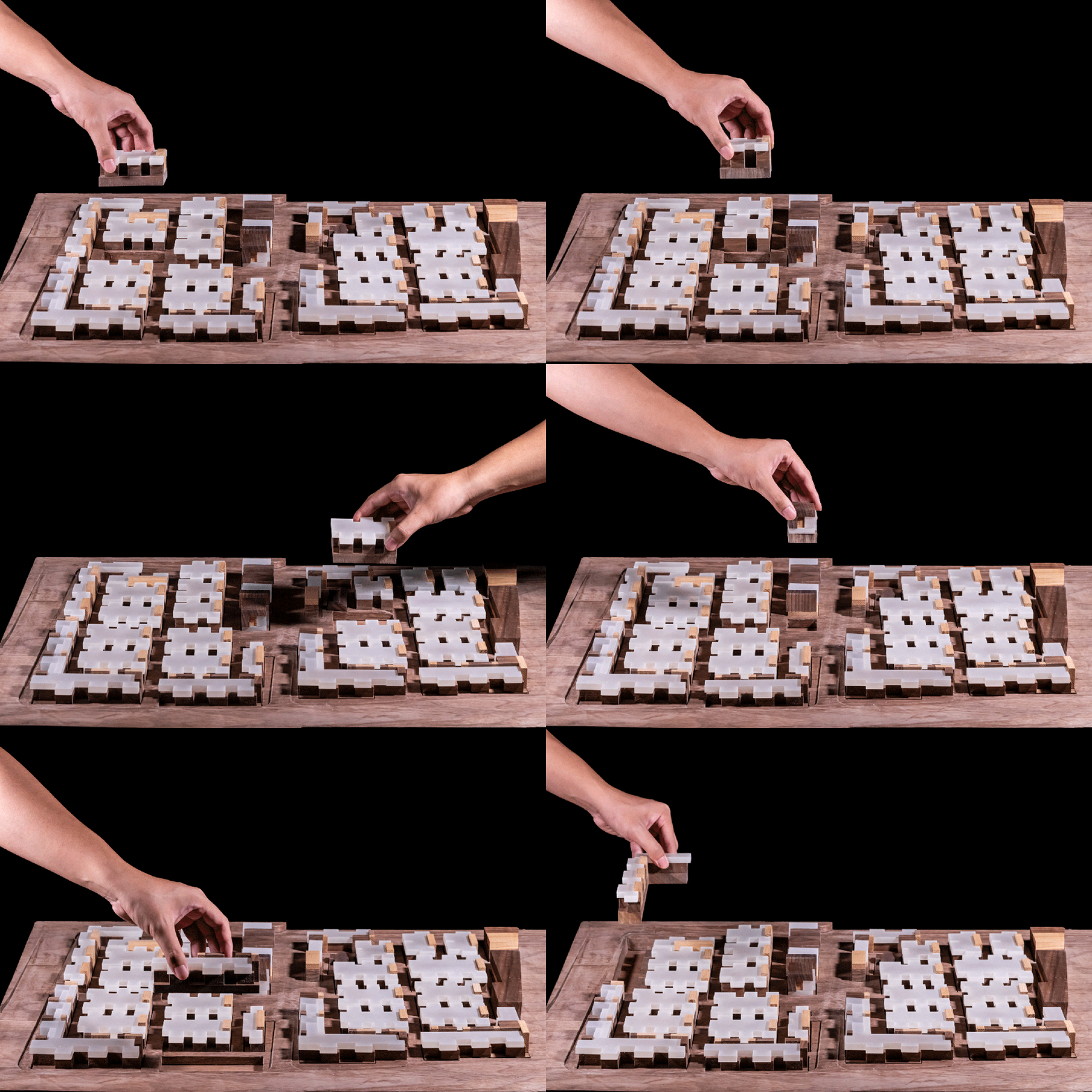
The site consists of two land parcels to the north and south, separated by a local street. In response to the 1.4 FAR requirement, the design introduces a 30–40m wide structural grid—a "network skeleton"—organizing the spatial hierarchy into primary lanes, secondary alleys, and pocket nodes. The layout maintains a continuous enclosure along the site perimeter, with private courtyards for internal groupings. L-shaped modules were developed from unit typologies and assembled into three interlocking configurations defined by linear, branching, and folded geometries.
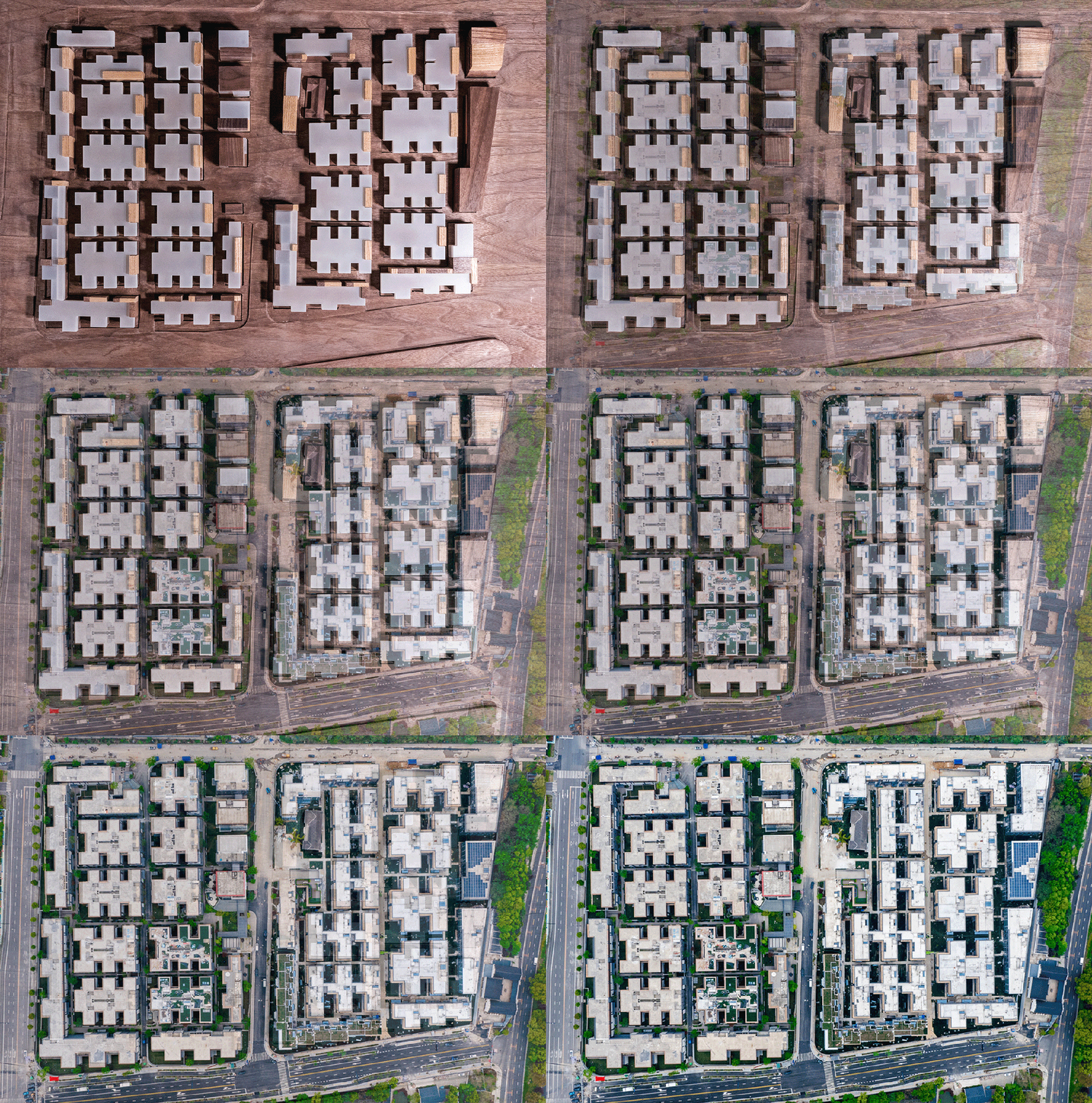
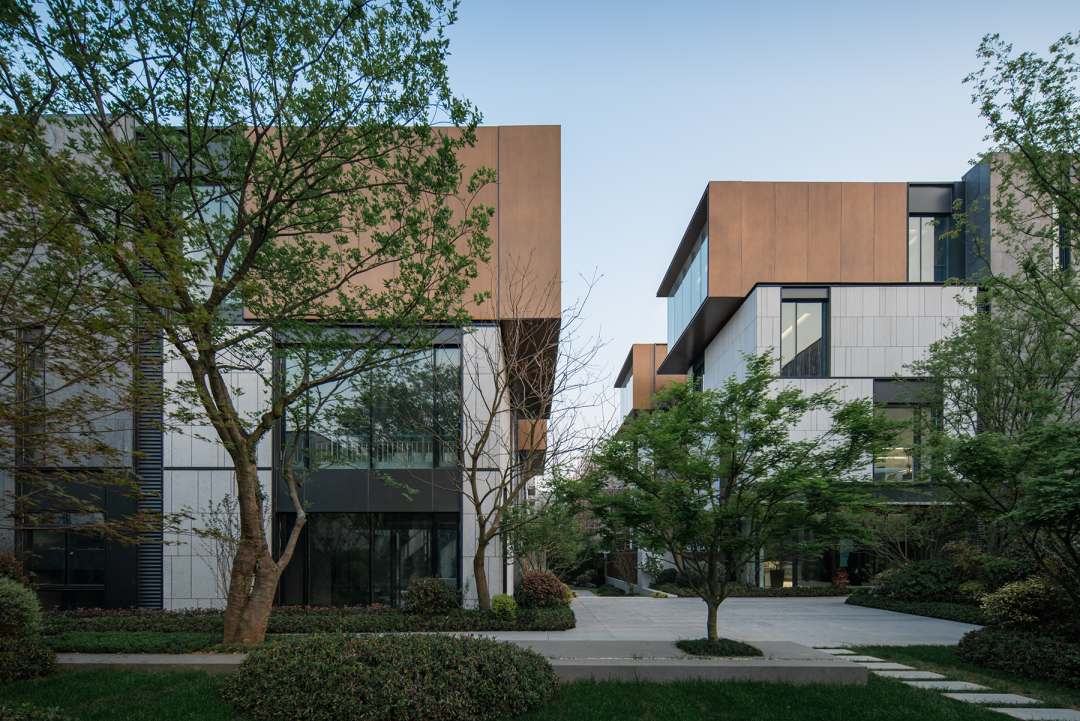
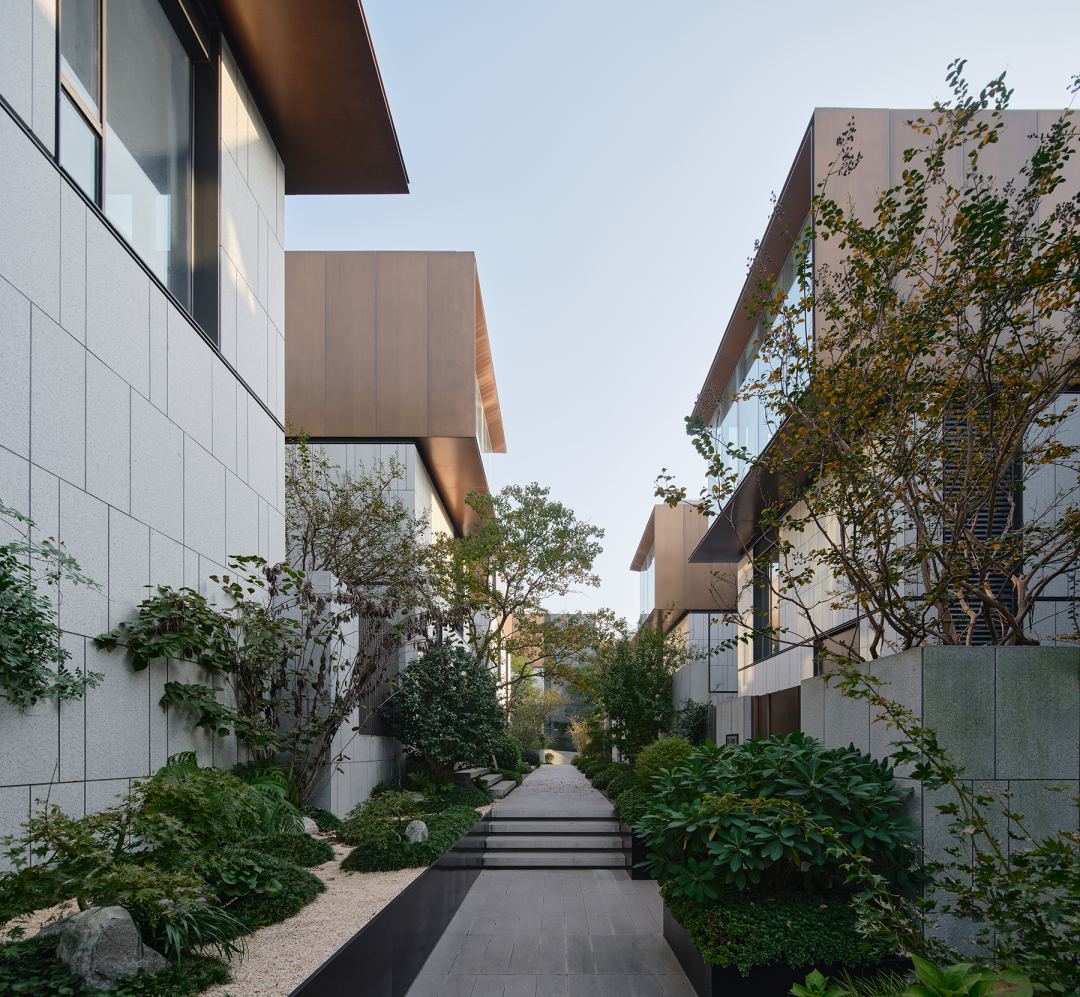
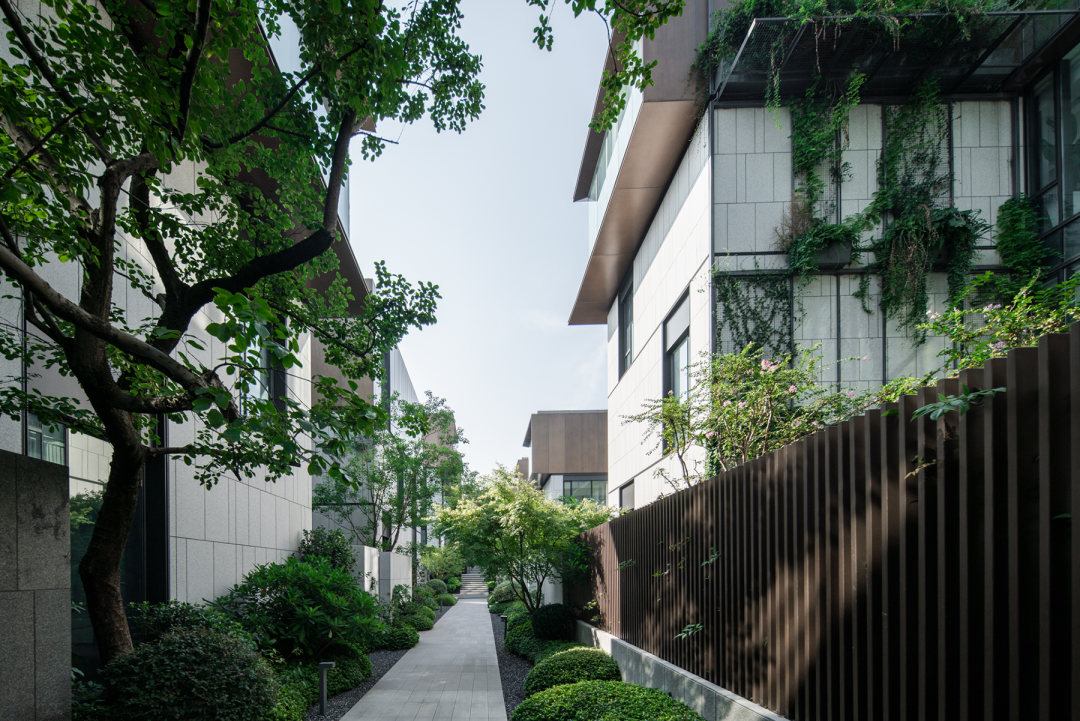
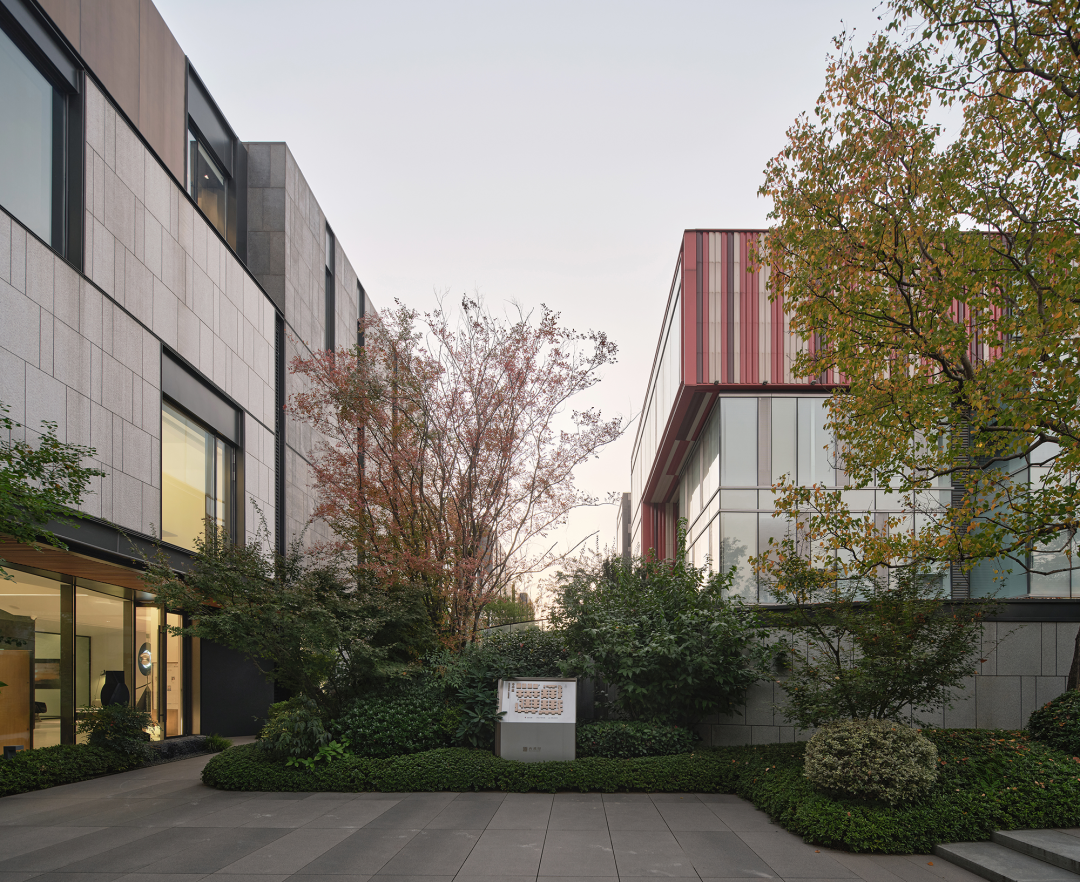
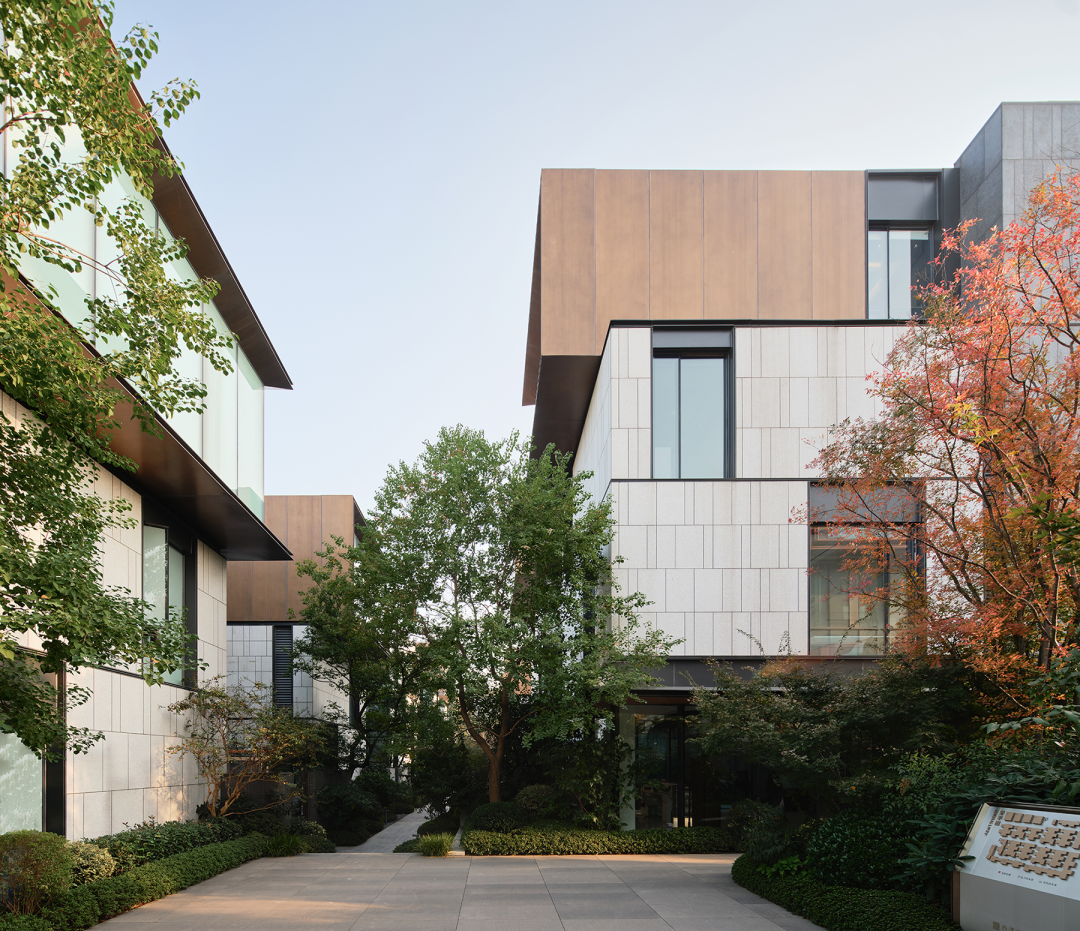
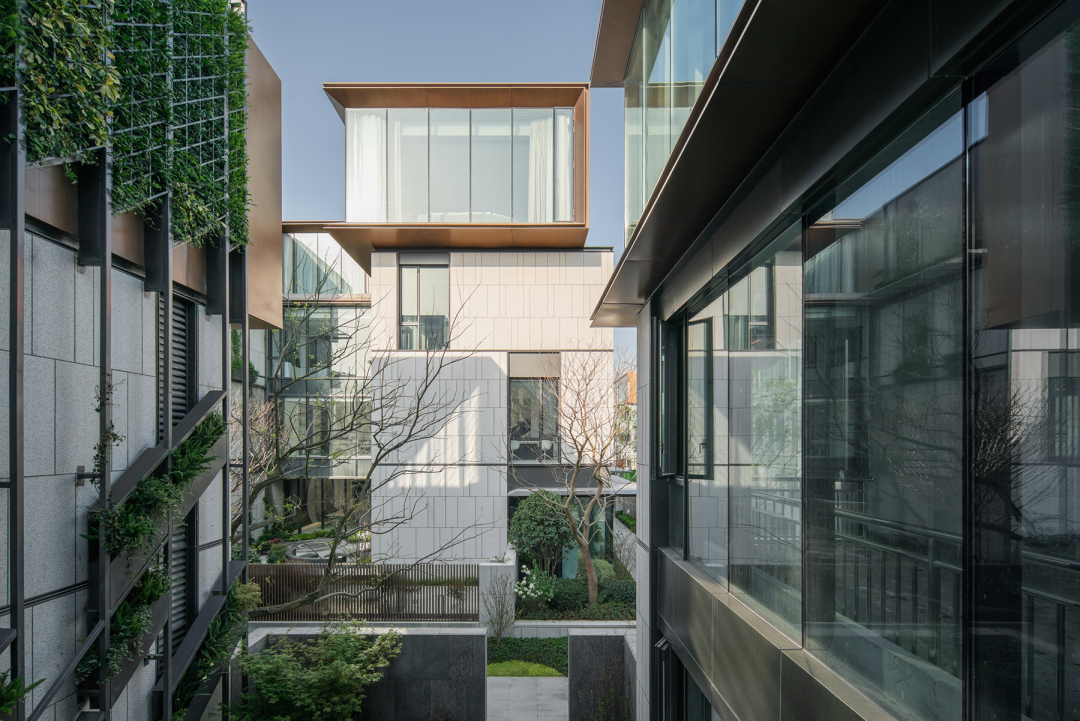
The interlocking modules connect public walkways with private gardens, forming "pocket courtyards" that visually interweave. Without occupying additional land, the design extends spatial boundaries, enabling fluid transitions and returning the spatial scale to a human-centric experience.
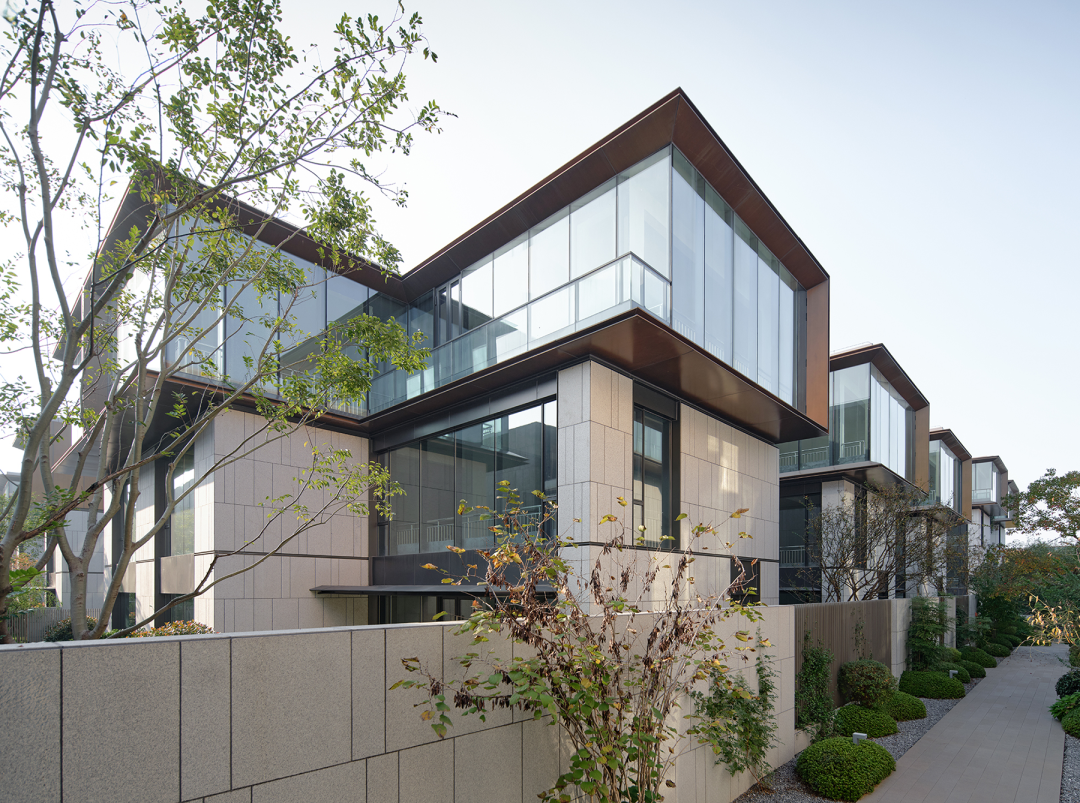
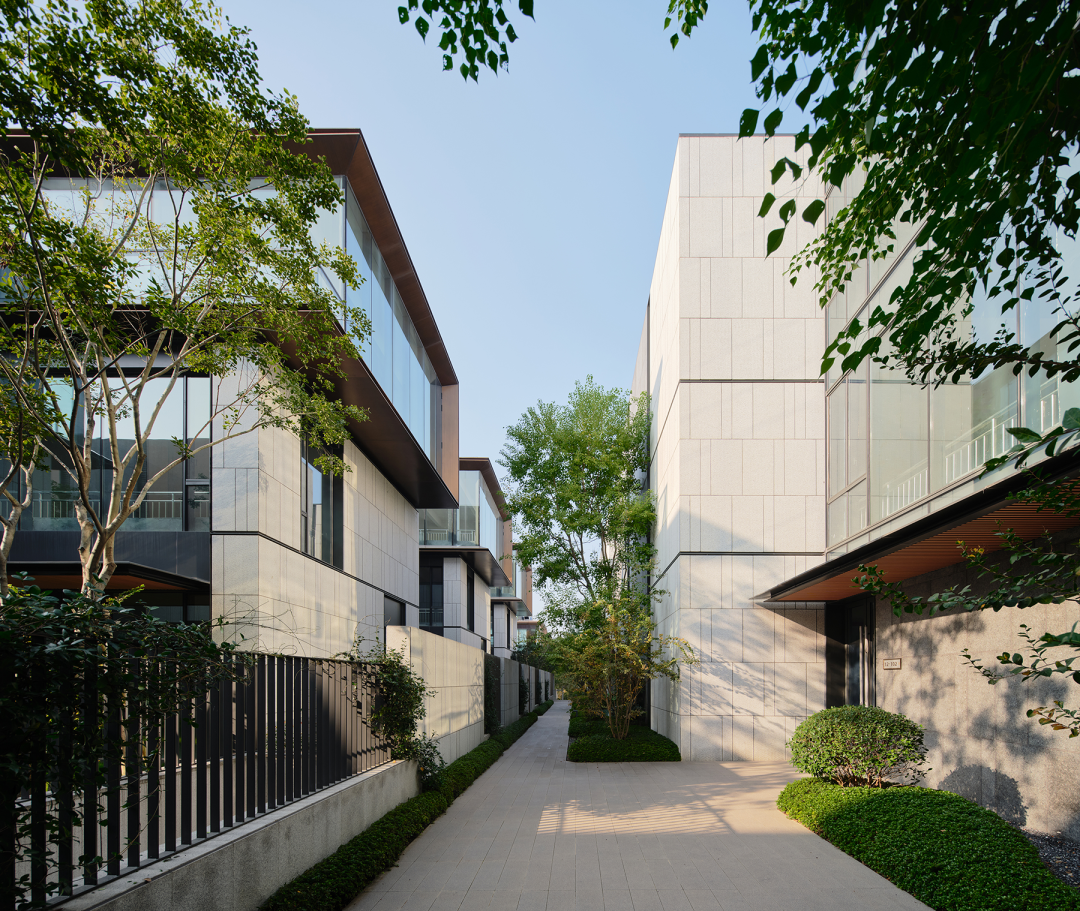
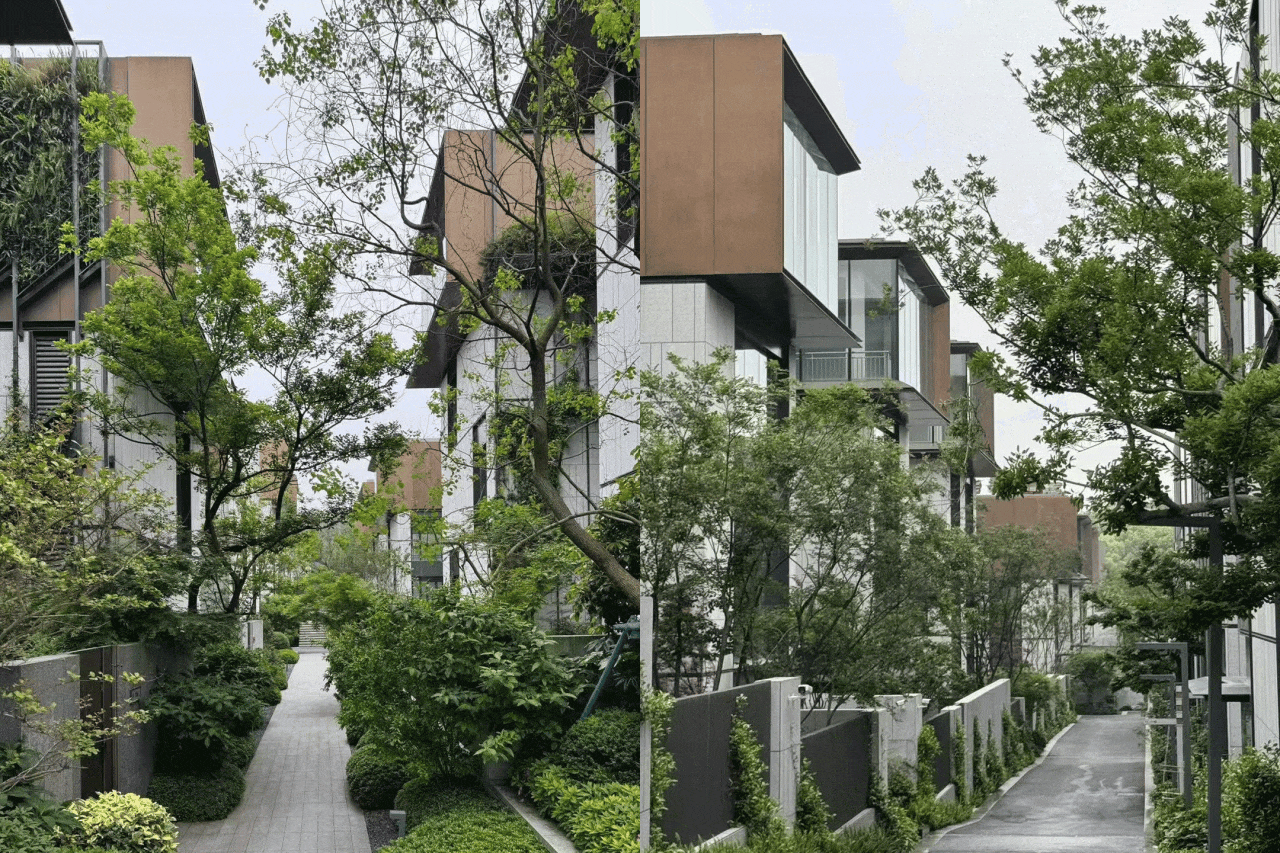
This variable and multi-scalar street landscape offsets the tension between density and spatial pressure. The north-south responding and inside-outside connecting layout not only organizes buildings and public realms but also aligns with the ecological corridors of Xixi Wetland, Uraban Park, and the foothills of West Lake.
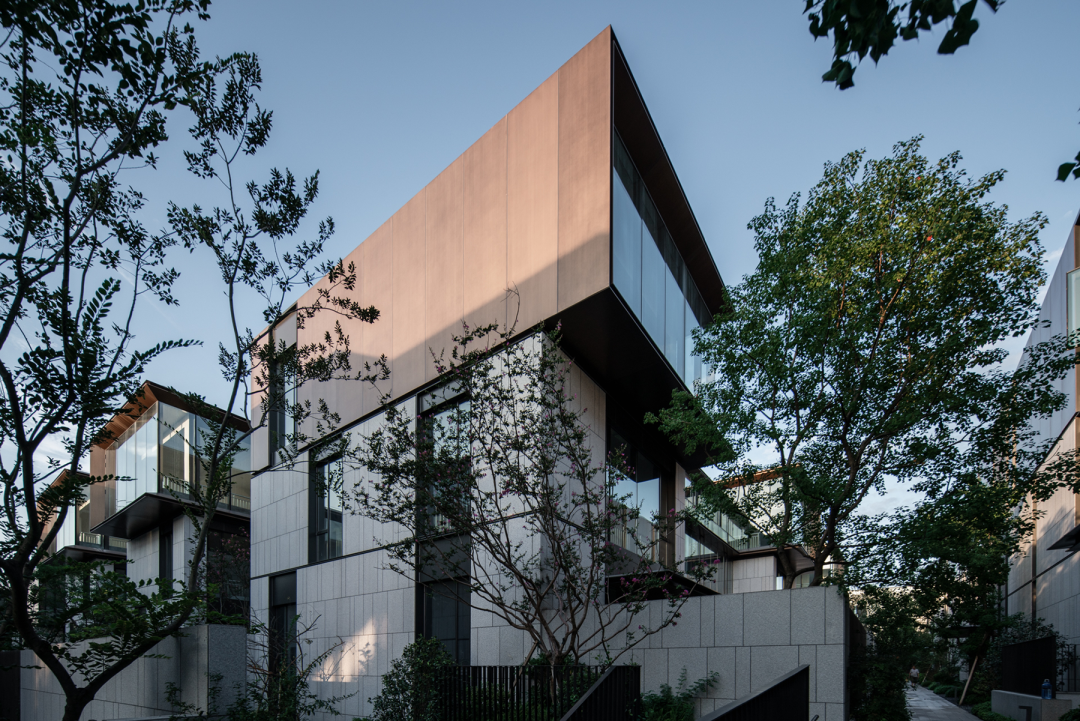
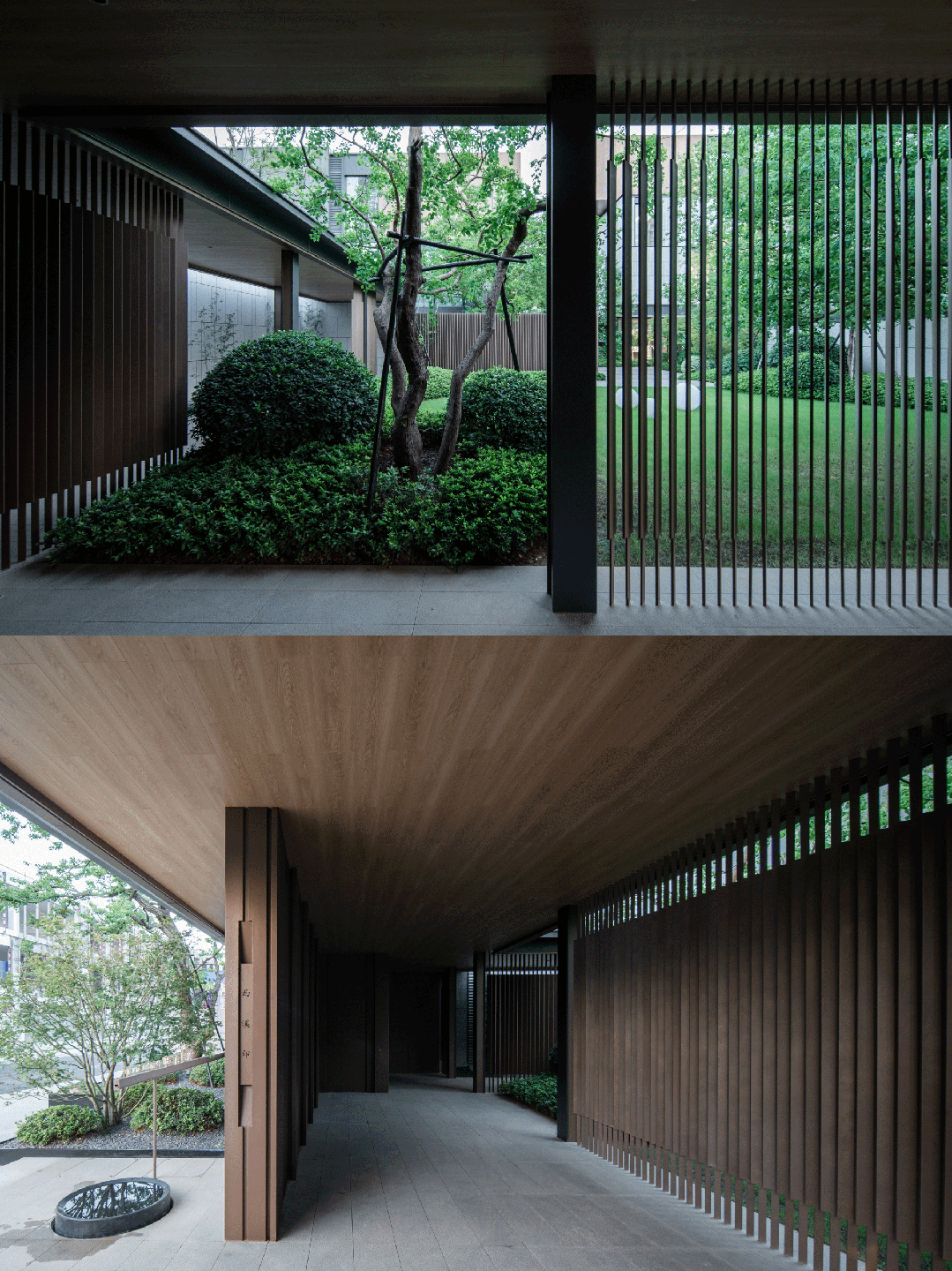
In response to the increasingly intertwined nature of work and life, the design dissolves conventional spatial boundaries to create highly integrated mixed-use environments. Each building blends commercial, clubhouse, office, and residential functions, accommodating the spatial needs of modern small-scale internet enterprises.
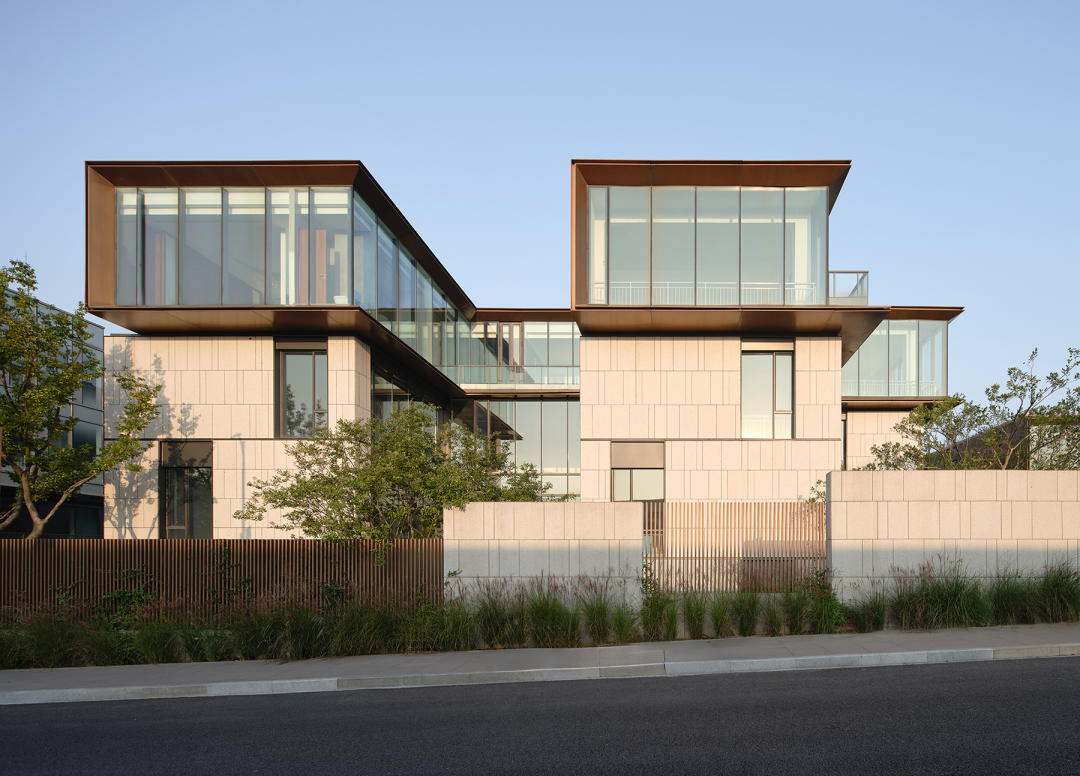
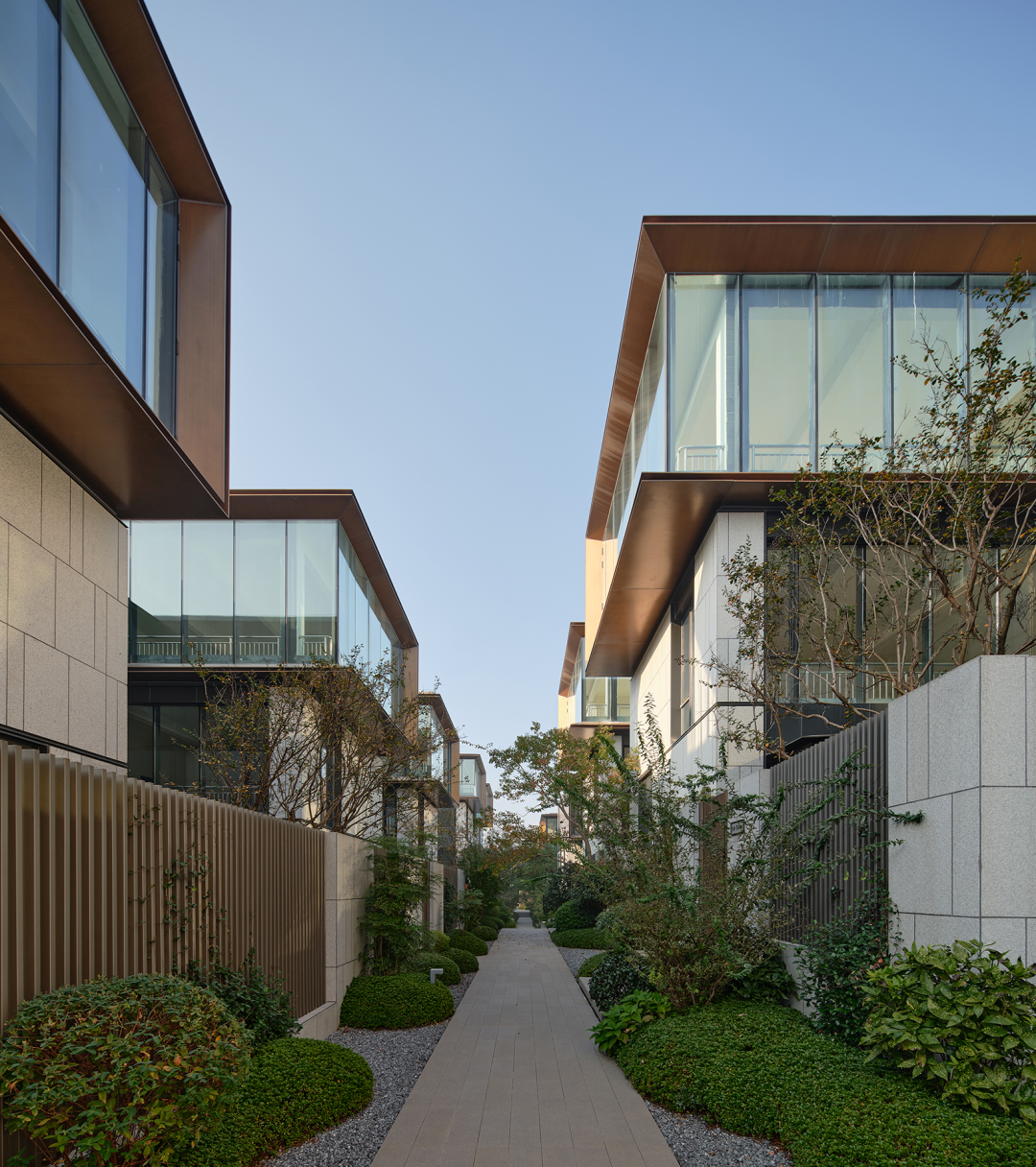
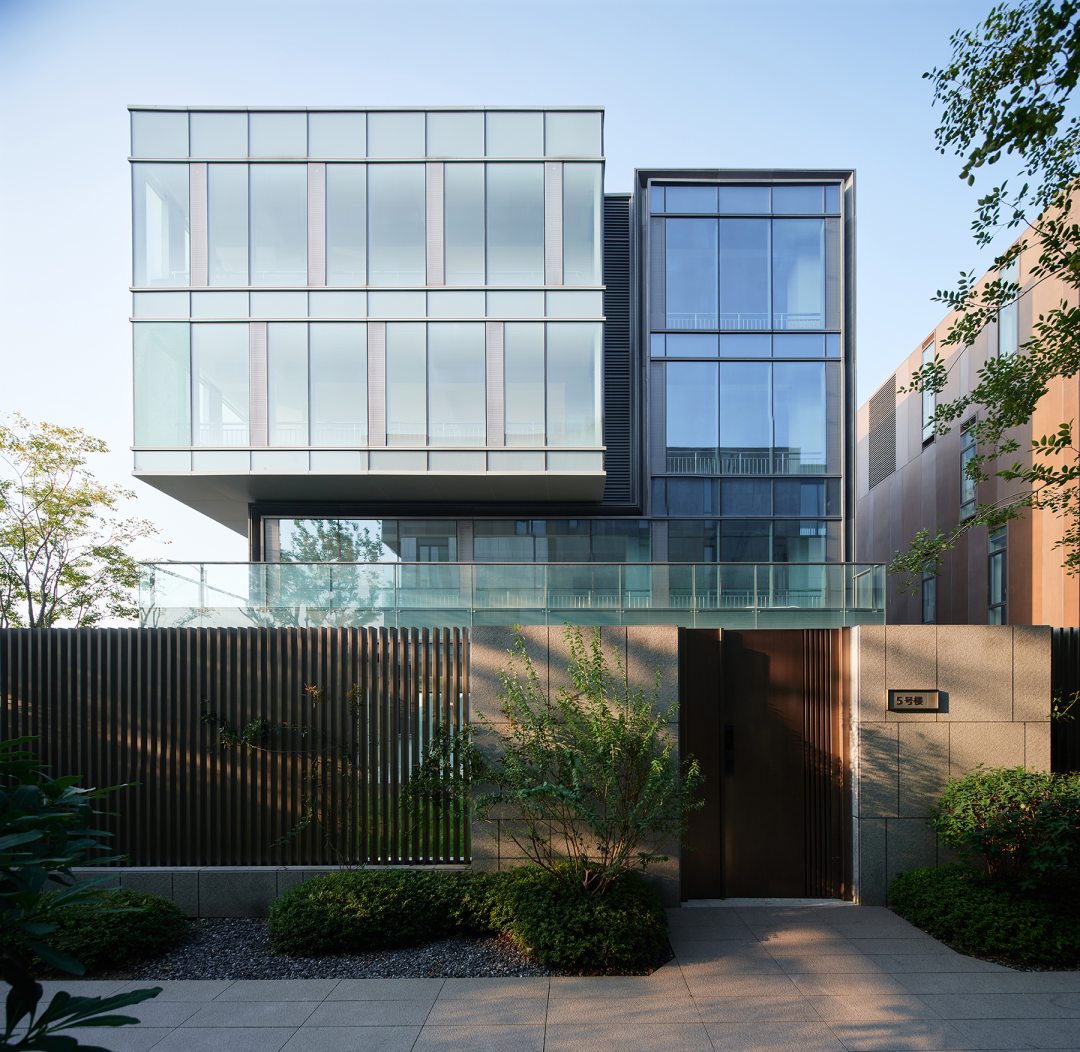
Each building features its own entrance and pedestrian pathway, framed by peripheral green buffers that establish a spatial progression from forecourt to lobby to private interior spaces.
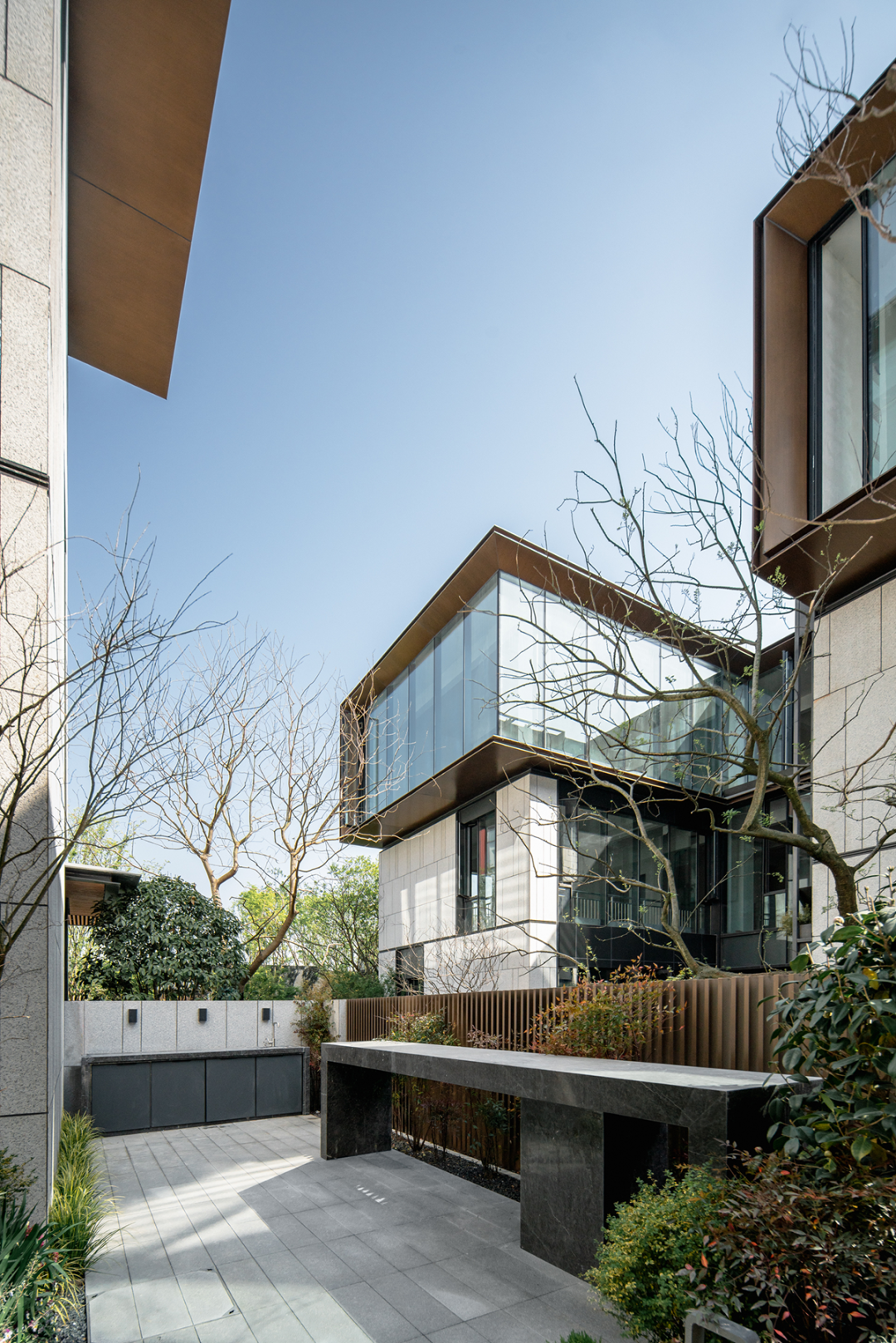
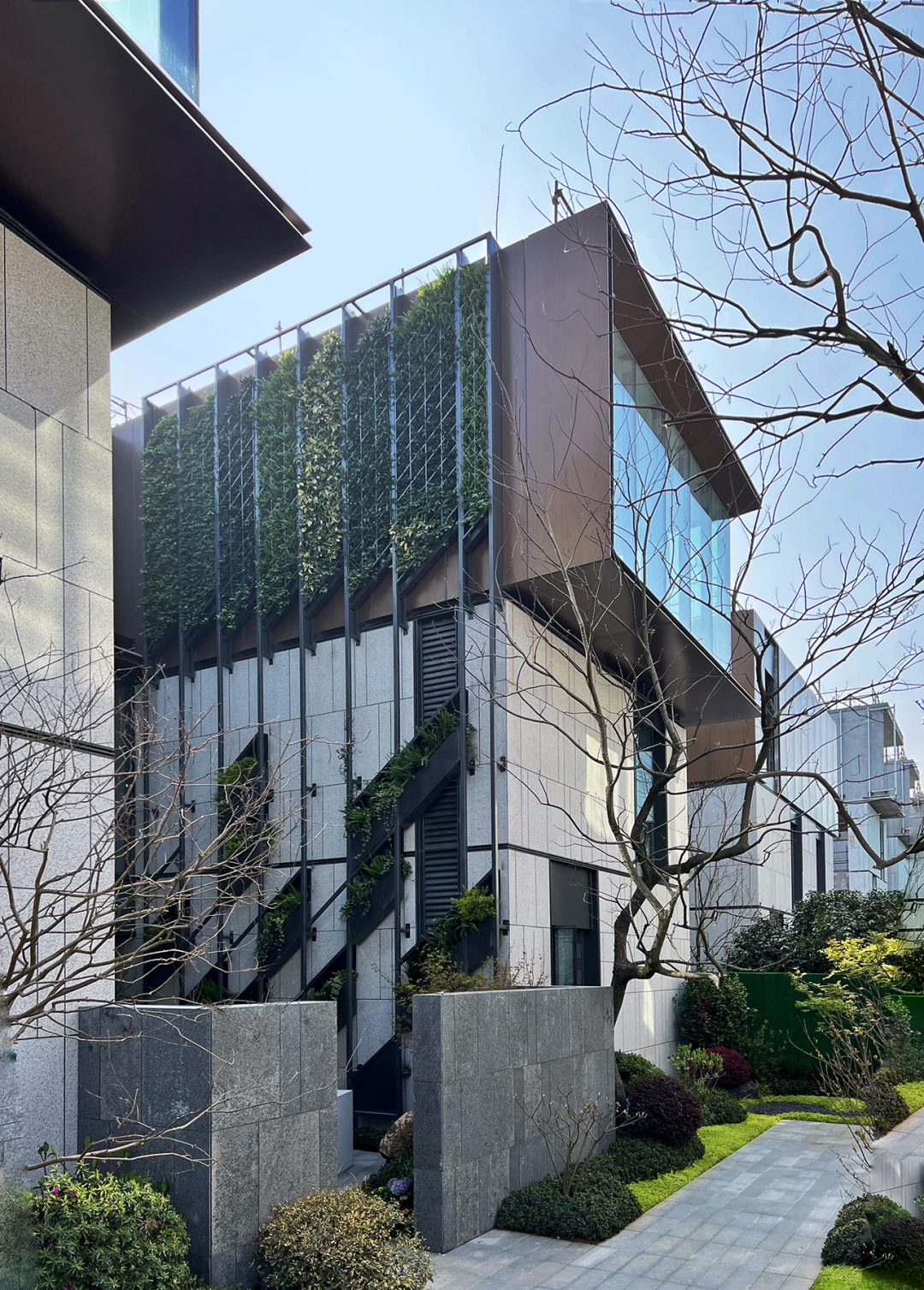
Vertical zoning reflects functional hierarchy: the basement level, with a 6.6-meter ceiling height, accommodates a multi-purpose showroom and clubhouse for reception, exhibition, and leisure. The ground floor houses the lobby and meeting rooms; the second and third floors are reserved for office use, with spatial independence for executives and staff; while the top floor serves as the private residence of the business owner—realizing a seamless “live above, work below” model.
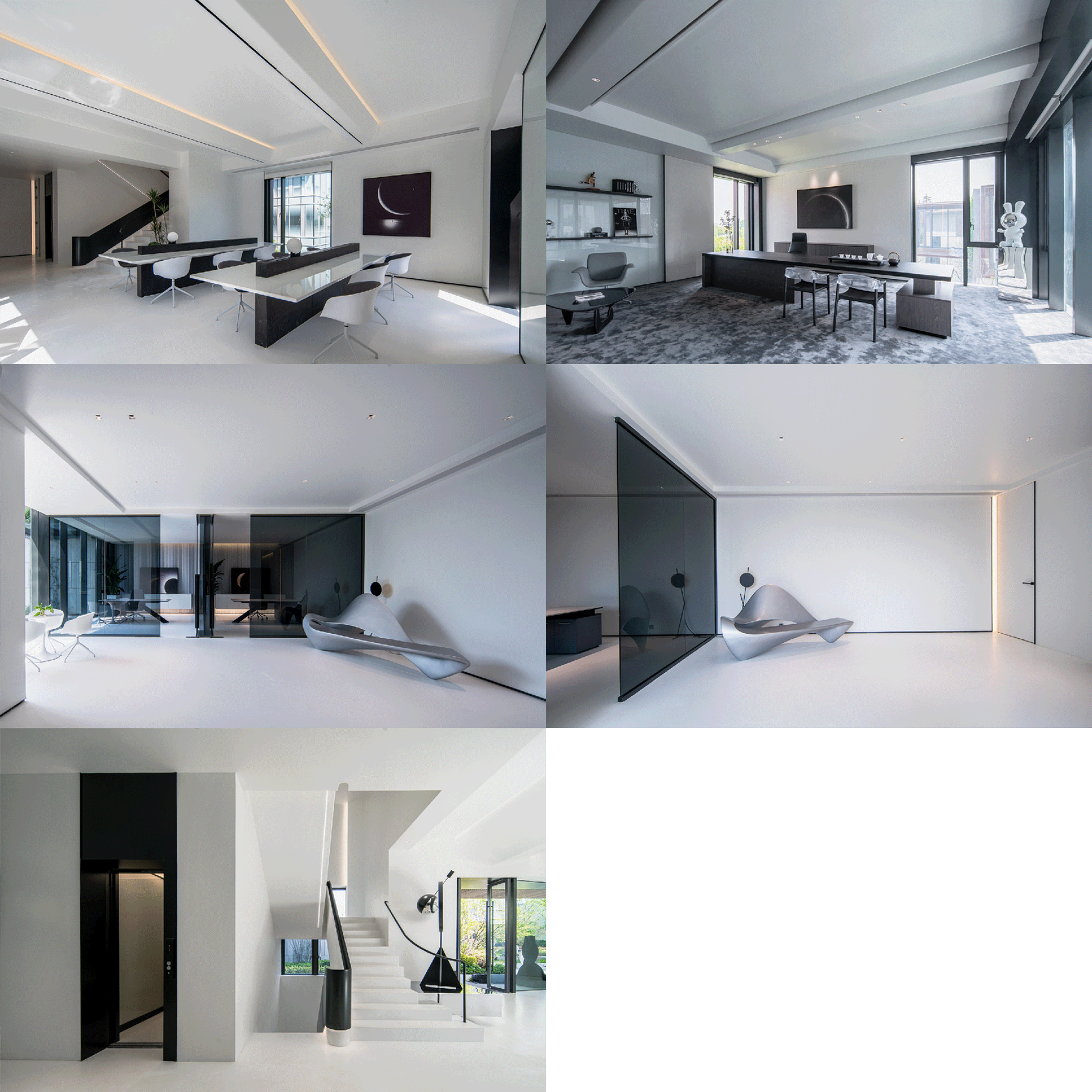
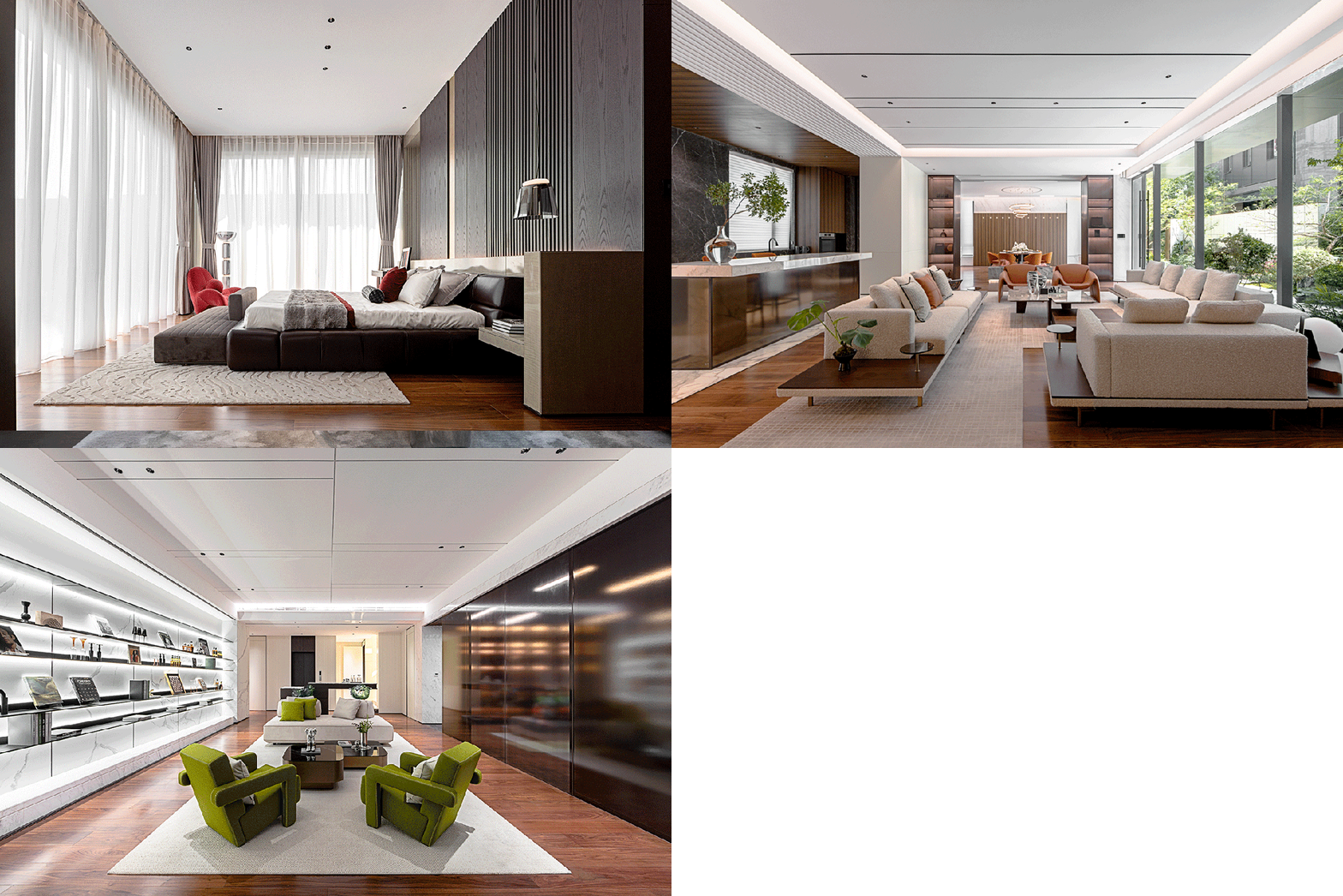
△ Living area
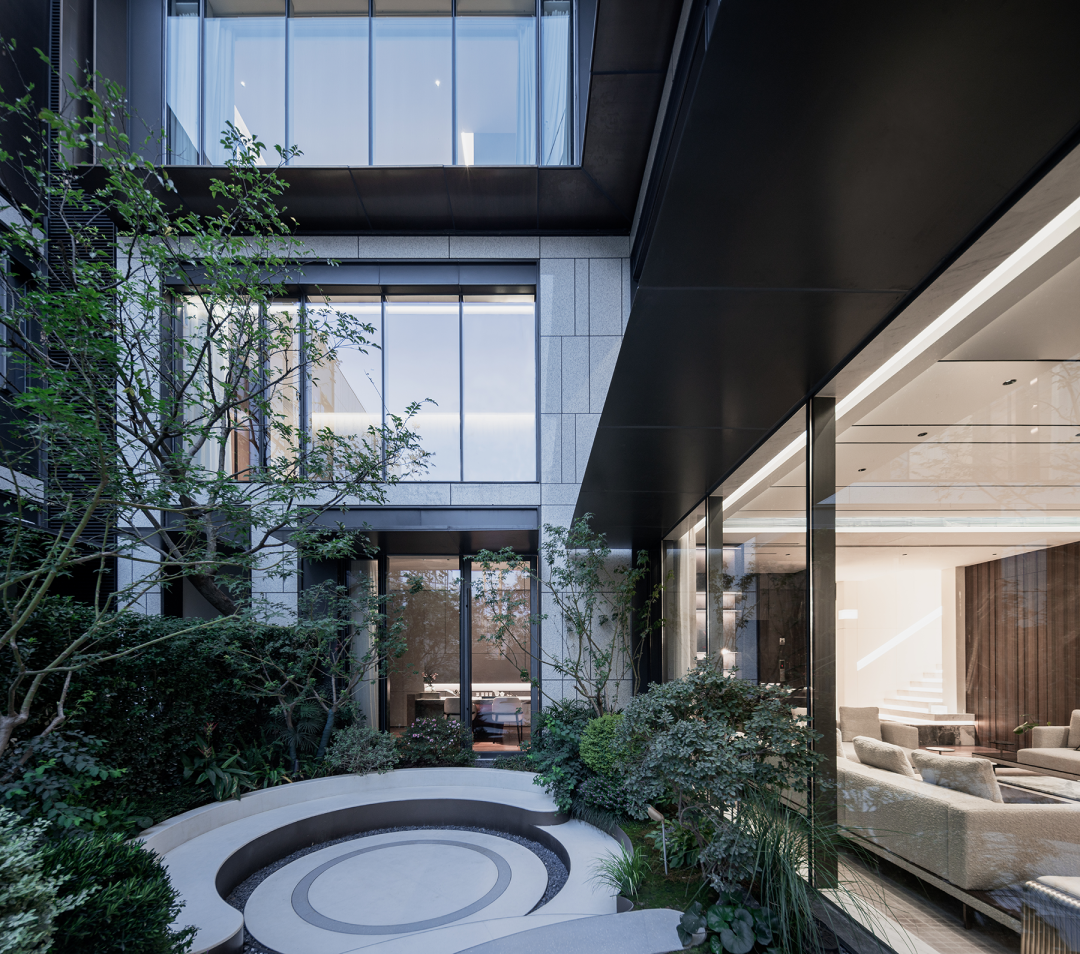
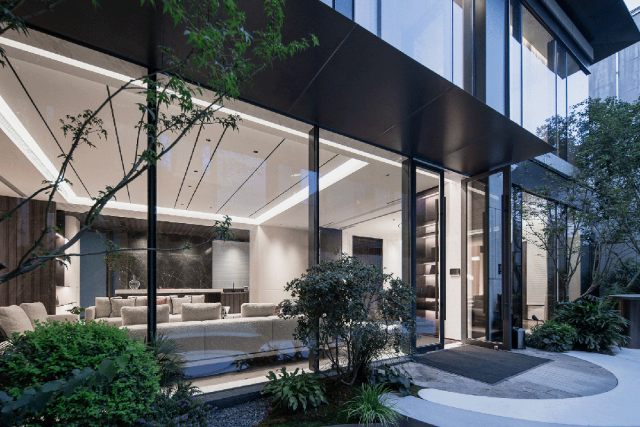
Architecturally, large floor-to-ceiling windows and column-free layouts enhance openness and flexibility while preserving spatial scale and efficiency.
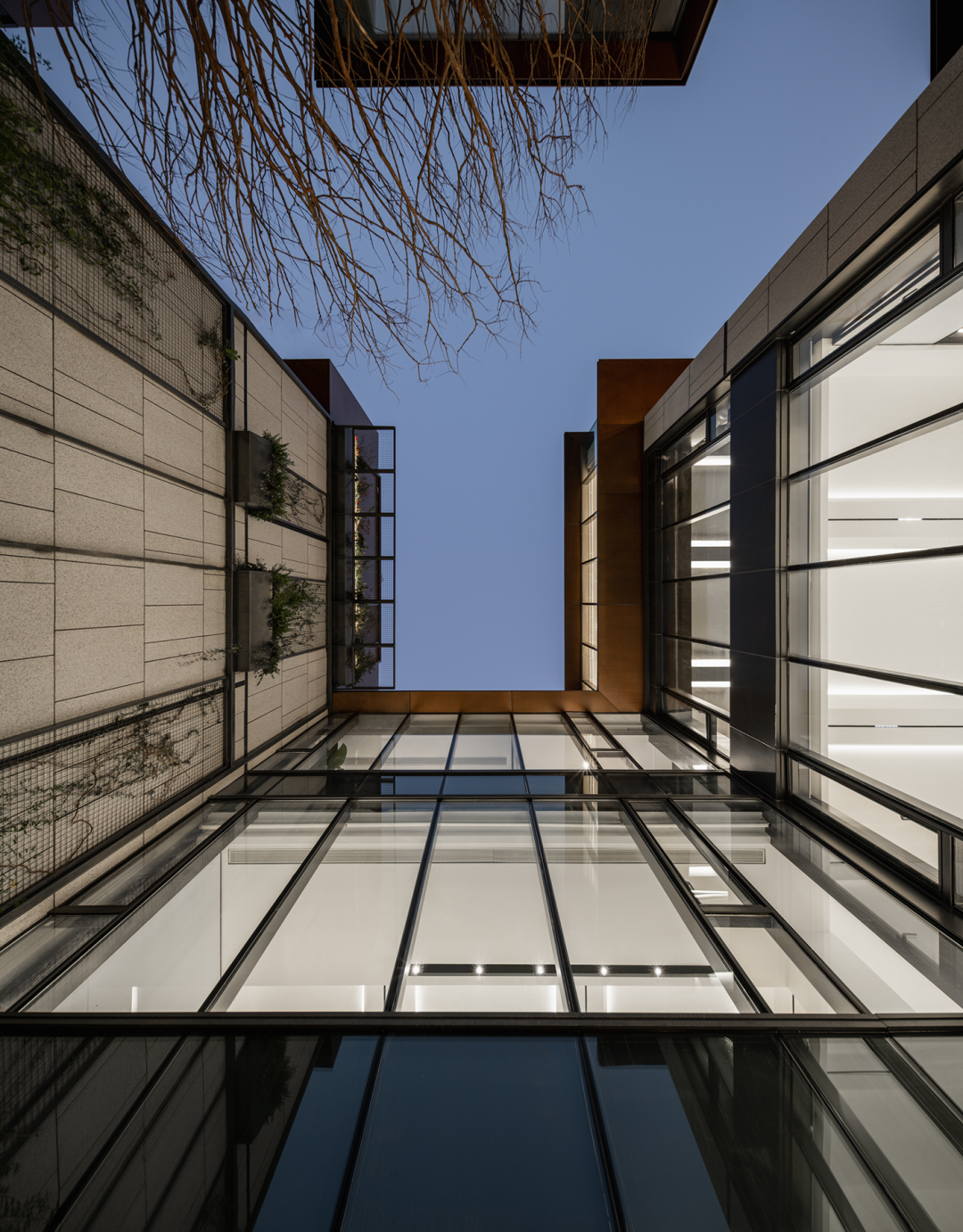
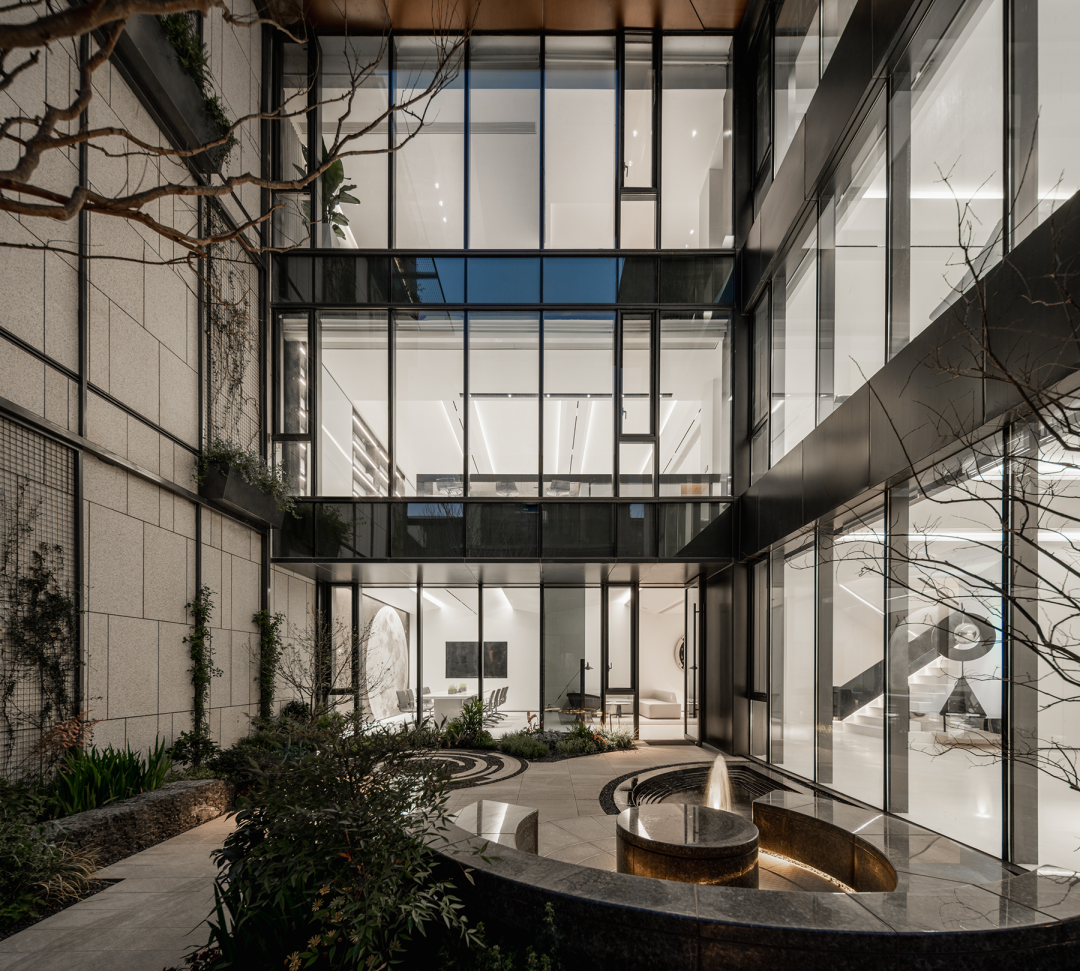
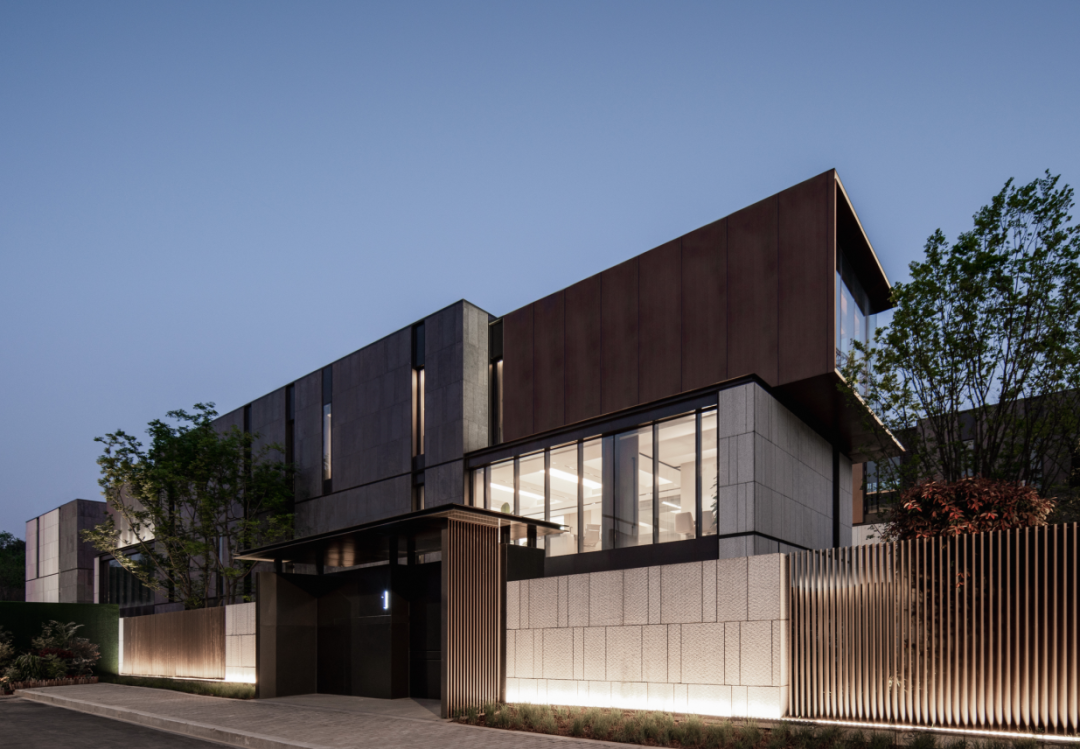
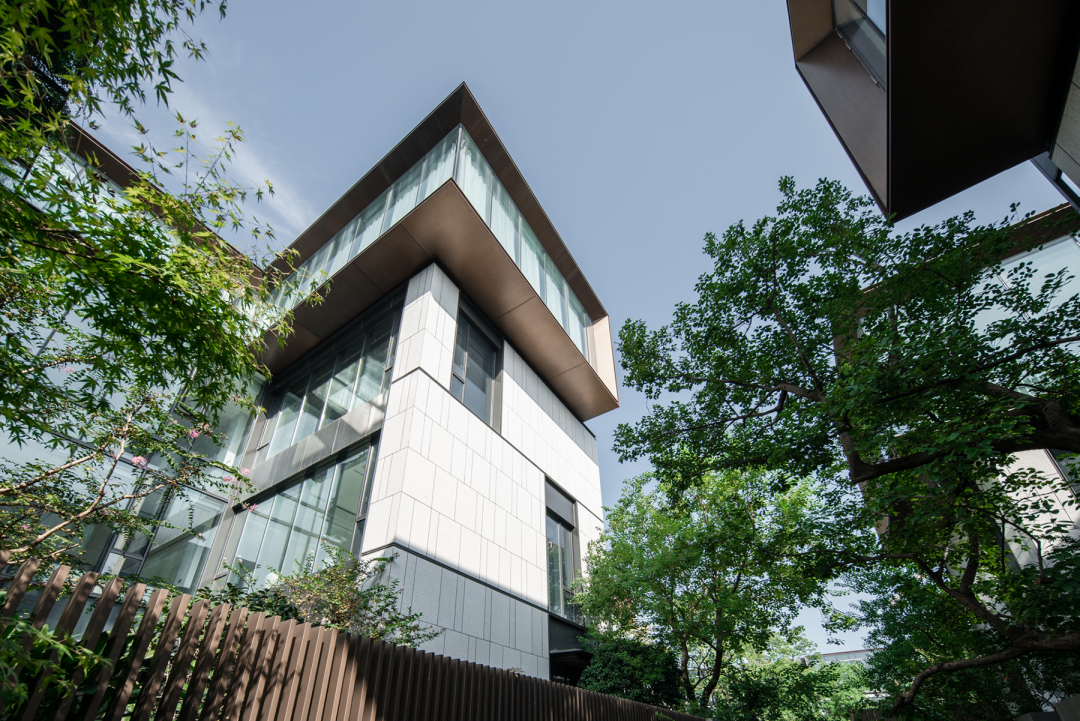
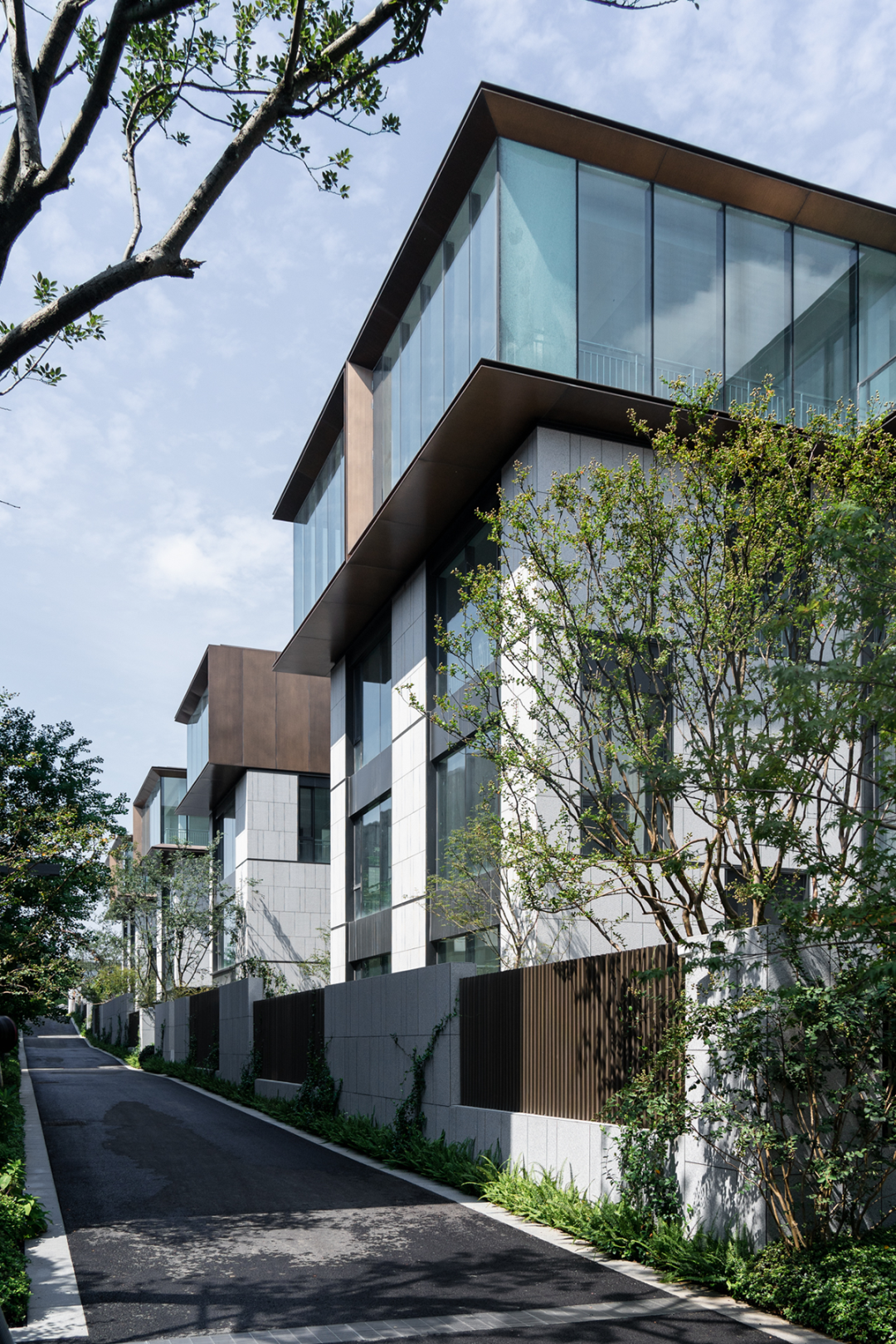
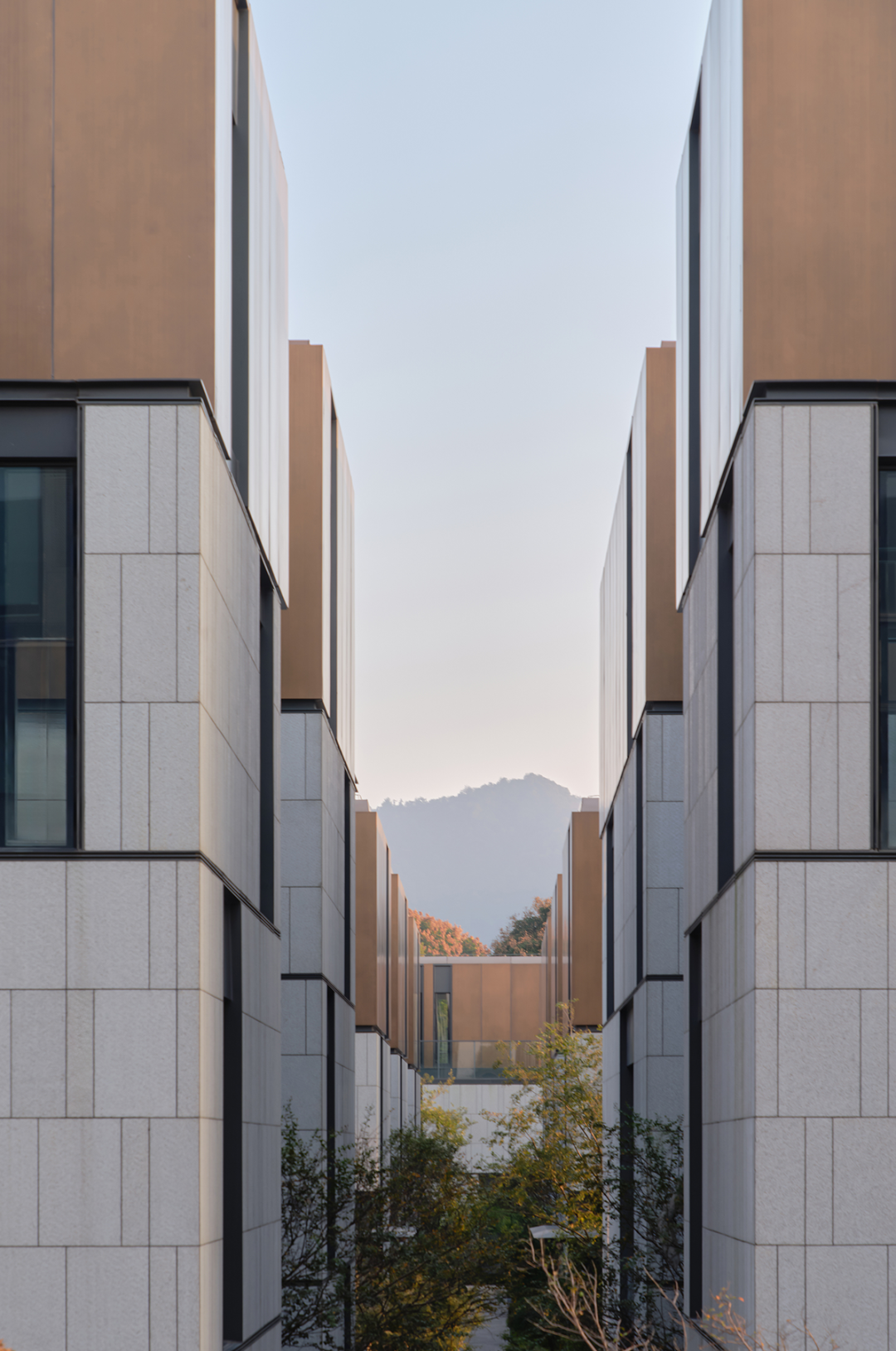
visual interference. Projecting eaves, folded panels, and deep-set windows shape a dynamic façade system, framing curated views toward Xixi and the distant West Lake—bringing the landscape into daily life.
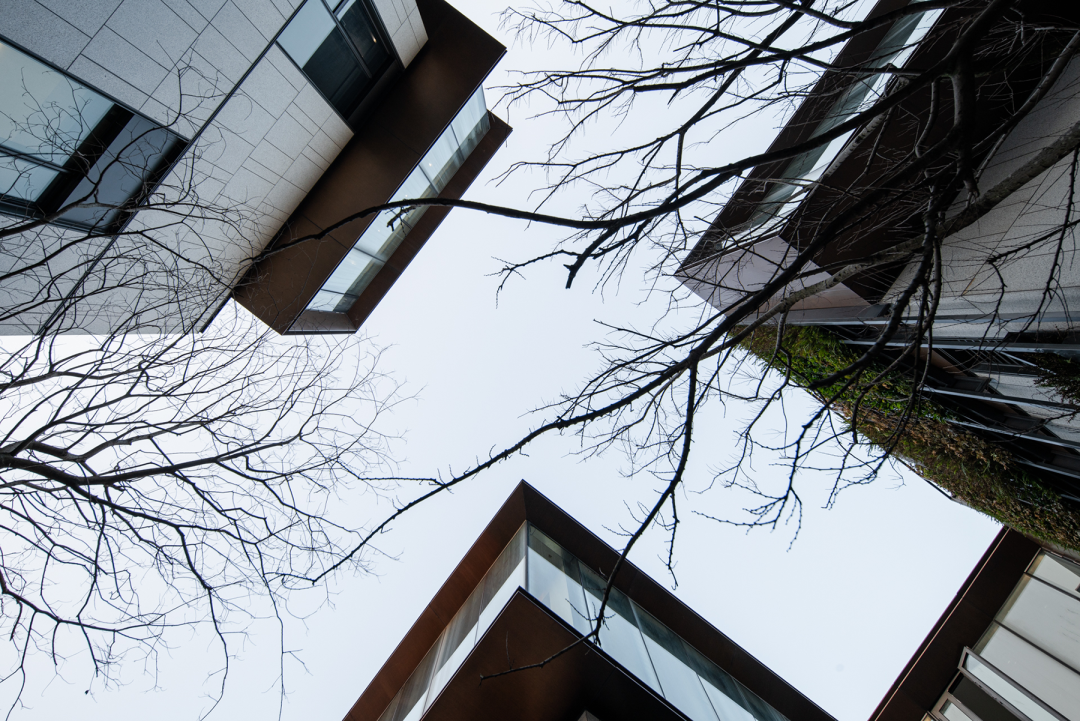
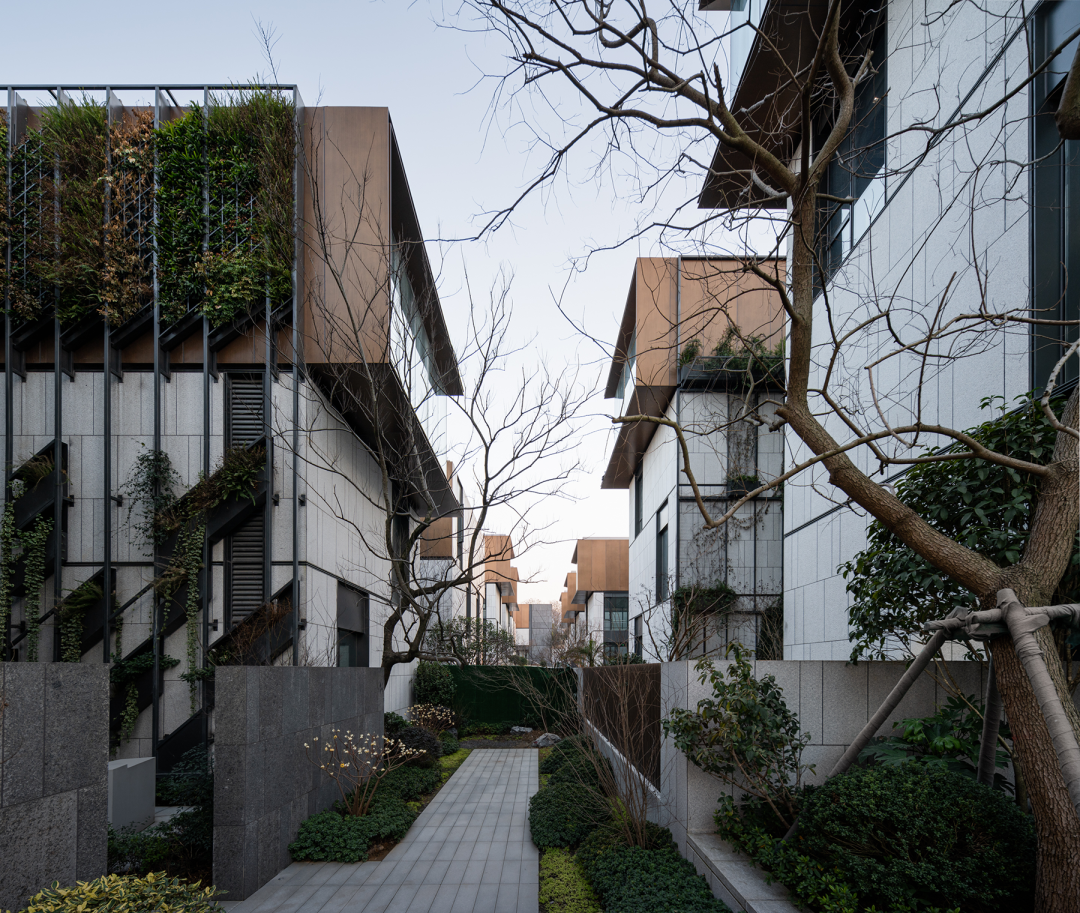
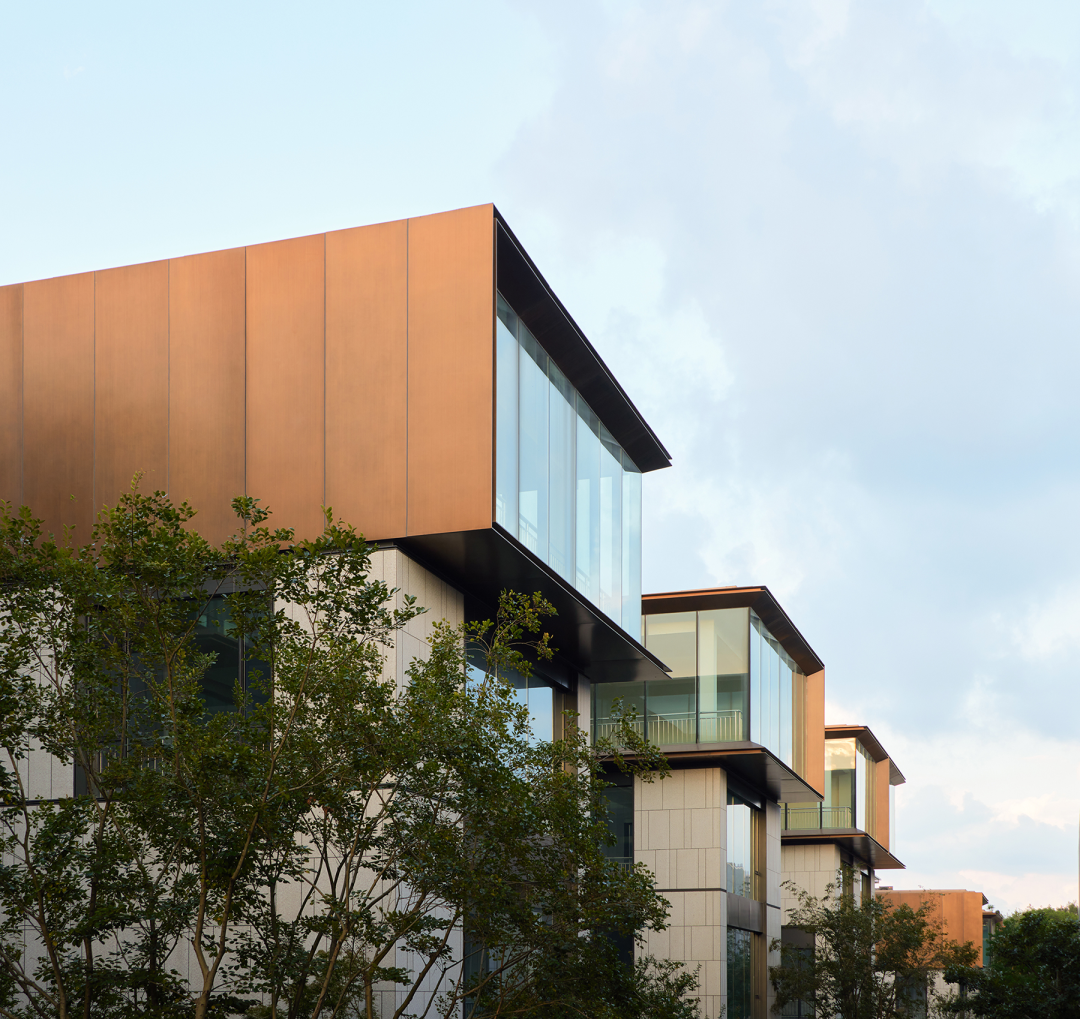
Variations in solid-void ratios, orientation, and boundaries give each structure individual character while embedding it within a coherent campus typology.
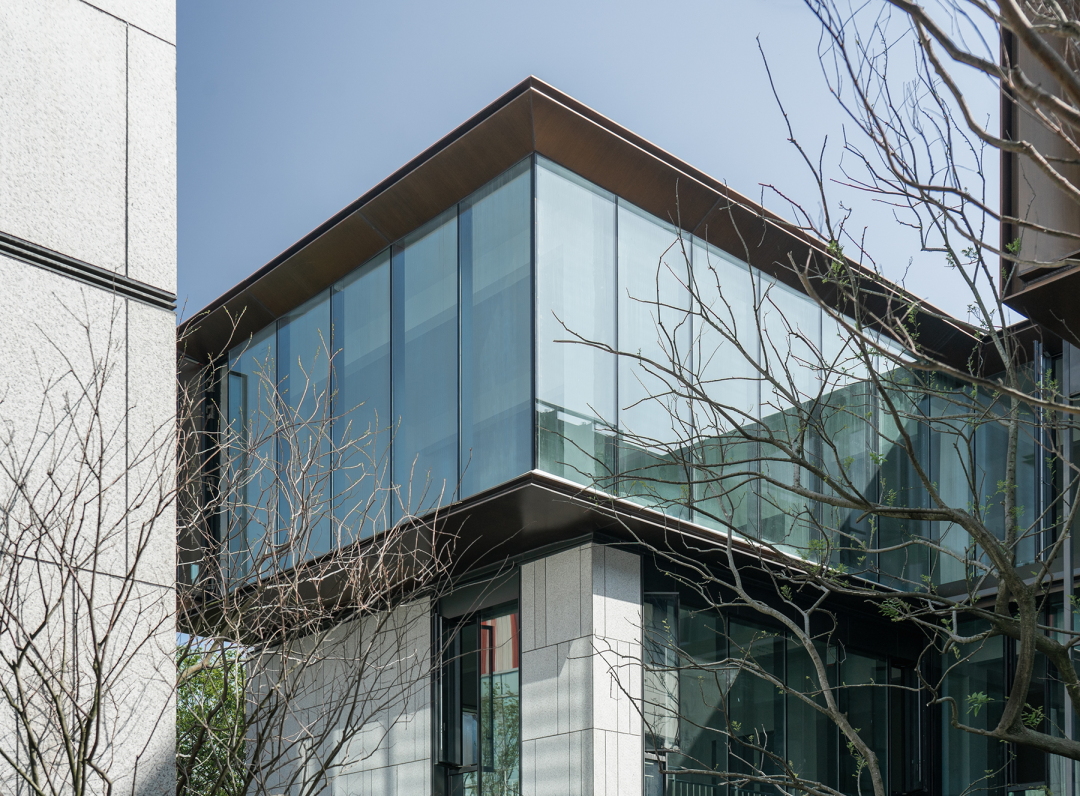
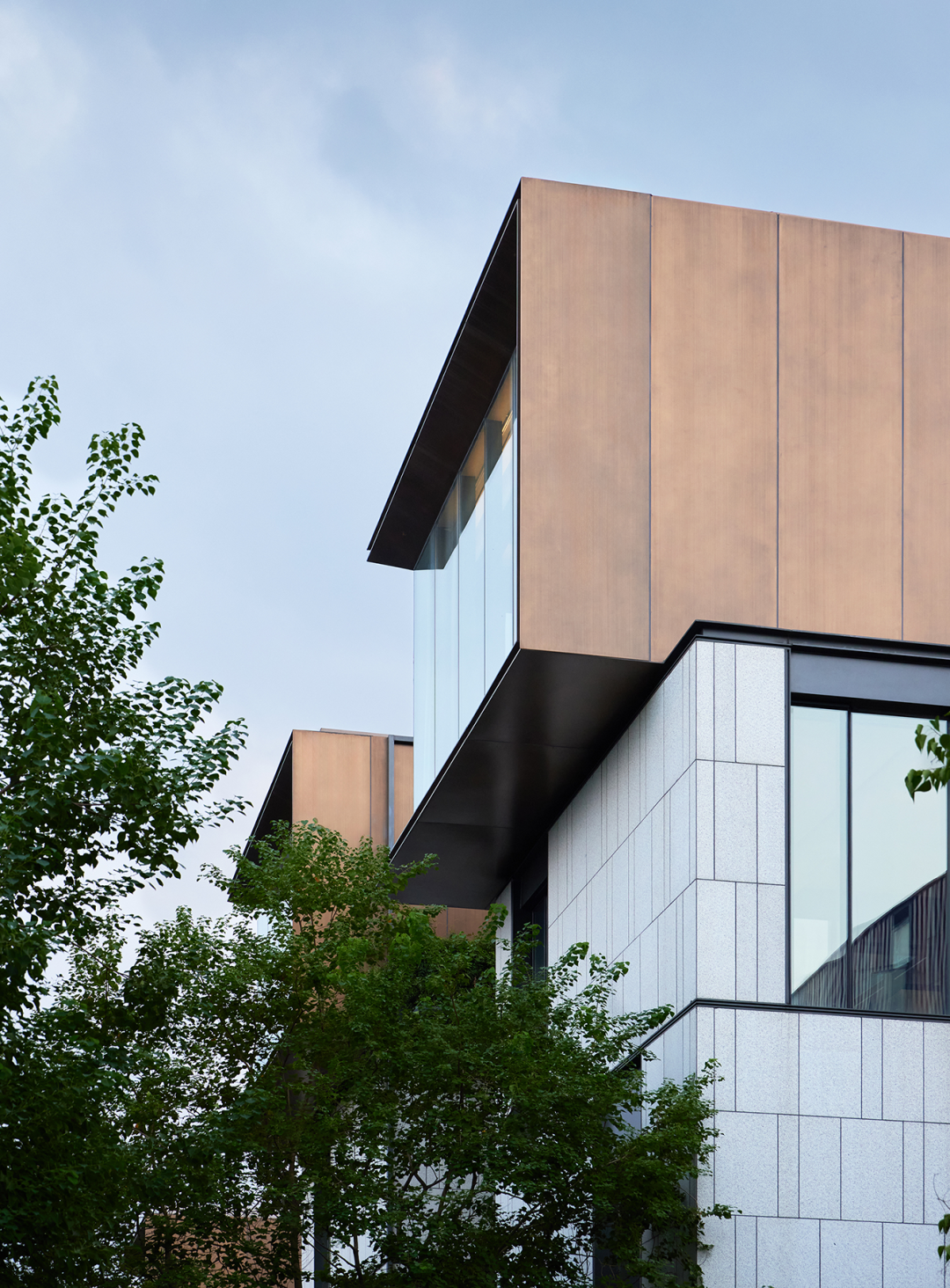
The architectural language draws inspiration from the refined aesthetics of Jiangnan, interpreted through a contemporary lens to produce a cohesive yet individually expressive campus identity. Material palettes diverge from the typically austere tones of commercial buildings—inviting vibrant hues to enliven the urban streetscape and reflect the youthful energy of this next-generation mixed-use district.
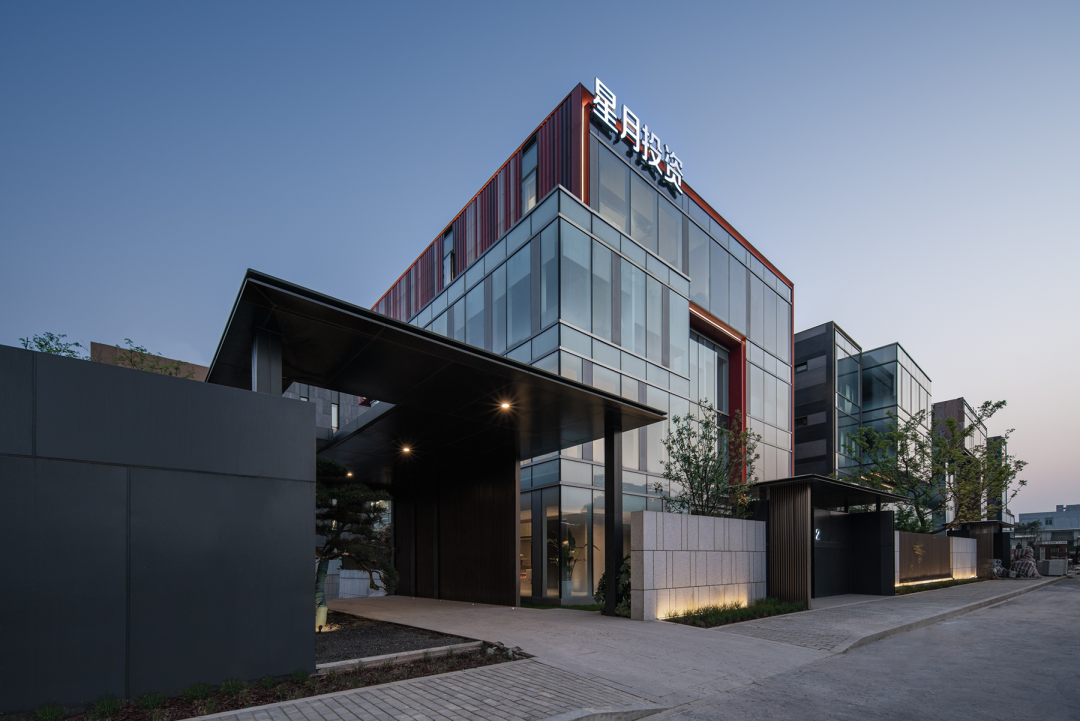
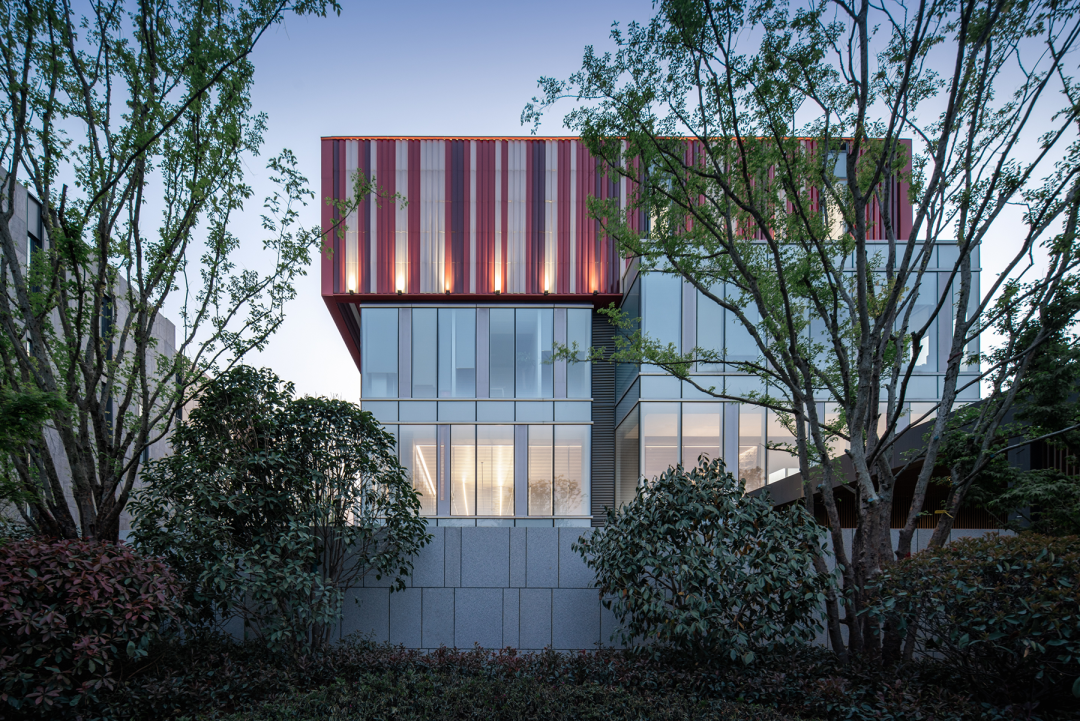
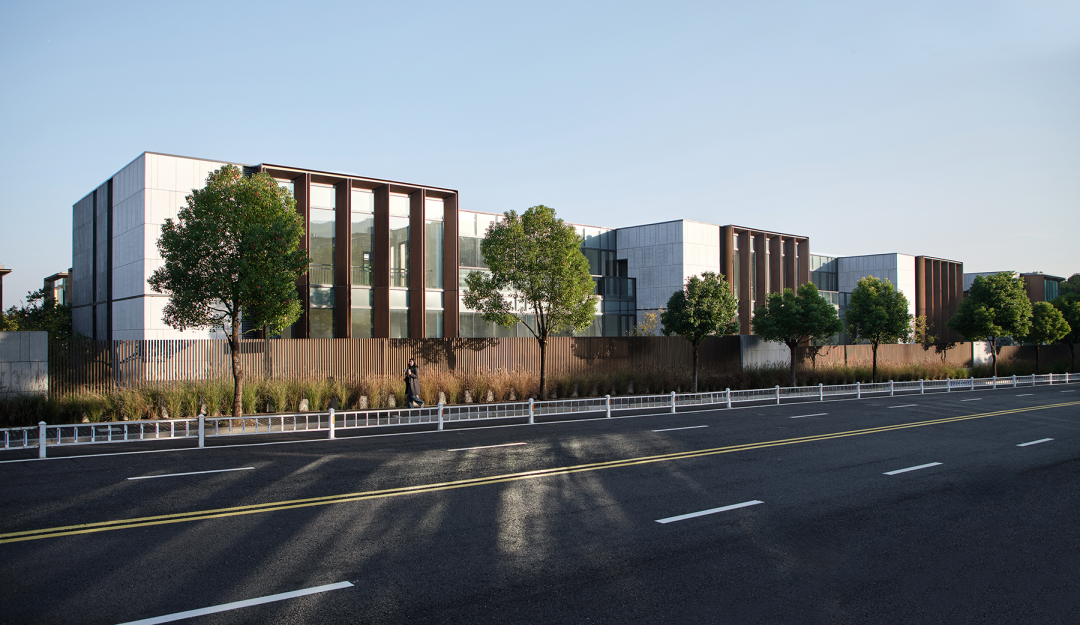
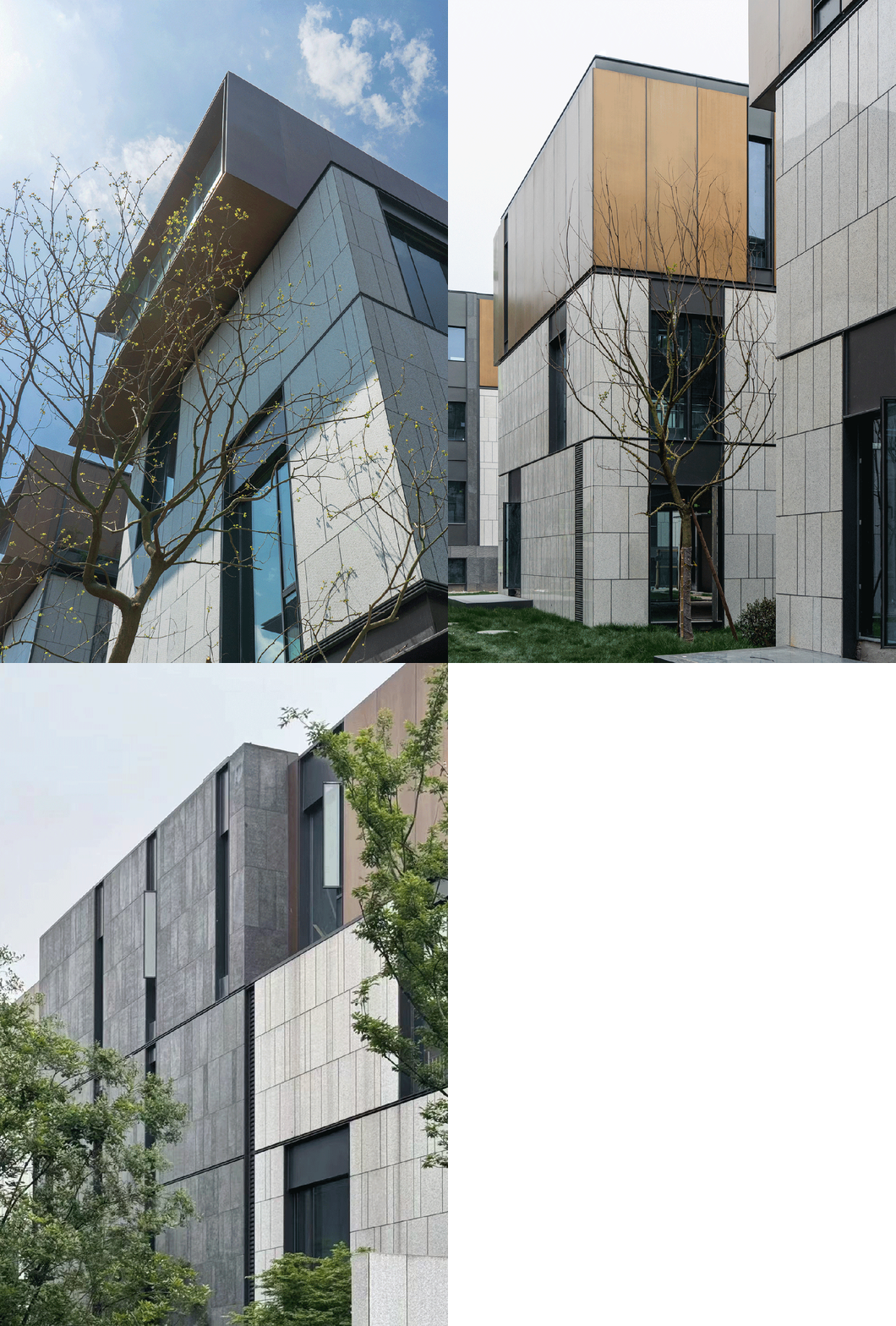
Five distinctive façade types were designed in response to varied site contexts: urban arterial roads, wetland edges, and internal clusters. Materials like grey stone panels, wood-toned grilles, brushed bronze aluminum, fritted white glass, and glazed ceramic tiles strike a refined balance between vibrant architectural tactility and the tranquil atmosphere of the wetlands—creating a soft interplay of light, shadow, and porosity.
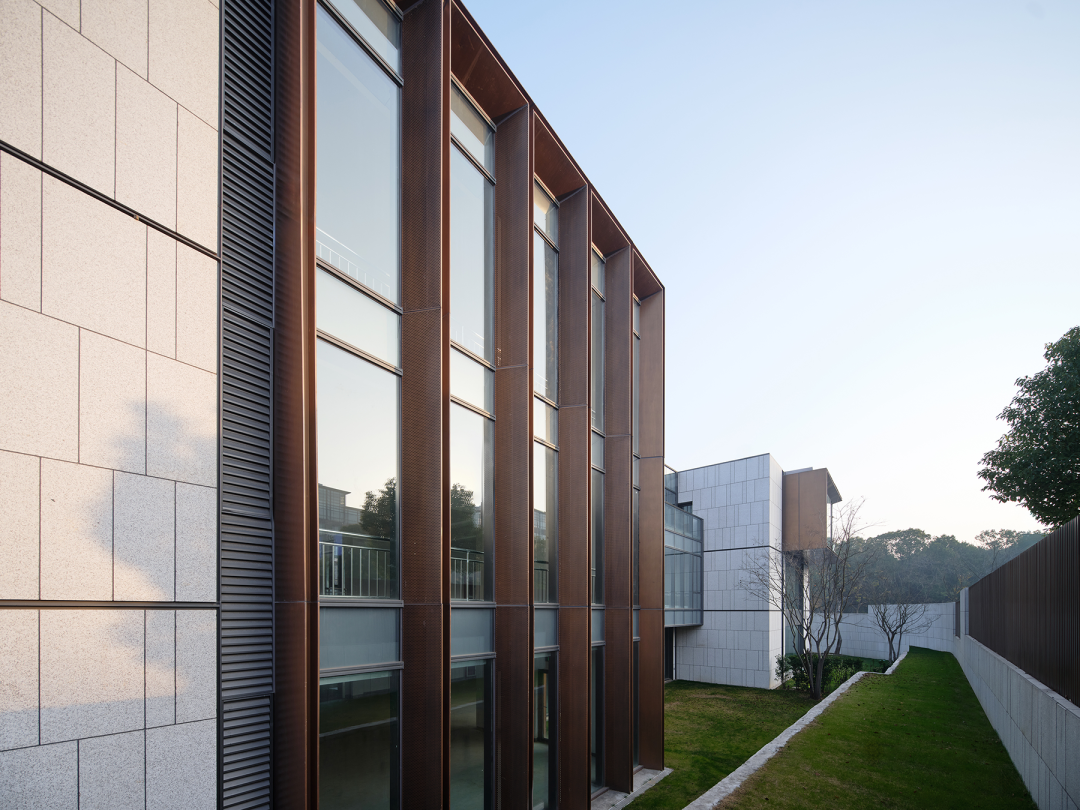
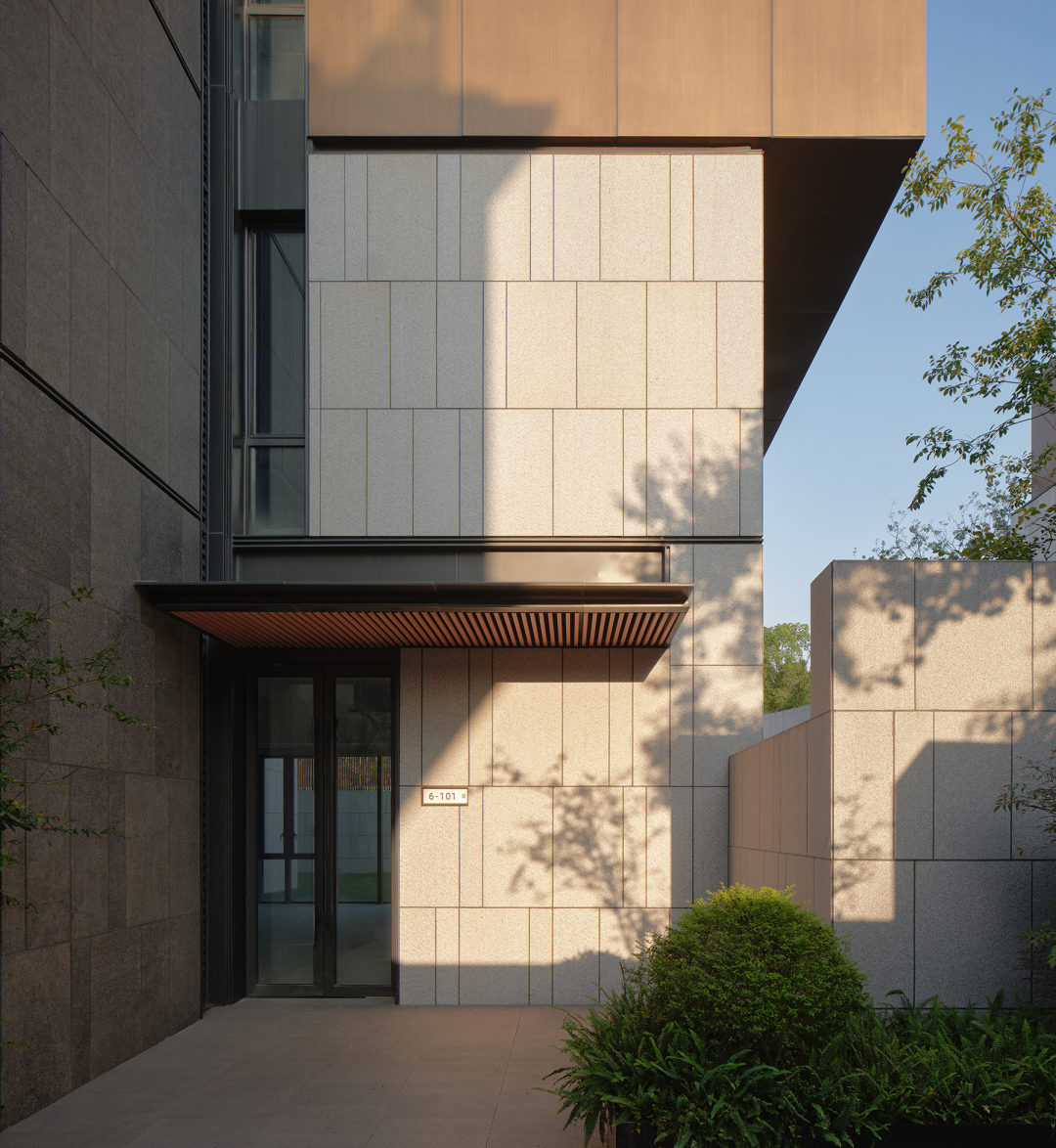
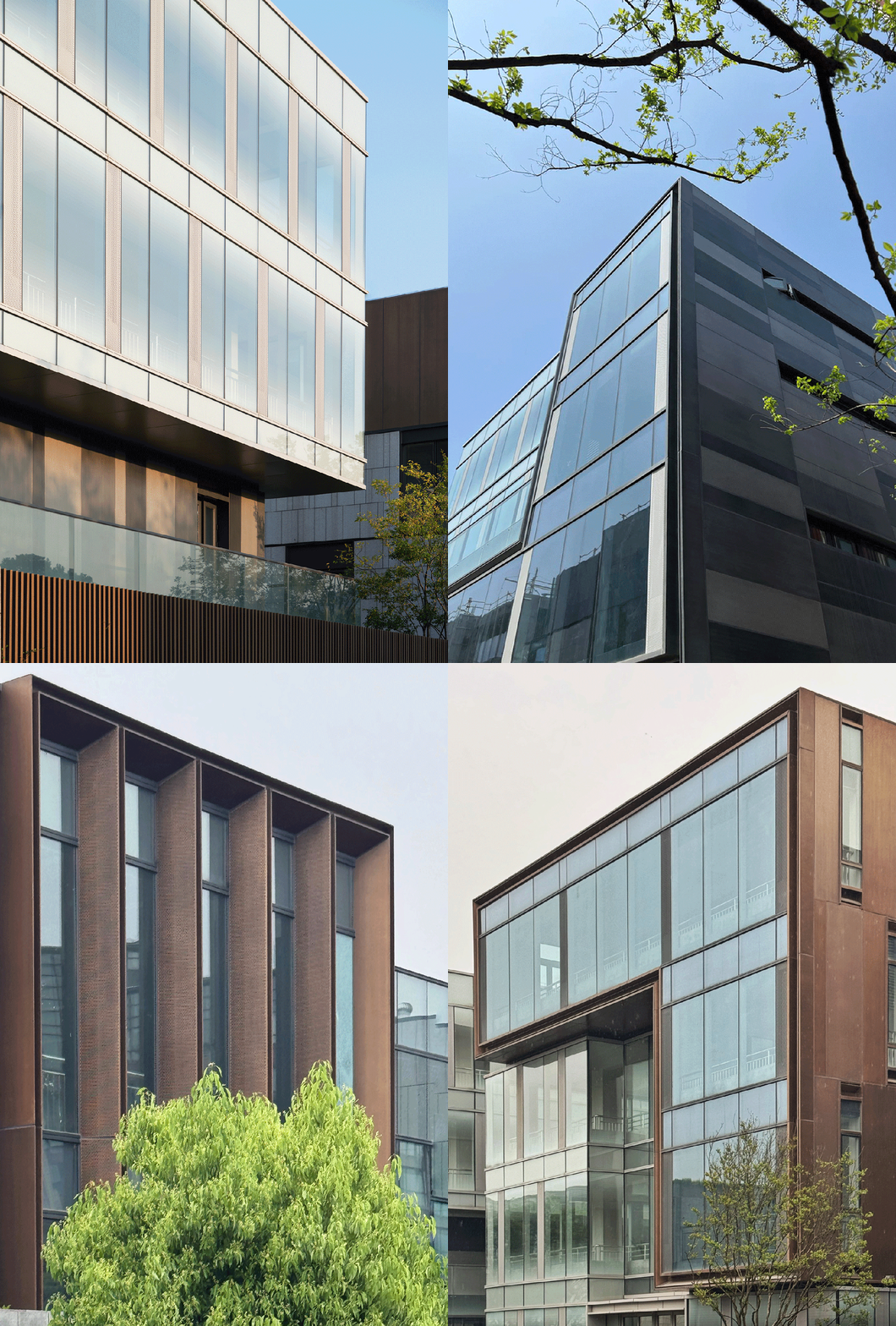
Unconventional color applications and streamlined massing proportions lend a strong visual identity while harmonizing with the gentle, elegant atmosphere of this landscape between Xixi and West Lake.
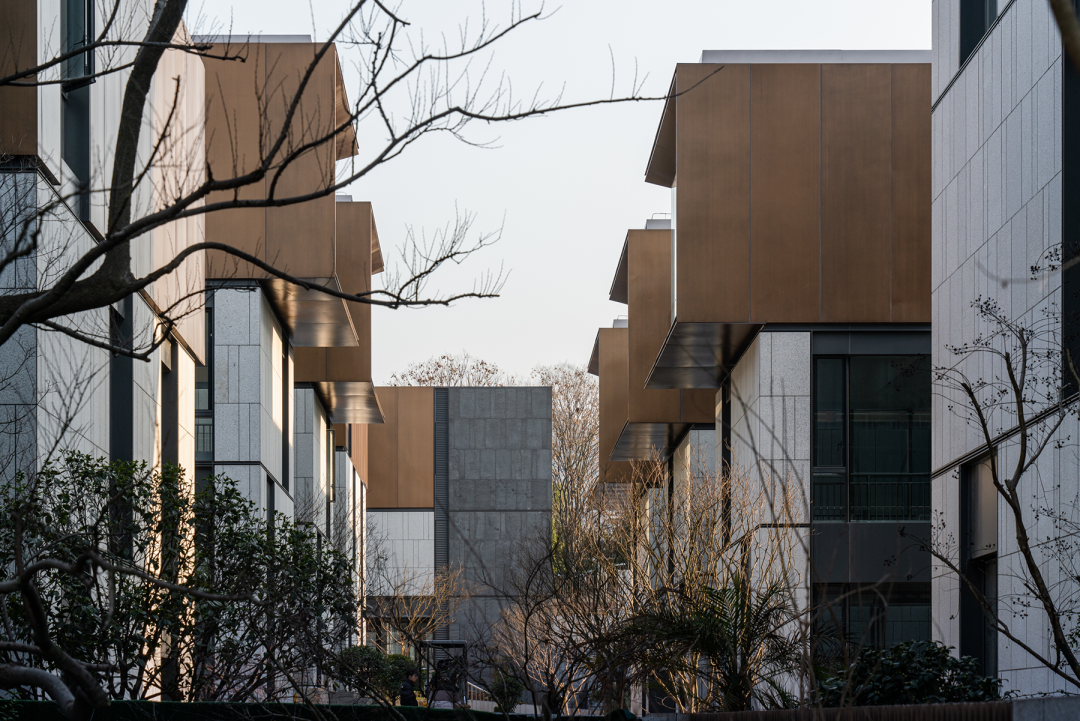
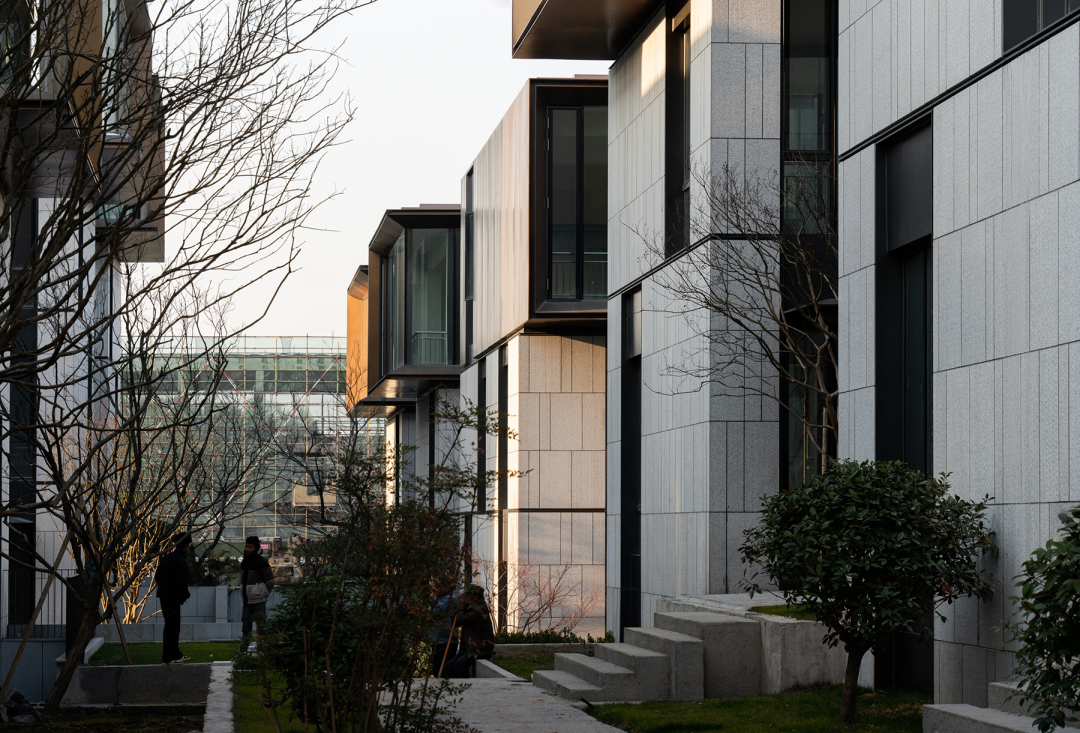
The future of urban life will be open, integrated, and symbiotic. High density, rather than being a constraint, becomes the engine for innovative communities and new modes of living.
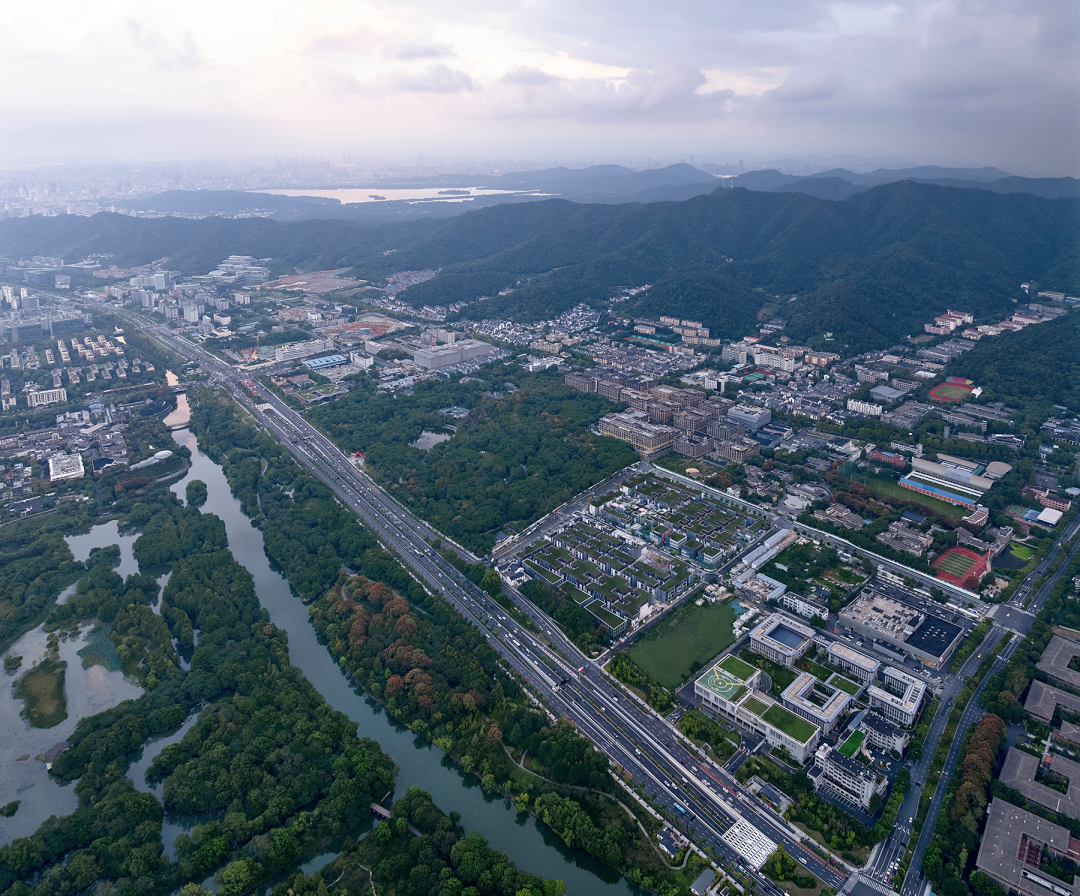
XIXI'IN applies the self-organizing model of the wetland water network to generate a novel architectural layout—resolving tensions between capacity and comfort, programmatic hybridity, identity and coherence, cost and quality. Today, its alleys and courtyards have taken shape, and daily life begins to unfold—gently bridging ecology and urbanity.