



Sports Mall
运动商业目的地
“Movement is inherent to human nature. We are attempting to transform sports architecture from an event container into an urban generator, allowing the non-daily competition venue to become a vibrant center for everyday city life.”
—— Zhu Peidong
Project Name: Xinchang Globular Center
Design Firm: line+ studio
Chief Architect / Project Principal: Zhu Peidong
Conceptual/Competition Phase Project Leader: Xing Mingquan
Conceptual/Competition Phase Design Team: Bao Wangtao, Liang Shiqiu, Zhou Wenyu, Liu Xiangjun, Sun Jiahao
Competition/Implementation Phase Project Leader: Hu Runzhi, Xing Mingquan
Competition/Implementation Phase Design Team: Bian Qian, Zhao Censen, Bao Wangtao, Duan Xiajing, Xu Zifeng, Zhang Daozheng, Tao Xufeng, Guo Zhenghao
Interior Conceptual Design Team: Jin Yuting, Ye Xin, Yu Jun, Zheng Liu, Zhu Yingyue, Mao Ling
Landscape Conceptual Design Team: Li Shangyang, Rao Feier
Client: Xinchang Public Service Group Co., Ltd.
Collaborating Design Institute: Huahui Engineering Design Group Co., Ltd.
Curtain Wall Design: Zhongnan Curtain Wall
Location: Xinchang, Shaoxing, Zhejiang Province
Gross Floor Area: 121,132 sqm
Design Period: 2022.06 - 2023.04
Construction Period: 2022.09 - 2025.07
Structure: Reinforced Concrete Frame, Steel Truss
Materials: Anodized Aluminum Panels, Glass Curtain Wall, Paint
Photography: Chen Xi Studio, line+
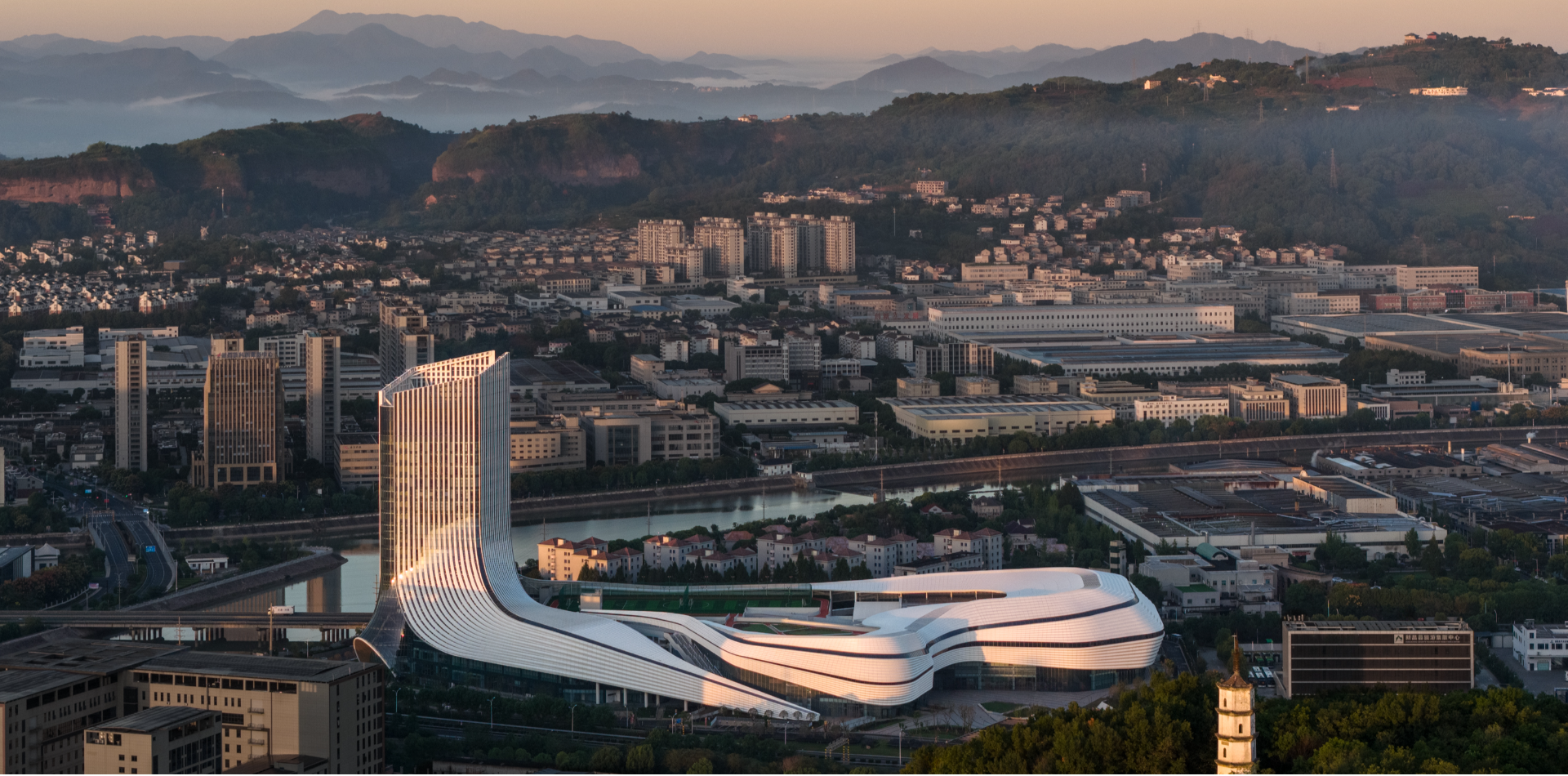
The Xinchang Globular Center, designed by Dr. Zhu Peidong, Co-Founder and Chief Architect of line+ studio, and his team, has been fully completed and opened. The project is one of the keys "4+1" major projects in Zhejiang Province.
Its completion provides a critical foundation for Xinchang, a county-level city in the mountainous region of Eastern Zhejiang, to realize its ambitious goal of "a small city hosting major championships." This moves the city's strategic path—"boosting the city, industry, and populace through events"—from vision to reality. Since its inauguration, the center has hosted national-level events, including the China Badminton Masters and the National Table Tennis Championships, and is slated to welcome its first international snooker match in July 2025.
Unlike traditional stadia, which operate primarily on an "event-cycle" model, the Globular Center is conceptualized as a "Sports Mall" (Sports and Commercial Destination). It utilizes sports as the core programmatic anchor, integrating diverse commercial, entertainment, and social functions to form a multi-format operational model that is active across all hours, all demographics, and all scenarios. The facility not only meets the professional standards for international competitions but also offers an accessible, ongoing lifestyle experience for local residents, establishing itself as Xinchang's new urban living room and vital engine.
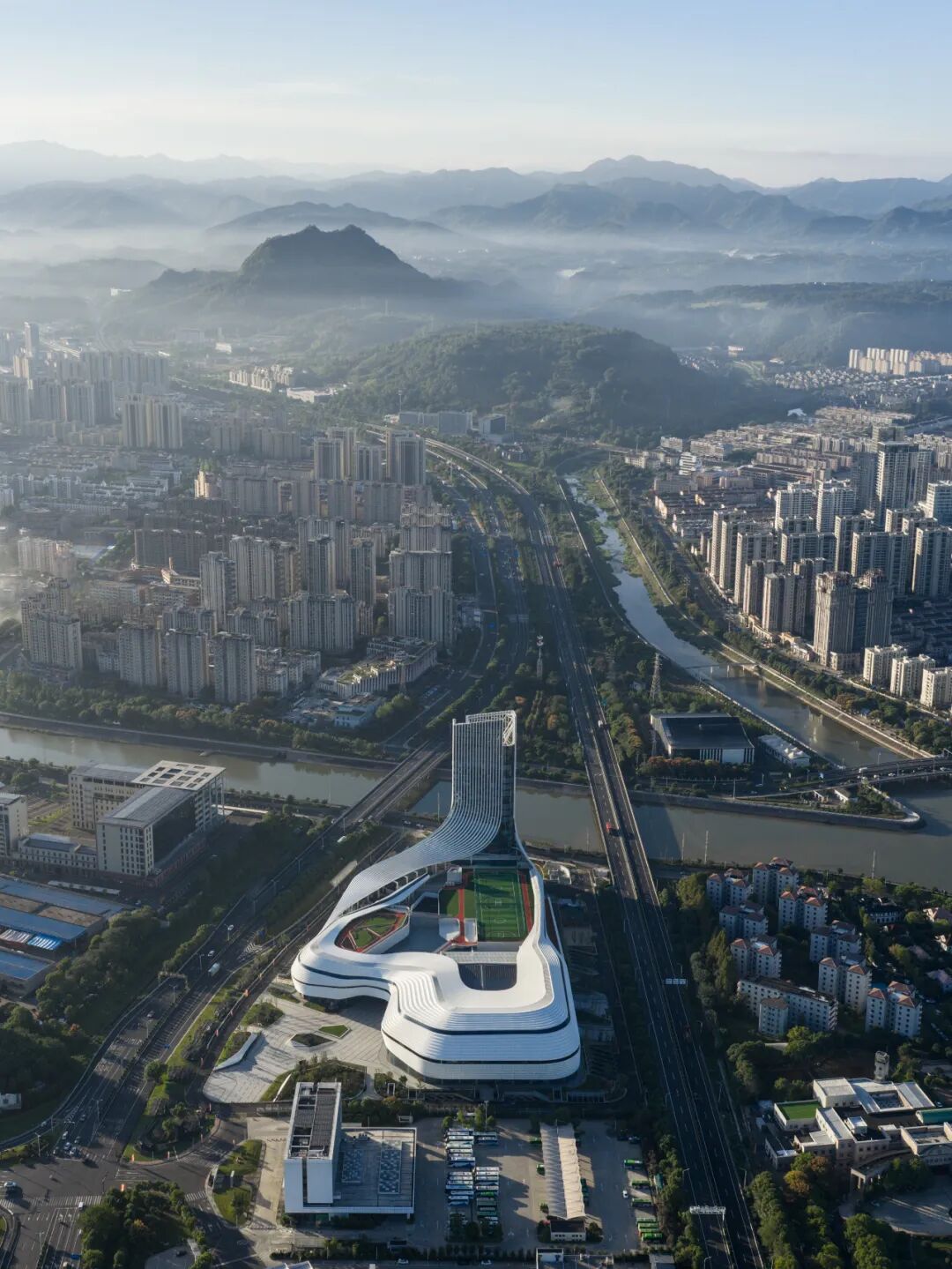

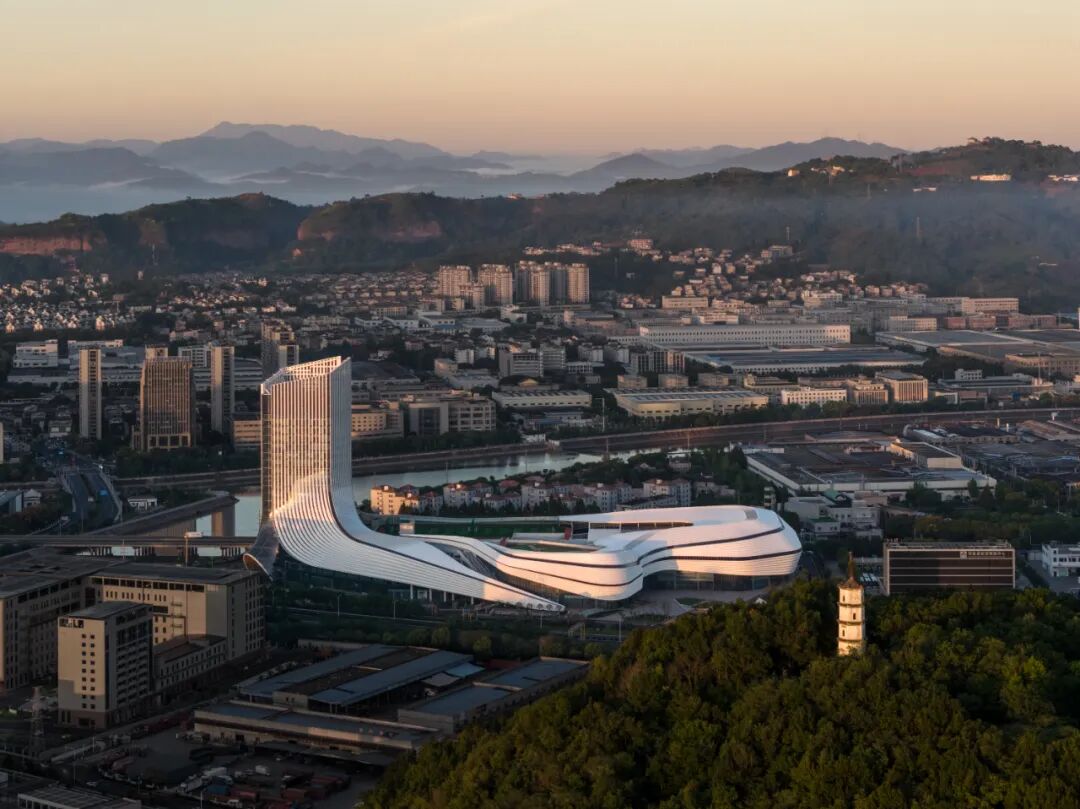
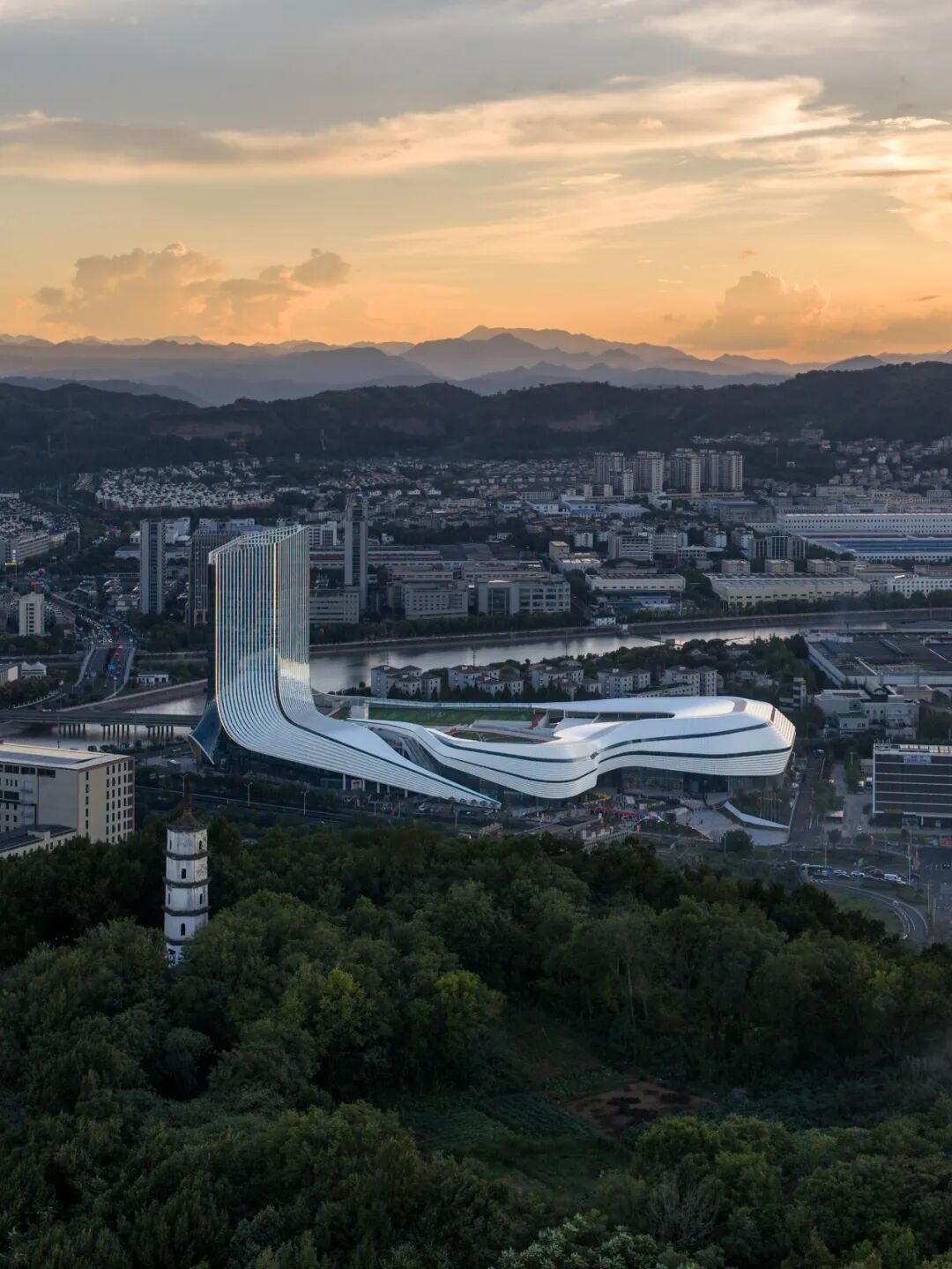
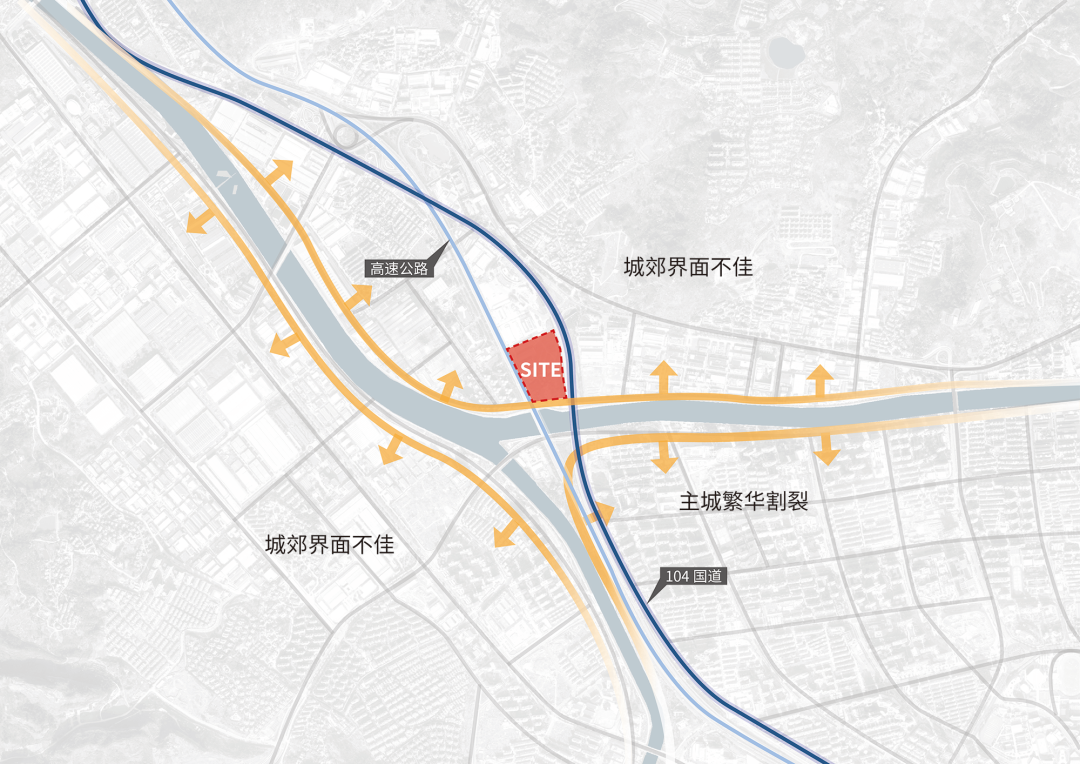
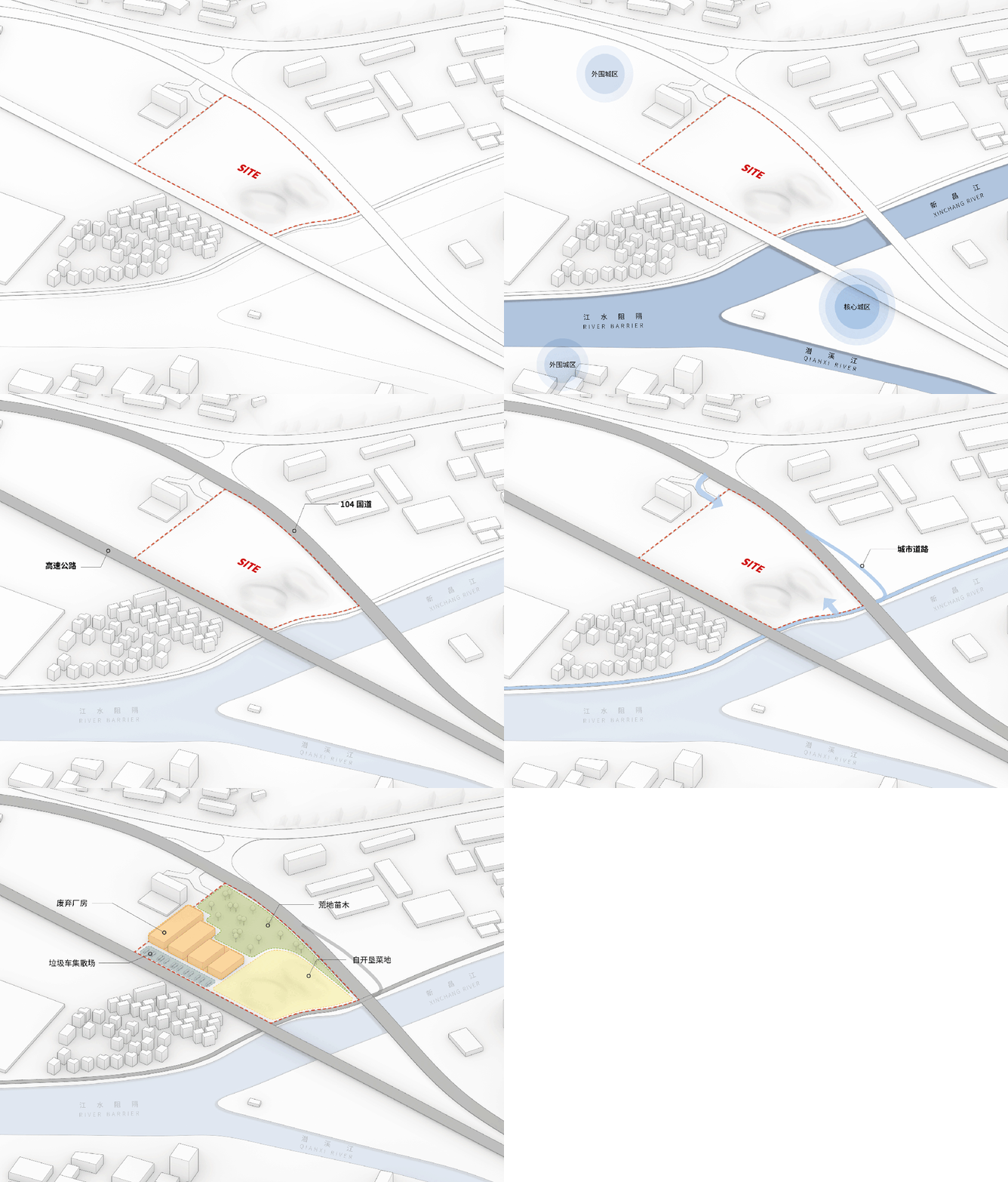
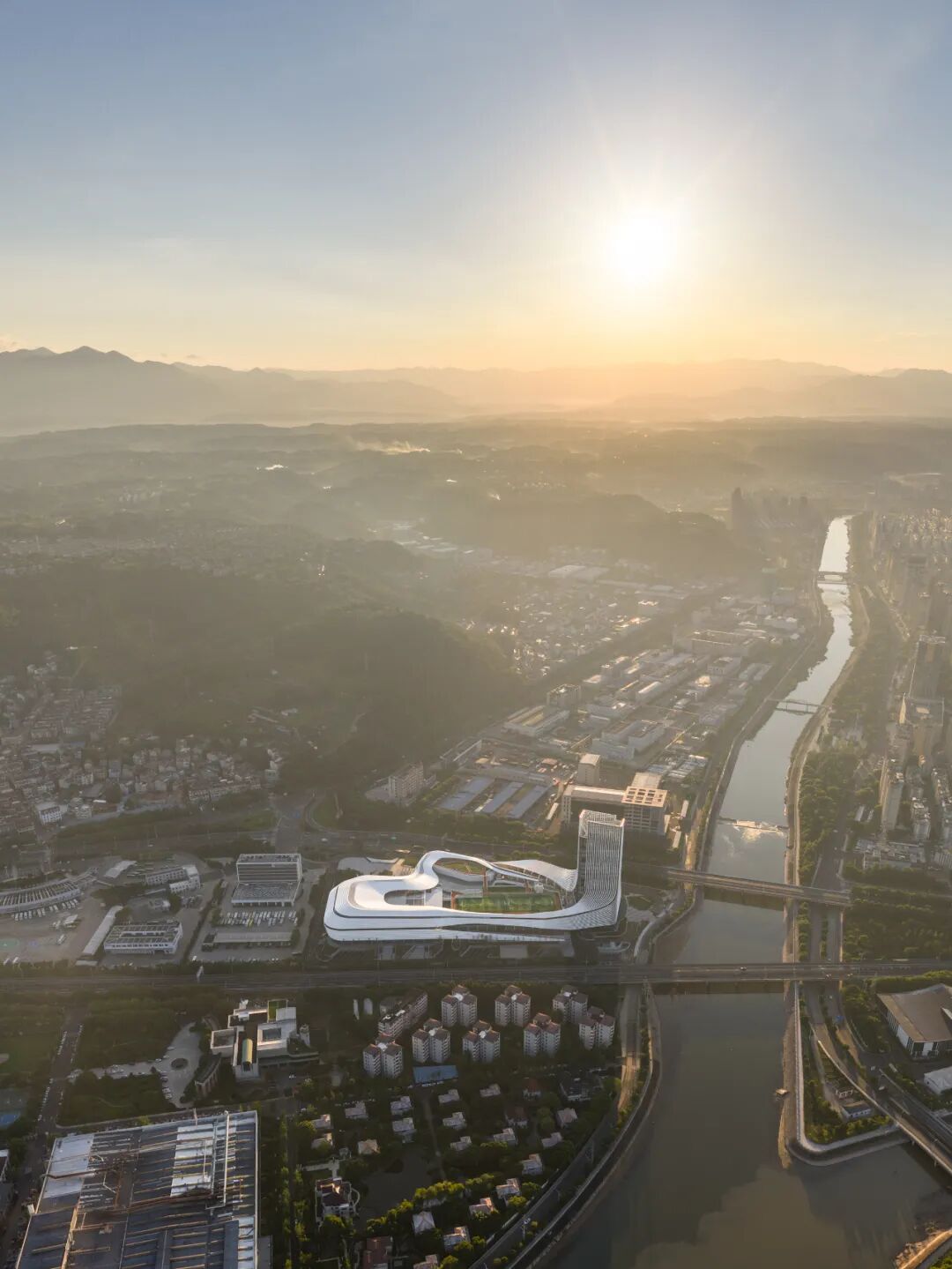
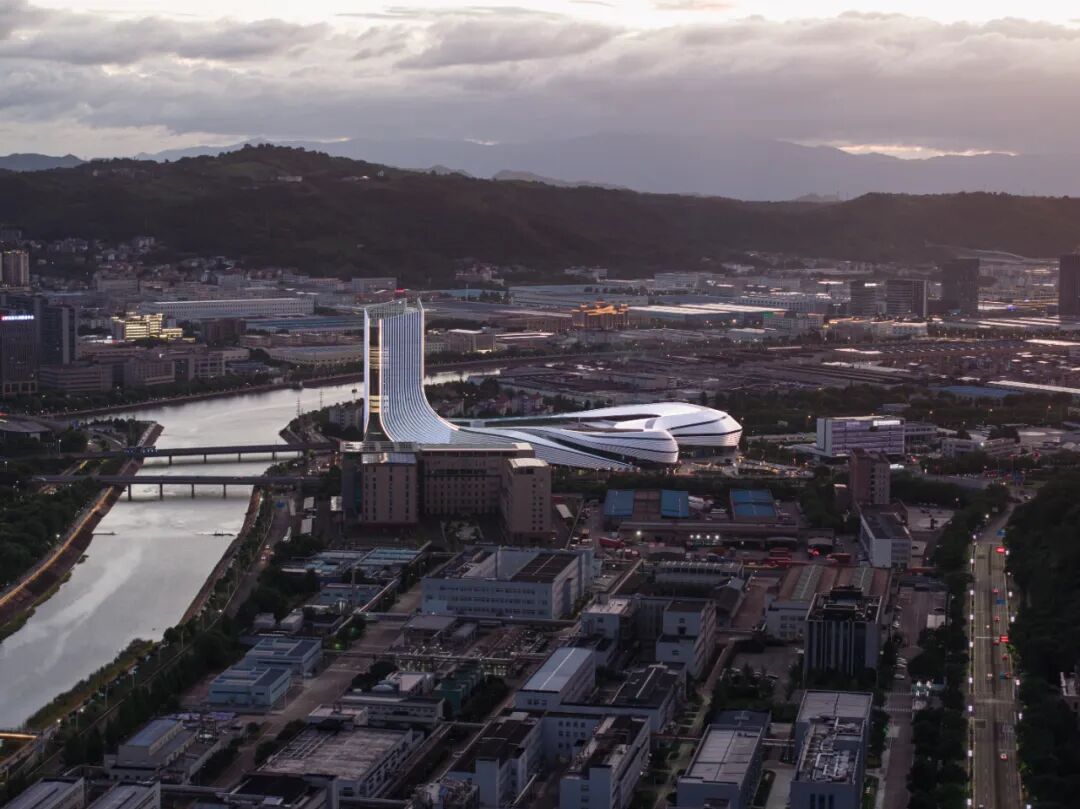
The project site is strategically located on Xinchang’s northern development axis. It serves as the "North Gateway," with the Changtai Expressway and National Highway G104 forming the primary display face for traffic entering the city. It is also a "Bridgehead," situated near the new high-speed rail station, which is accelerating the transformation of surrounding industrial zones. The Globular Center is positioned as the first major public landmark in this area.
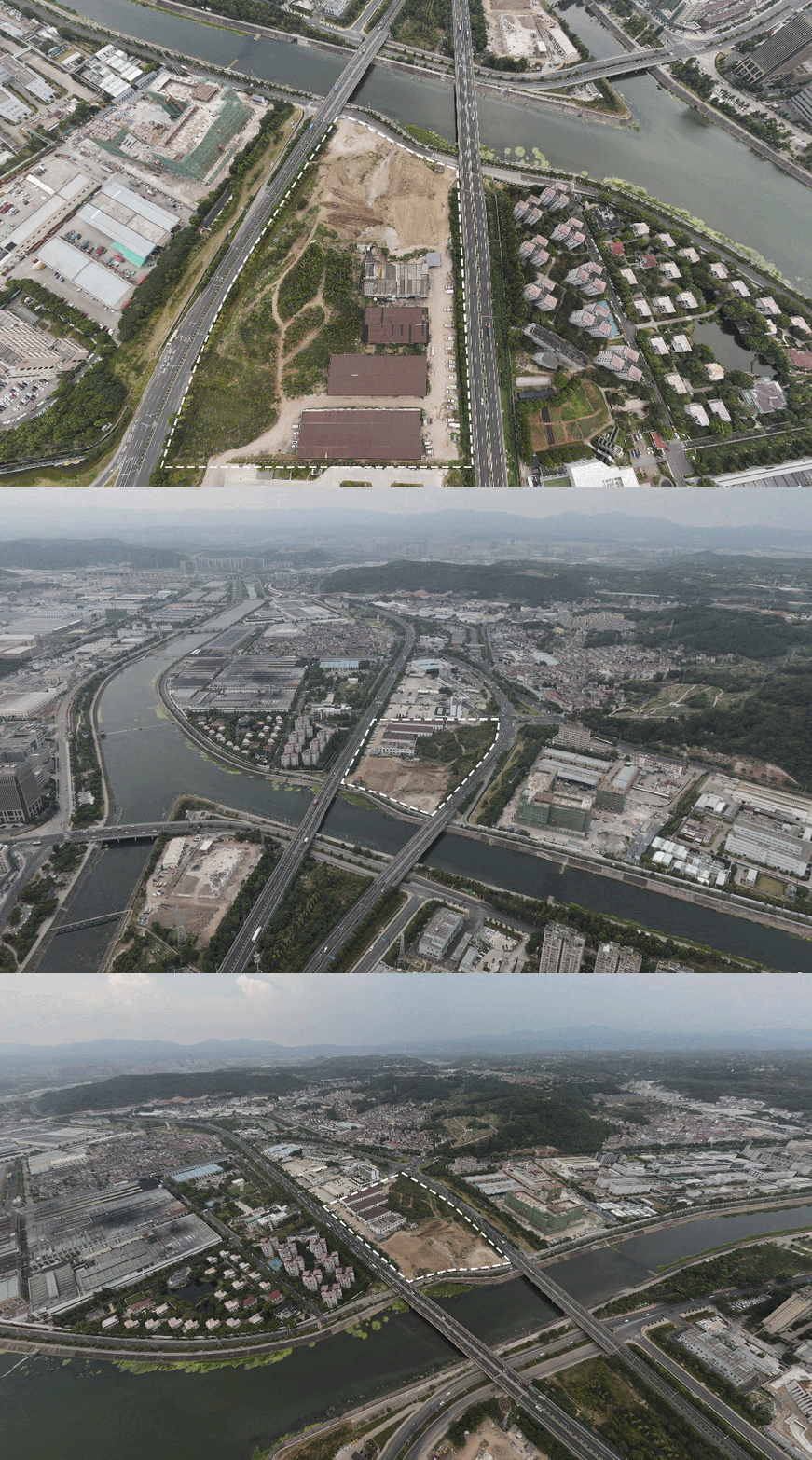
However, the initial site conditions were challenging: limited accessibility due to elevated expressways, a lack of urban life given the old industrial surroundings, and the presence of abandoned factories—effectively, the "scraps" in the urban fabric.
Despite its small size (population under 500,000), Xinchang is economically strong, boasting 18 listed companies and high private-sector vitality. The local passion for grassroots small-ball sports (badminton, table tennis, tennis) is significant, making venue shortages on weekends a chronic issue. The local government thus planned a 120,000 sqm complex capable of hosting high-level events, aiming to leverage sports for urban and industrial renewal.
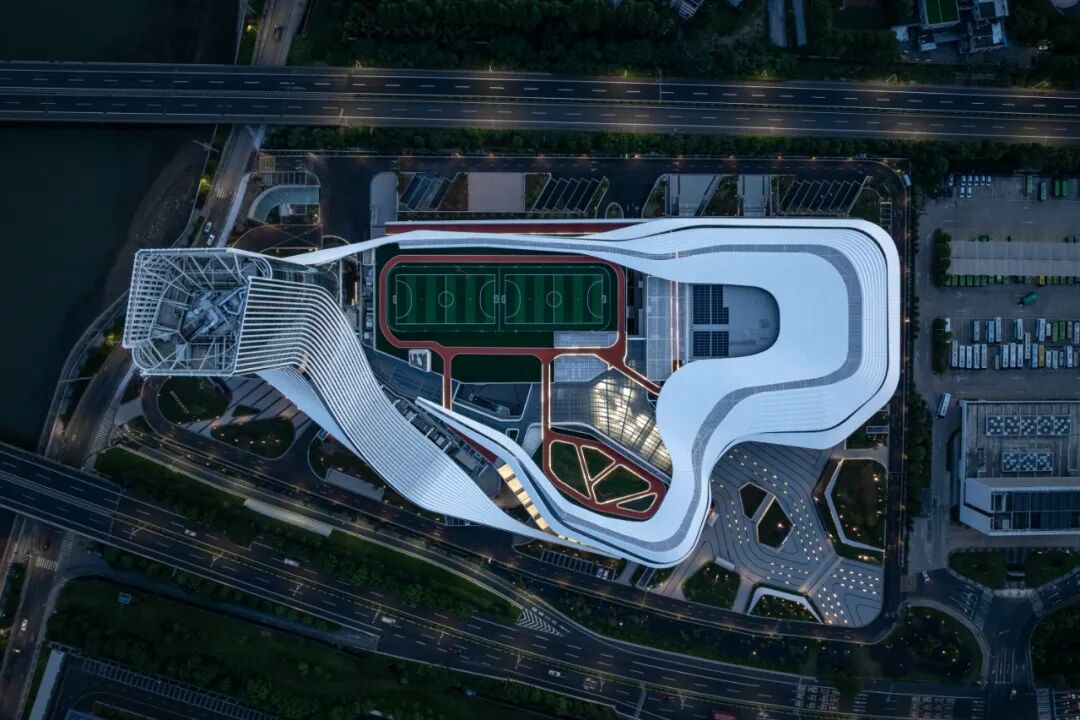
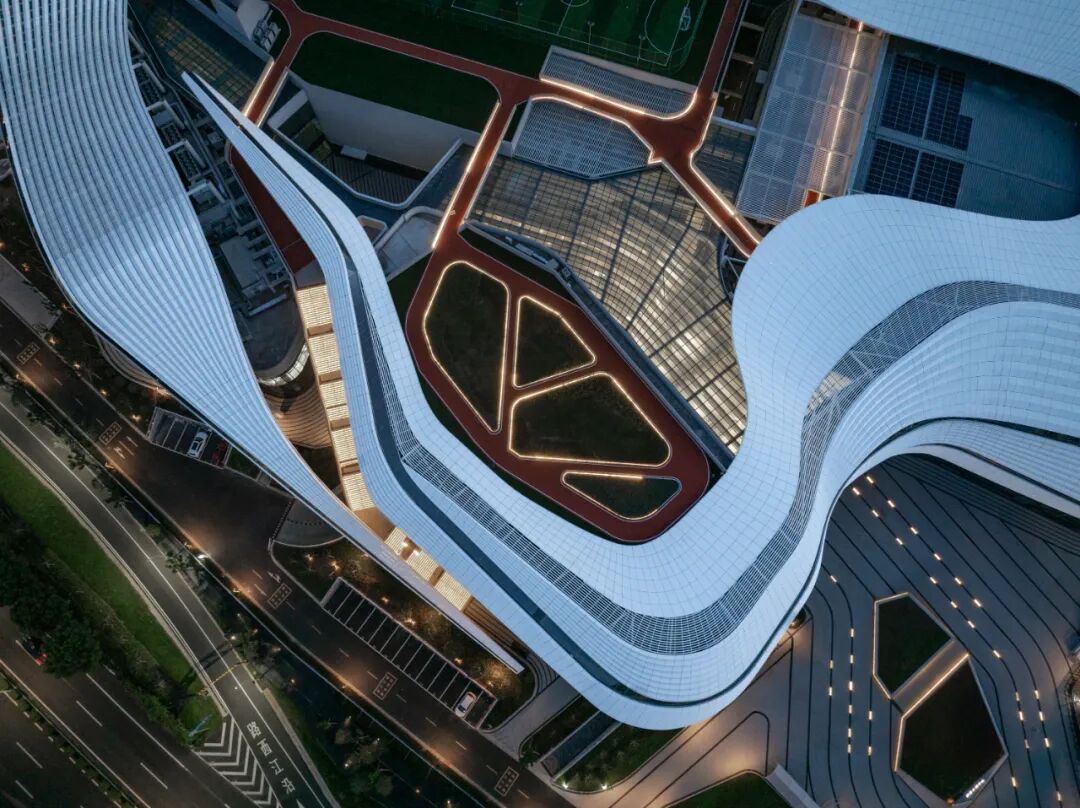
Given the scale of the 120,000 sqm complex—comparable to large venues in major cities—the architect's role extended beyond merely "building a venue" to proposing a sustainable operational logic and spatial strategy for the city.

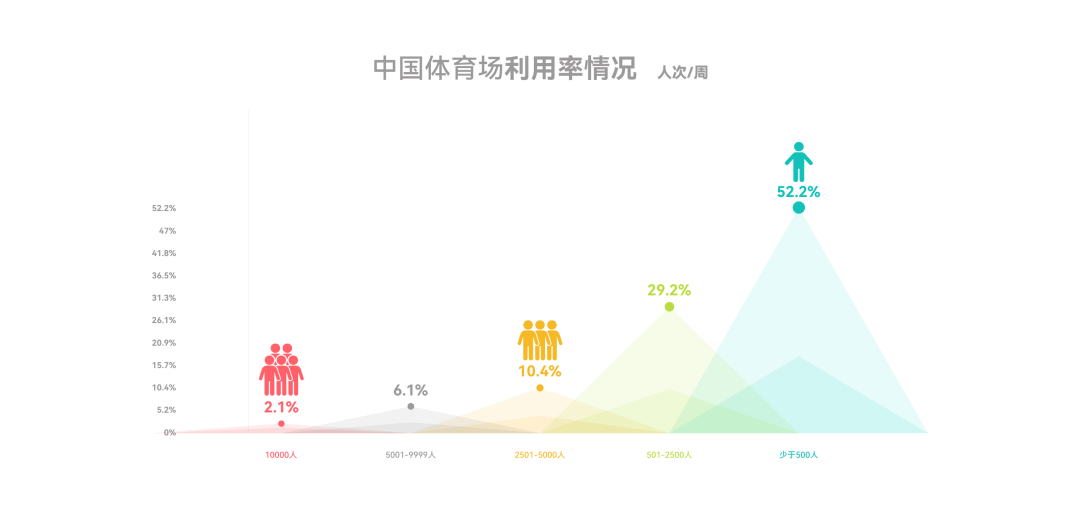
Sports venues across China widely struggle with low utilization and significant operational pressure. Their profitability is constrained by limited sports events and insufficient daily demand. Coupled with substantial investment in construction and high maintenance costs, venue revenue often becomes heavily reliant on government subsidies. Multiple studies highlight this issue: 52% of venues report fewer than 500 weekly visitors, and some have annual usage rates below 40%. The root causes are typically identified as sparse foot traffic and rigid operational models.
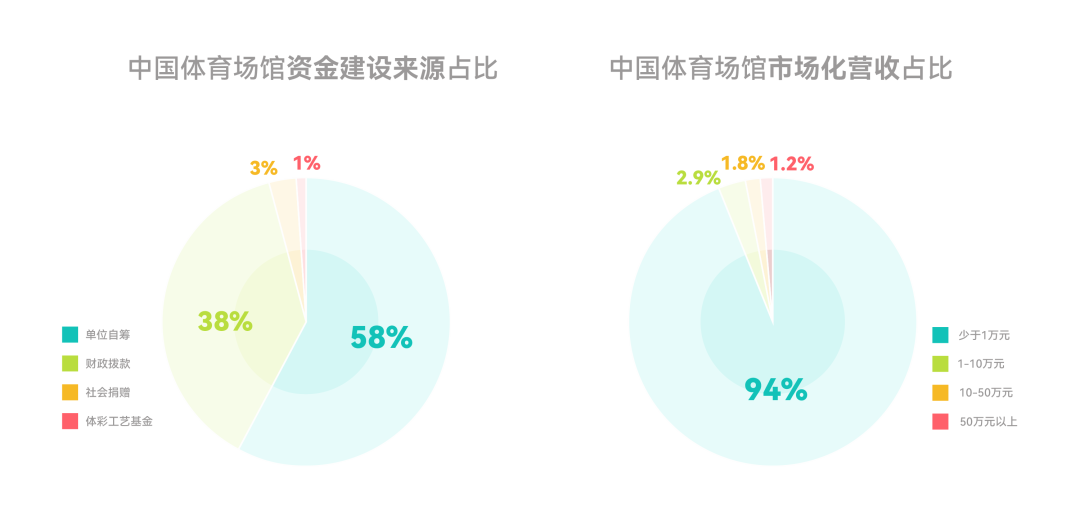
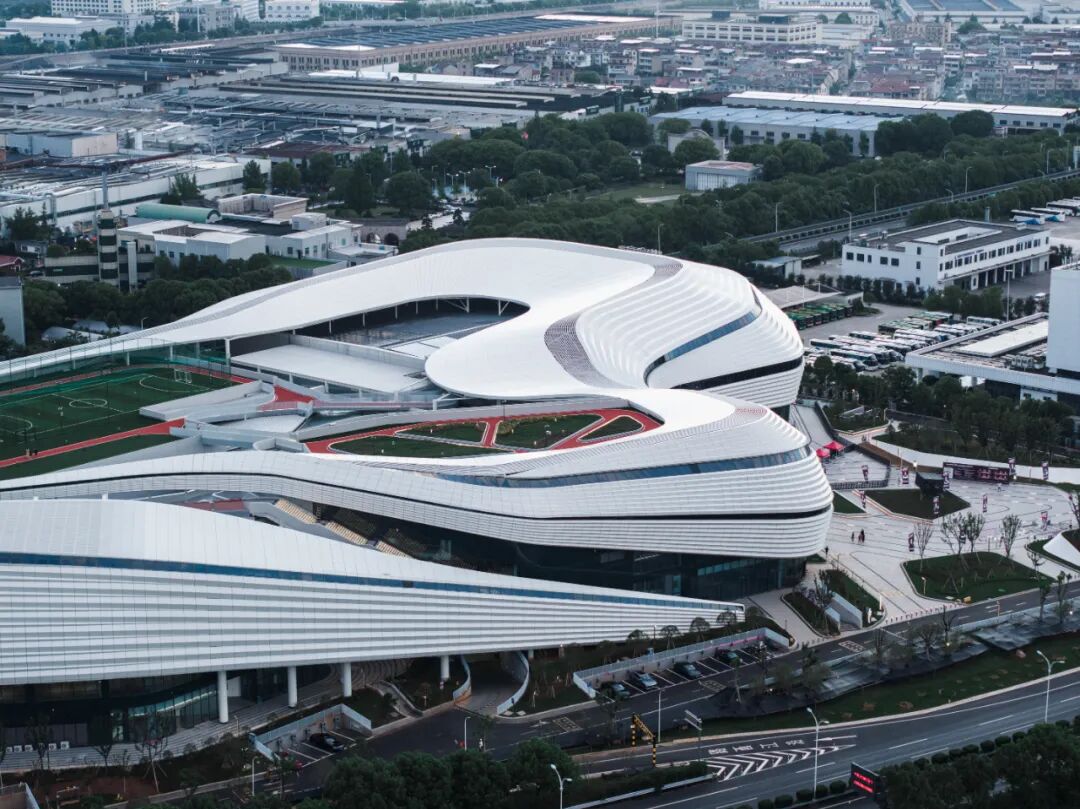
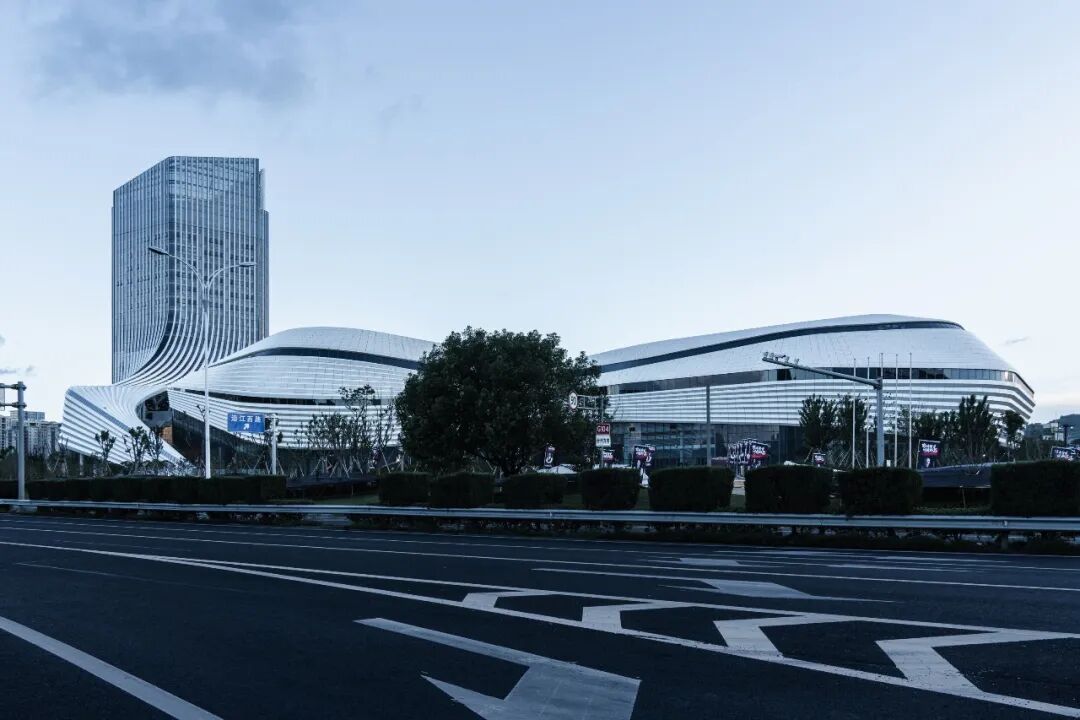
This challenge is more pronounced in county-level cities, where event-based revenue alone cannot sustain such a large facility. To address this, line+ proposed the "Sports Mall" prototype: a "1+N" composite operational model using sports as the engine, integrating commercial, leisure, social, and cultural tourism components. This approach fundamentally transforms the venue from a non-daily "Event Container" into an everyday "Urban Generator."
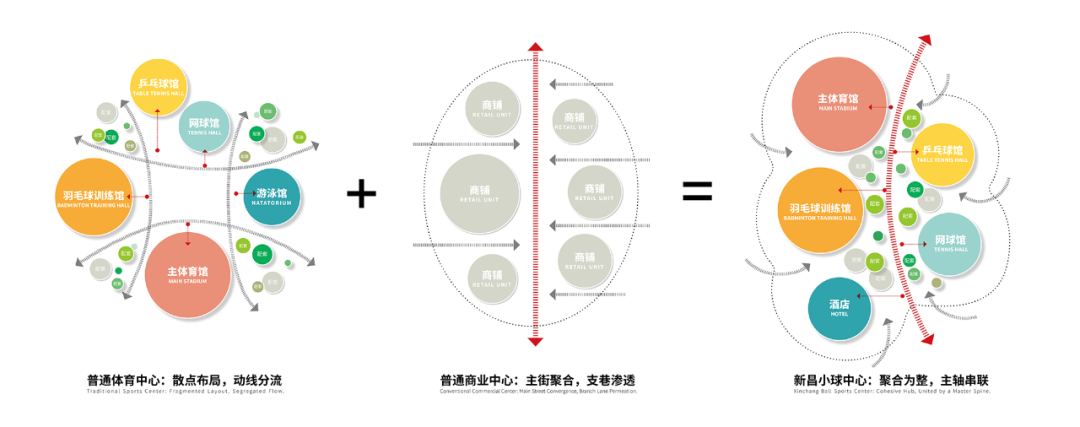
The design strategy focused on: Normalization: Integrating the space into citizens' daily fitness and leisure routines, utilizing the site's advantages to establish it as a routine urban activity center.
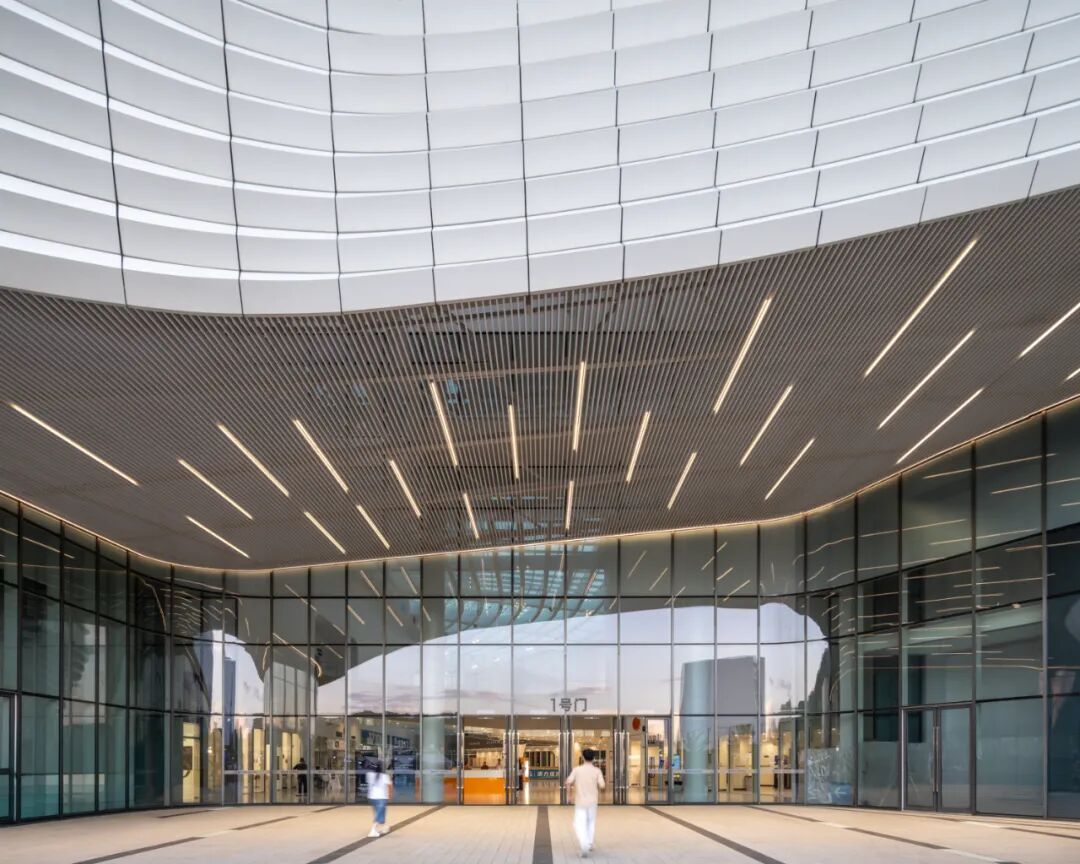
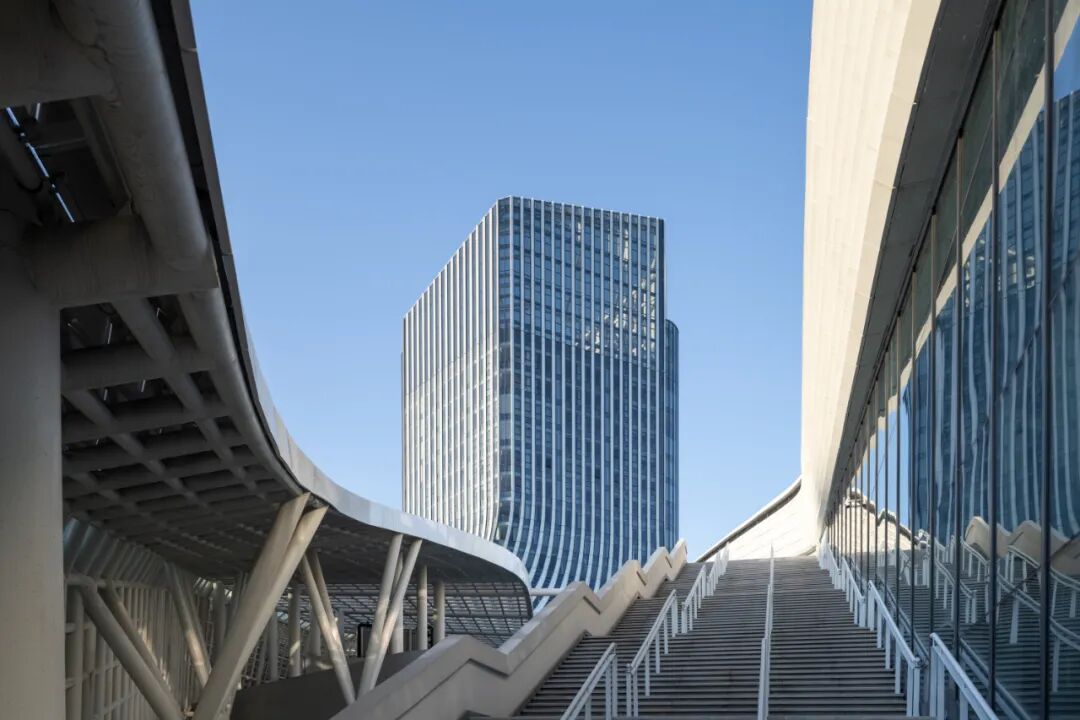
Functional Mix: Introducing diverse formats—dining, retail, hospitality, and entertainment—beyond the core sports function. This not only provides comprehensive support for international events but also complements the surrounding area's lack of commercial amenities, serving as a new city center for leisure, fitness, and conventions during off-peak times.
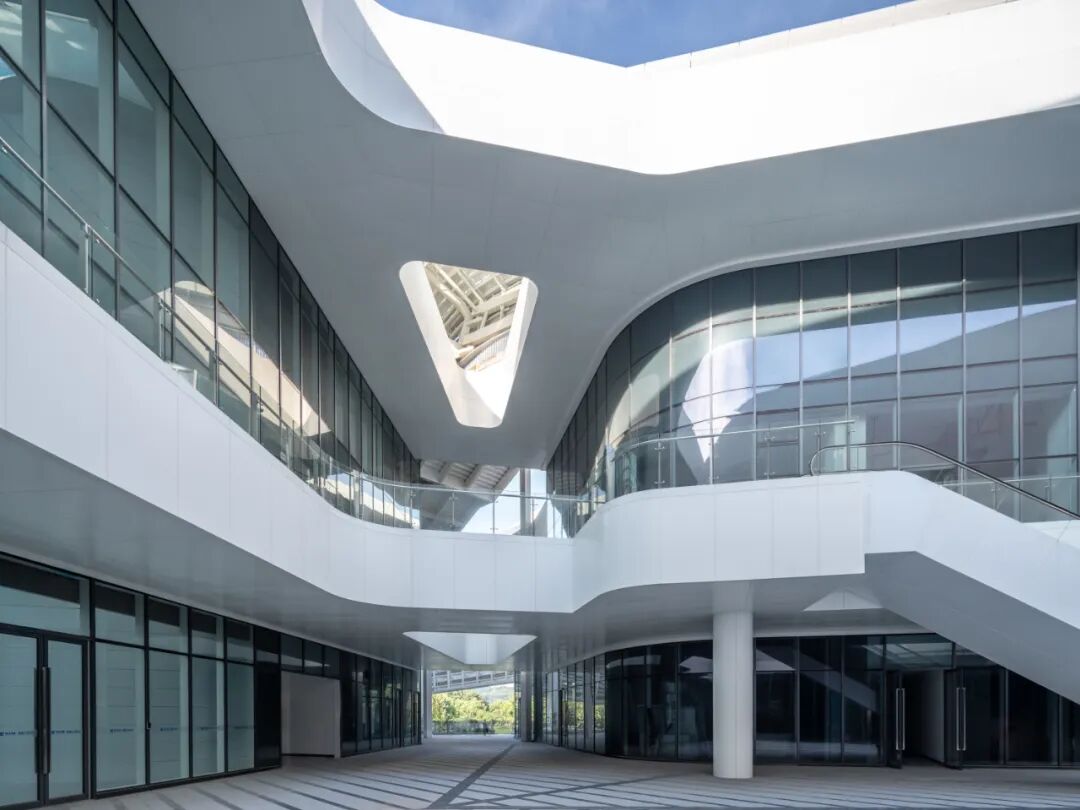
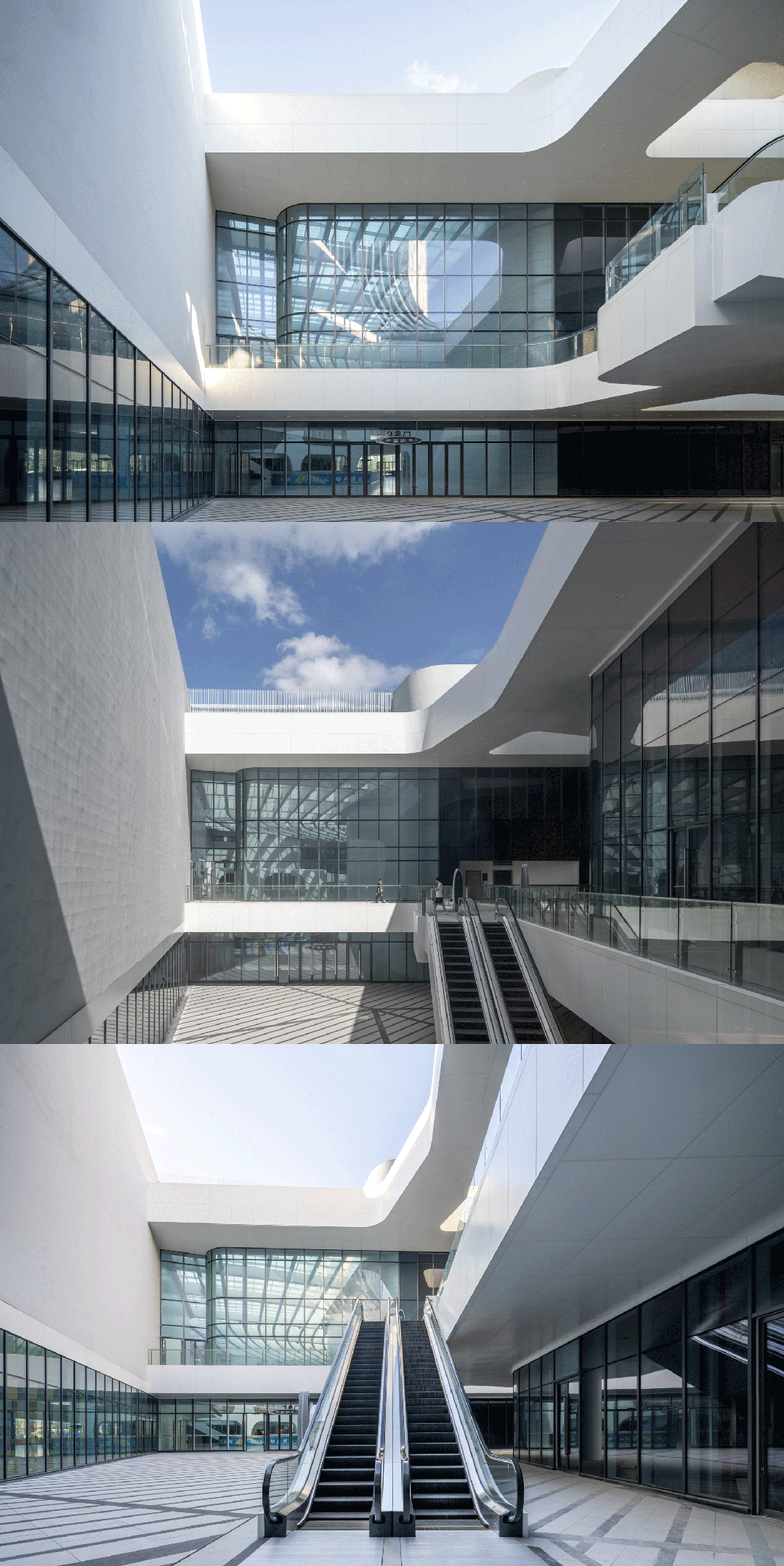
From a platform for professional championships to a center for mass fitness, and from cultural performances to urban celebrations, the Globular Center not only satisfies the city’s need for professional sports infrastructure but, through continuous operation, moves beyond the traditional cyclical "empty-activation" usage model, becoming a composite urban landmark connecting the ordinary with the extraordinary.
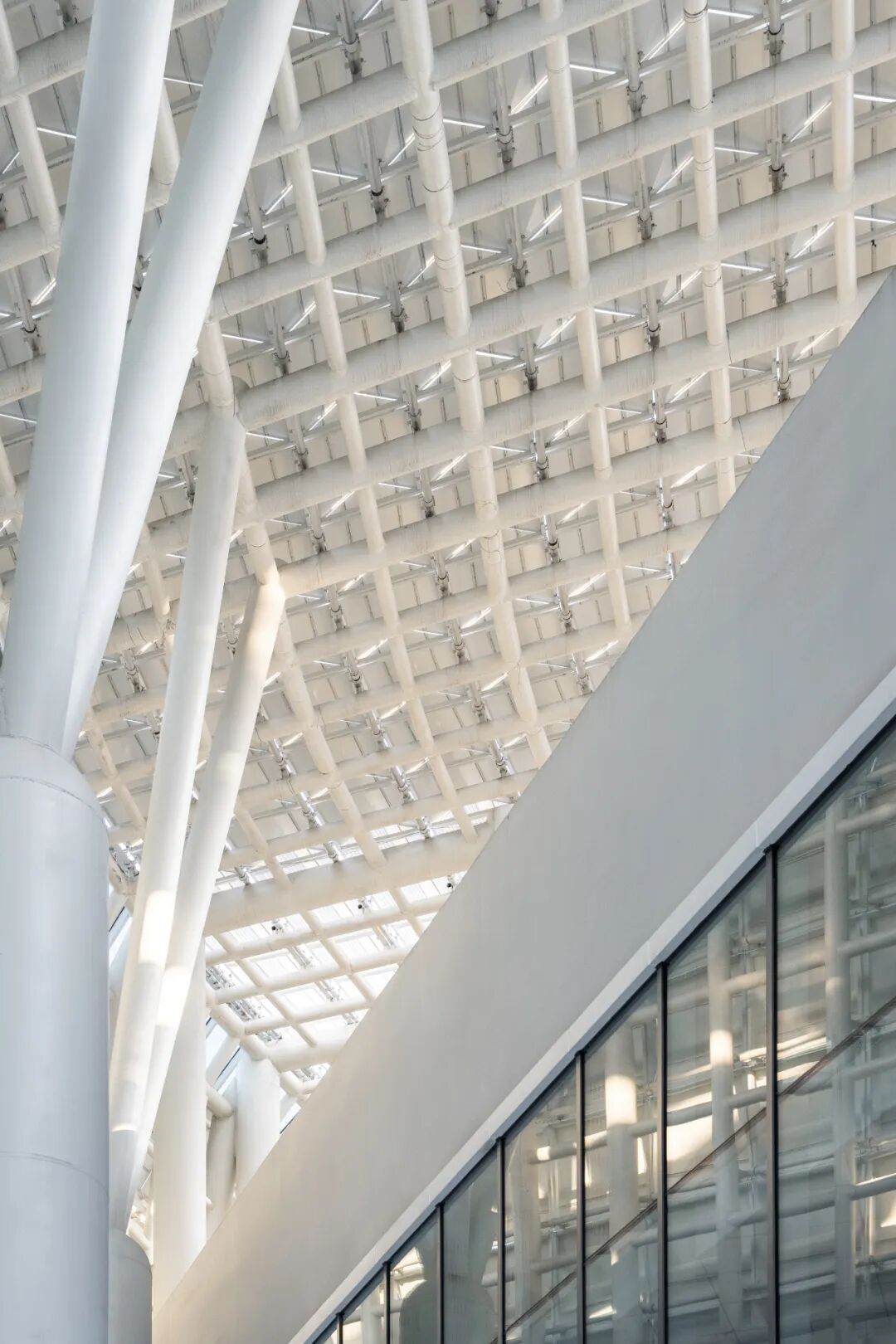
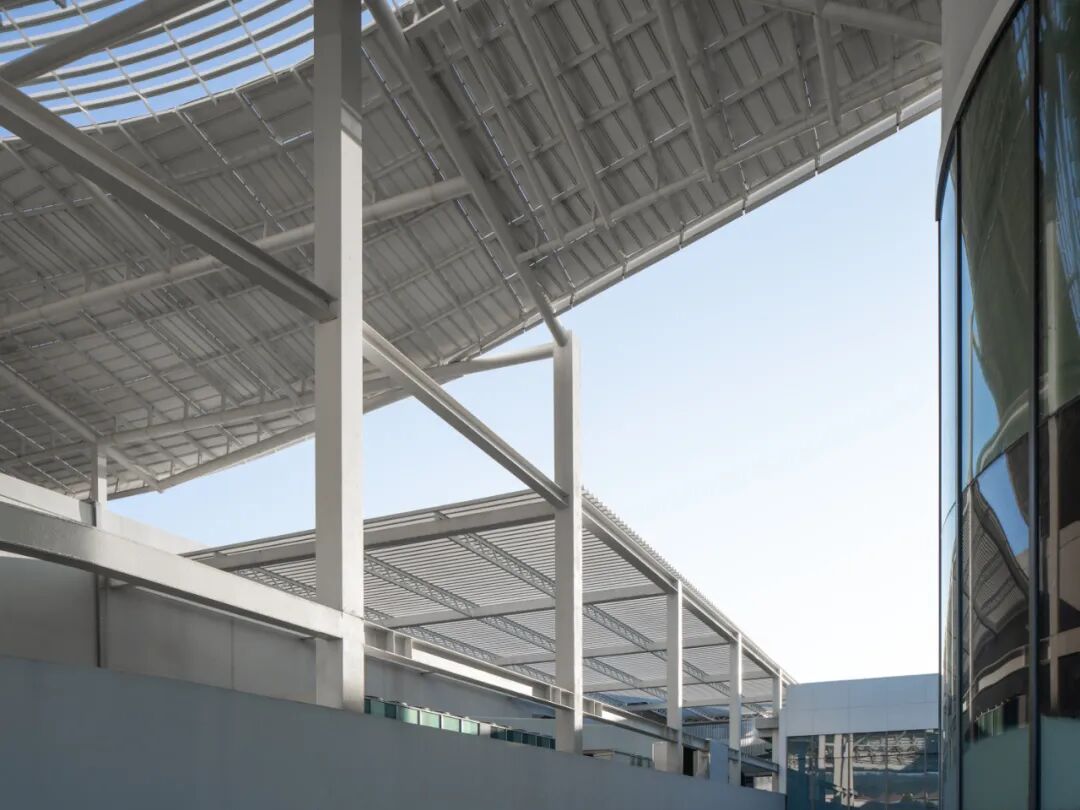
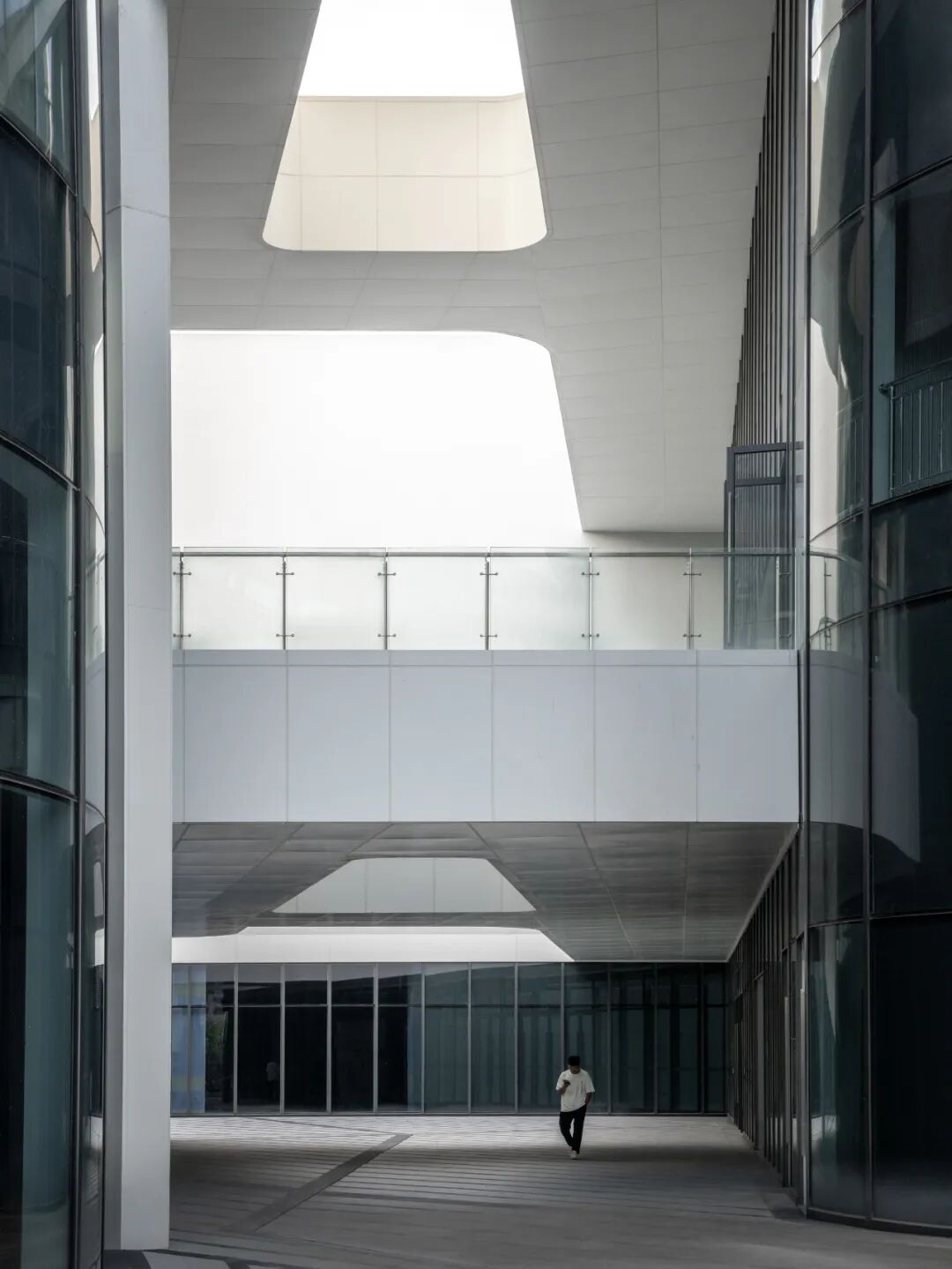

The compact 120,000 sqm facility presented a dense and functionally intricate design challenge, integrating a 5,000-seat Class A multi-purpose gymnasium, training halls for badminton, tennis, and table tennis, composite commercial spaces, exhibition areas, and a 19-story hotel-style athlete apartment.
Transportation Planning
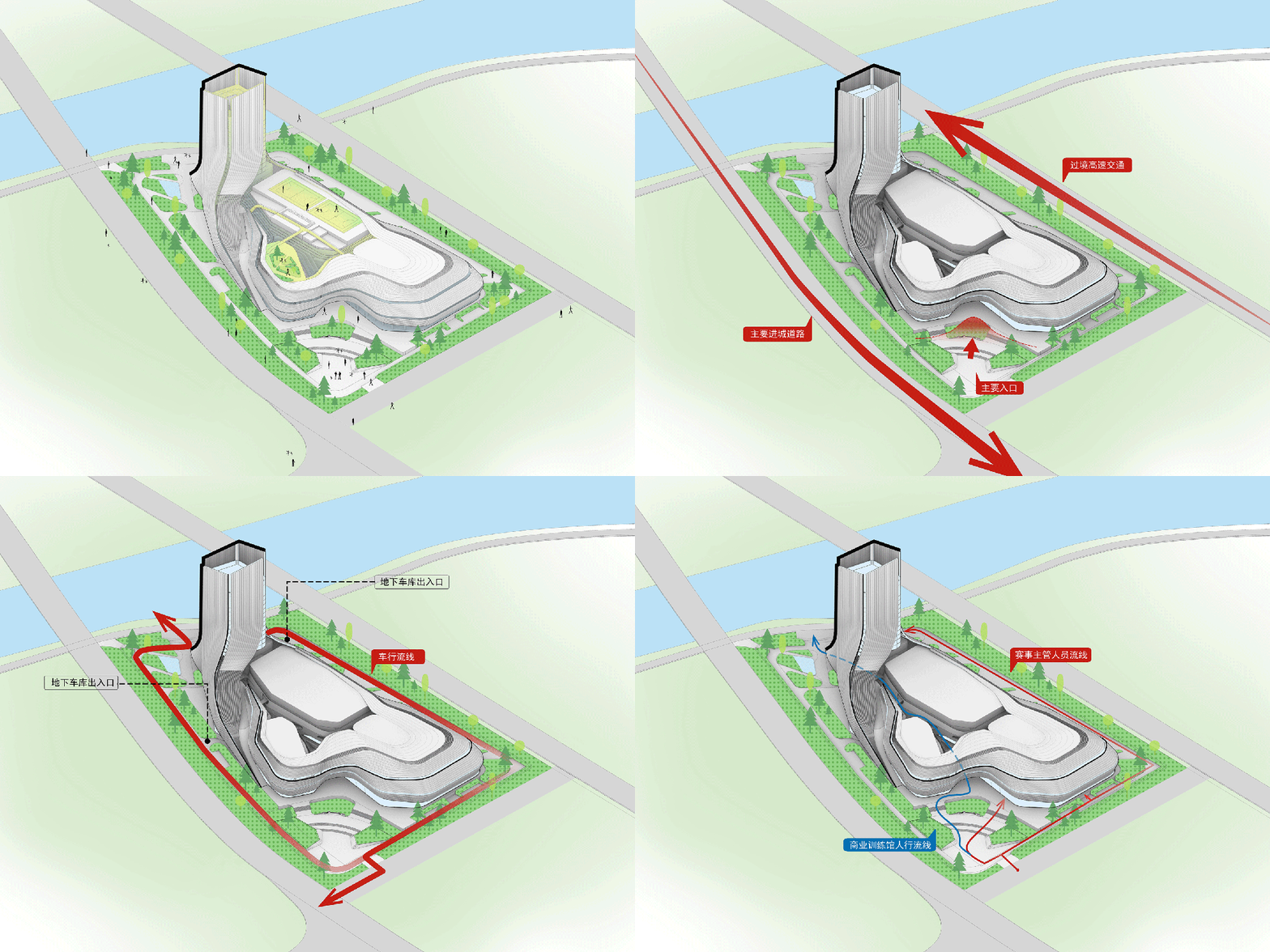
△ Transportation plan
Program Distribution
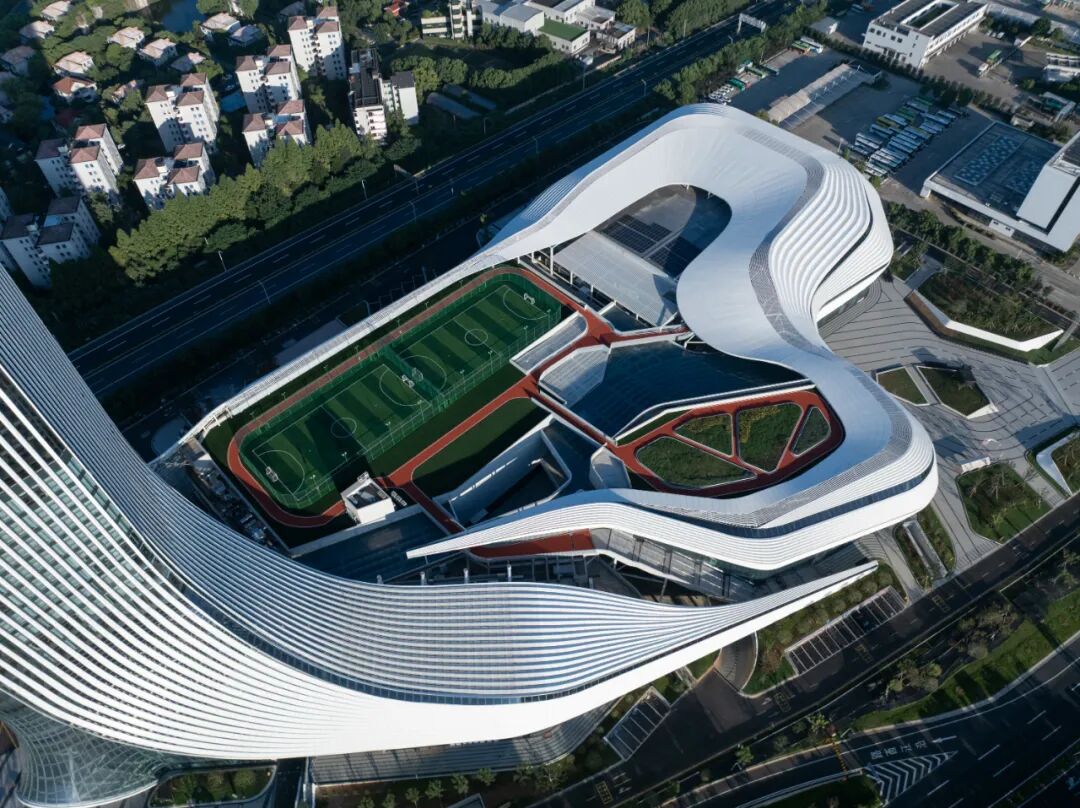
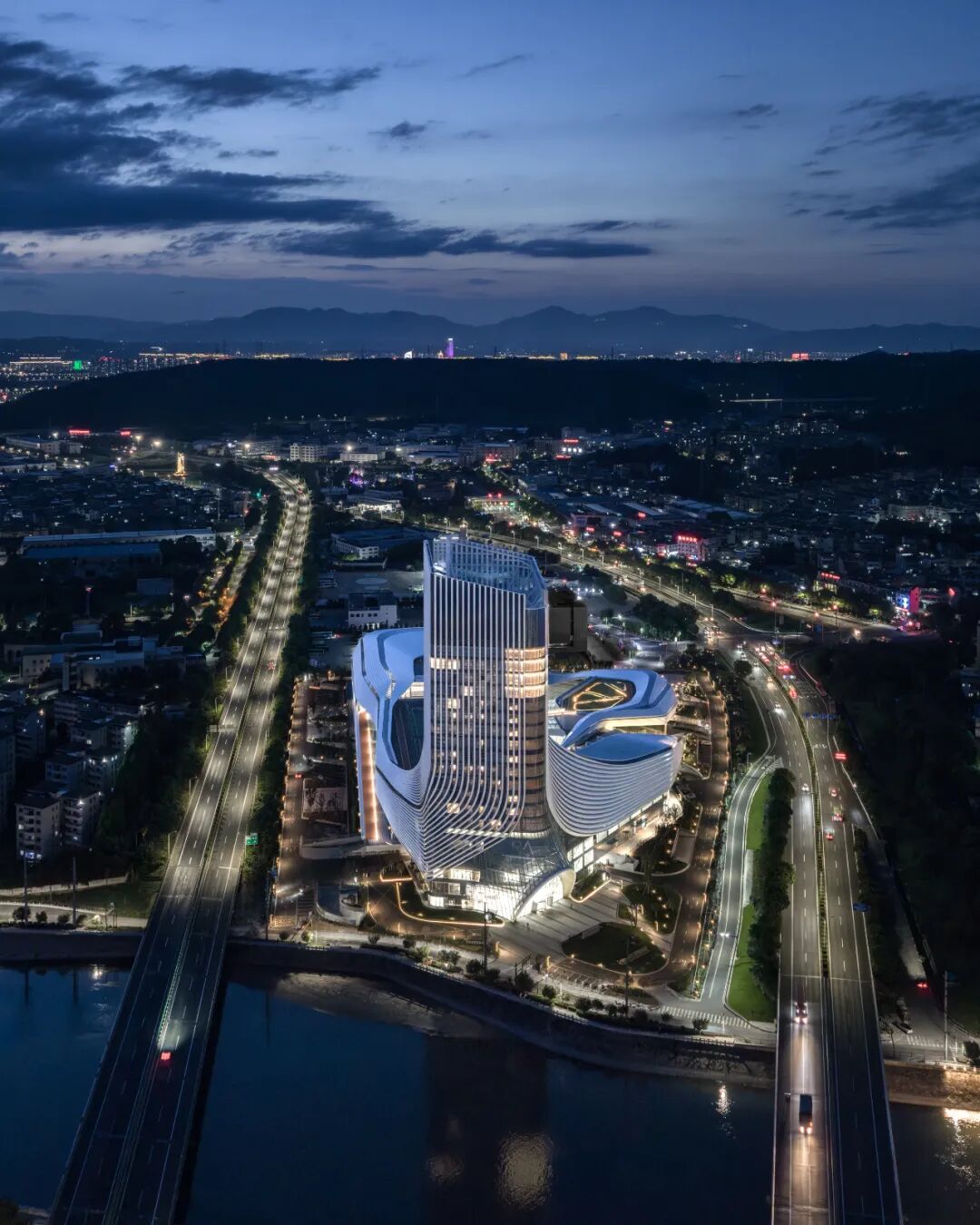
The north side, adjacent to the Tourist and Passenger Transport Centers, is the main public arrival area. Therefore, the Main Gymnasium, Small Ball Halls, Training Halls, and the entrance plaza are located in the North to accommodate public and event activities. The hotel, requiring privacy and comfort, is positioned on the south side, facing the river for a serene retreat.
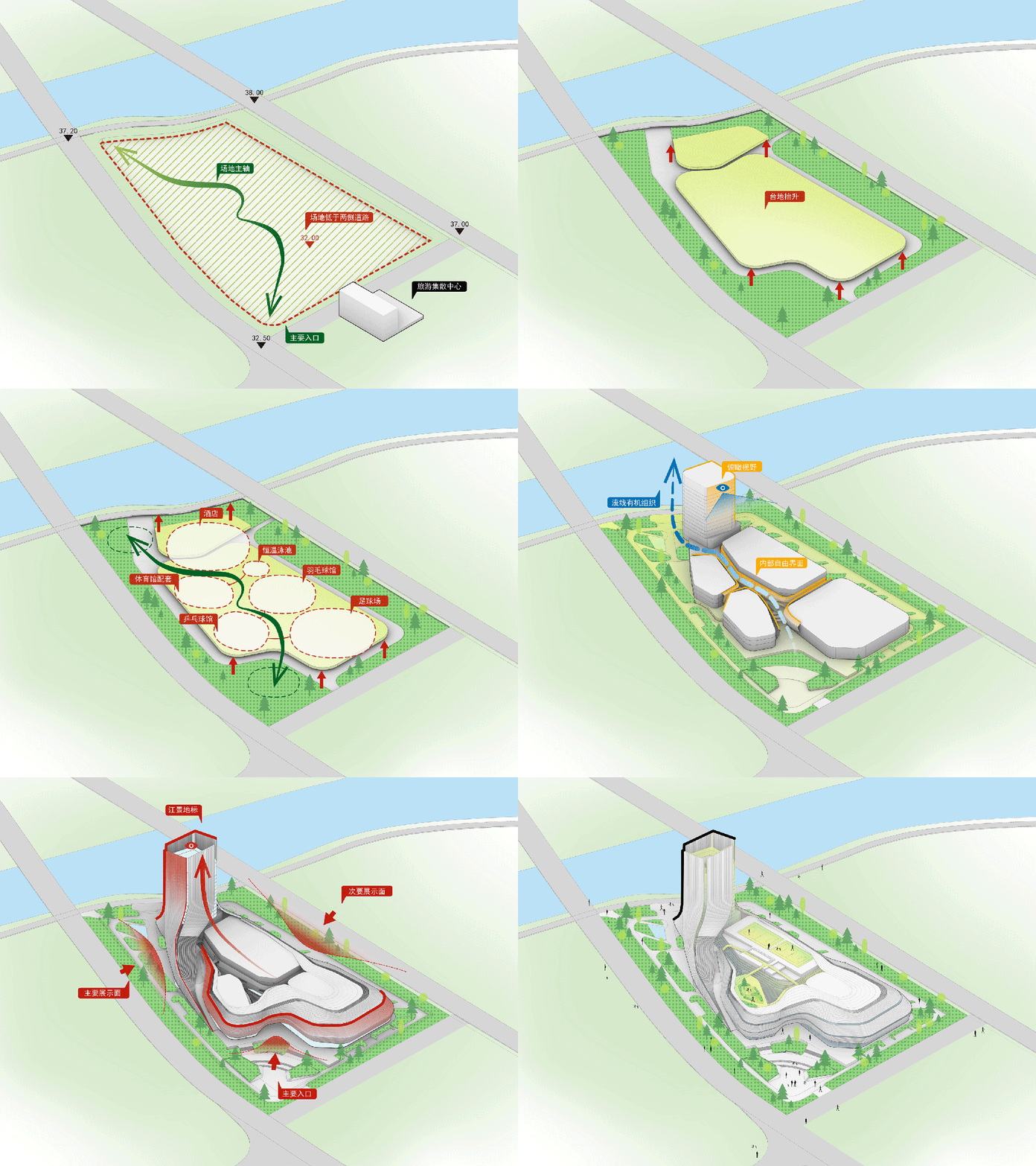
△ Program Distribution
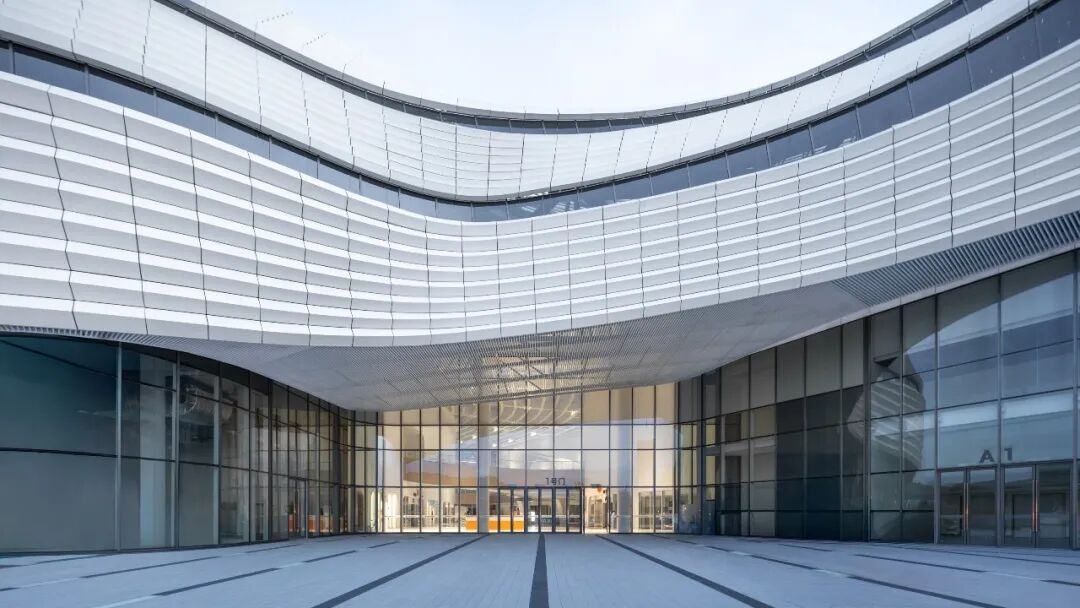
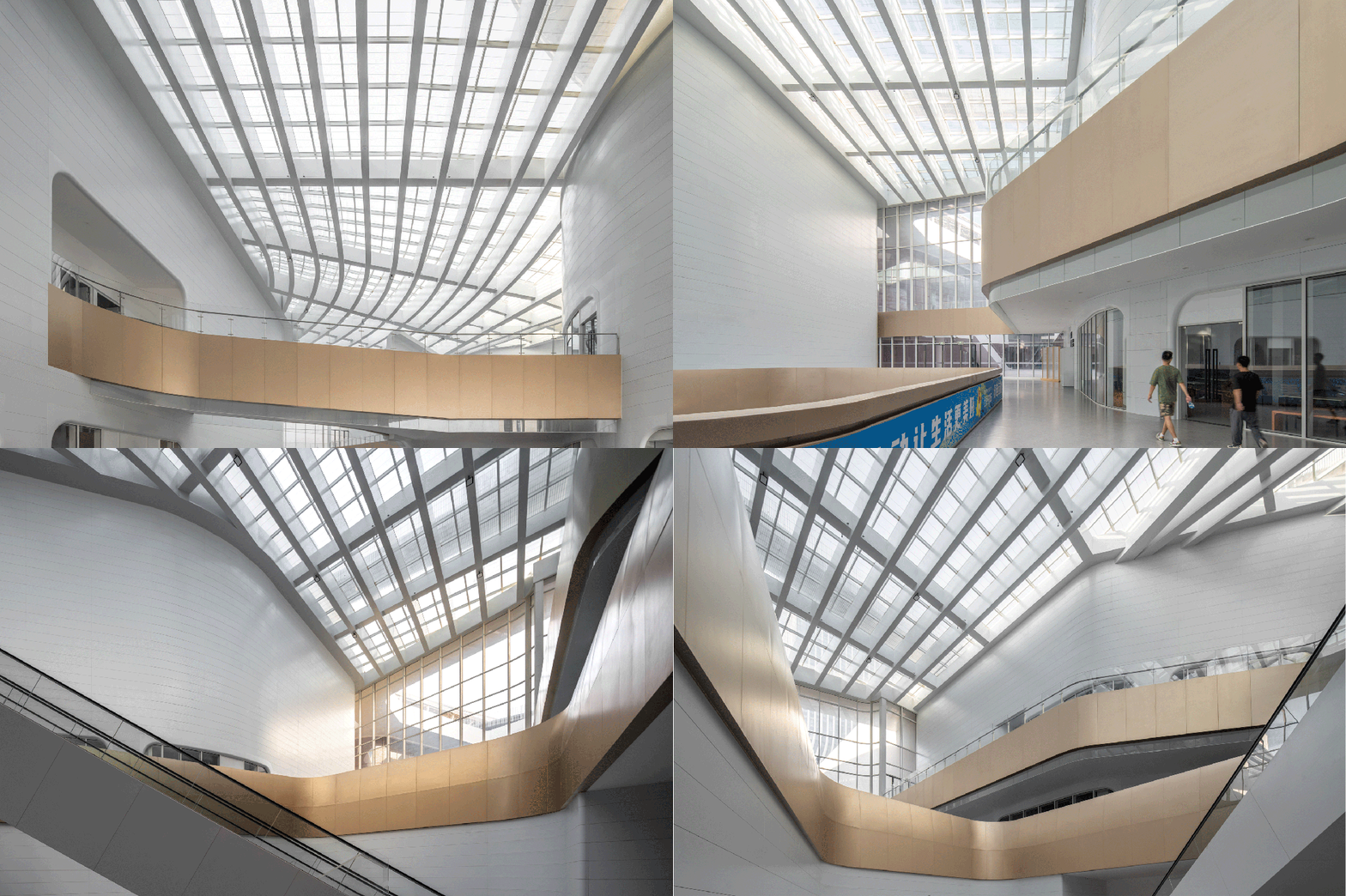
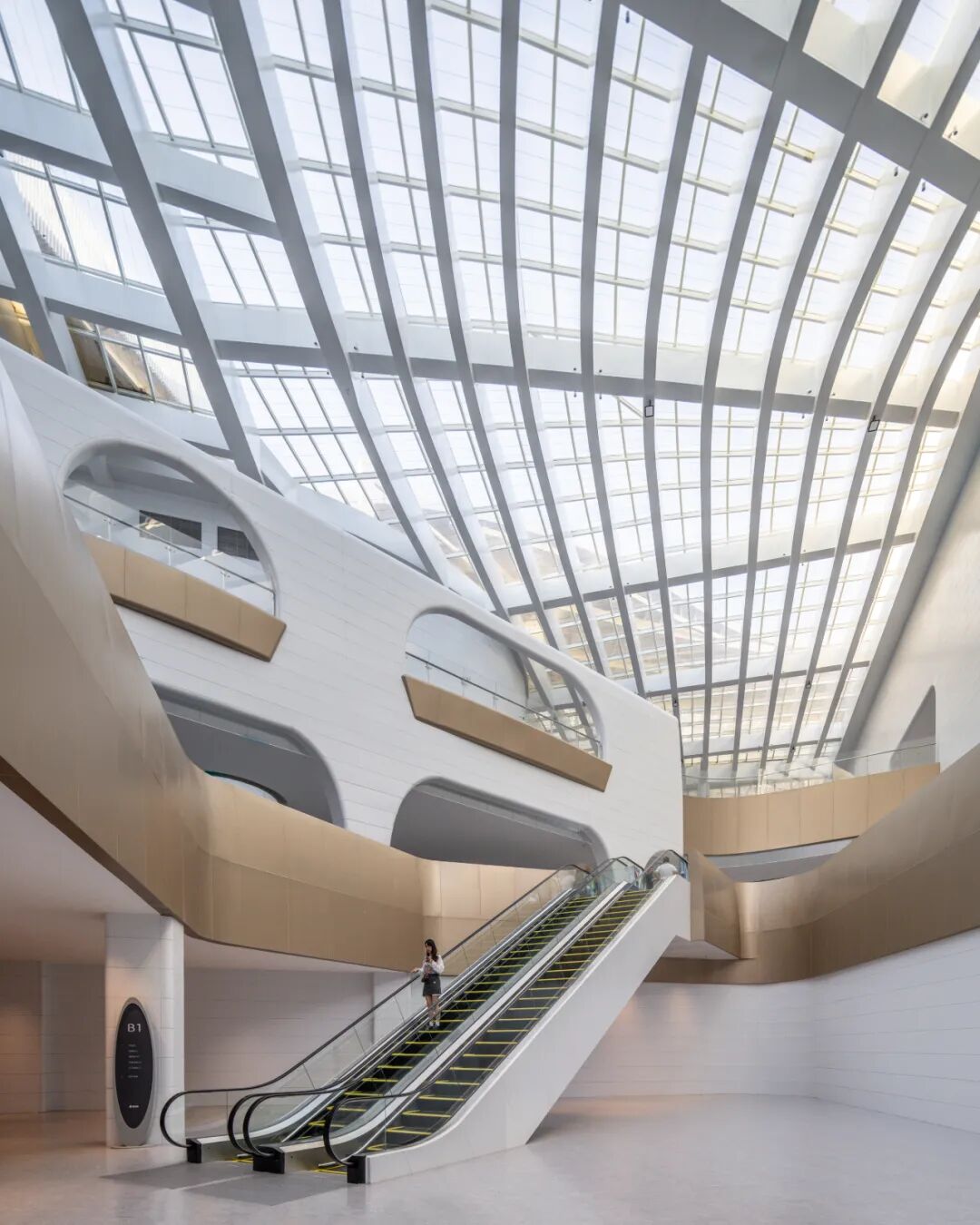
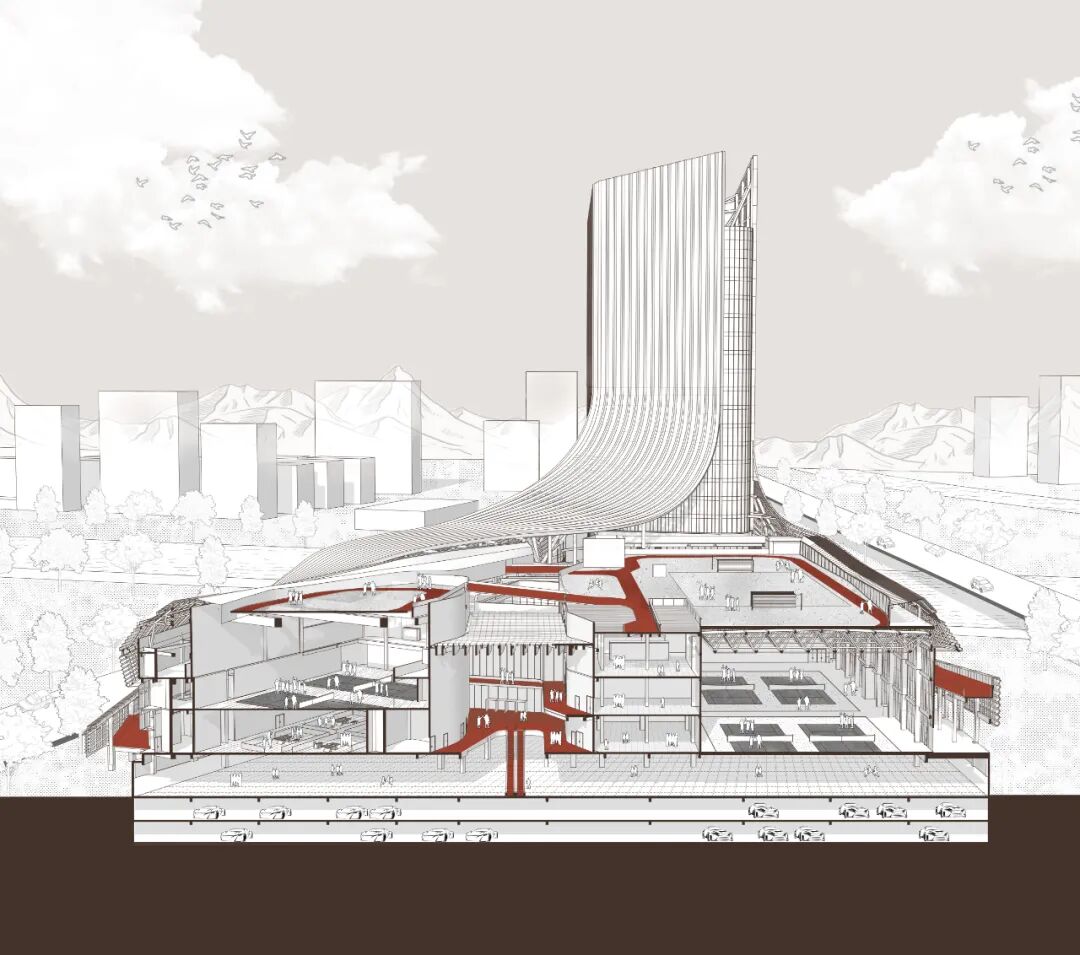
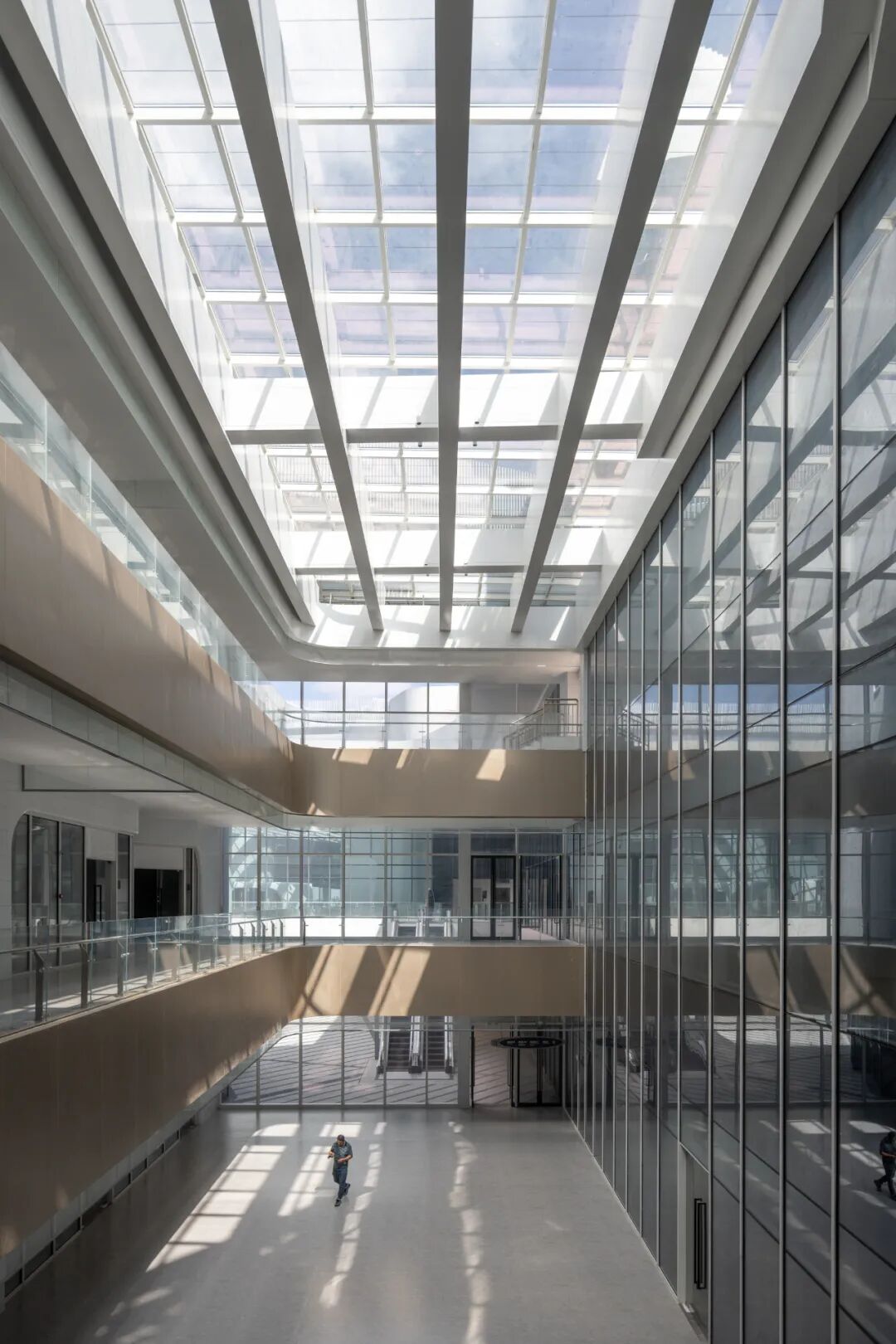
The five major volumes (Main Gymnasium, Small Ball Halls, Training Halls, and Athlete Hotel) are linked by a central "Atrium HUB." Retail and dining services are embedded along the atrium, forming an open main street, similar to a shopping mall, which connects the northern and southern anchors and encourages interaction with the city.
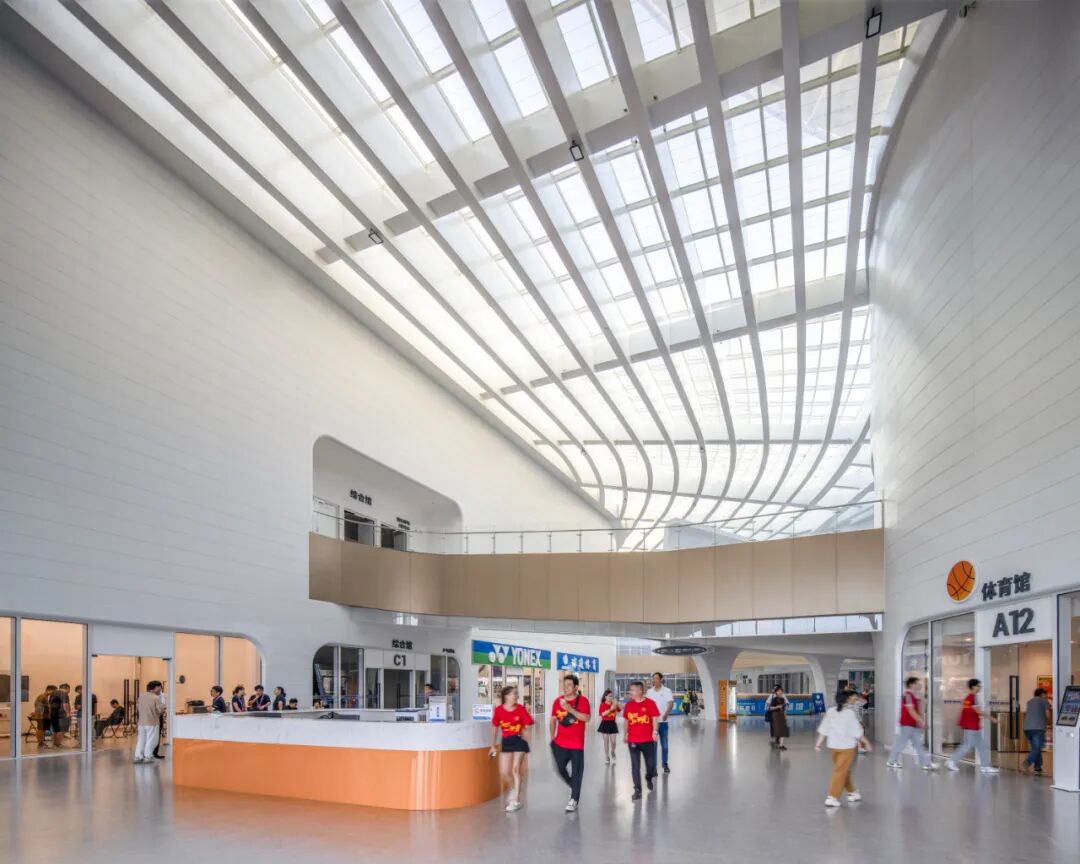
Space Reutilization
Different sports require varying clear heights and court dimensions. An "Elastic Grid" strategy was adopted to flexibly adjust court divisions, maximizing space utilization and enabling seamless scenario conversion for various activities.
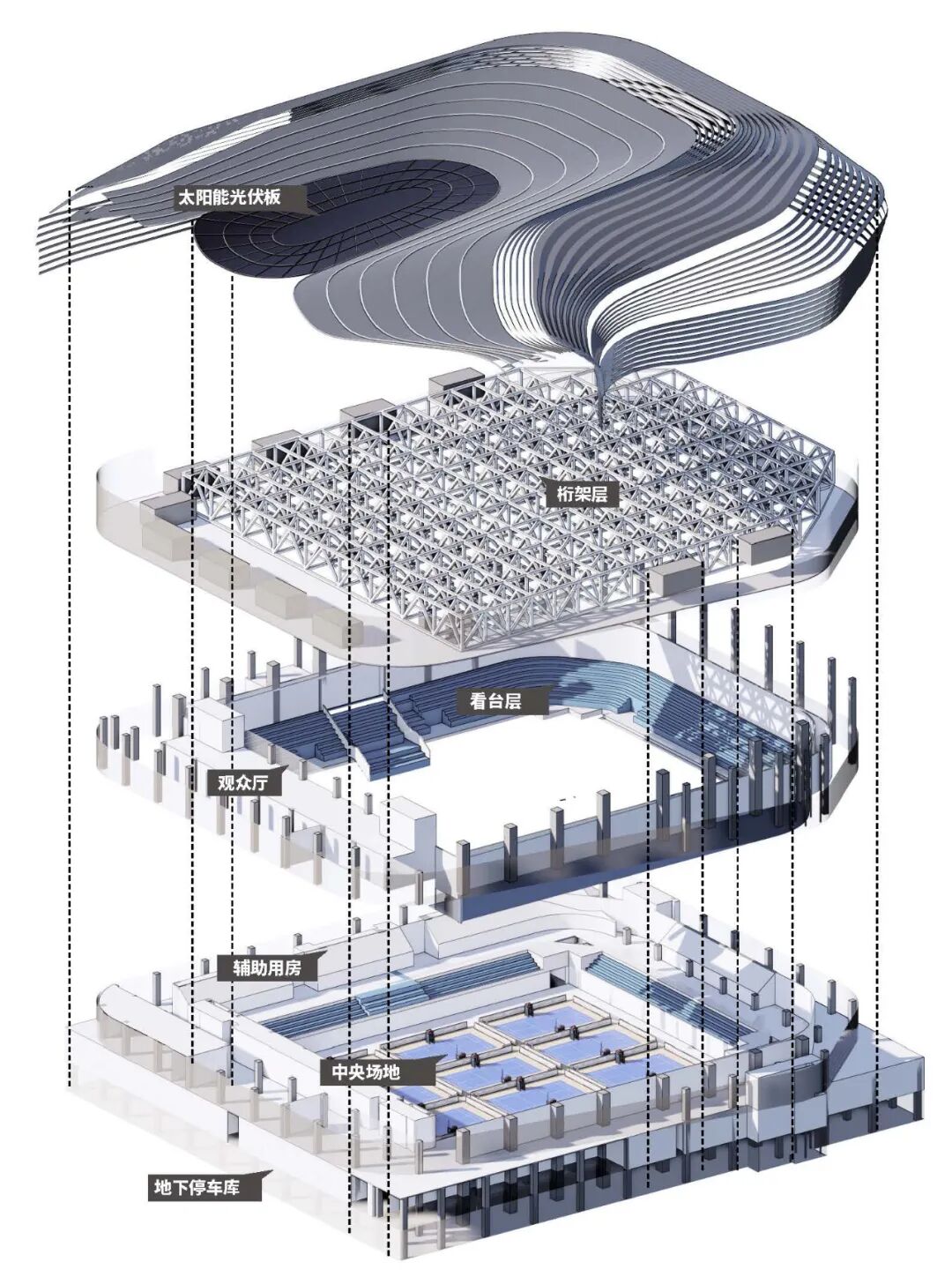
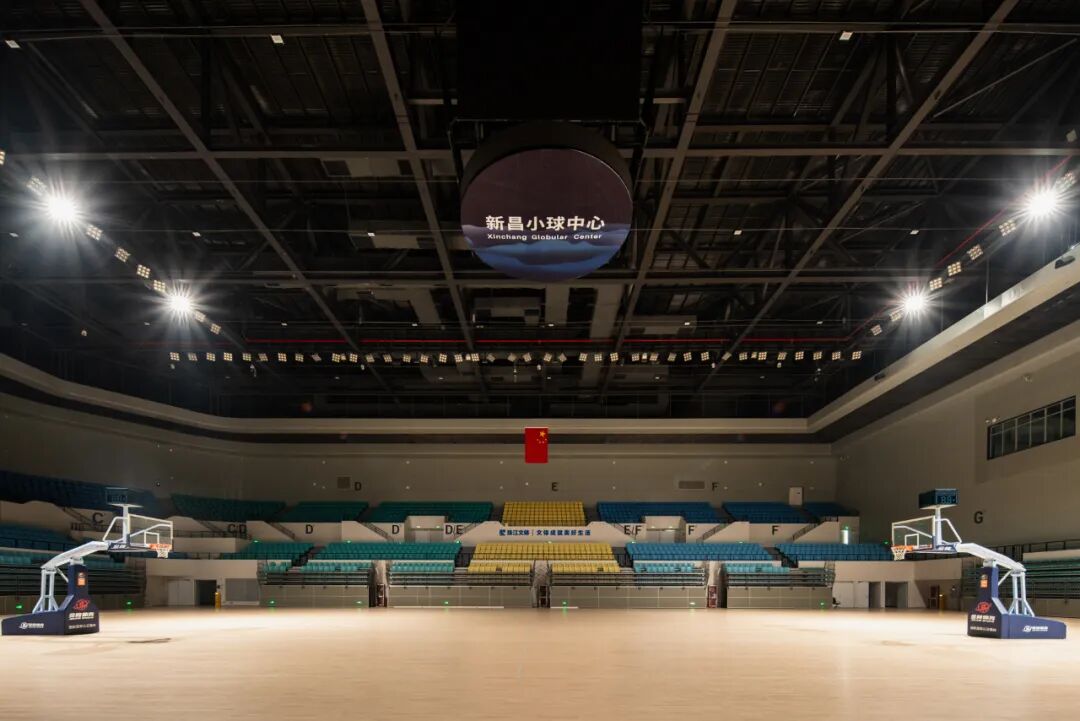
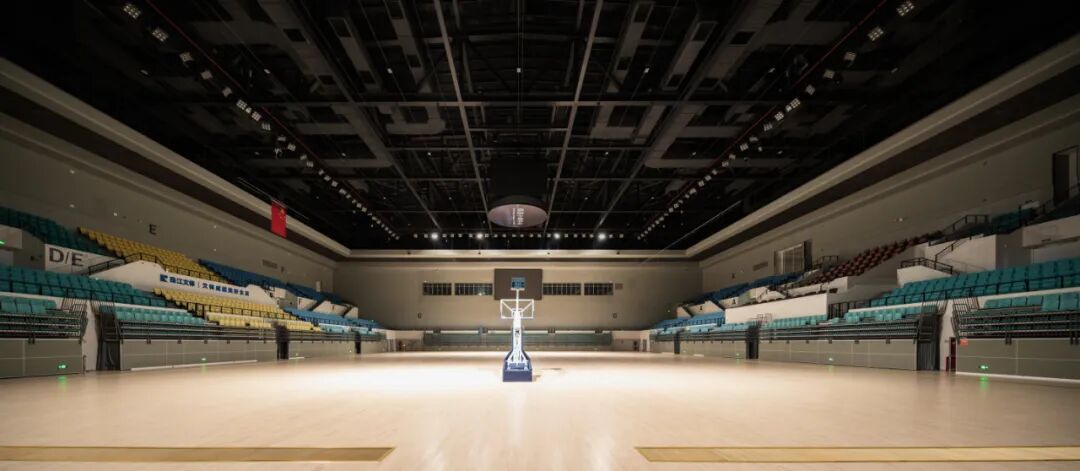
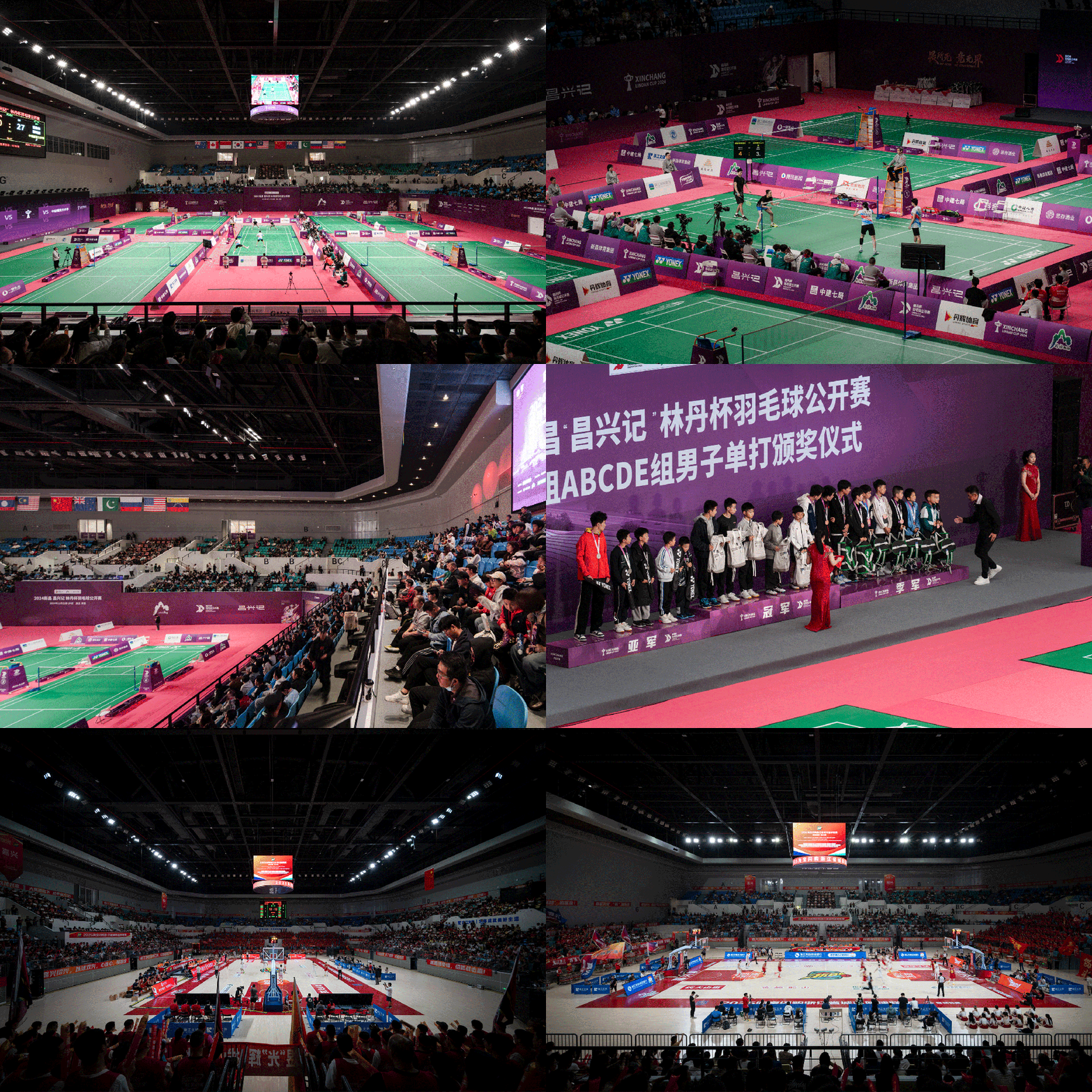
Main Gymnasium: Approx. 16,000 sqm. The central court meets international professional specifications for 12 badminton, 3 basketball, 14 table tennis, or 1 tennis court, convertible as needed. The 5,000 retractable spectator seats offer adjustable seating for optimal viewing.
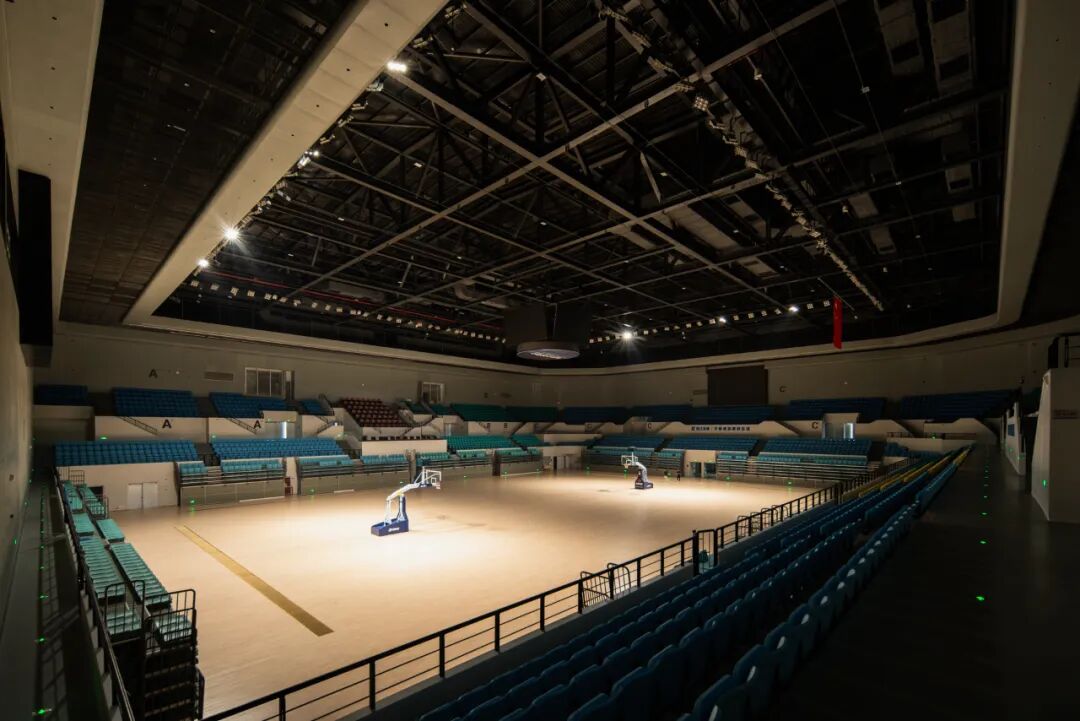
Training Hall: Approx. 7,900 sqm with a clear height of 13.5m, featuring 24 badminton training courts and 2 tennis courts (1 fixed, 1 convertible). A 25m, four-lane swimming pool and gym are located on the basement level.
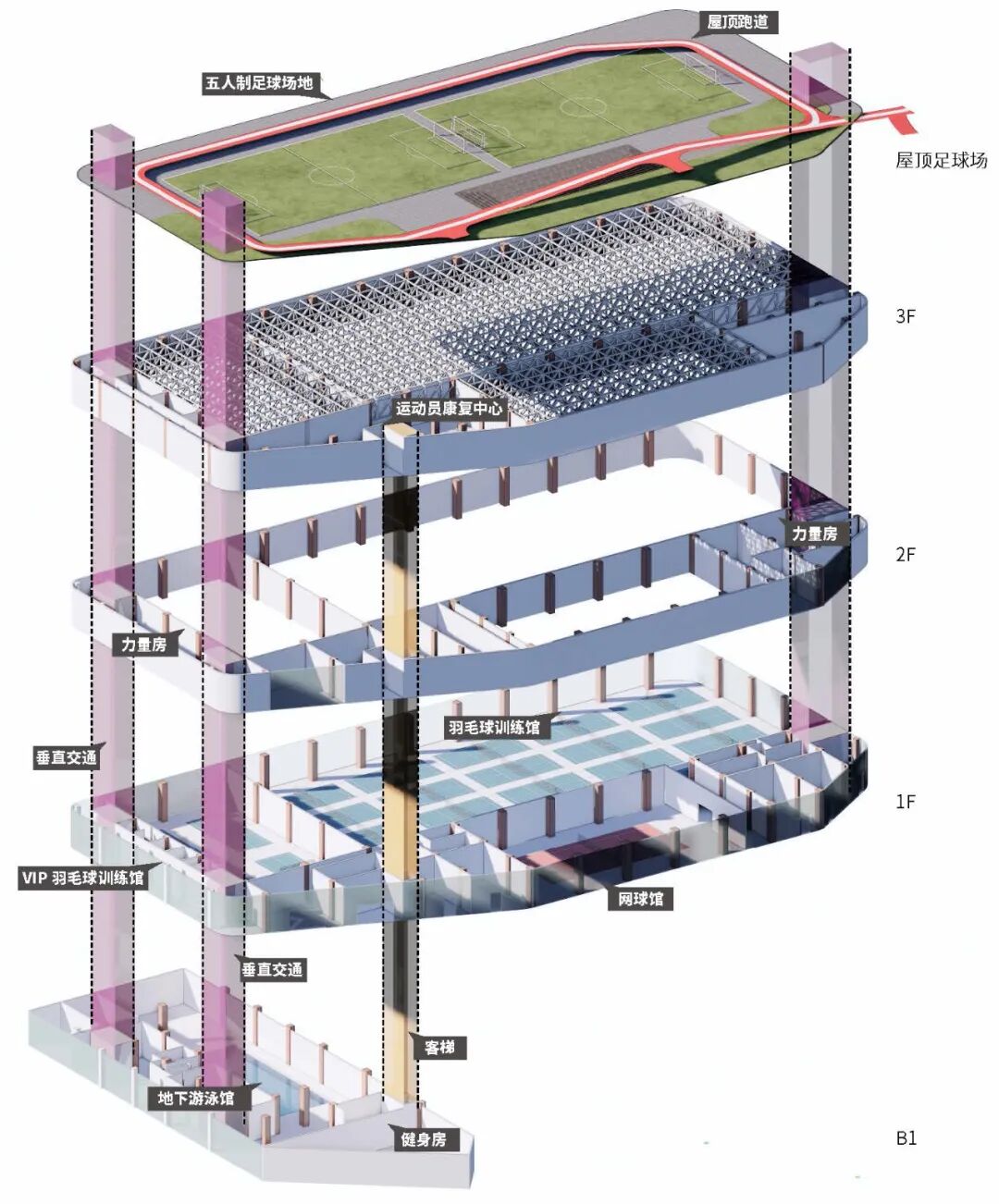
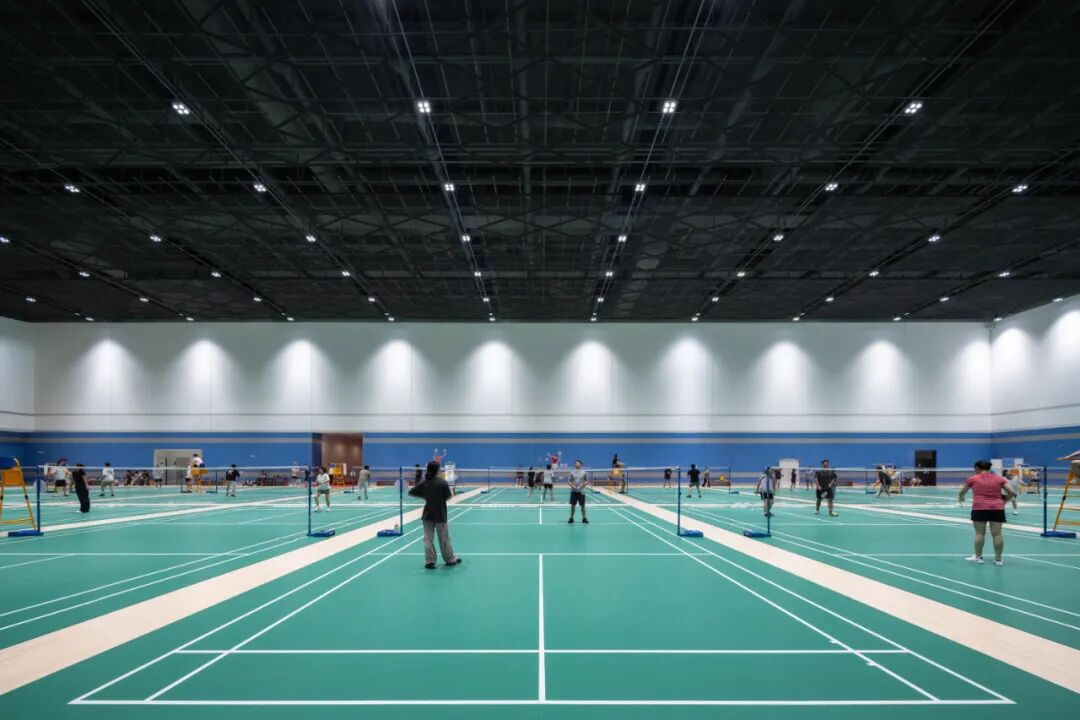
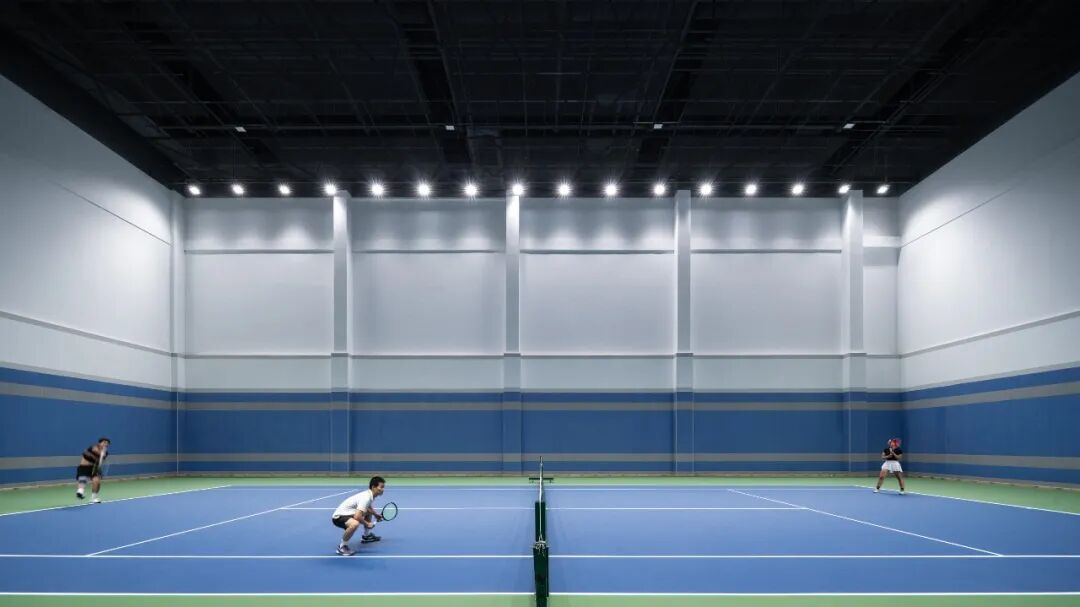
Table Tennis Hall: Approx. 6,100 sqm. The first floor (5m clear height) has 15 table tennis training courts; the second floor (11m clear height) offers 12 badminton courts or 15 table tennis courts.
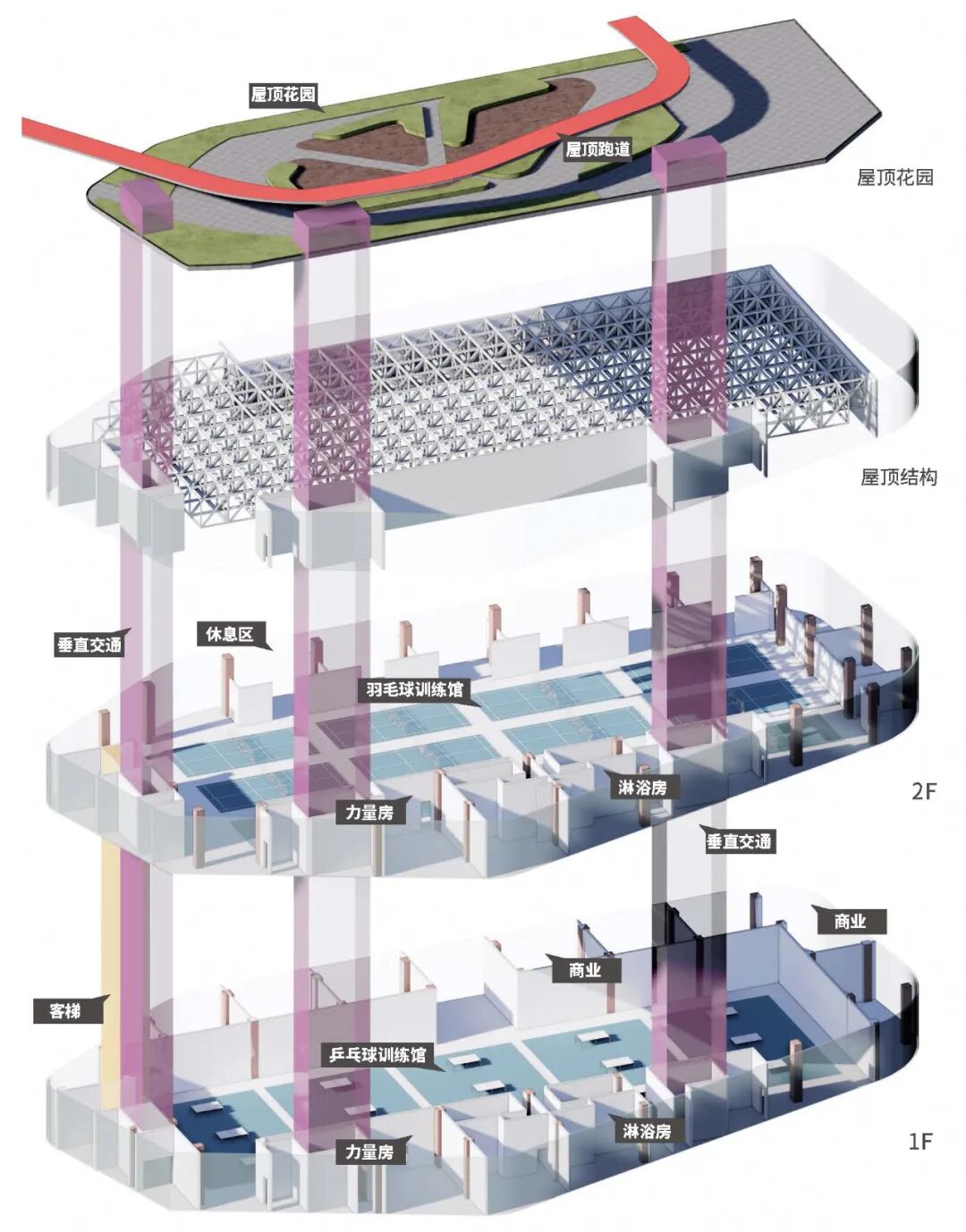
Rooftop Activation
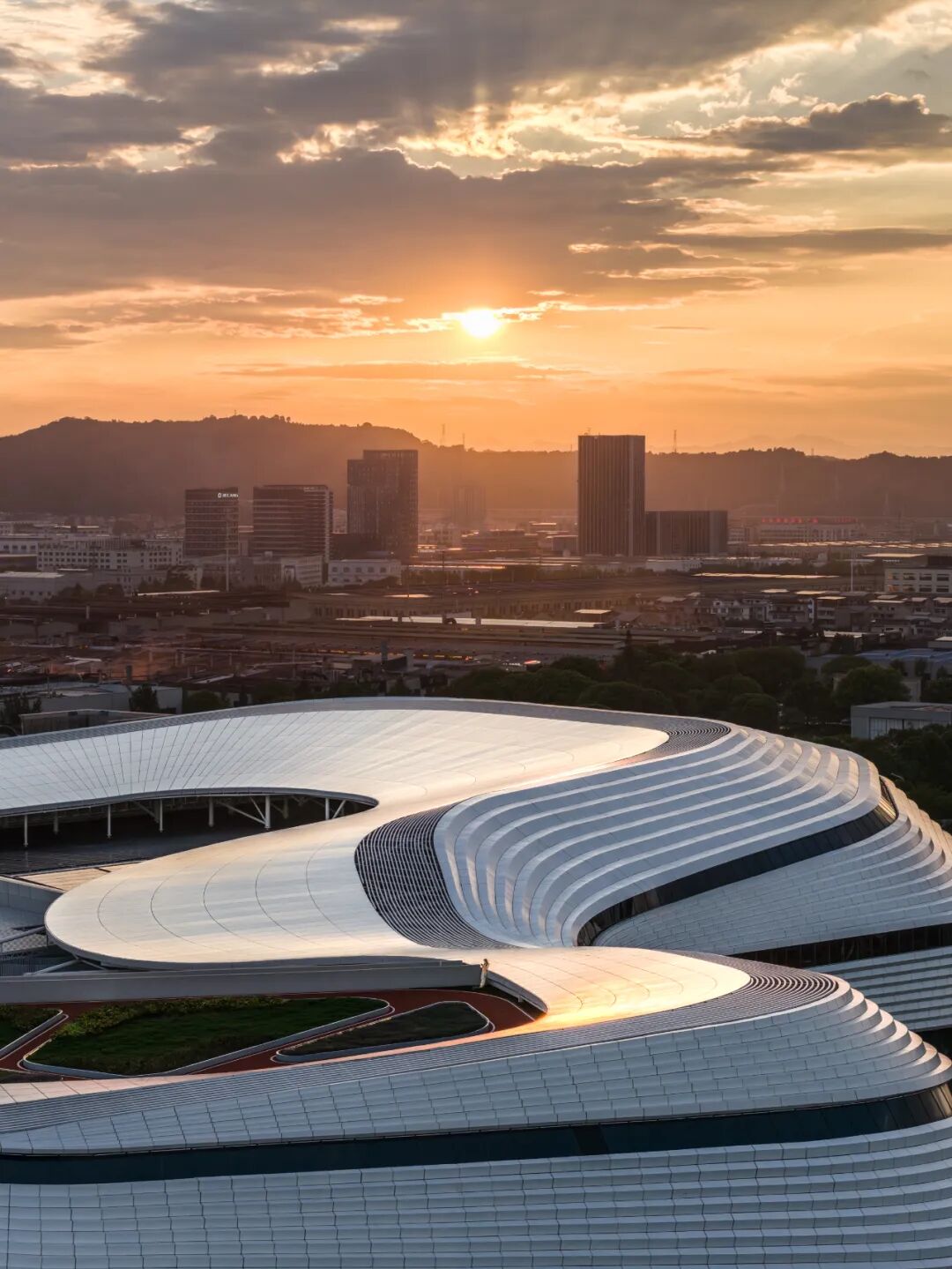
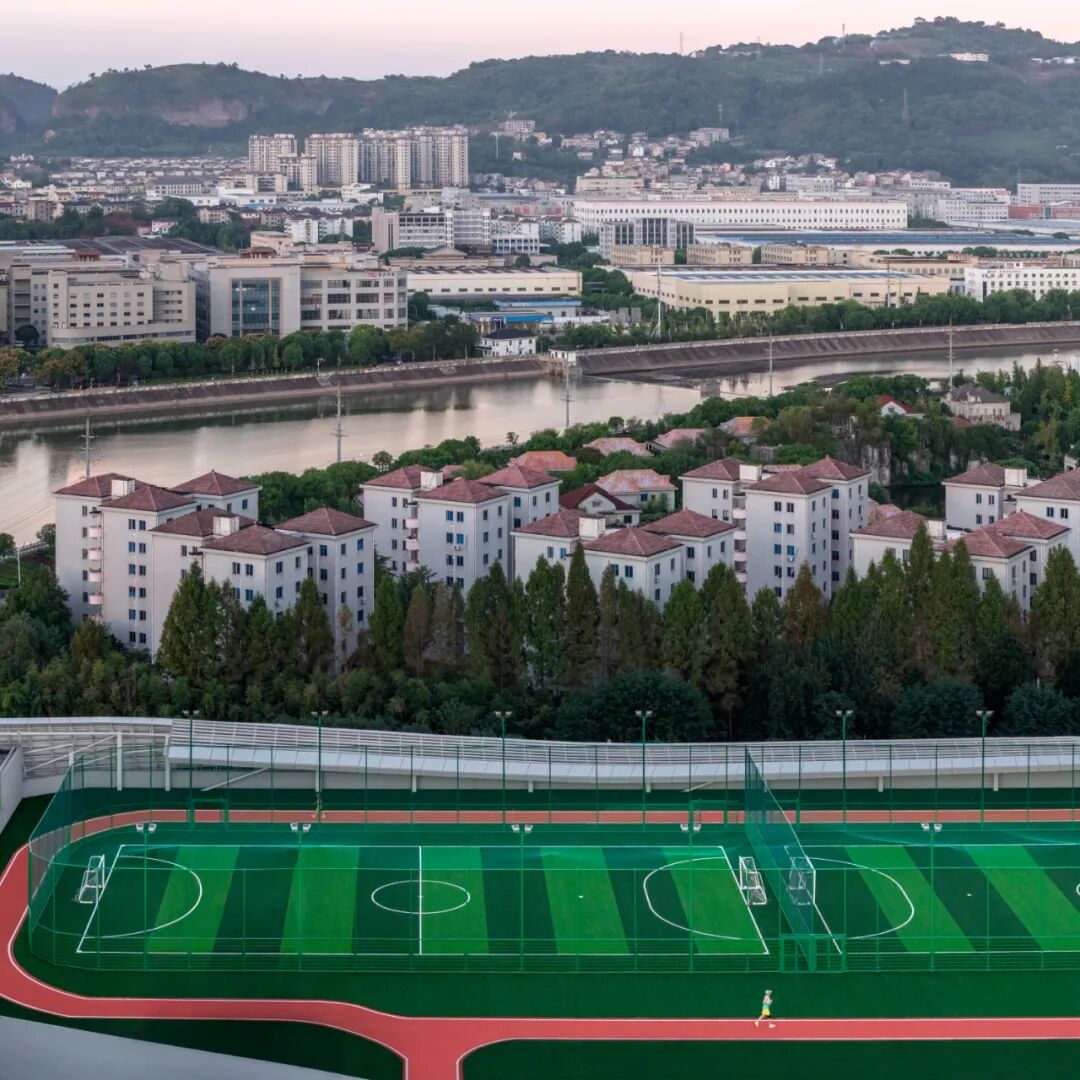
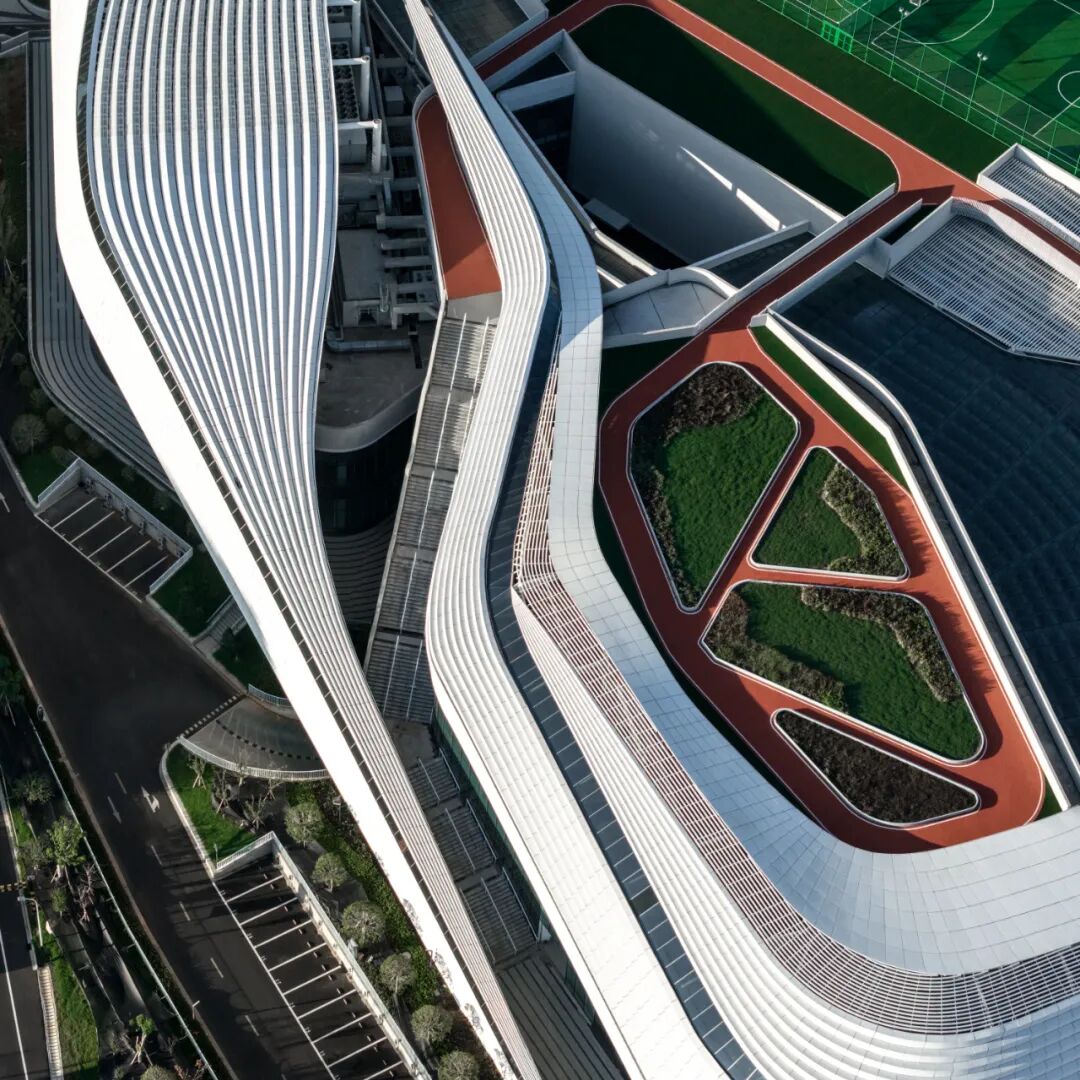
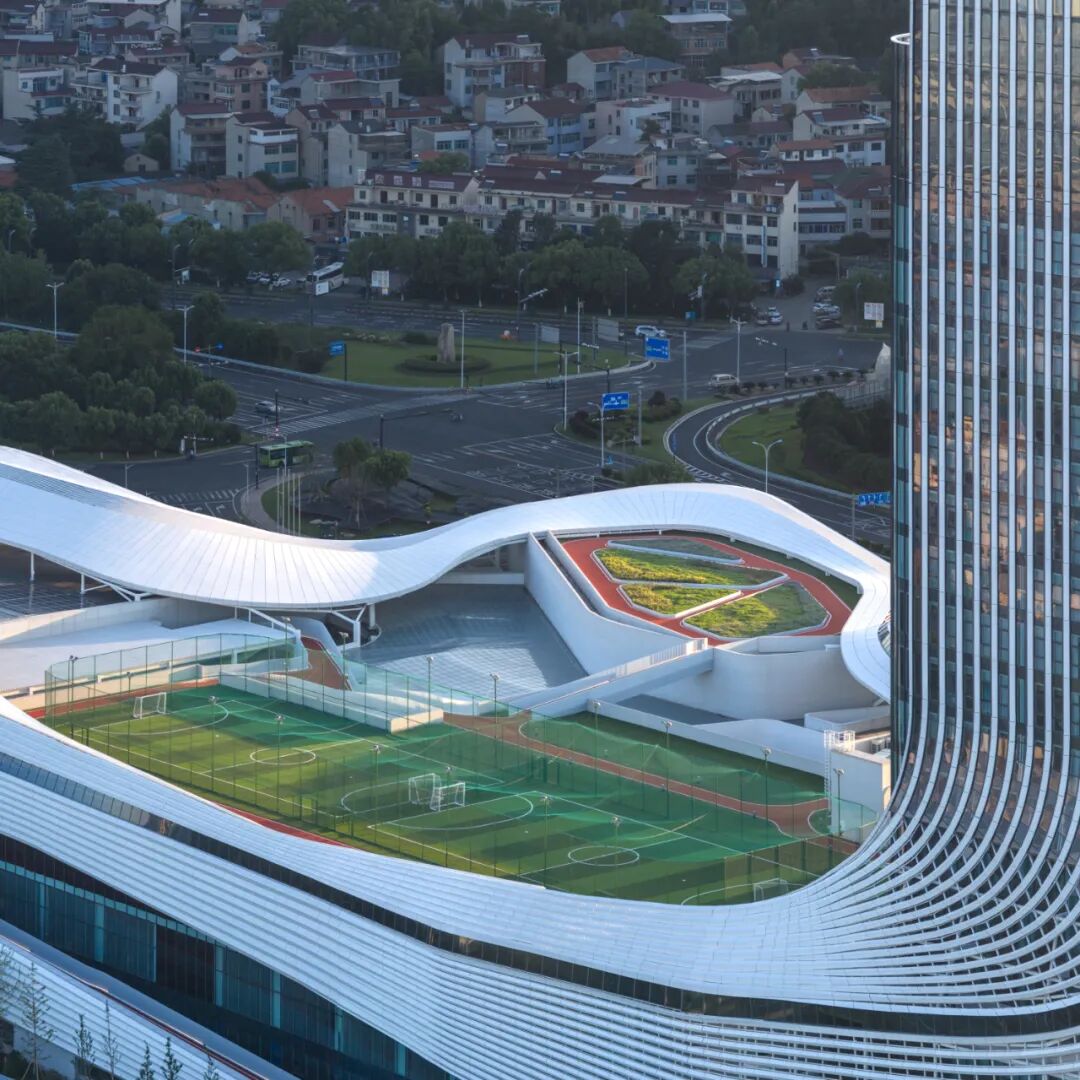
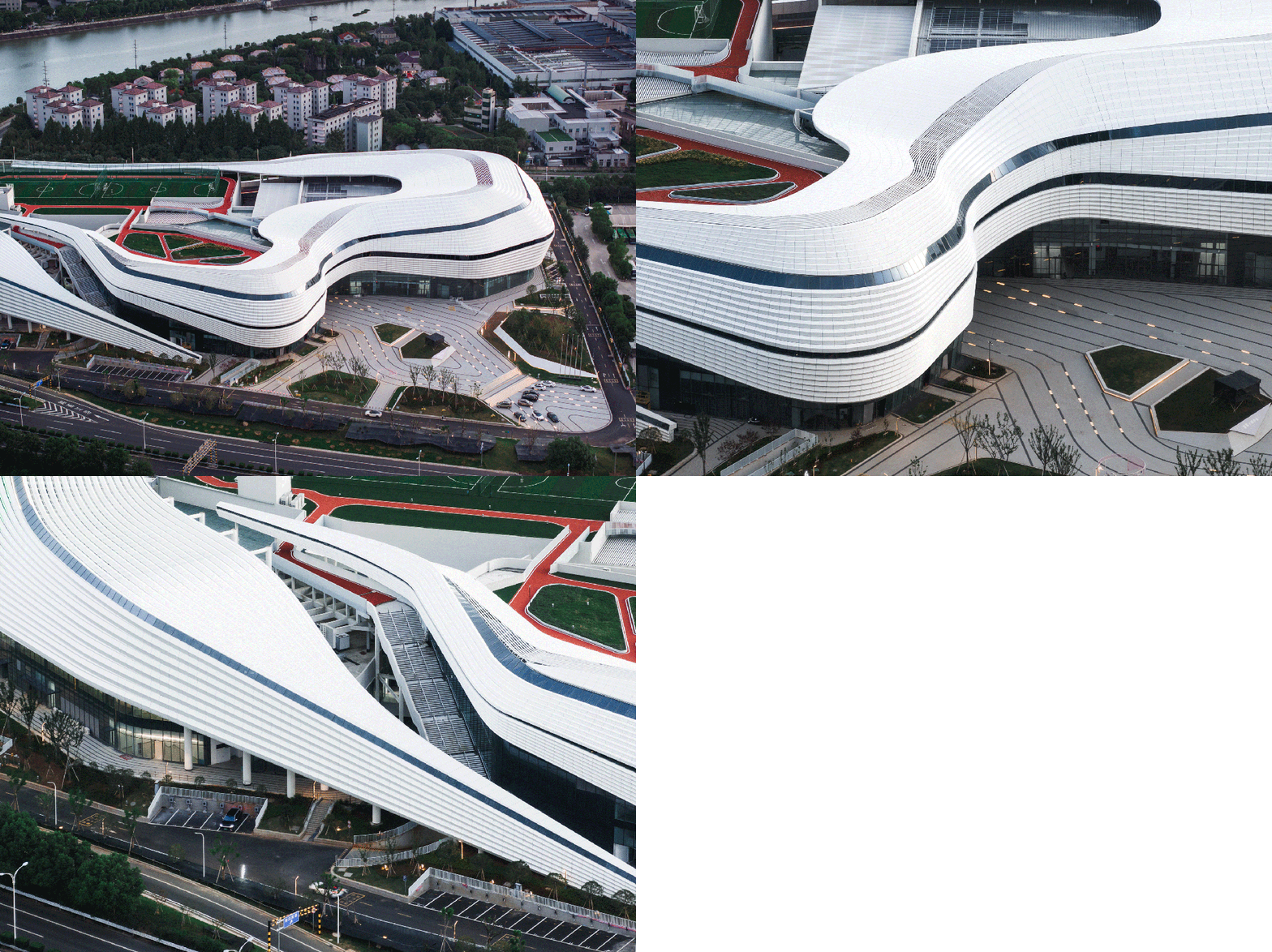
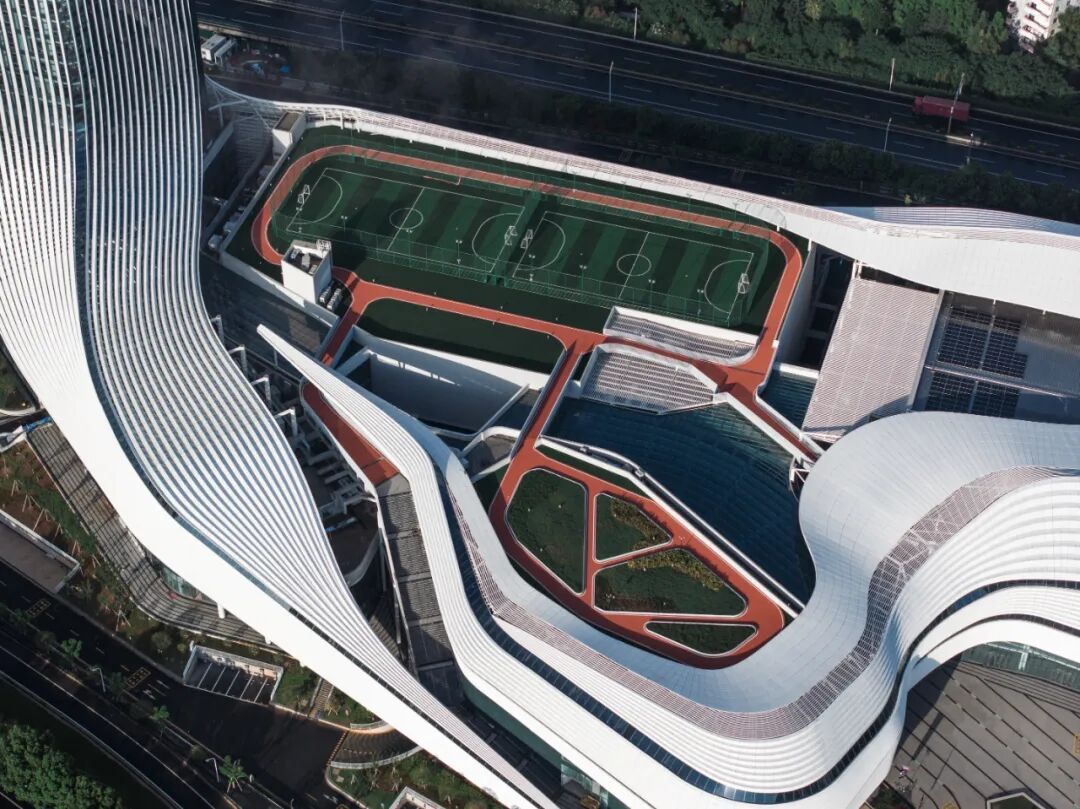
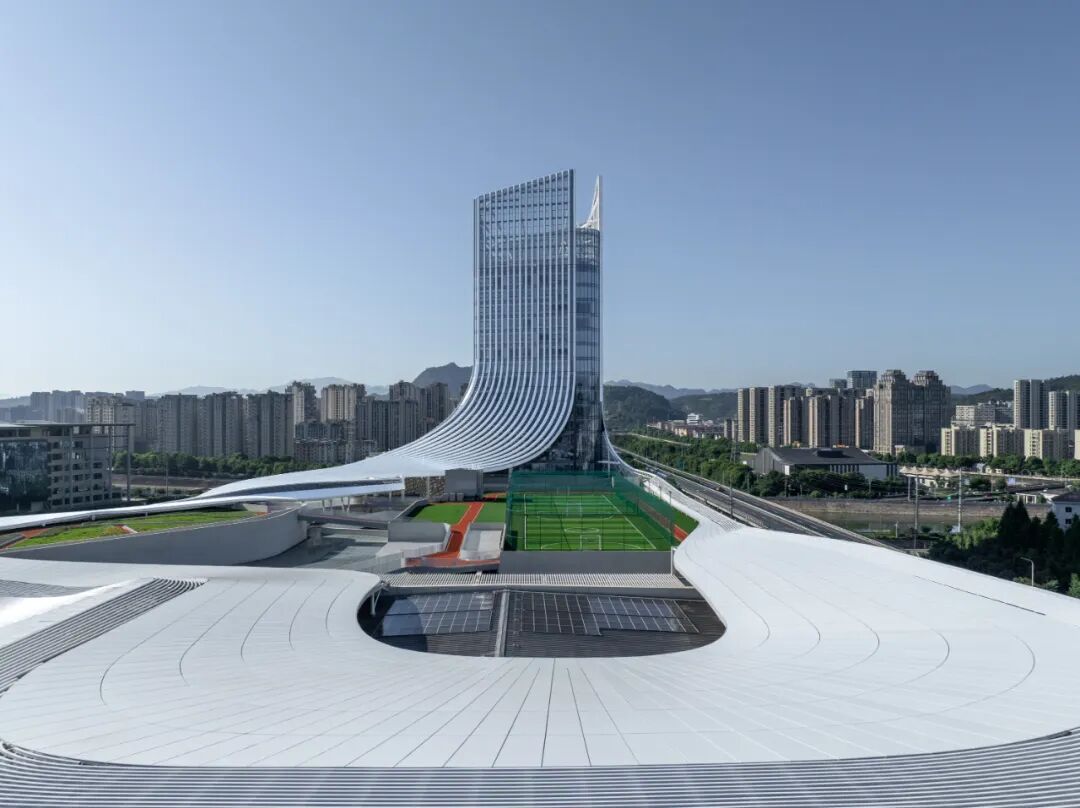
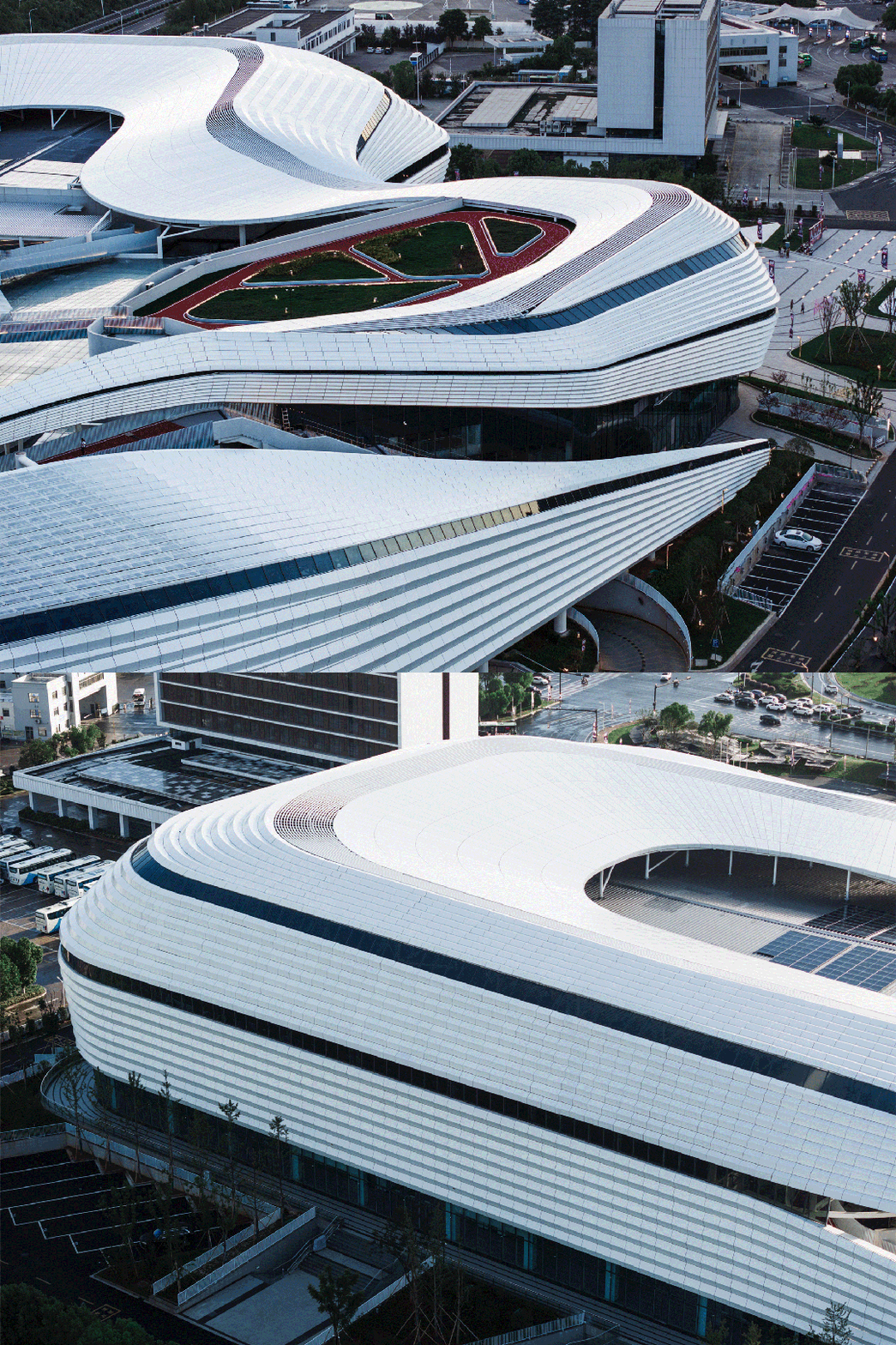
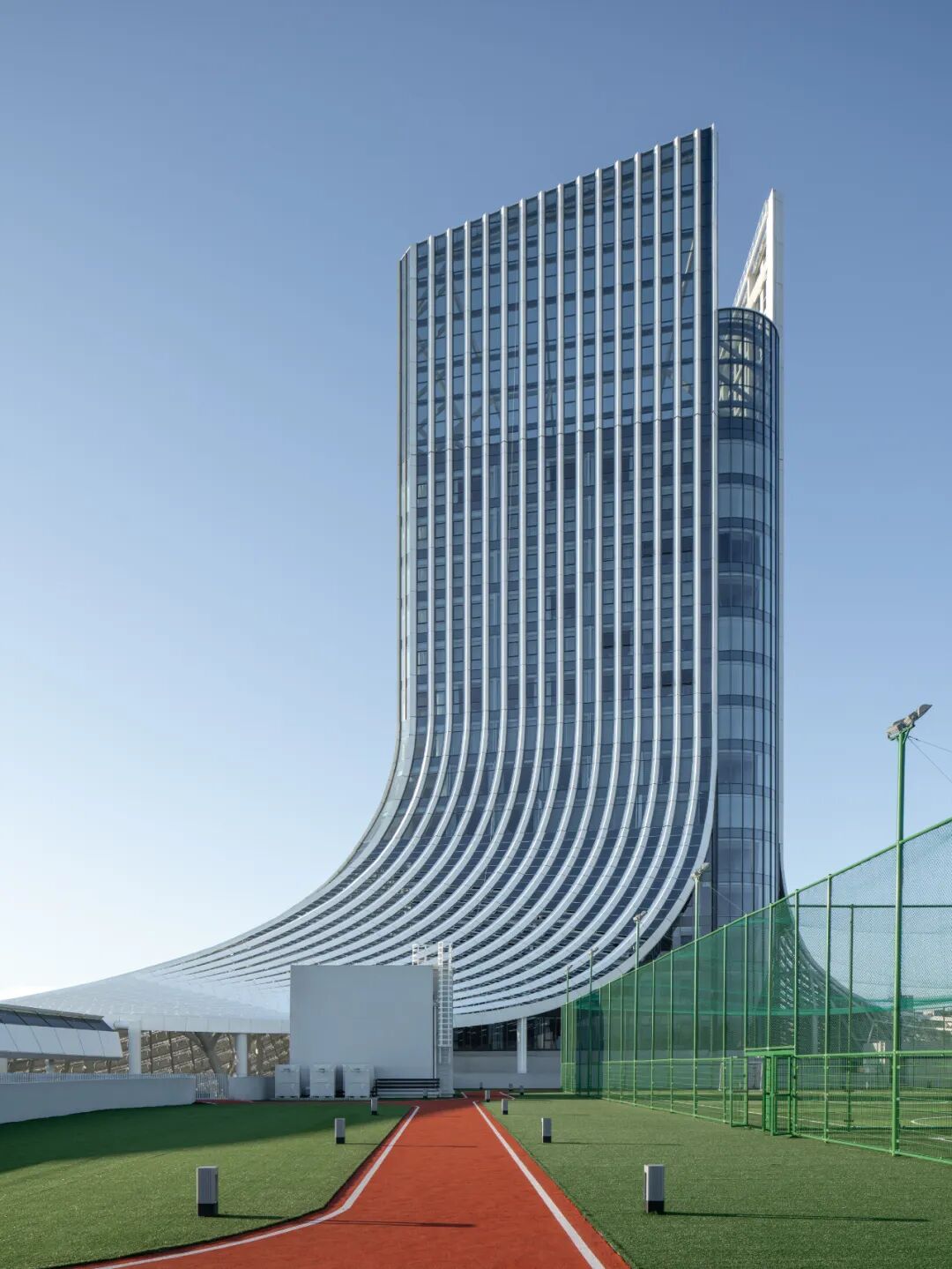
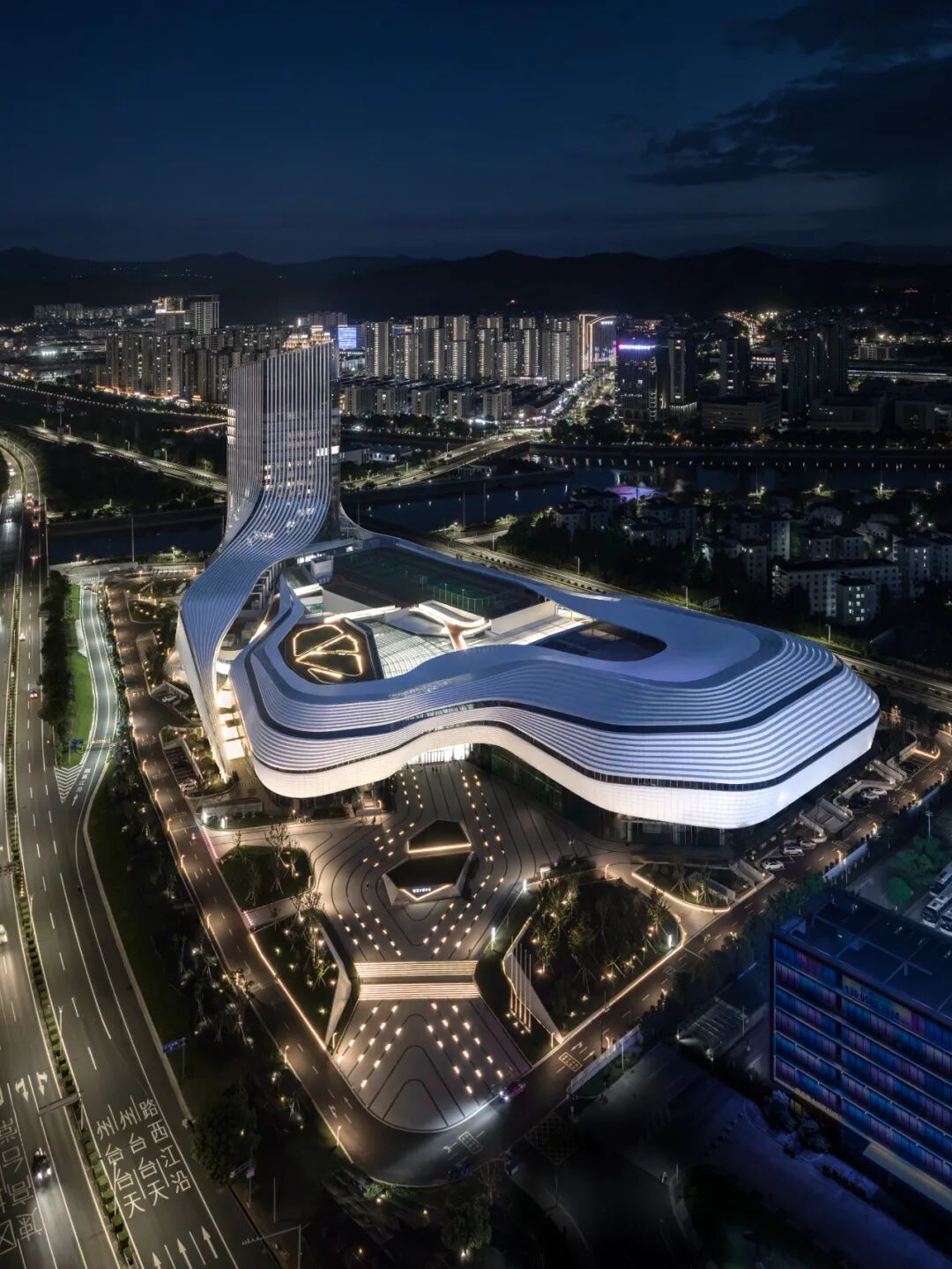
A continuous, overarching roof unifies all the venues. This roof is activated with a soccer field, a running track, and an urban viewing platform, accessible to the public 24/7 via east and west ramps. Urban life extends onto the roofscape.
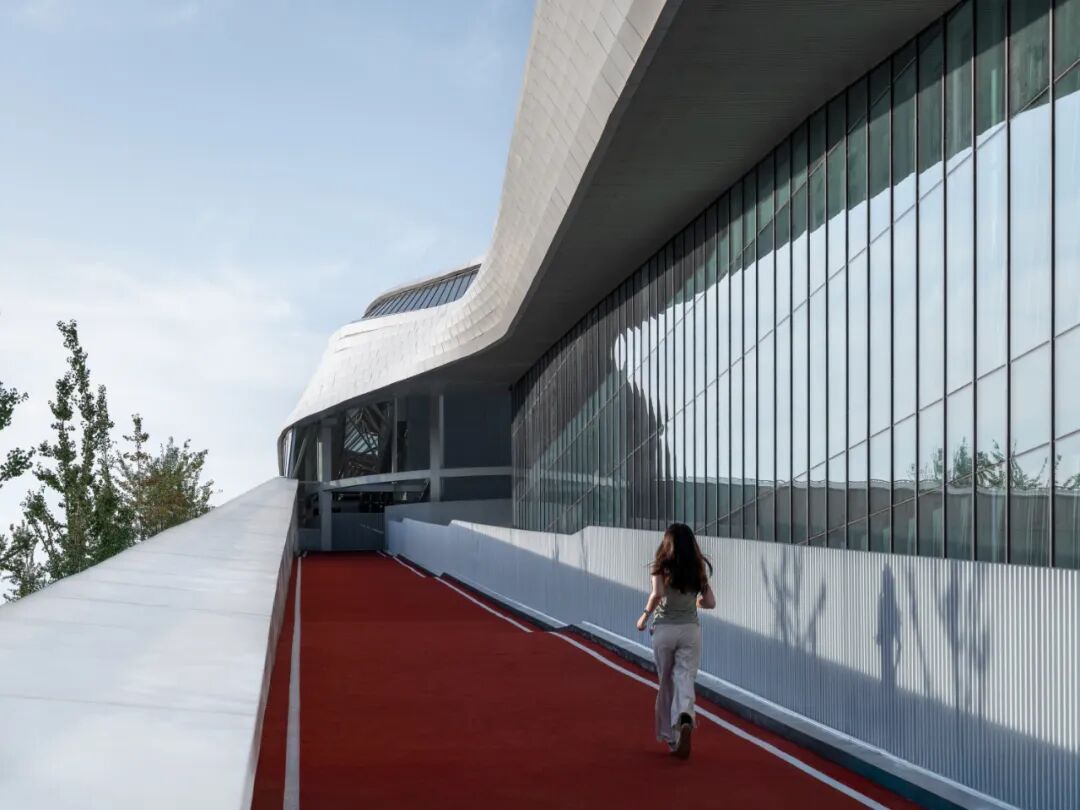
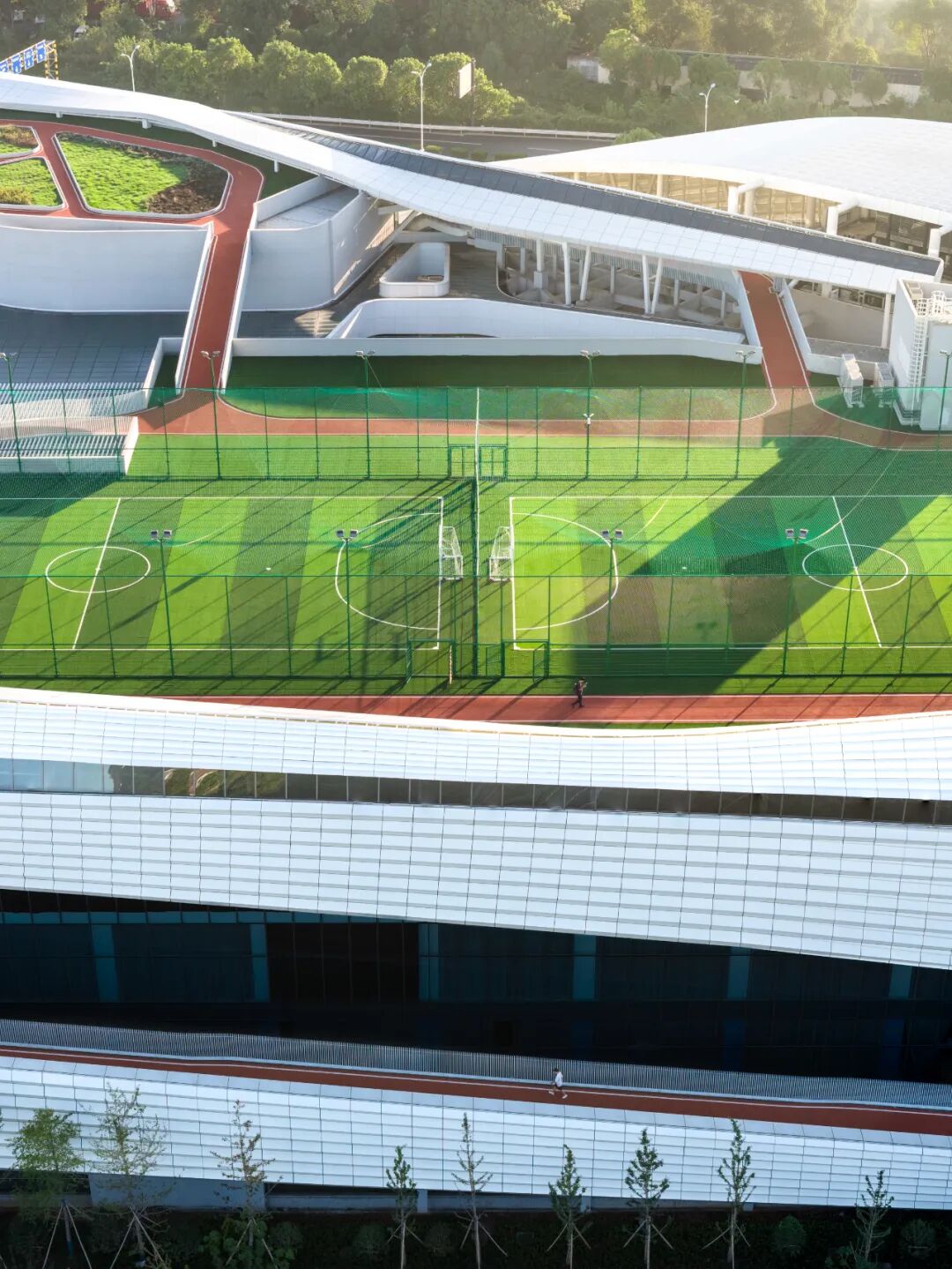
Hotel and Convention Space
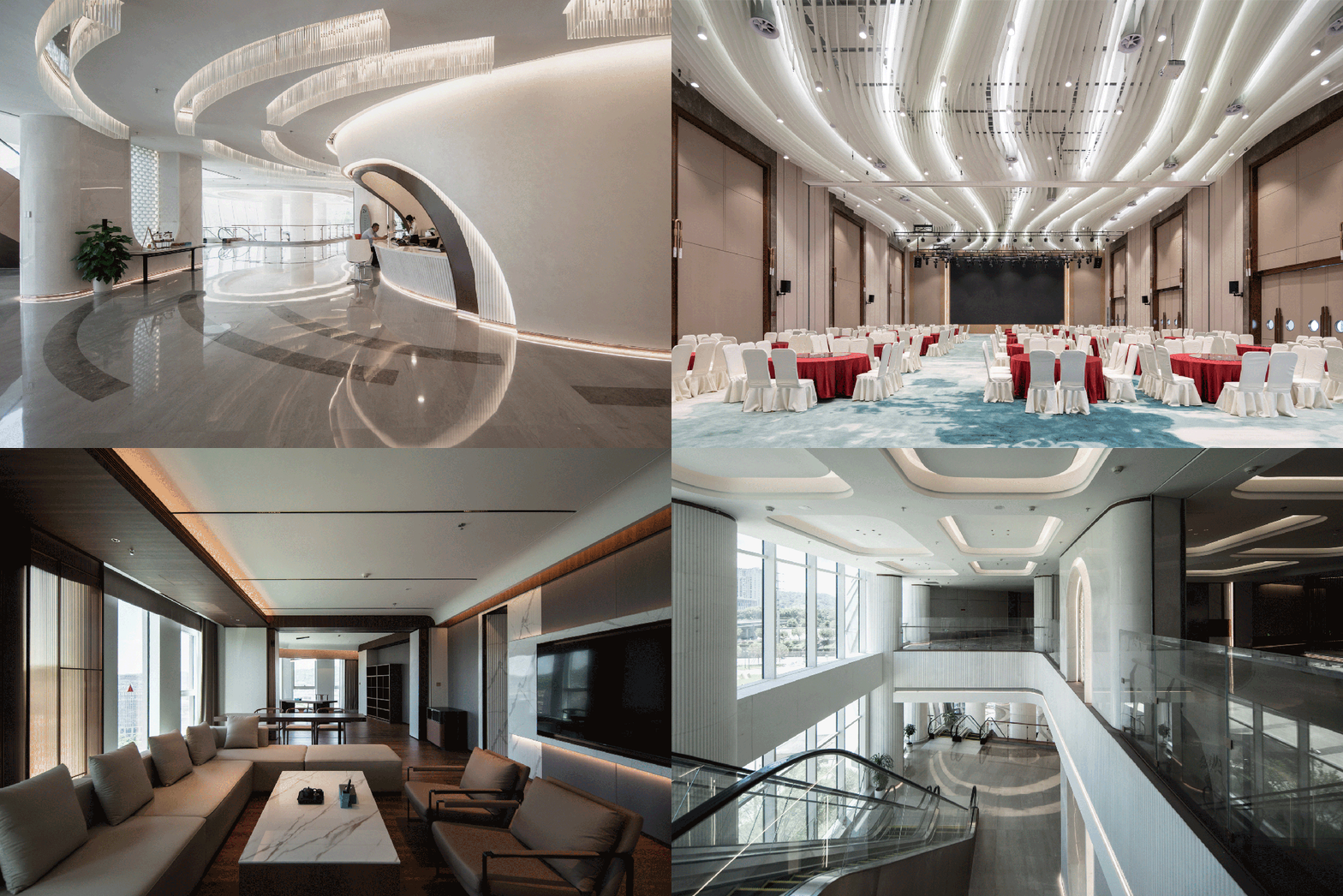
The southern tower and podium house the hotel and ballroom: Levels 1–4 is for the public lobby, meetings, and dining; Levels 6–17 are standard guest rooms; and the top floor features luxury suites. High-rise atriums are set every four floors on the river-facing side, offering views of the river and Xinchang's city center. Following a "Shared Service Backstage" concept, the logistics for the hotel, ballroom, and commercial areas are interconnected to ensure efficient, collaborative operation.
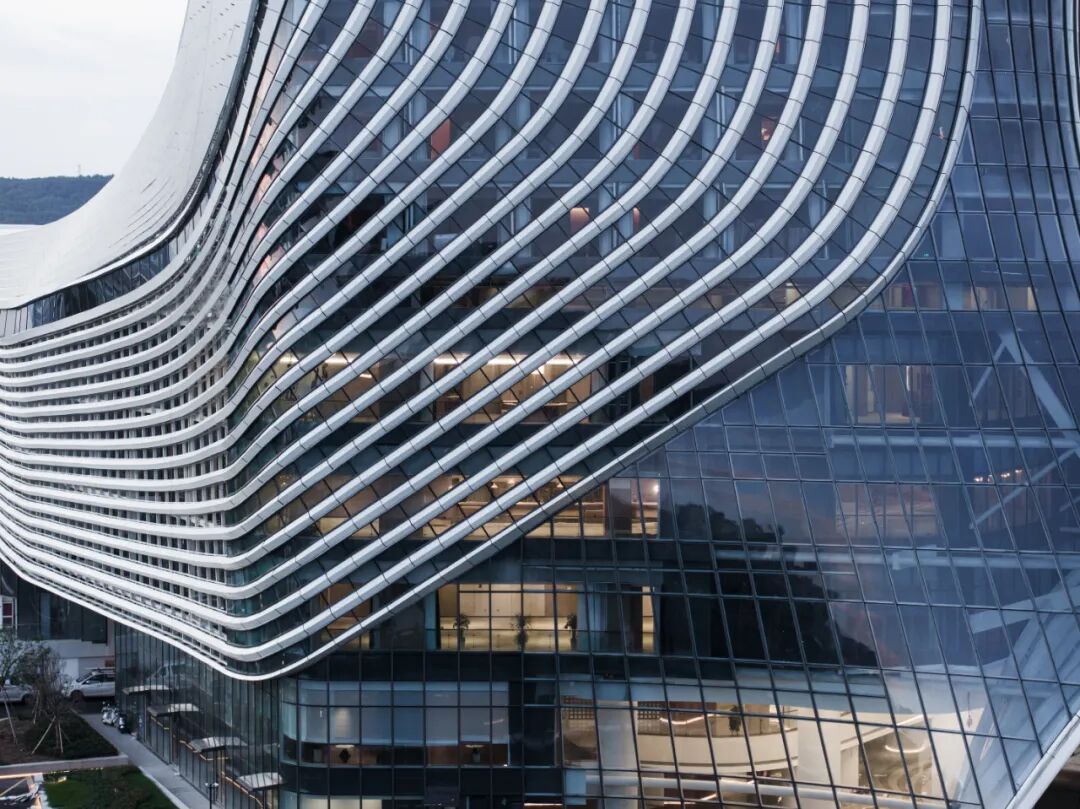


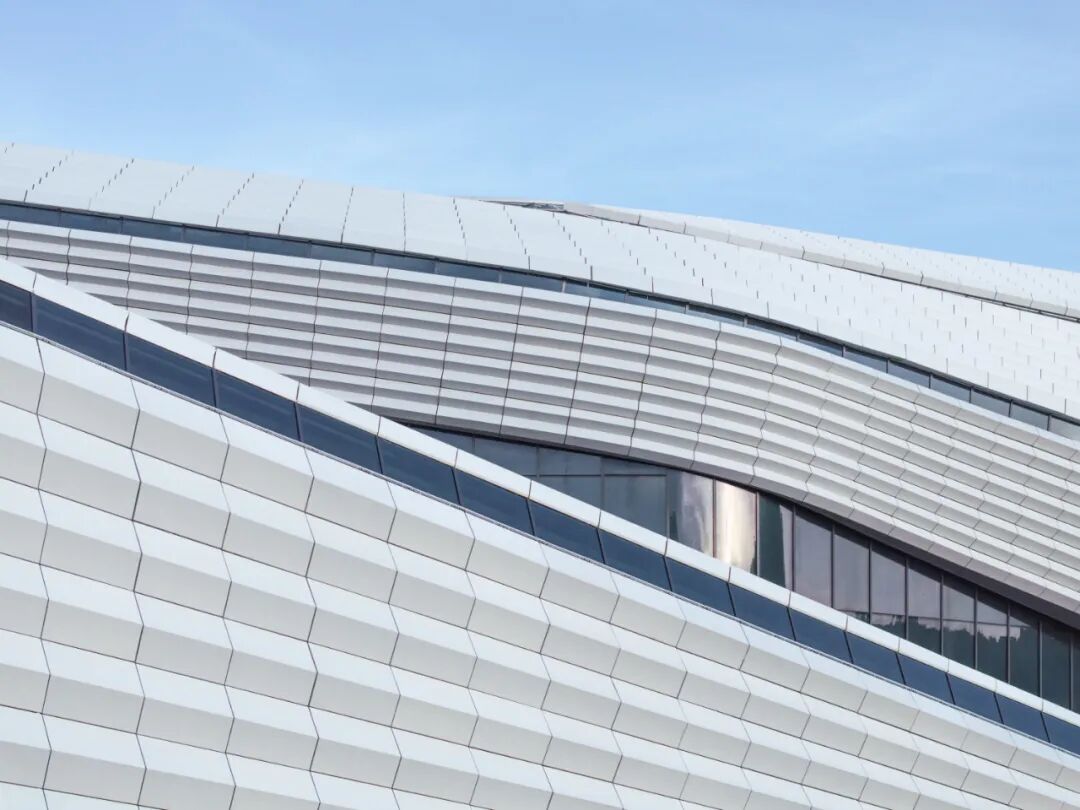
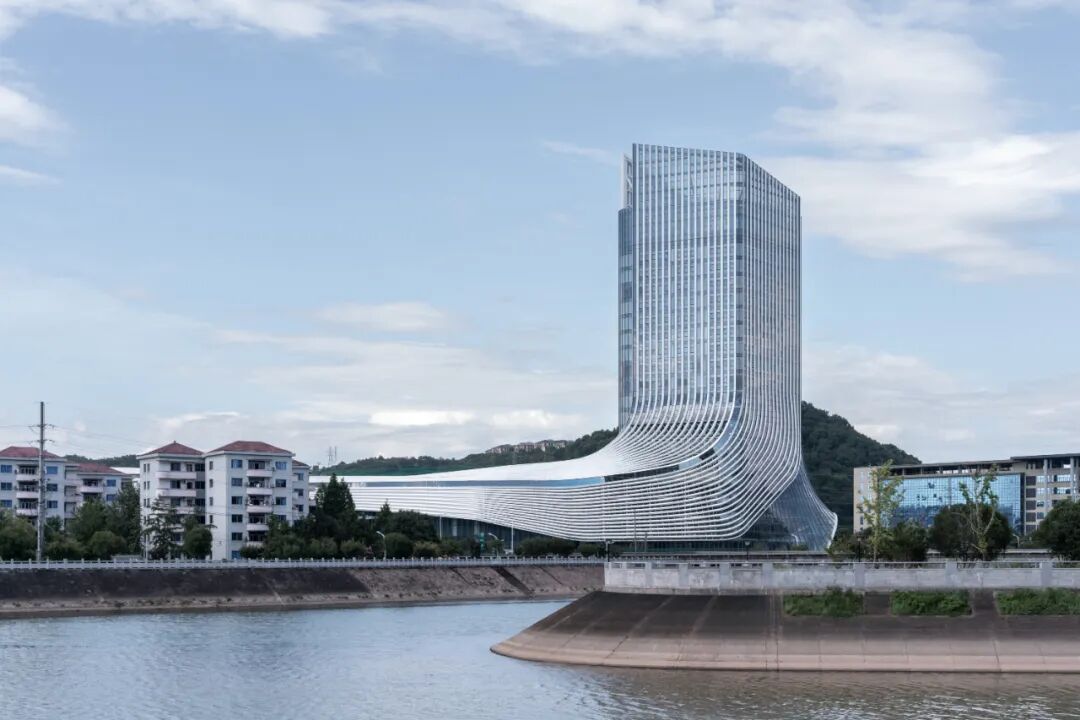
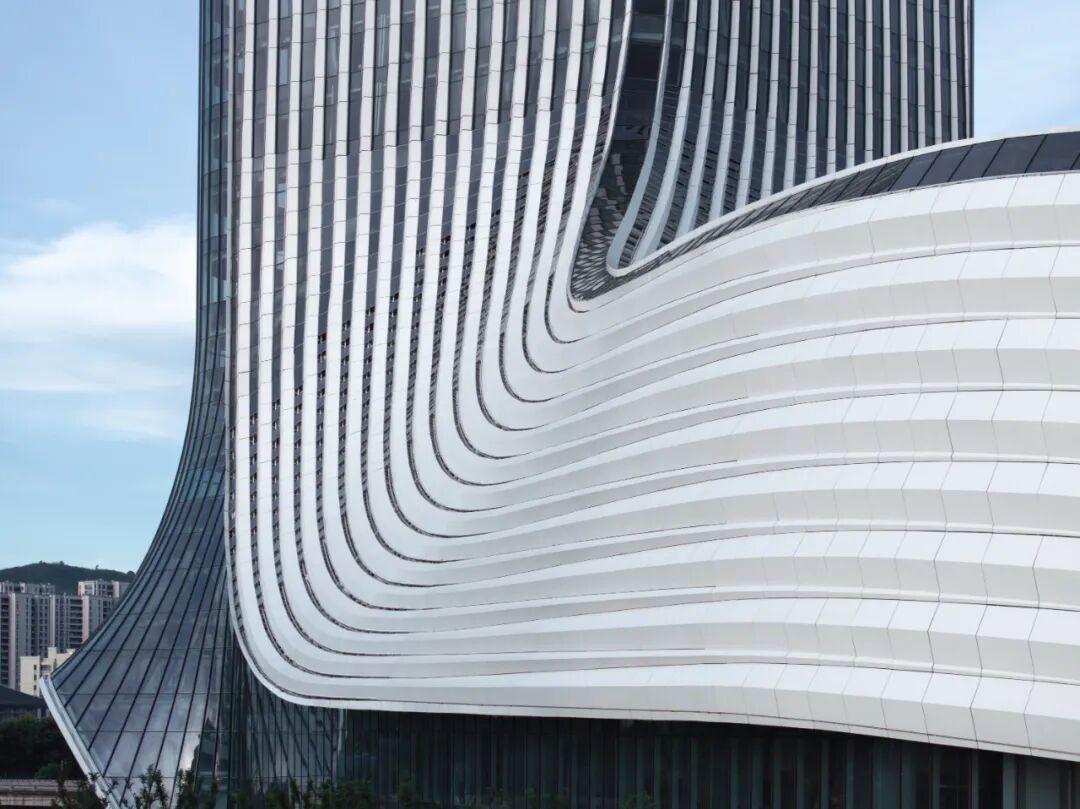
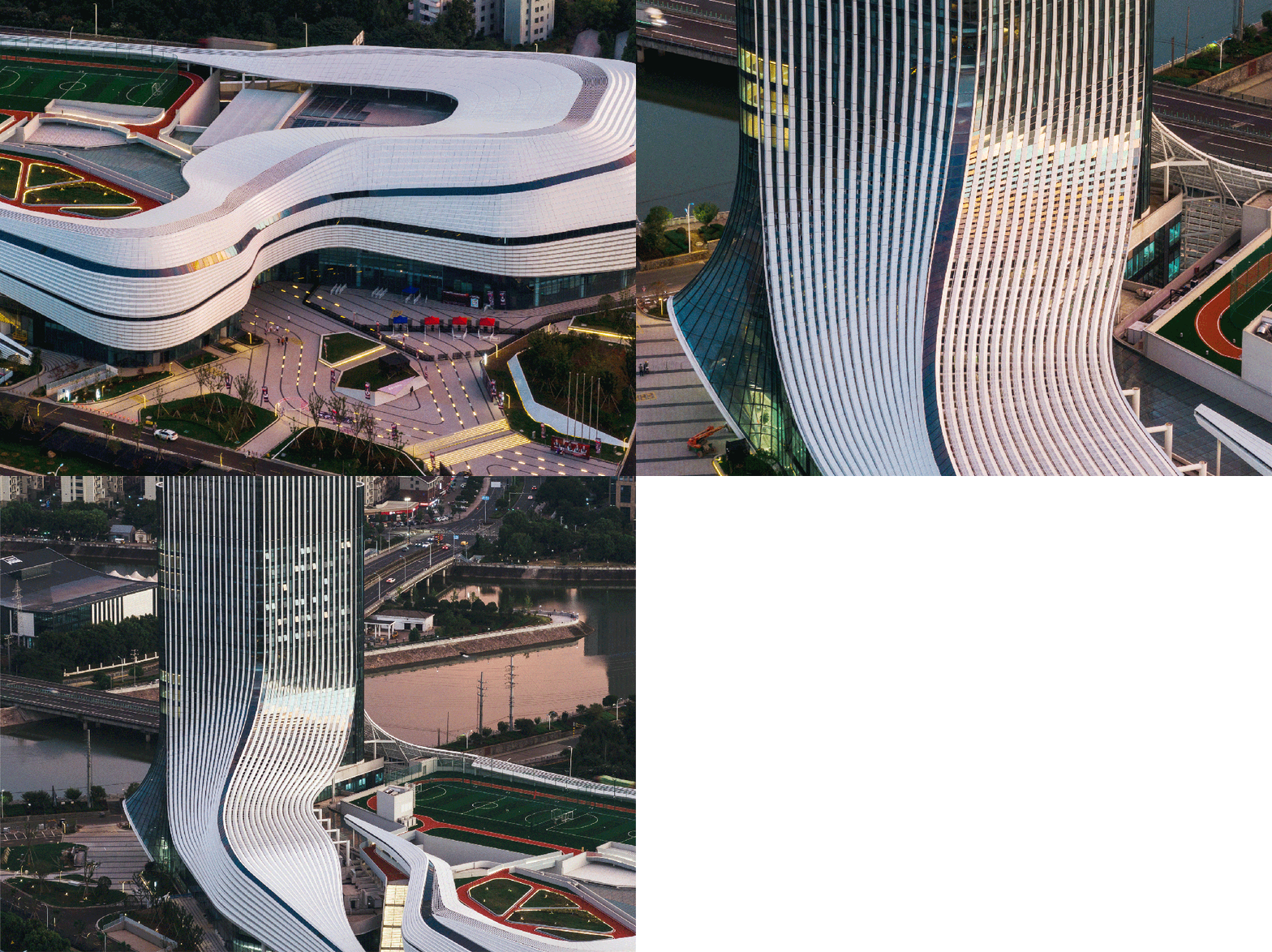
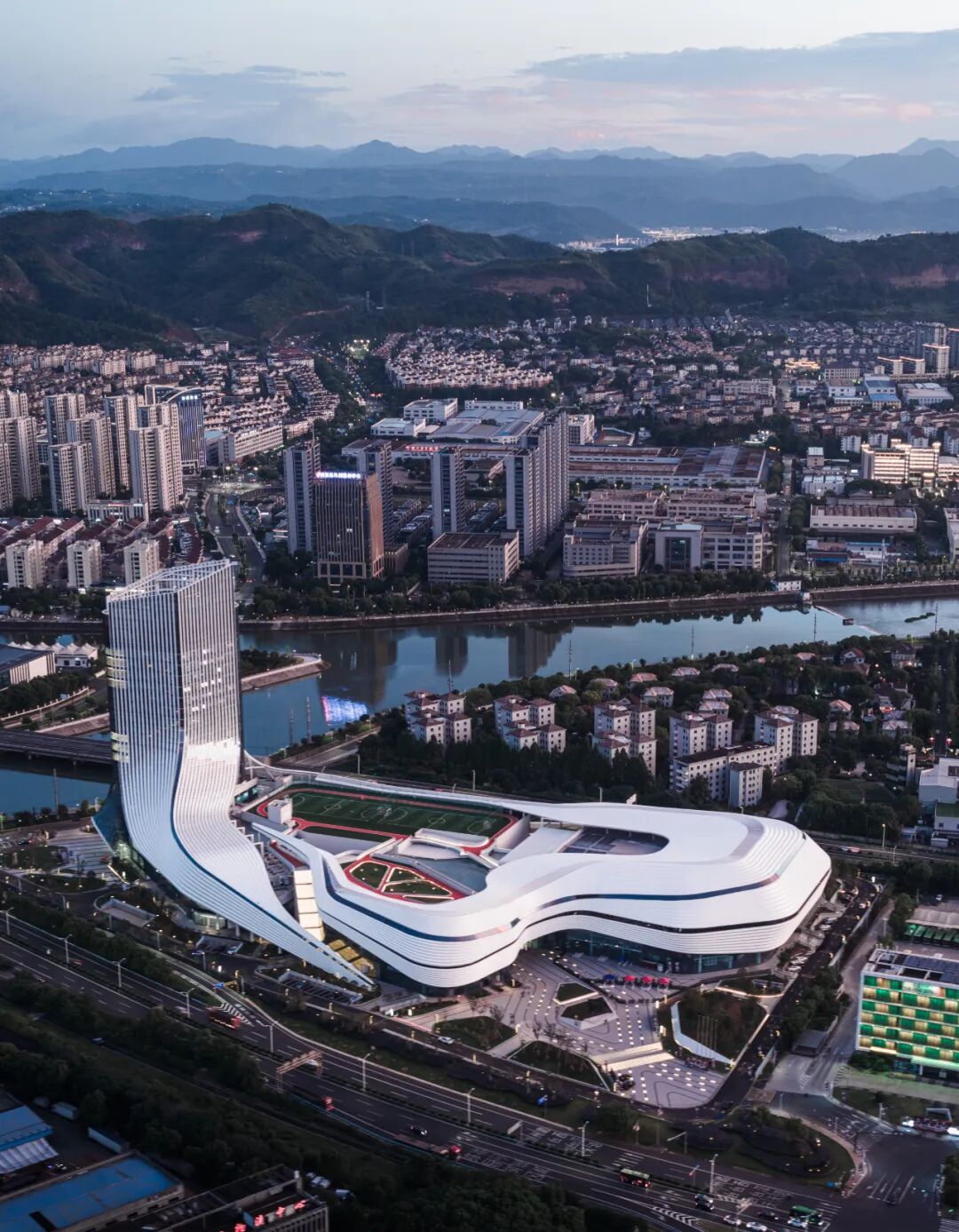
Creating a distinctive, iconic image for the large complex was crucial. Inspiration was drawn from Xinchang's unique landscape culture. Historically significant as a stop on the "Tang Poetry Road of Eastern Zhejiang," the region is celebrated for its peaks and waterfalls. The design uses the fluidity of water and the contours of mountains as its formal motif, employing continuous massing and a horizontal rhythm to define the city boundary and create a waterfront interface that is both culturally expressive and contemporary.

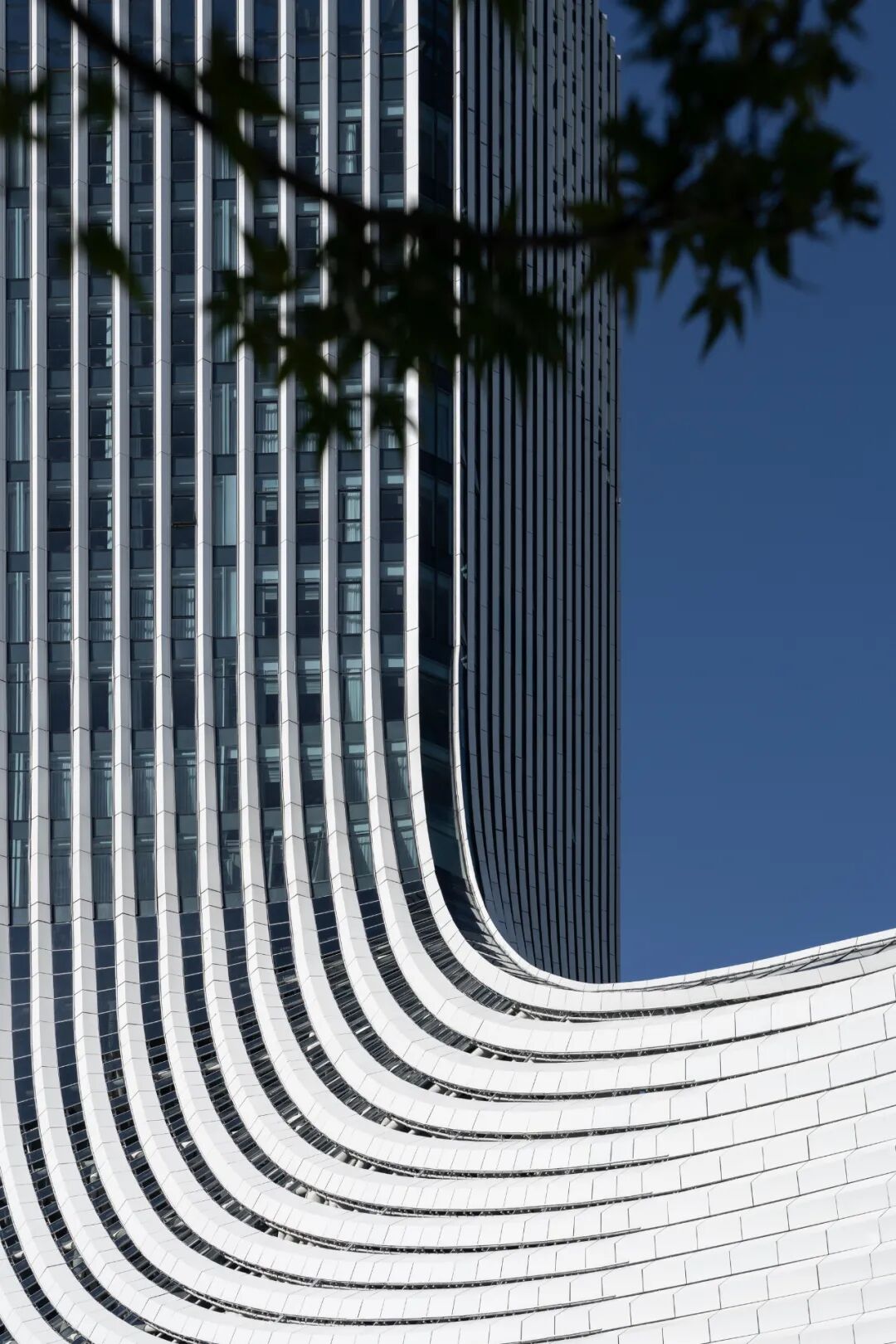
The hotel tower marks a new high point on the north bank skyline. The tower's atrium suggests a cascading waterfall, forming a sculptural volume through dramatic transitions. The curtain wall, featuring perforated aluminum panels and metal rod grilles, provides dynamic light effects during the day and a distinct illuminated landmark at night.
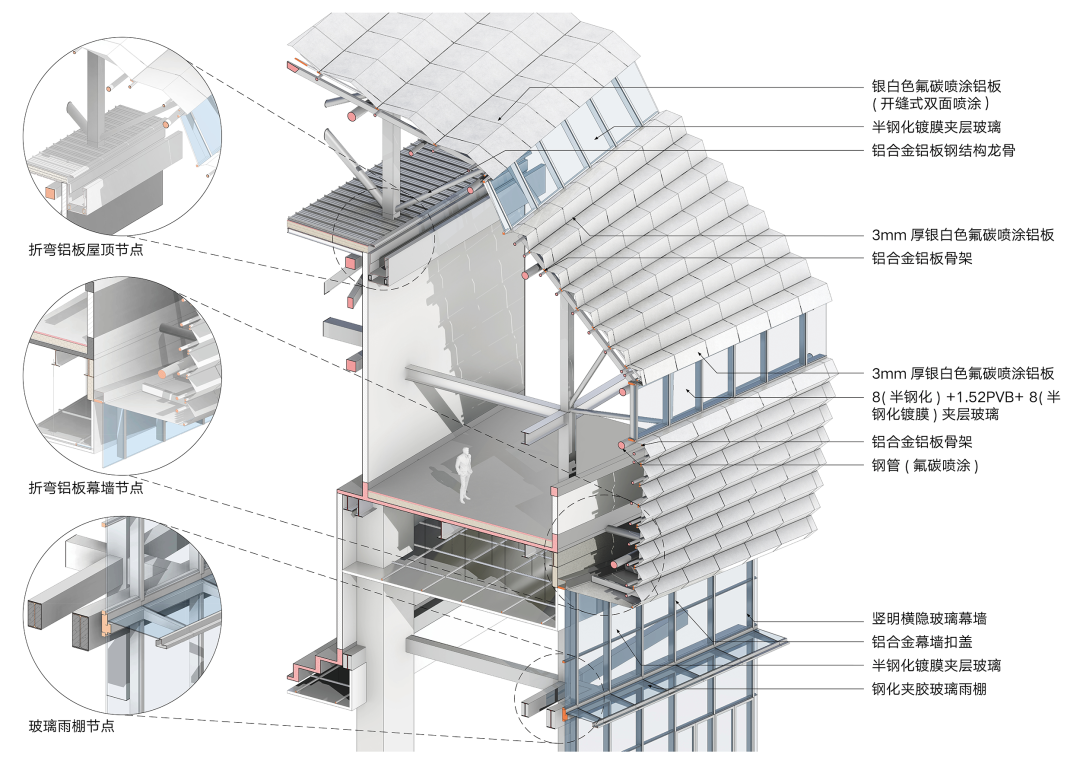
△ Curtain Wall Section Details of the Main Gymnasium
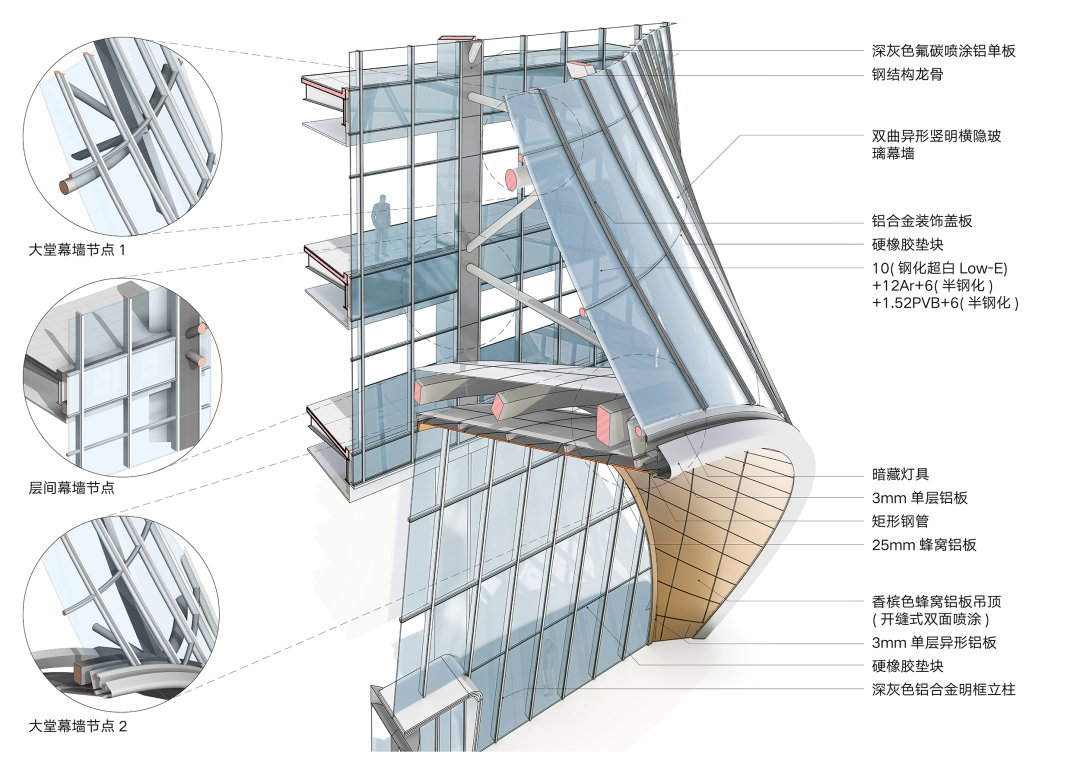
△ Curtain Wall Section Details of the Hotel
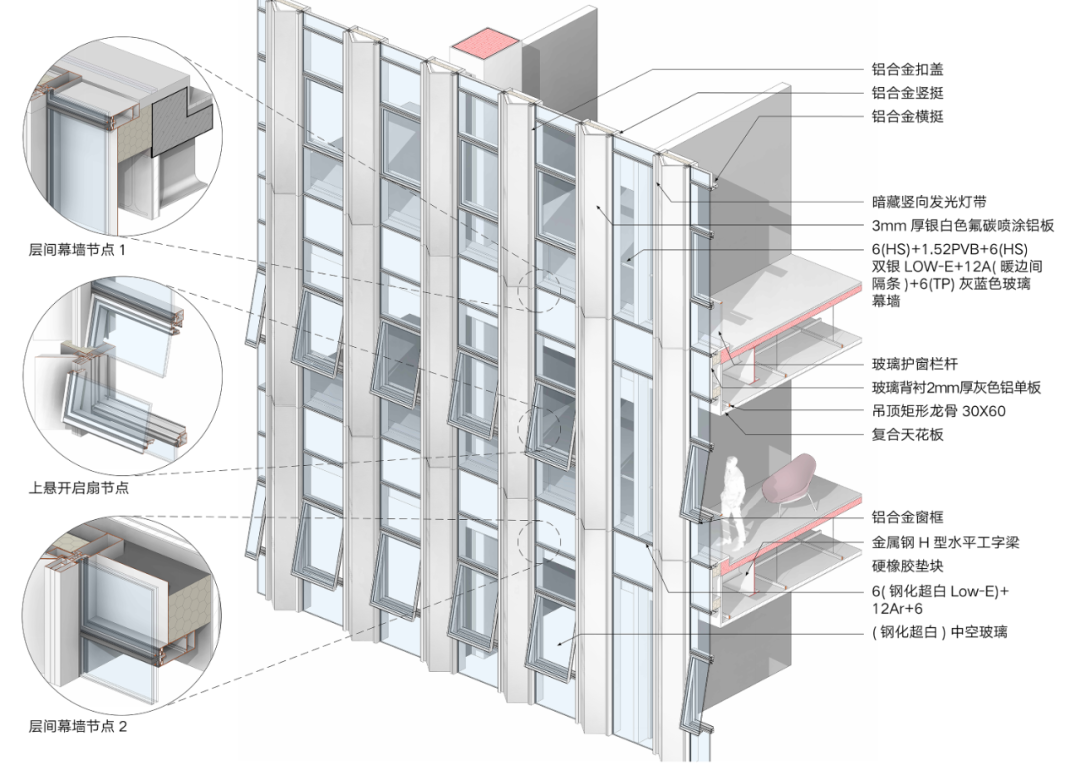
△ Curtain Wall Section Details of the Hotel
Structurally, the venue uses a large-span truss and frame-core-tube system, balancing spatial flexibility with construction economy. The Main Gymnasium spans 75.9m using a truss structure; the ballroom spans 20.55m with a composite beam structure; and the training halls span 36.5m (badminton) and 30m (table tennis) with plane trusses and lateral supports.
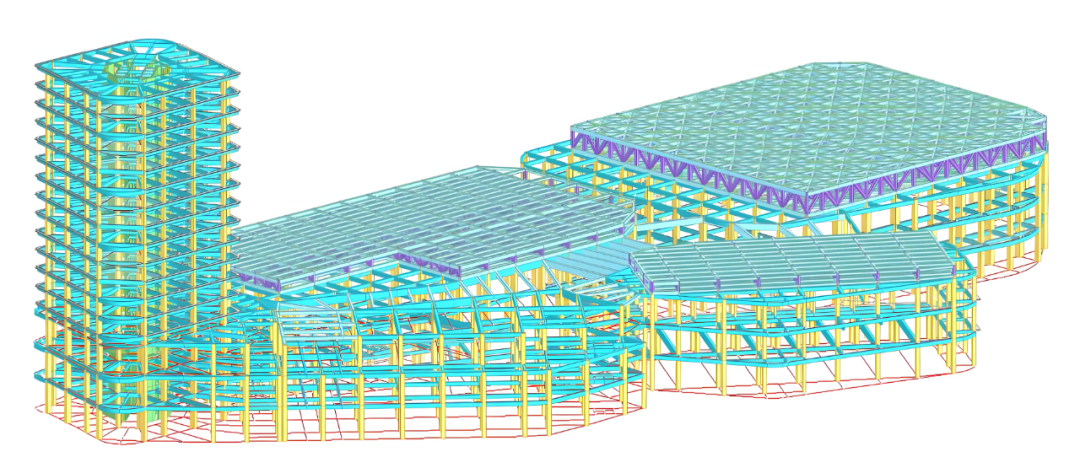
△ Structural Analysis

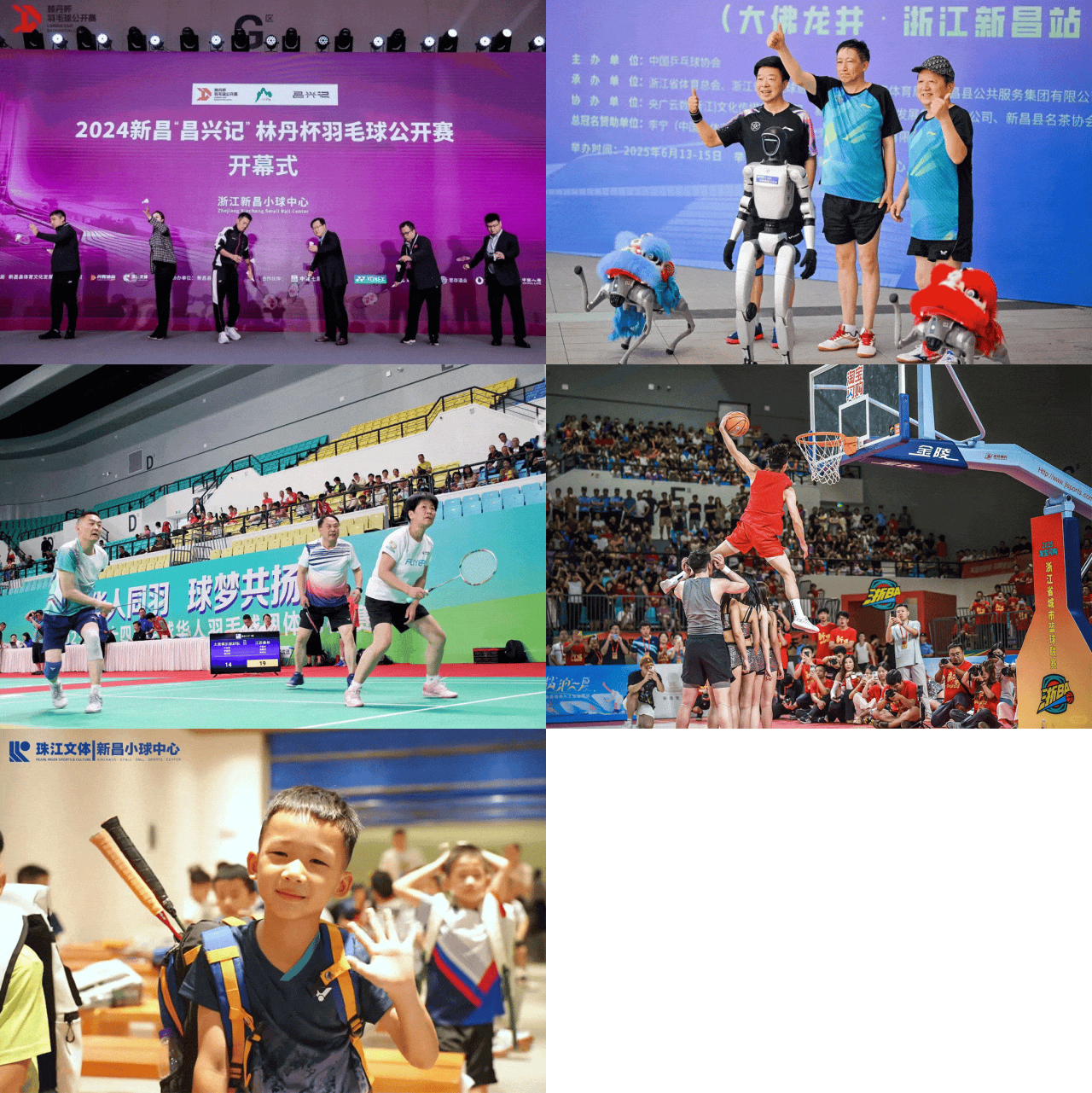
In November 2024, the 2nd Xinchang "Lin Dan Cup" Badminton Open, the Globular Center's inaugural event, attracted 1,033 athletes from 15 countries. Since then, the center has hosted 17 international, national, and provincial events, including the Snooker Masters Invitational and various championships, alongside 20 mass participation events. This has established a normalized operational pattern of "major competitions monthly, and matches weekly." To date, total attendance has surpassed 220,000, online reach has exceeded 150 million views, and direct economic benefits have topped 100 million RMB.
Drawings
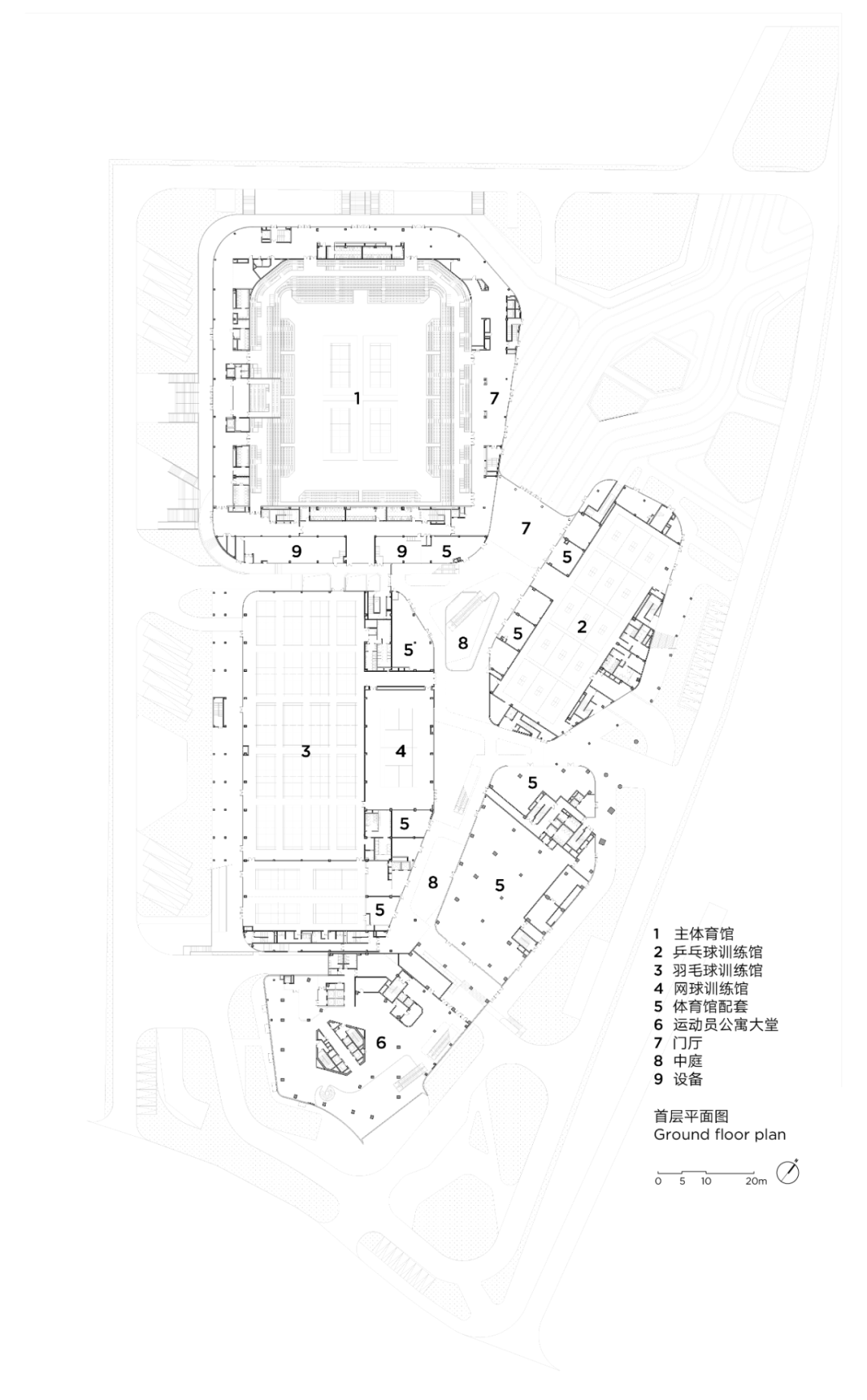
△Ground Floor Plan
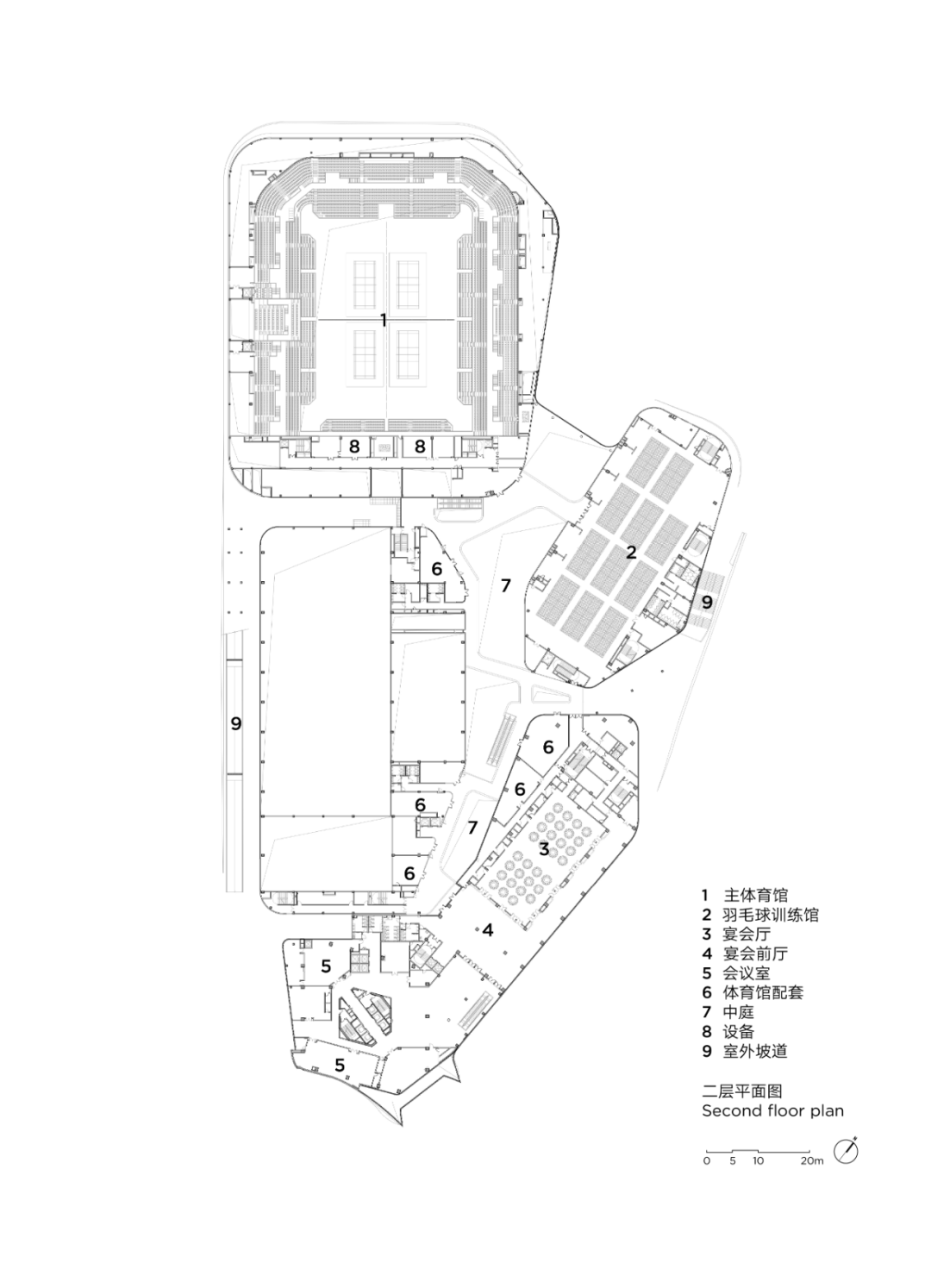
△ Second Floor Plan
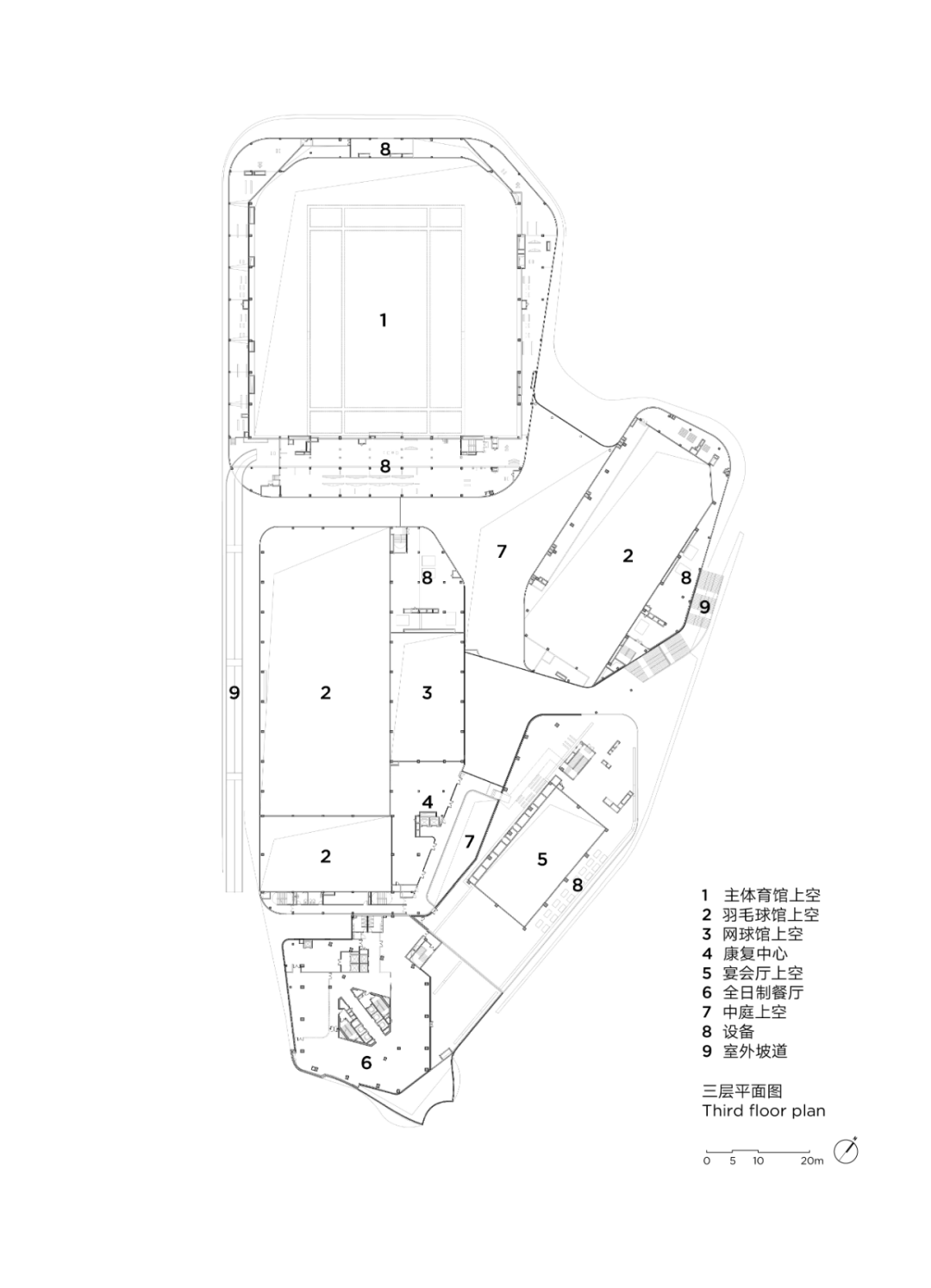
△ Third Floor Plan

