


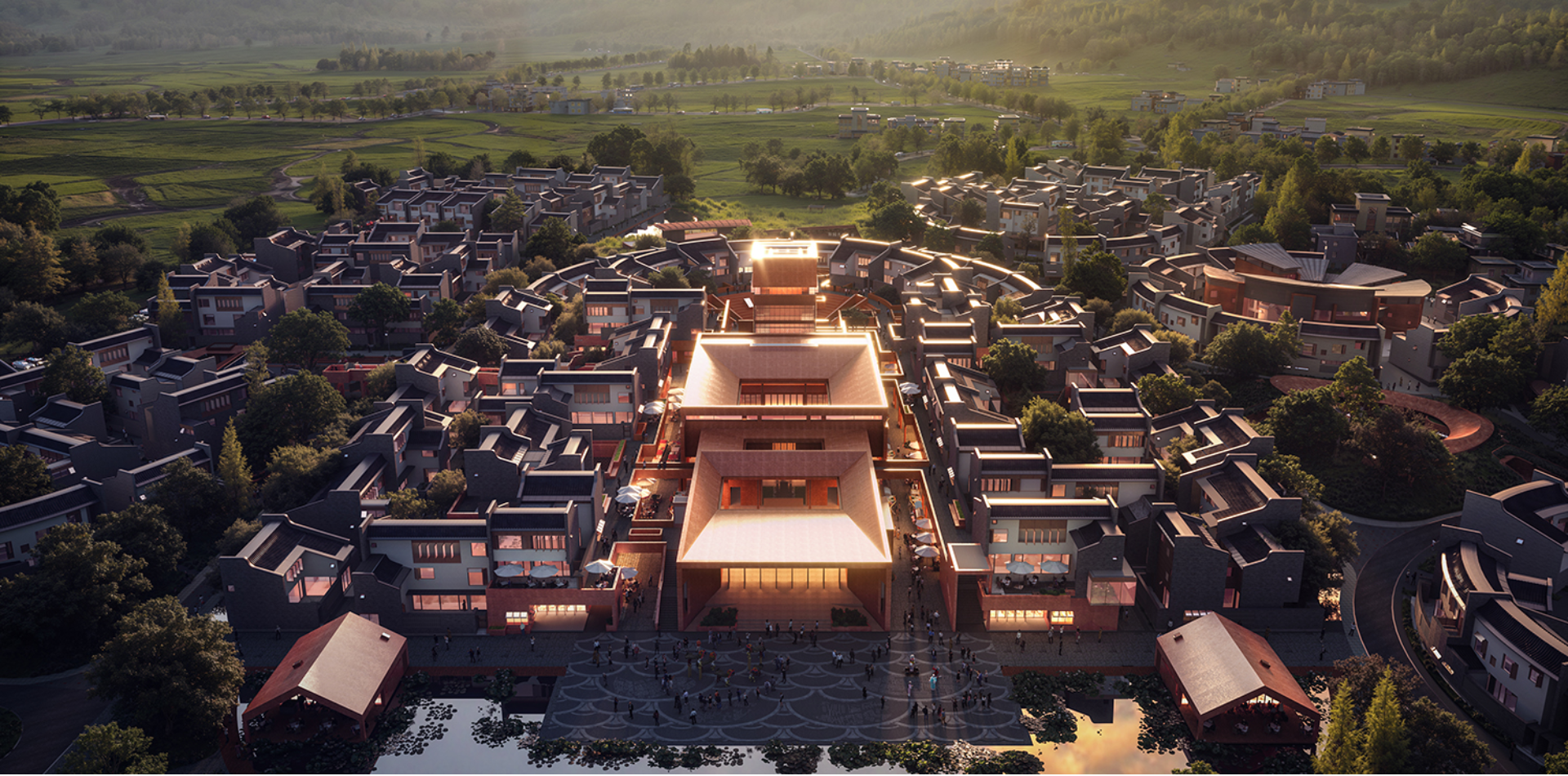

Weilong Settlement
围龙新居
“We drew from the circular spatial logic of Hakka Weilong dwellings, using a three-dimensional civic plinth and a typological cluster system to rebuild rural public centers, neighborhood scales, and living orders. Weilong New Community is not merely a resettlement project—it is a prototype for the future countryside.”
——Fanhao Meng
Project Name: Huizhou Longmen Resettlement Community
Architecture Design: line+ studio
Interior Design: line+ studio
Landscape Concept Design: line+ studio
Chief Architect / Project Principal: Fanhao Meng
Project Architect: He Yaliang
Design Team: Hao Xu, Yifan Xu, Hong Jiang, Shu Xing, Fanlin Gou
Resident Architect: Hong Jiang
Client: Longmen County Government; Longmen County Industrial Investment Co., Ltd.
Landscape Design: LAI+ Benxi Design Design Directors: Wenbo Lai, Yiheng Chang
Construction Drawing Partner: Huizhou Architectural Design Institute Co., Ltd.
Main Contractor: China Construction Fifth Engineering Bureau Co., Ltd.
Location: Longjiang Town, Longmen County, Huizhou, Guangdong
Building Area: 69,101 m²
Design Period: Nov 2024 – Oct 2025
Construction Period: Feb 2025 – Present
Structure: Concrete frame
Materials: Split bricks, small grey tiles, imitation red sandstone coating, wood-grain finish windows and doors, dark grey aluminum panels, natural stone.
Photography: line+, OuY, Xuanzhu Liu
Renderings: GREENWOOD, line+
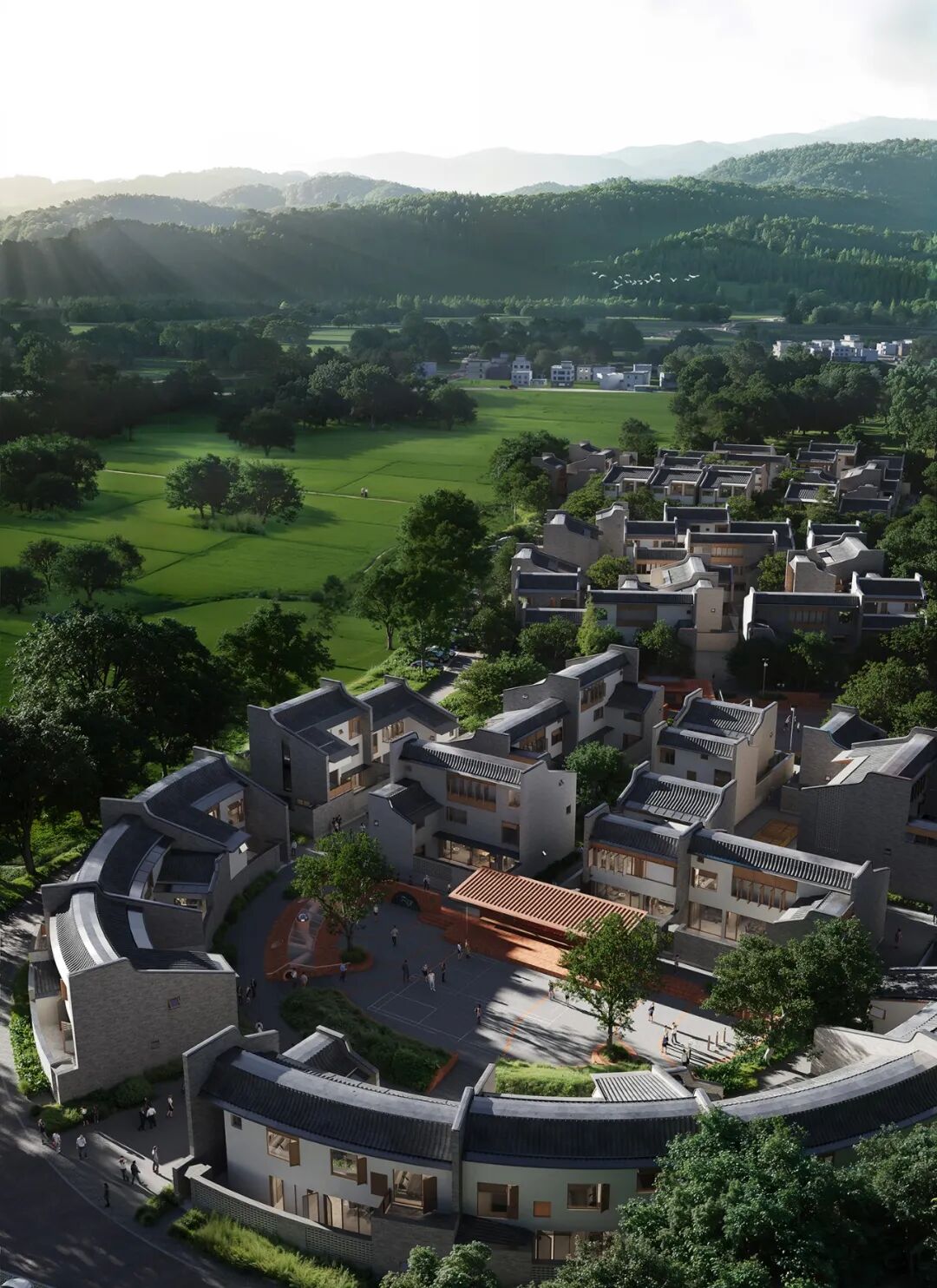
Located in Longmen, Huizhou, Weilong New Community is both a Guangdong Province “Future Community” pilot and a key project under the provincial rural revitalization initiative. Fanhao Meng, Co-Founder & Chief Architect of line+, was invited to lead the project from concept to construction delivery. Responding to the collective resettlement needs of multiple village groups, the project aims to establish an integrated model for future rural living—combining contemporary Lingnan identity, complete community services, cultural-tourism operations, and urban–rural integration.
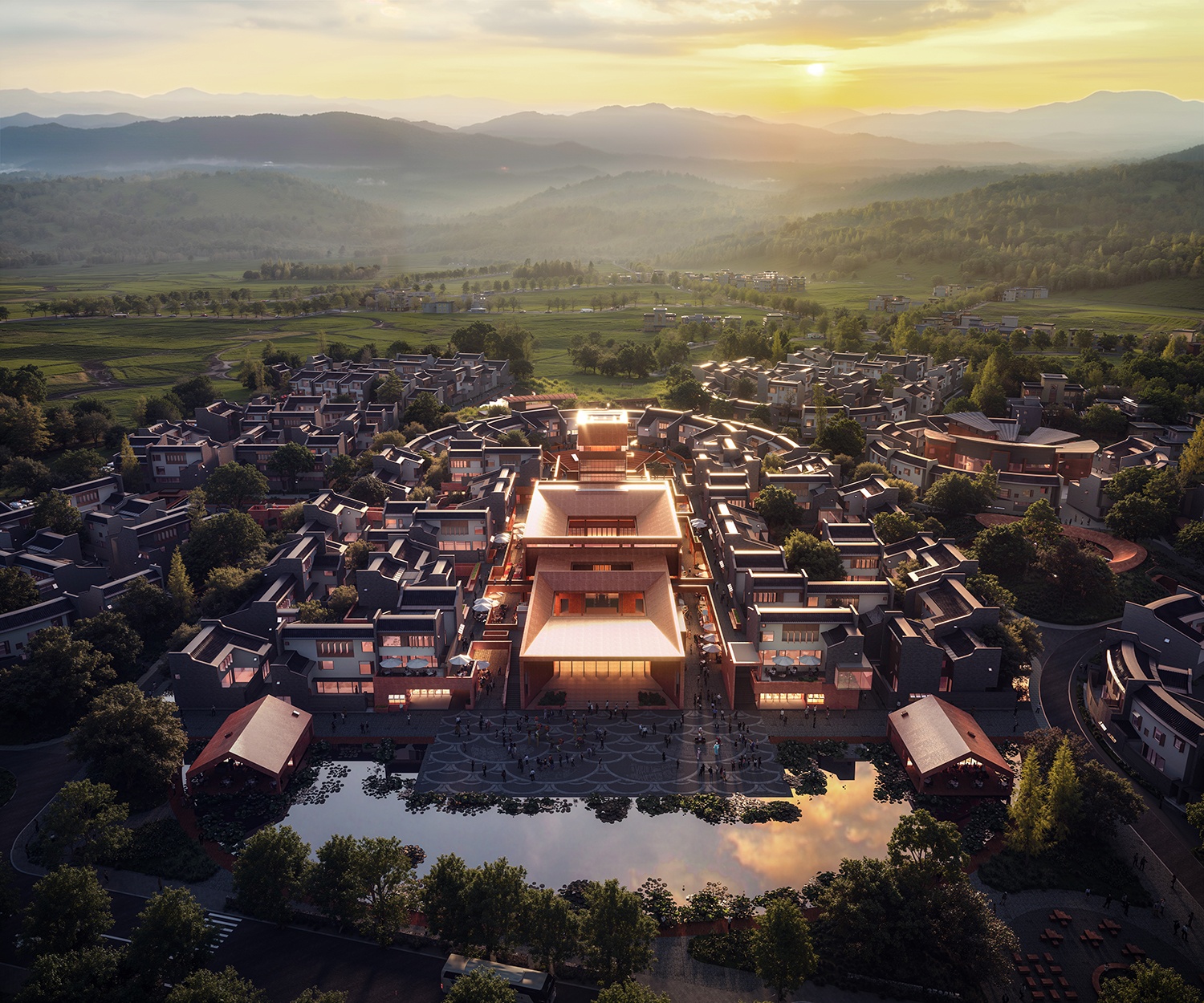
△ Contemporary Interpretation of the Hakka Weilong House
Rural resettlement in China often faces twin pressures: the loss of local identity and the drift toward generic urban form. In Longmen, Huizhou, Fanhao Meng and line+ approached these tensions as design opportunity—using Weilong New Community to reinterpret Hakka settlement logic through contemporary architectural means. Drawing from the spatial DNA of Weilong dwellings, the project employs a three-dimensional civic plinth and a typological housing system to accommodate three primary user groups: long-term local residents, returning/dual-habitation families, and new urban settlers seeking flexible living and operating models.
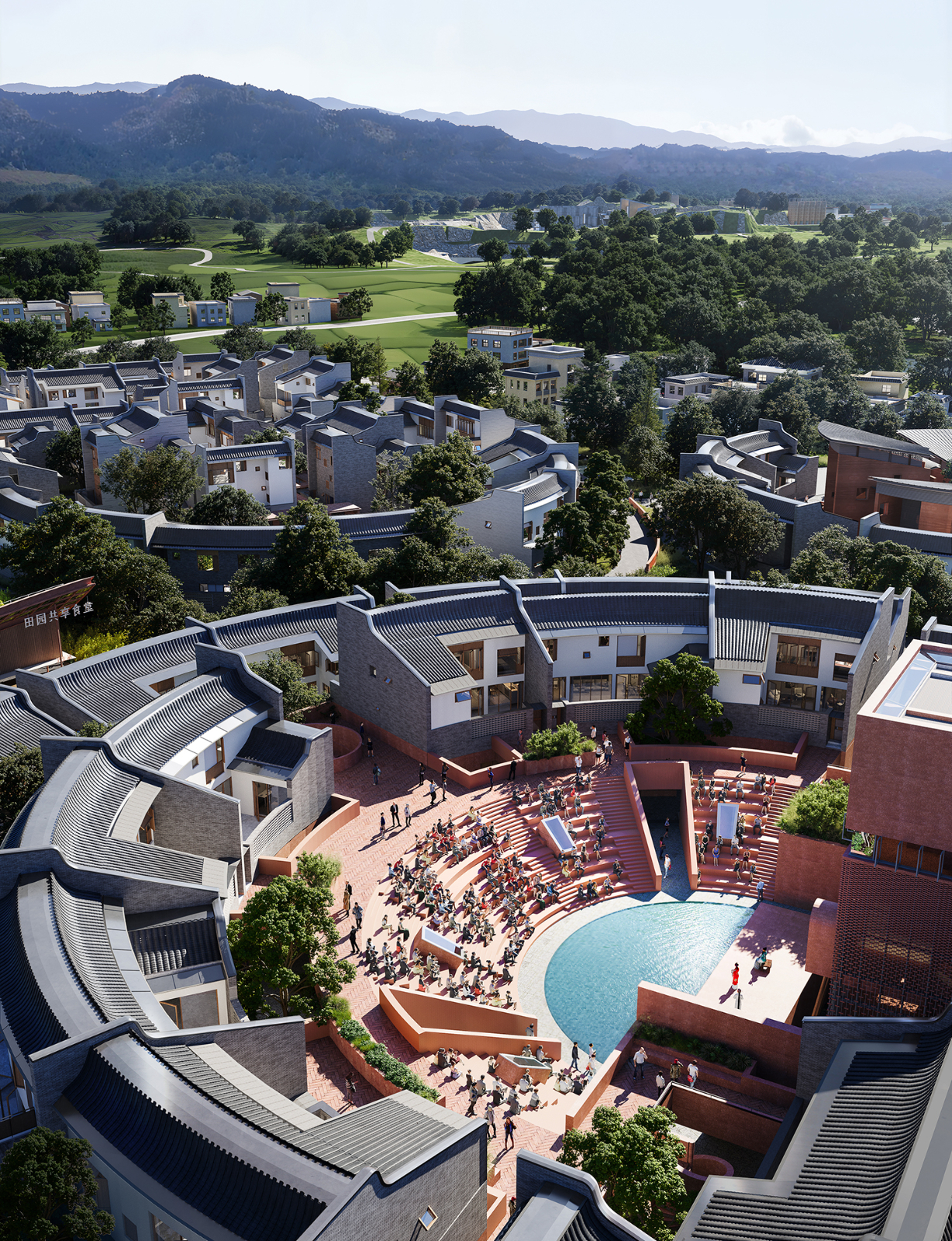
△Community Theater
Yet the project extends far beyond housing. It incorporates hospitality, cultural venues, community infrastructure, rural operations, new industries, and cultural–tourism development around nearby quarries. Through the convergence of living, working, culture, and operations, Weilong New Community evolves into a future-oriented rural system model—hybrid, multifunctional, and deeply integrated with its territorial context.
△ Animation – Weilong New Community
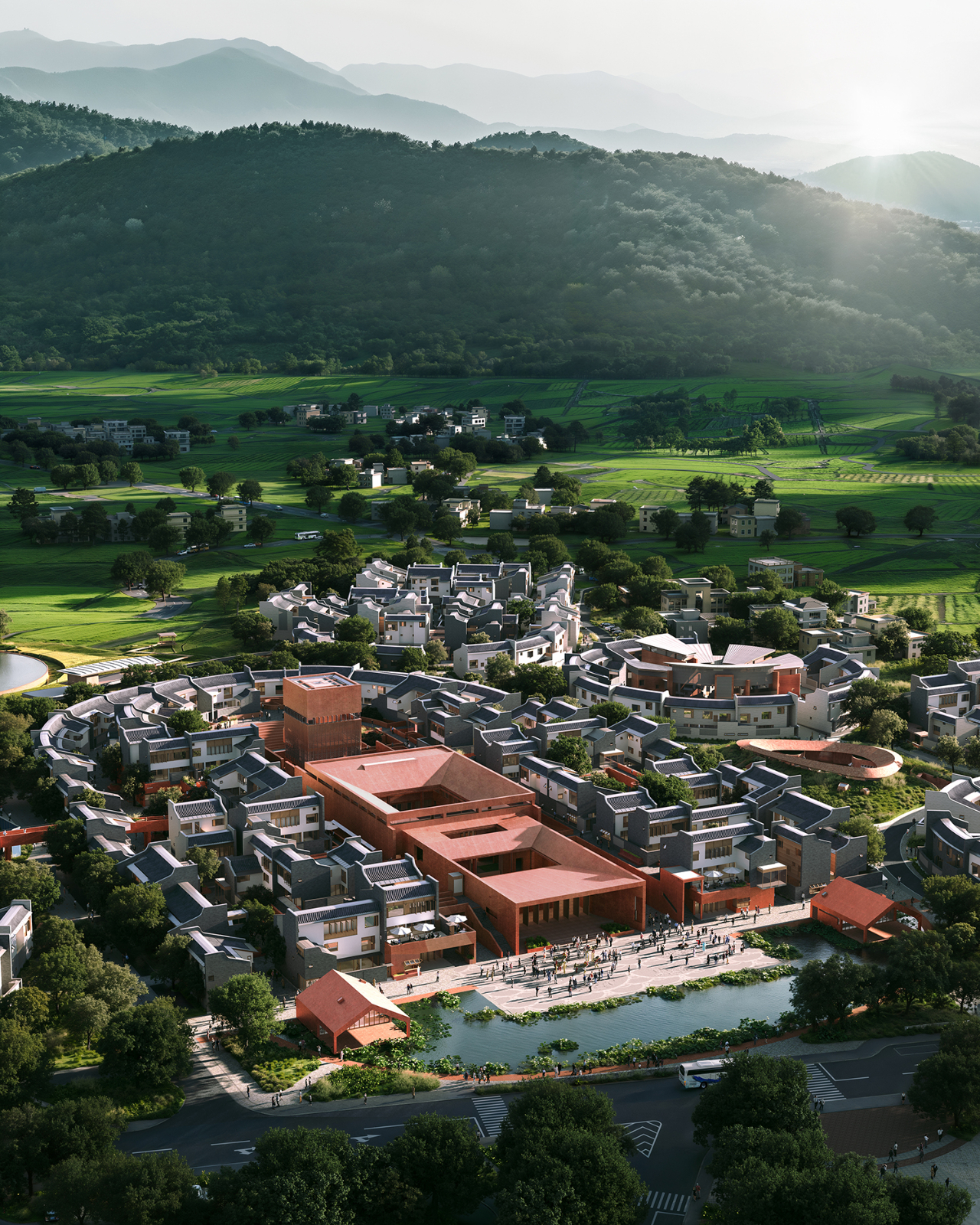
△Core Weilong Cluster
Construction is underway and completion is scheduled for next year — marking the first large-scale built intervention in Guangdong’s “Nan Kunshan–Luofu Mountain Rural Development Demonstration Belt.”
In 2021, Meng’s Nostalgia and Urban Dreams installation at the 17th Venice Biennale explored the shifting dynamics between rural and urban China — from one-way migration to reciprocal integration. Back then, mixed rural populations emerged organically through social change. Today, Weilong New Community reveals that this crossover has evolved from phenomenon to norm. The design confronts a new condition: rural development is no longer binary, but multi-directional and interdependent, requiring forward-looking organizational systems and spatial frameworks.
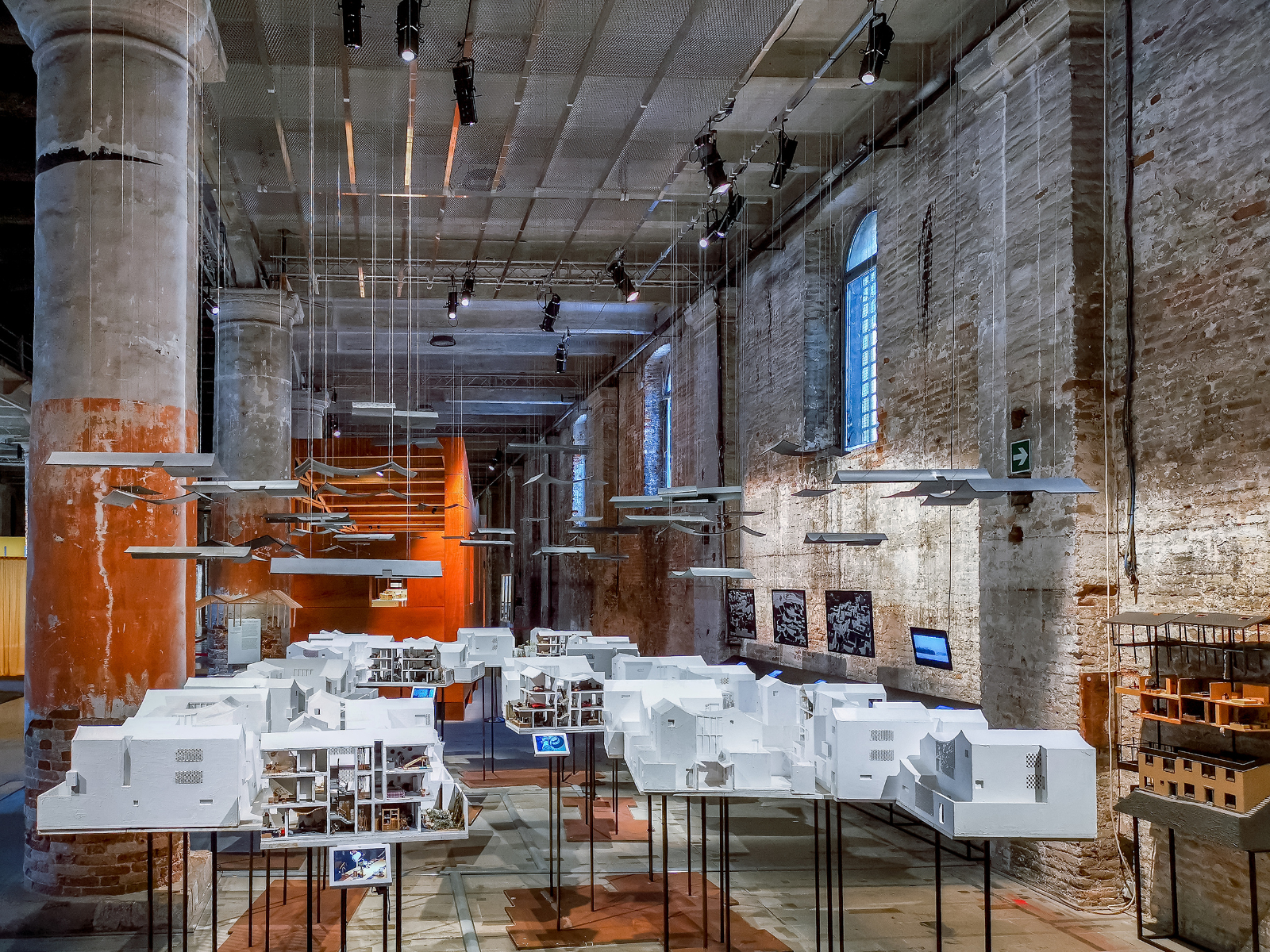
△ Venice Biennale: “Nostalgia and Urban Dream”
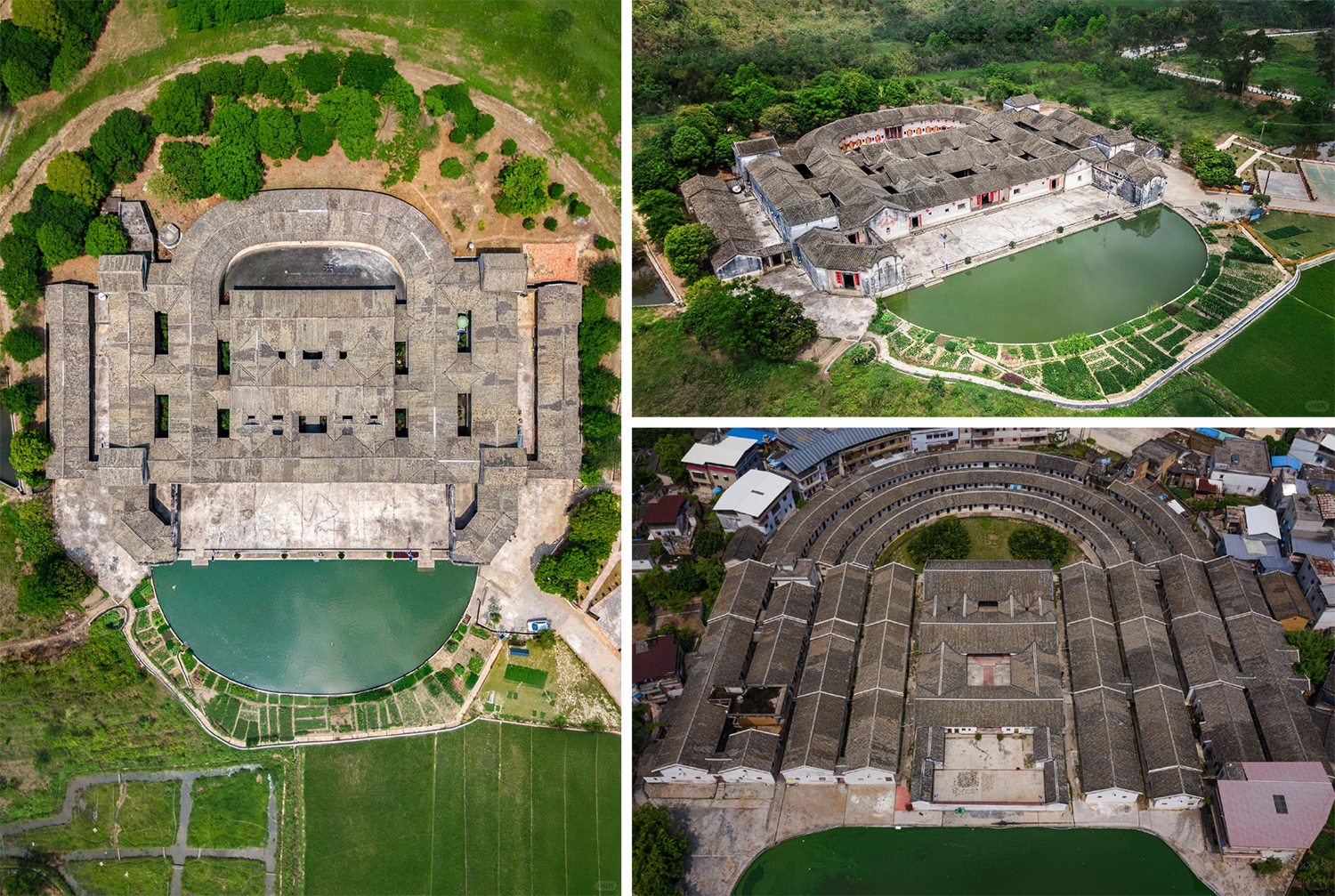
△ Traditional Hakka Residence
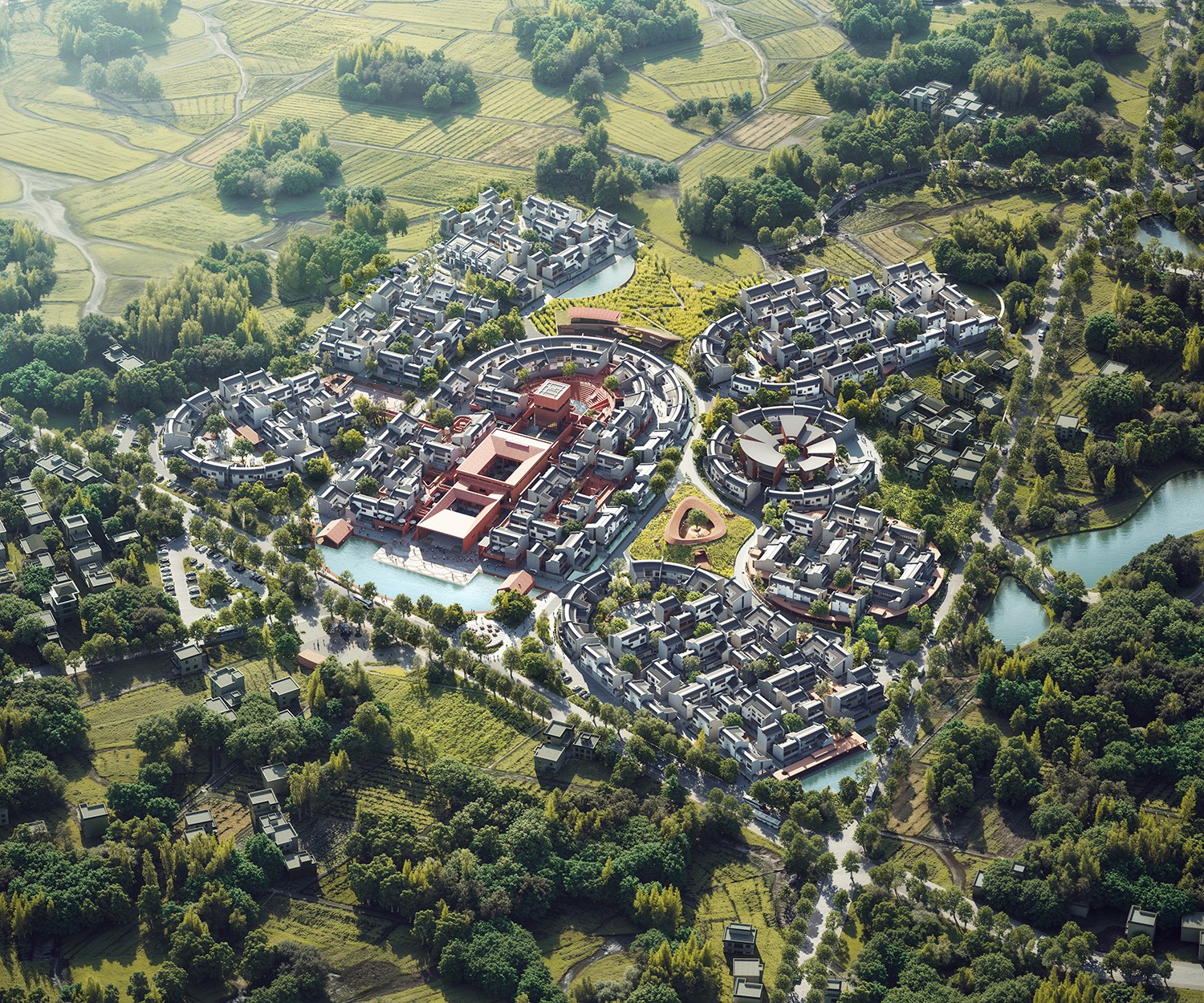
△ Planning Aerial View
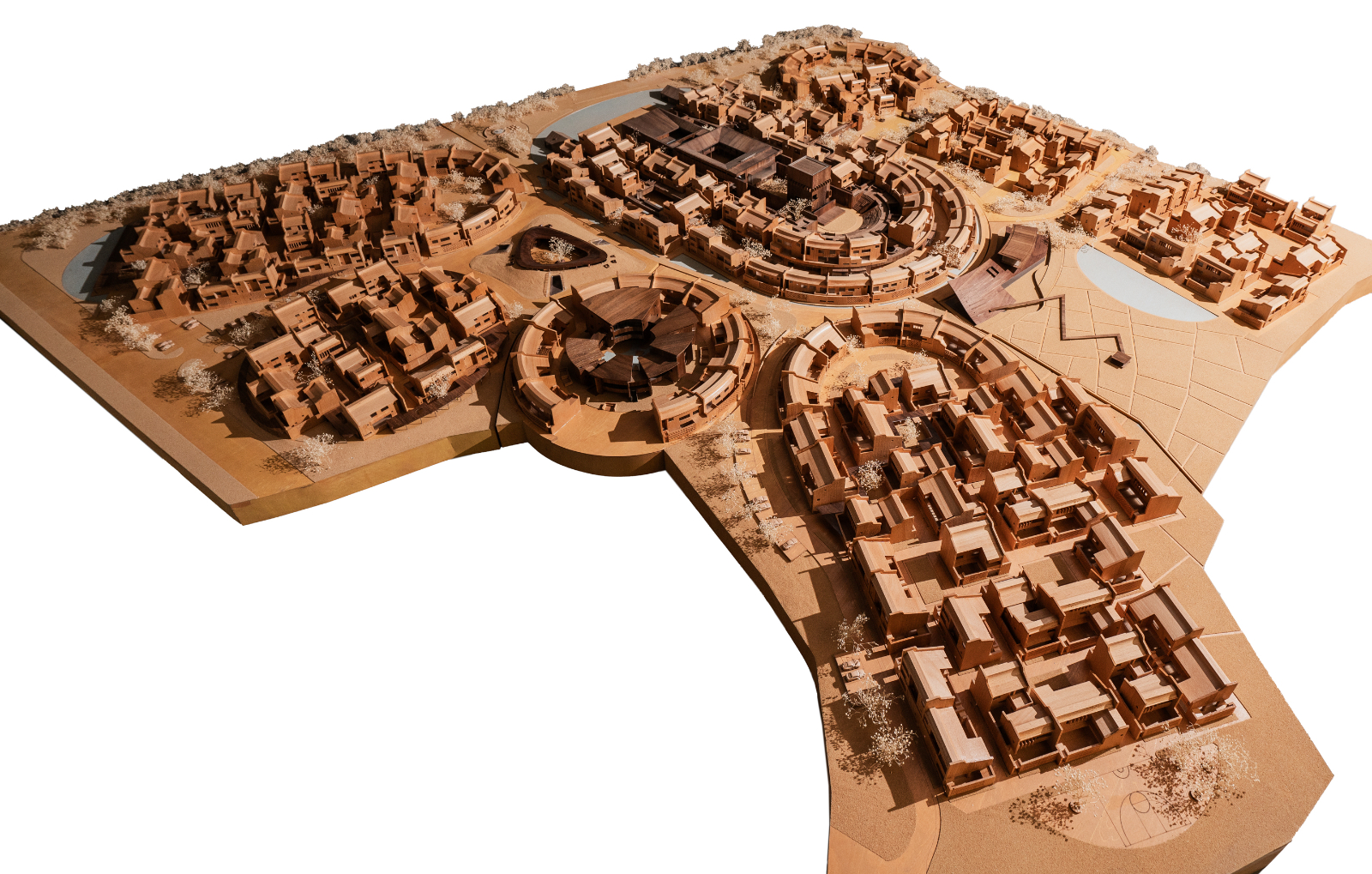
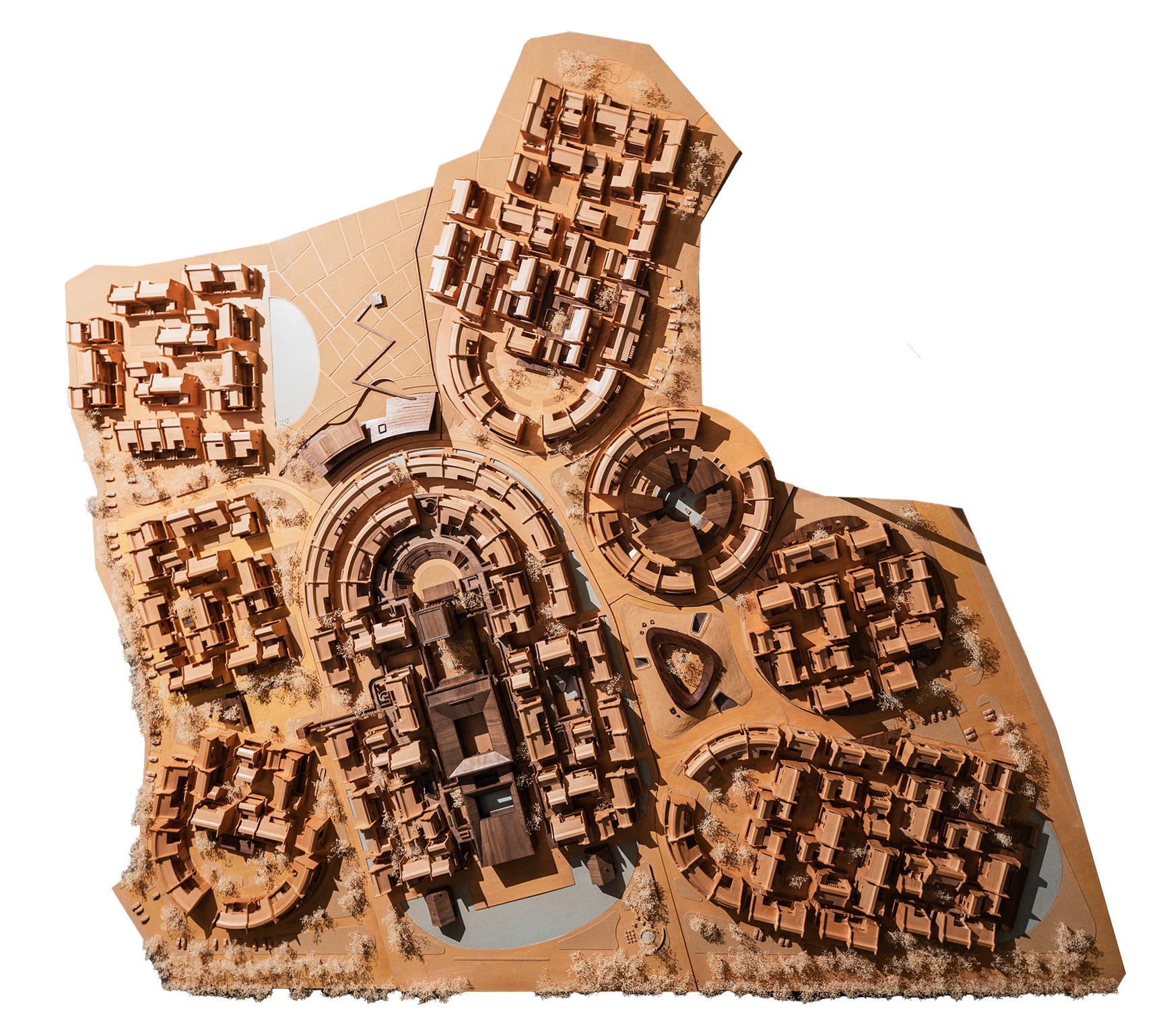
△ Overall Design Model
Through 194 survey questionnaires, we found that nearly 80% of the original residents identify as Hakka and recognize traditional forms, yet 70% prefer modern convenience (abandoning traditional stoves and central halls, with fewer taboos regarding orientation and Feng Shui). Furthermore, nearly 40% of residents plan to use their houses for B&Bs or commercial operations. Future users can be classified into three main categories: long-term local residents, returning/dual-habitation families, and new urban settlers. Among them, returning/dual-habitation families include mixed families who return for self-living and renting, as well as owners who move out with their children and lease their homes to new urban residents, allowing old villagers to earn multiple incomes from rent and operations.
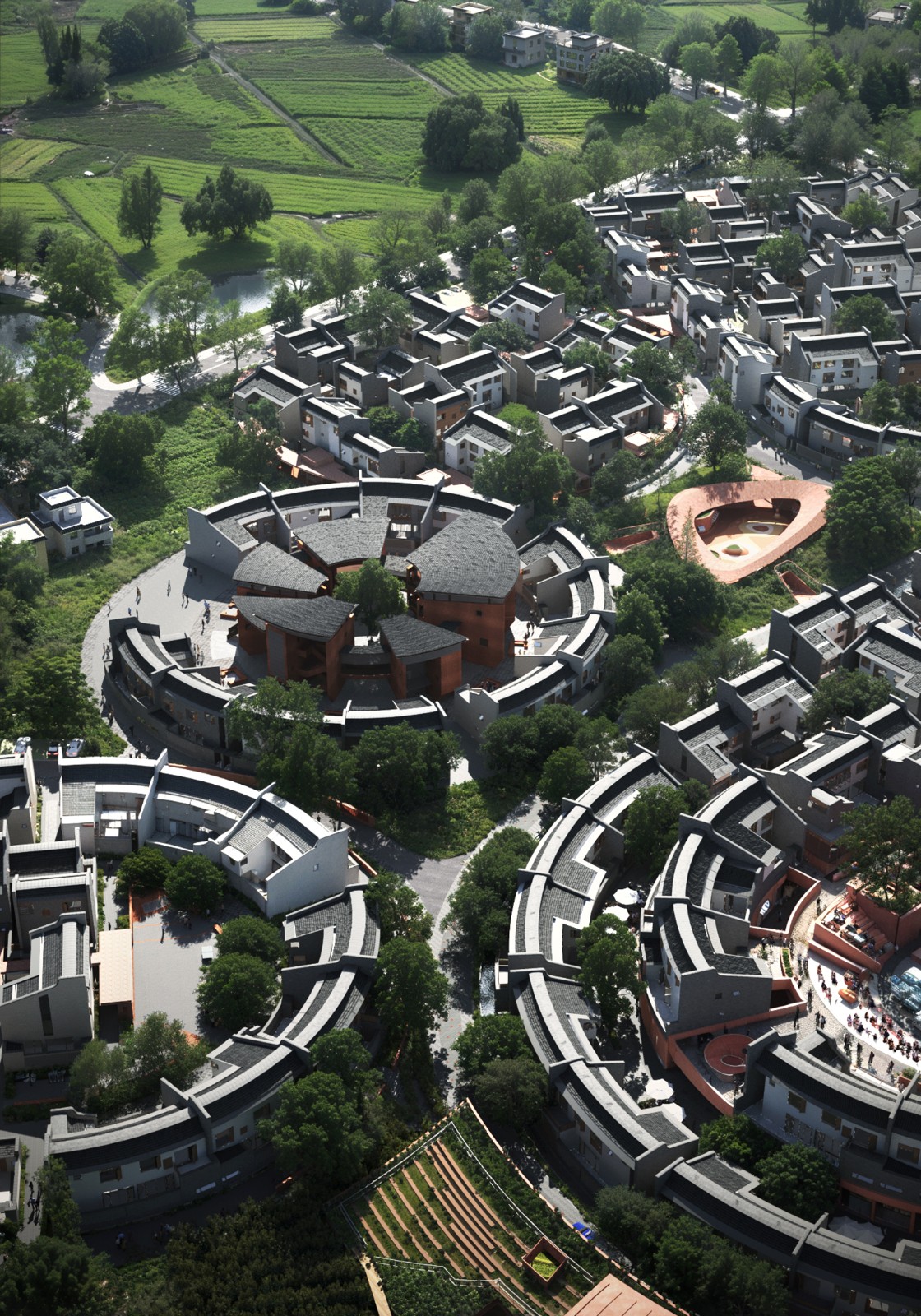
△Layout Responding to Diverse Lifestyles
The evolution of Hakka villages has shifted from kinship-based settlements to diverse mixed communities. This "rooted modernity" reflects Longmen County's cultural blend—where Hakka architecture integrates Cantonese elements, offering key regional insights. Thus, the resettlement project moves beyond "upgrading" to reconstruct a modern living environment that embodies local culture and belonging. Balancing resident needs and government expectations, we set three design principles: regional spirit, dynamic response, and economic efficiency.
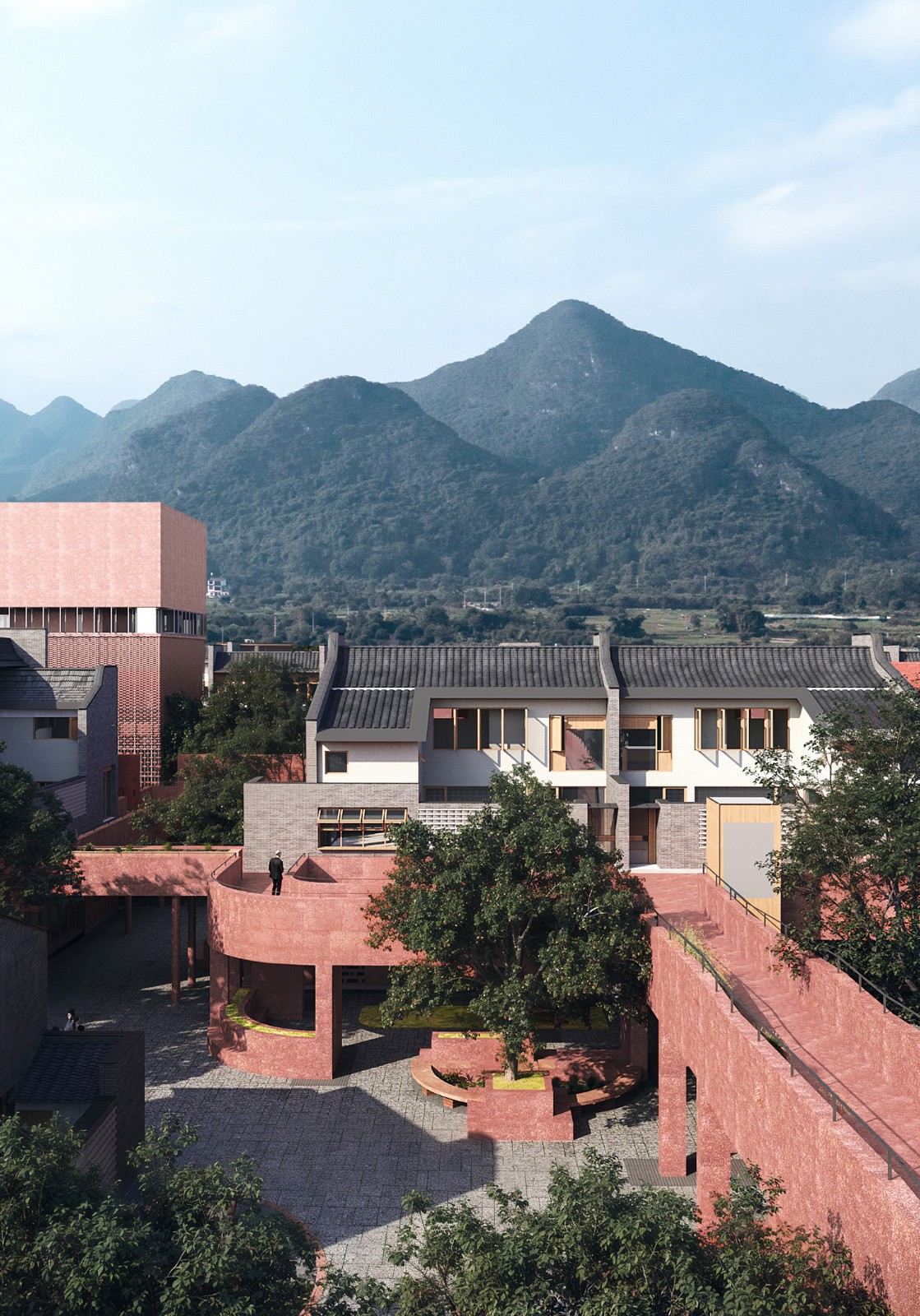
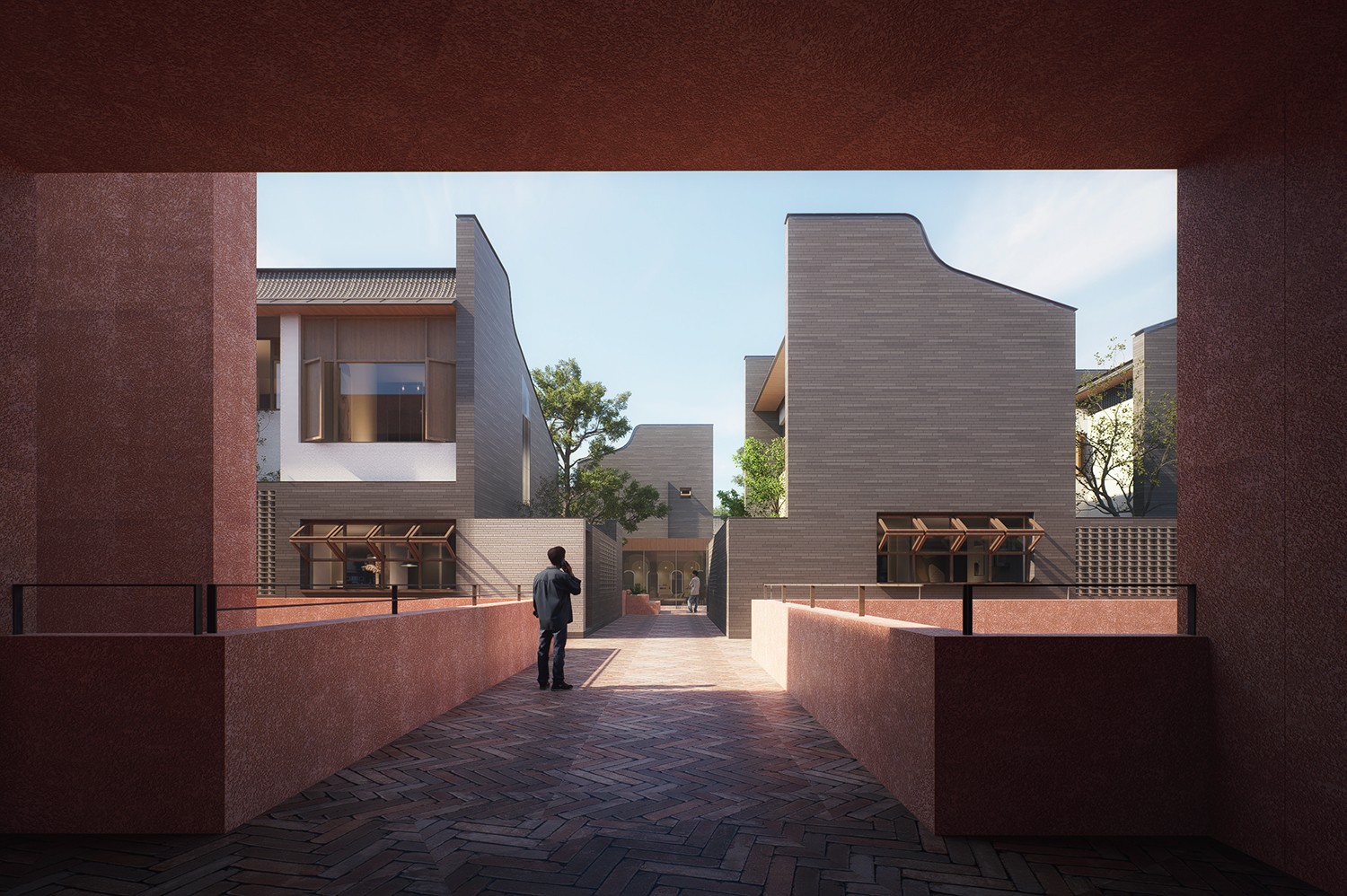
△Three-Dimensional Rural Public System
With the goal of improving quality of life, we aim to use life scenarios as a fulcrum and industrial introduction as a driving force to build a "Living-Life-Industry" triple-track rural renewal model. To this end, we integrated planning consultants to propose "Ten Future Scenarios" for Weilong New Community, serving as the prerequisites for spatial organization and functional allocation.
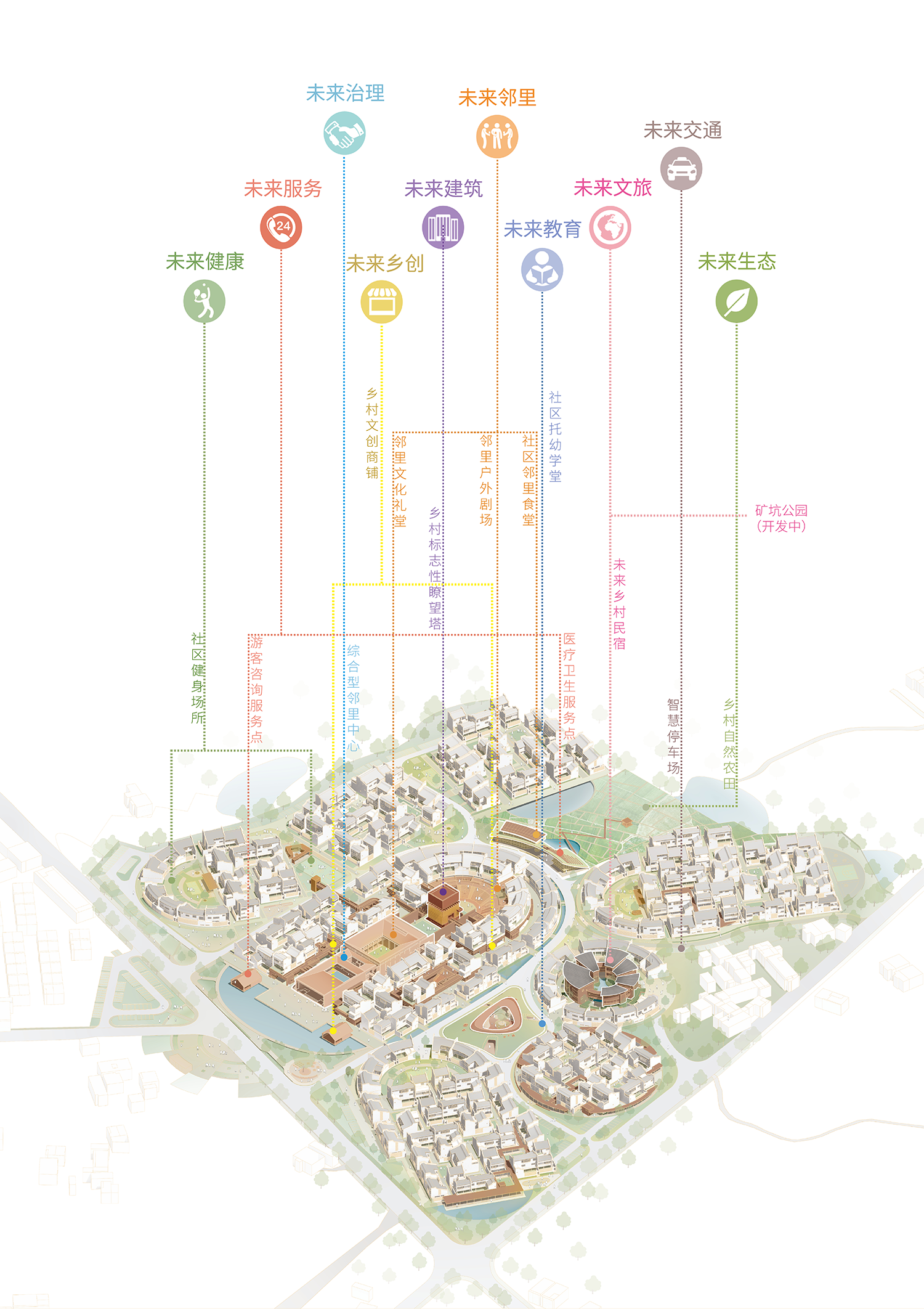
△Ten Future Scenarios
Traditional Weilong dwellings used centripetal enclosure and axial symmetry to establish lineage order and defense. In our plan, we retain the kinship scale and centripetal essence, grouping the community into clusters that foster neighborly interaction. A strategy of "flexible gathering" replaces rigid walls with public activities and ecological permeability, forming soft boundaries.
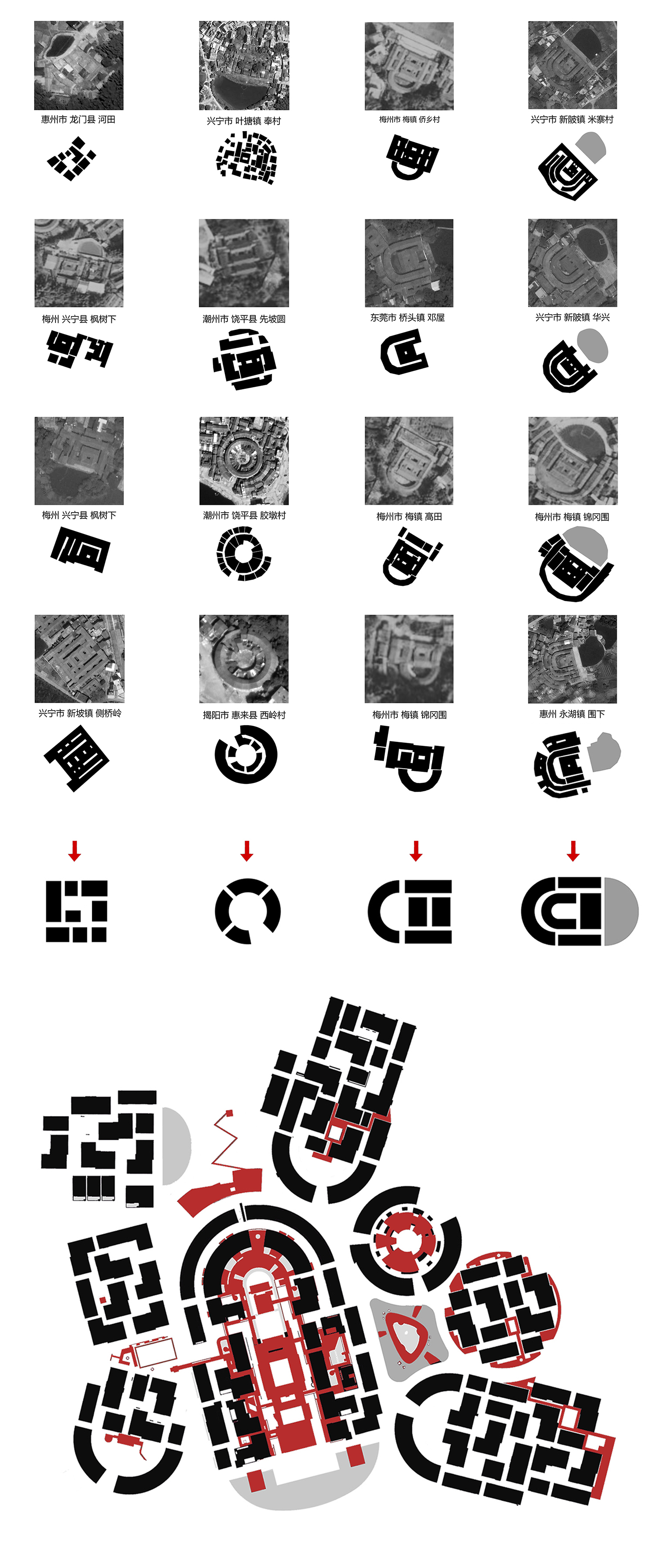
△ Typological Study and Evolution of Weilong Dwellings
△Planning Mode
Drawing from previous experience, we classified the clusters by function—mixed residential, homestay-commercial, and pure residential—creating distinct zones for varying levels of activity and allowing families to select homes according to their needs. Within each cluster, we rewove a lifestyle network suited to contemporary living, avoiding the informality of traditional villages and establishing a new order that is “loosely structured yet cohesive.”
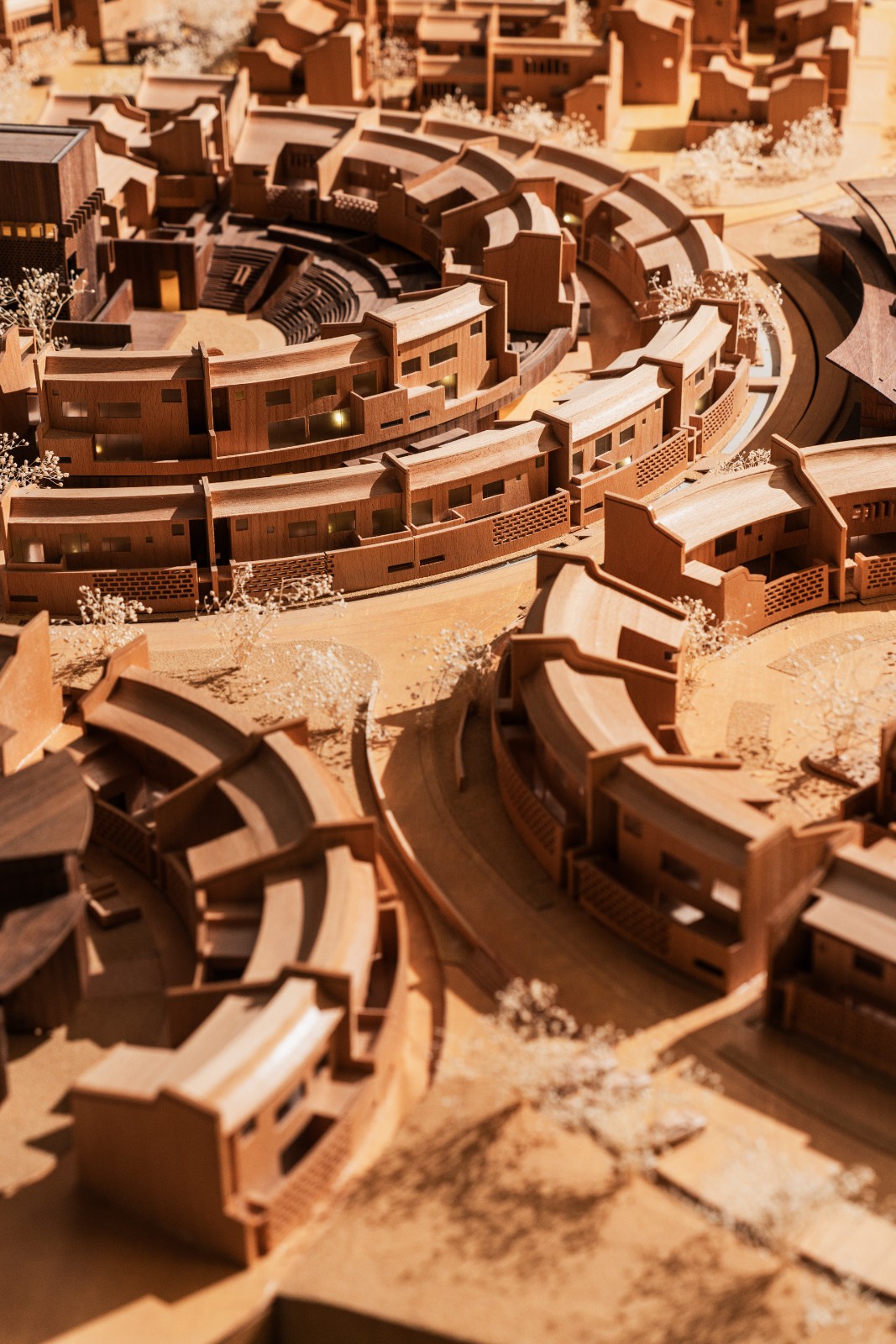
△Cluster Model
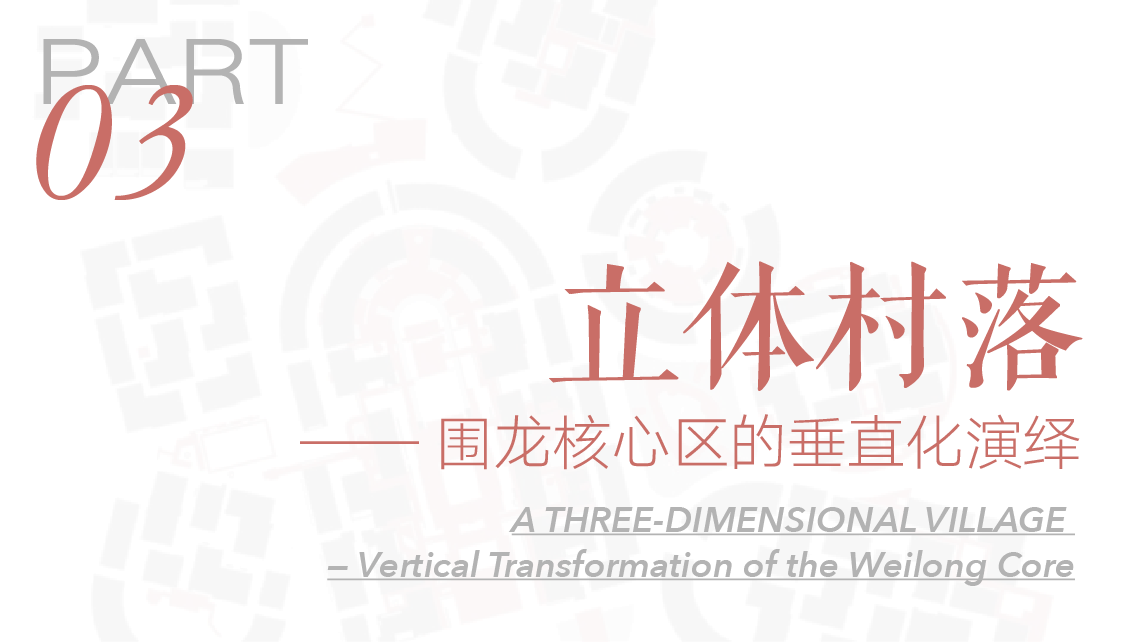
The traditional axial sequence of “moon pond – threshing ground – ancestral hall – rear chamber” in Weilong dwellings is planar and ceremonial. We preserve these spiritual nodes while translating them into spatial places aligned with contemporary lifestyles.
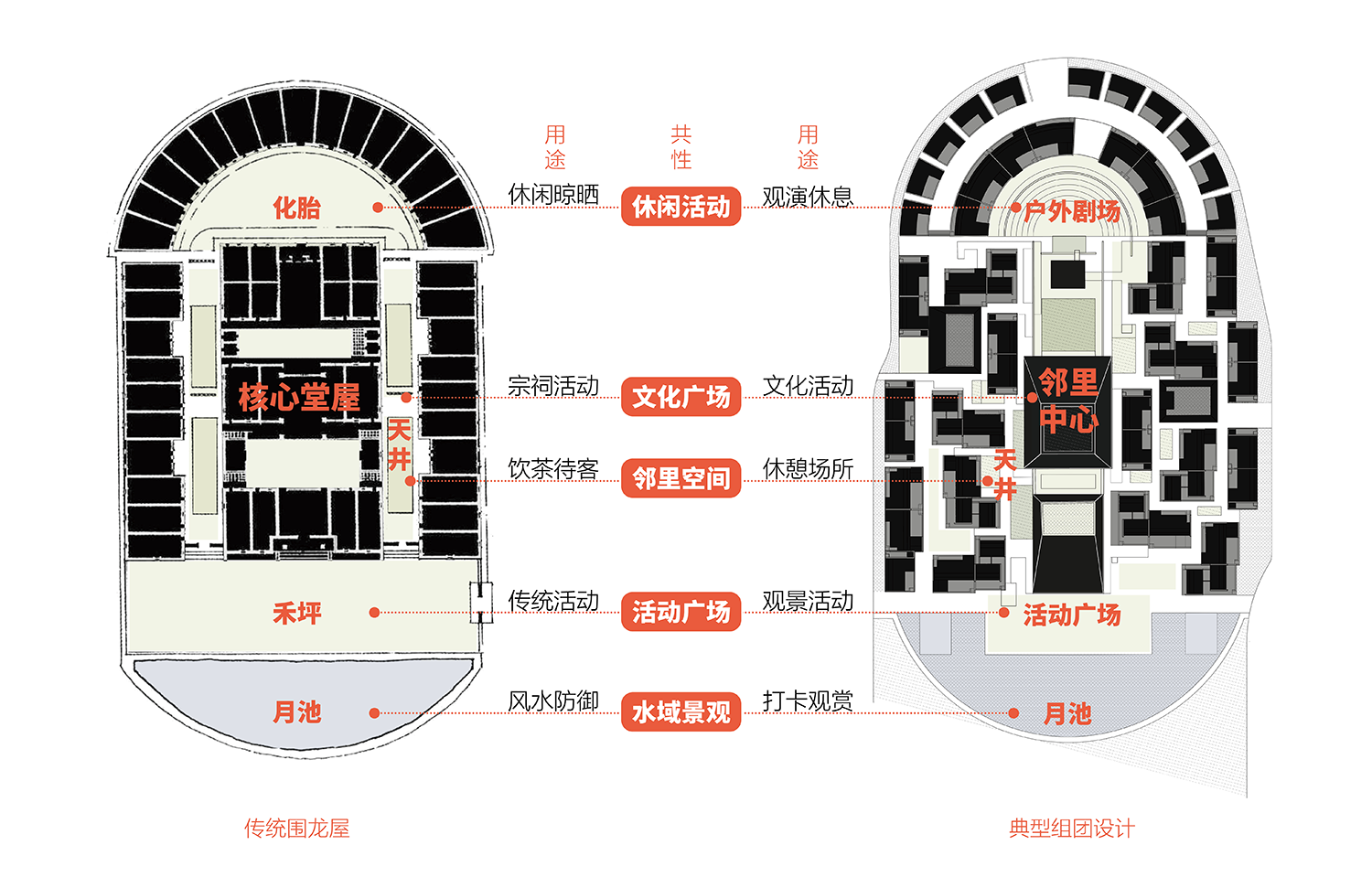
△ Plan Translation of the Weilong Dwelling
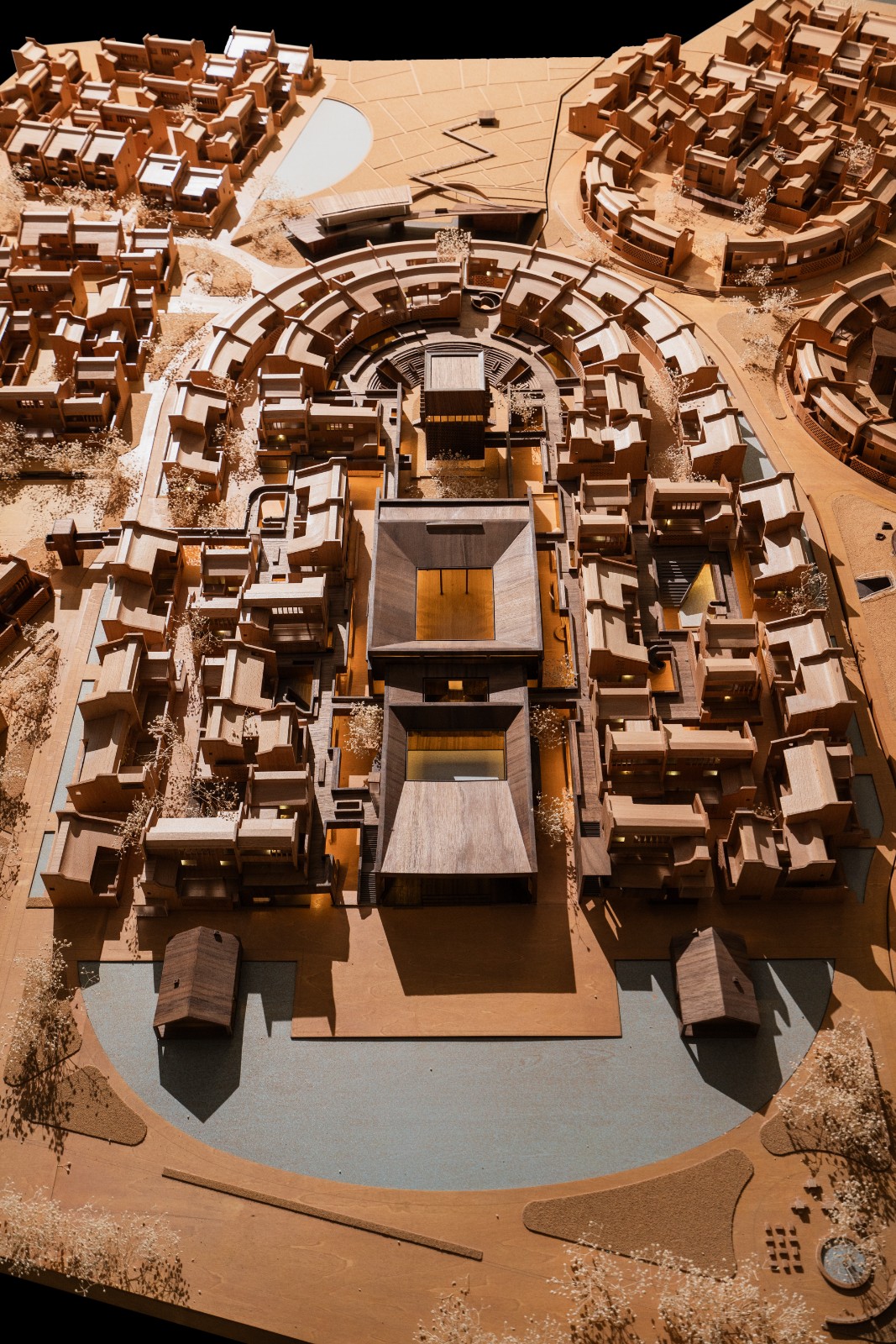
△ Model of the Core Area
The pond is reimagined from practical utility into a spiritual and scenic focal point. The ancestral hall transforms into a communal hub for commerce and social life, while the rear ceremonial space becomes a semi-outdoor theater, connecting a series of public areas designed for contemporary living.
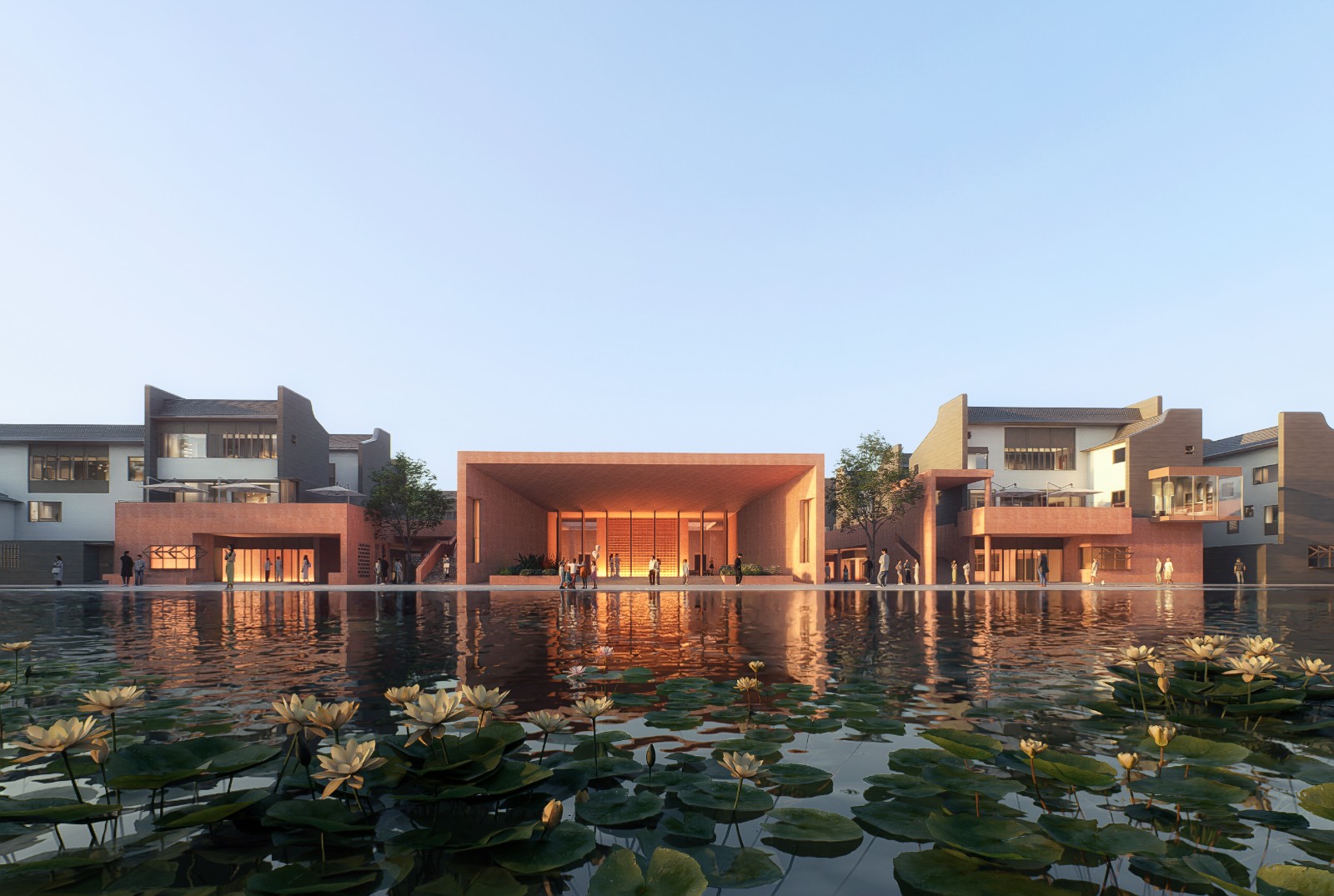
△“Half-Moon Pond” at the Community Entrance
The design elevates traditional planar ritual logic into a three-dimensional form. Educational, cultural, recreational, and commercial functions are integrated into a "multi-level public base." The upper level serves as an open platform for shared activities, while the lower level accommodates service facilities, logistics, and transport networks—enabling public life and operational systems to function independently yet in seamless coordination.
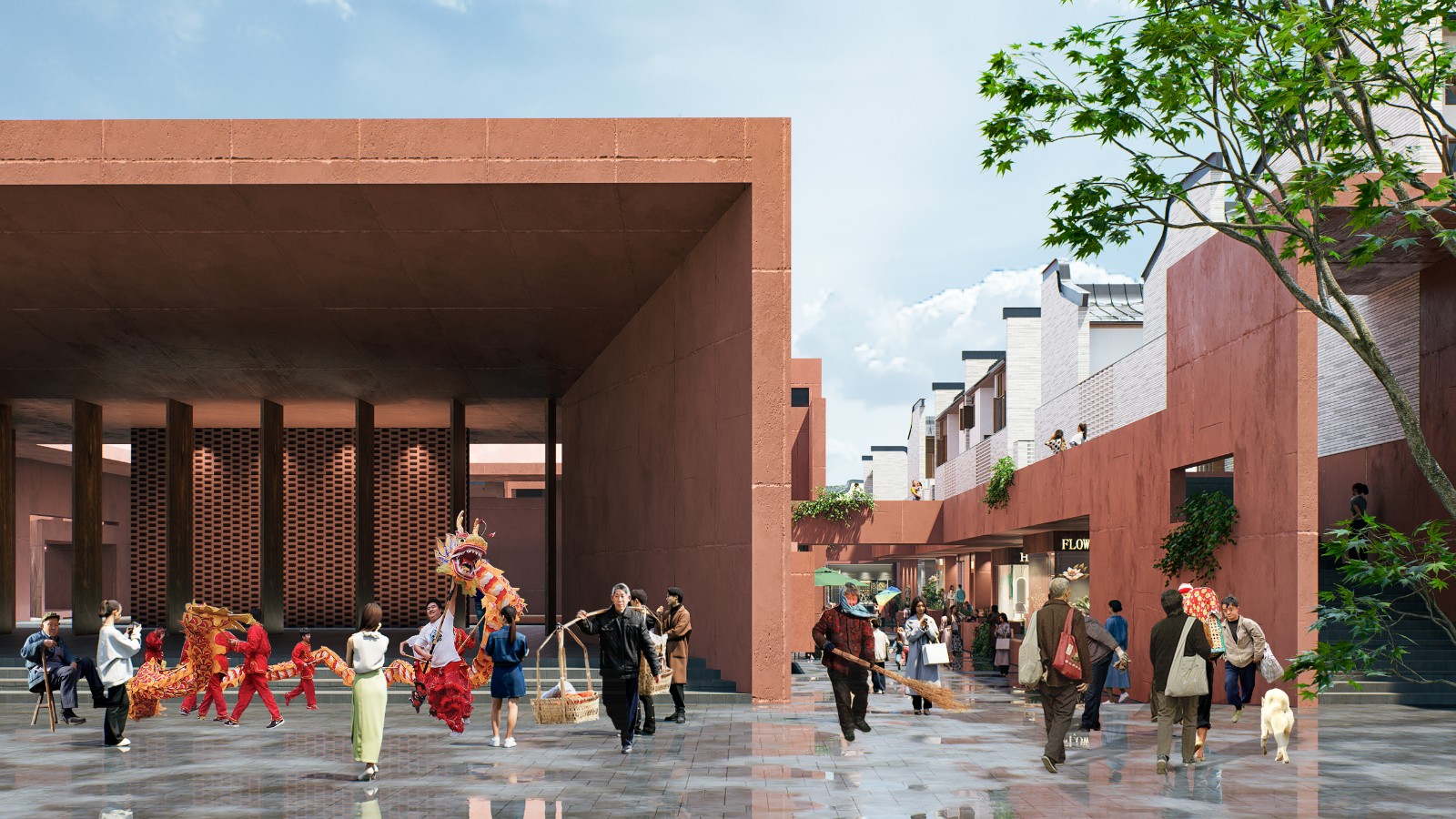
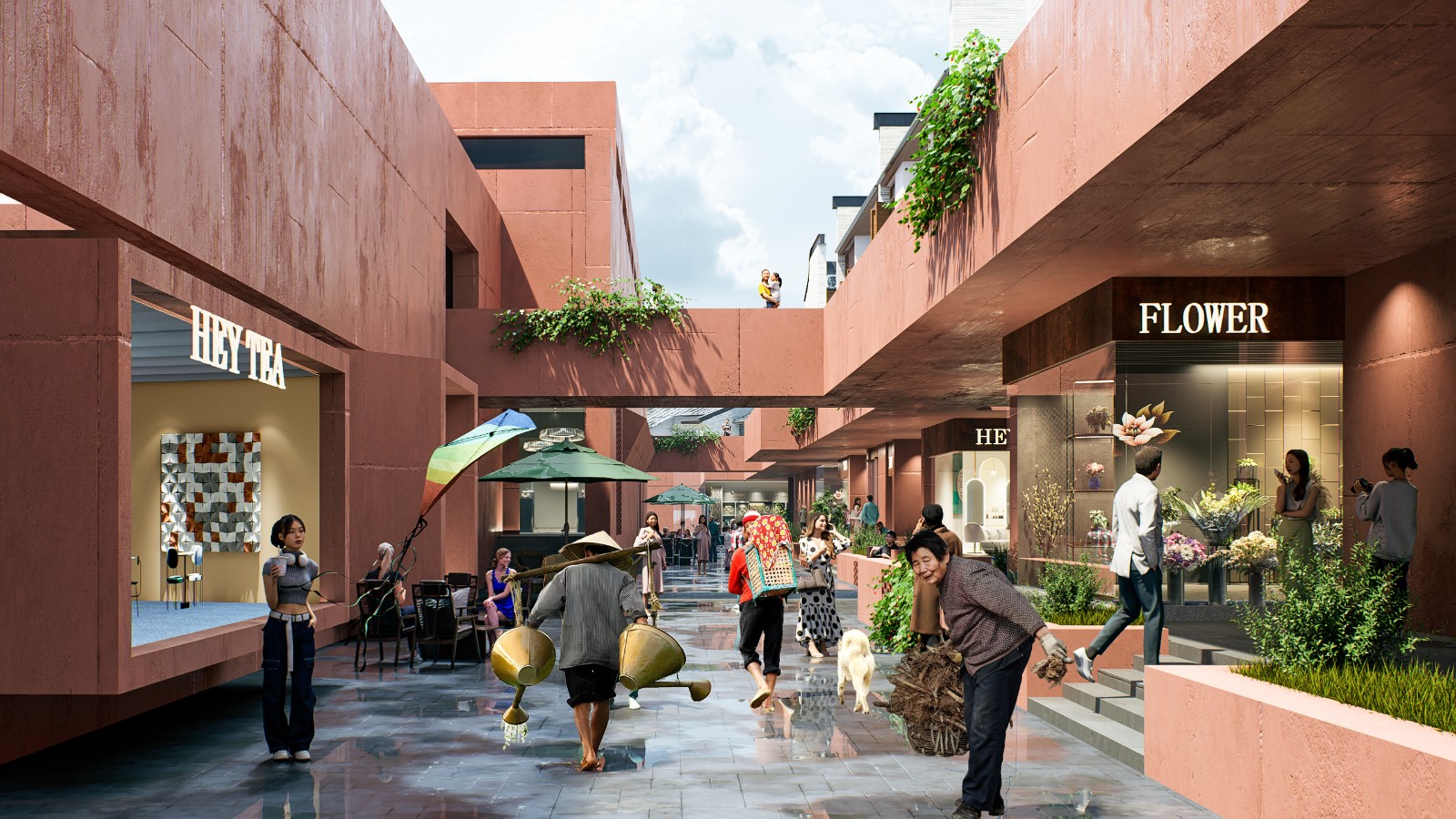
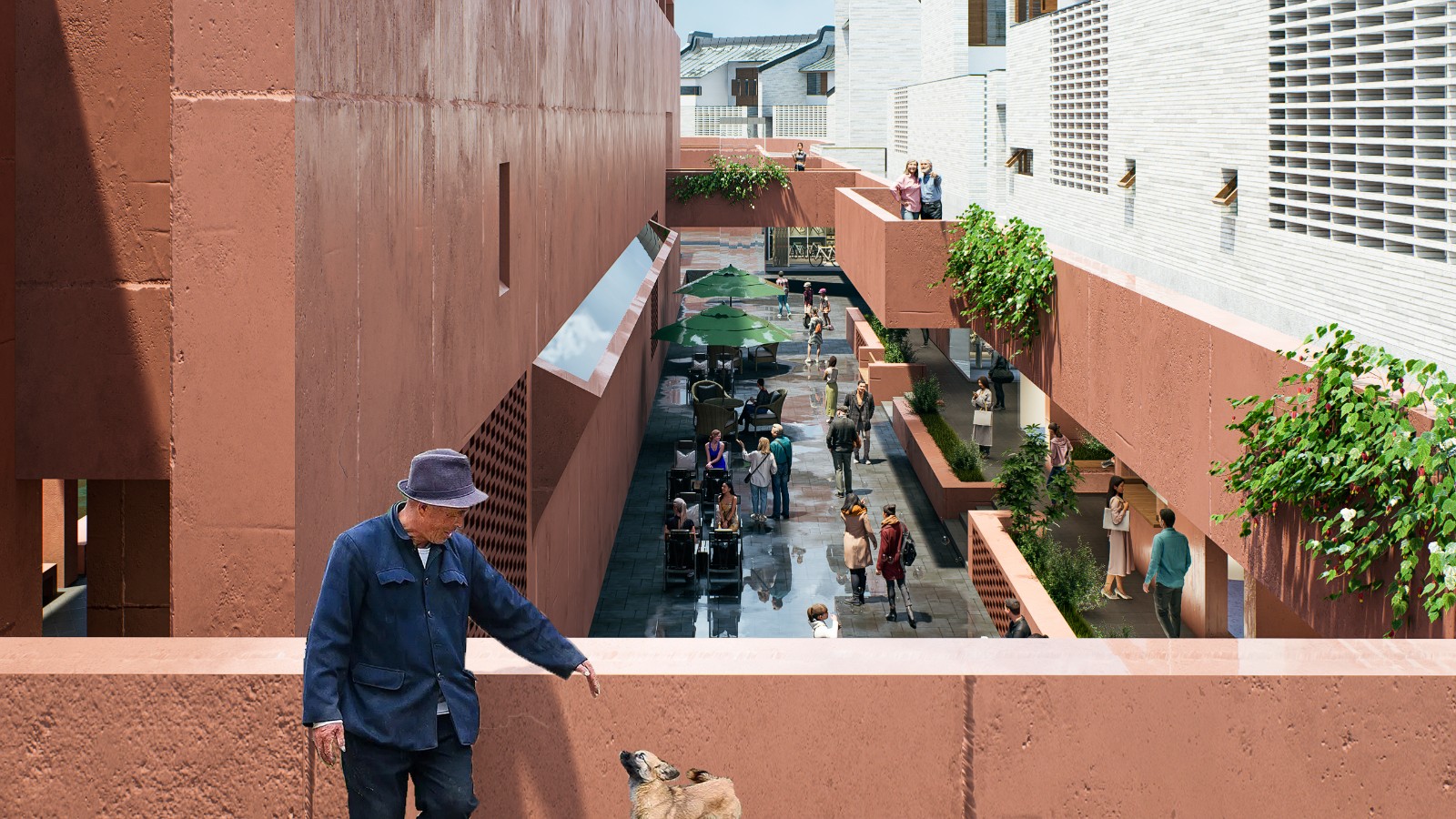
△Three-Dimensional Public Plinth
The public plinth links the core area with residential clusters at the periphery, forming a continuous living circuit. A unified sandstone-textured finish—referencing the regional geology—creates a clear and legible public base that echoes the spatial logic of Weilong settlements.
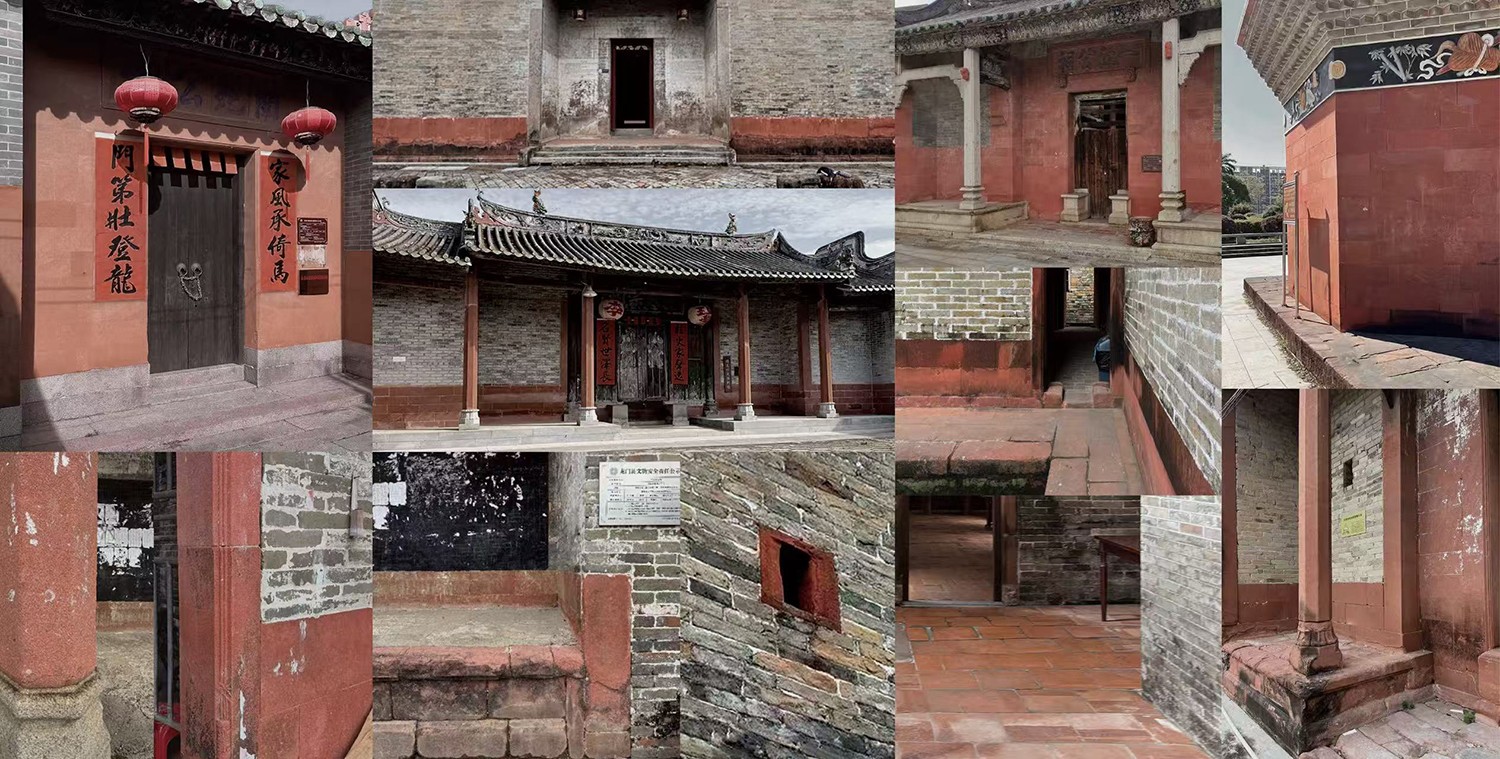
△ Regionally Distinct Red Sandstone
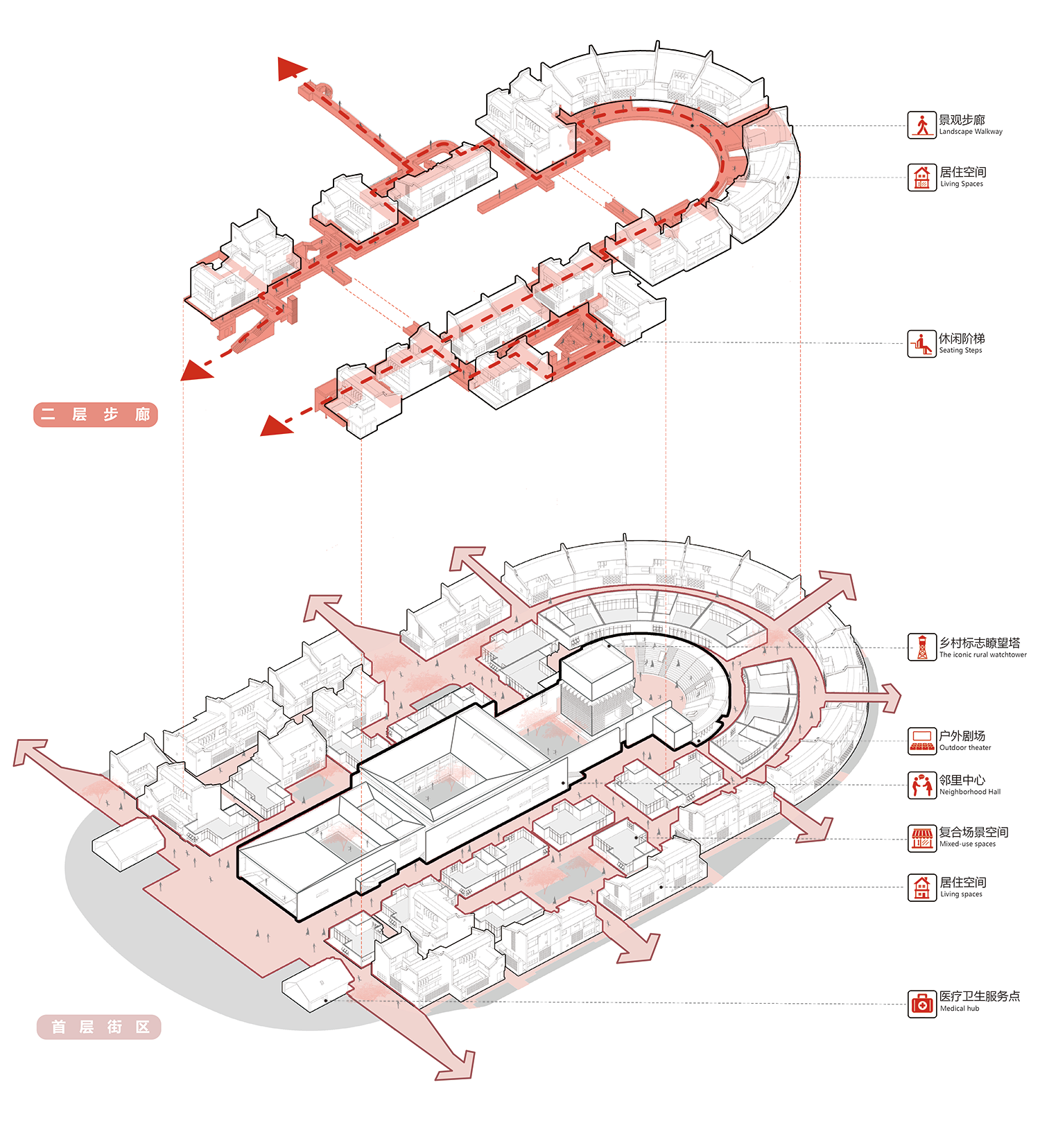
△ Three-Dimensional Public Plinth
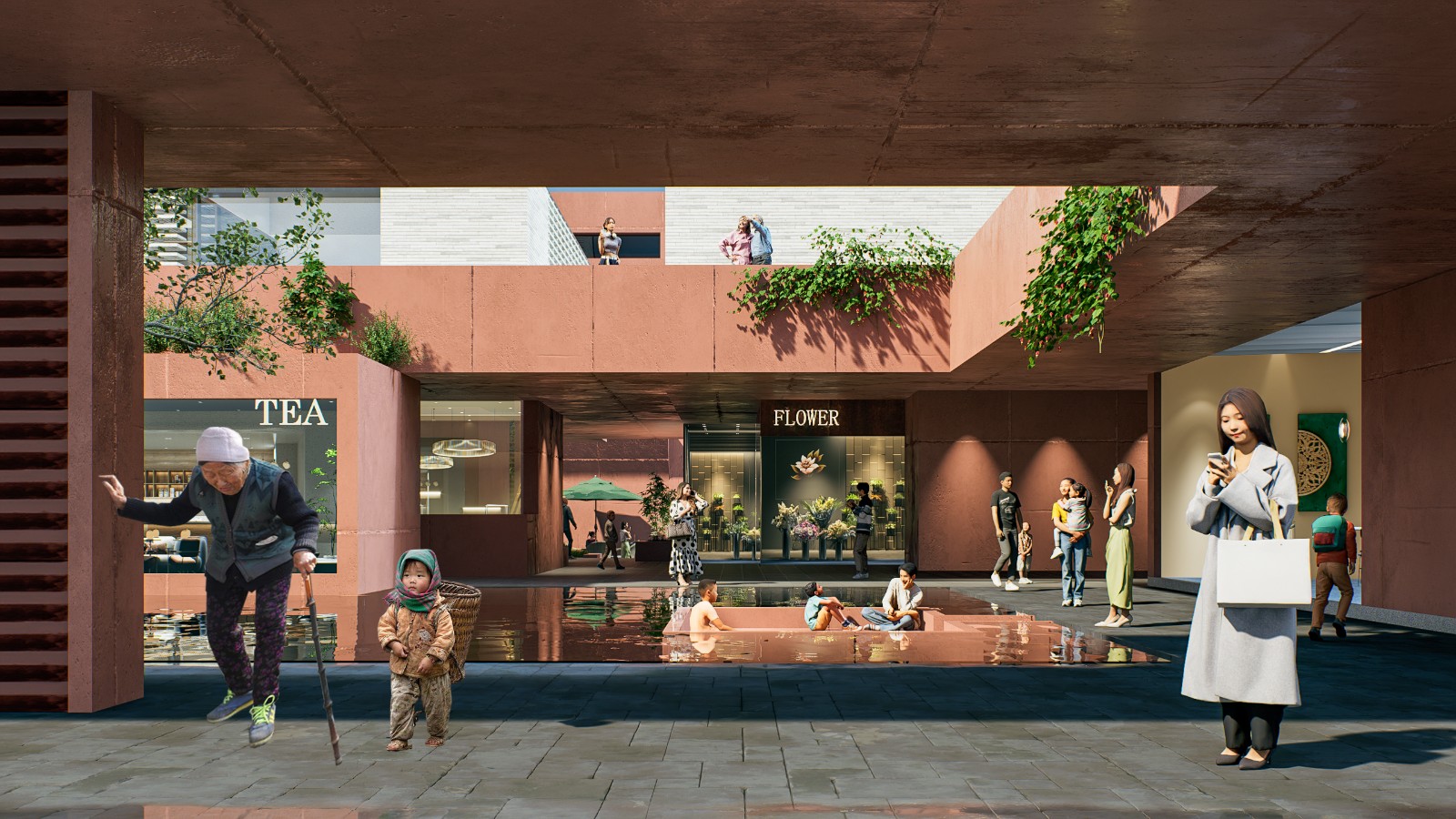
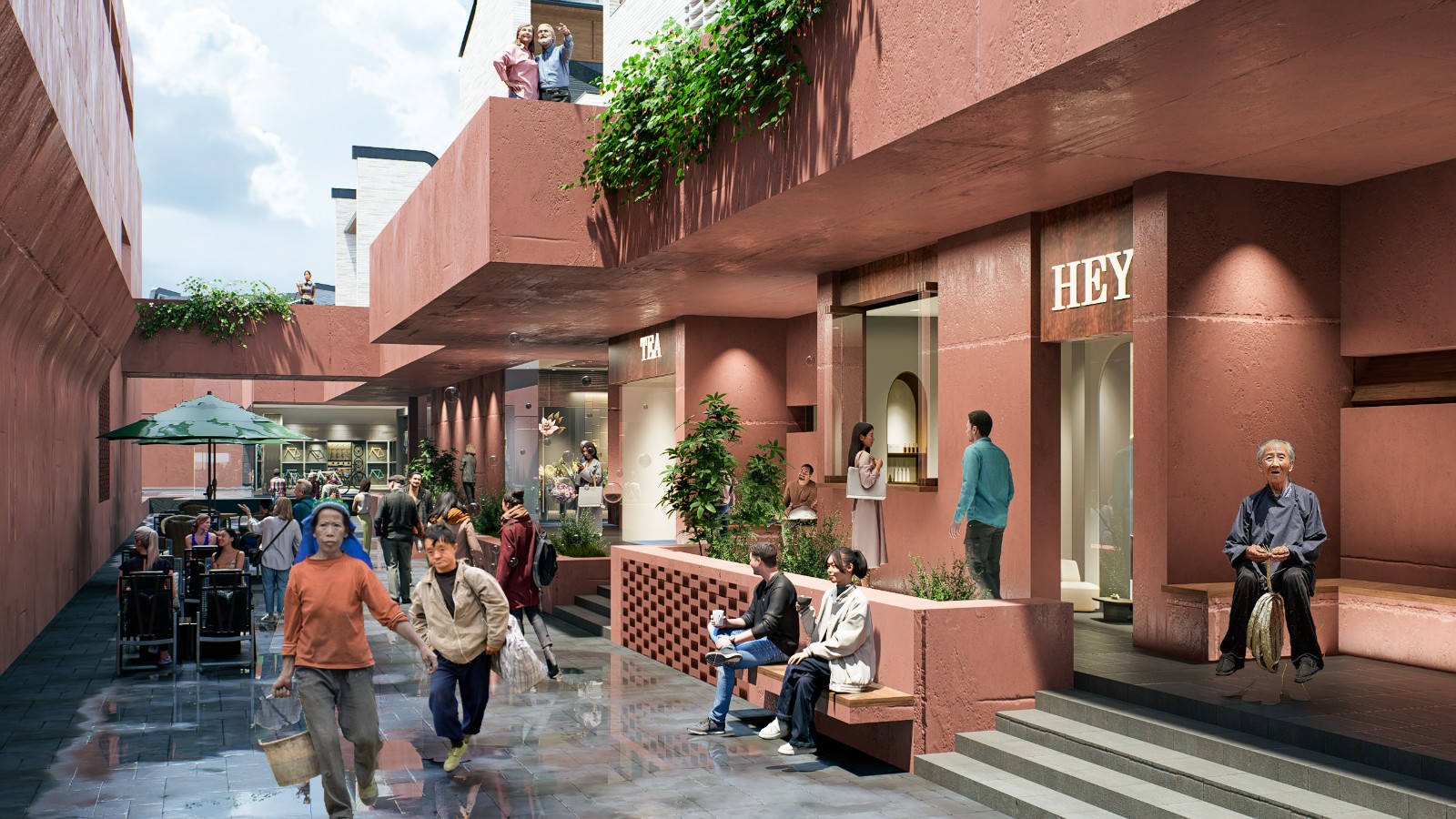
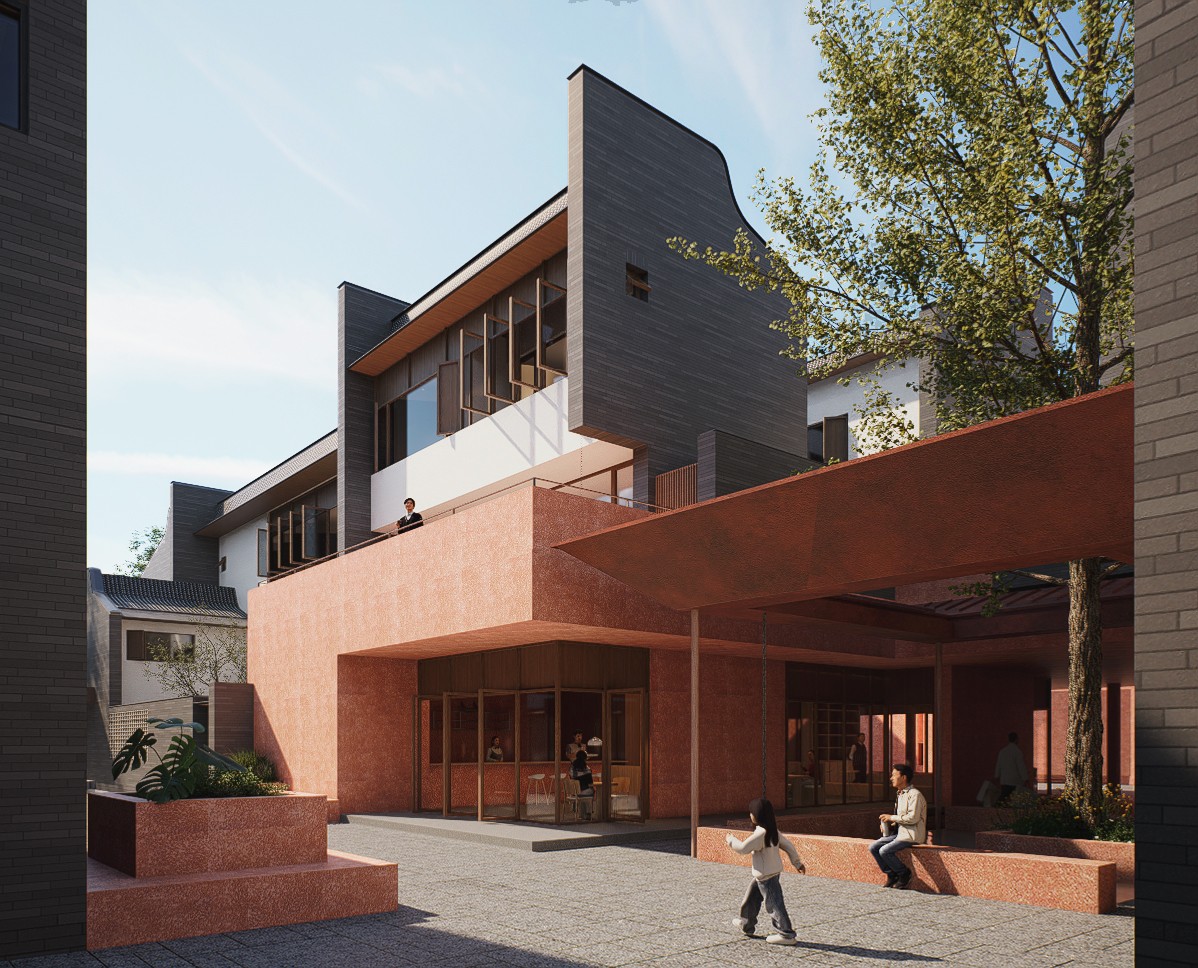
△Multi-Layered Ground-Floor Public Spaces
Residential clusters are placed above the plinth, with vertical circulation separating commercial functions below from living spaces above. This “live above, shop below” spatial configuration increases land-use efficiency while activating the street interface and generating new forms of public life.

△ Core Area Section 1

△ Core Area Section 2
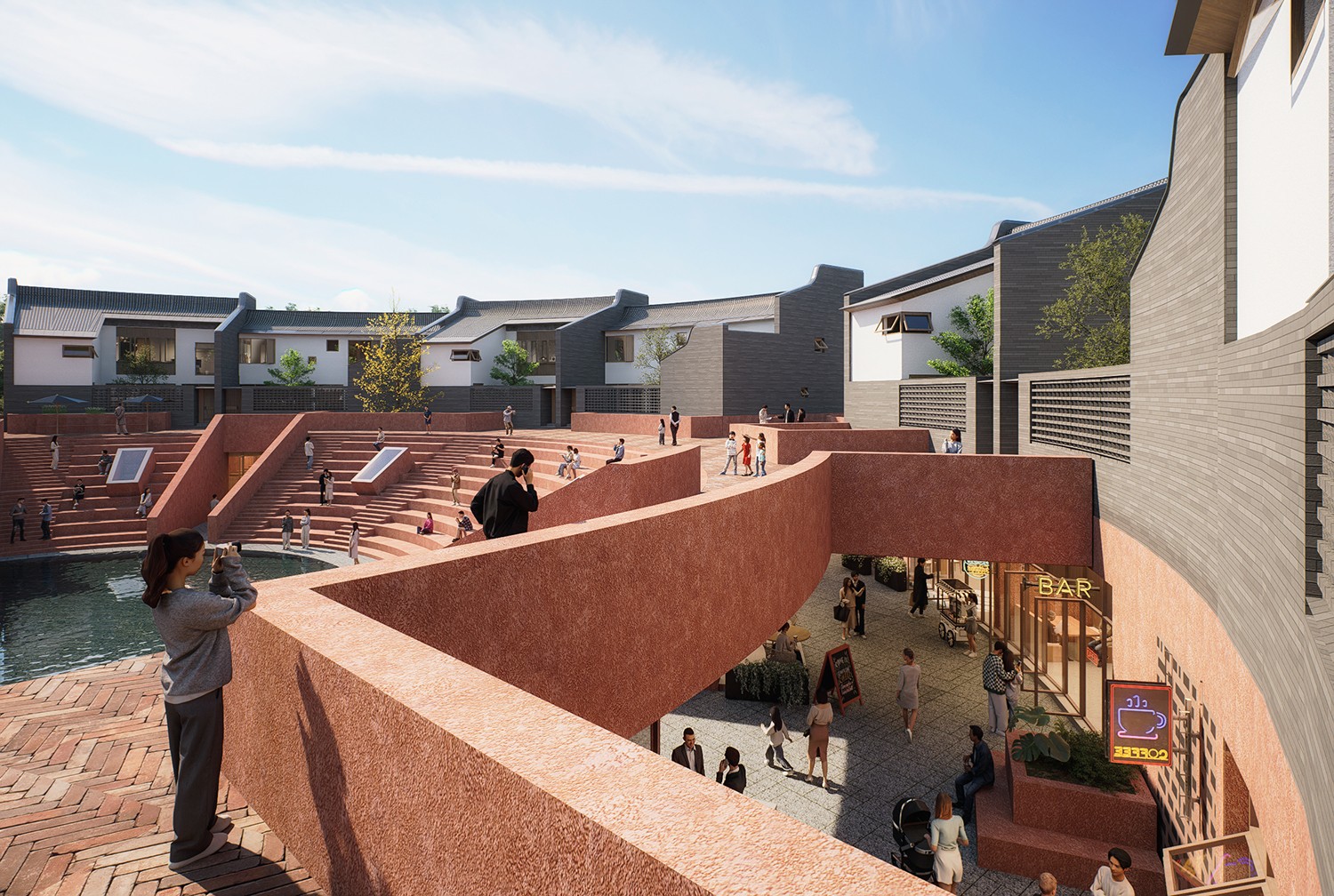
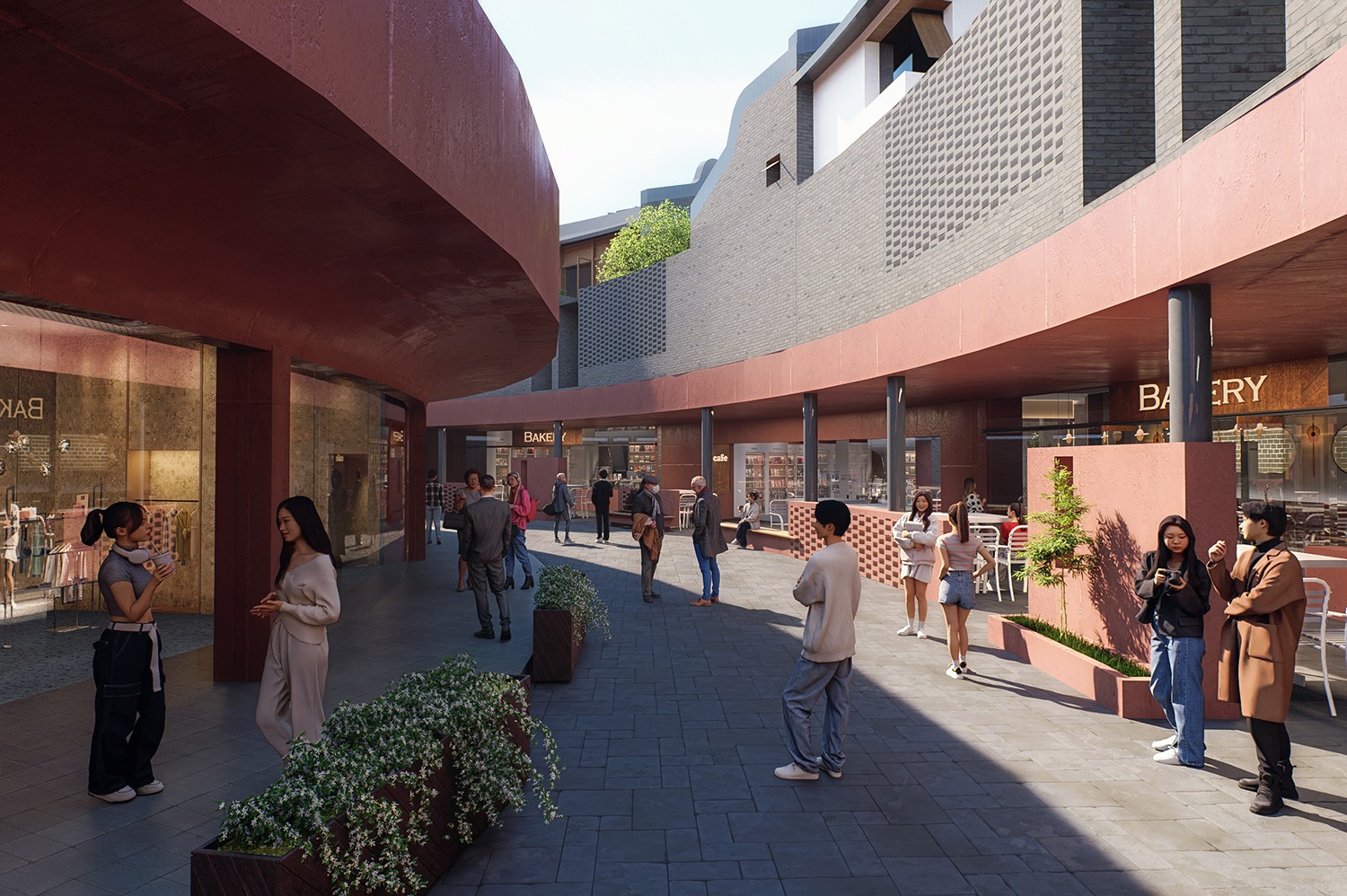
△“Living Above, Shop Below” Spatial Typology
Neighborhood Center: Drawing upon the traditional sequential courtyard system, the design forms a three-courtyard spatial order. The first “water court” creates a calm ambience; the second “central court” serves as a circulation hub linking community and commercial routes; the third is a modern ancestral hall functioning as a spiritual core.
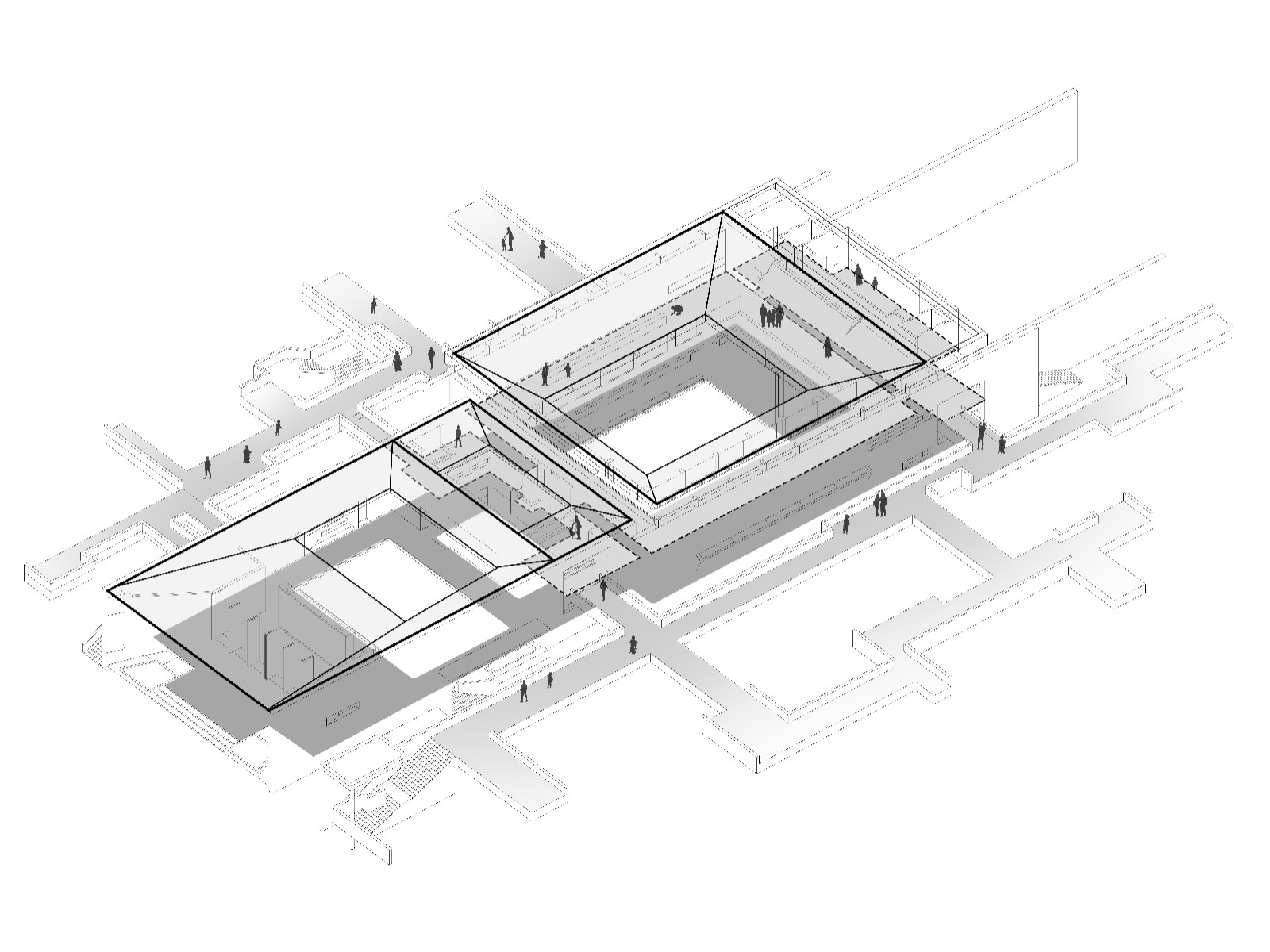
△ Neighborhood Center
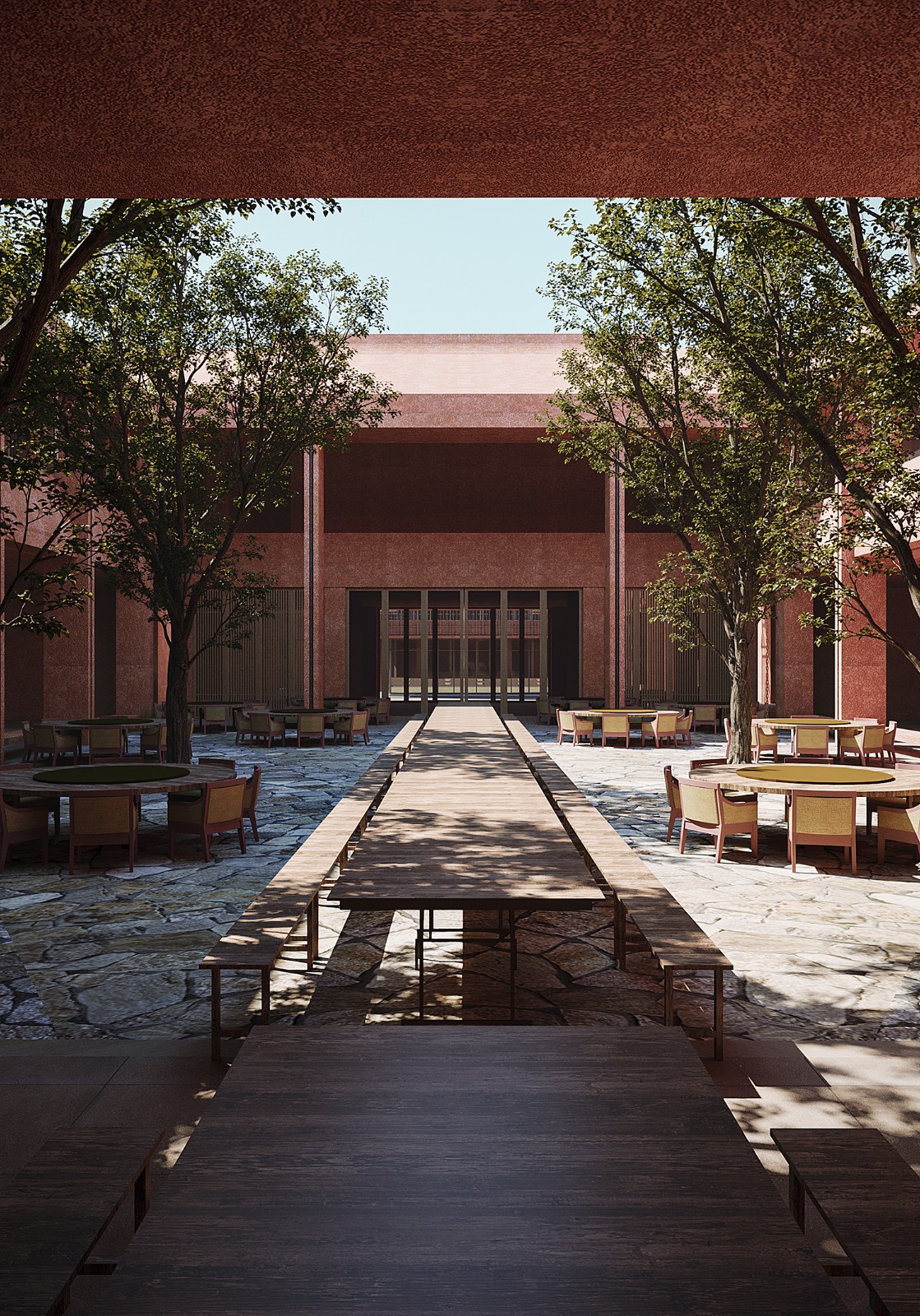
△Flexible Open-and-Close Courtyard
The adaptable courtyard system opens and closes in response to daily and festive needs: on ordinary days, walkways create spaces for display and rest; during festivals, the entire courtyard transforms into a venue for banquets and ceremonies. Vertically, the second floor houses civic services, activity rooms, and a library, directly linked to the public plinth to form a three-dimensional and efficient service network.
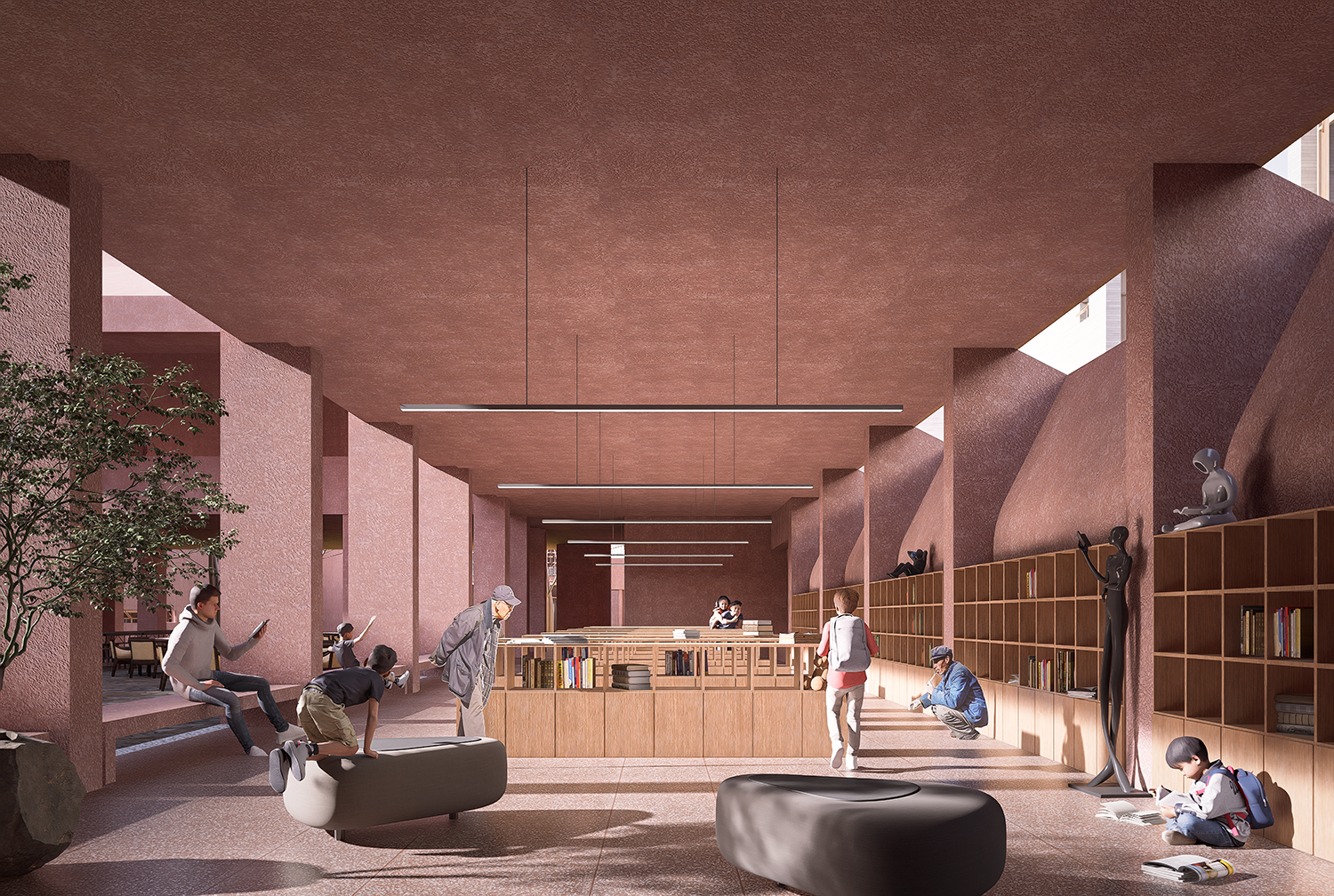
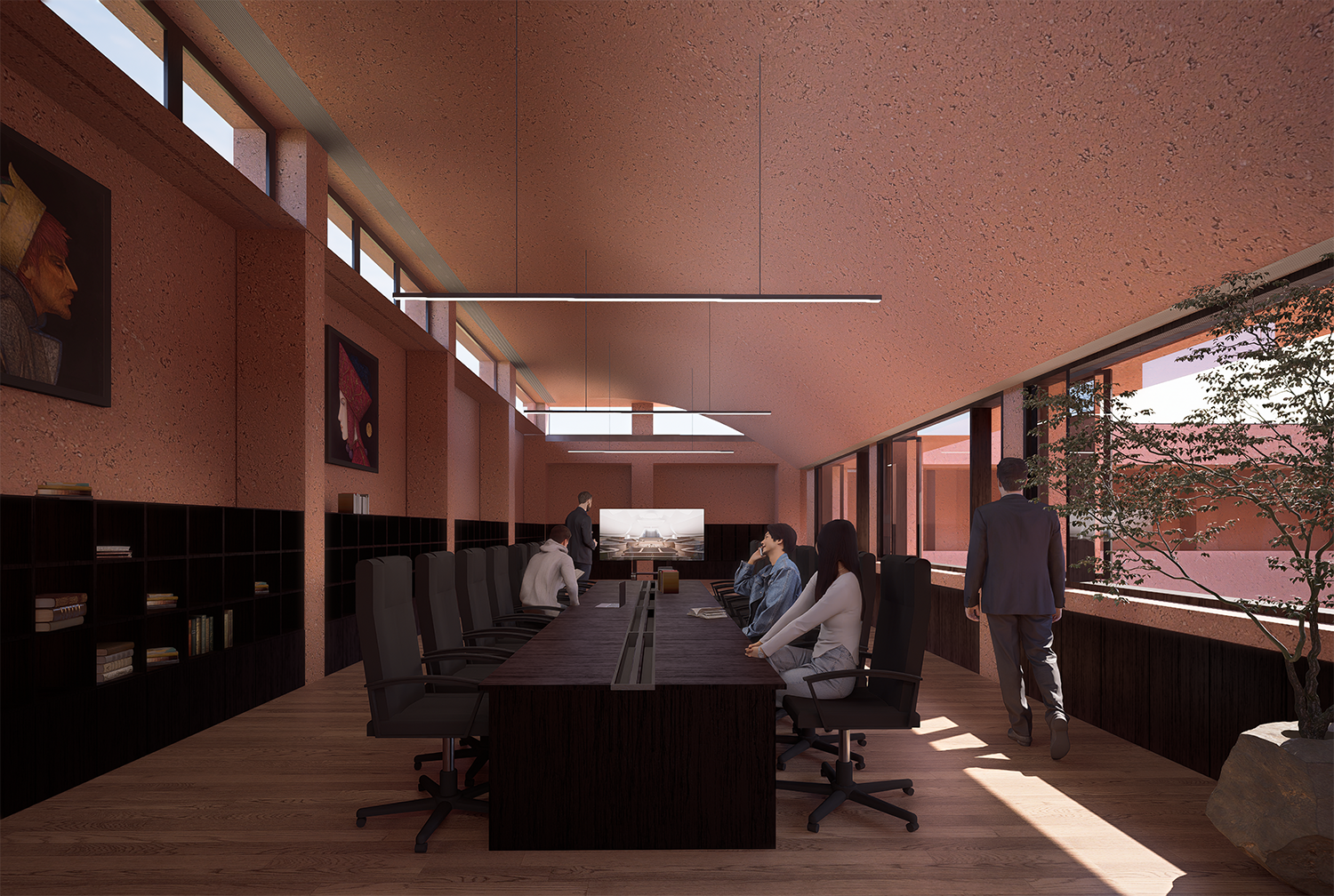
△Varied Scenarios at the Neighborhood Center
Observation Tower: Inspired by the defensive and vertical symbolism of the watchtower found along the axis of Hakka compounds, this tower becomes a spiritual vantage point and visual landmark of the community. Through stacked vertical spaces, it incorporates cafés, reading rooms, and exhibition areas, while providing elevated viewing decks. It functions both as a daily public facility and as a symbolic anchor reinforcing collective memory, echoing the layered mountain landscape beyond.
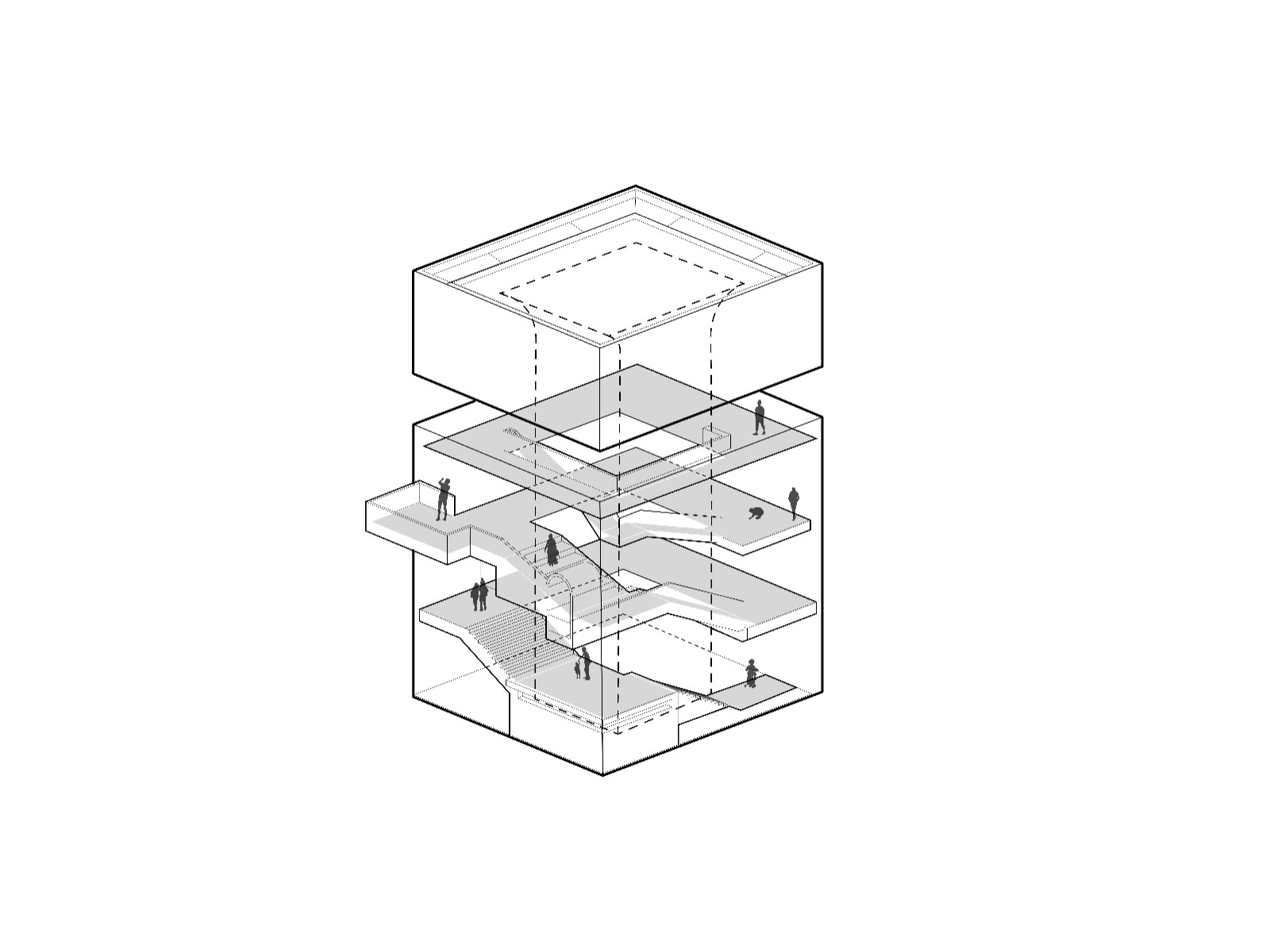
△ Observation Tower
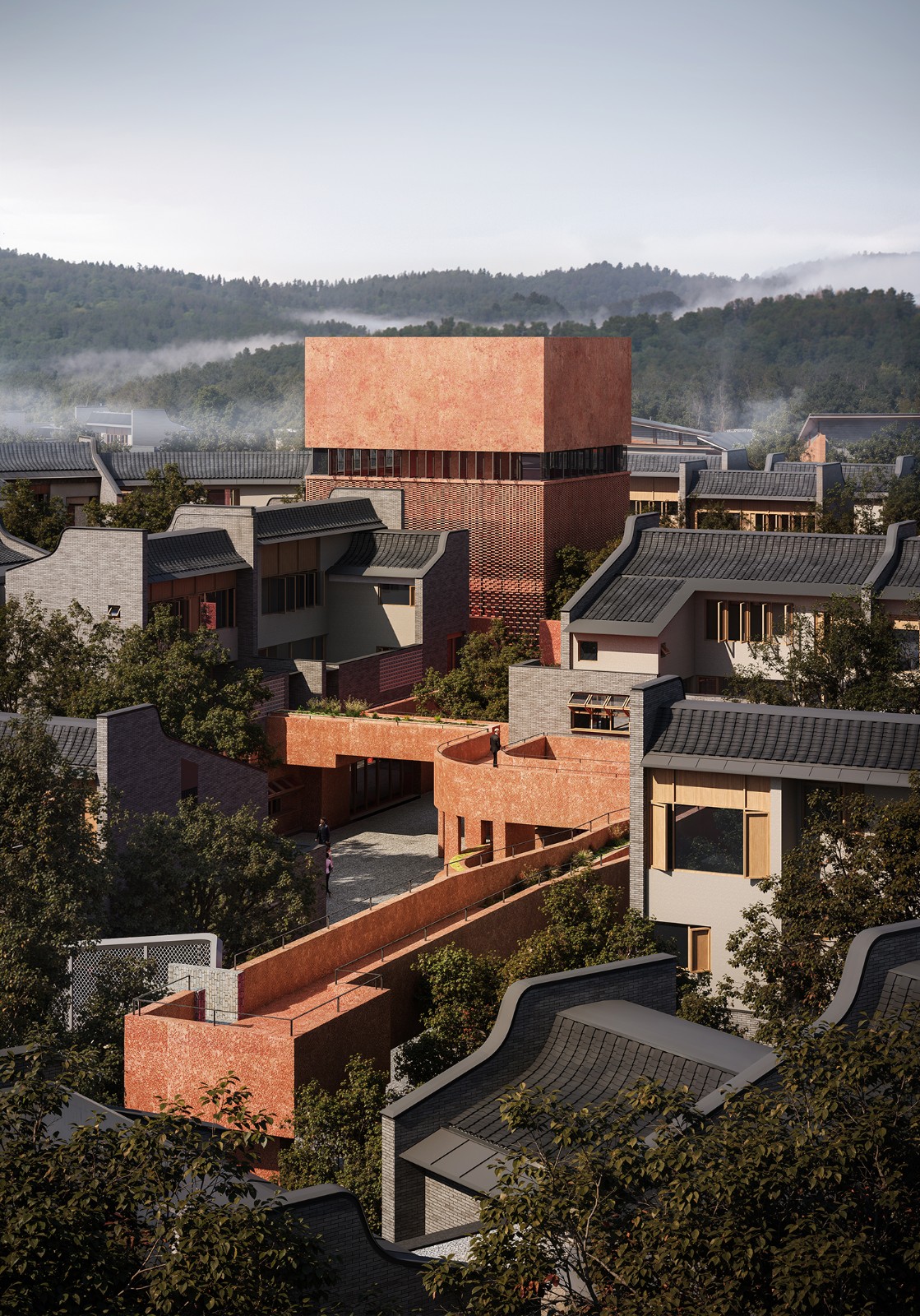
△Observation Towe
Cultural Homestays: Homestays are clustered within dedicated circular formations for unified management and operation. Distinctive facades and landscape expressions offer differentiated experiences from resettlement housing. This “unity in difference” allows villagers and visitors to share public space while maintaining identity, generating a balanced rural tourism ecosystem.
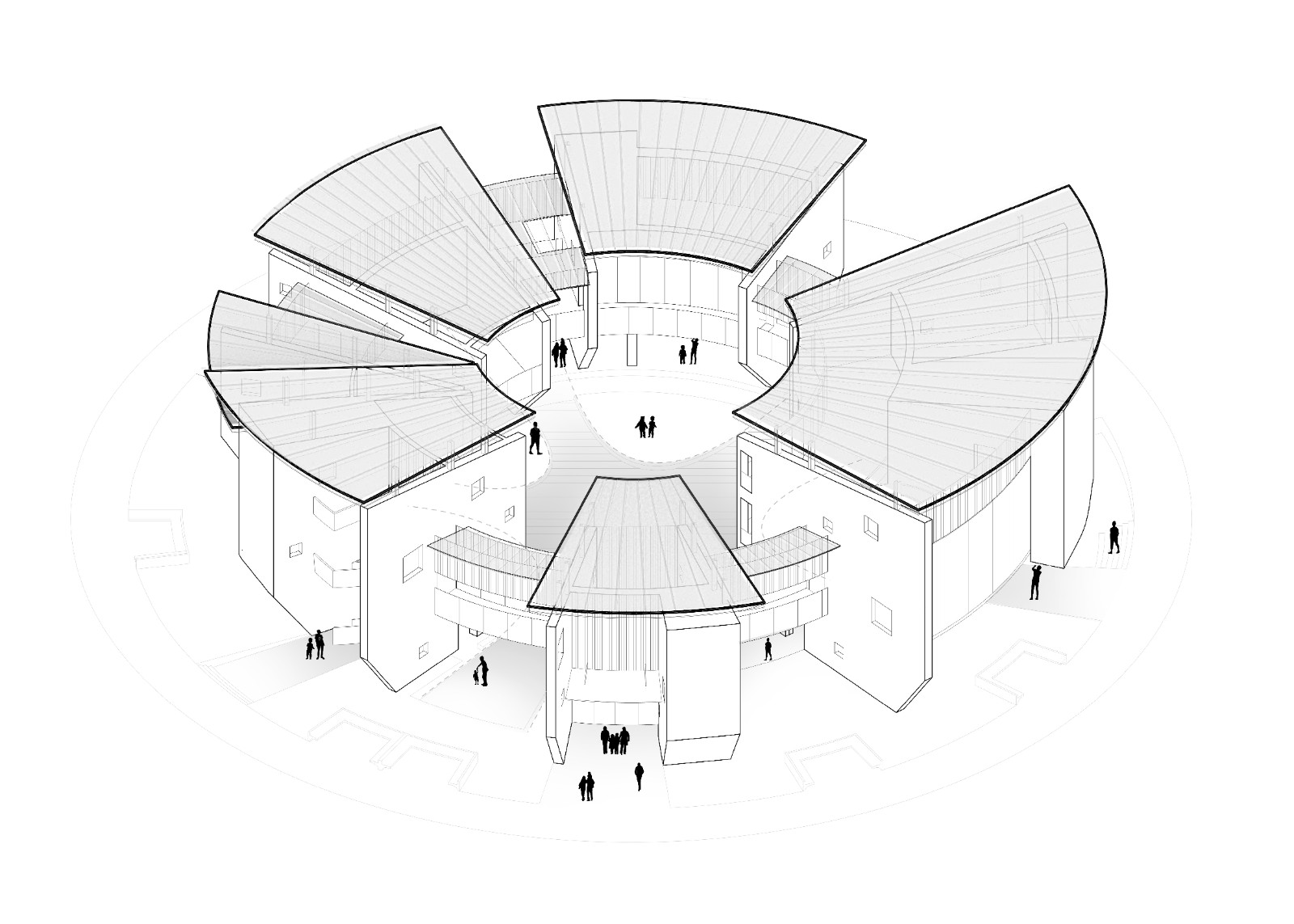
△ Cultural Homestays
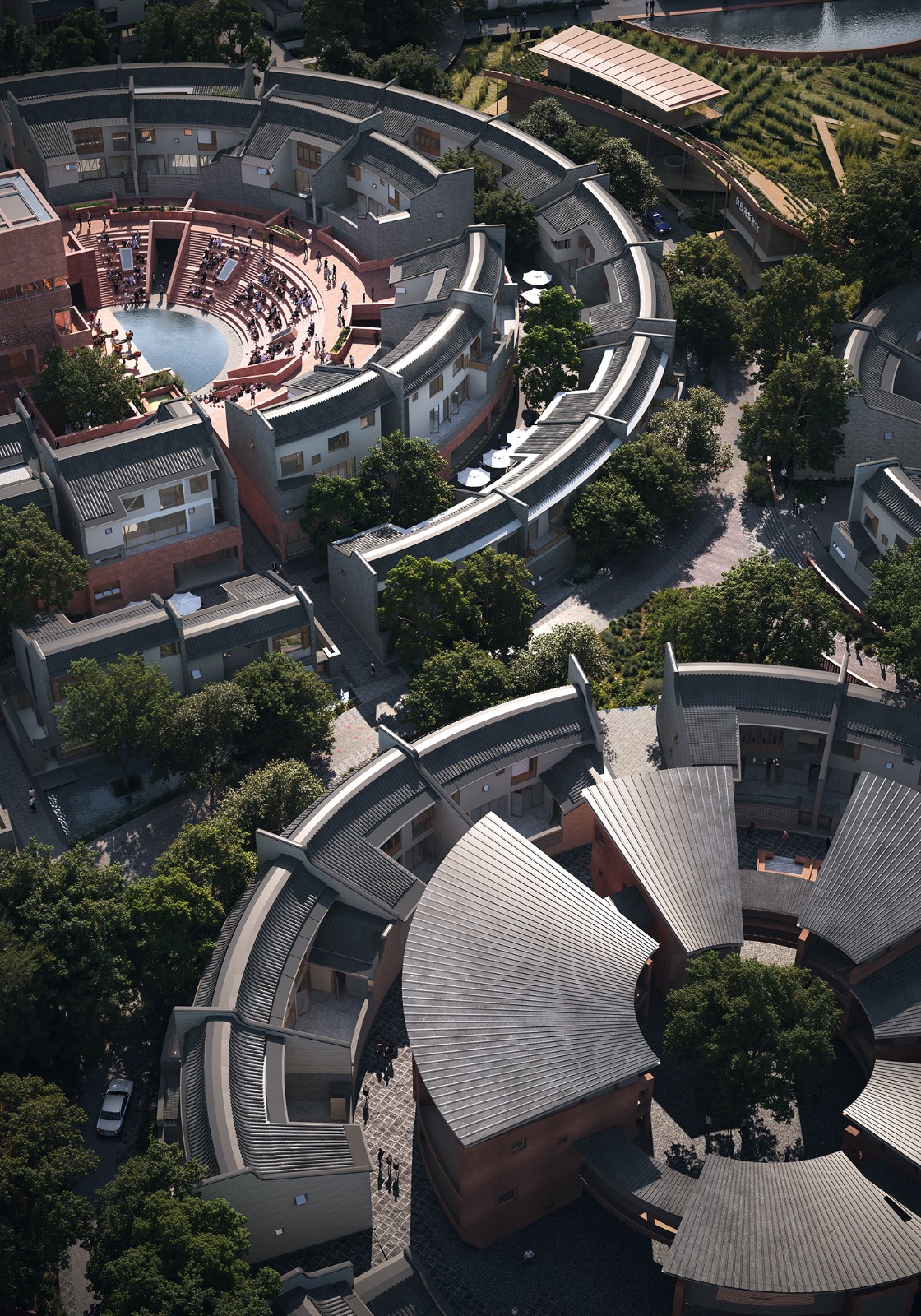
△Cultural & Tourism Guesthouse Cluster
Nursery & Daycare: Located between clusters, the daycare is elevated around a central courtyard, with partial landscape integration. Undulating ground and protected semi-outdoor areas create an “all-weather playground” suited to the humid subtropical climate. It is both a haven for children and a pocket park shared with the community.
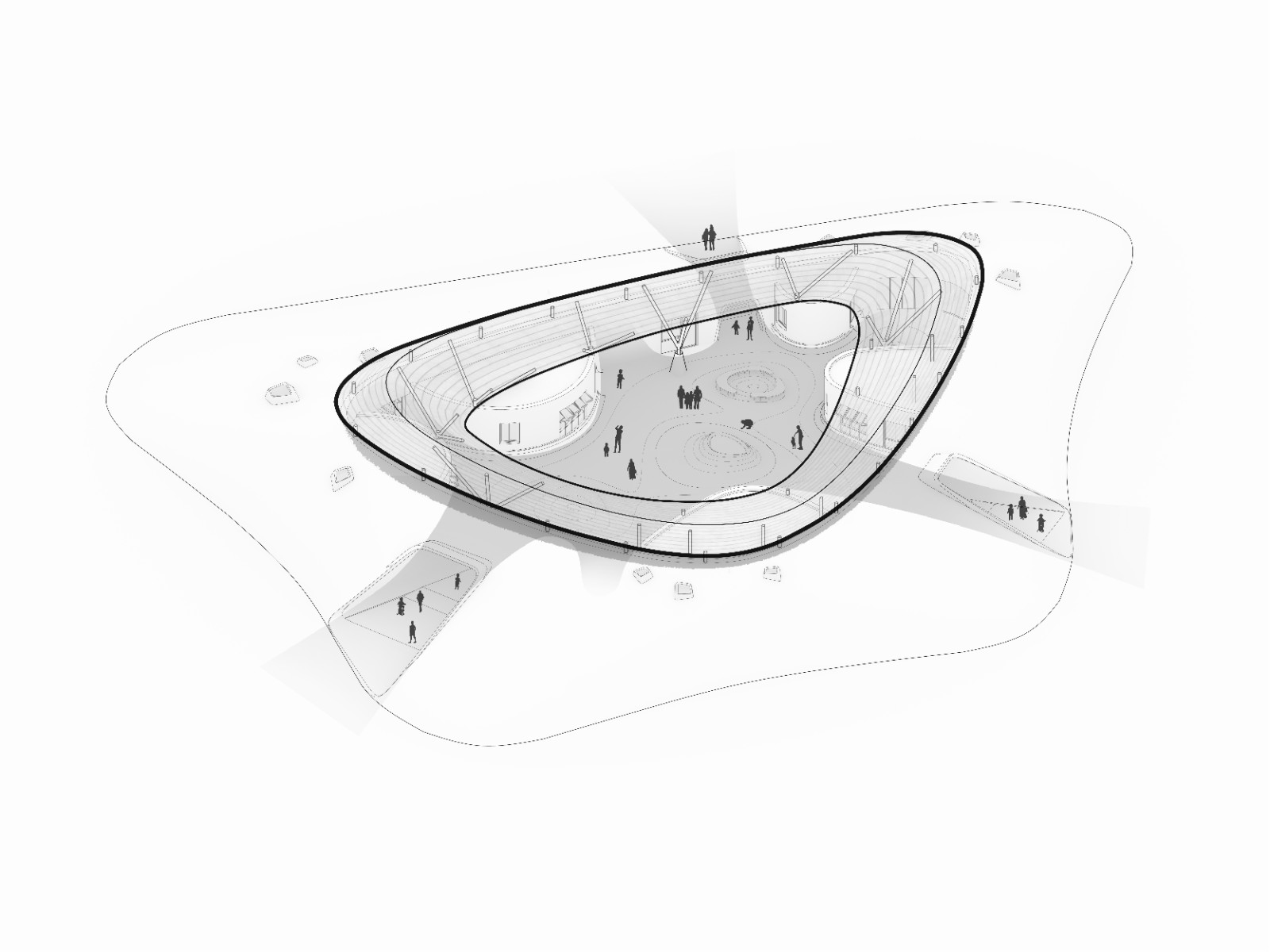
△ Nursery & Daycare
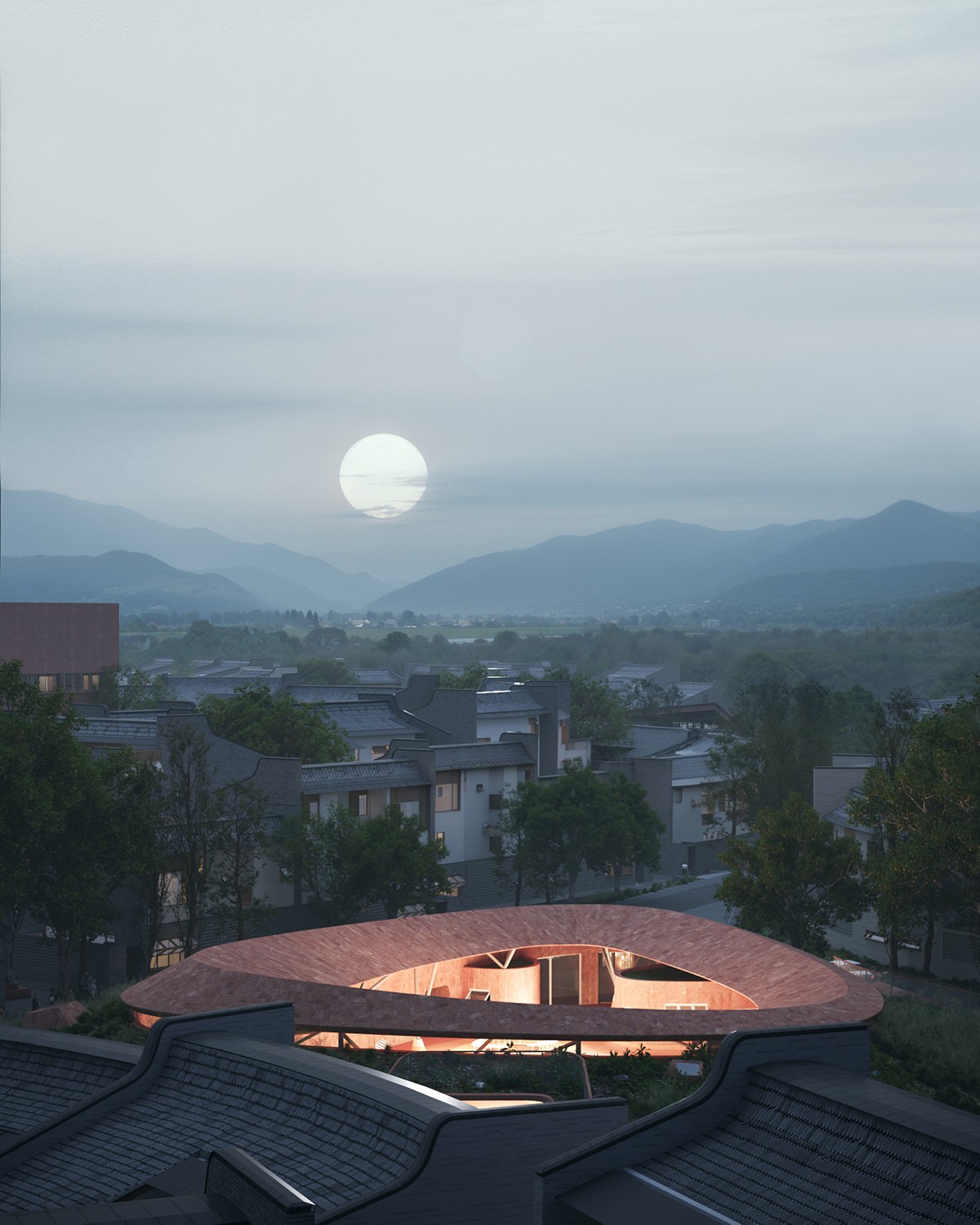
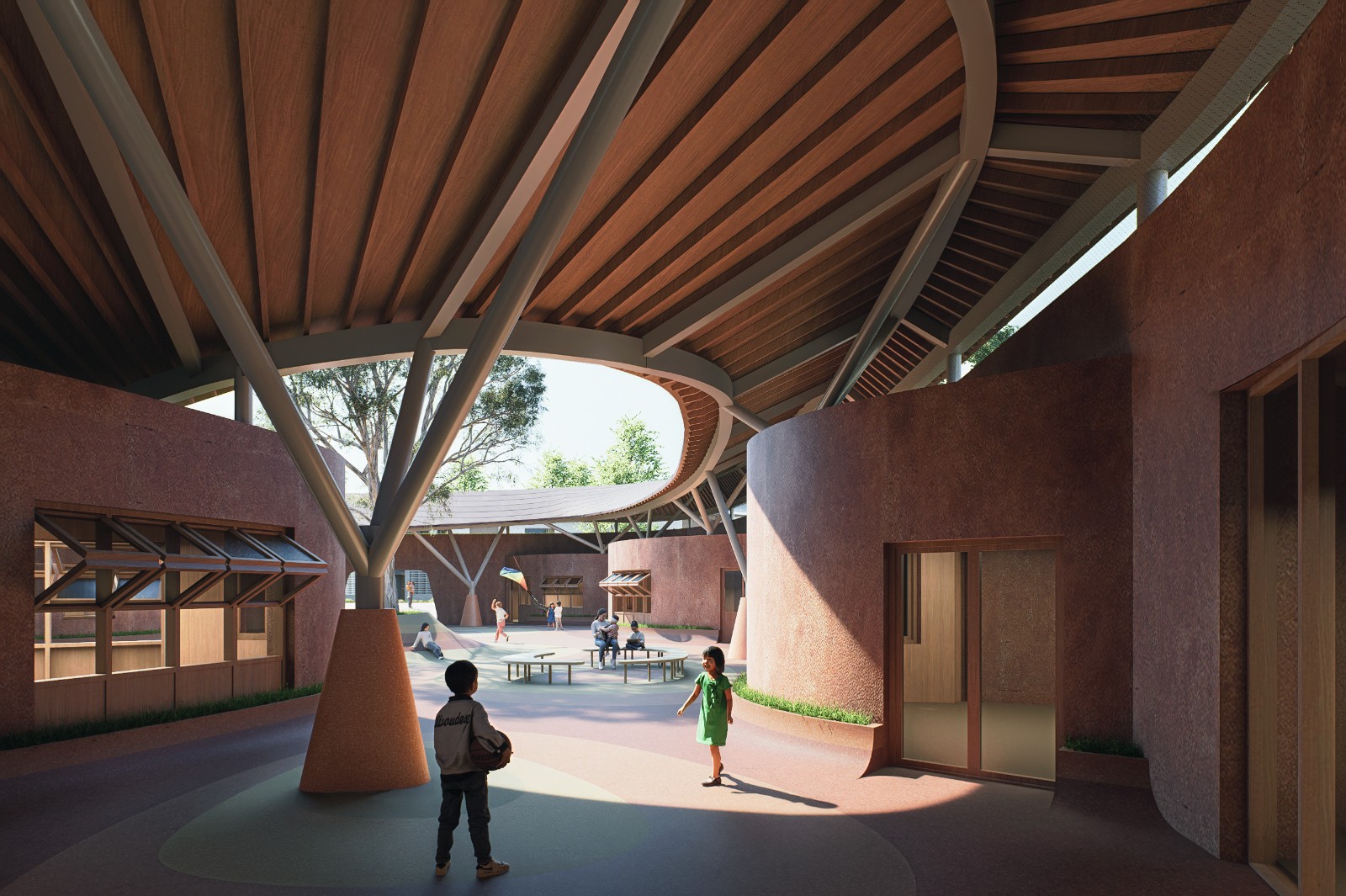
△Nursery & Kindergarten
Neighborhood Dining Hall: Positioned at the village edge facing farmland, the canteen serves as a vital public hub for daily life. Its geometry echoes the enclosure logic of traditional compounds, while terraced topography stitches the building to surrounding fields. Through landscape-driven form, the building becomes both usable terrain and perceptible public amenity—reinforcing communal character along the rural edge.
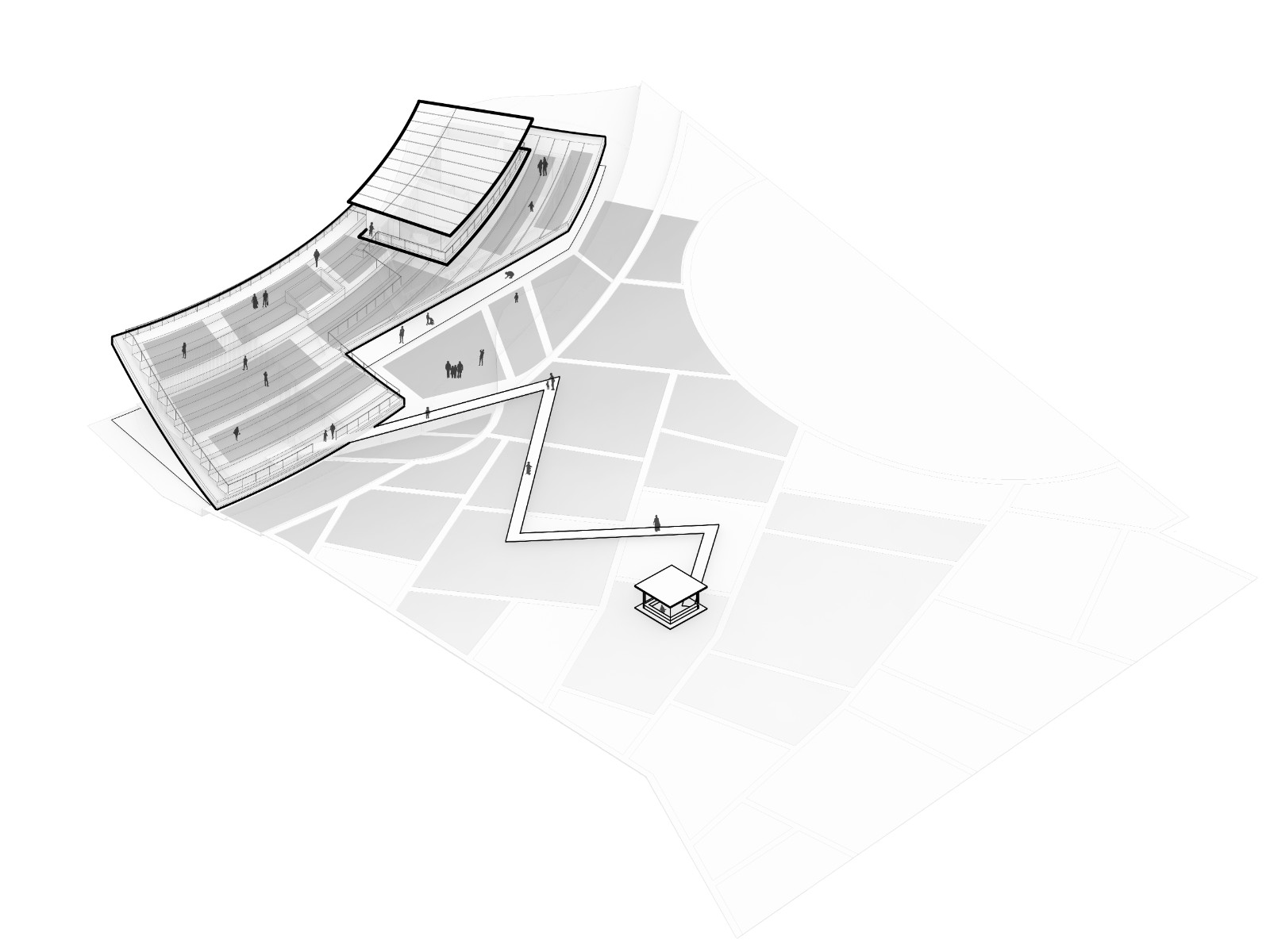
△ Neighborhood Dining Hall
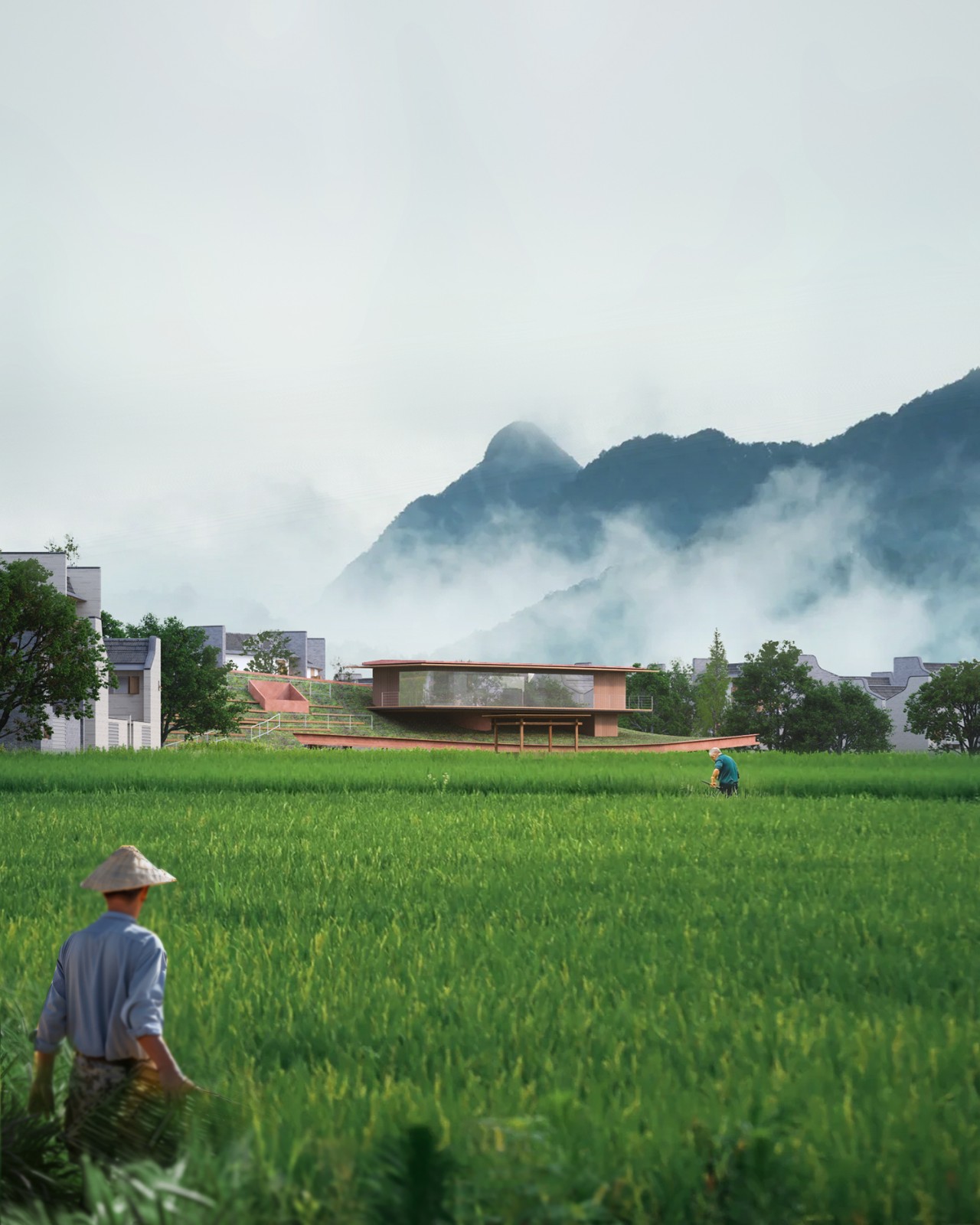
△Neighborhood Canteen
Based on research findings, we defined three building modules—80, 100, and 120 m²—and translated the logic of traditional Hakka residences into contemporary units for three user types: long-term local residents (stable living): stronger emphasis on kitchen, storage, and elder bedroom; returning/dual-habitation families (dual-use): separation of primary and secondary spaces for “living + rental”; new urban settlers (flexible operation): multiple entries and courtyards for homestays or studios.
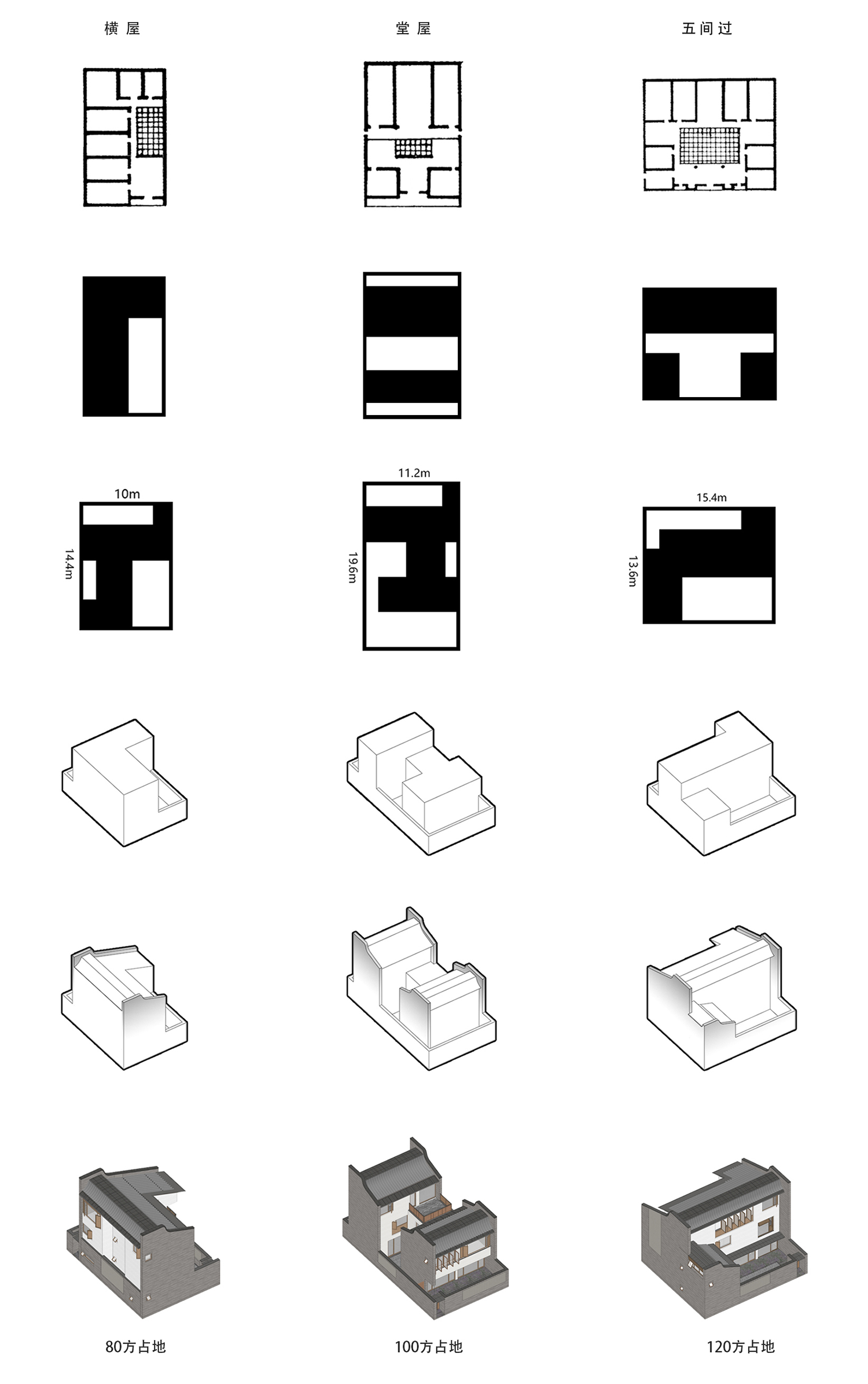
△ Generation Process of Residential Units
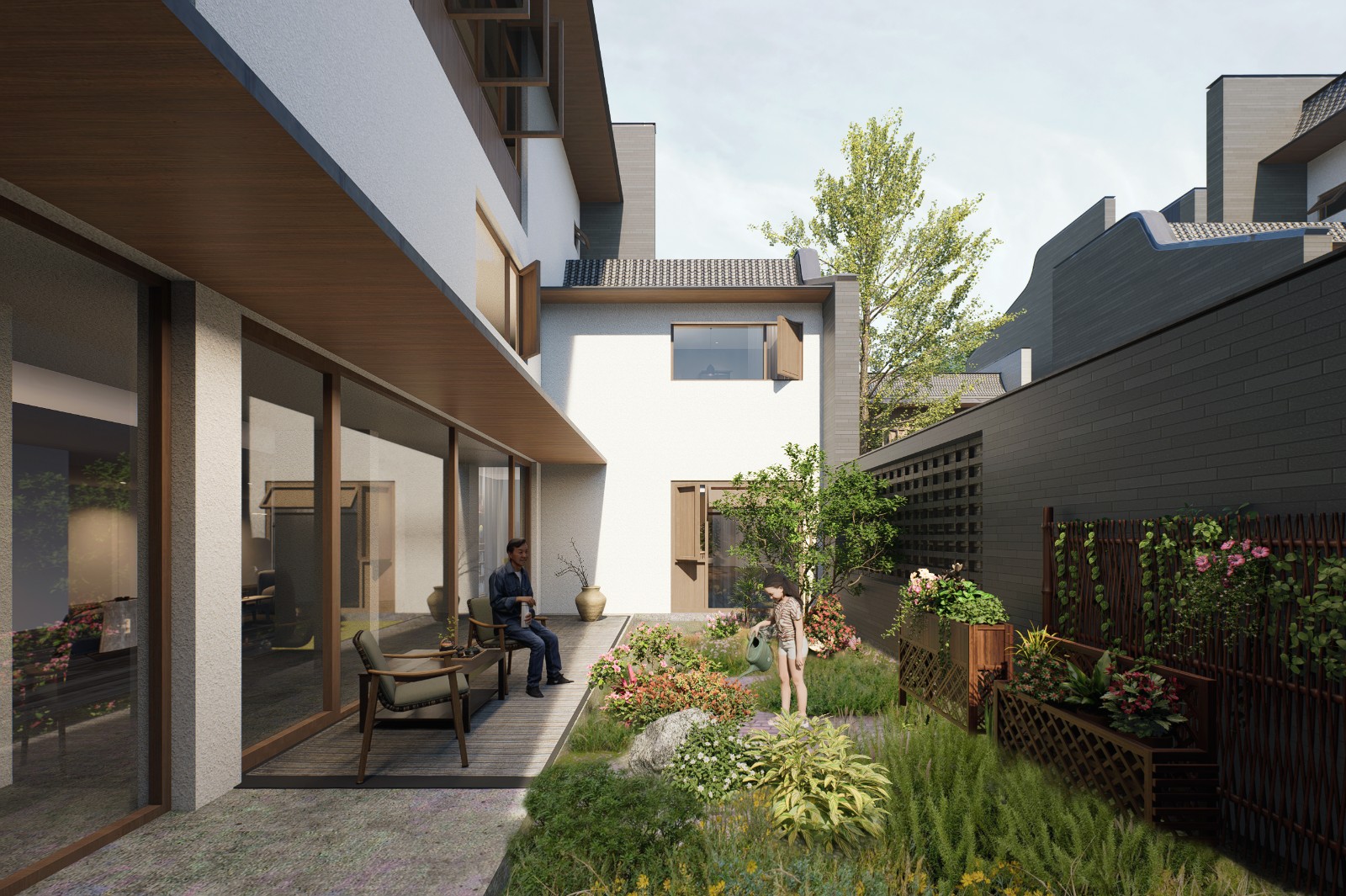
△New Weilong Houses
How can diverse Hakka settlements be generated from modular clusters? The Hakka Weilong houses in Longmen County, integrate numerous Cantonese elements in their architectural features, such as the wok ear walls. We distilled this core characteristic and abstracted the traditional wok ear walls into three modern geometric forms—sloped-back, double-sloped, and single-sloped—thereby creating an architectural language of “unity in diversity.”
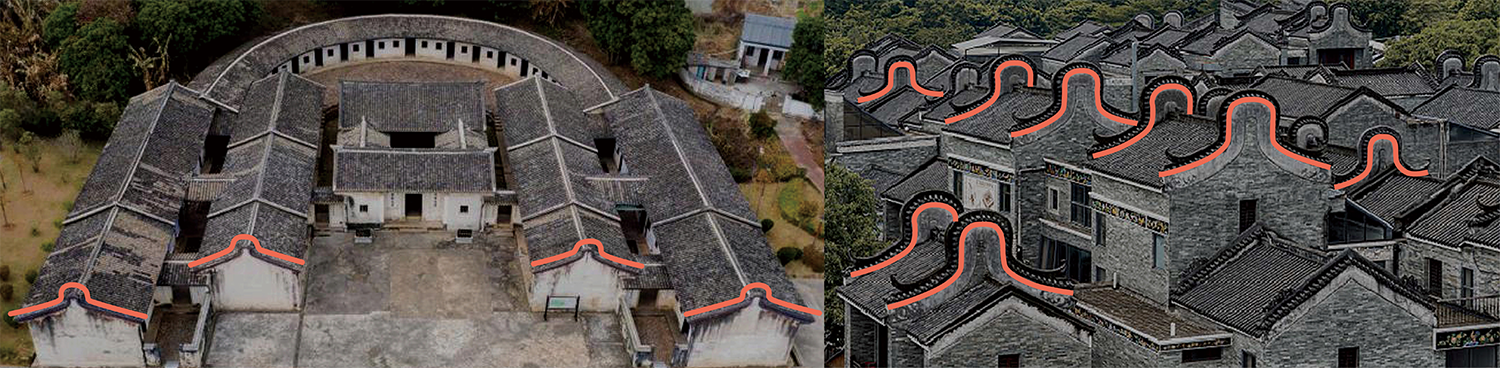
△ Architectural Element Abstraction
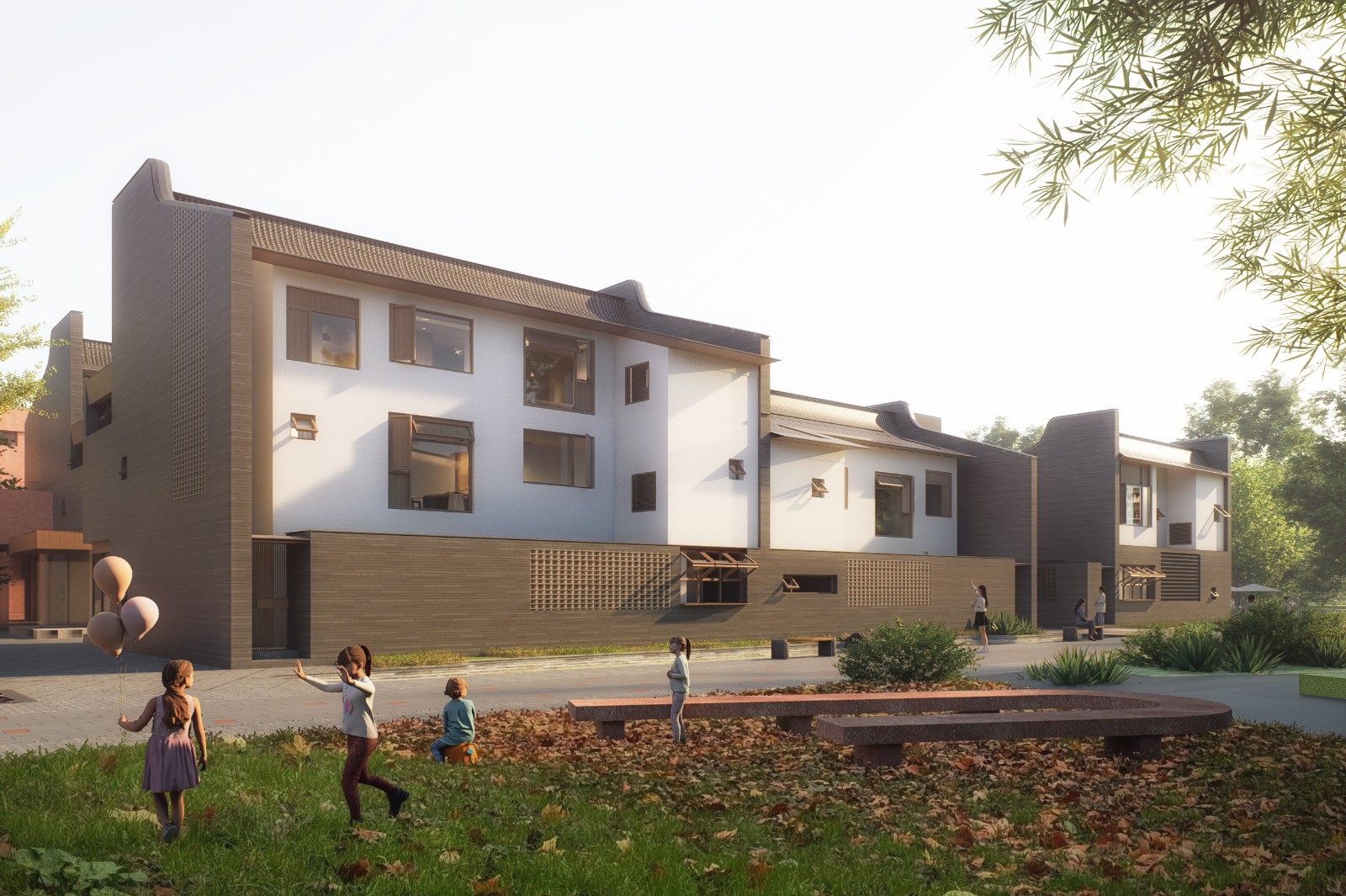
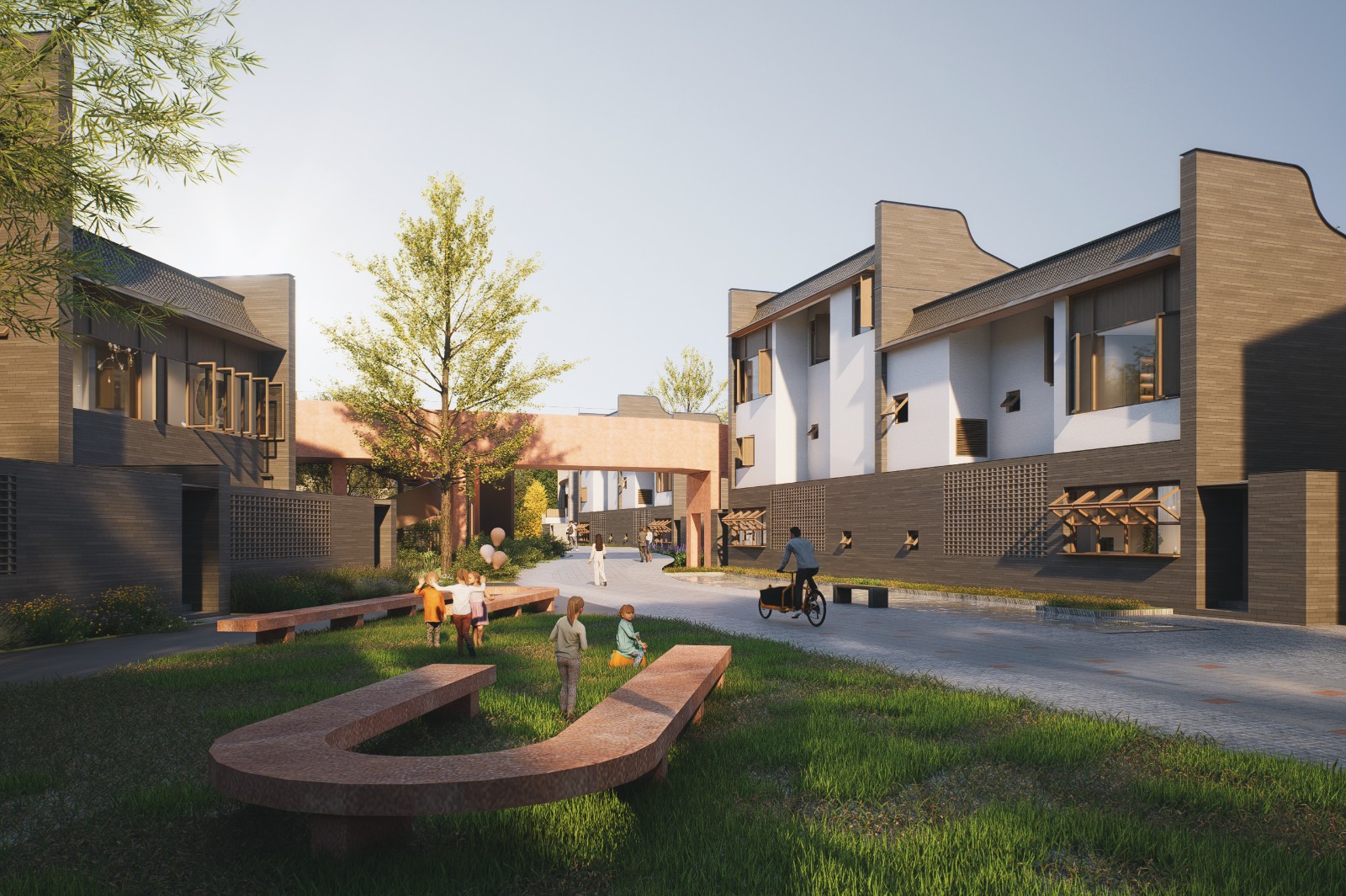
△Diverse Roof Forms
Building upon three-unit archetypes and two height options, more than ten variations were generated and deployed across residential clusters, commercial bases, curved cluster, and homestay cluster. Through flexible enclosure and spatial attachment, these form diverse “New Weilong Courtyard” suited to multiple living scenarios.
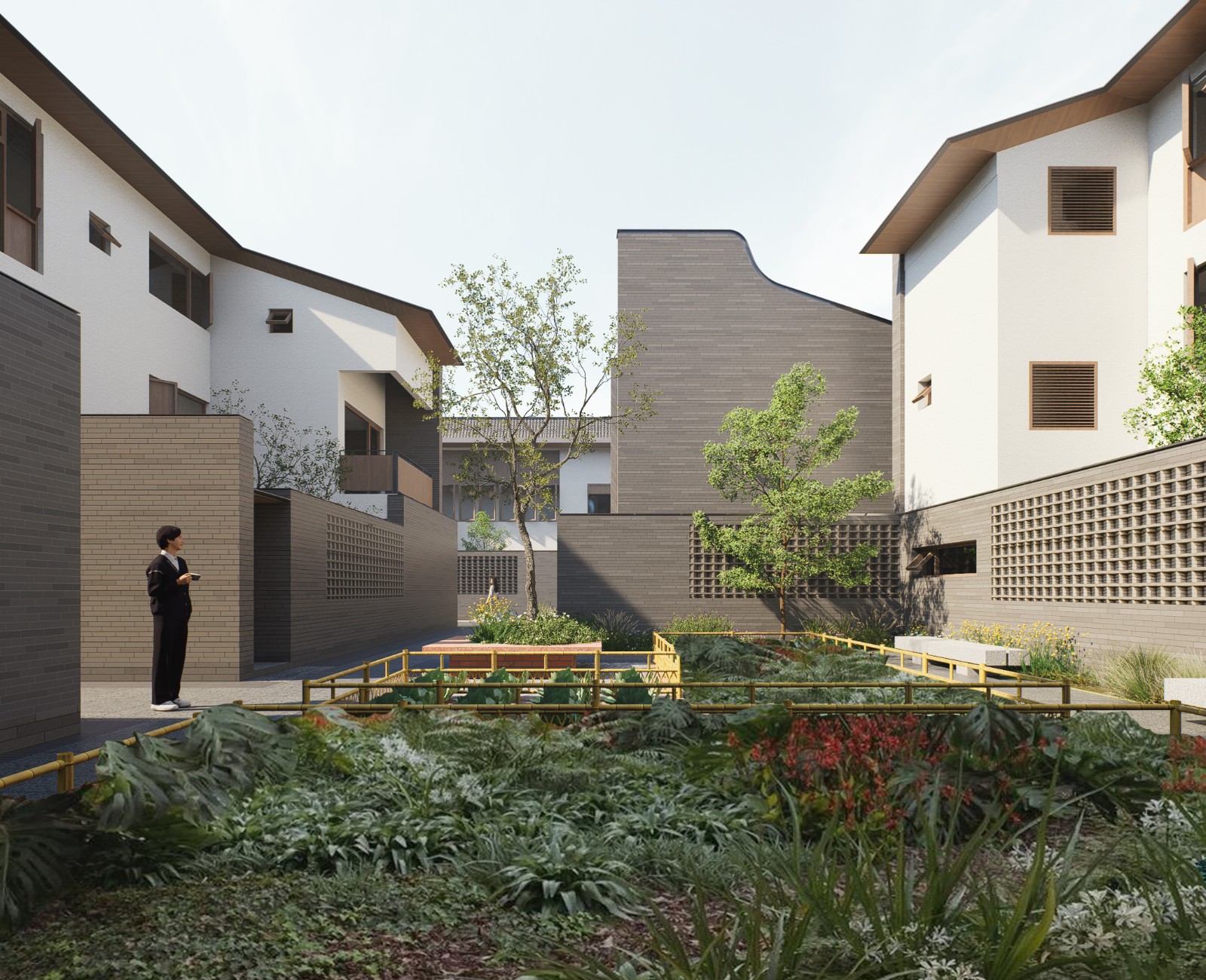
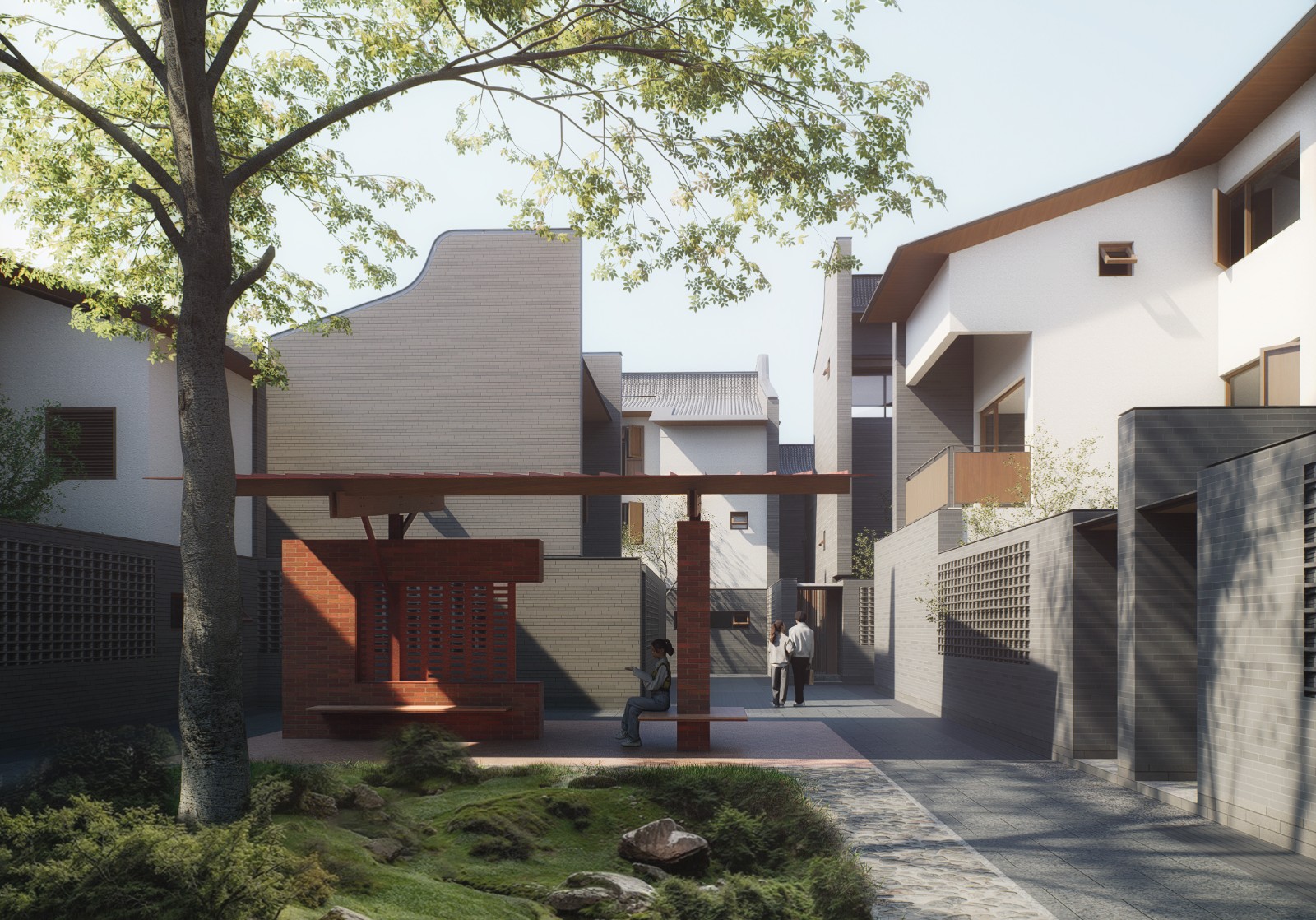
△New Weilong Houses
This unit–cluster–settlement logic nests closely within the masterplan, generating street networks of multiple scales that respond to traditional neighborhood and settlement patterns.
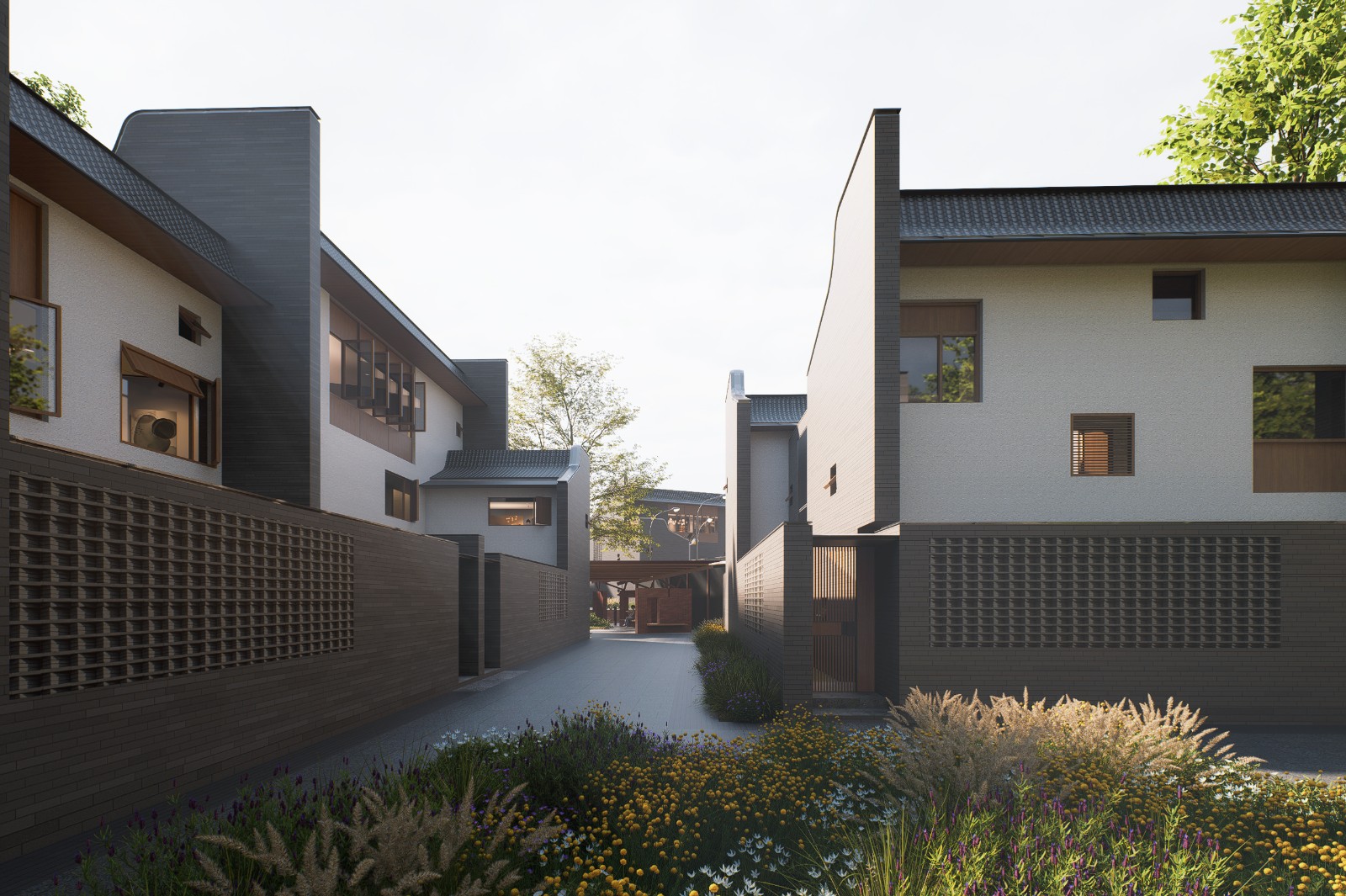
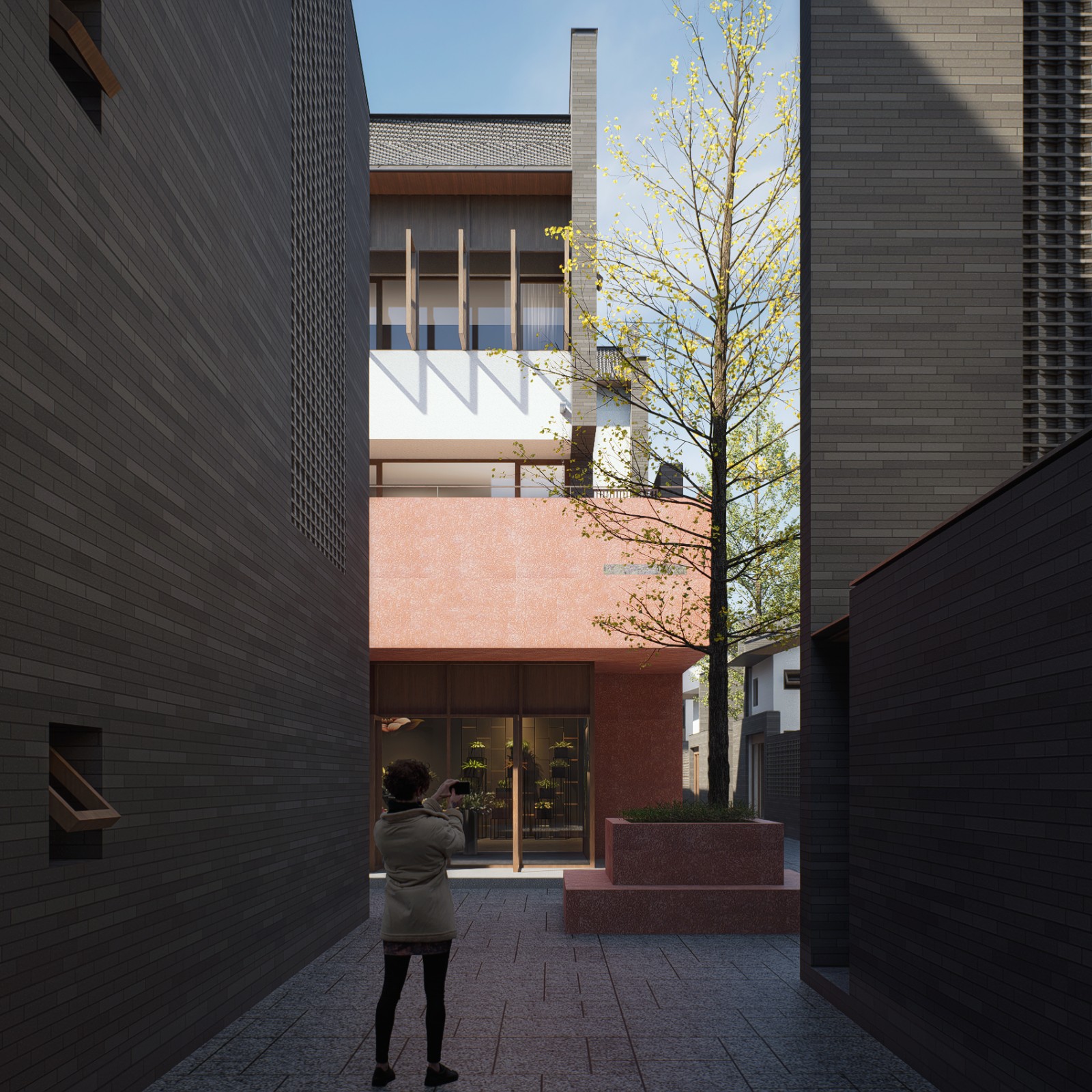
△Multiple Street & Alley Scales
In construction, a low-tech, low-cost strategy was adopted: locally made clay tiles for roofing, industrial split-faced bricks for façades, and minimal aluminum components replacing traditional decorative elements. While preserving aesthetic intent, this approach provides an economical model for rural development.
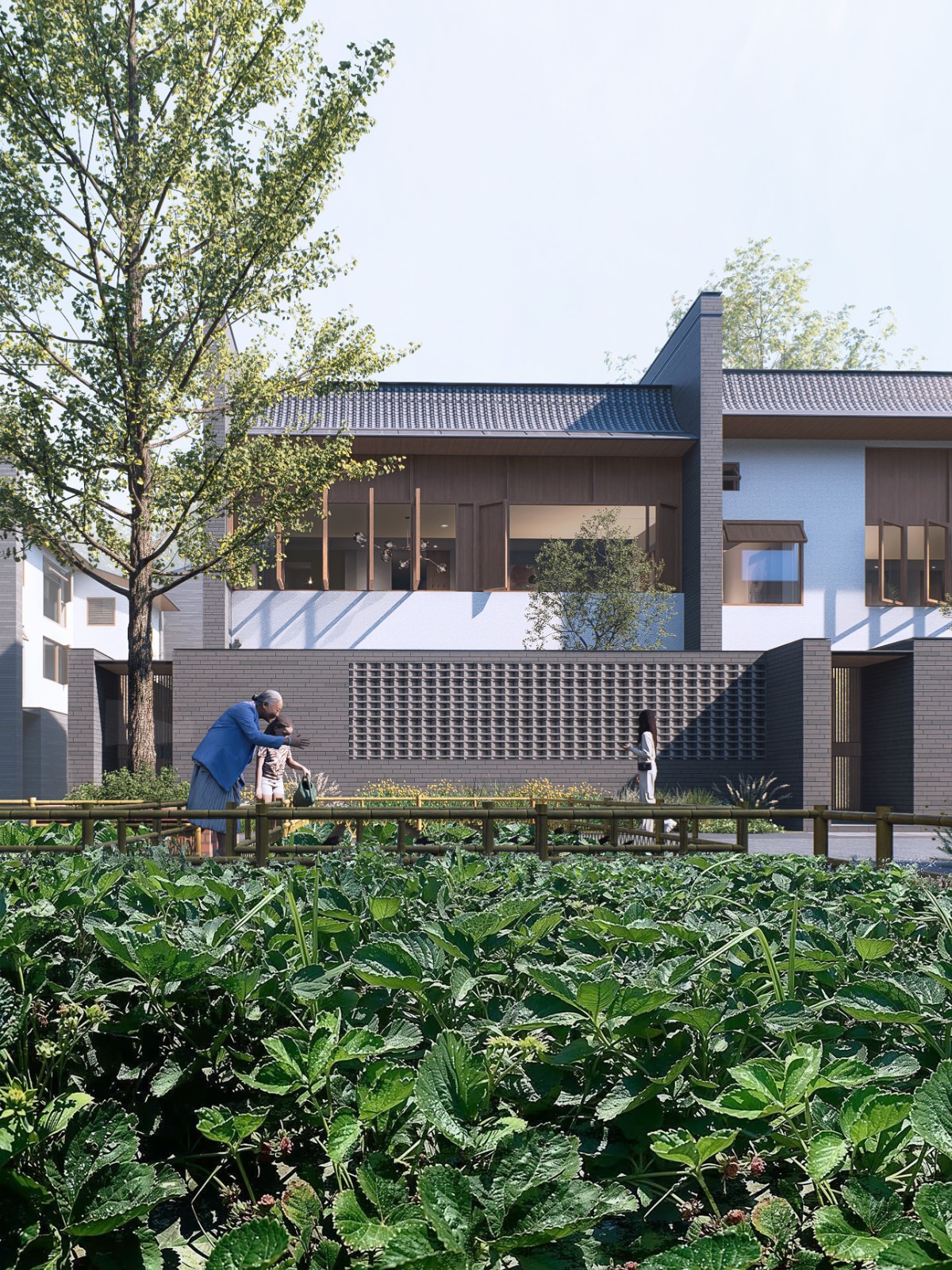
△New Weilong Houses
The Weilong New Community represents an iterative exploration of a “rural settlement prototype.” Using the cyclical spatial intelligence of Hakka settlements as a foundation—and integrating typological recomposition with a three-dimensional public plinth—we rearticulated the intertwined relationships of kinship and locality, residence and industry, tradition and modernity across a community of 212 households.
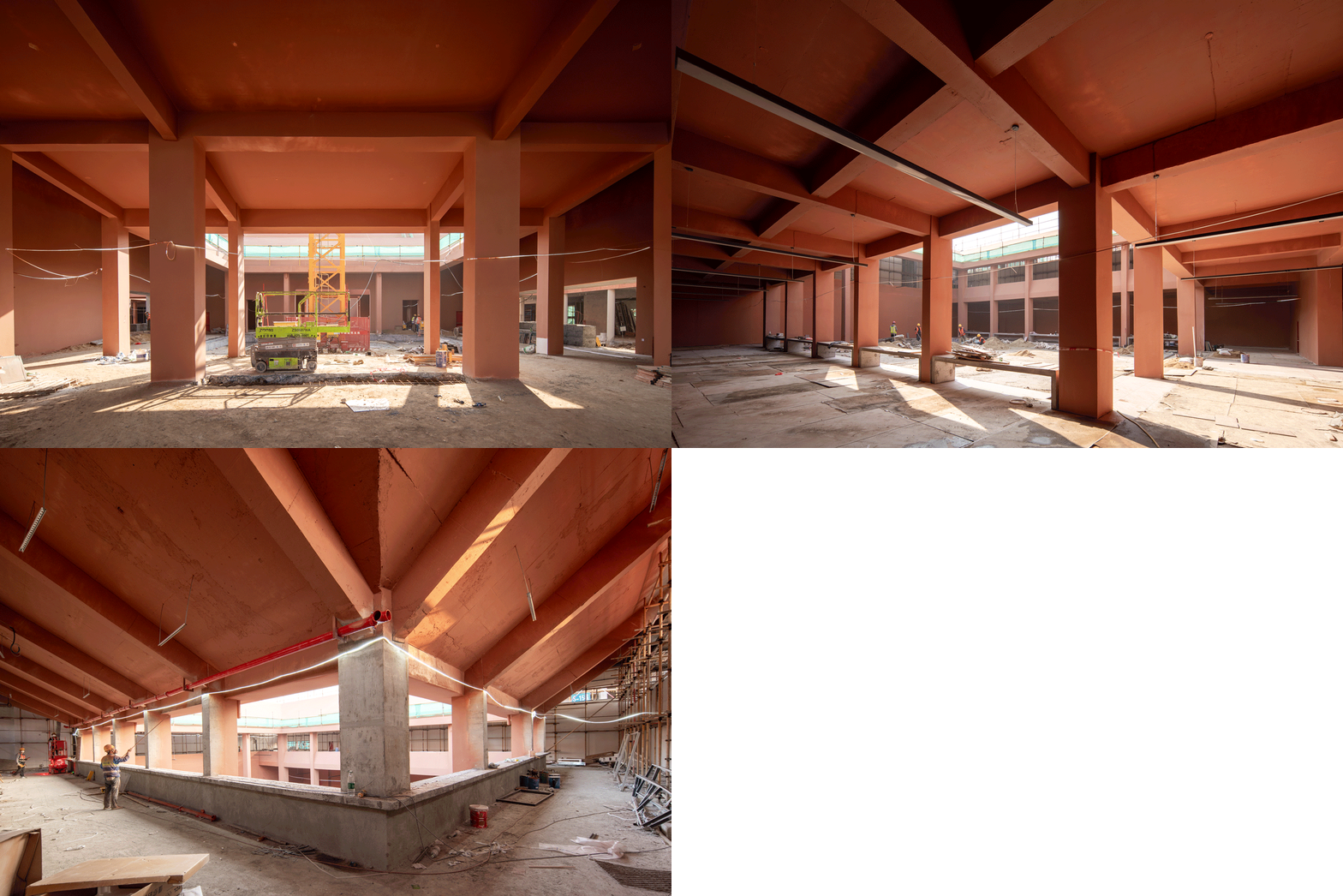
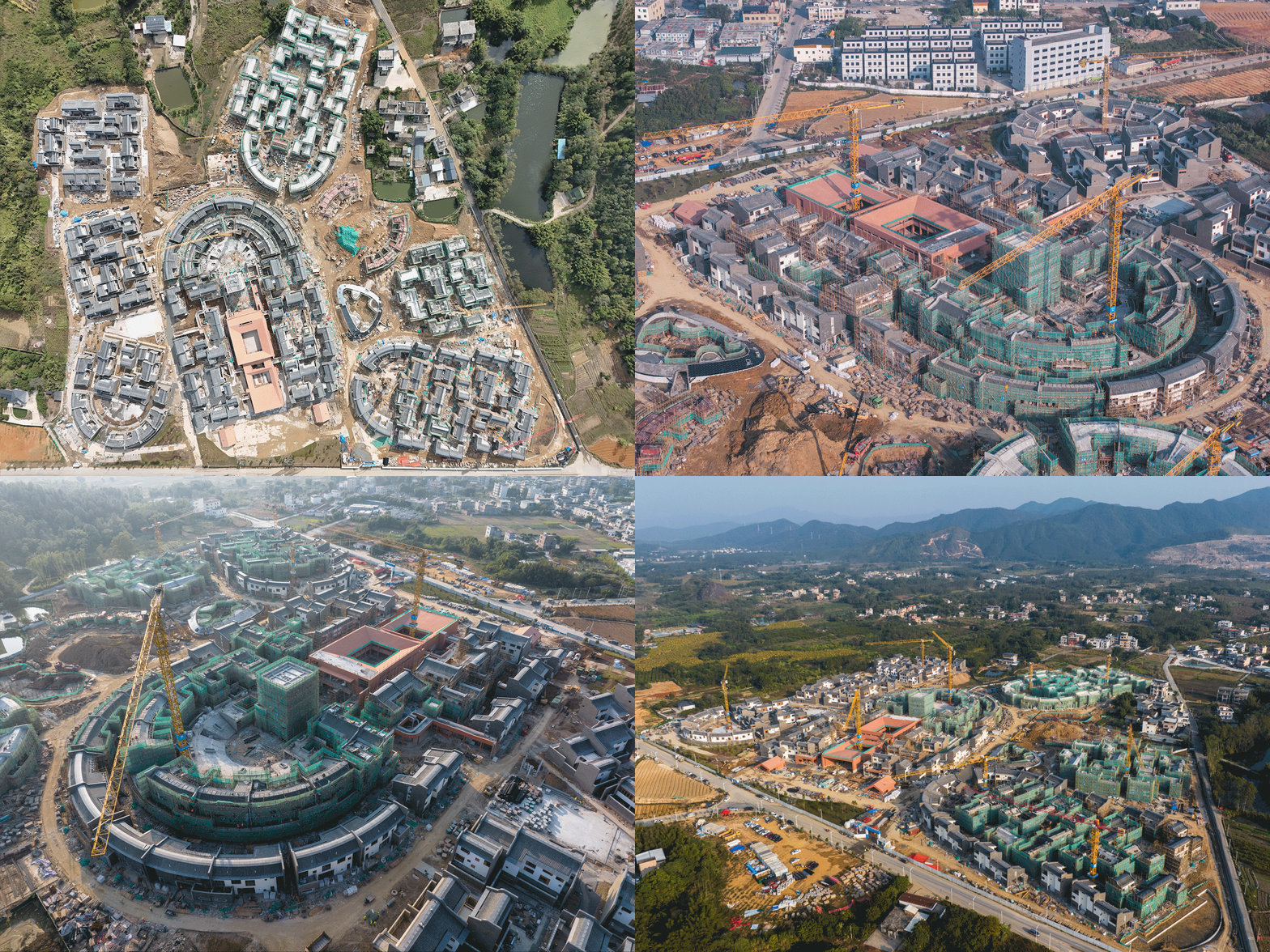
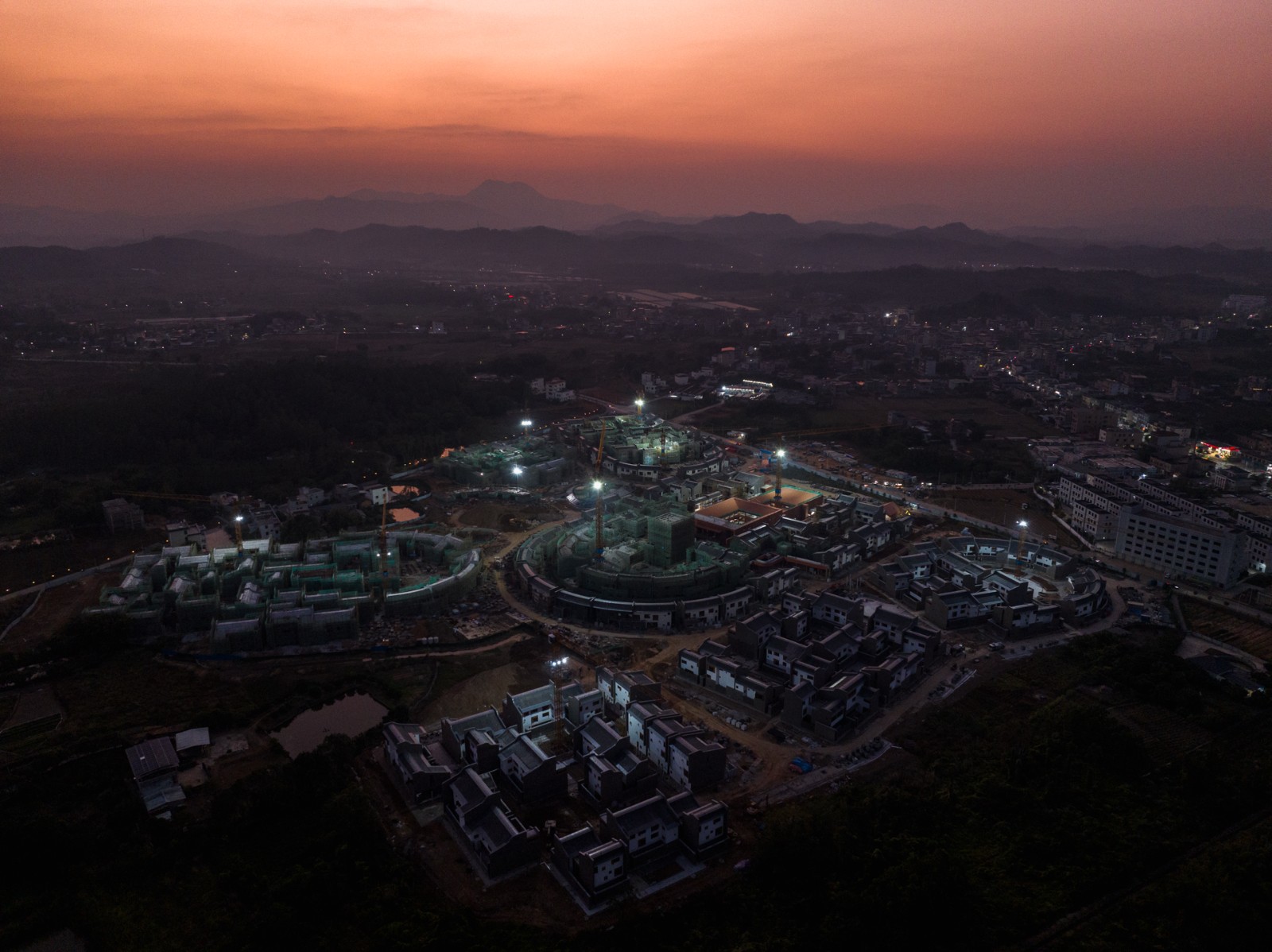
△ Construction Site
Through this project, we aim to contribute a locally grounded trajectory toward rural modernization in China—what we call “rooted modernity.” As villages evolve, their future order may be shaped by the generative logic of natural settlements, by relationships between people and land, between individuals and the collective, and by future-oriented ways of living—preserving local spirit while shaping new horizons.
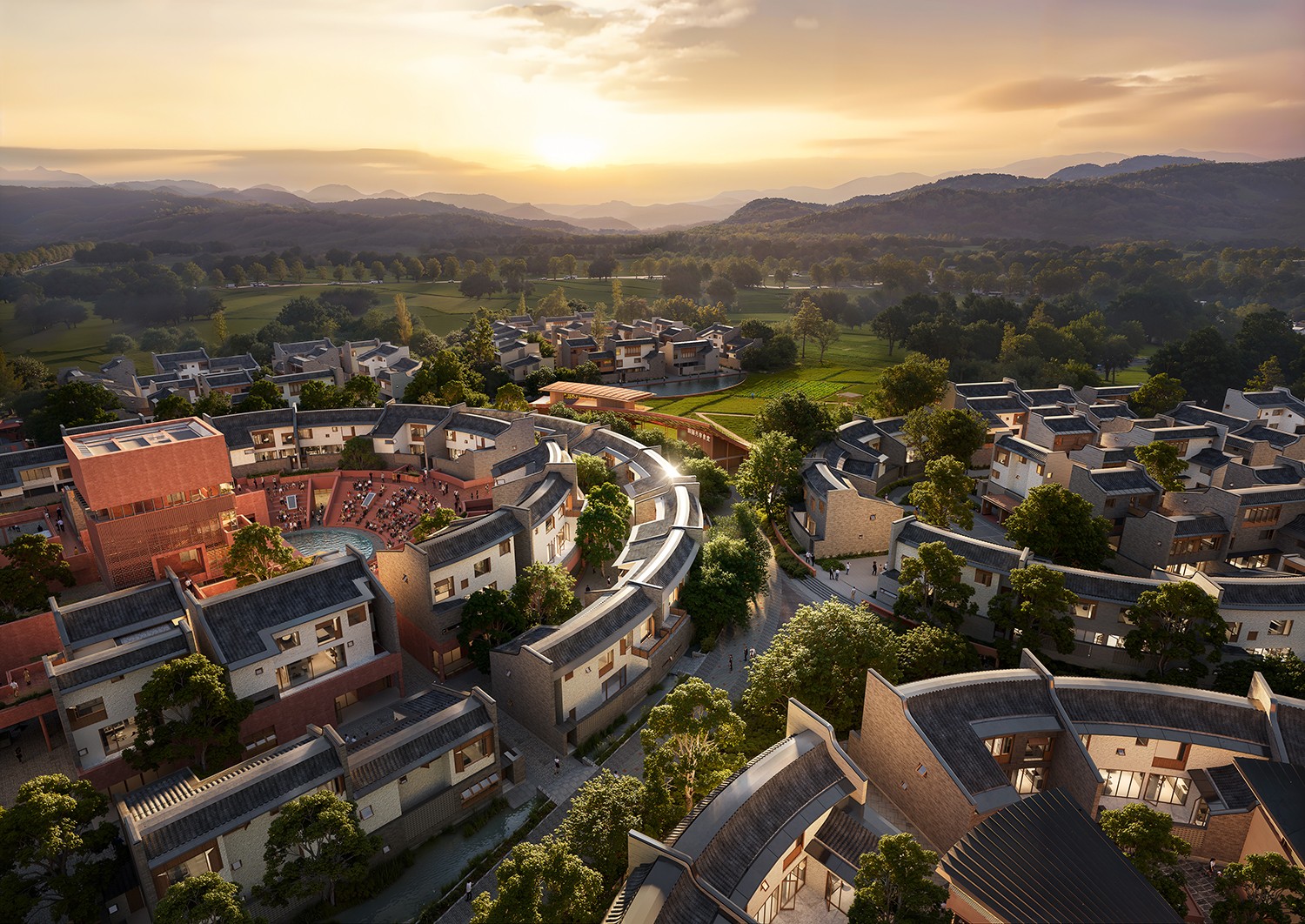
△China’s New Countryside for the Future

