

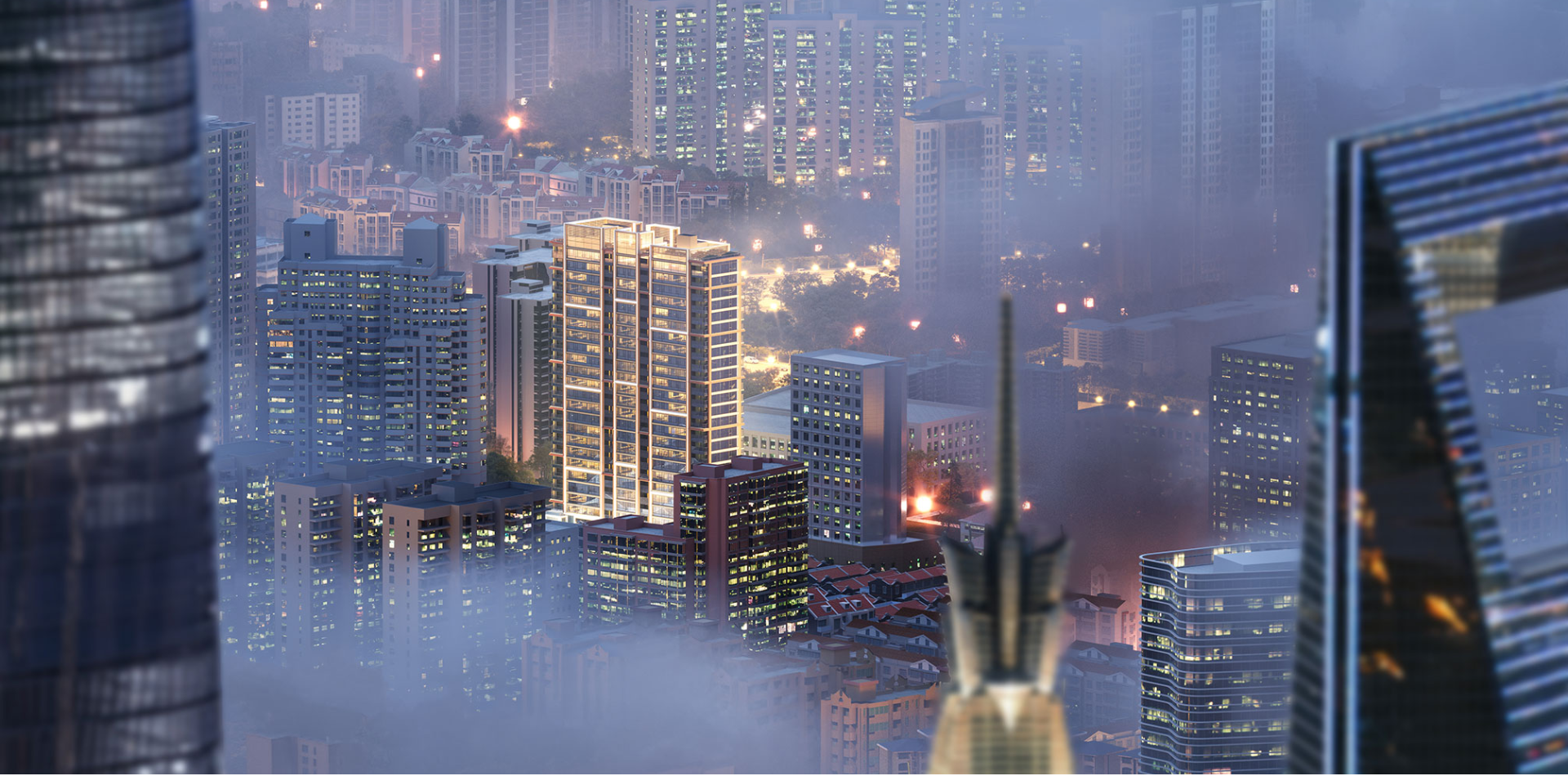

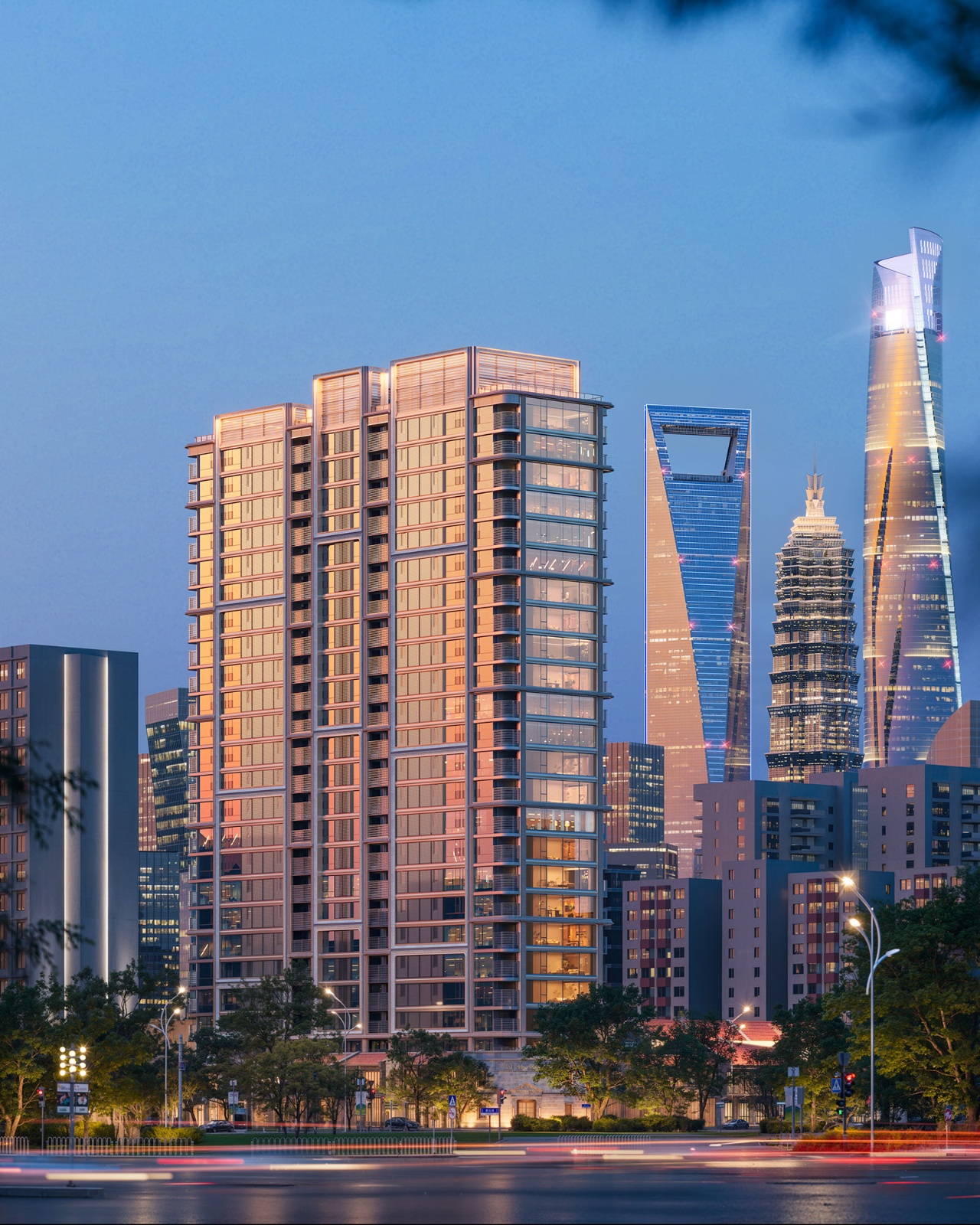
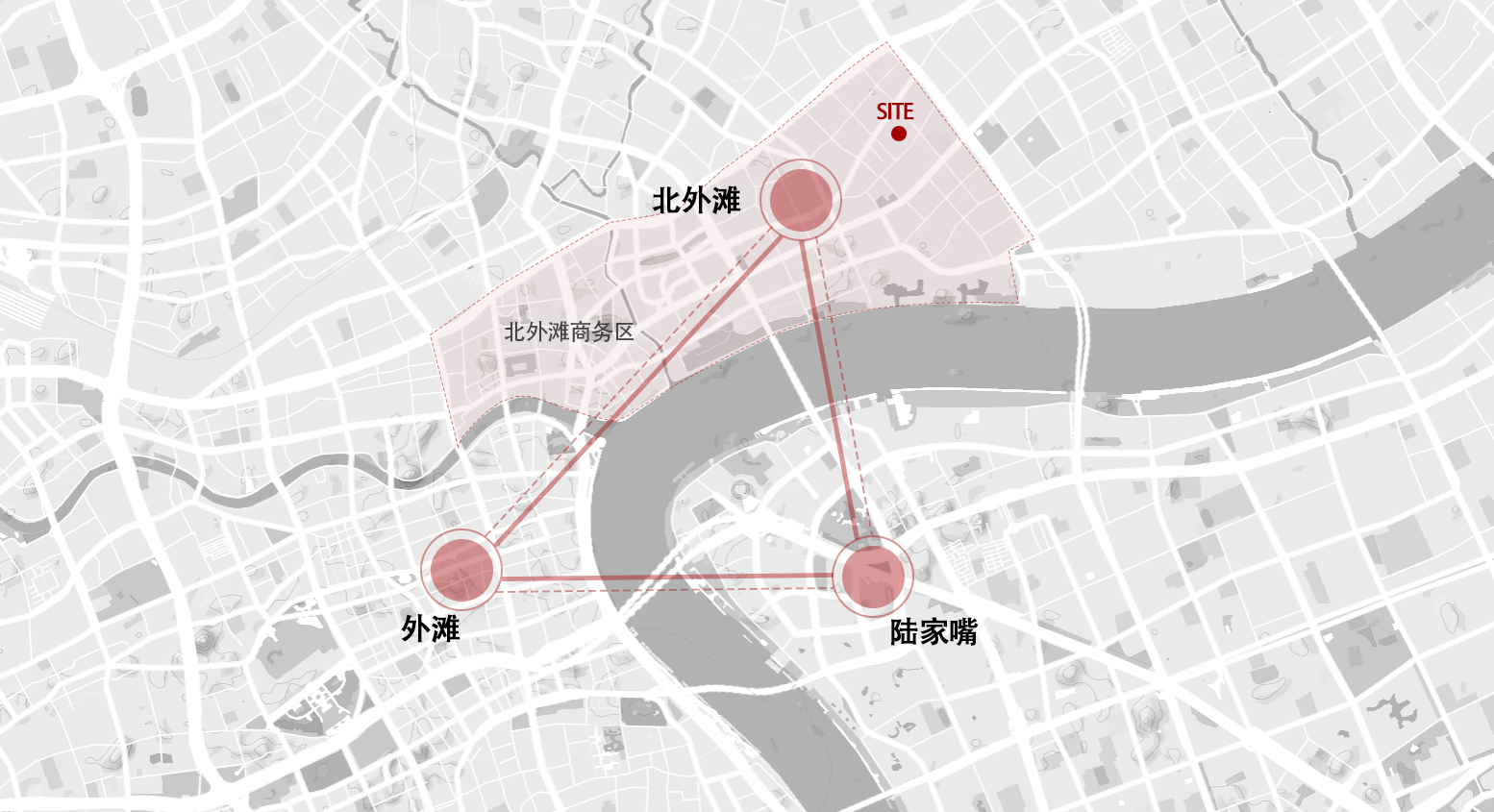
The North Bund, one of the few areas in central Shanghai with large-scale planning potential and opportunities for comprehensive redevelopment, forms Shanghai’s “Golden Triangle” together with the Bund and Lujiazui. Carrying layers of historical heritage, global vision, and future aspirations, it stands as the core of the city’s waterfront and a true “world reception room.”
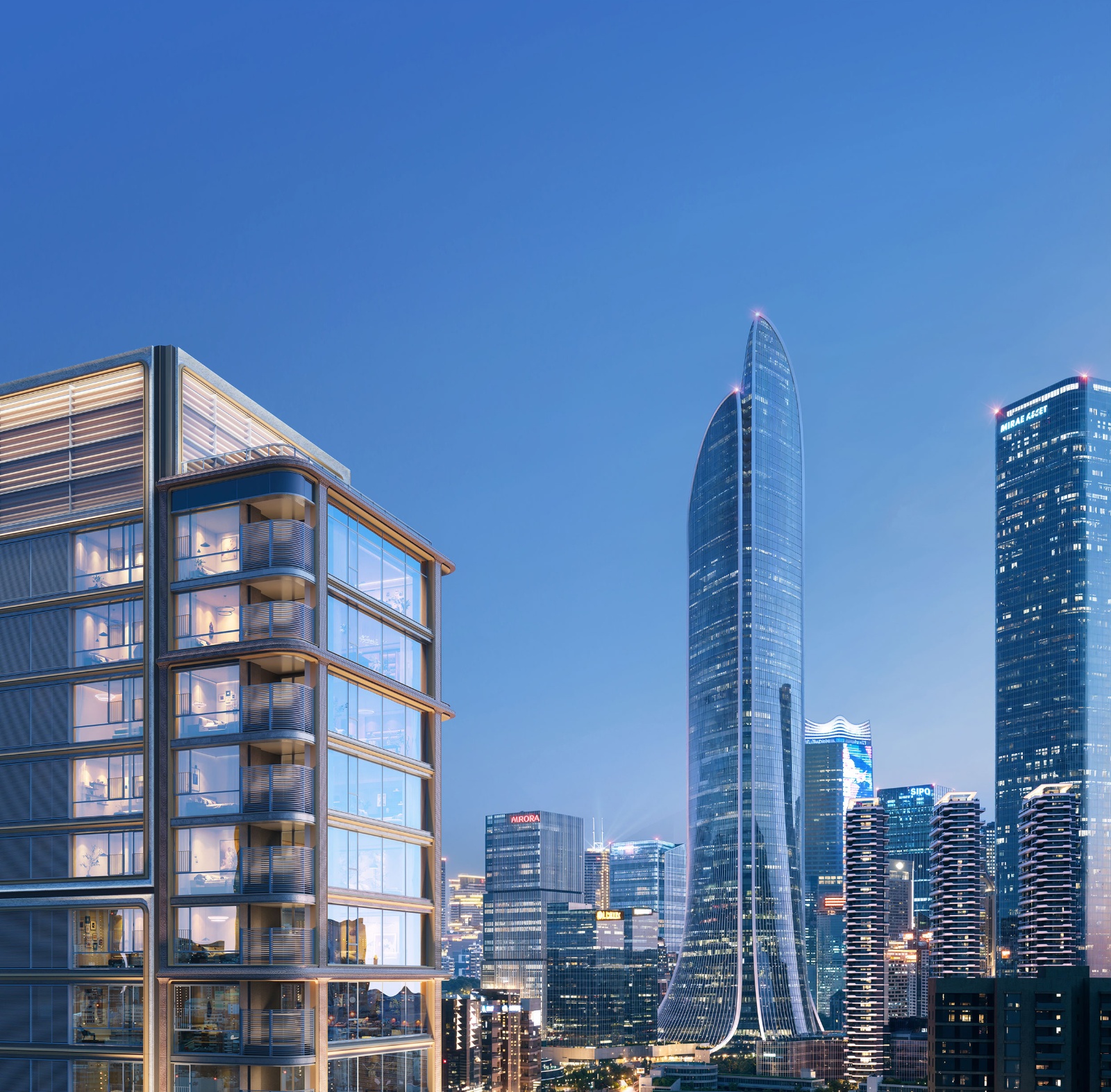
COFCO · North Bund One is located within Tilanqiao, the most historically dense, complex, and challenging site in the North Bund renewal area. Overlapping traces of century-old dock industries, Shikumen lilong neighborhoods, Jewish refugee settlements, and the former Second Logistics Base have allowed this district to retain an intact and perceptible urban grain even within a high-density metropolis, making it a crucial historical anchor of the North Bund.
Project Name: COFCO · North Bund One
Design Firm: line+ studio
Chief Architect / Project Principal: Peidong Zhu
Client: COFCO Group
Landscape Design: L&A Design
Interior Design: CCD (Cheng Chung Design), SDL (Steve Leung Design Group)
Façade Consultant: Inhabit
Lighting Design: HDA Lighting Design
Construction Drawings: Shanghai Tianhua Architectural Design
Heritage Consultant: East China Architectural Design & Research Institute – Historic Preservation Institute
Heritage Design: Zhangming Architectural Design Studio
Location: Hongkou District, Shanghai
Building Area: 118,558 m²
Design Period: September 2024 – Present
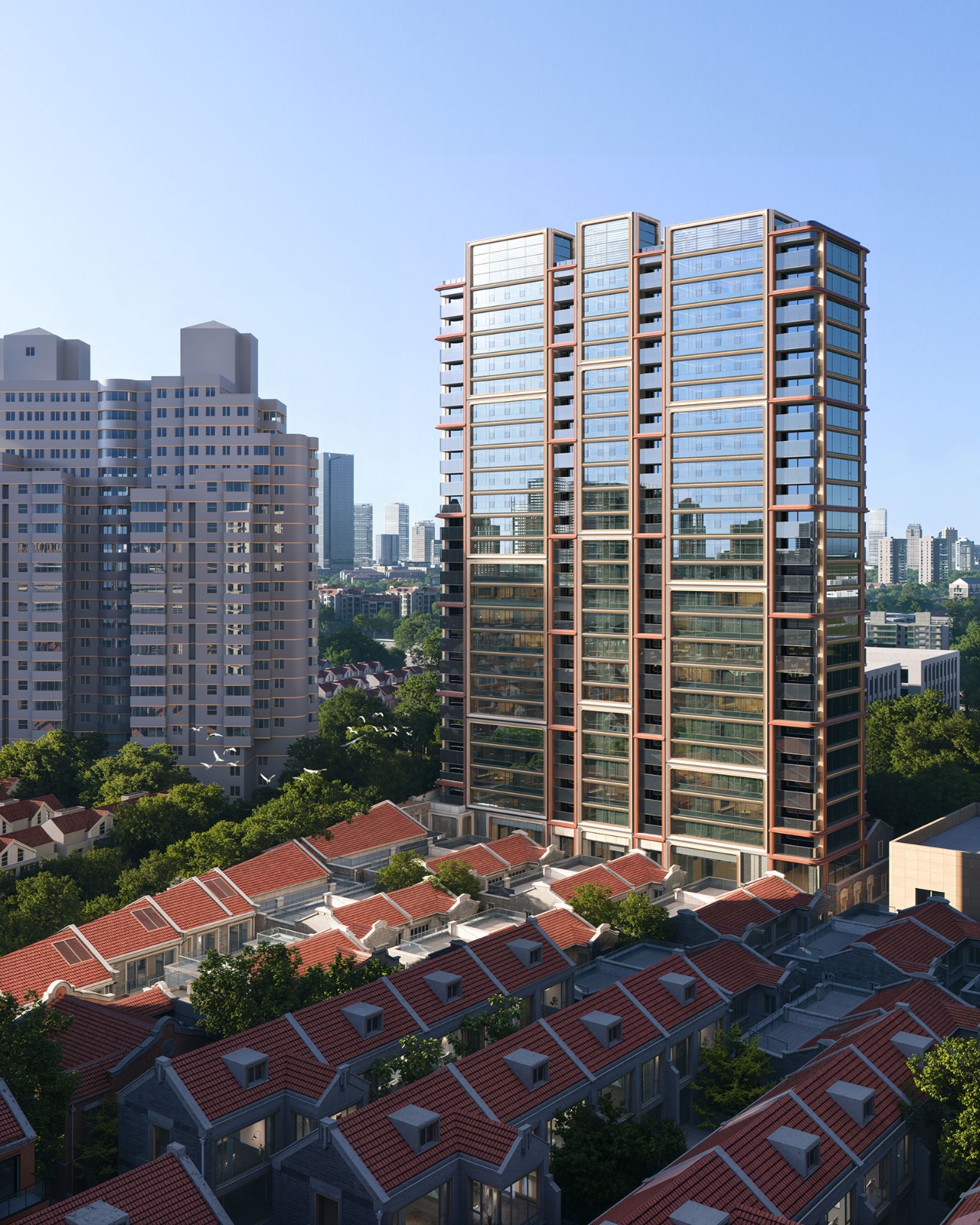
Confronting this highly sensitive and irreversible historical context, line+ Co-Founder and Chief Architect Peidong Zhu adopts the method of kintsugi as an approach to urban renewal. Rather than restoring history or turning it into symbolic consumption, the project intervenes through a graded strategy of Preserve – Weave – Insert, clarifying the roles of different temporal layers and transforming historical fractures into structural resources that can continue to serve contemporary urban life.
“Renewal is not a reset, but the establishment of an order that can continue to grow between the fractures of time.”
——Peidong Zhu
PART 1
—— Urban Habitat · Coexisting with Nature ——
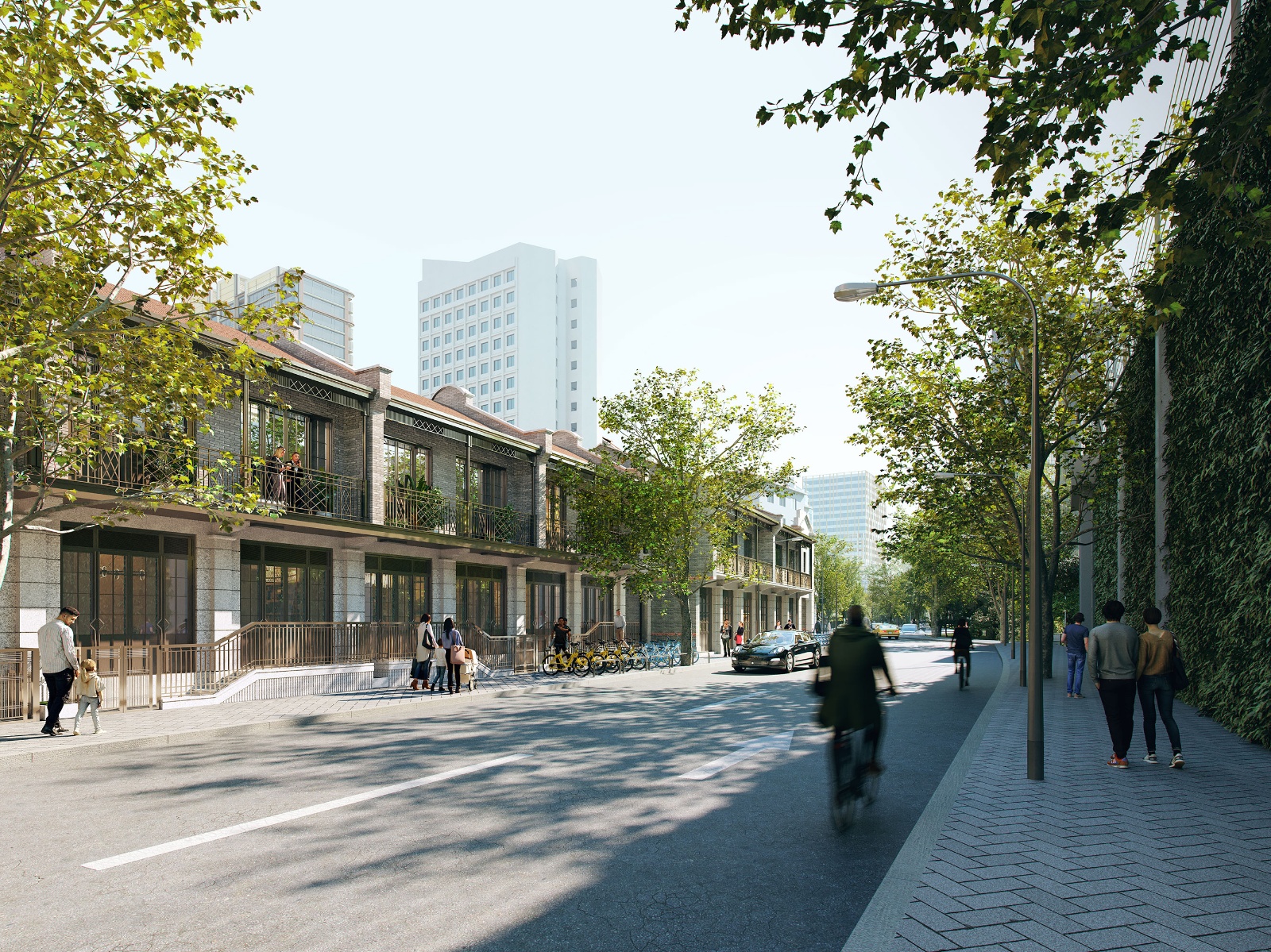
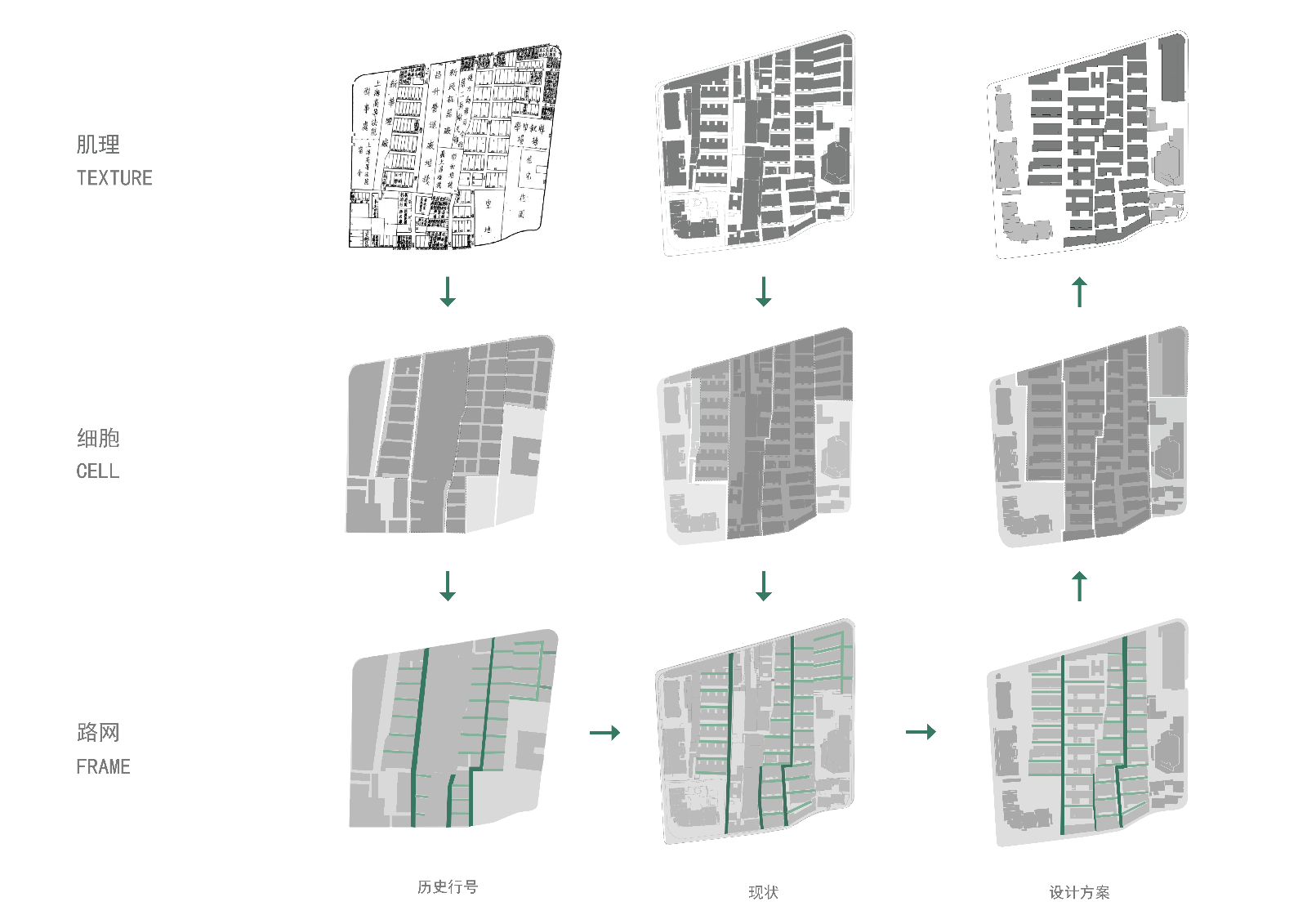
Instead of erasing urban texture for expansion or overprotecting heritage at the expense of vitality, the design continues the north–south lilong fabric and introduces three types of interventions.
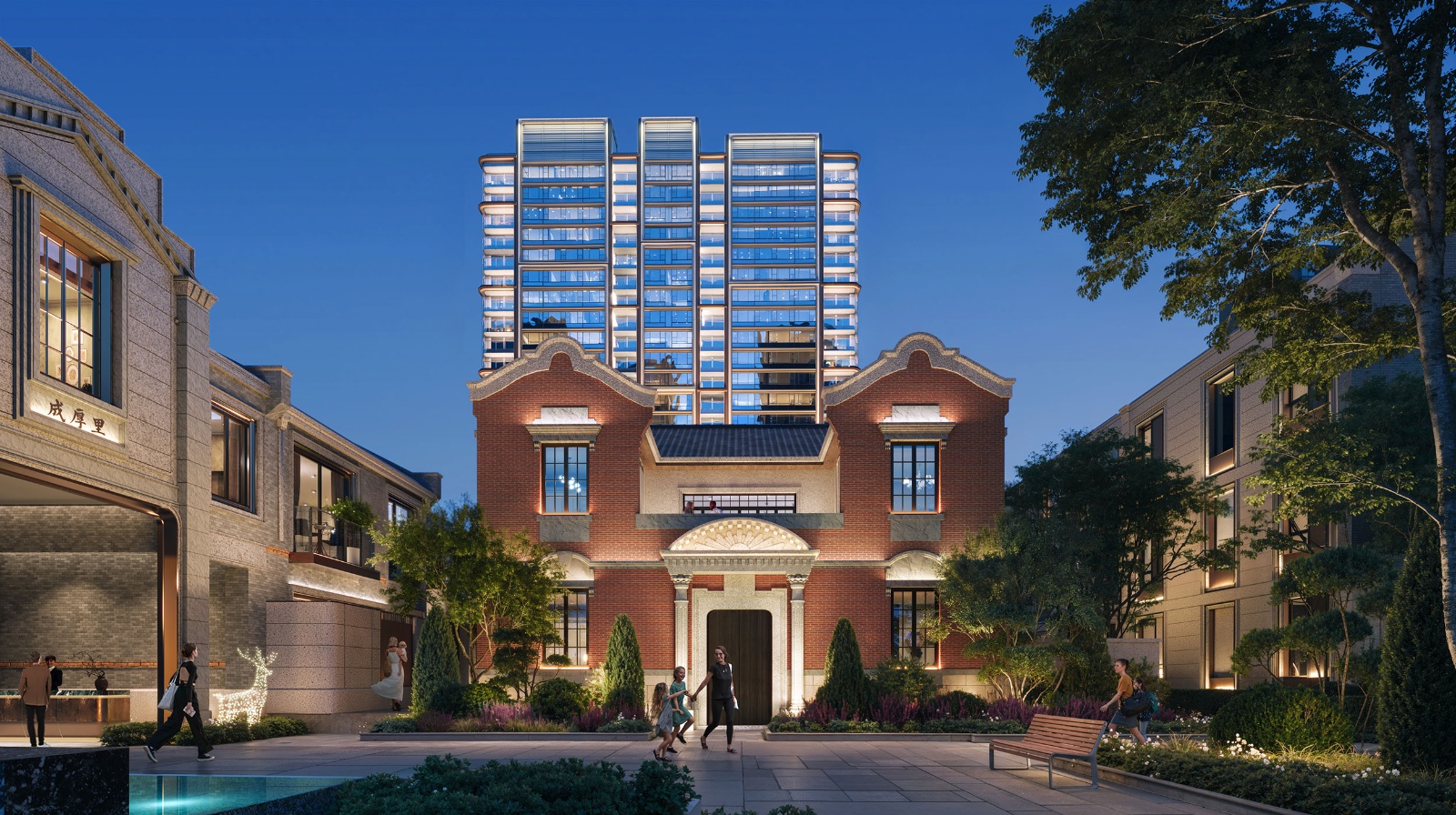
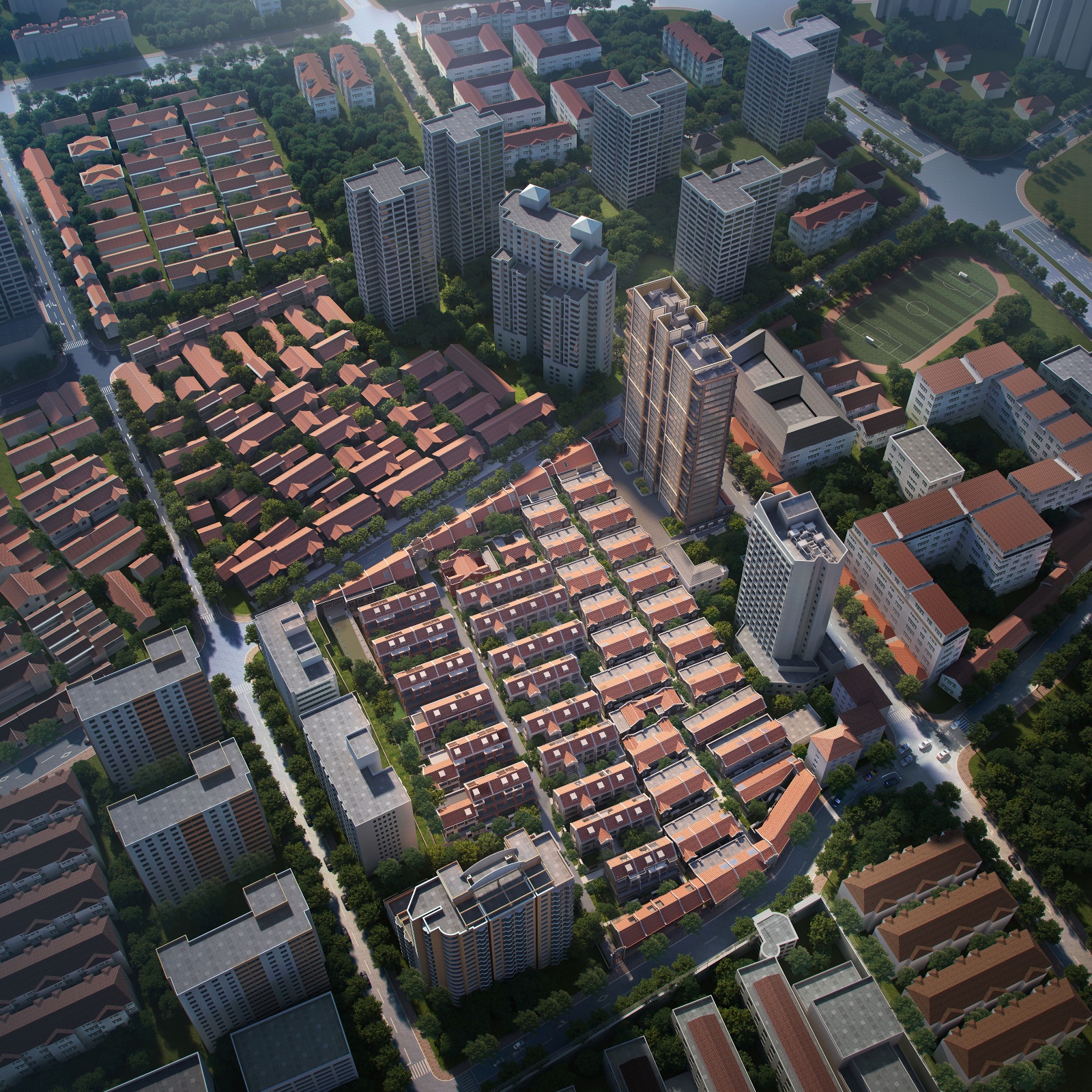
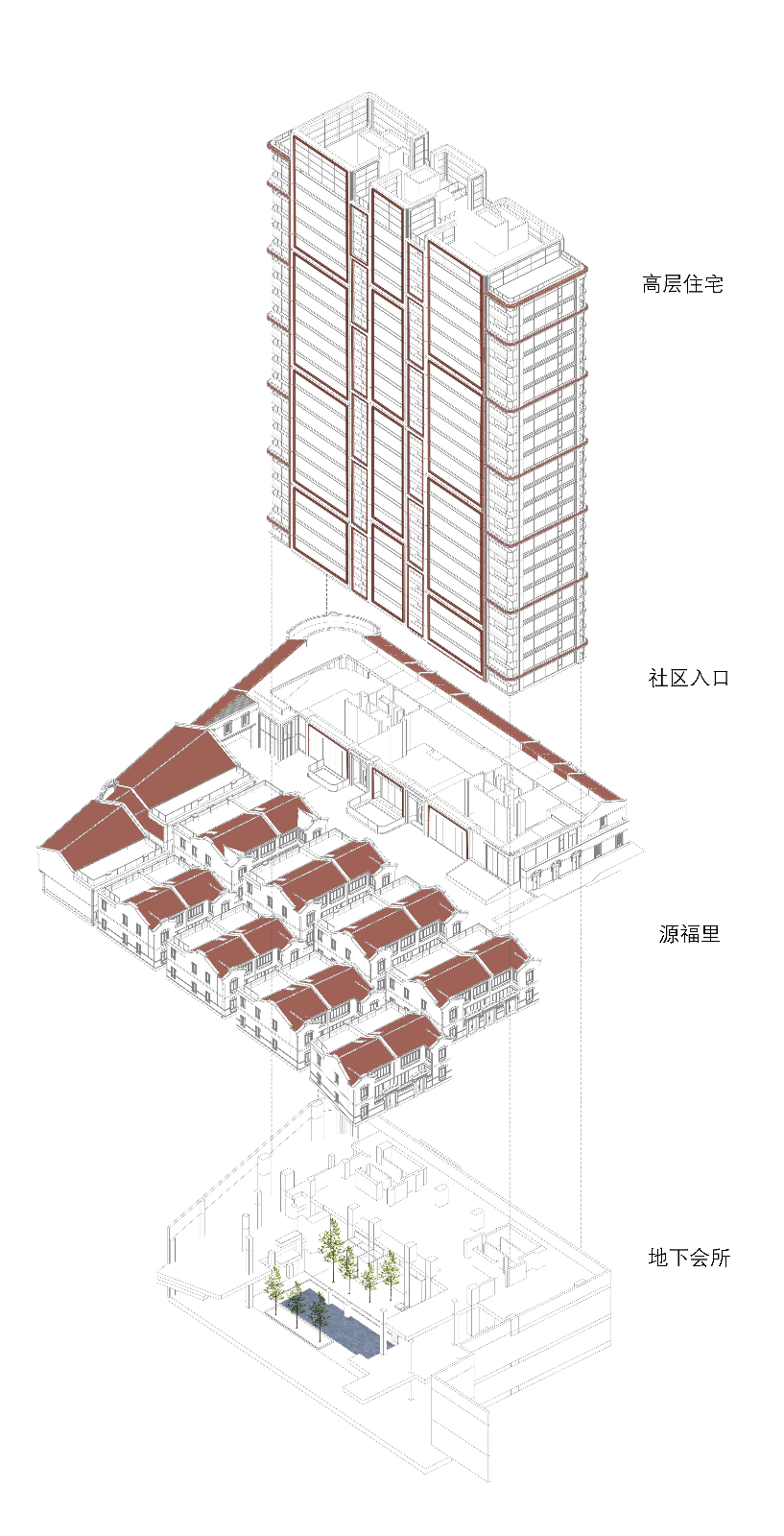
The largest preserved Shikumen heritage cluster, Yuanfuli, is retained in its entirety, while new buildings and landscape systems are linearly inserted as urban stitching. This creates an interwoven structure of new–preserved–repaired, allowing the low-density historic district to integrate seamlessly into contemporary city life.
PART 2
—— Arcade Edges · Lively Streets——
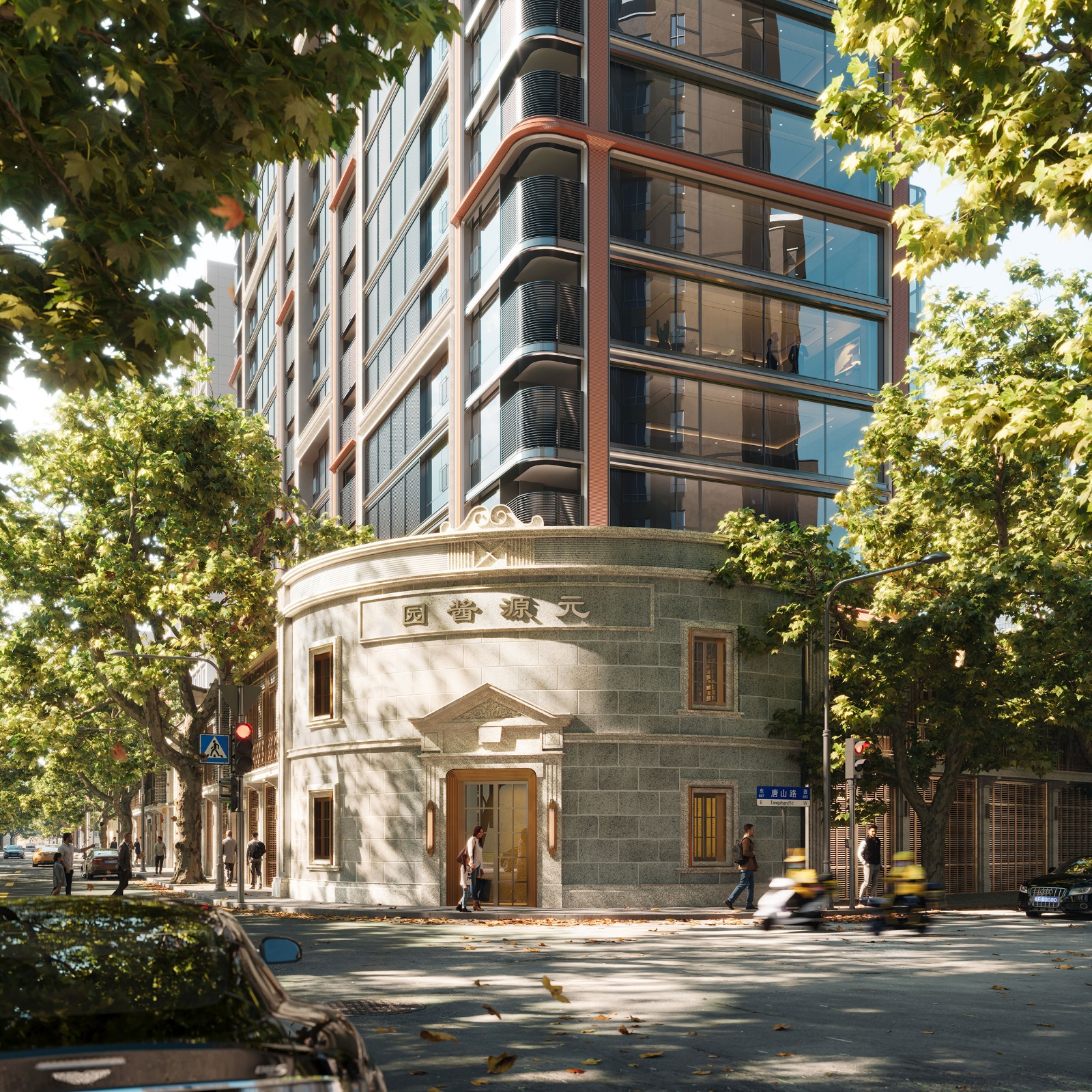
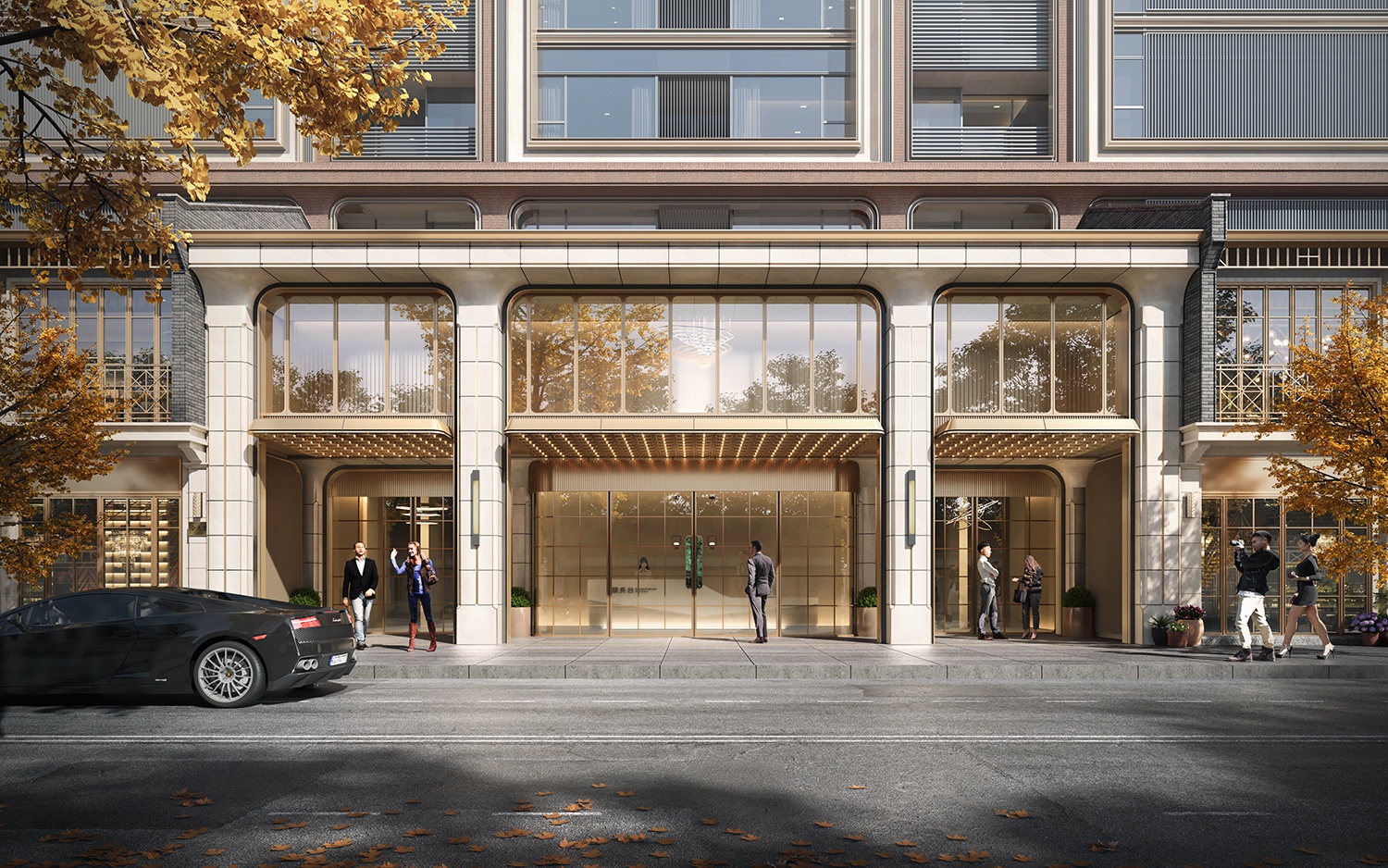
Two-story arcades along three sides form a continuous historical interface, together with the corner Yuanyuan Sauce Garden and the century-old tramline, shaping a “corridor of time.”
Twelve Shikumen gates are preserved and renewed as neighborhood nodes, reorganizing street rhythms and reconstructing a layered urban life composed of streets, alleys, and inner courtyards.
PART 3
—— Vertical Lilong · Organic Façade ——
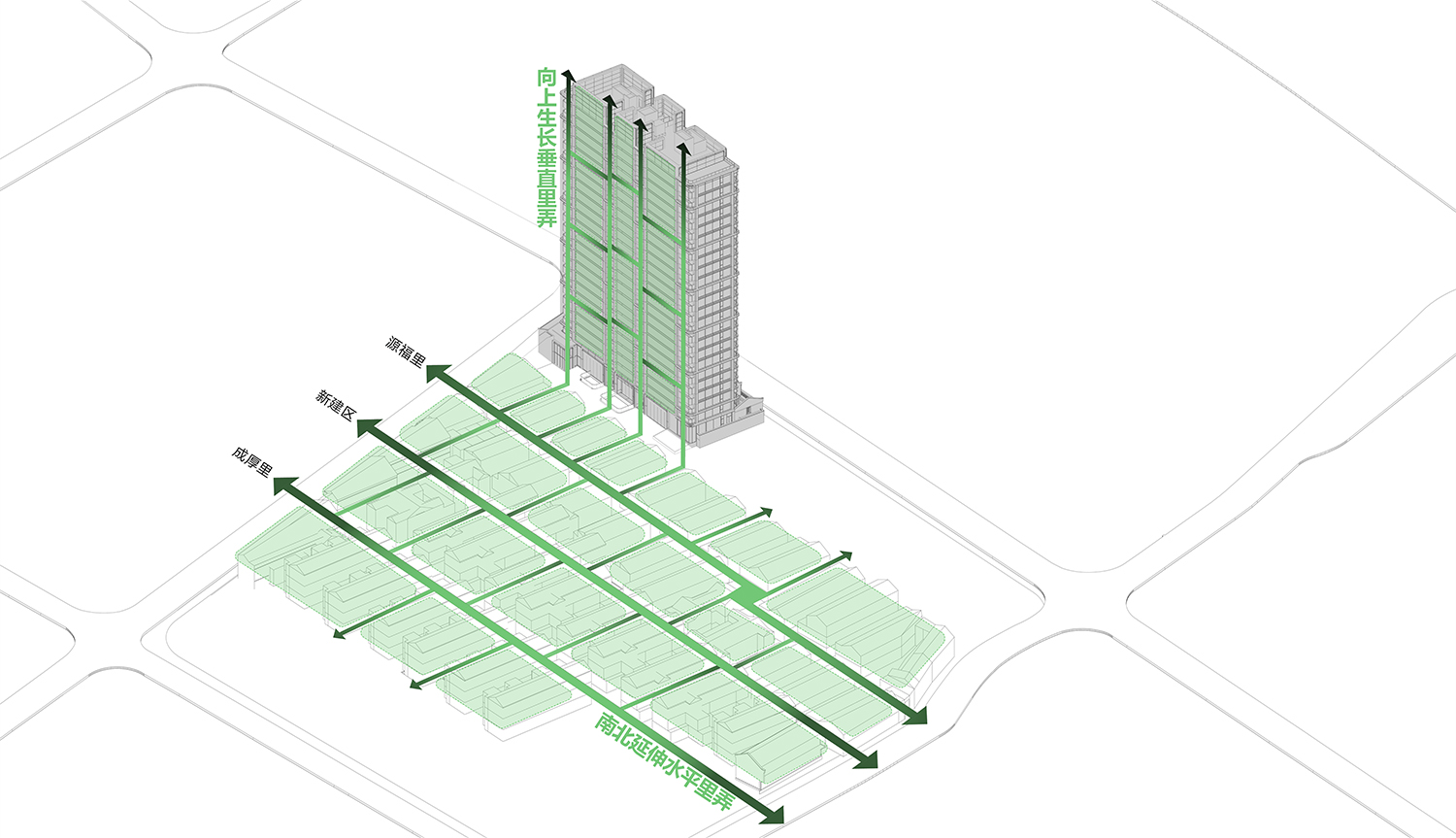
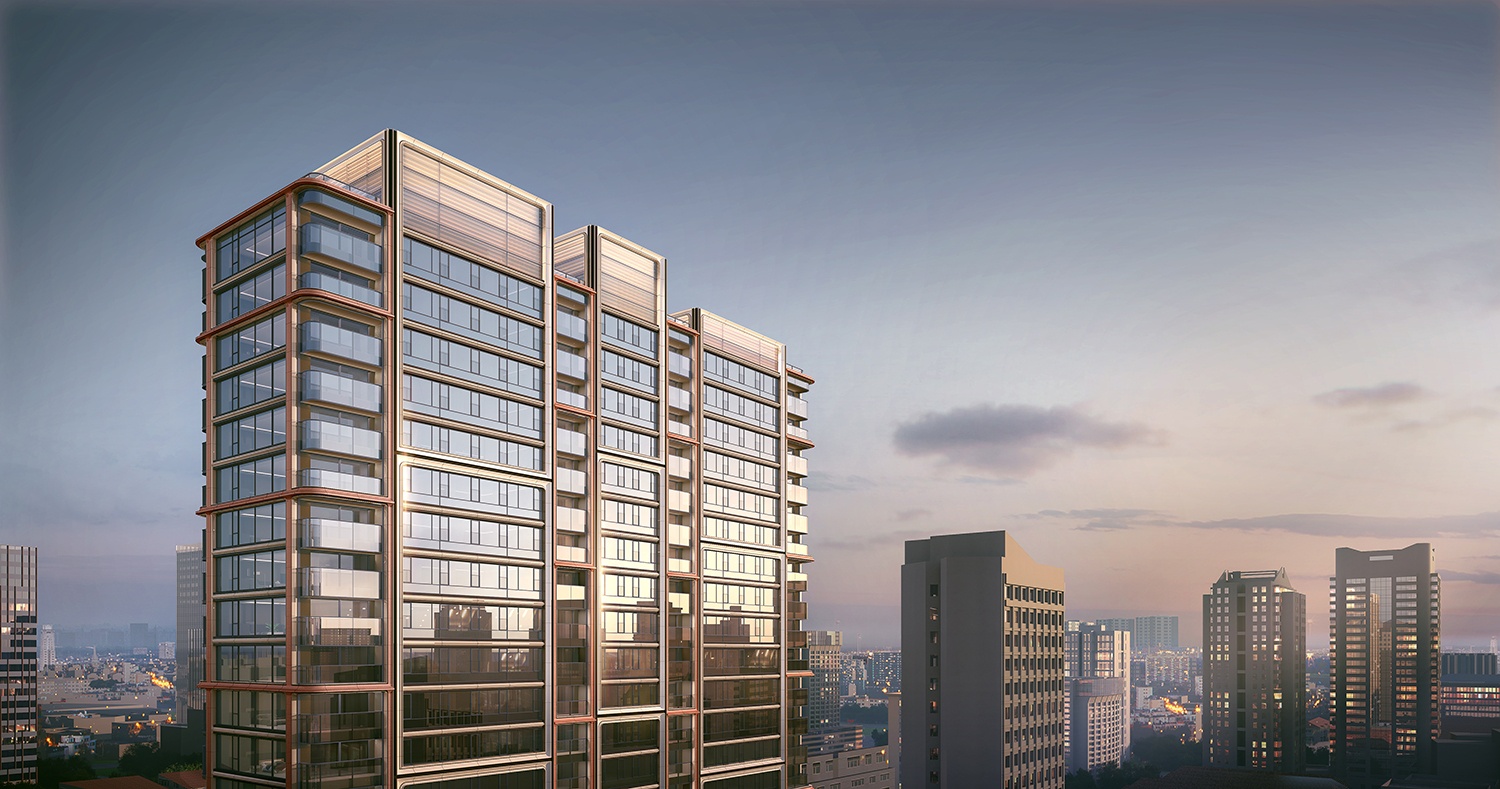
The high-rise volumes respond to history through a strategy of “vertical lilong.” By subdividing massing and translating street logic into vertical form, the façade becomes a three-dimensional network of urban lanes, reducing the visual pressure of slab towers.
Glazed ceramic panels, weathered bricks, and bronze-toned metals form an ordered yet harmonious material sequence, continuing the historical texture and temporal depth within contemporary construction.
With texture continuity, site stitching, and interface reconstruction as its core strategies, line+ revitalizes Tilanqiao while preserving its historical value, enhancing both spatial quality and urban vitality.
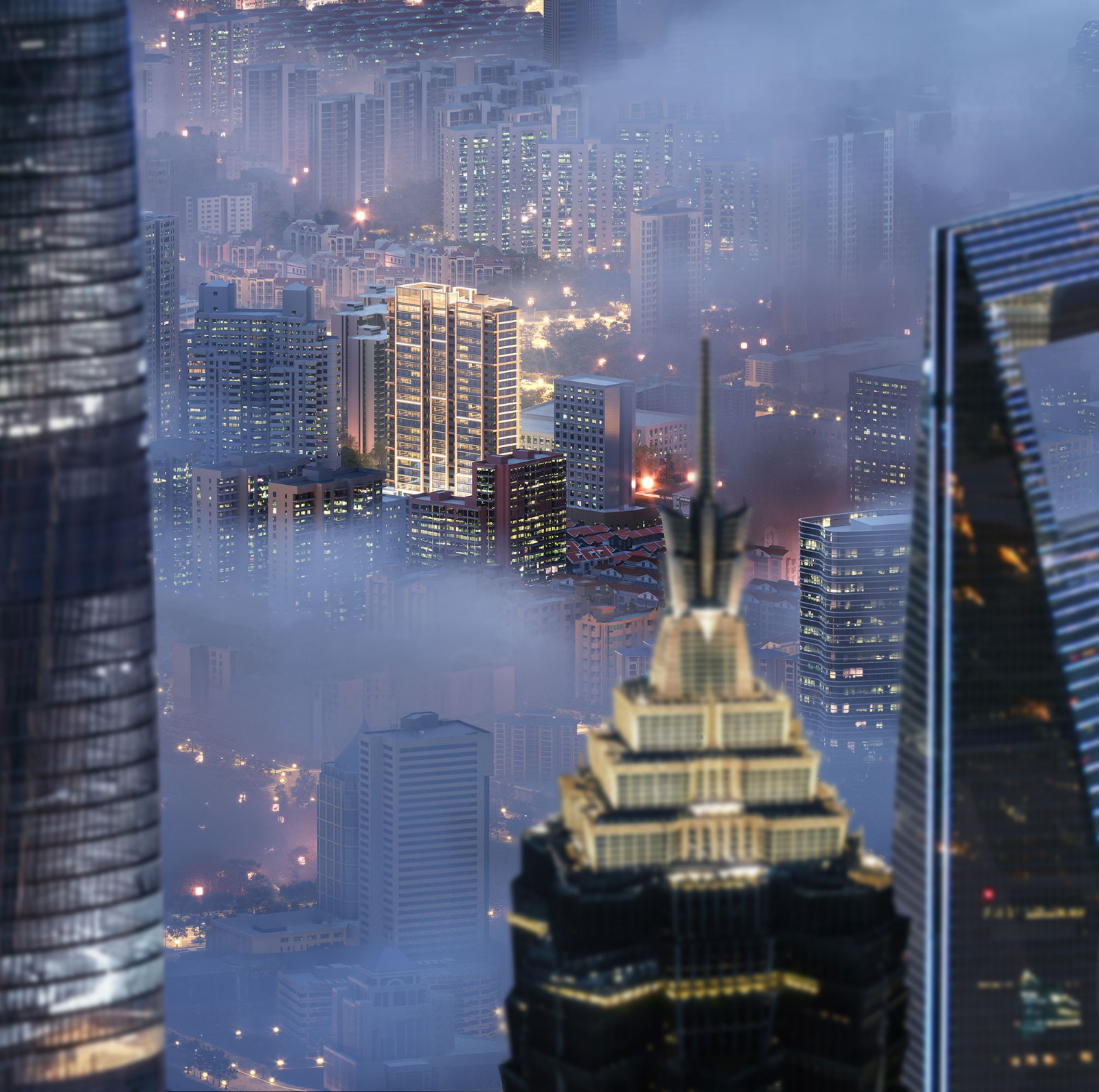
COFCO · North Bund One stands as a clear, restrained, and quietly powerful architectural footnote—marking the transition of the North Bund from history toward the future.