


Project Name: Hangzhou LOFT49 Regeneration
Design Firm: line+ studio
Chief Architect / Project Principal: Peidong Zhu
Design Team: Wangtao Bao, Tao Xu, Ke Gao, Zhenyu Li, Shiqiu Liang, Xinyi Shi, Jiaqi Wang, Xiaoyu Yang, Wenyu Zhou Architecture; Yuting Jin, Xiaoxiao Fan, Zhiyi He Interior
Client: Hangzhou Blue Peacock Cultural & Creative Co., Ltd.
Collaborative Design Institute: Sino-Foreign Jianhuacheng Engineering Technology Group Co., LTD. Zhejiang Branch
Landscape Design: Zhejiang Antao Design Co., Ltd.
MEP Consultant: Hangzhou Yizi Architectural Engineering Technology Co., Ltd.
Location: Hangzhou, Zhejiang, China
Gross Floor Area: 95,901.45 sqm
Design Period: May 2022 – December 2022
Construction Period: December 2022 – December 2025
Materials: Glazed terracotta panels, weathering steel panels, aluminum / metal panels, glass, stucco coating
Photography: Arch-Exist, Shan-jian images, Chen Xi Studio, Guowei Liu, DONG Image, line+
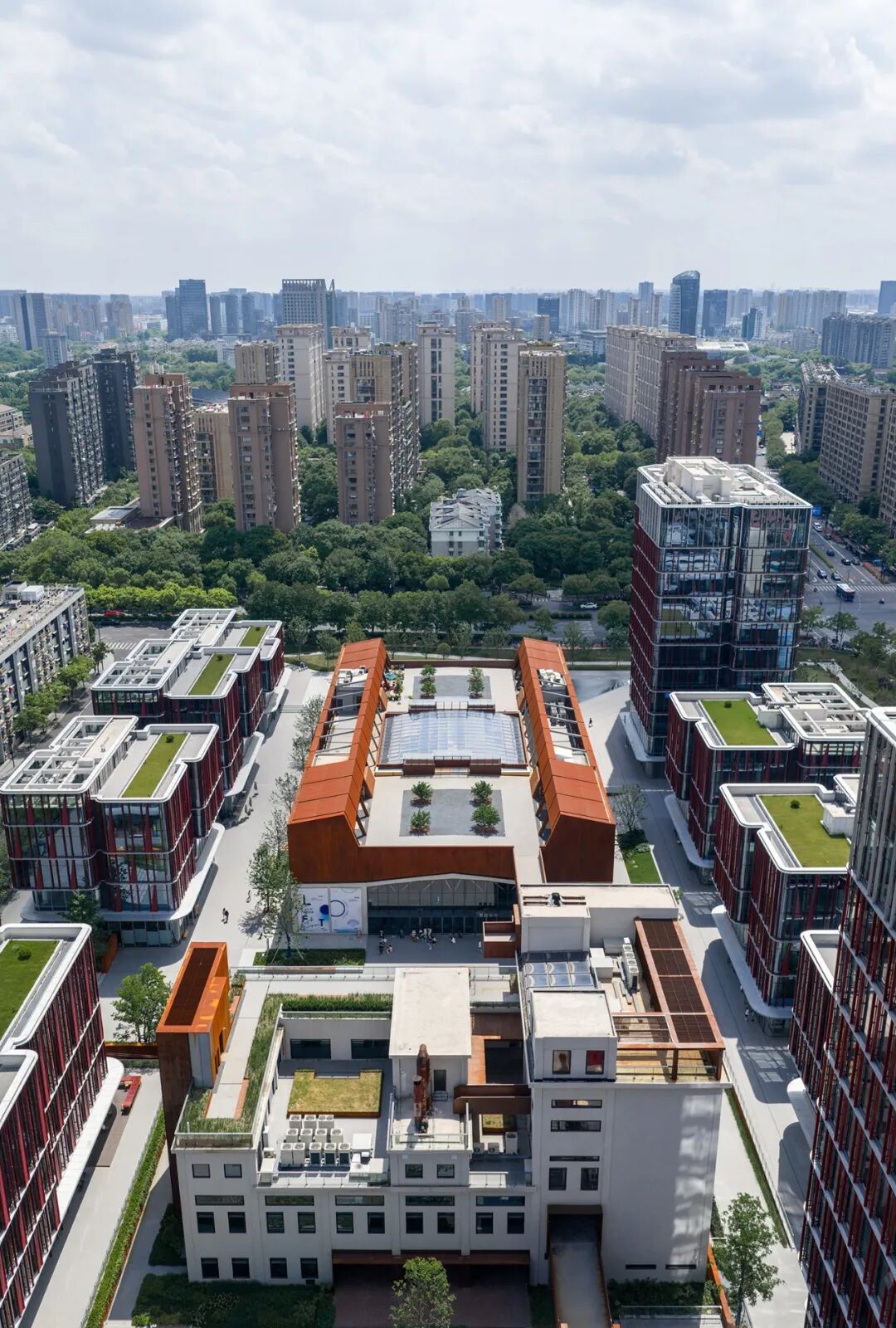
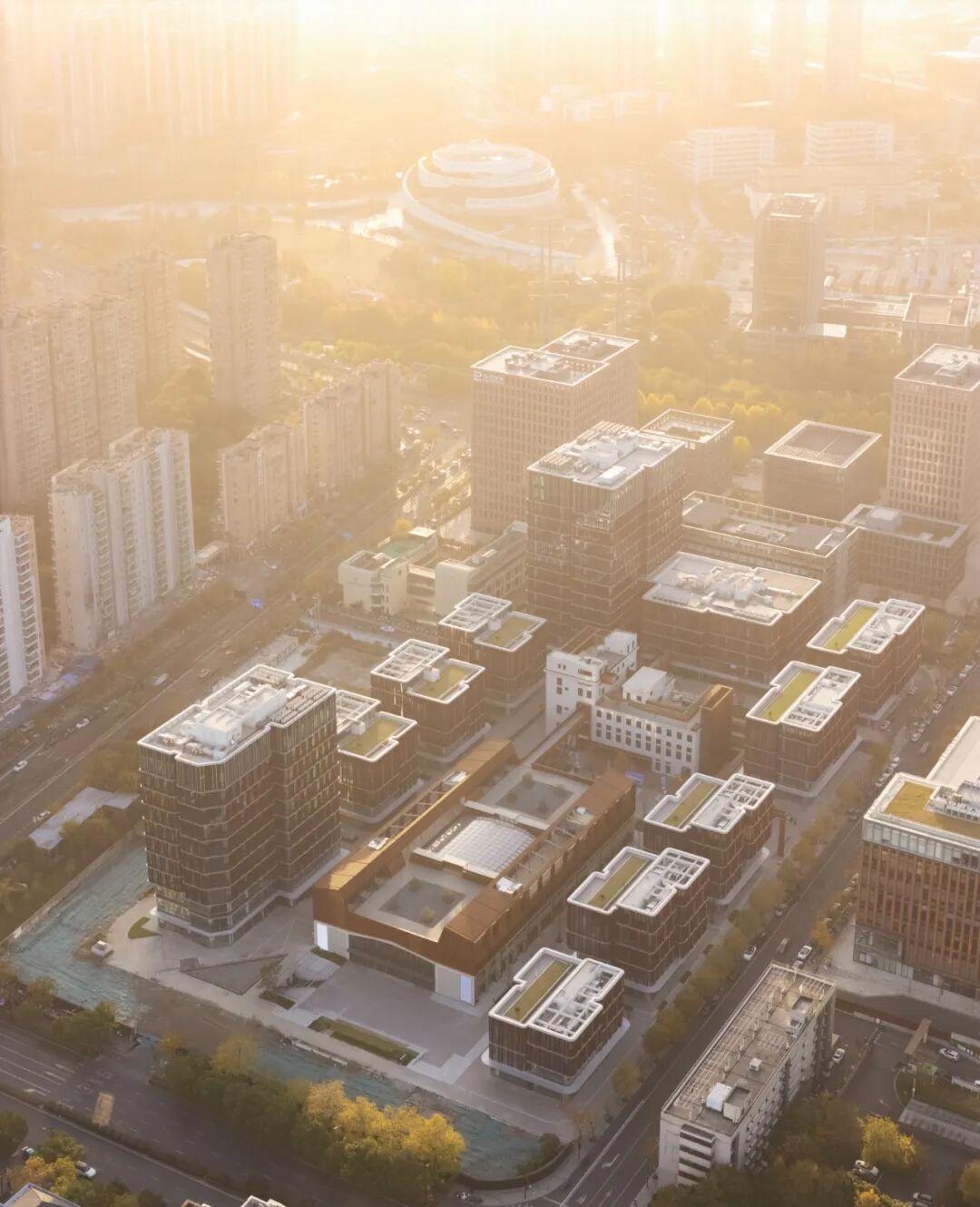
As an industrial heritage site along Hangzhou’s Grand Canal, Hangzhou LOFT49 Creative Park has become one of Zhejiang’s representative cases of design-led organic urban renewal in recent years. Led by Dr. Peidong Zhu, co-founder and principal architect of line+, the second phase of the park was fully completed at the end of 2025 and has now officially entered its public operation phase.
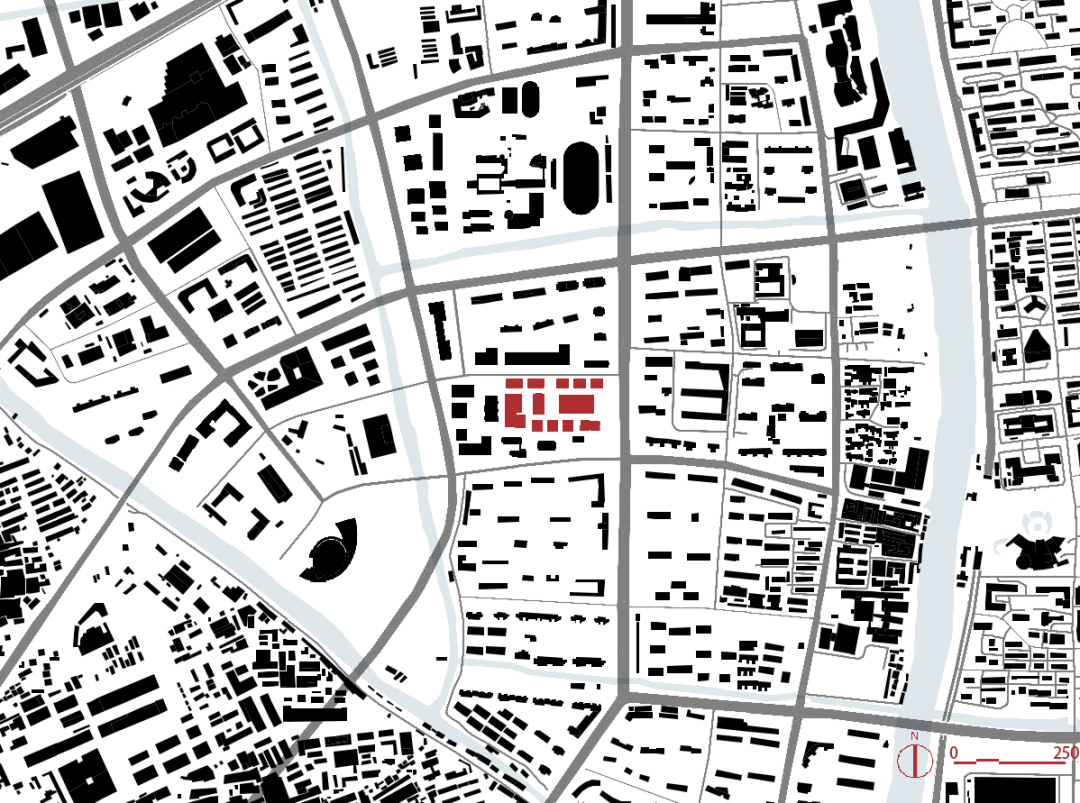
△ Location map
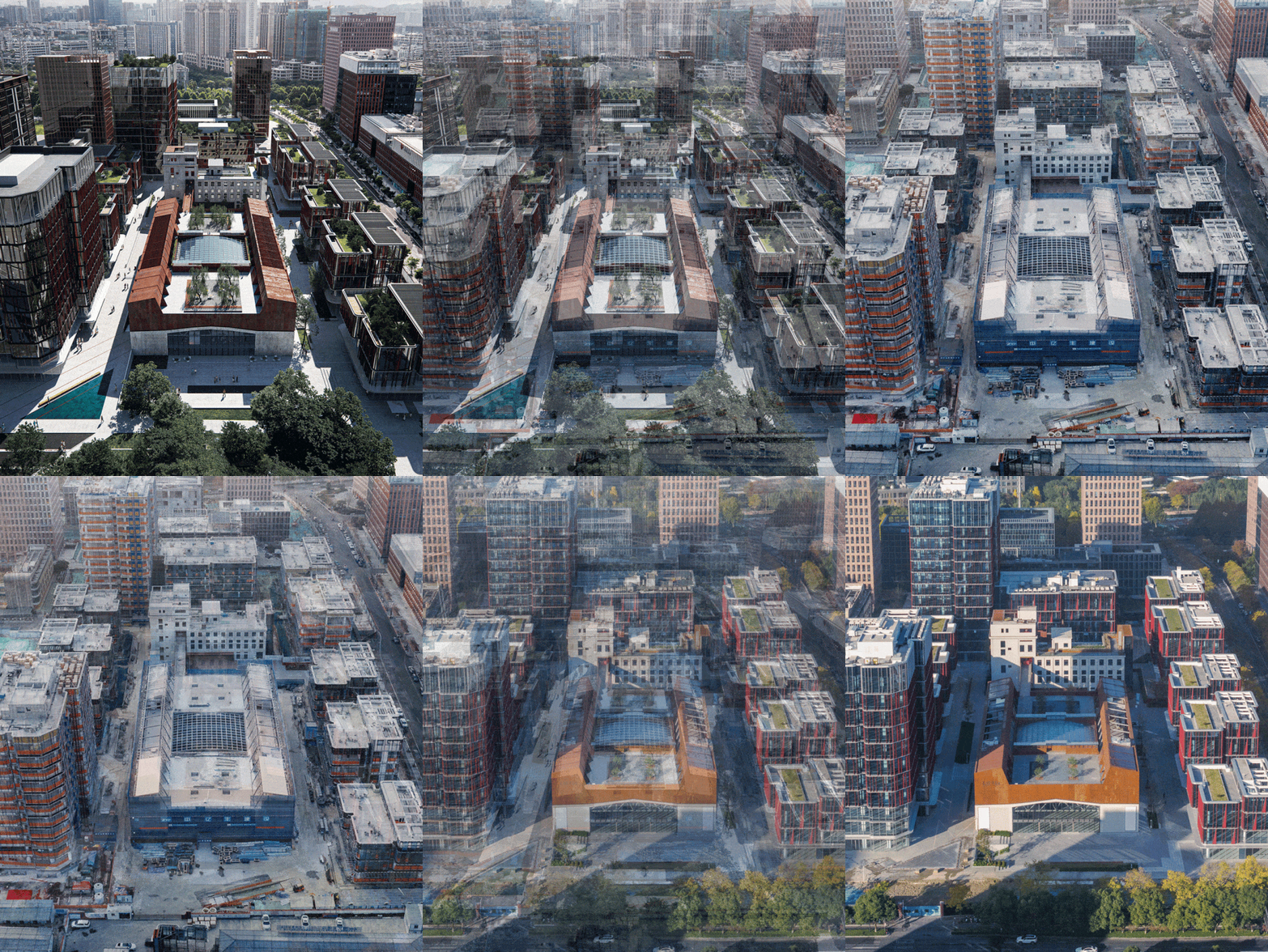
△ LOFT49 Phase II: from design proposal to built reality
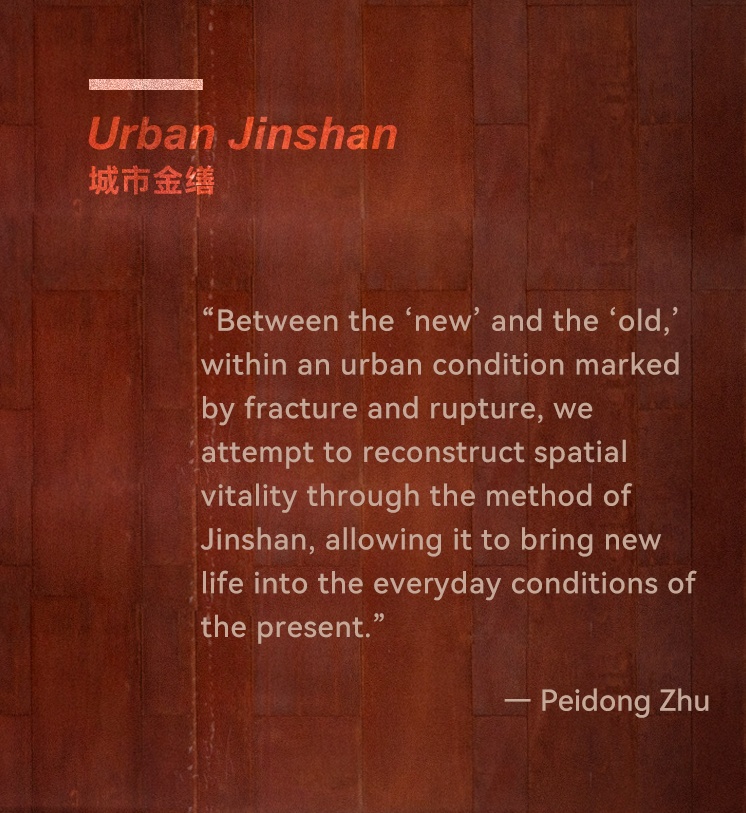
Confronted with the overlapping demands of brownfield regeneration, planning upgrade, and the conservation and adaptive reuse of industrial heritage, Dr. Peidong Zhu served as the chief designer of the project, leading the overall planning, architectural design, and integrated interior renewal of the industrial heritage buildings in Phase II. In this typical case of renewal, where the authenticity of industrial remains and the demands of contemporary urban development are placed under simultaneous pressure, Zhu proposed the concept of “Urban Jinshan.” Through design, the project responds to the transformation of industry and lifestyle, offering a new line of thinking and a practical pathway for urban regeneration.
During construction, line+ held the exhibition Order Amidst Contradiction: From Hangzhou's Shanshui to Global Horizons at the partially completed LOFT49 construction site from June to October 2025. Through event-based curation, the unfinished site was temporarily activated, allowing the park’s future vitality to be tested before completion.
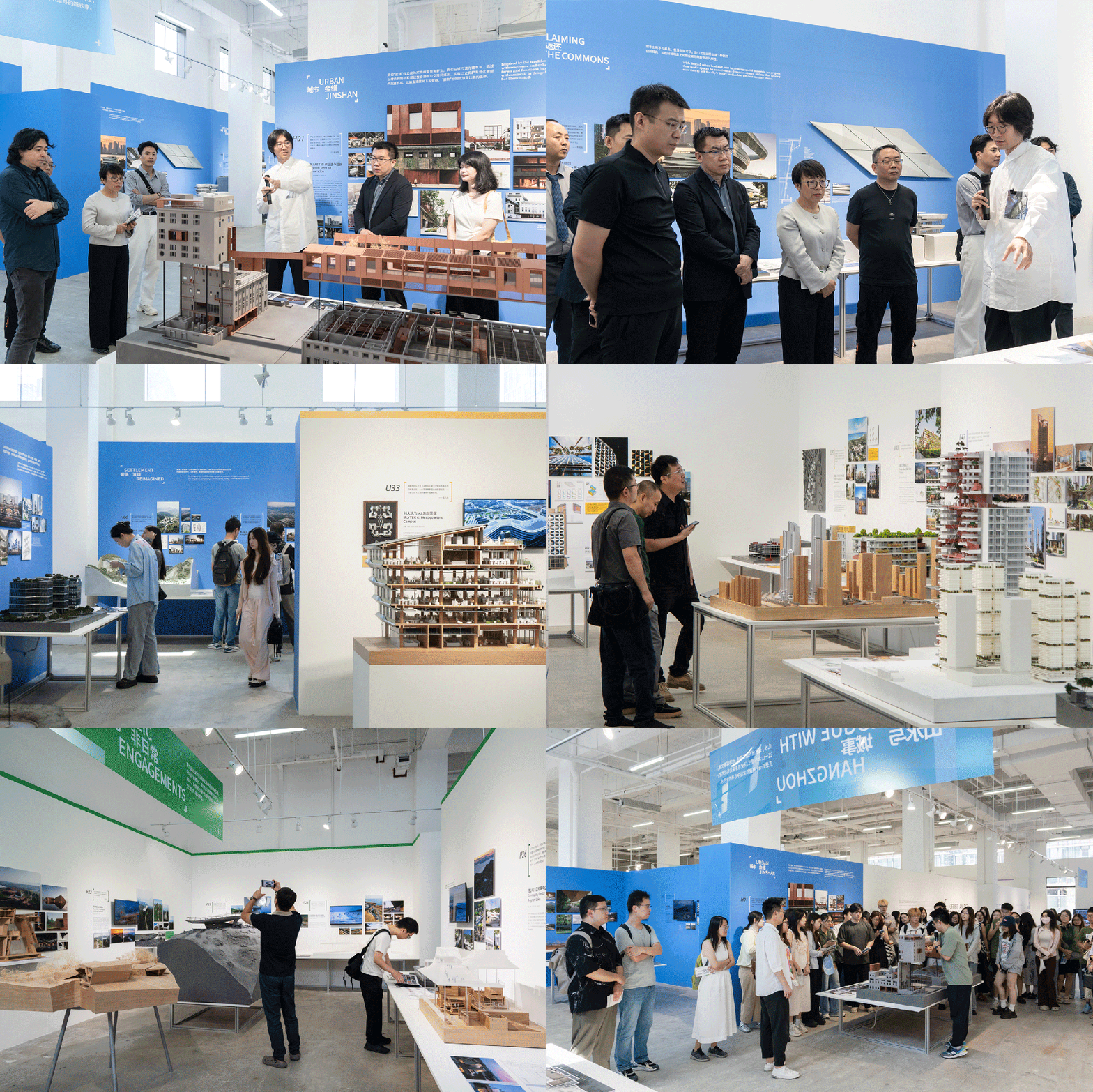
△ Exhibition site
LOFT49 traces its origins to the Hangzhou Chemical Fiber Factory, founded in 1958. In 2003, through the spontaneous gathering of artists and creative practitioners, the former factory compound was transformed into Hangzhou’s first landmark creative industry park. After its initial transition from industrial production site to creative industry cluster, LOFT49 now faces a more complex and pressing challenge: under the pressure of high-intensity development and high-output expectations in a central urban location, how can it continue, protect, and activate the dual historical memory of its industrial heritage period and its later LOFT49 creative park period, while also efficiently increasing spatial capacity to meet the upgraded needs of new industries and contemporary civic consumption?
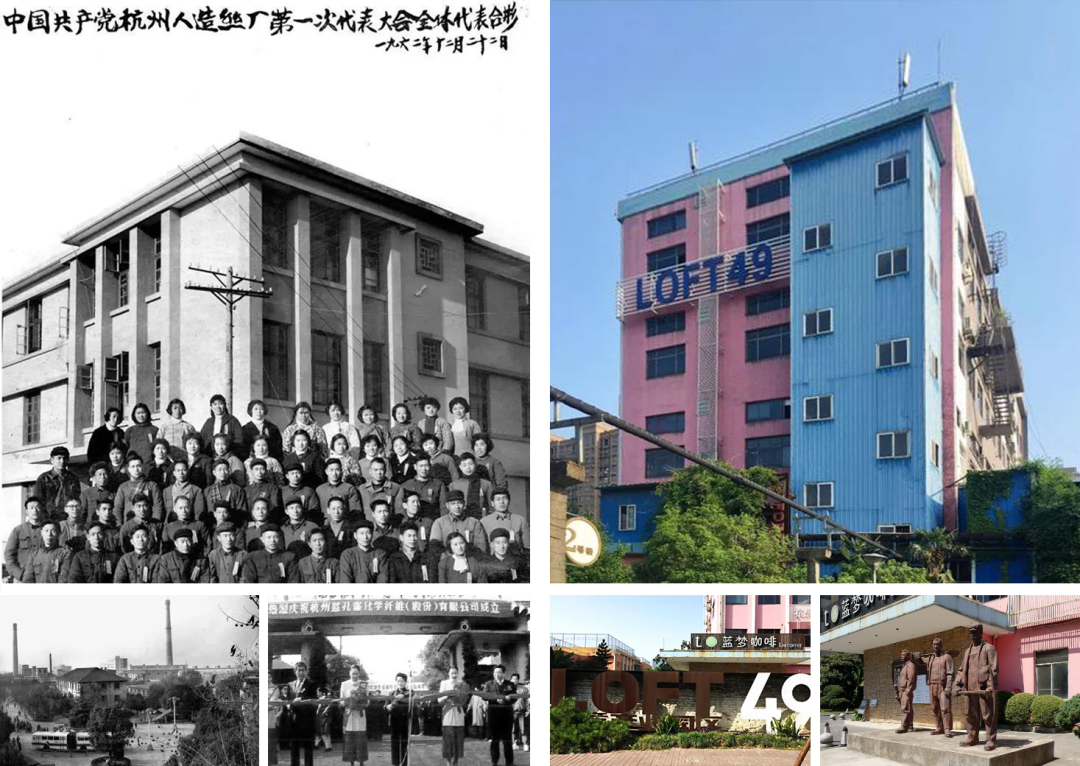
△ Hangzhou Chemical Fiber Factory and the LOFT49 Creative Park
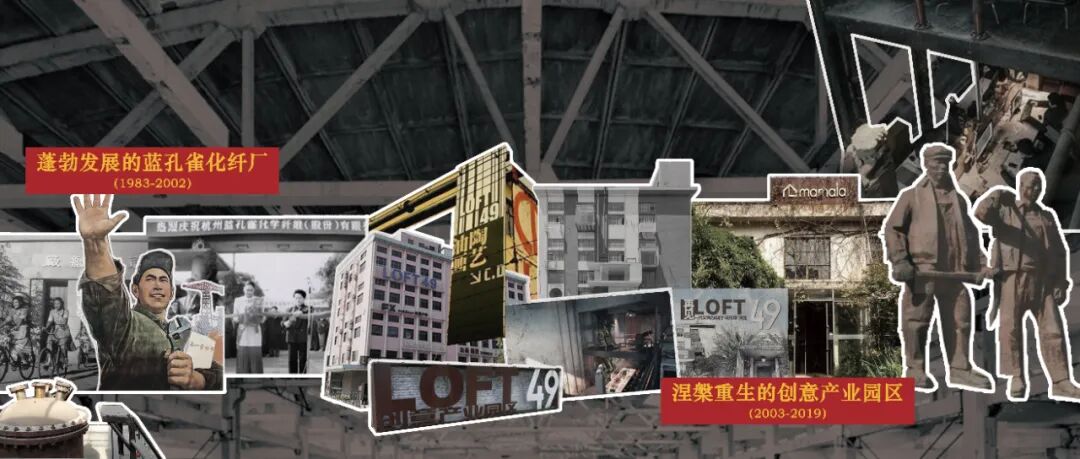
△ The dual background of industrial remains and creative industries
“Urban Jinshan” draws from the craft of Jinshan (kintsugi), which repairs broken objects by emphasizing their fractures rather than concealing them. It treats the ruptures and imperfections of the city as the very premise of design. By introducing a clear and legible heterogeneous system, the project reactivates, reuses, and re-sensitizes an urban system that had become partially ineffective, releasing industrial heritage from a static state of preservation and transforming it into a new kind of urban interface capable of continuous operation.
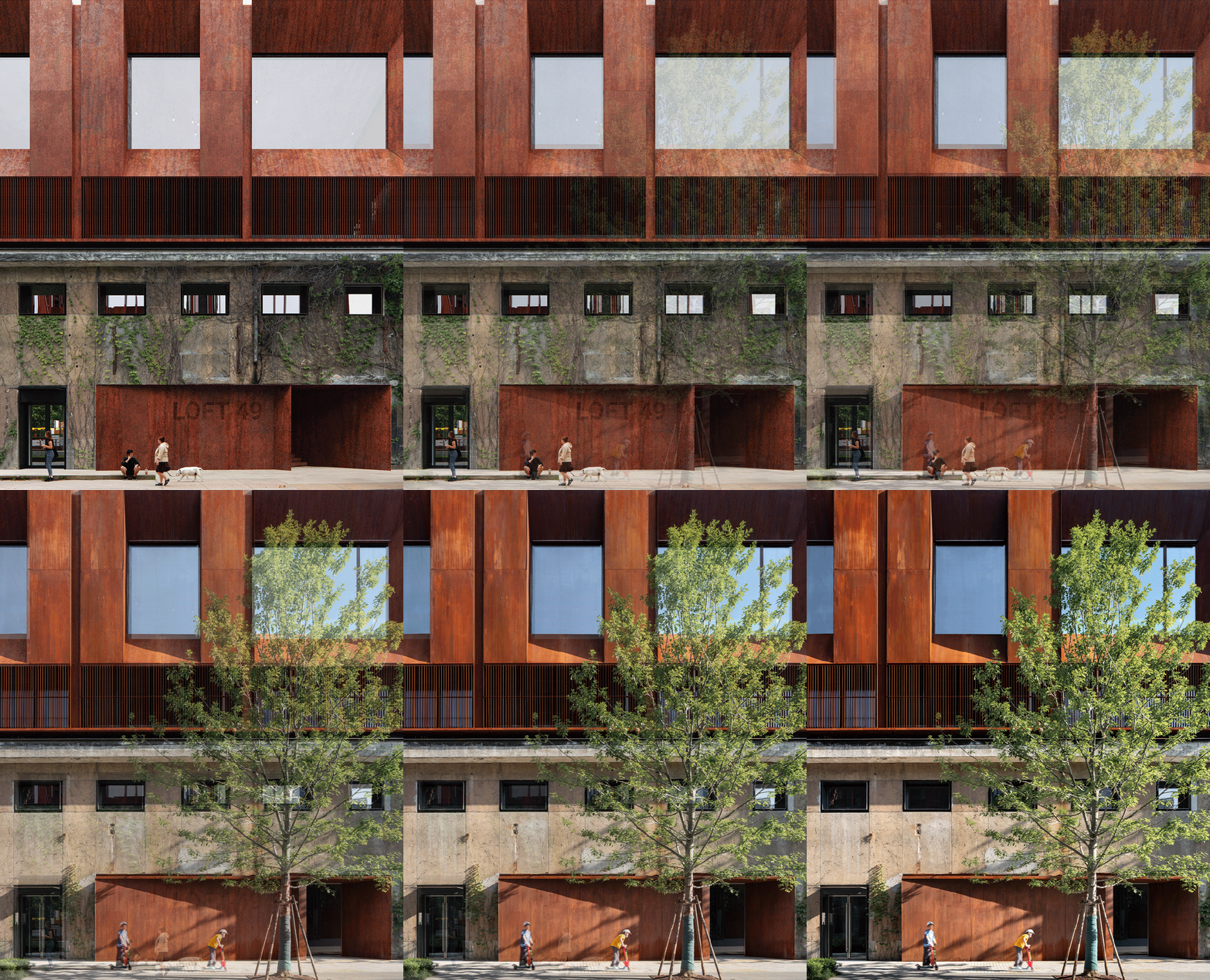
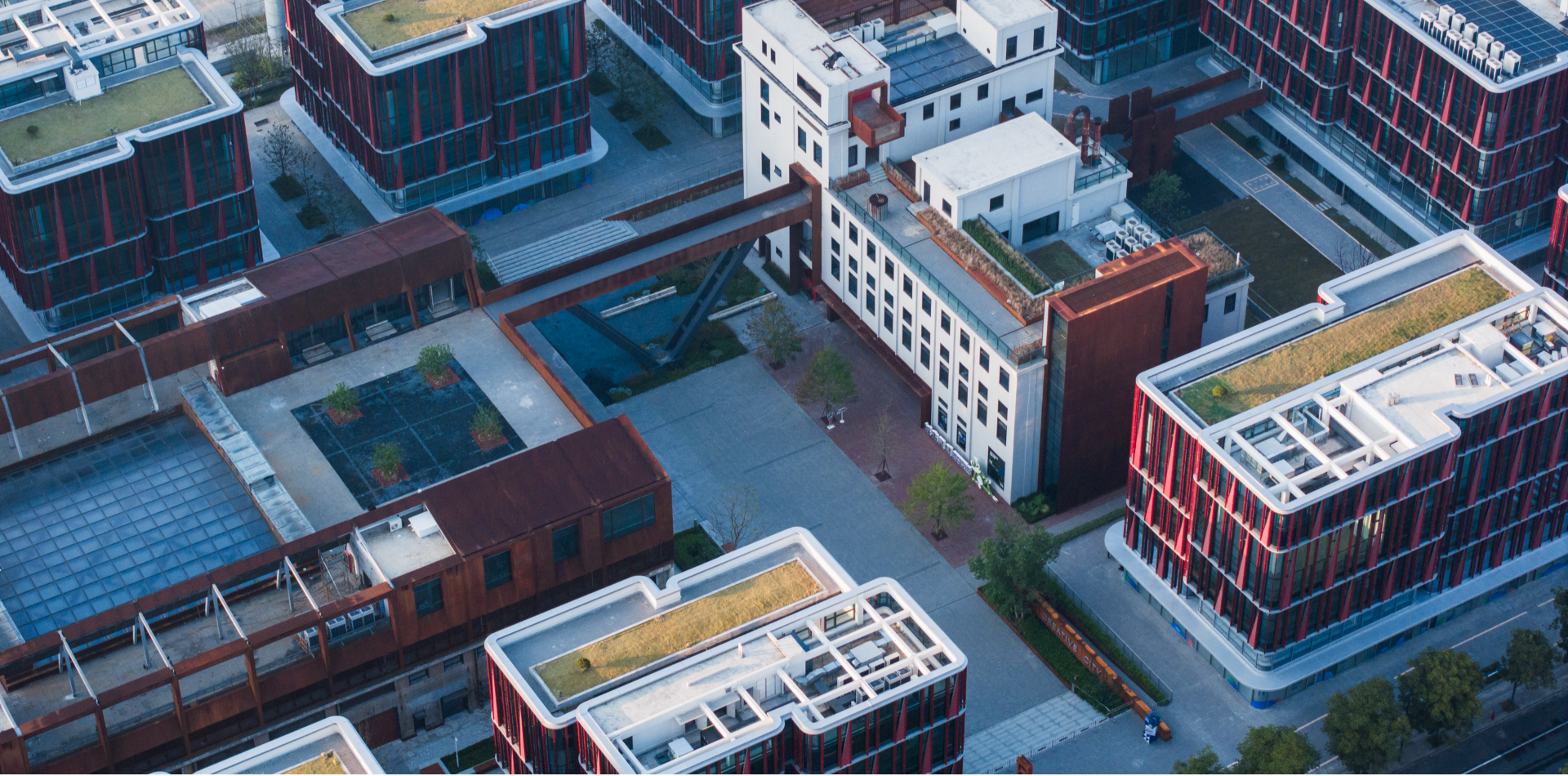
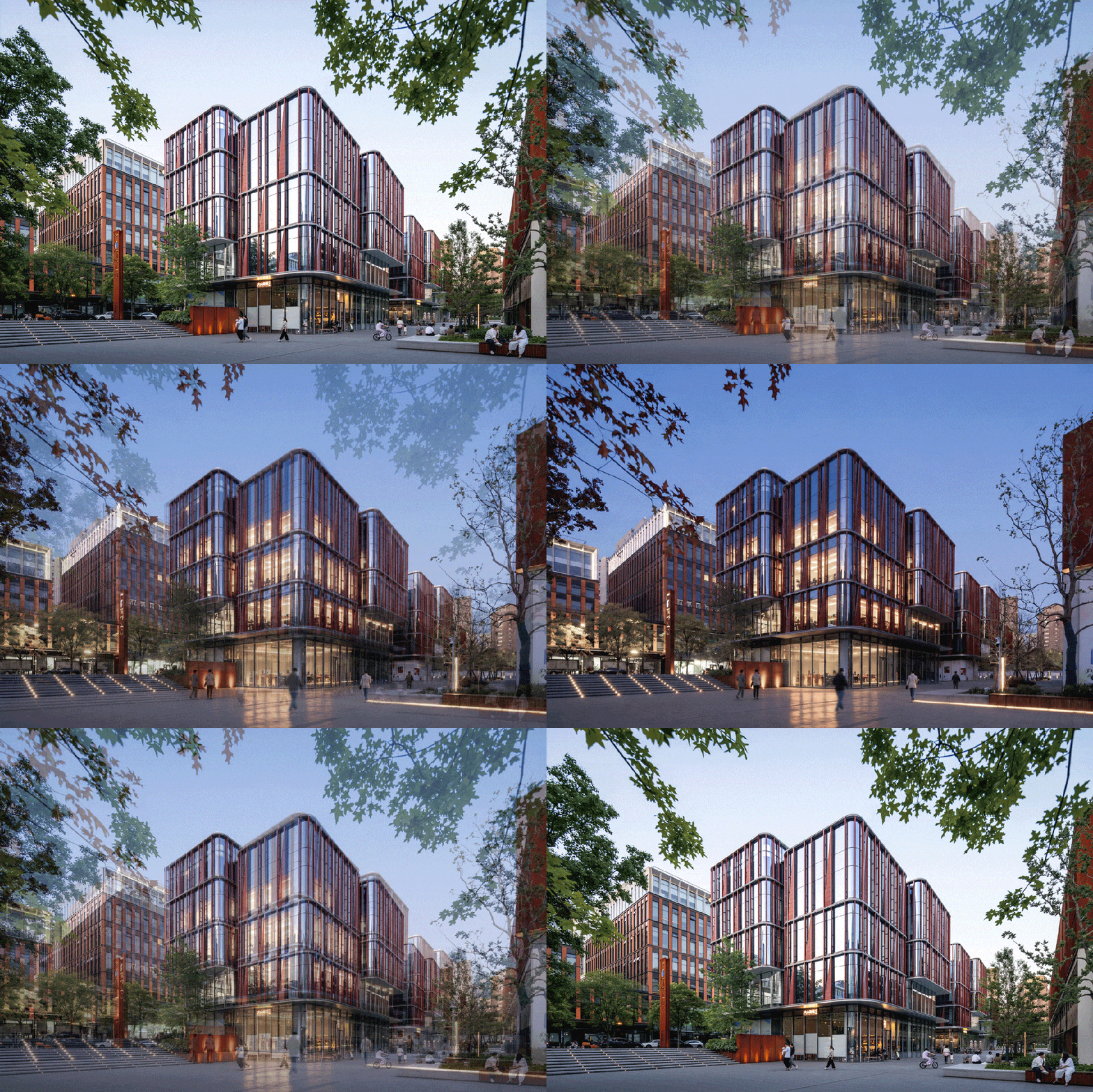
△ From design rendering to built reality
The design of LOFT49 Phase II includes the conservation and renewal of two industrial heritage buildings, together with the construction of approximately 90,000 square meters of new building volume. Building 6, a high-bay production workshop in the middle of the site, and Building 10, a single-storey large-span factory building, were preserved in their entirety. Around them, ancillary buildings that had been severely damaged through continuous use, and which were assessed as having limited distinctive value and low preservation significance, had already been fully demolished before the architects’ intervention.
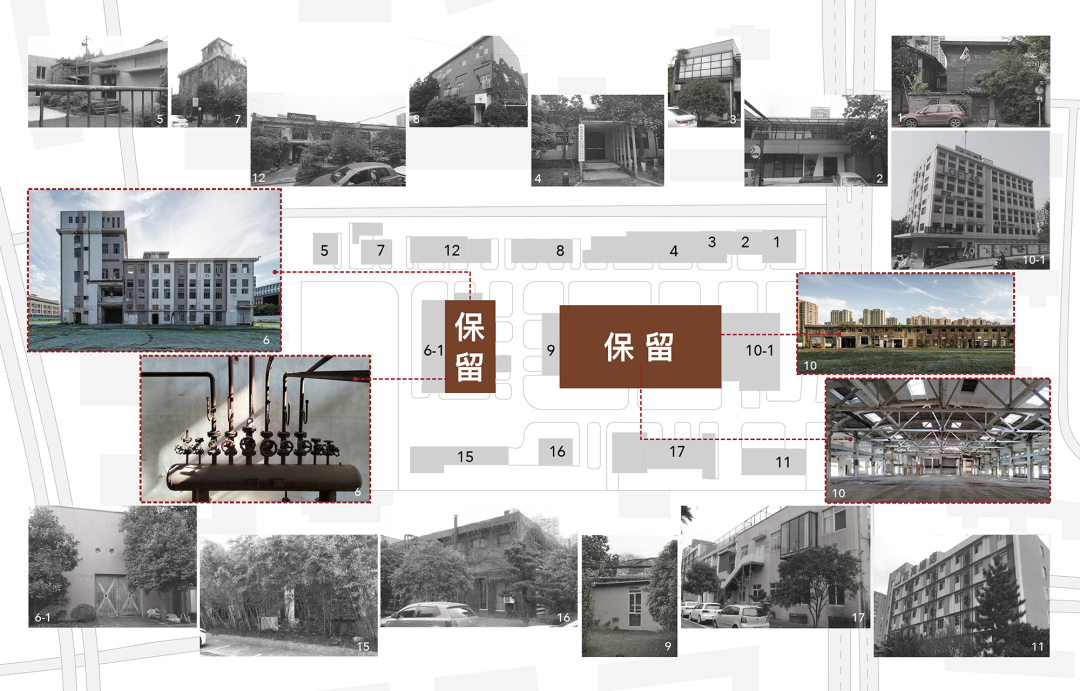
△ Demolition and retention strategy based on the industrial heritage assessment report
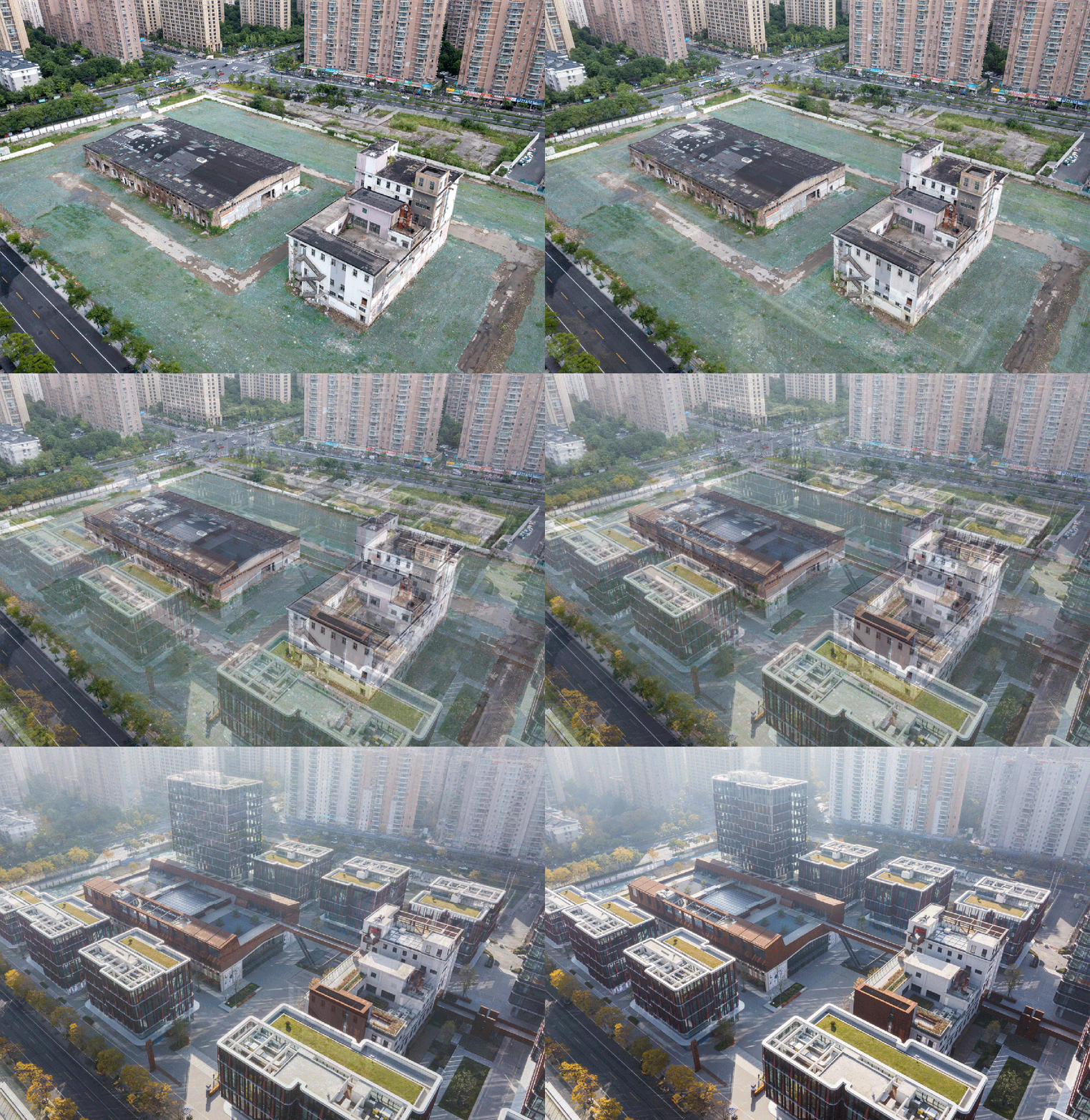
△ Before-and-after comparison
Faced with an incomplete set of original site information, the architects first intervened at the level of planning and design. Through the non-uniform distribution of newly added capacity, high-rise volumes were pushed toward the edges of the site, releasing the internal ground as much as possible. The “historical remnants” that had once been enclosed, fractured, and difficult to access was transformed into a shared and permeable public block.
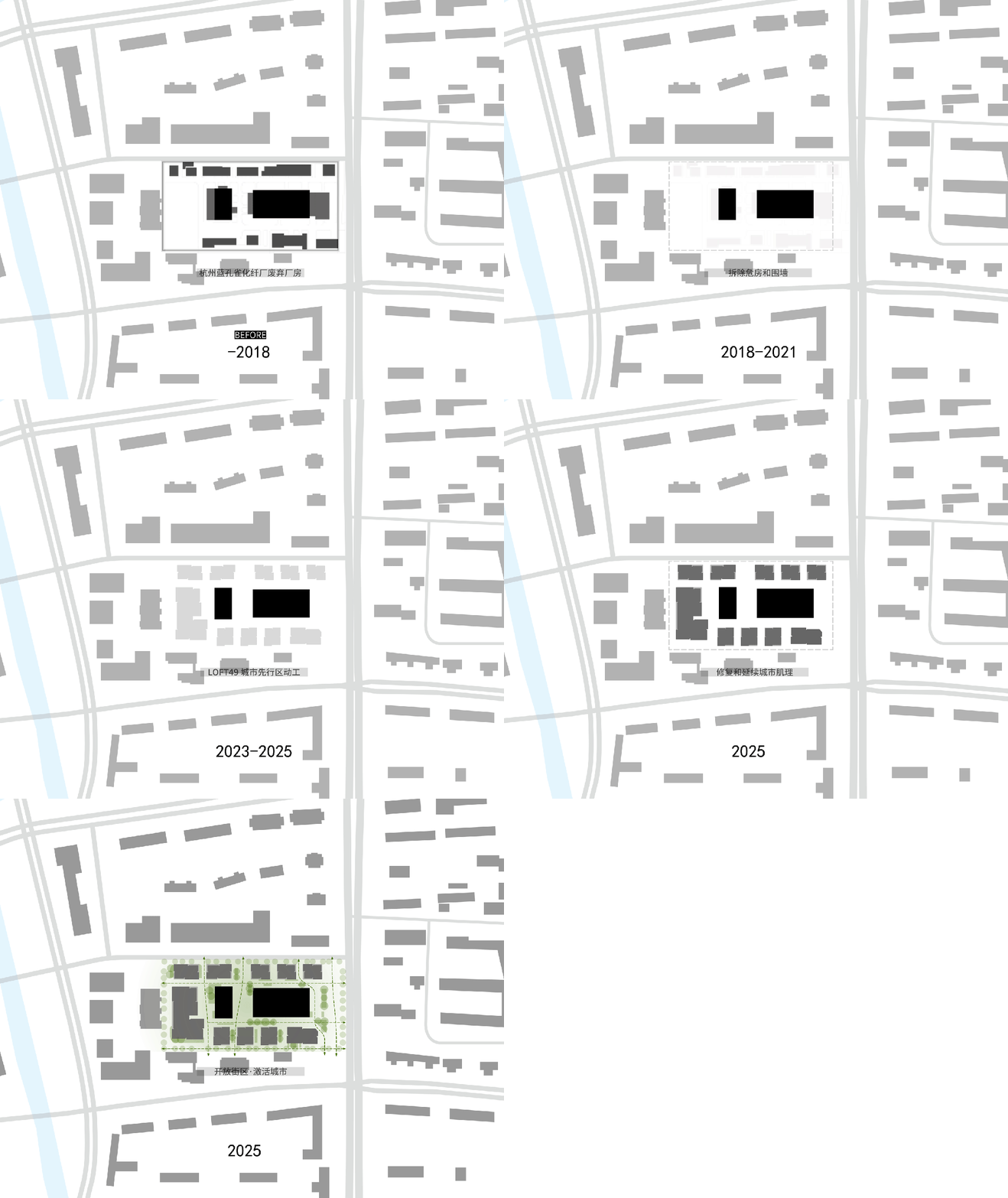
△ Fabric transformation analysis
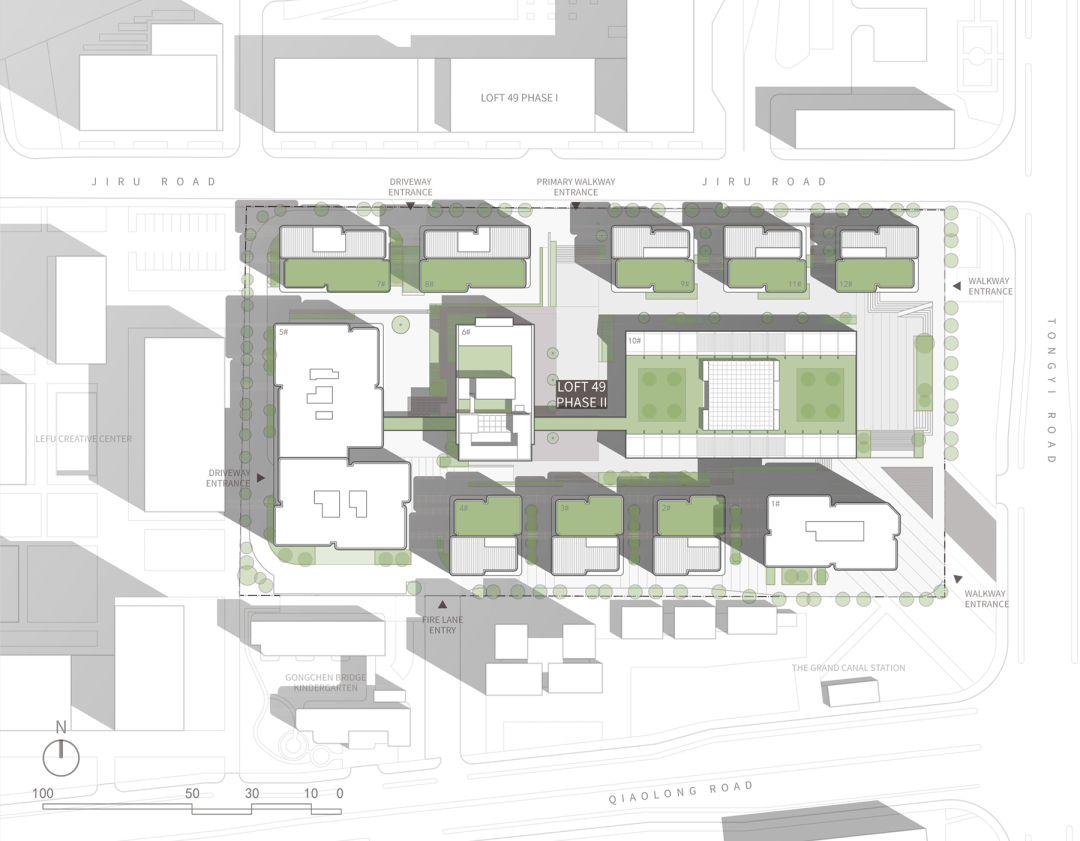
△ Master plan
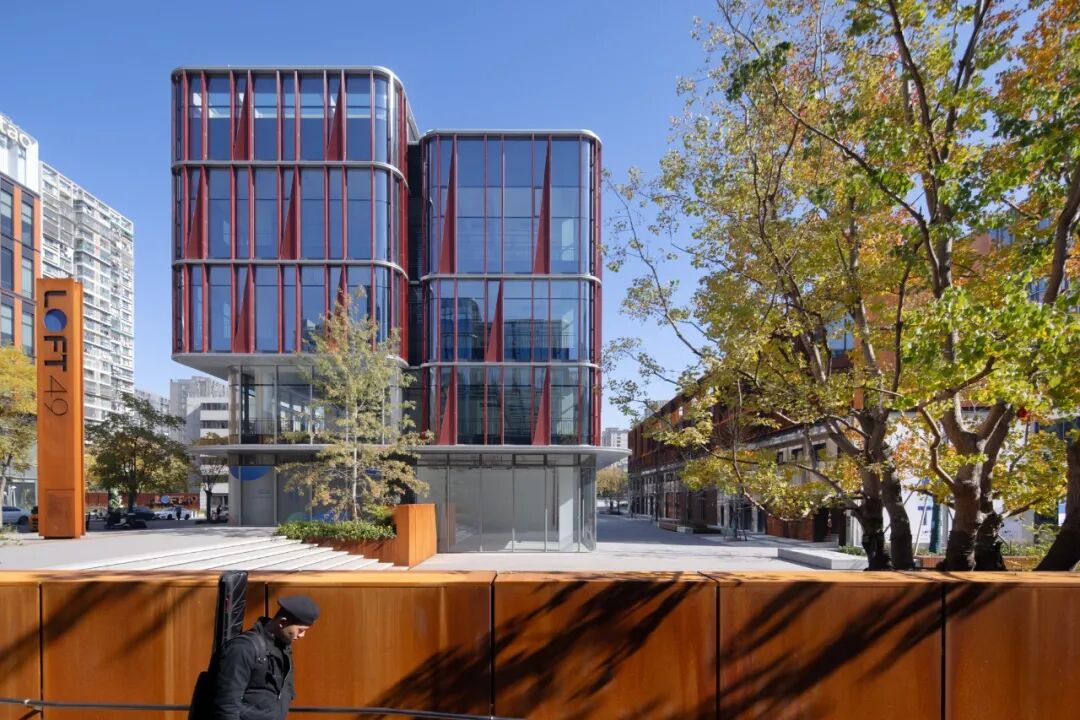
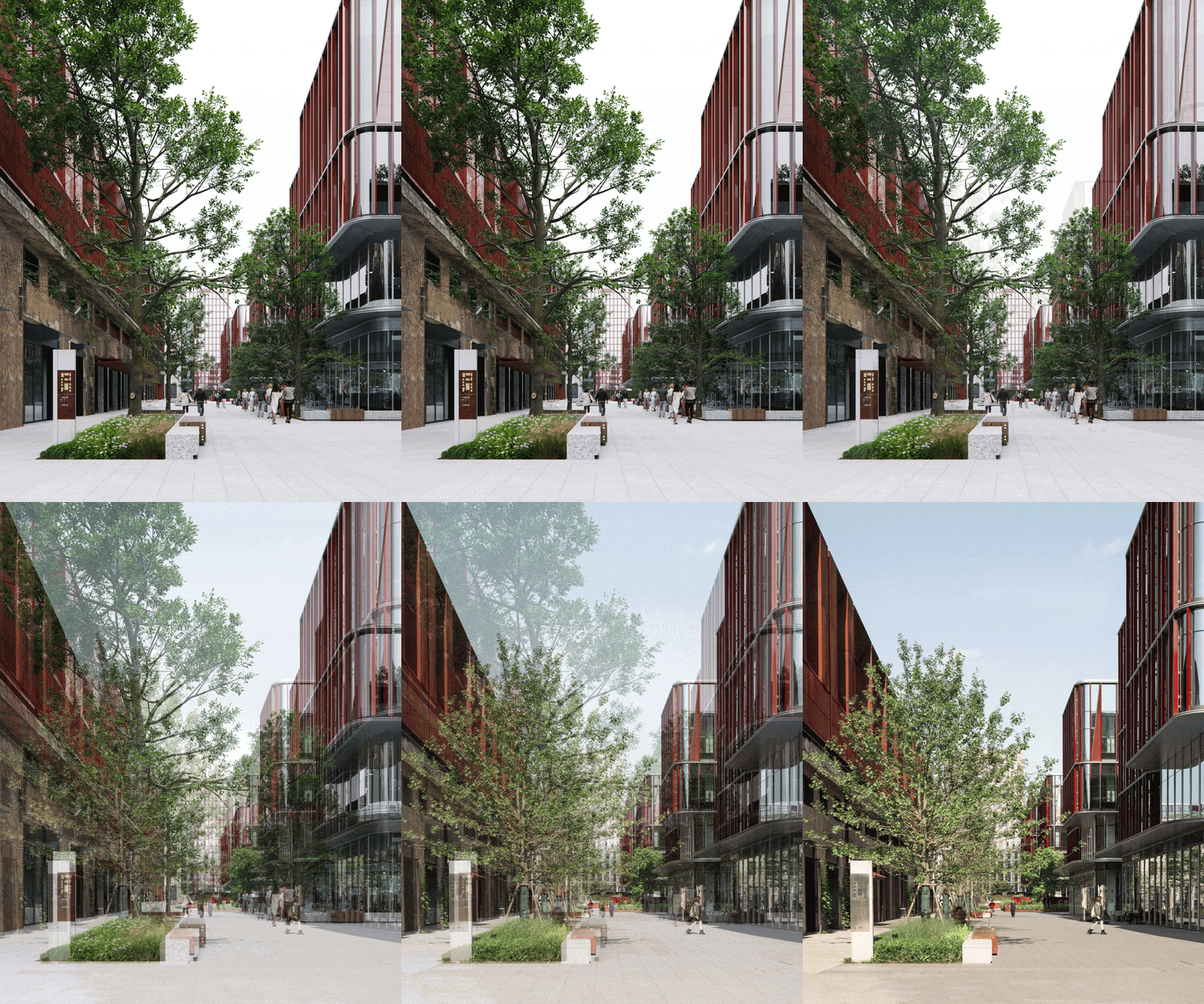
△ From design rendering to built reality
The conventional enclosed creative park can no longer satisfy the needs of contemporary urban groups. In response, the design introduces greater spatial flexibility and extensibility, accommodates mixed programs of different scales, and embeds an open-block structure together with new L-W-P elements — living, working, and playing — into the existing industrial park framework.
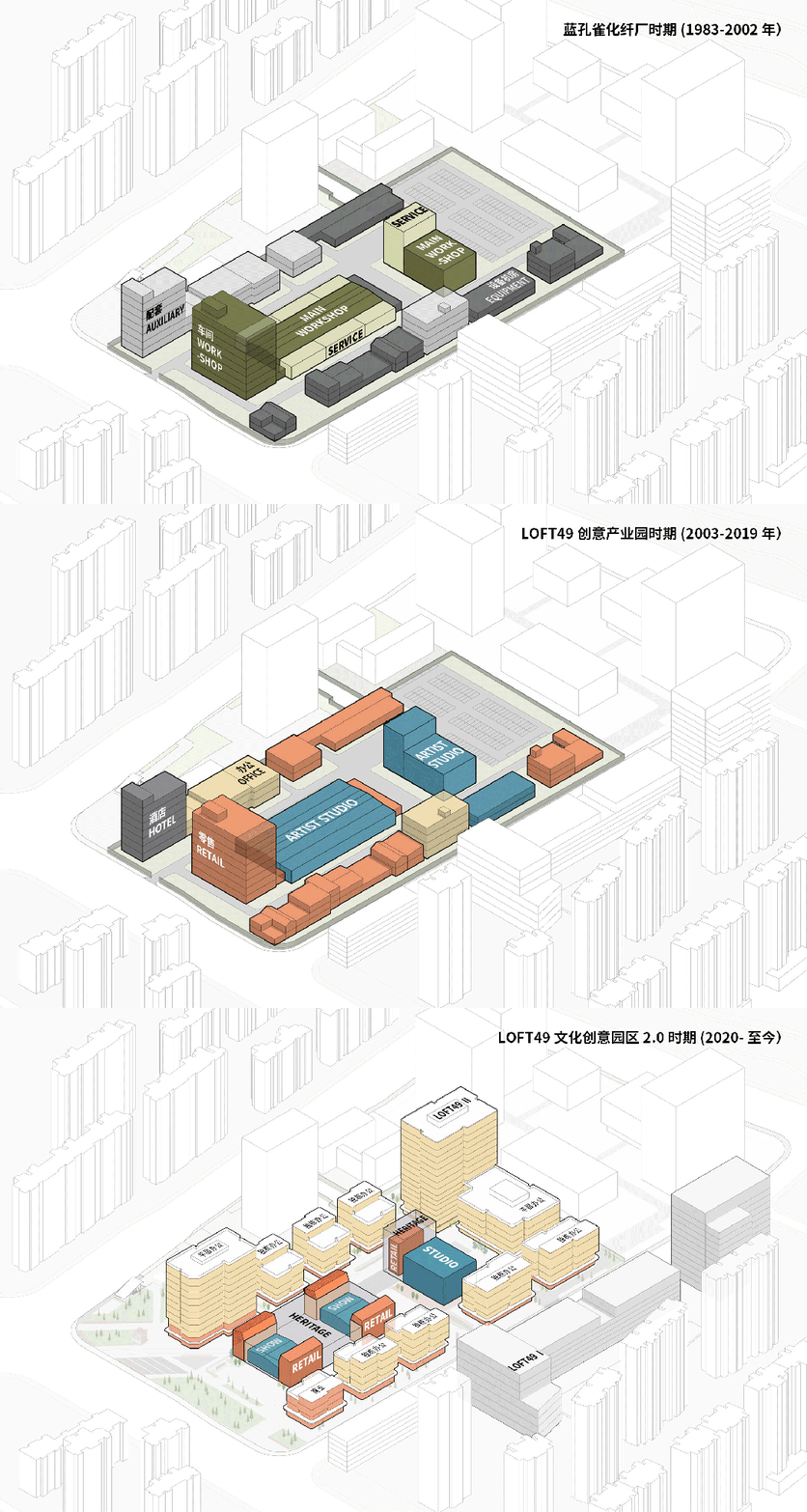
△ Programmatic replacement
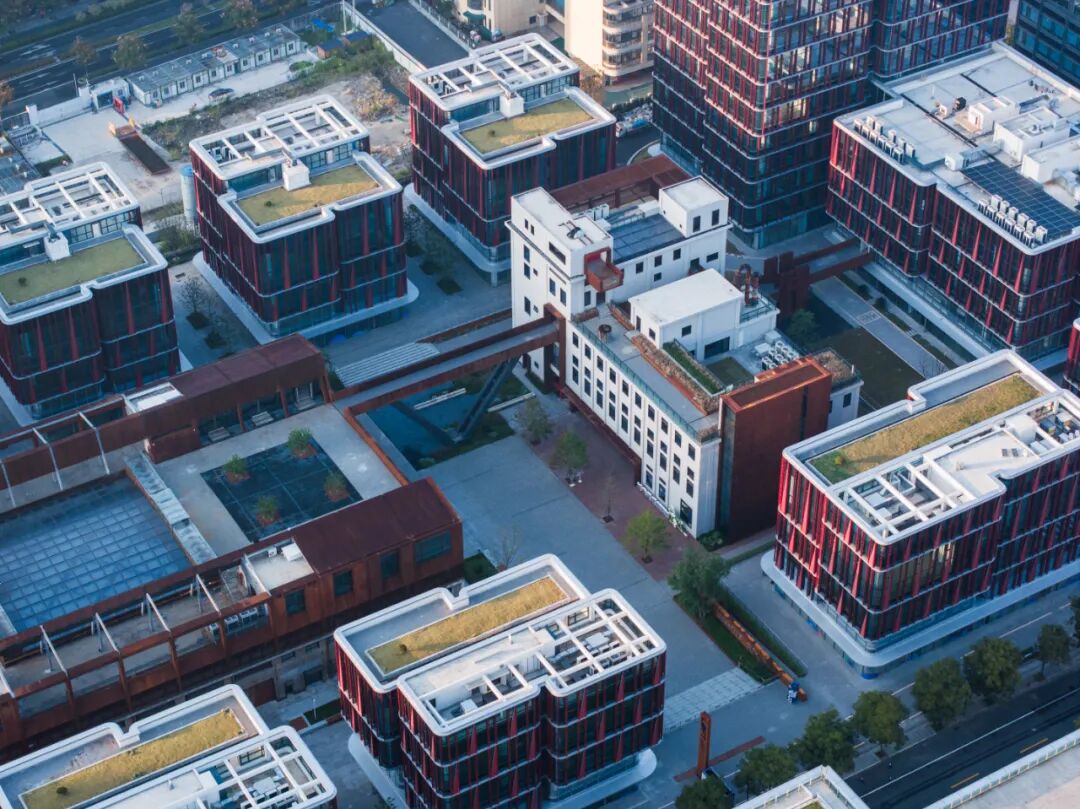
Through the spatial strategies of “mode empowerment” and “type empowerment,” the architects attempt to realize a paradigmatic migration at LOFT49: from construction, to creation, and further toward co-creation through the participation of multiple actors.
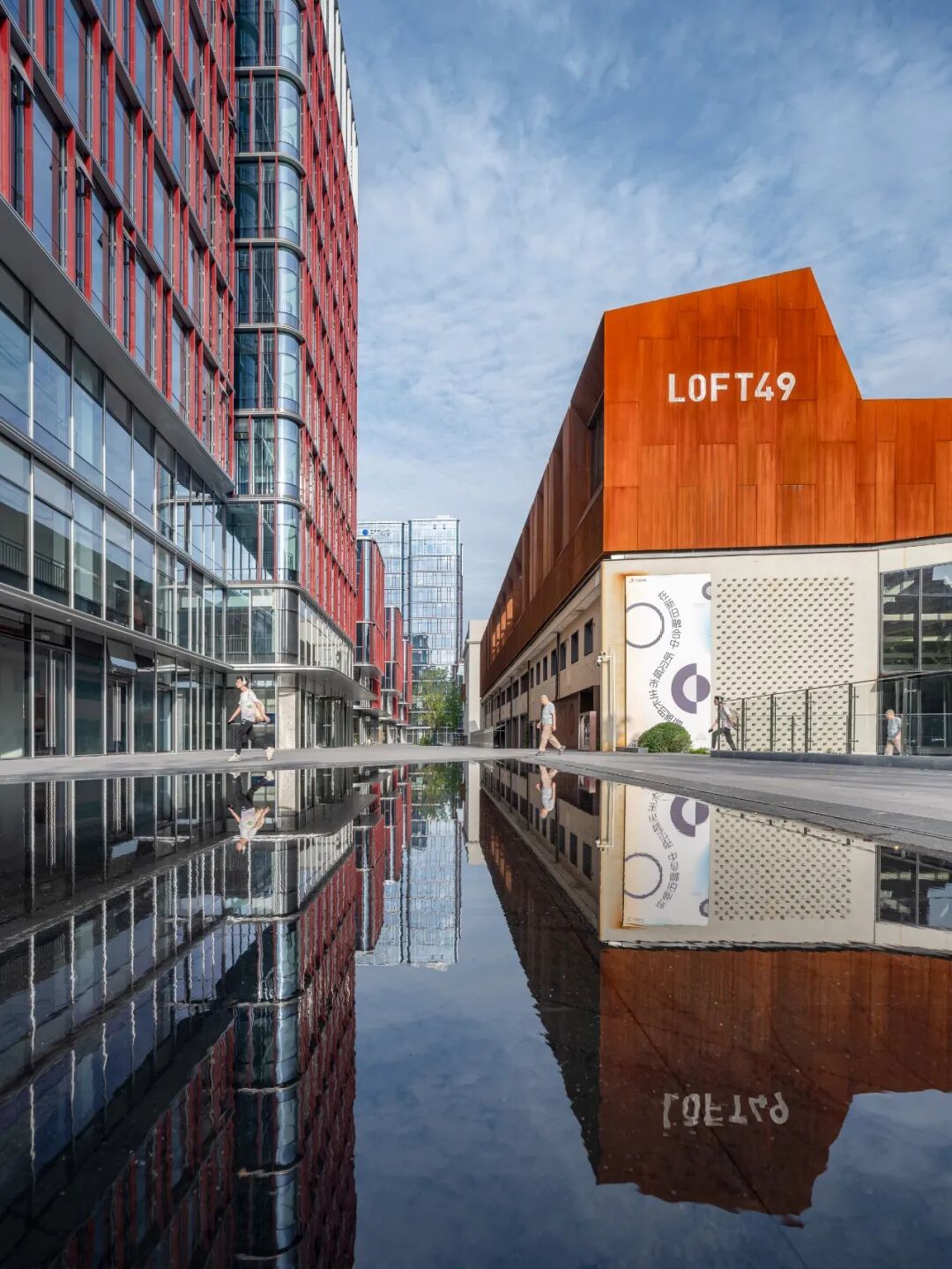
Jinshan originates from a care for things. Using traditional lacquer techniques to repair damaged objects, and outlining their fractures with gold, it gives them renewed functional and artistic value. Drawing from this craft, the architects reorganize the fractured and damaged spatial information of the park through a continuous and perceptible public open system, together with a clearly distinguishable material system.
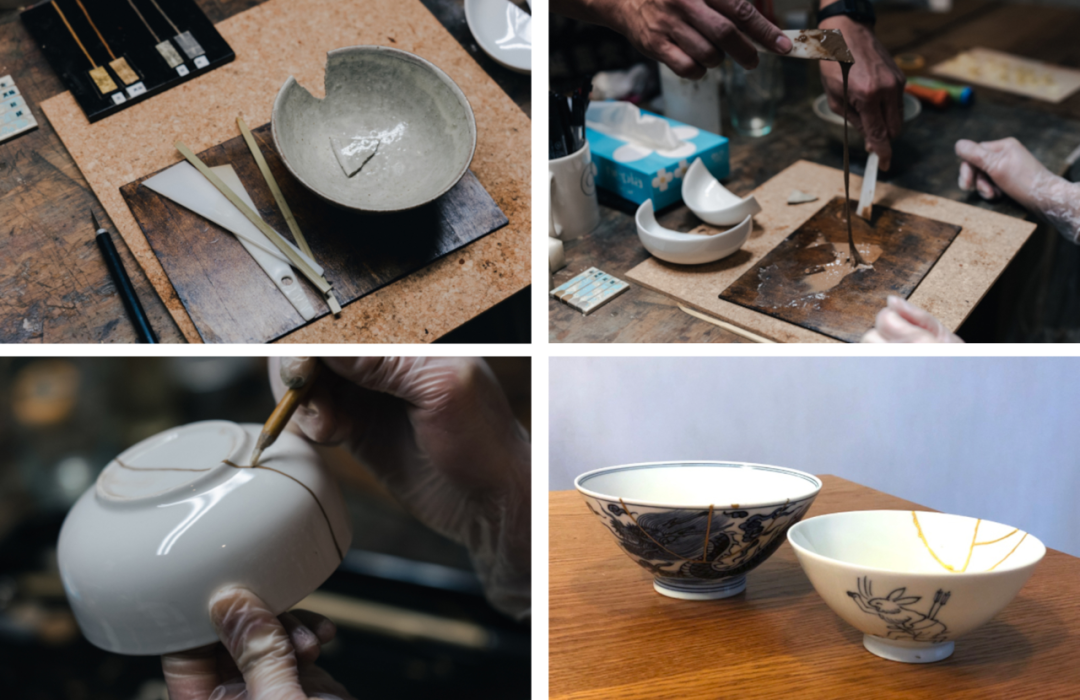
△ Jinshan repair technique
Building 10 was built in 1987. It was one of the original factory’s core production buildings, a typical single-storey large-span factory with a steel bent-frame structure. Production equipment of industrial significance is still retained inside.
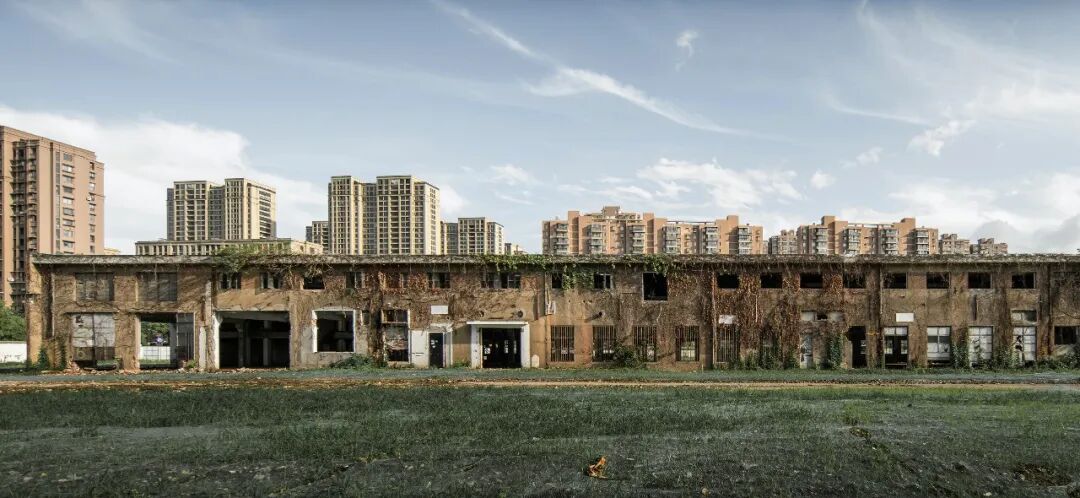
△ Building 10 before renovation
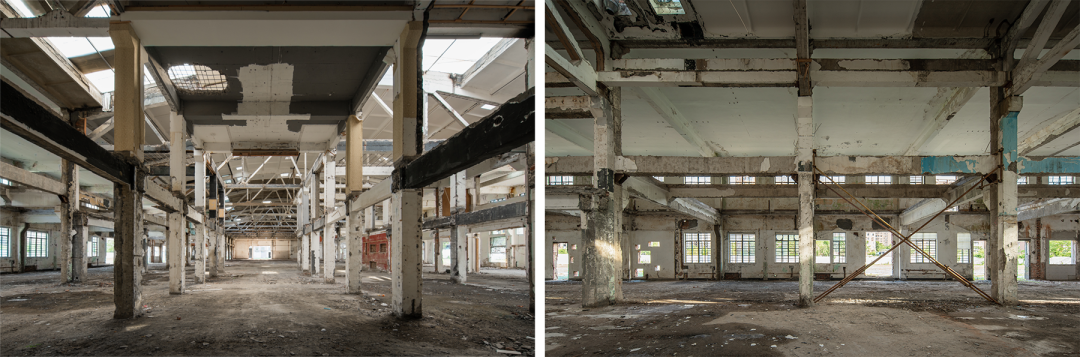
△ Interior space of Building 10 before renovation
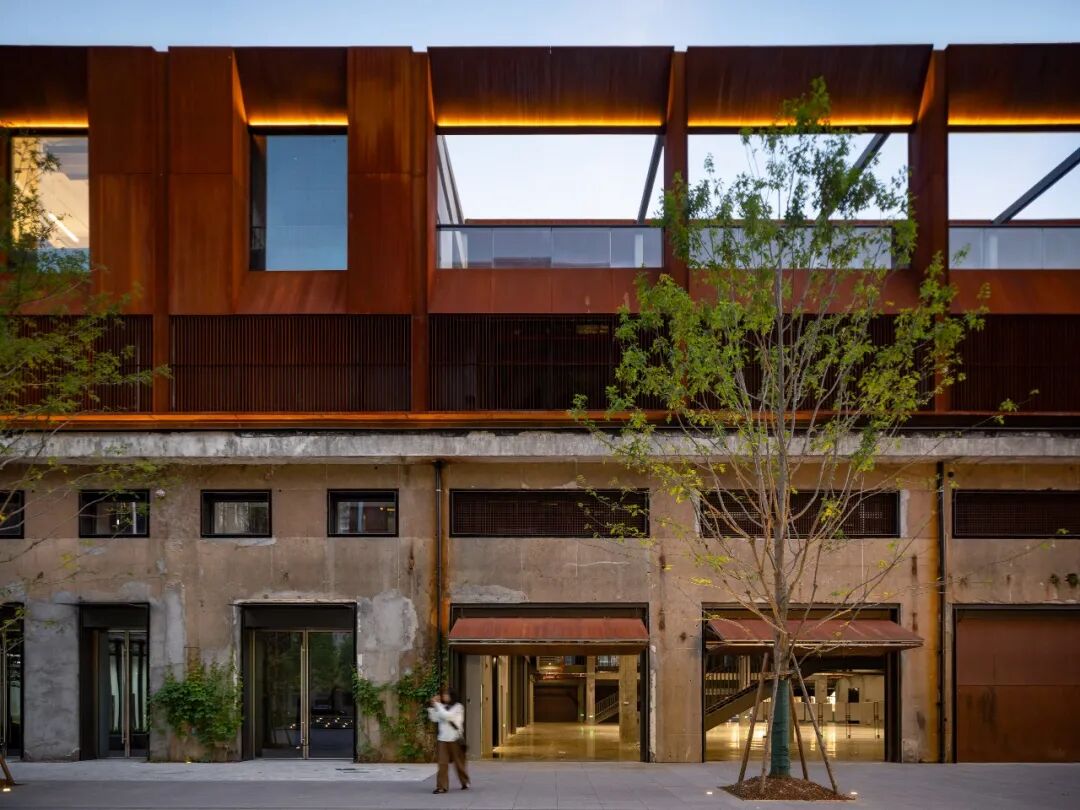
△ Building 10 after renovation
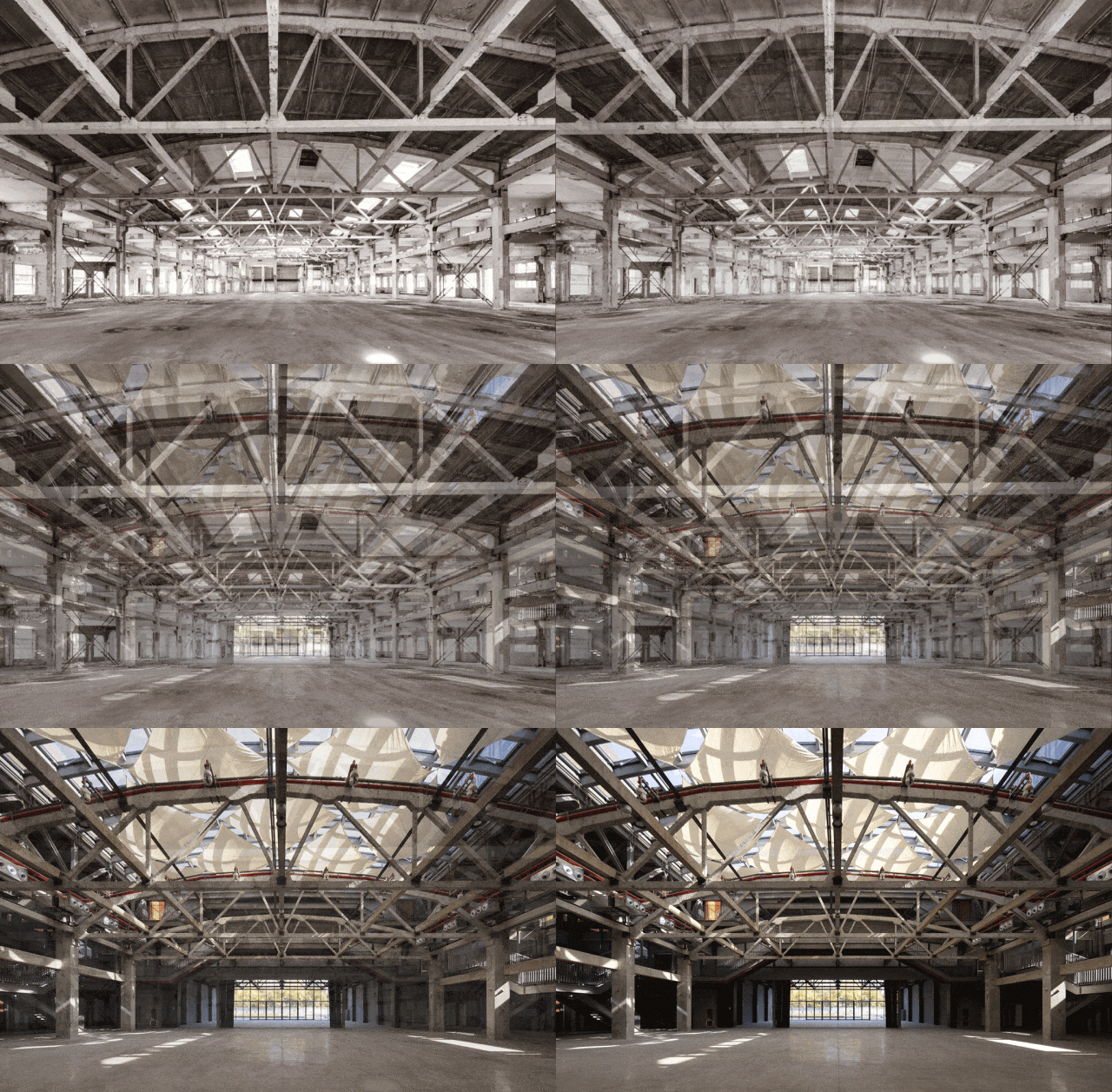
△ Interior space of Building 10 before and after renovation
Building 6 was built in 1990 as an acrylic sock production workshop. Its spatial scale is relatively compact, and part of its production equipment has also been retained.
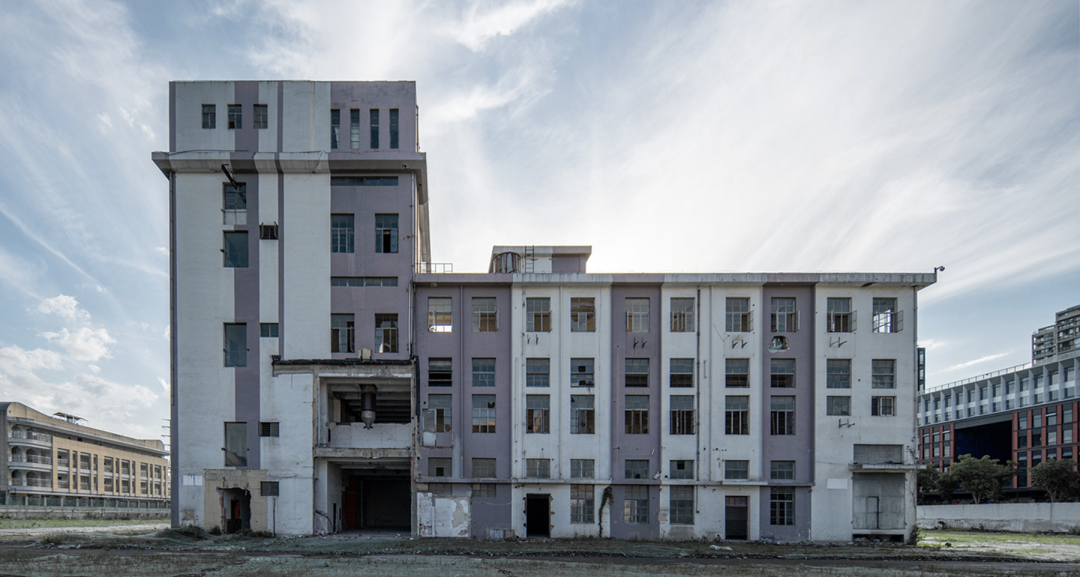
△ Building 6 before renovation
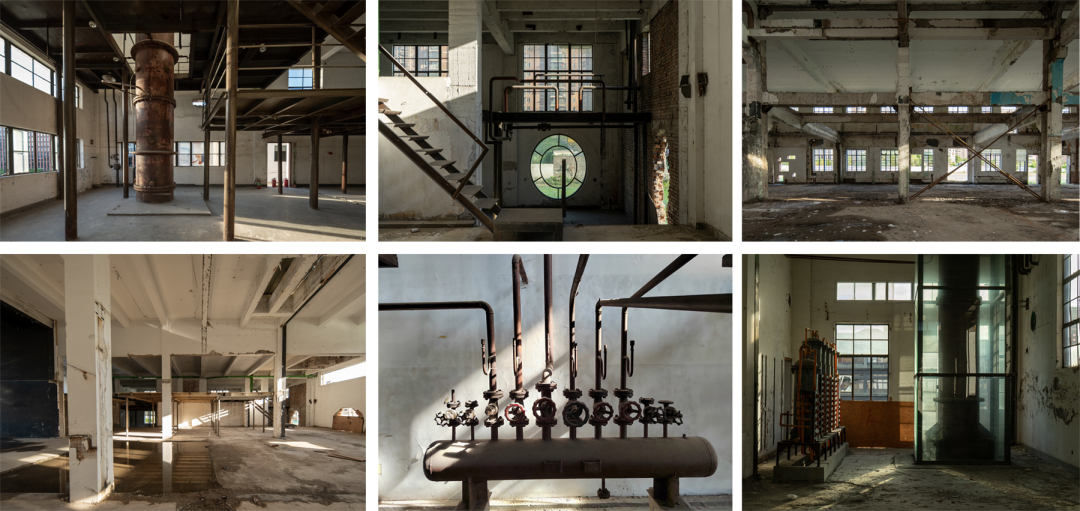
△ A large amount of production facilities and equipment retained inside the factory building
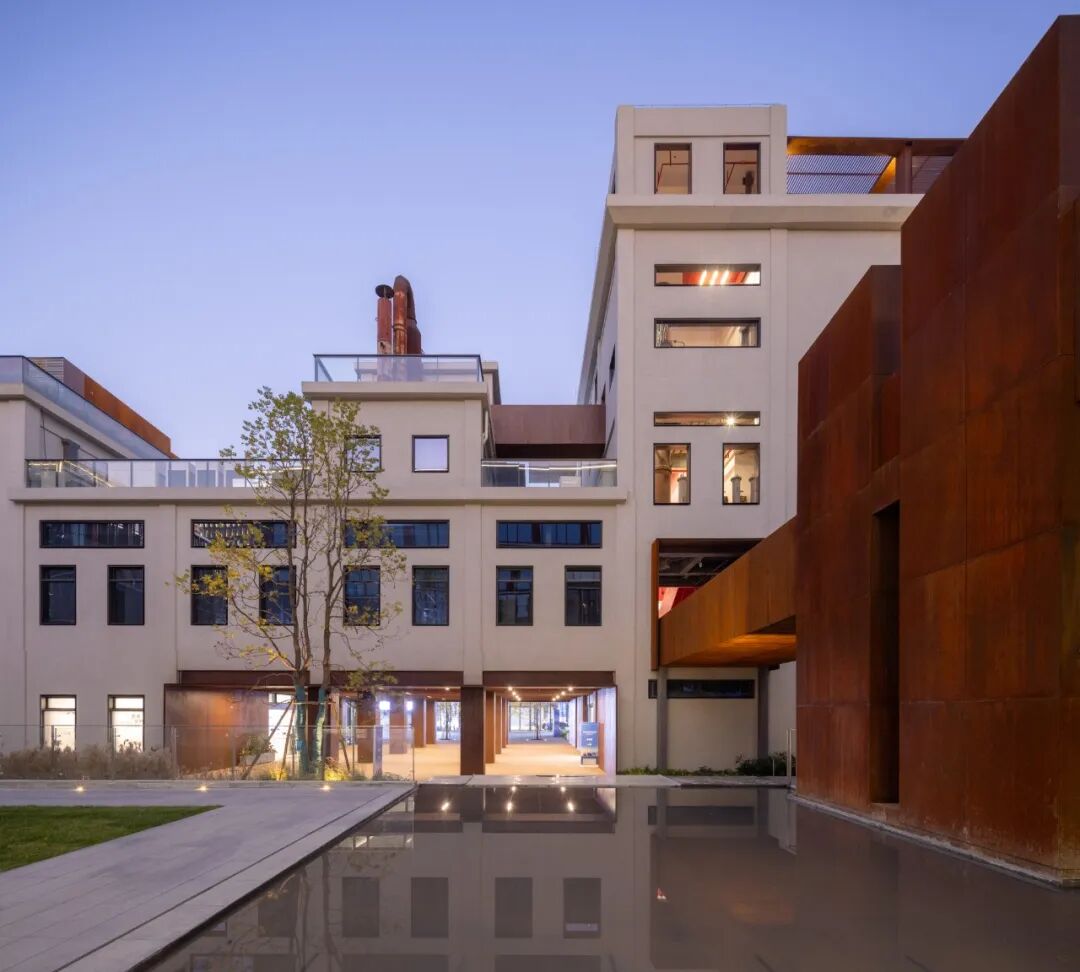
△ Building 6 after renovation
In implementation, the architects first carried out Jinshan at the spatial level. Three plazas were inserted into the park to form public nodes for pause and encounter, and these nodes were connected through a new circulation system.
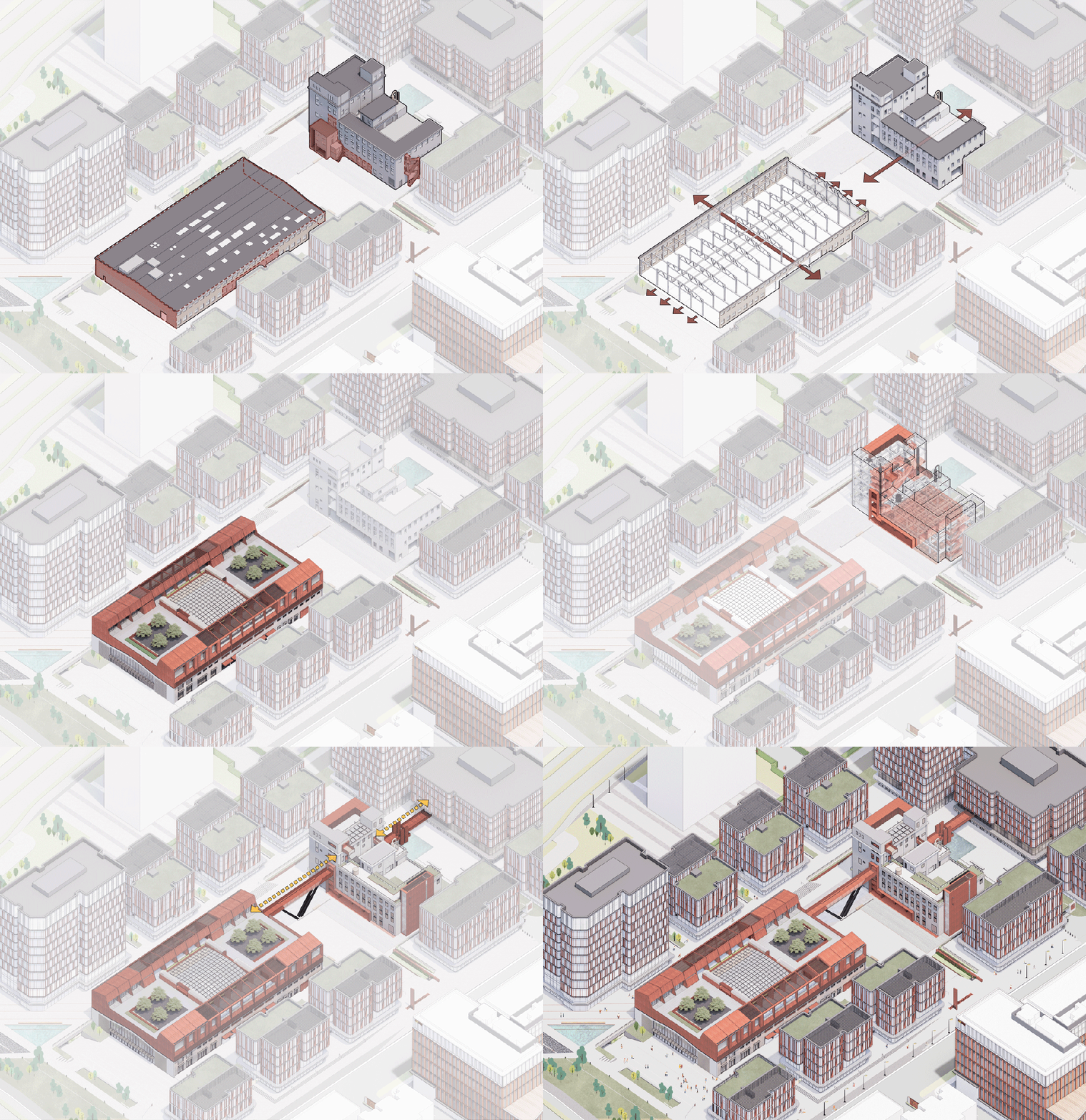
△ Formal generation analysis of the renovation of Buildings 6 and 10
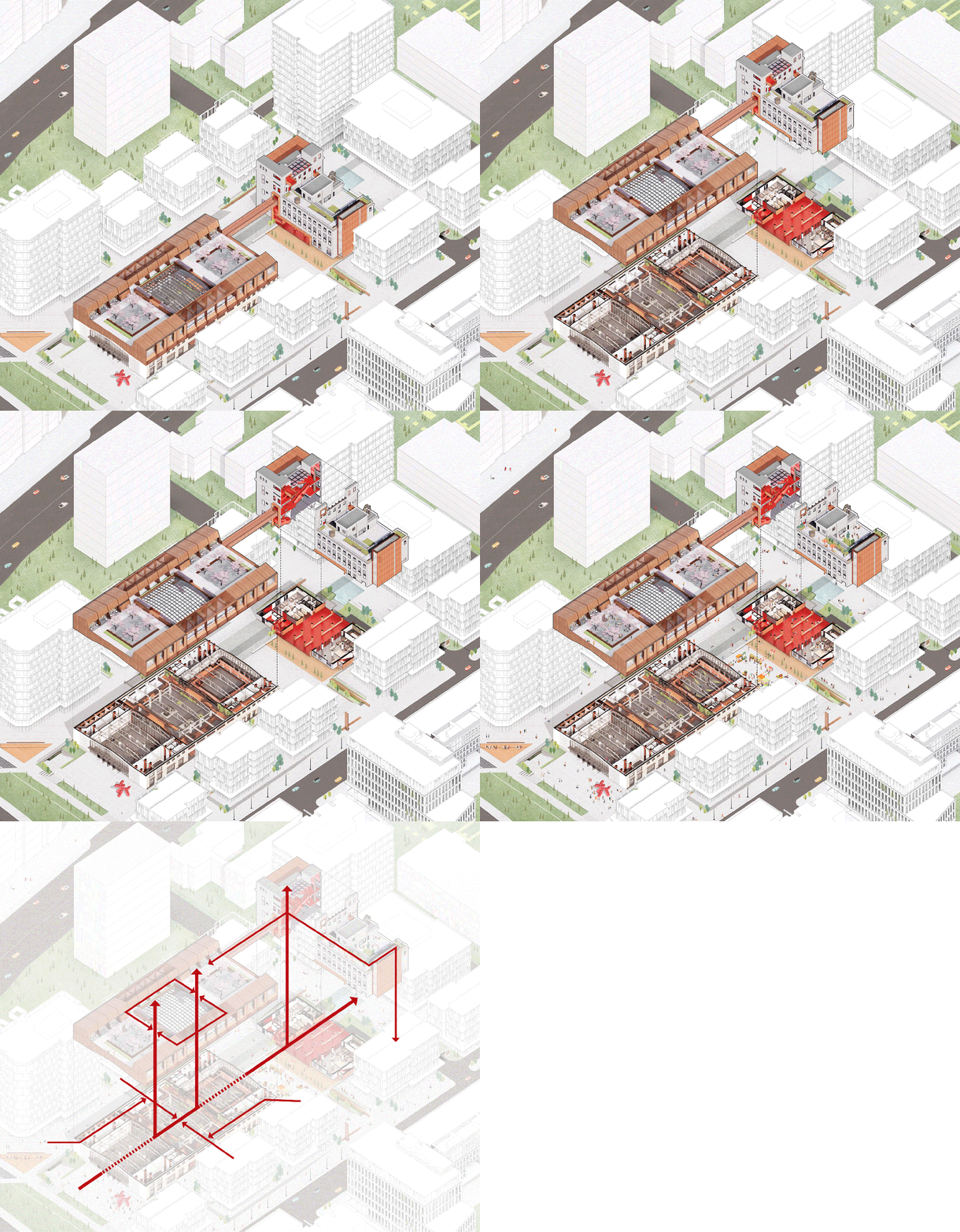
△ Exploded axonometric diagram
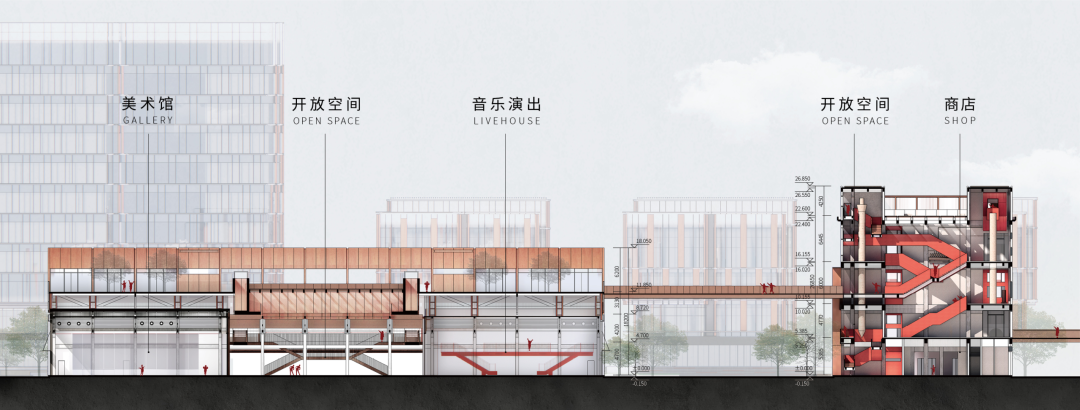
△ Section — spatial relationship
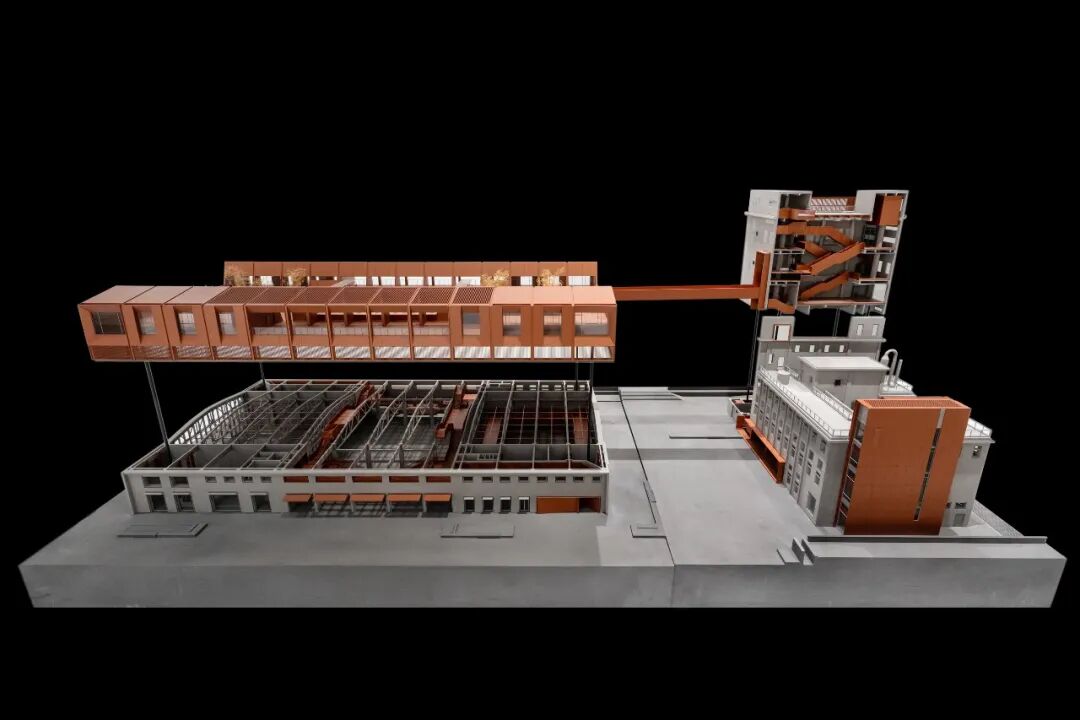
△ Model photograph
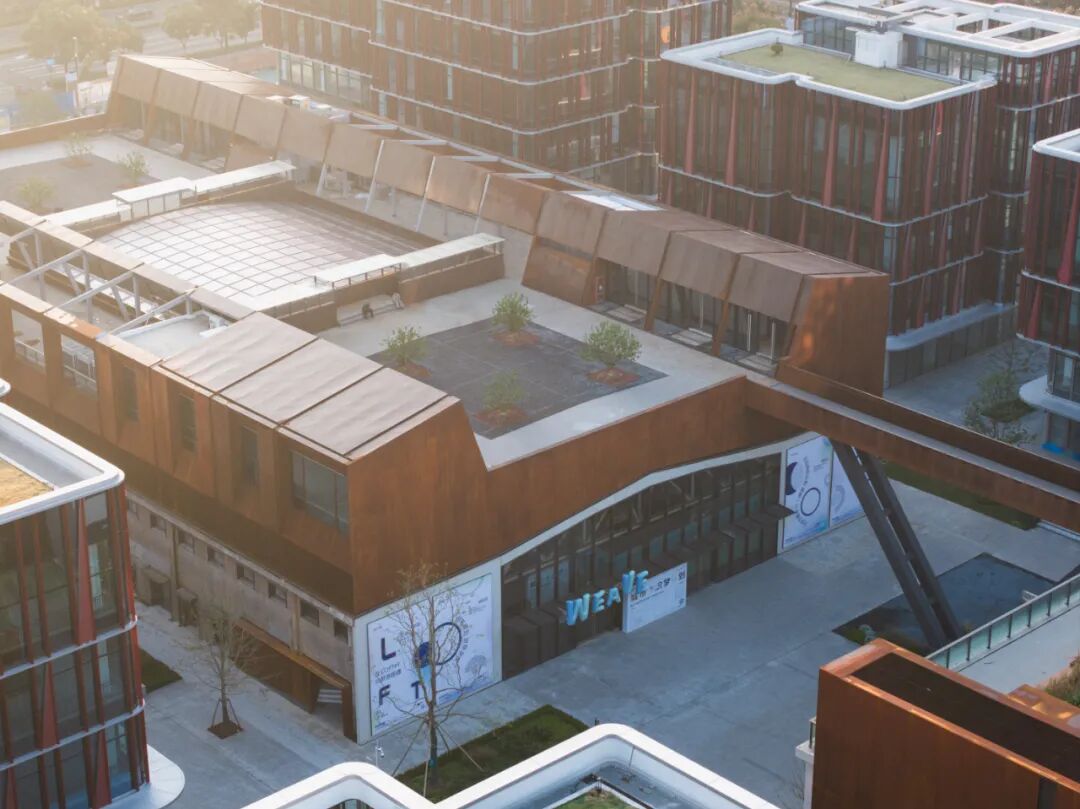
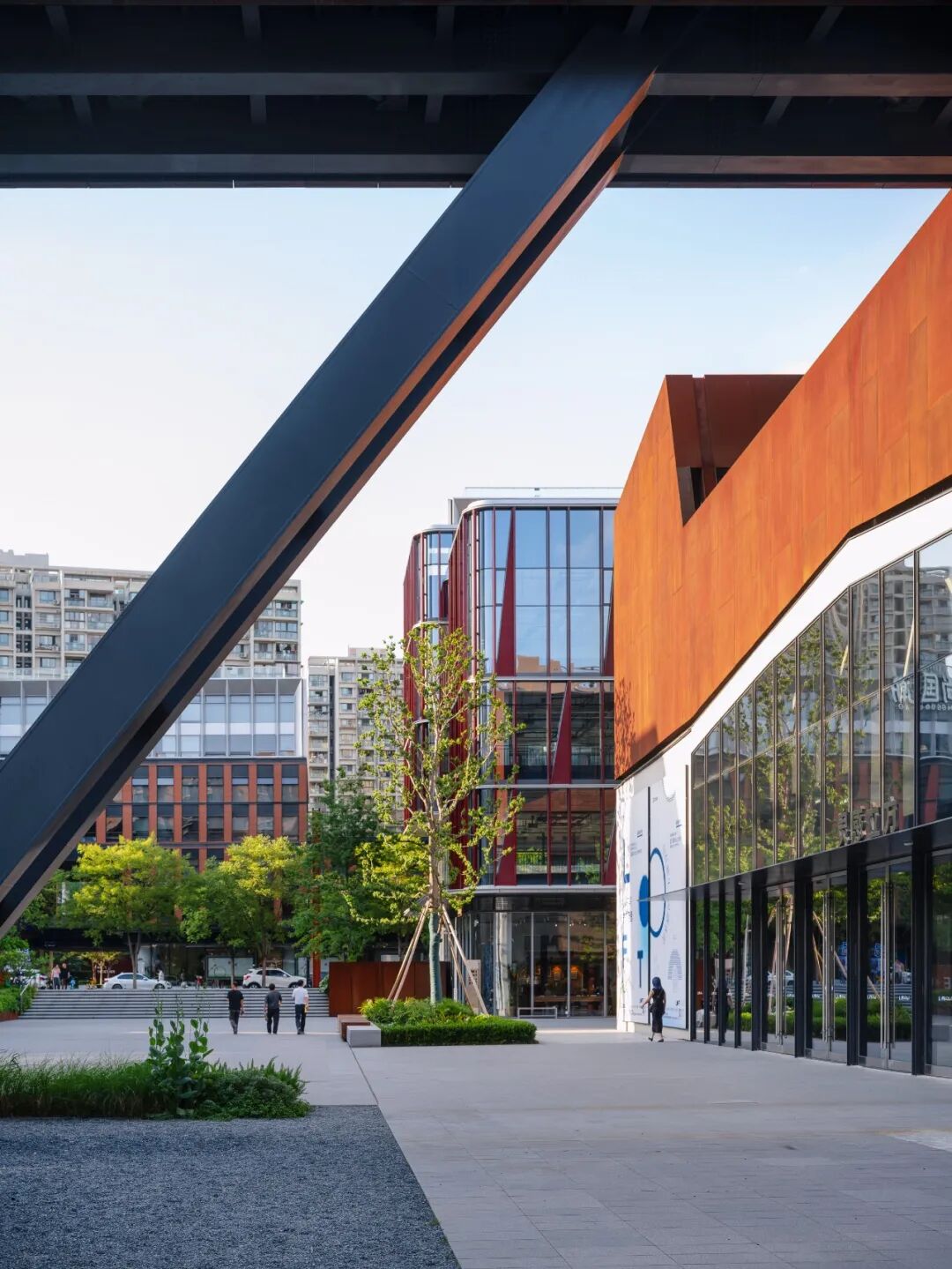
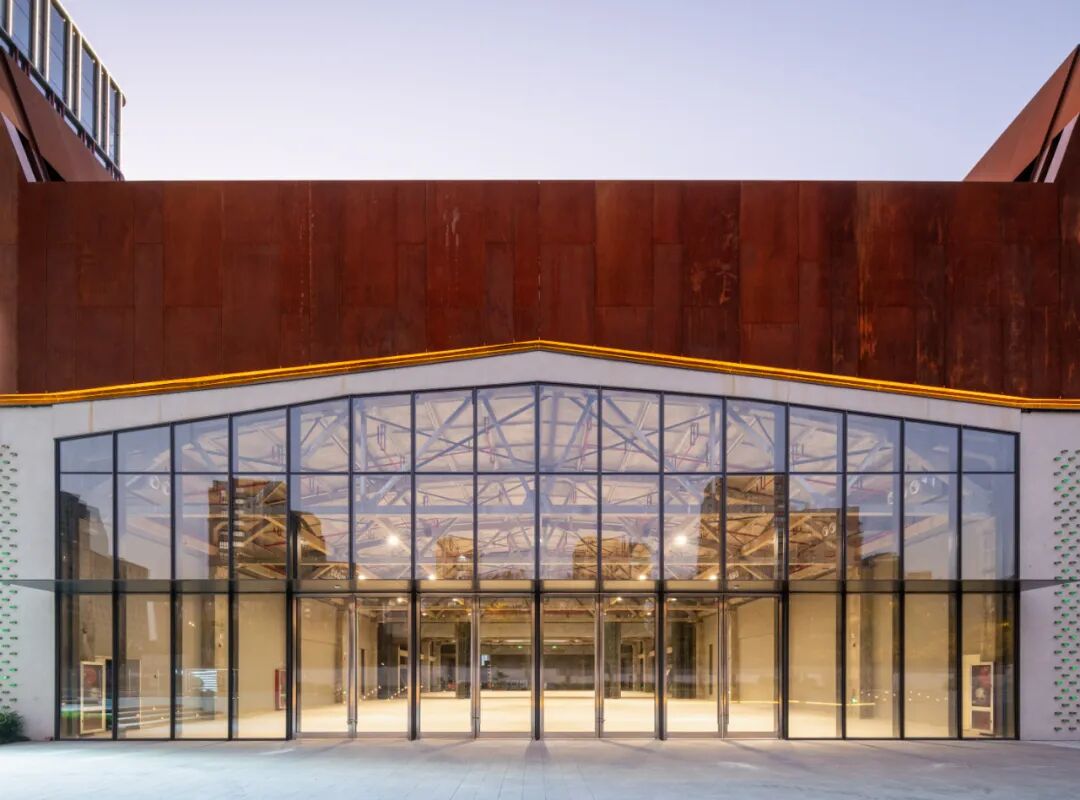
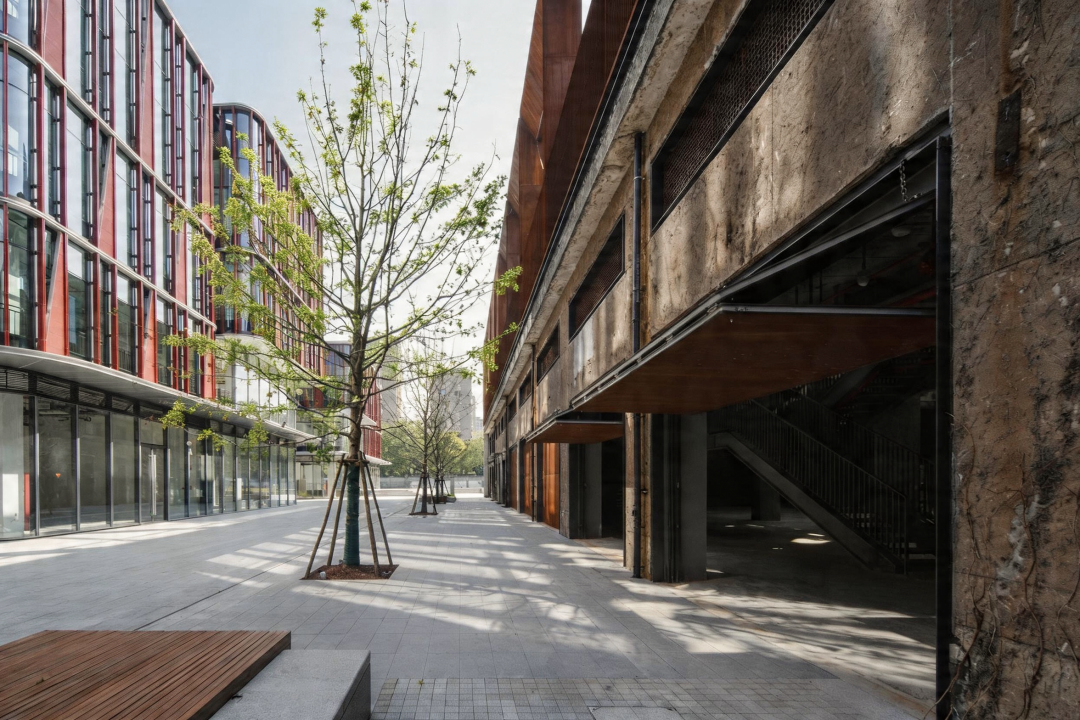
For the single-storey large-span factory building, Building 10, the east-west façades that had originally functioned as internal partition walls were opened up, forming a transparent interface toward the city and reinforcing the spatial connection with the East Plaza and Central Plaza. On both the north and south façades, three structural bays were opened up and enlarged. Combined with the newly inserted shared atrium and foldable barn doors that can be opened at designated times, these interventions provide convenient public access through the building while creating flexible spaces for gathering and activity.
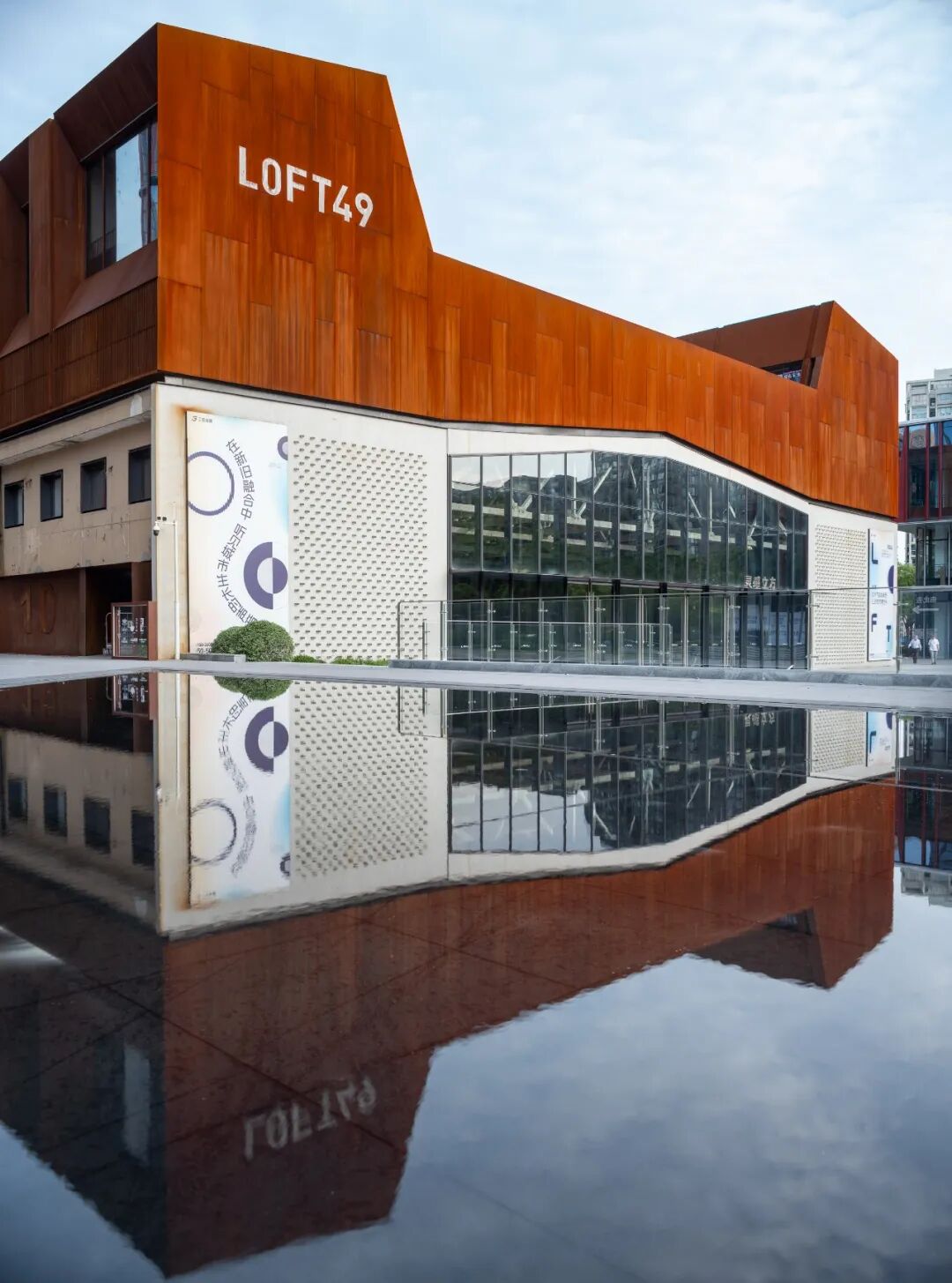
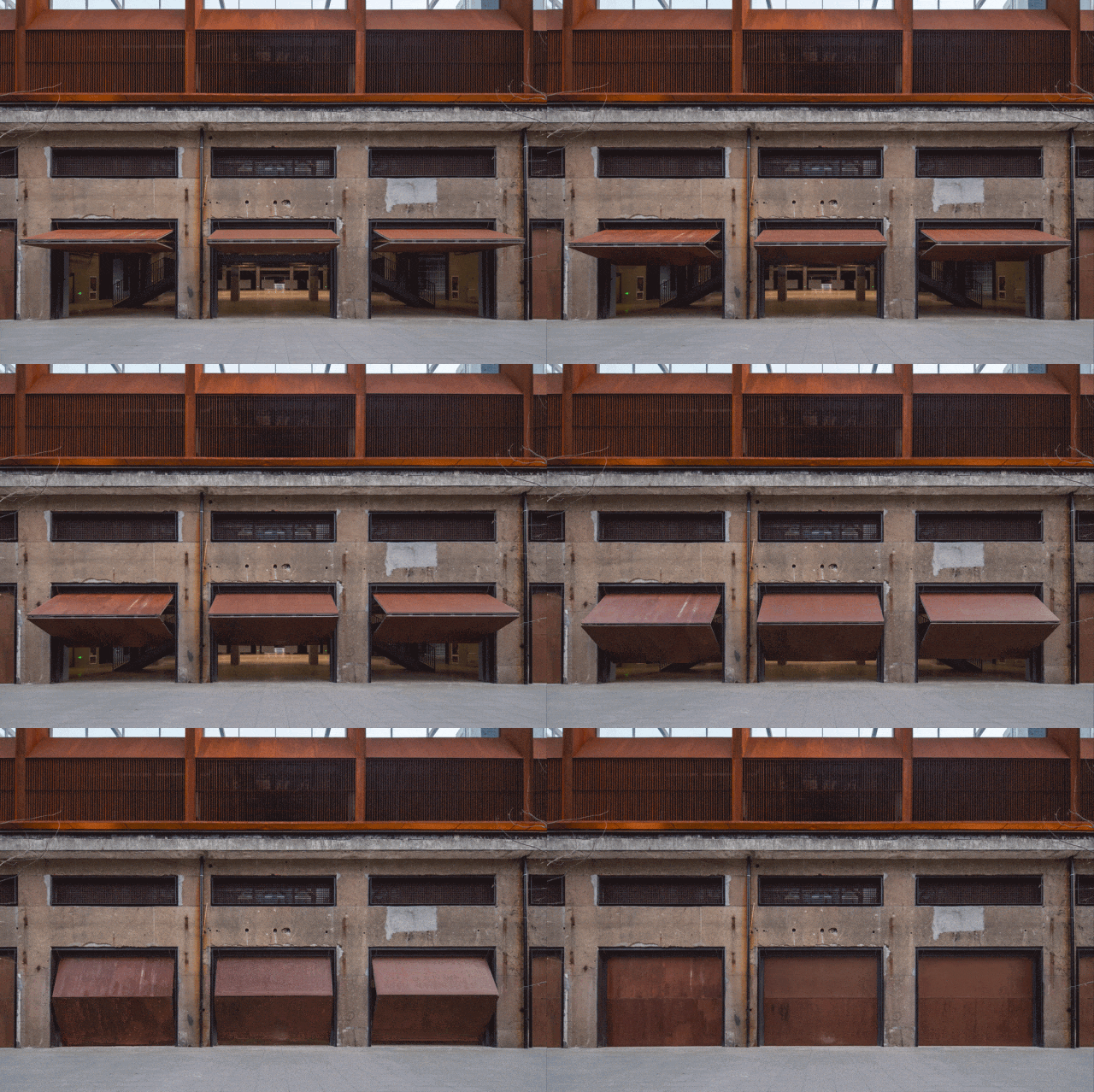
△ Opening process of the barn doors in Building 10
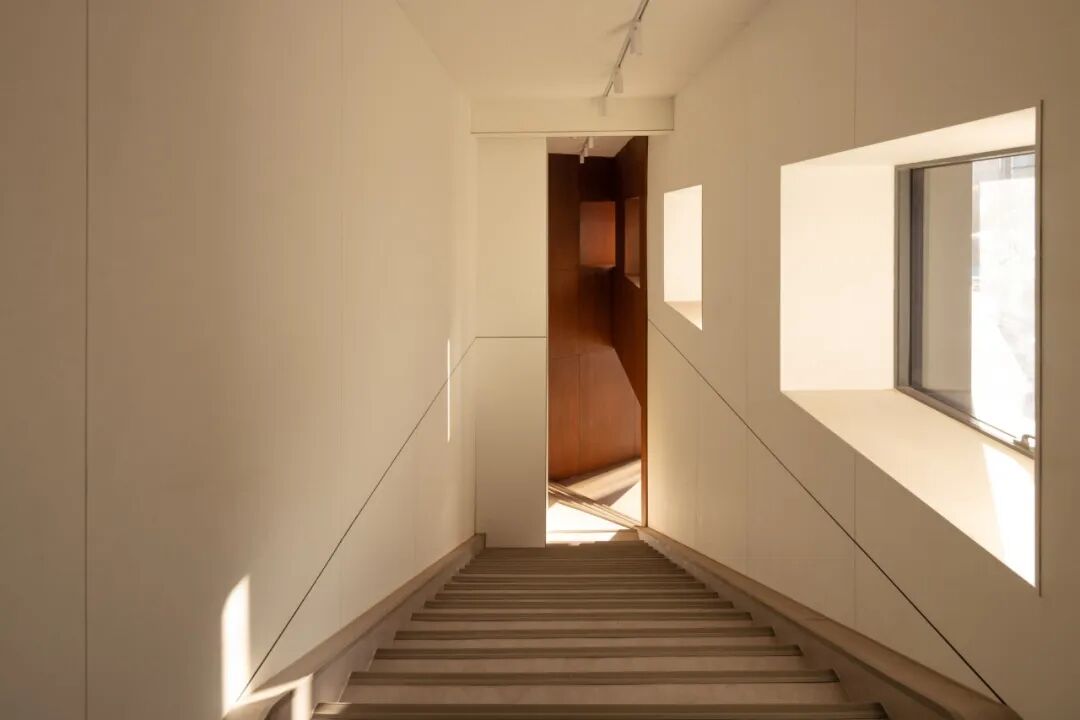
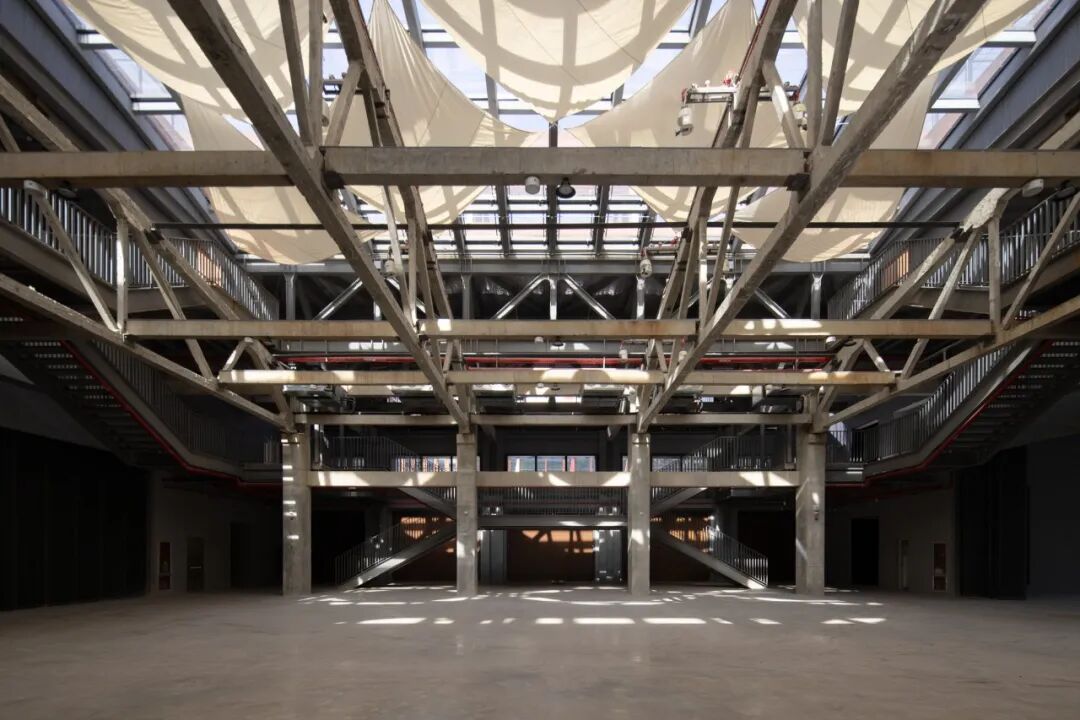
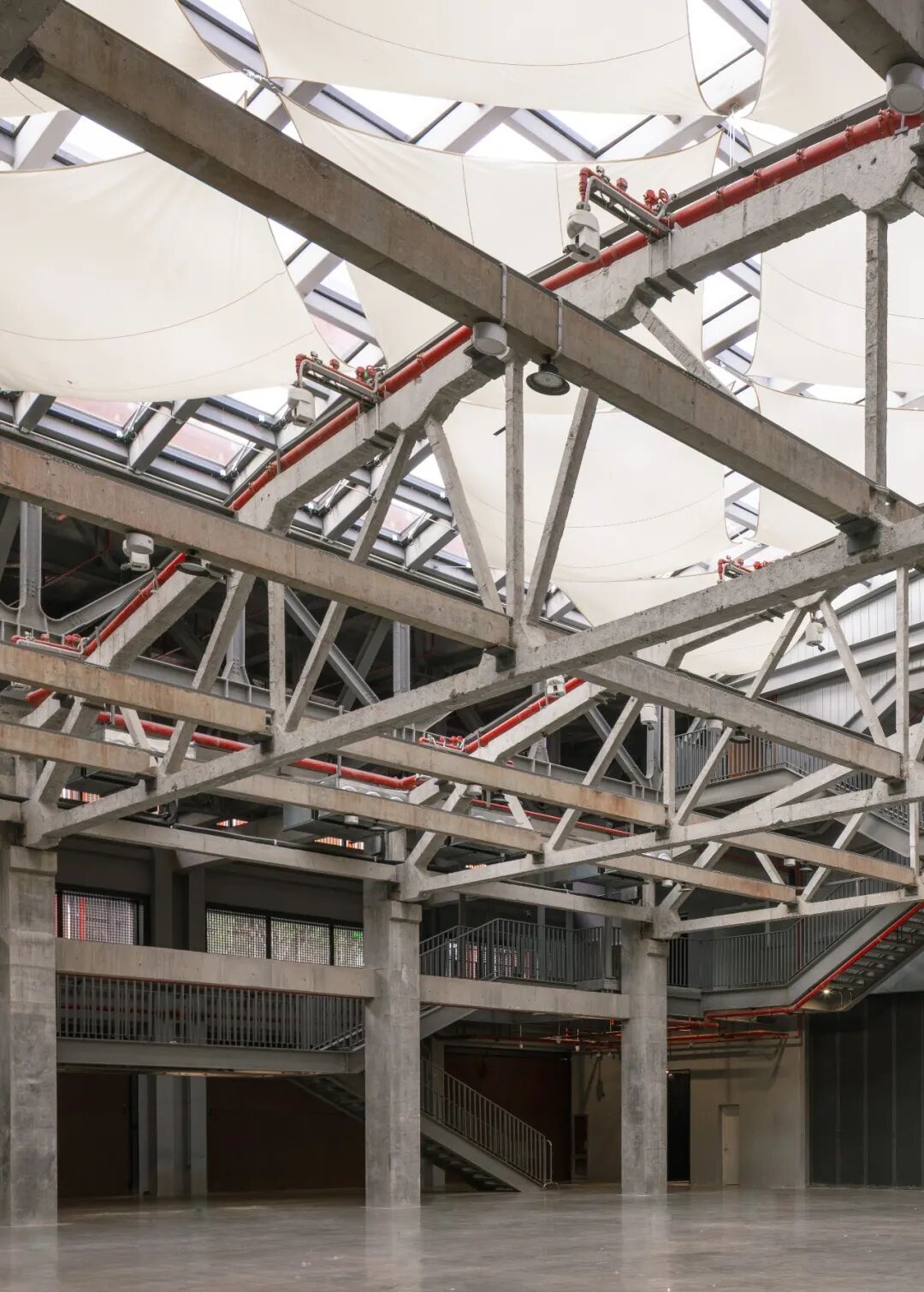
△ Shared atrium of Building 10
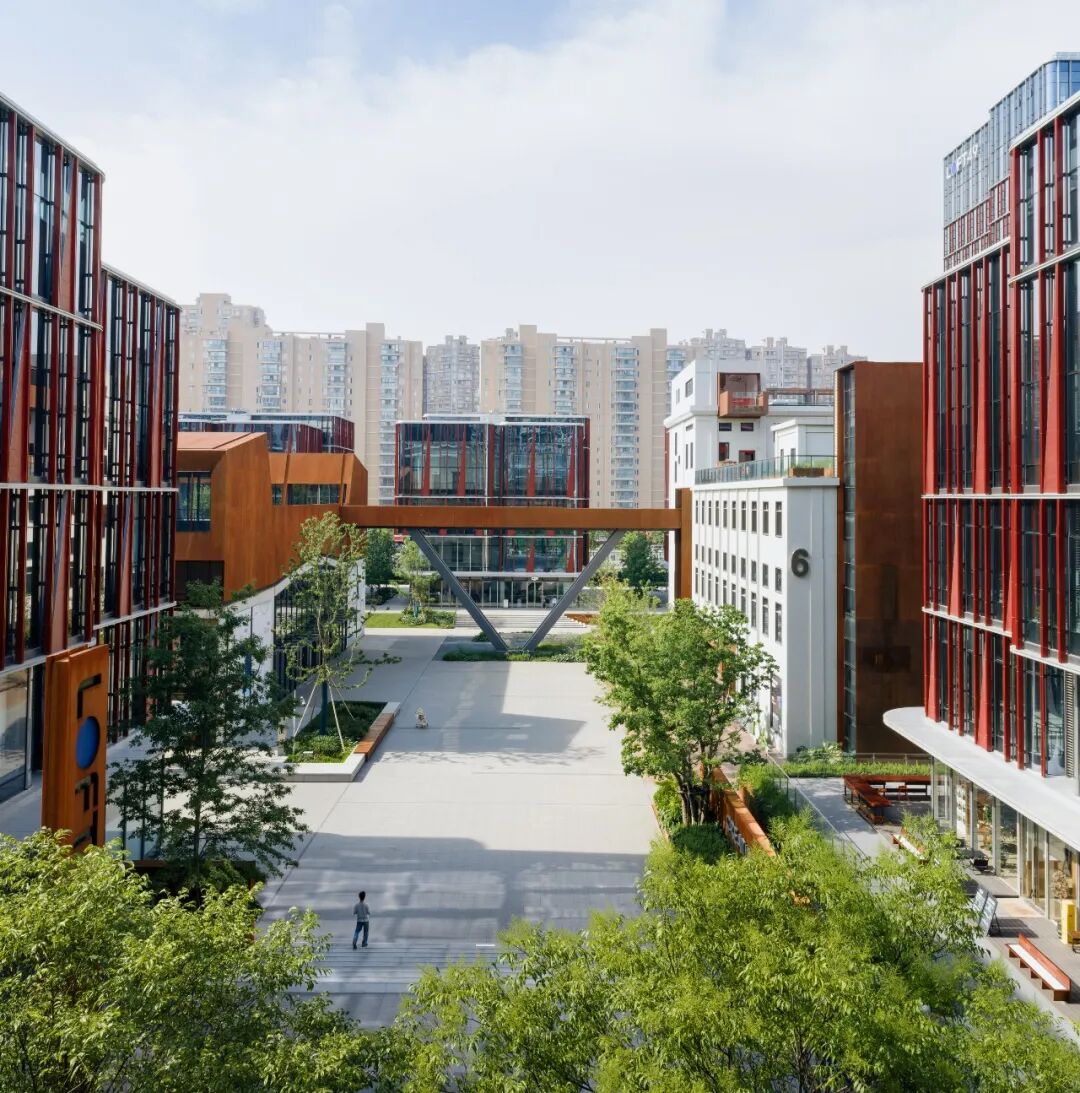
For the high-bay production workshop, Building 6, part of the ground floor was elevated and fully opened to the block, linking the Central Plaza with the West Plaza. On the second floor, a bridge connects the two retained buildings, forming a three-dimensional pedestrian system that runs through the core area of the park.
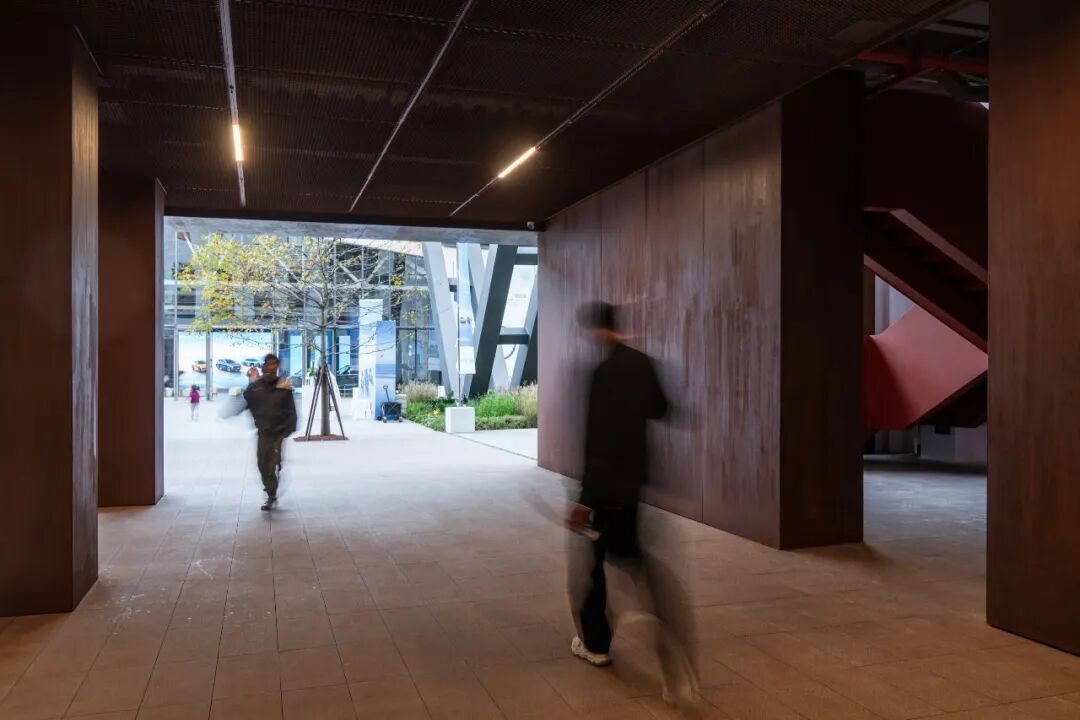
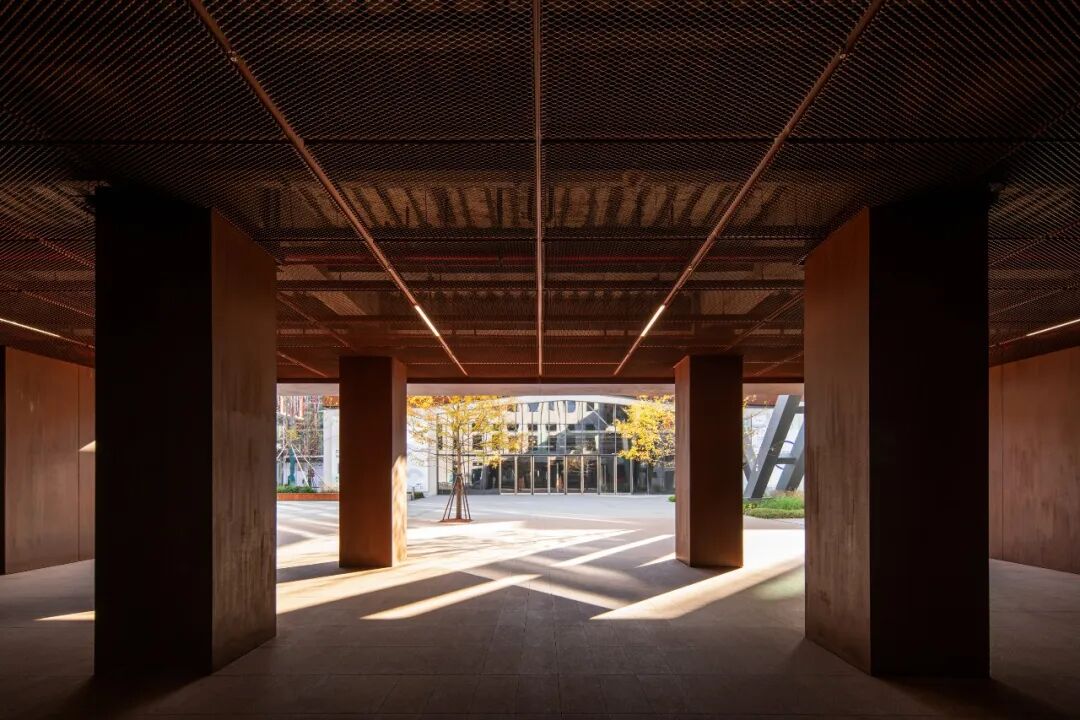
△ Open ground-floor space of Building 6
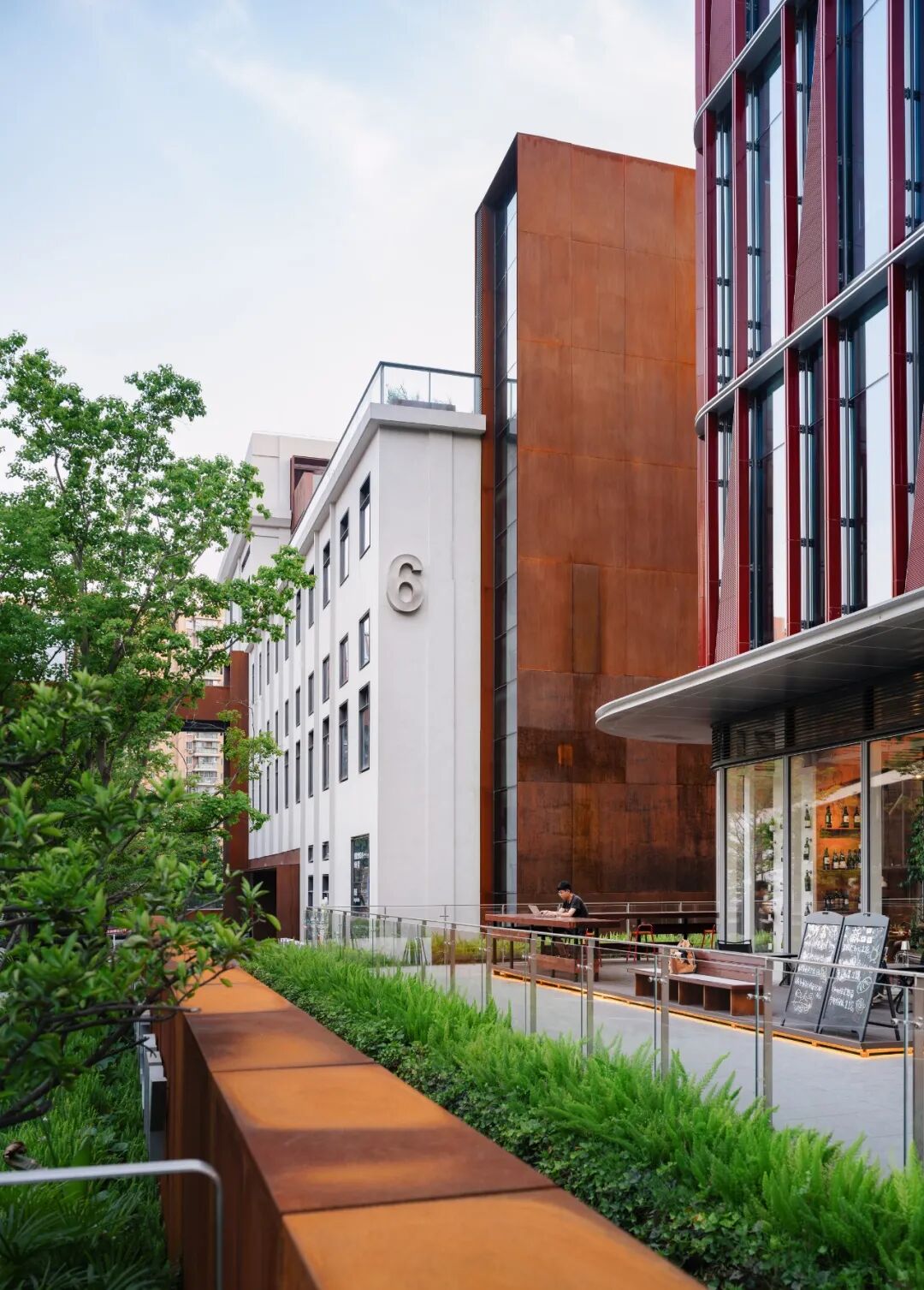
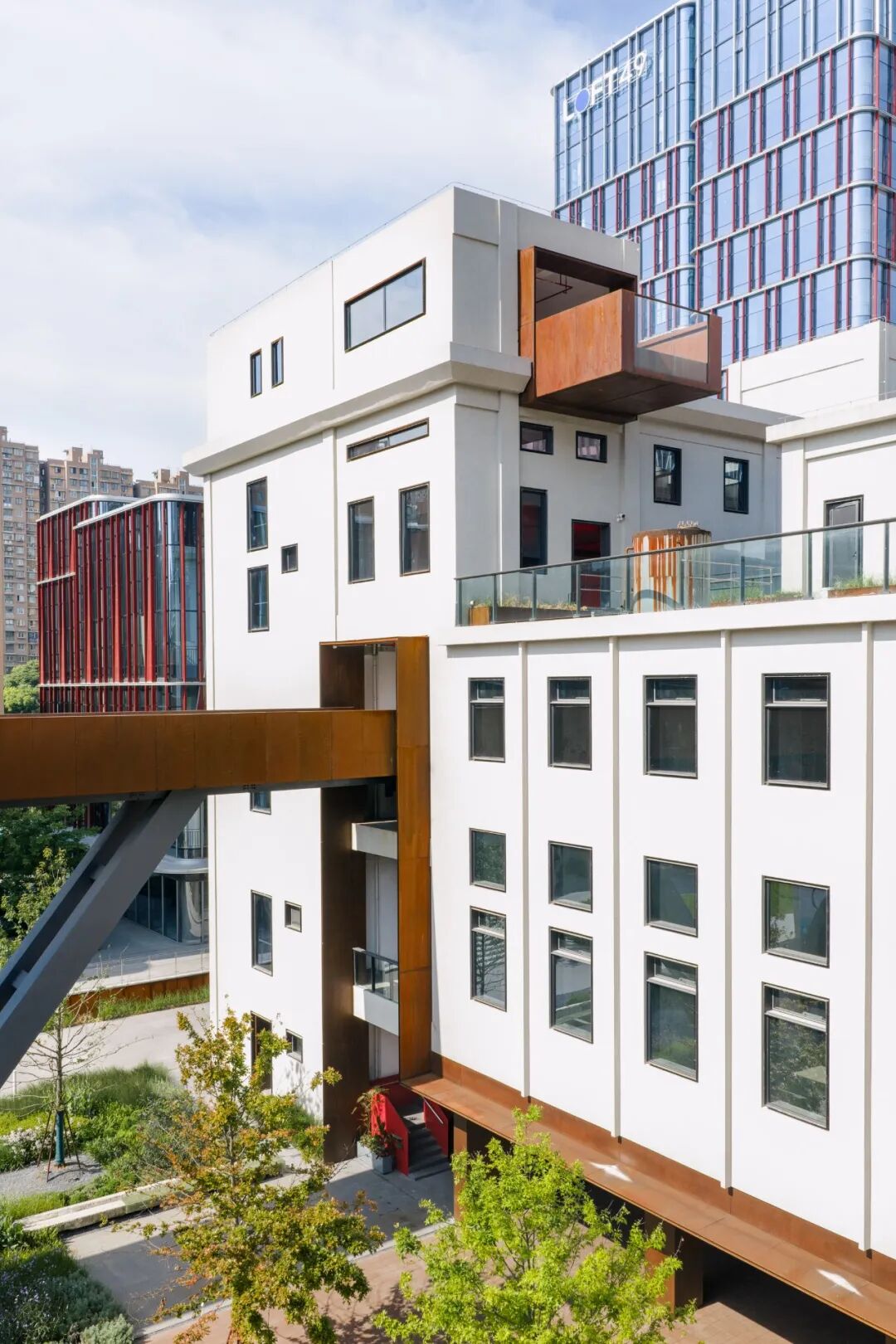
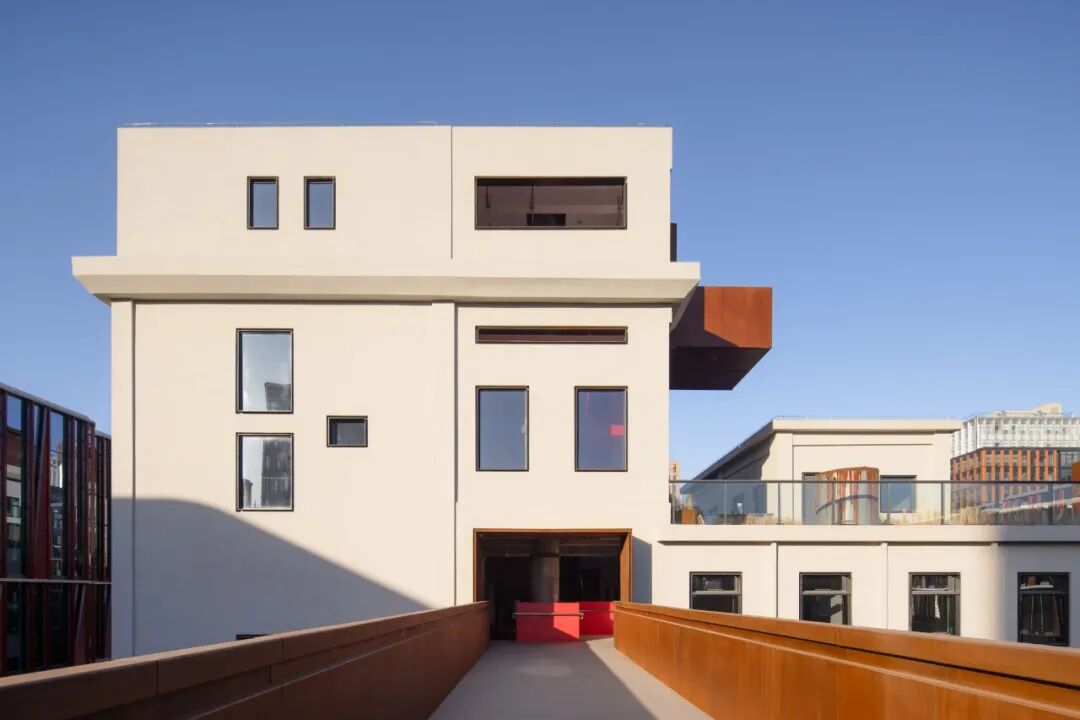
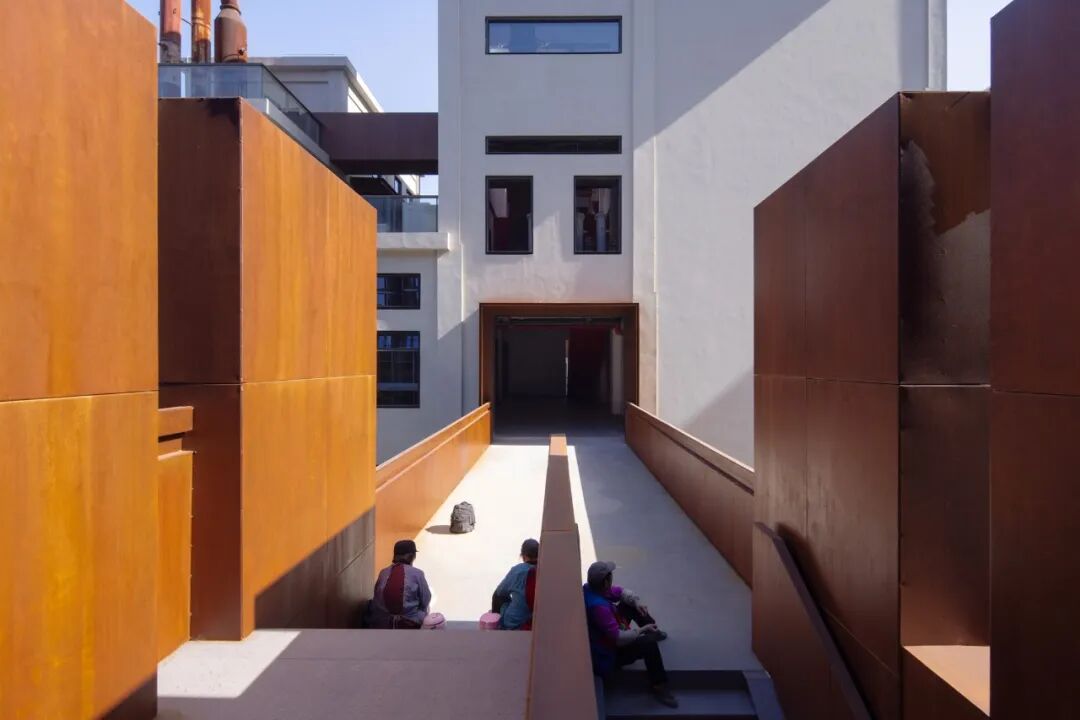
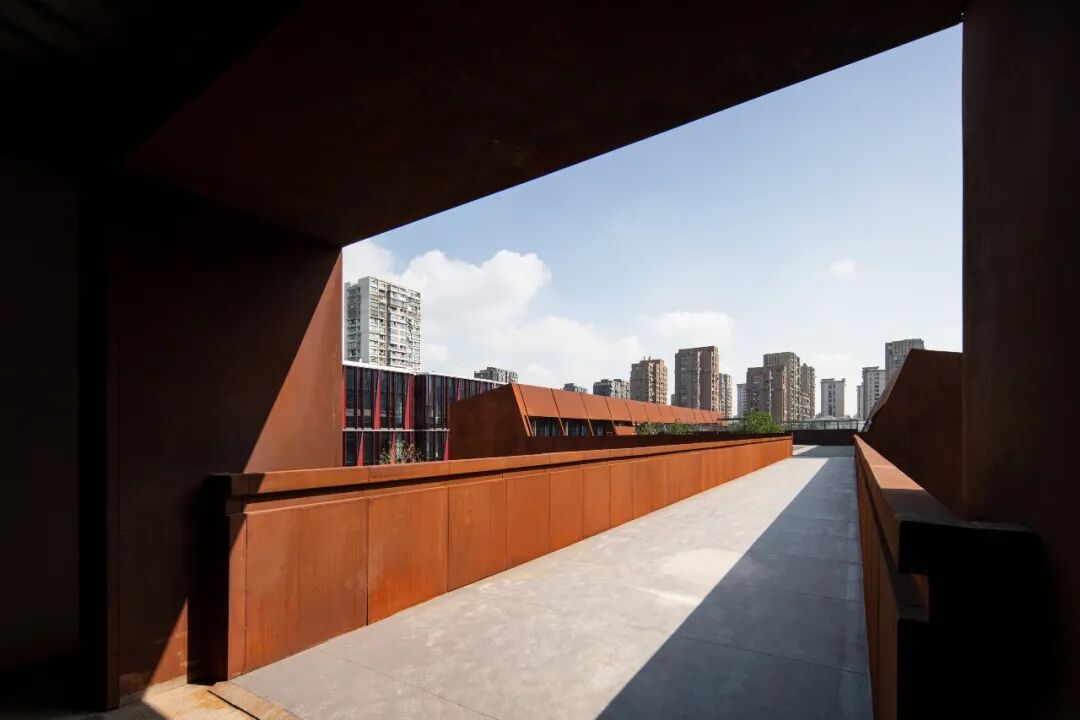
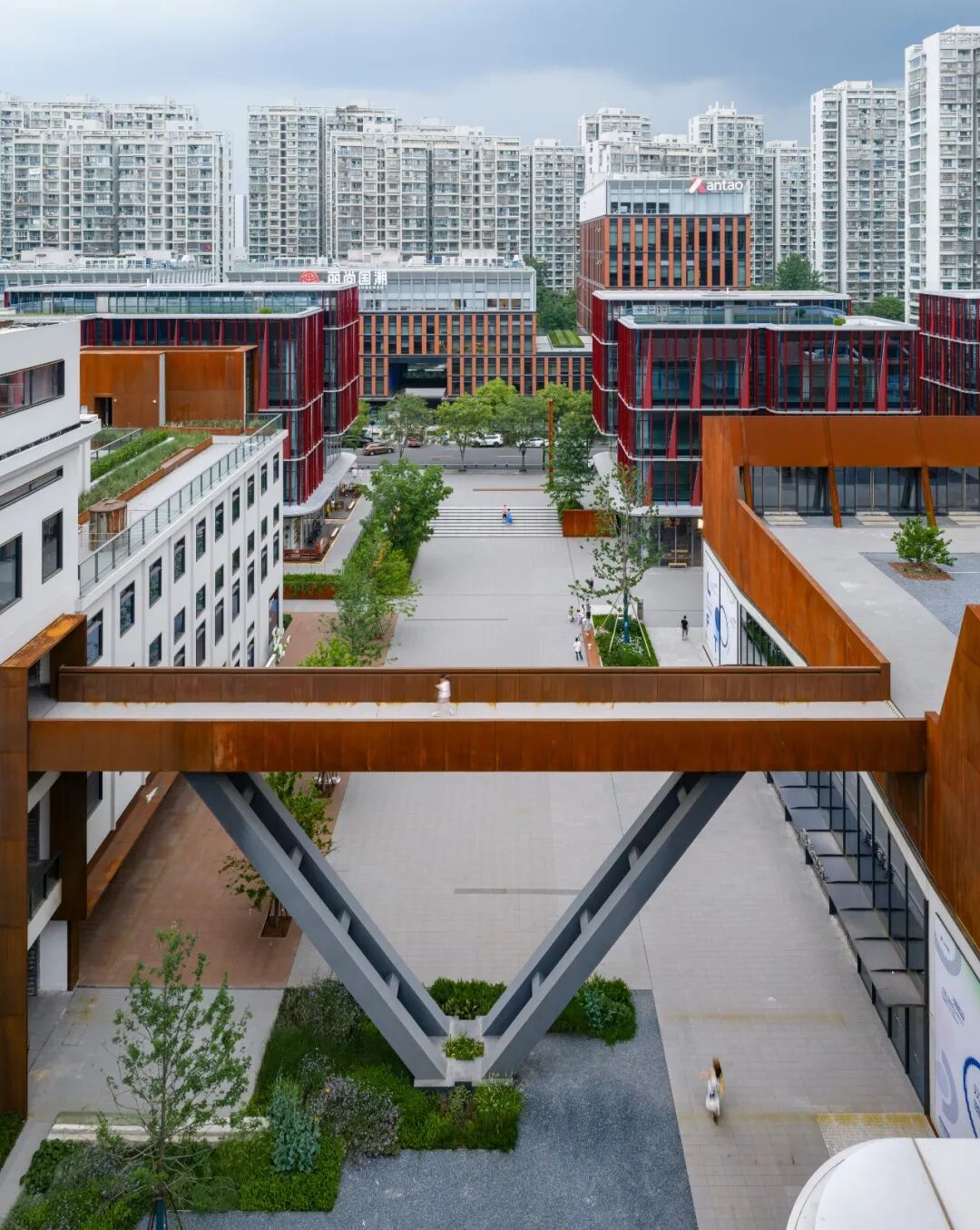
△ Bridge connecting Building 6 and Building 10
After the public space structure was reorganized, the focus of Jinshan shifted toward the physical perception of the new and old systems. Through tectonic organization and material contrast, the design seeks to establish a clear temporal relationship between the newly added spatial system and the original buildings. The specific strategies unfold through the following aspects.
| Retaining the Walls
Inspection showed that the exterior walls of both factory buildings presented safety risks to varying degrees. The design adopted two different strategies according to their preservation conditions.
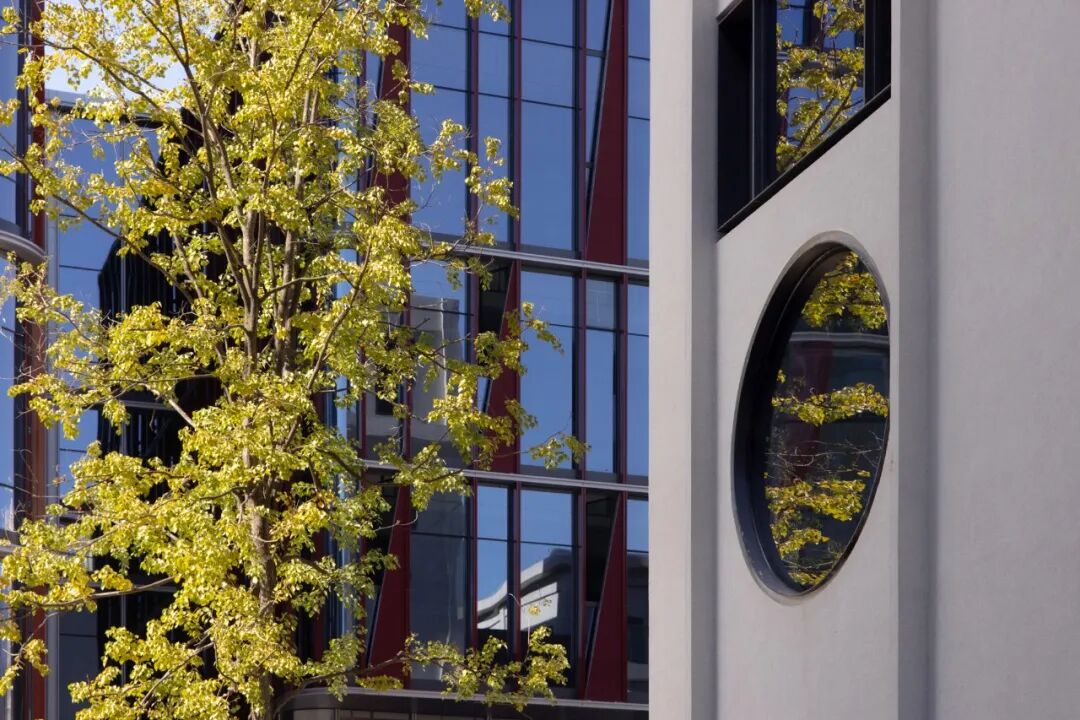
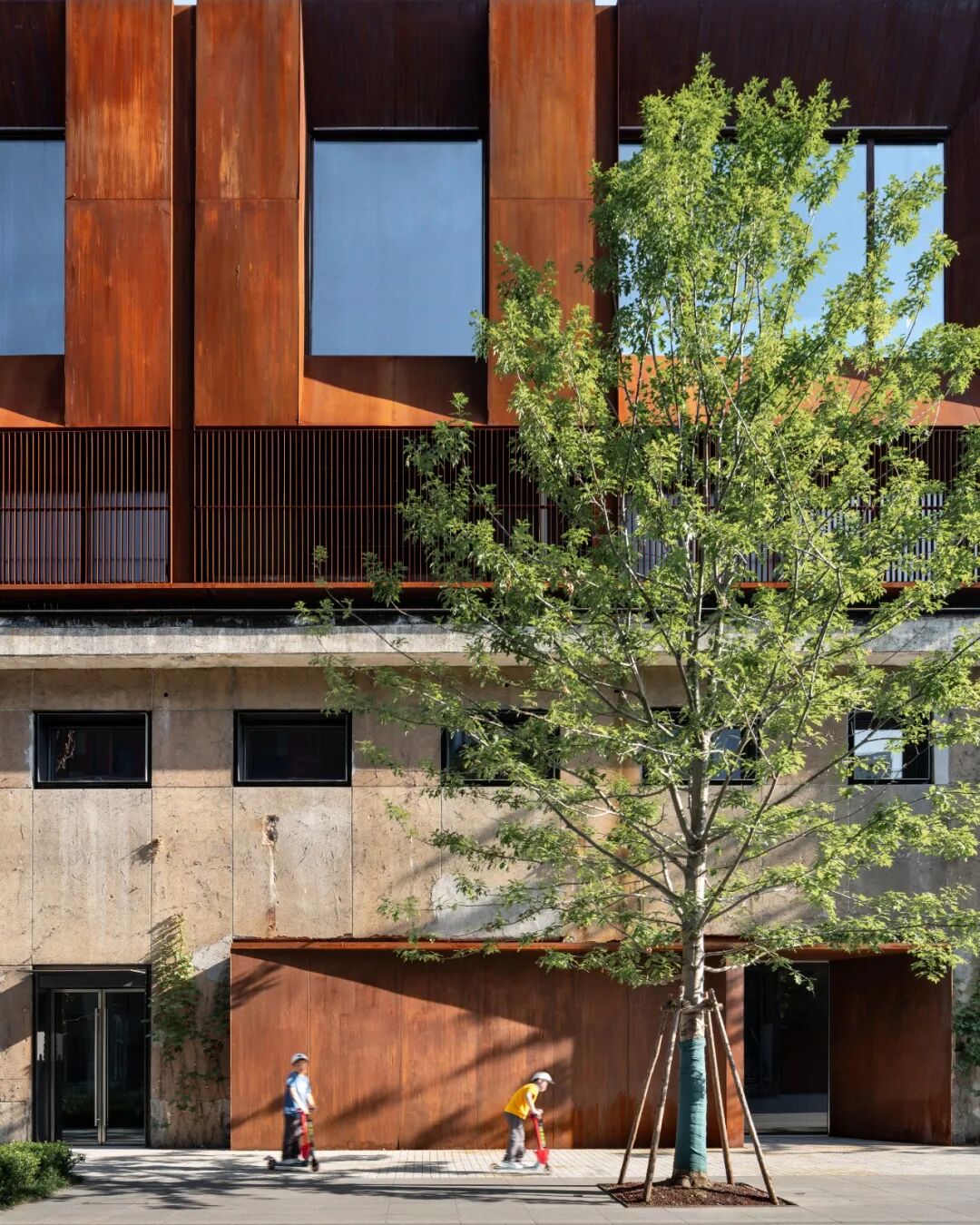
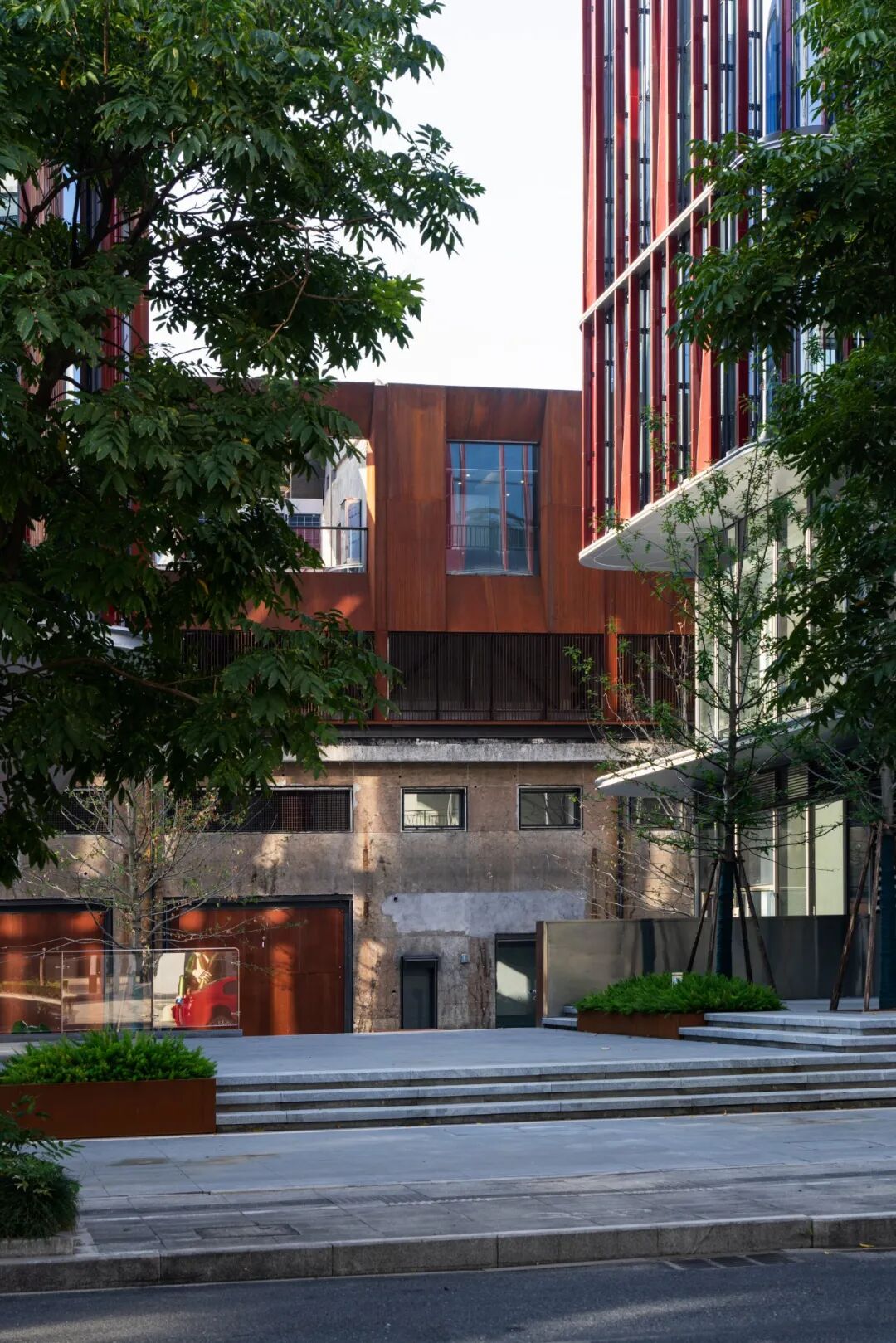
The exterior walls of Building 10 retained their texture and window-opening relationships relatively well. Behind the walls, the design introduced a carbon-fiber reinforcement system and new buttress columns, preserving the original exterior walls as much as possible. These almost entirely retained walls, carrying traces of patina, are precisely the witnesses of the park’s multiple historical phases.
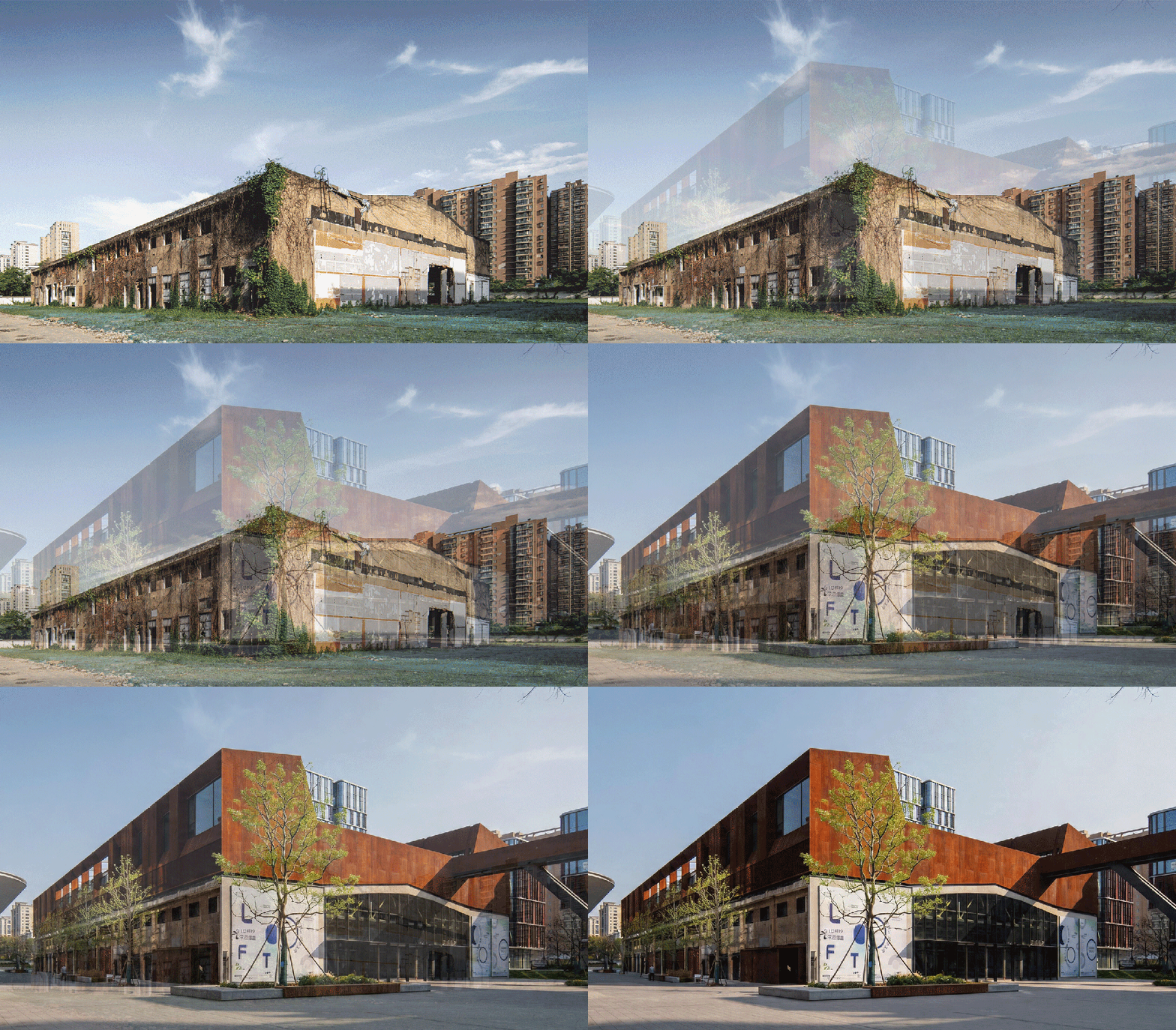
△ Before-and-after comparison of the exterior façade of Building 10
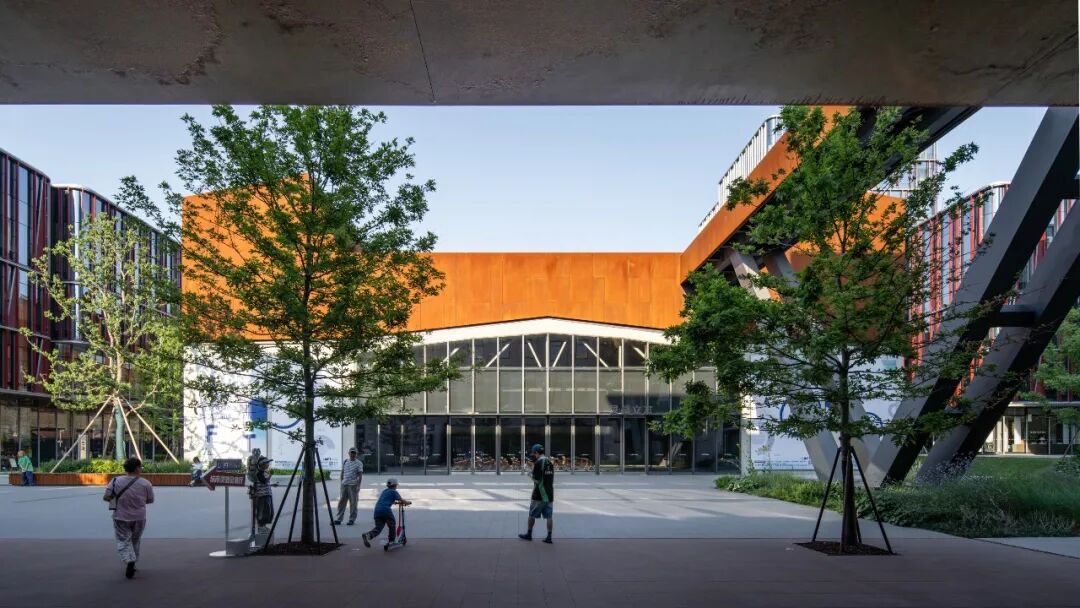
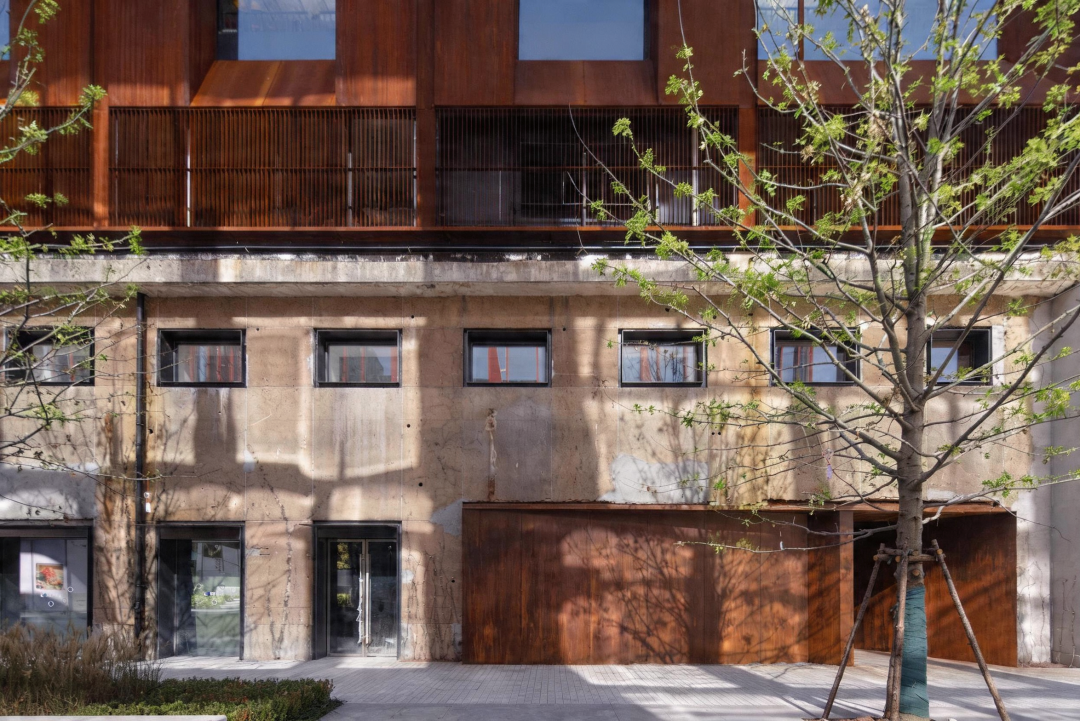
△ Exterior façade of Building 10 after renovation
Over long-term use and natural growth, the holes and cracks in the original walls gradually evolved into micro-natural interfaces. In the new use scenario, the old walls now present a detailed expression in which rough industrial texture and natural vitality coexist.
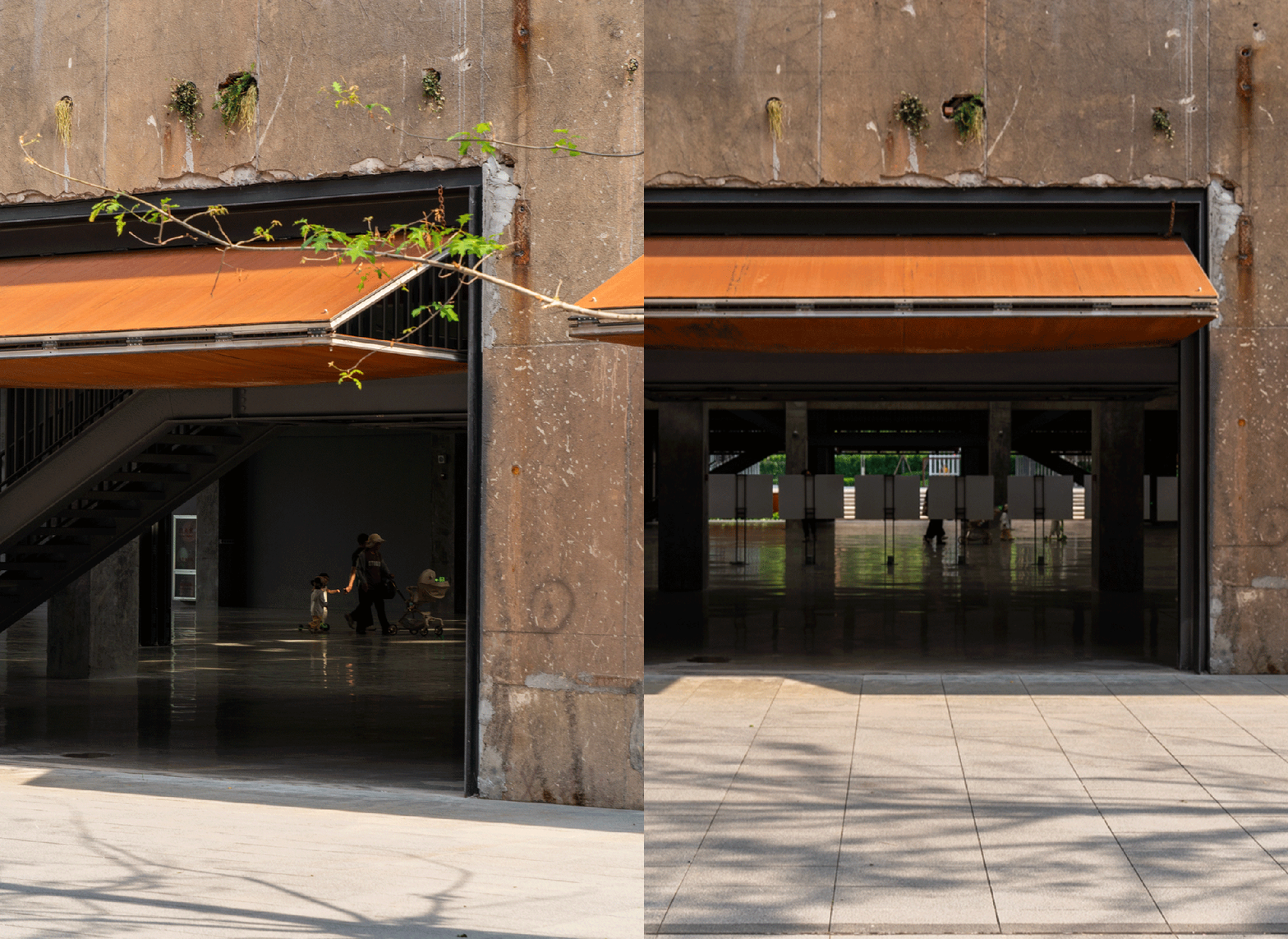
△ Plants growing from holes in the old walls
In contrast, Building 6 had been extensively modified during its years as part of the creative park, leaving its exterior walls in a more compromised condition. The design therefore followed a strategy of preserving the primary structure while replacing the outer skin. By retaining the original structural frame and rebuilding the façade, the project restores the building’s original rhythm and proportions of openings while meeting contemporary safety requirements.
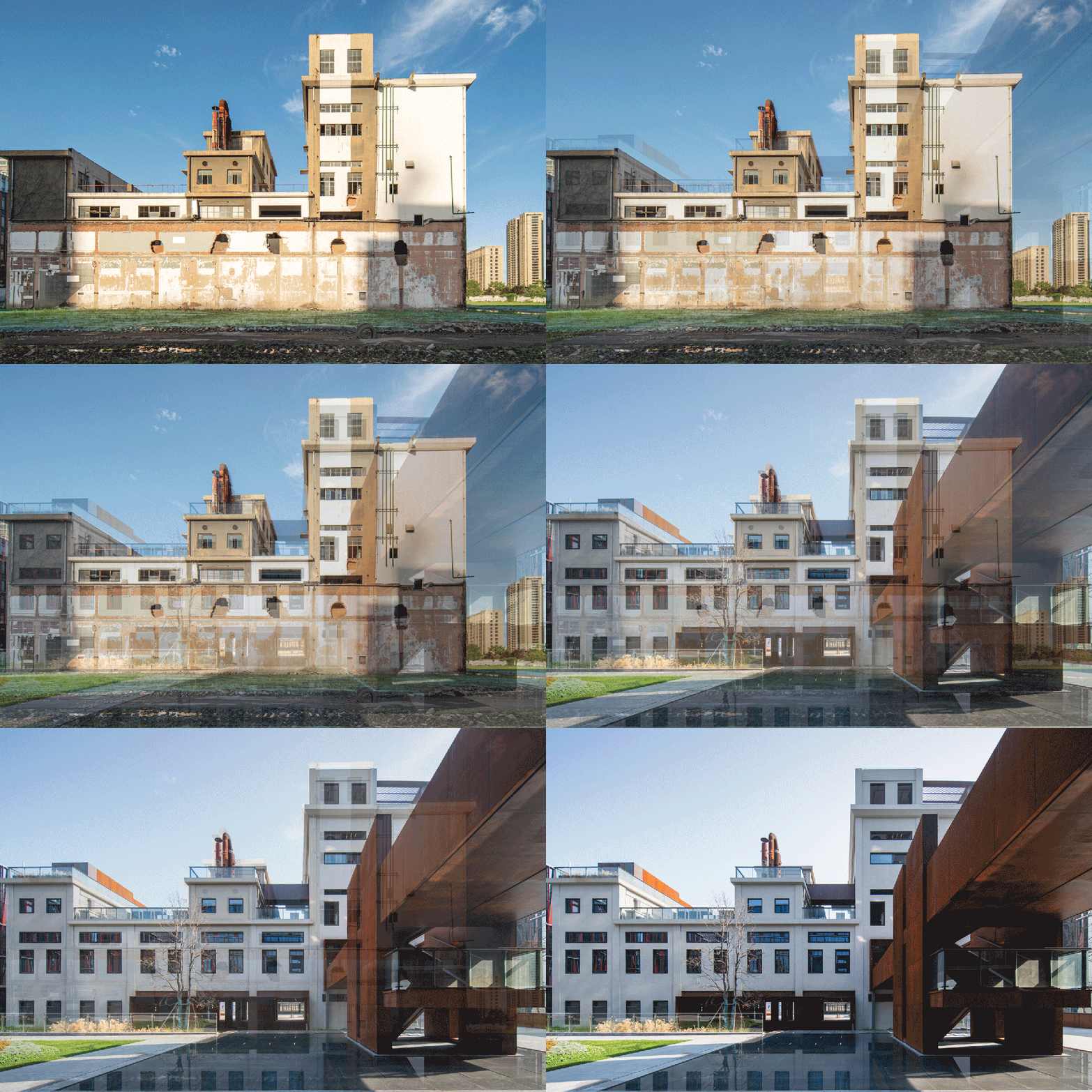
△ Before-and-after comparison of the exterior façade of Building 6
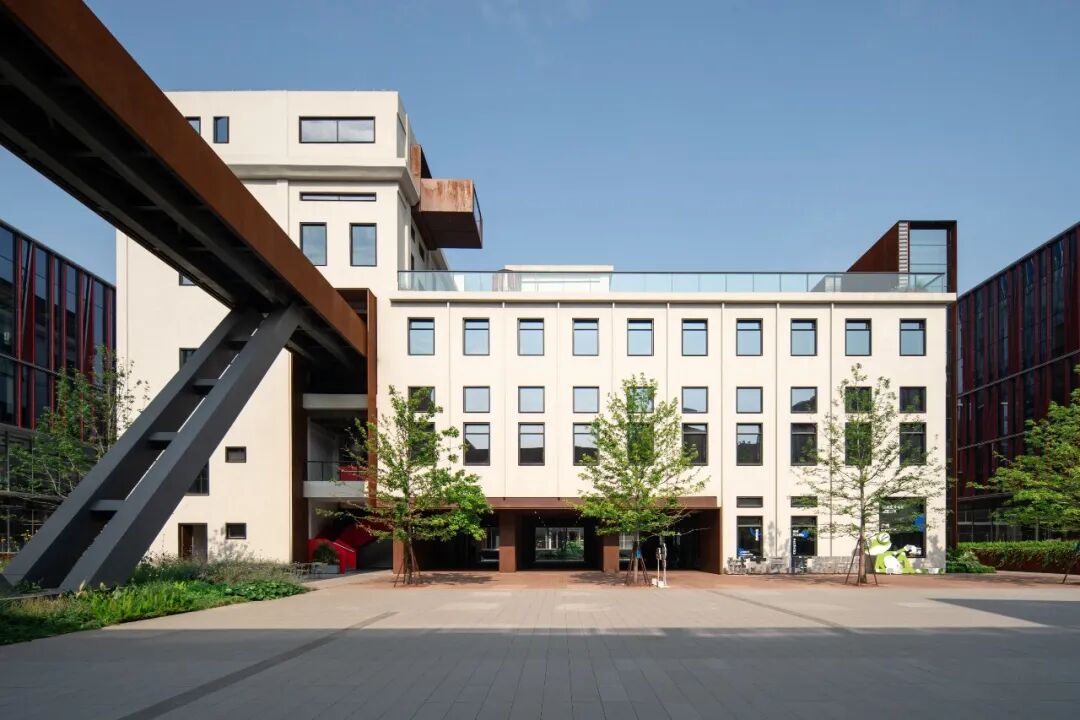
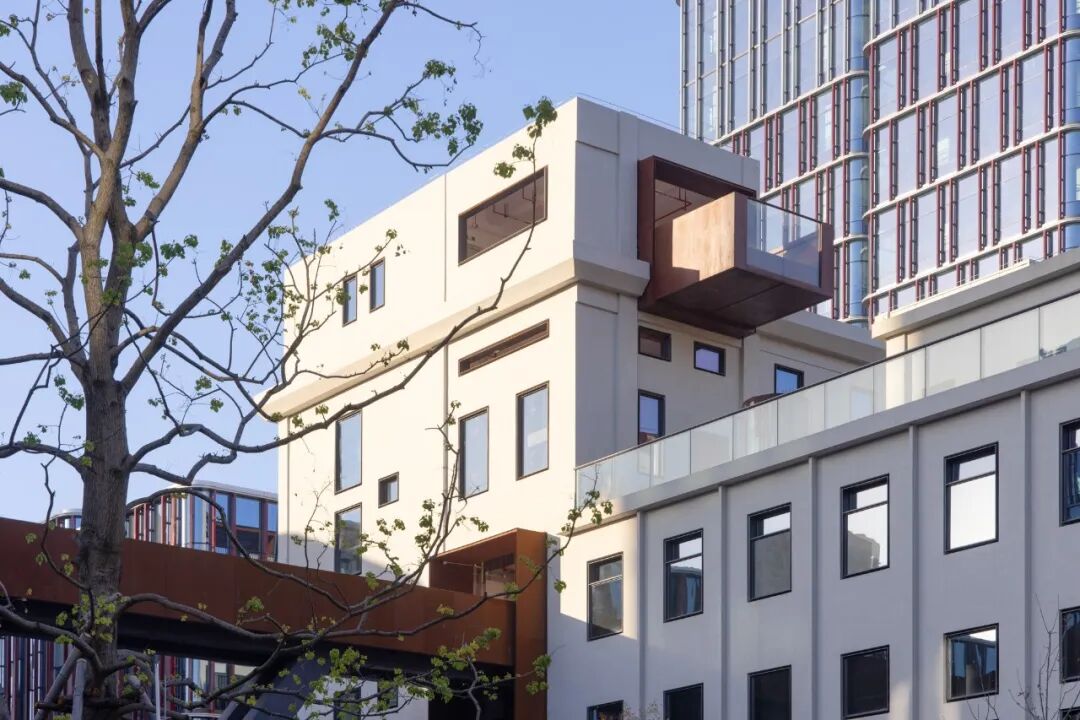
△ Building 6 after renovation
| Using Materials
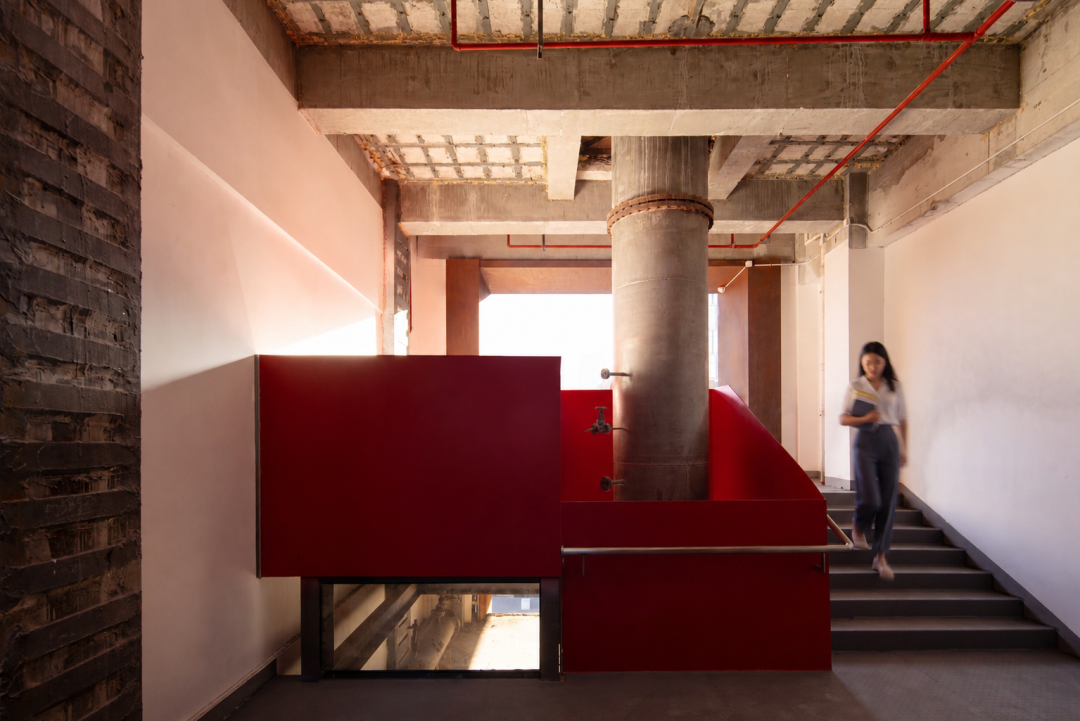
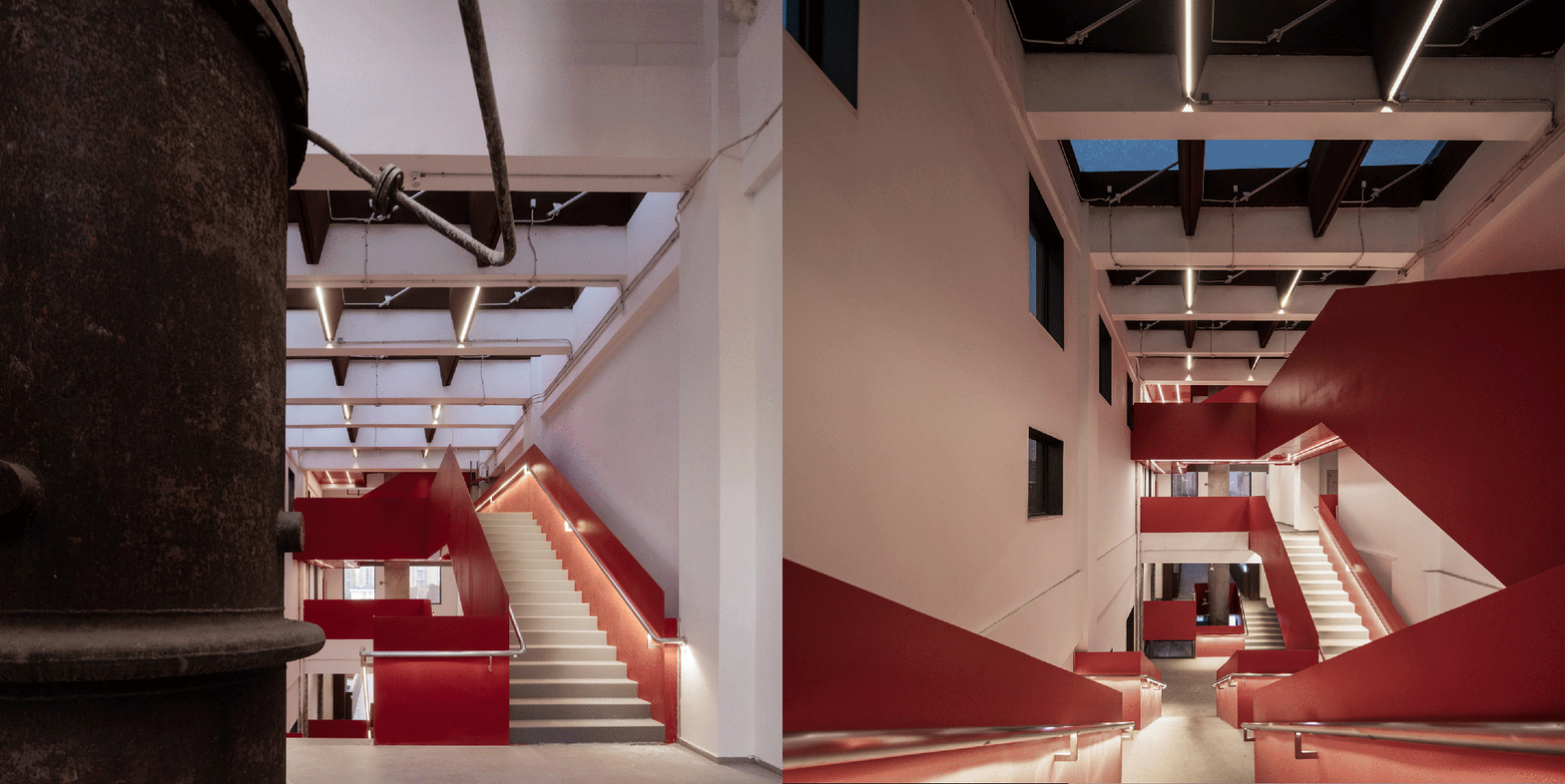
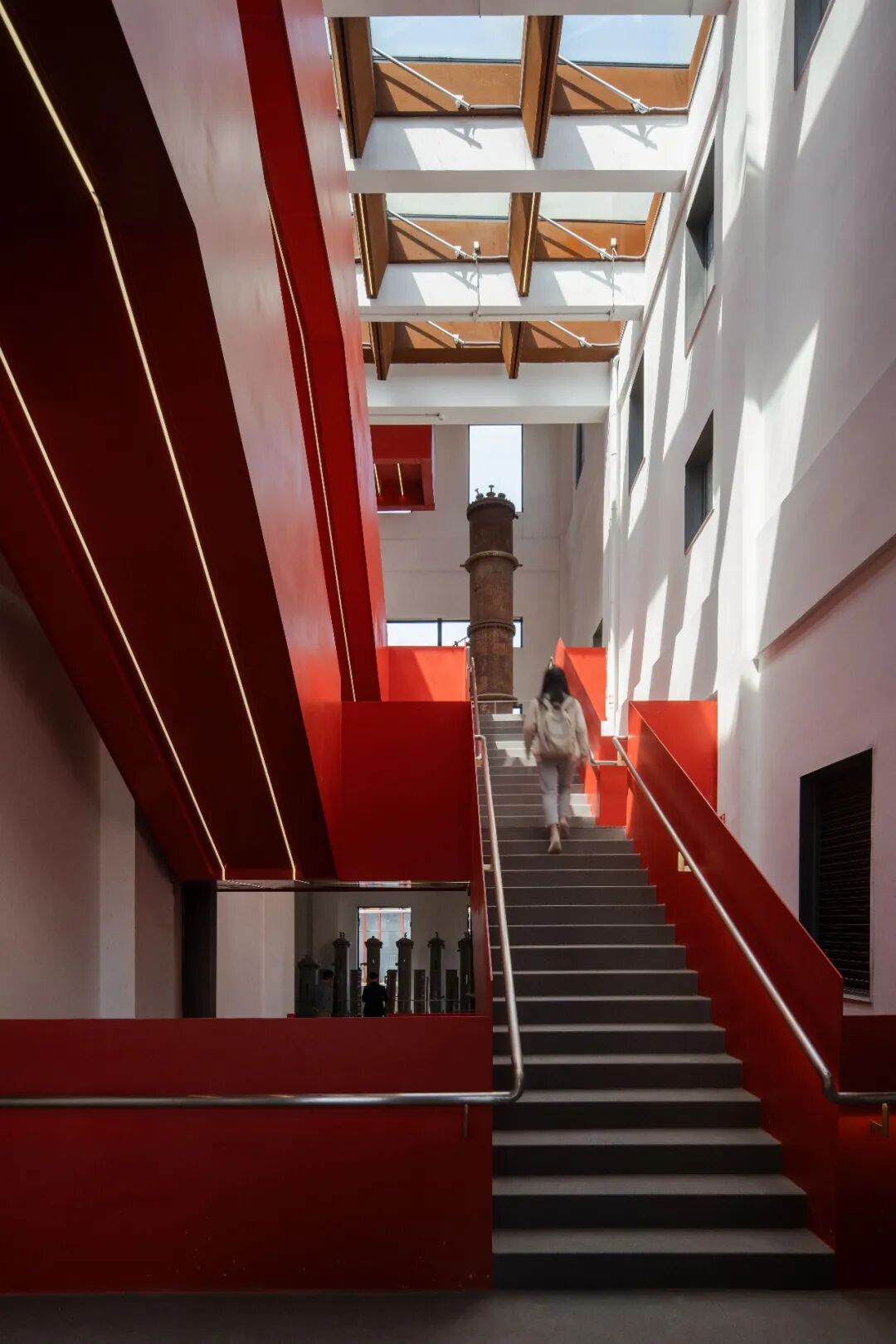
Faced with a site where historical information was limited, the design chose reds of different saturations as the Jinshan elements inserted into the original system.
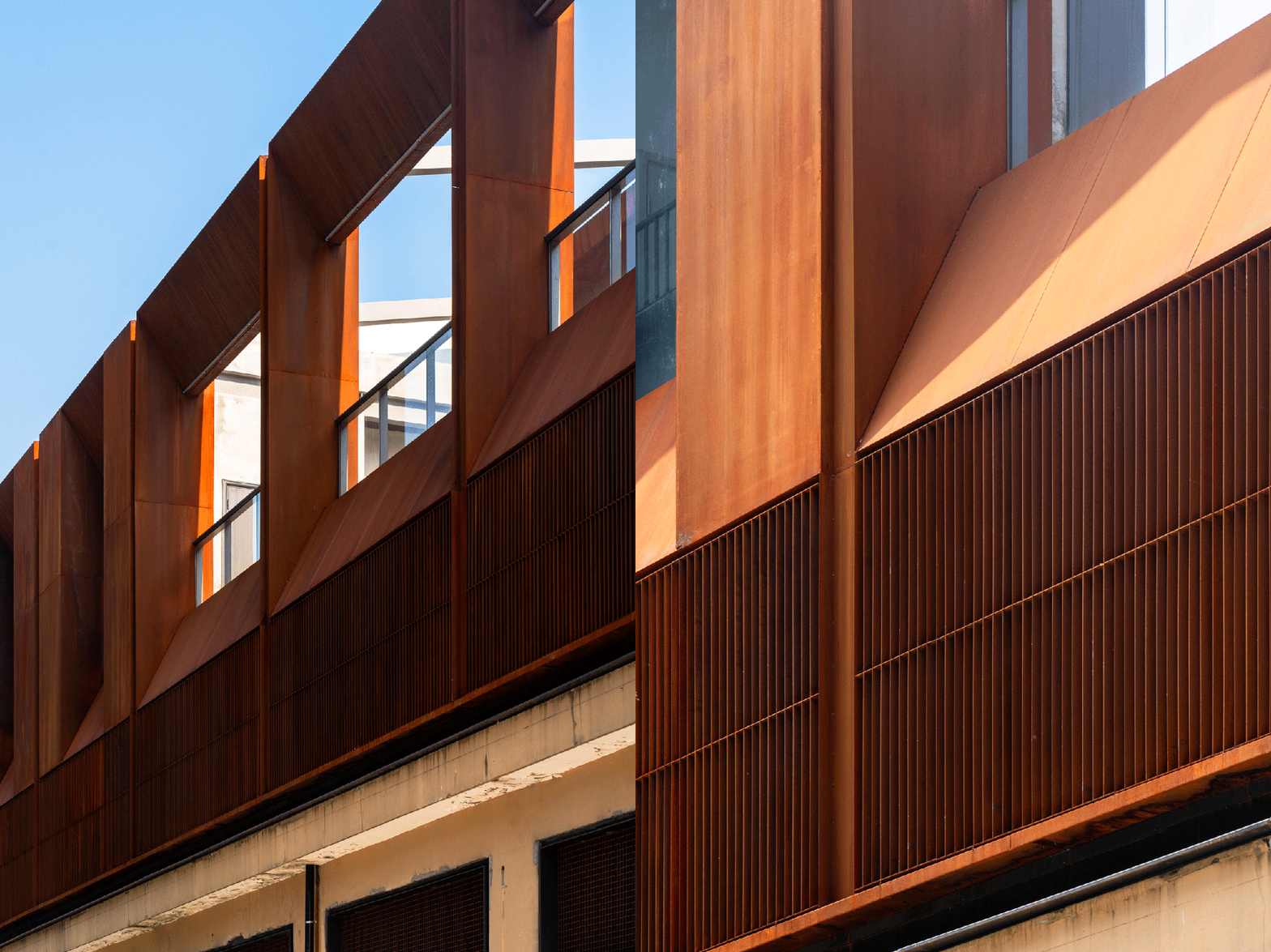
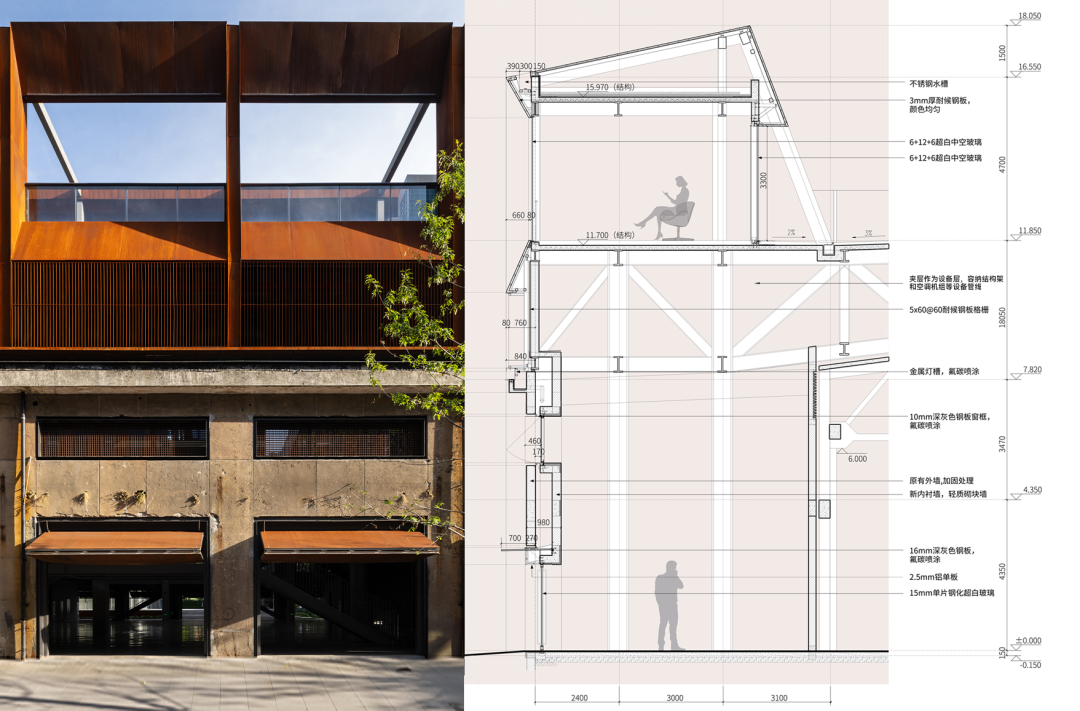
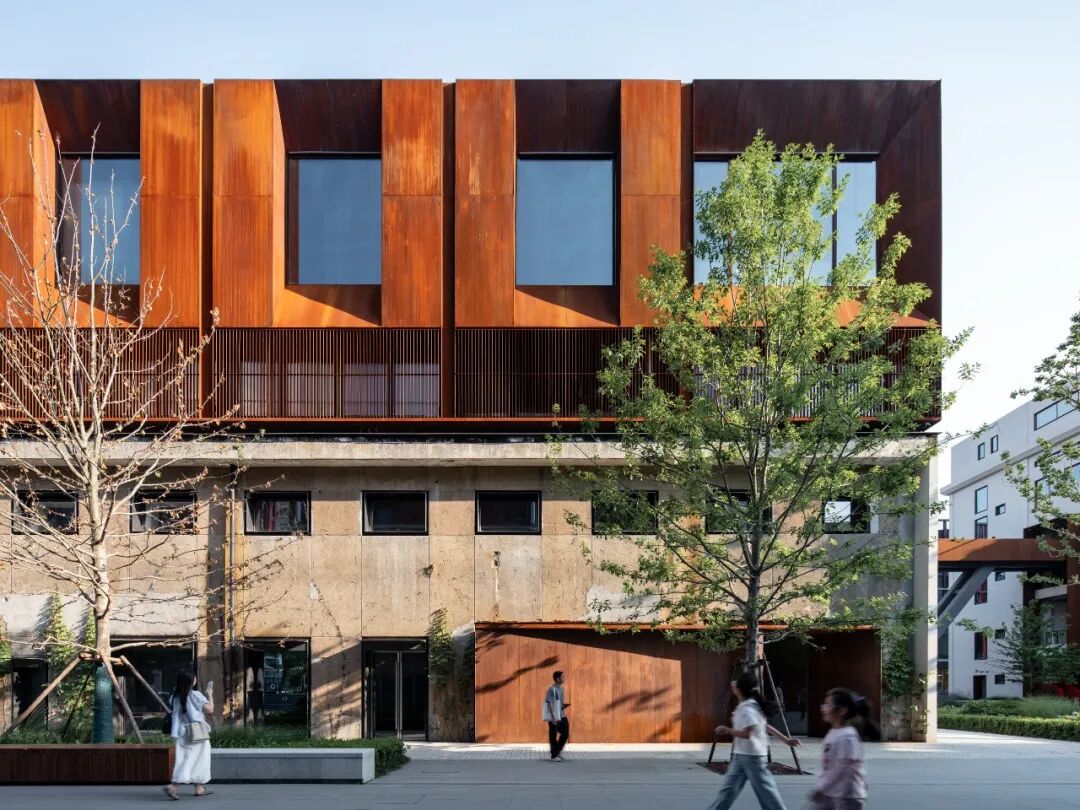
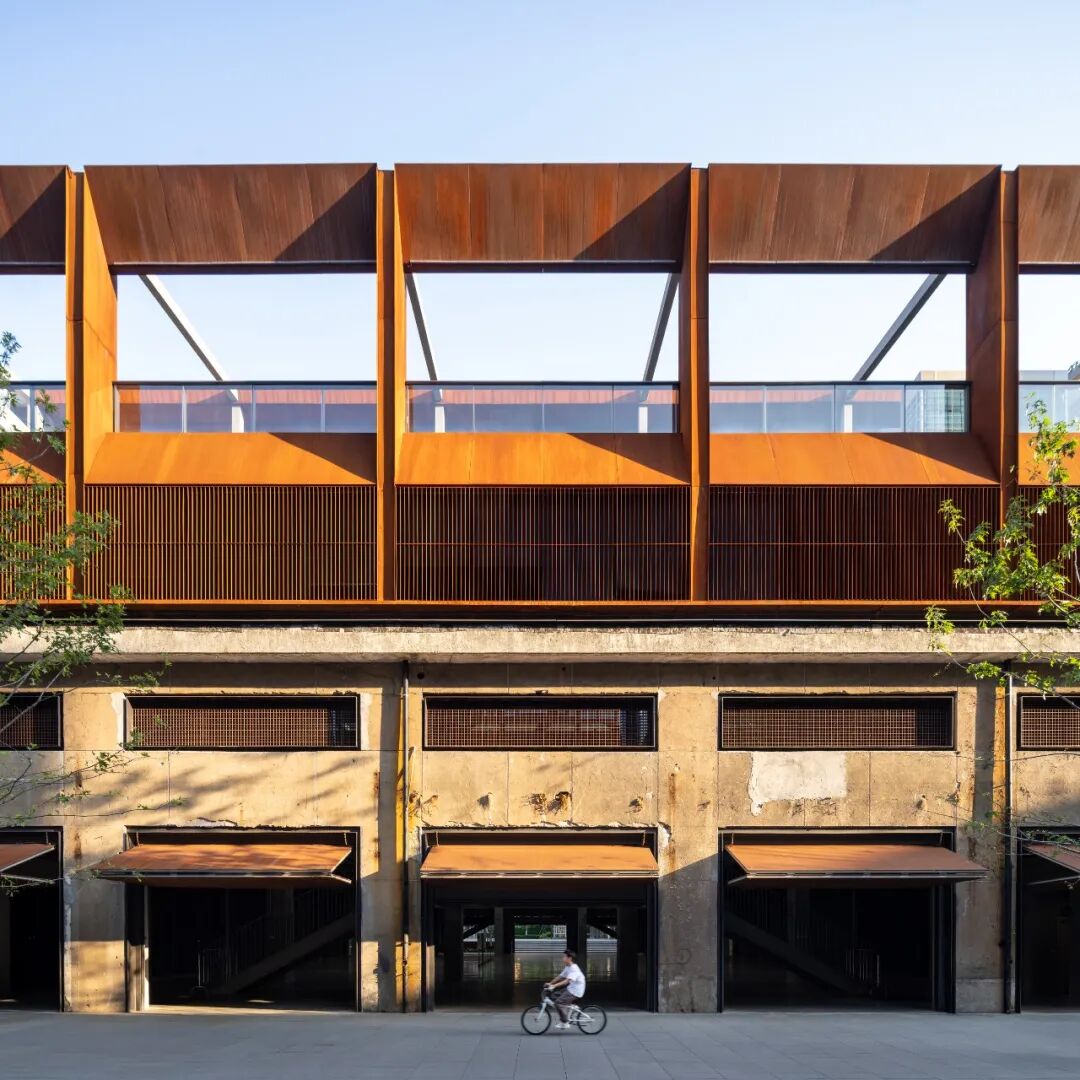
Low-saturation weathering steel panels, with their rough and steady industrial texture, were used for the intervention and reinforcement of the retained buildings. In Building 10, the roof-supporting structure made of weathering steel extends outward like an inverted portal frame. It is explicit and direct, while also taking on multiple functions: roof support, equipment mezzanine, and elevated public platform.
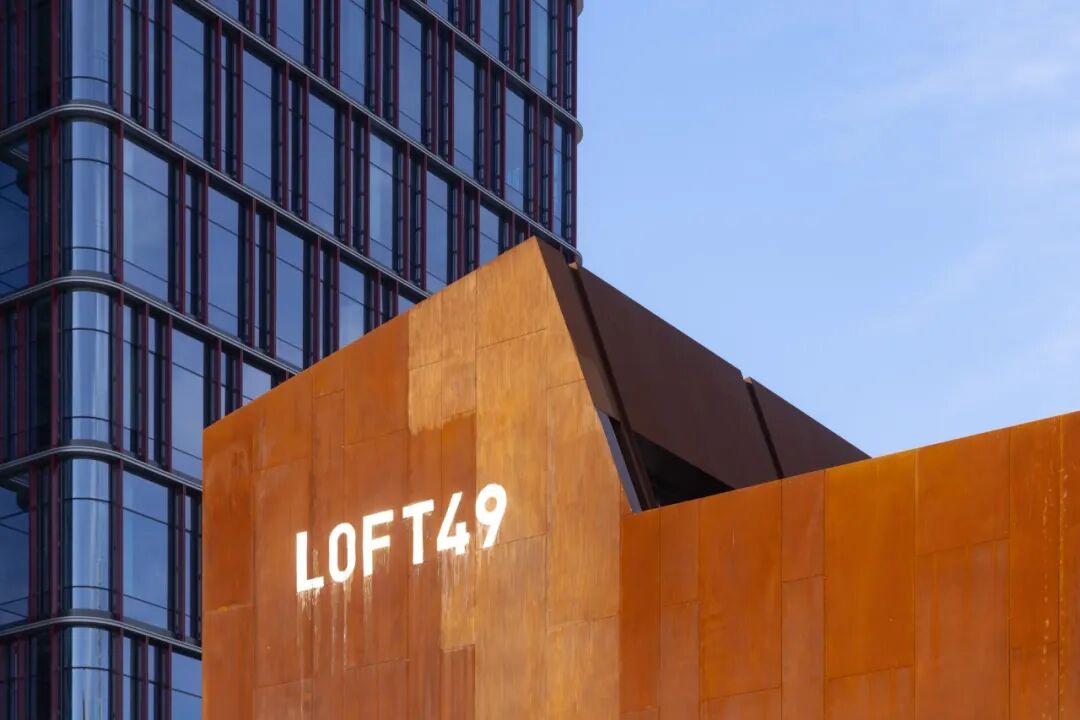
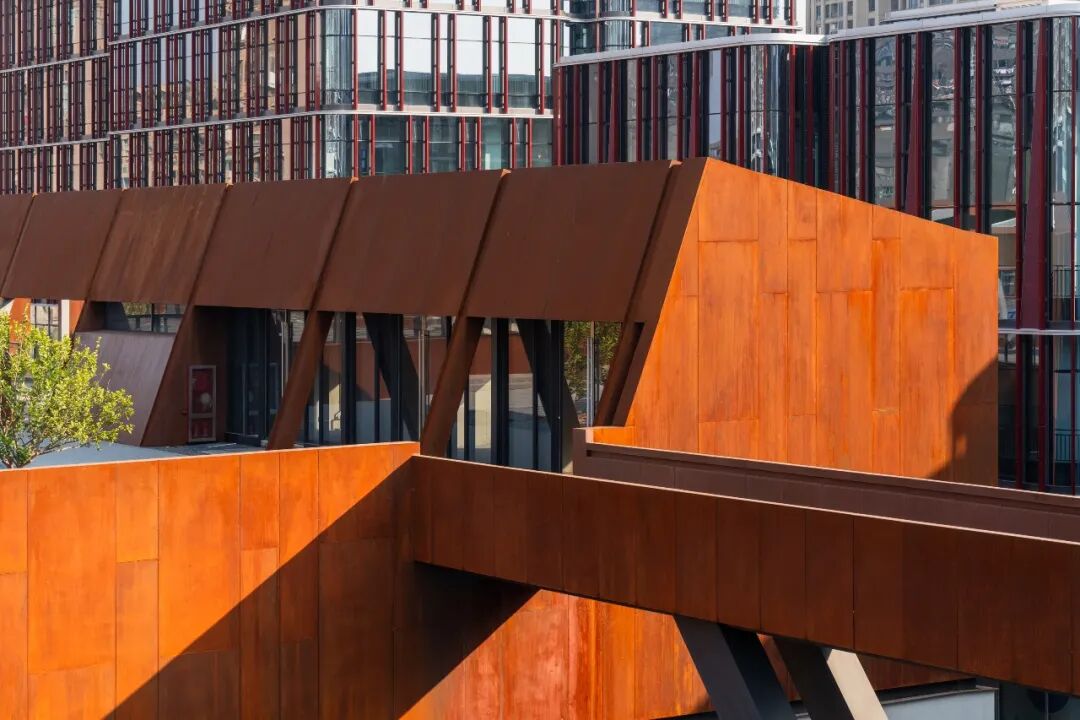
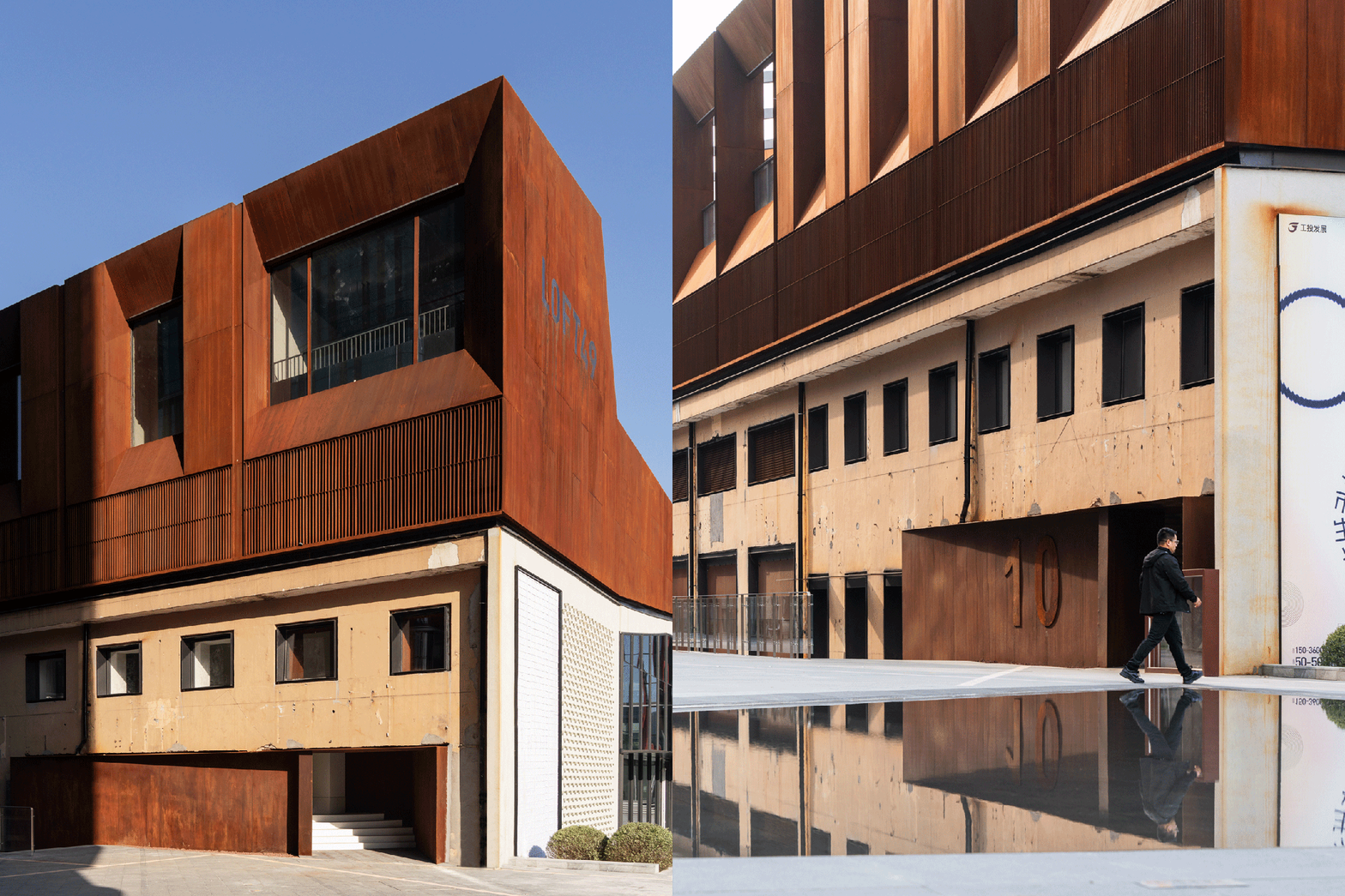
In Building 6, weathering steel panels grow inward, from door and window surrounds to the edges of openings, in a more reserved and internalized manner. High-saturation red steel panels are used for the newly added internal structures, introducing a sharp flash of color into the plain industrial spatial background.
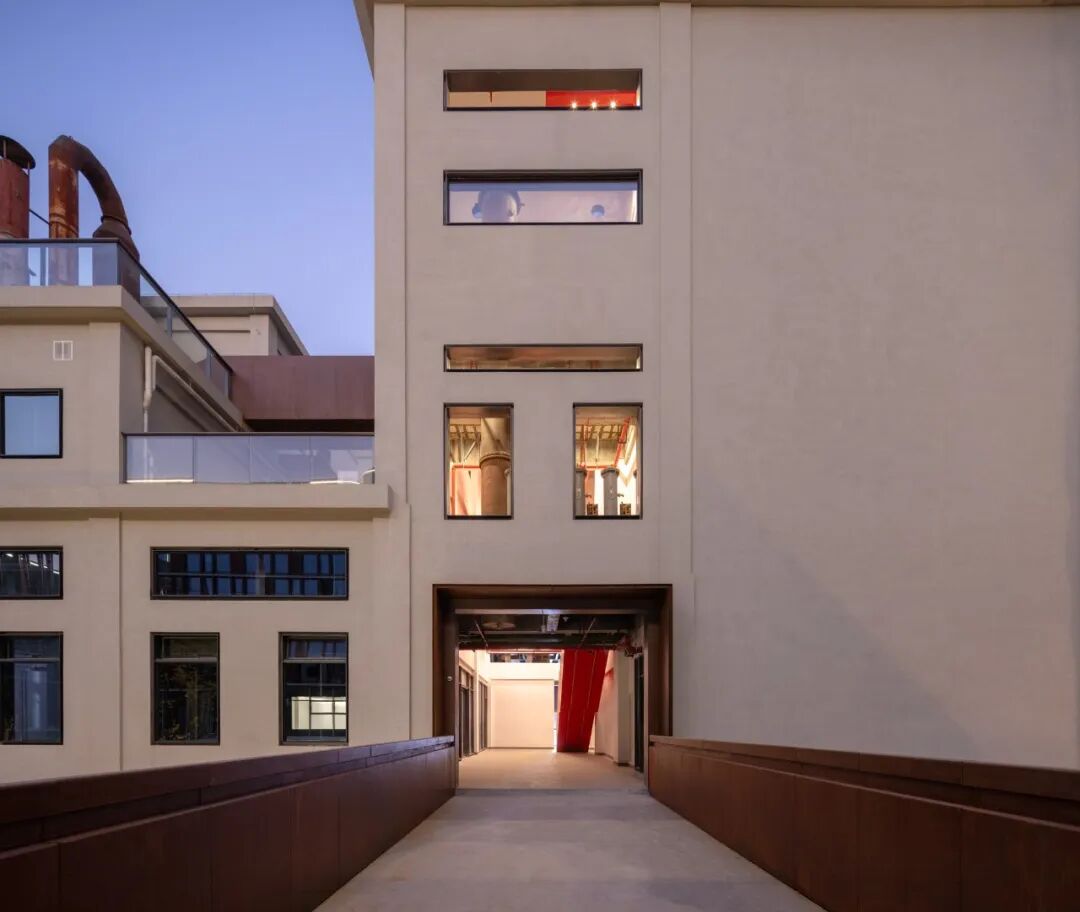
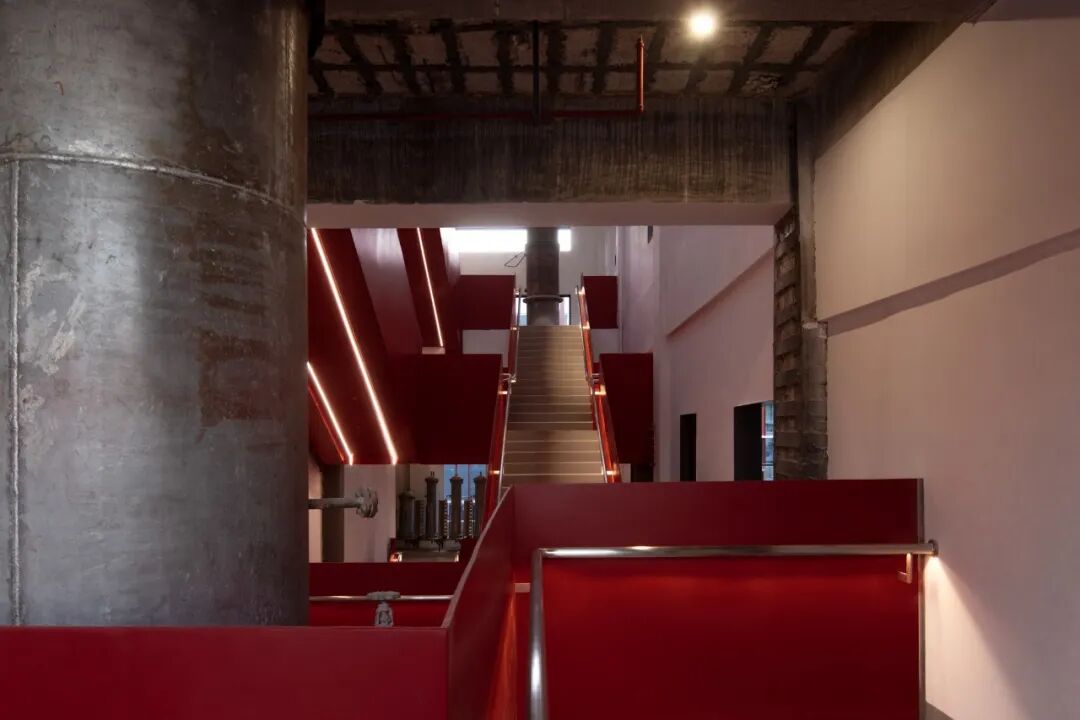
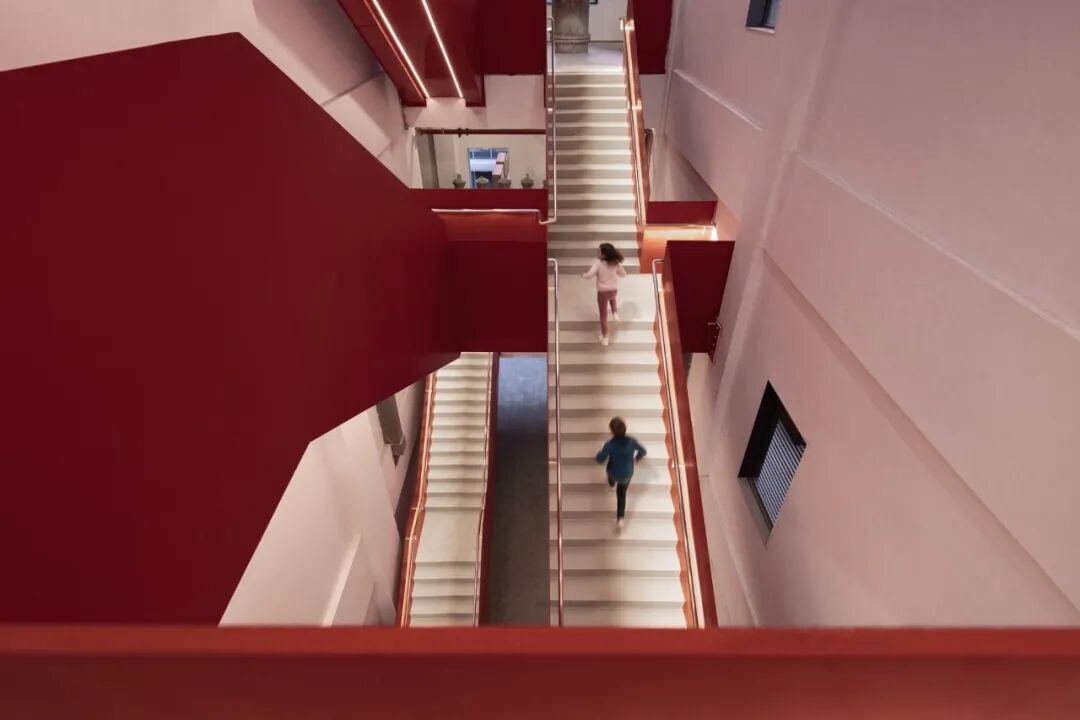
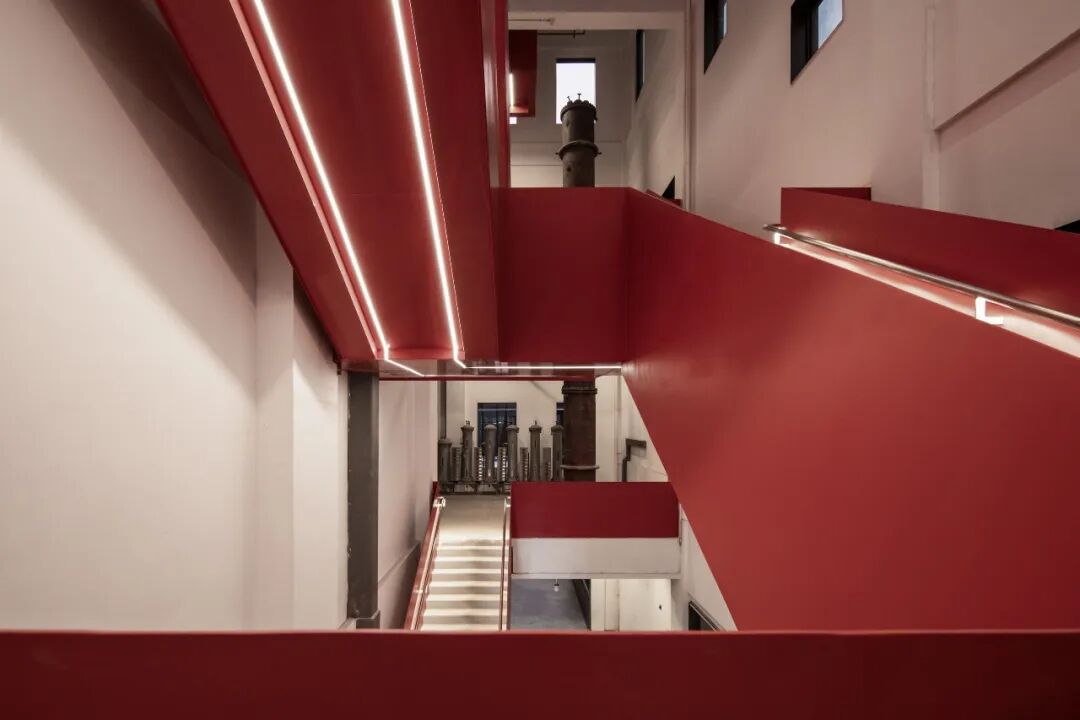
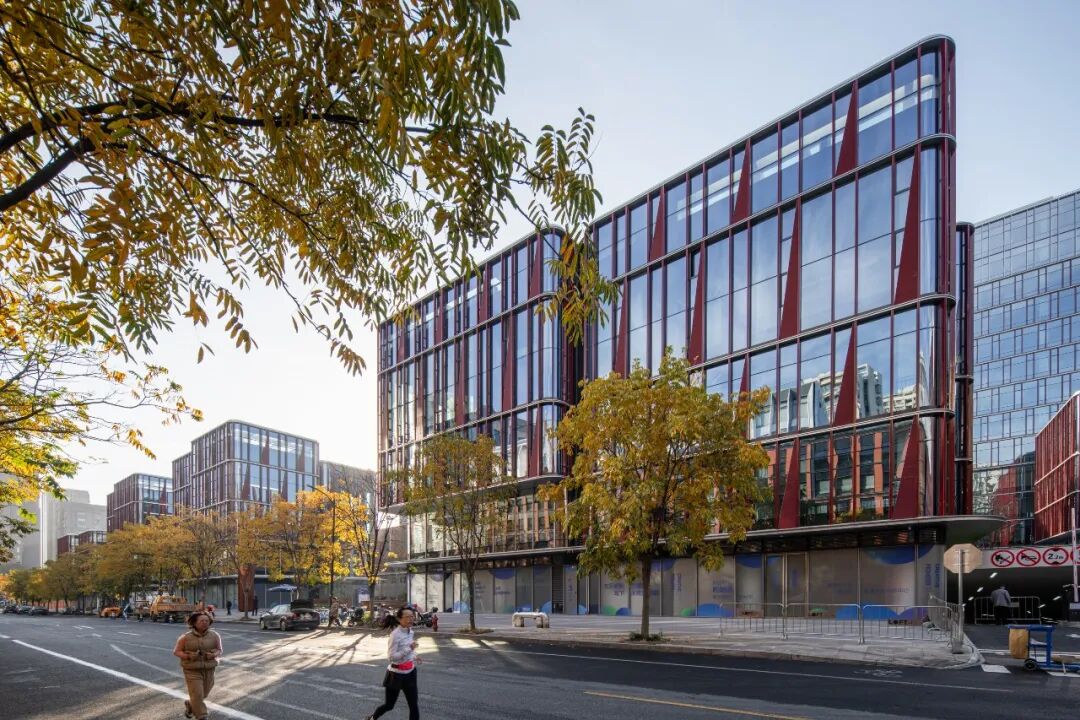
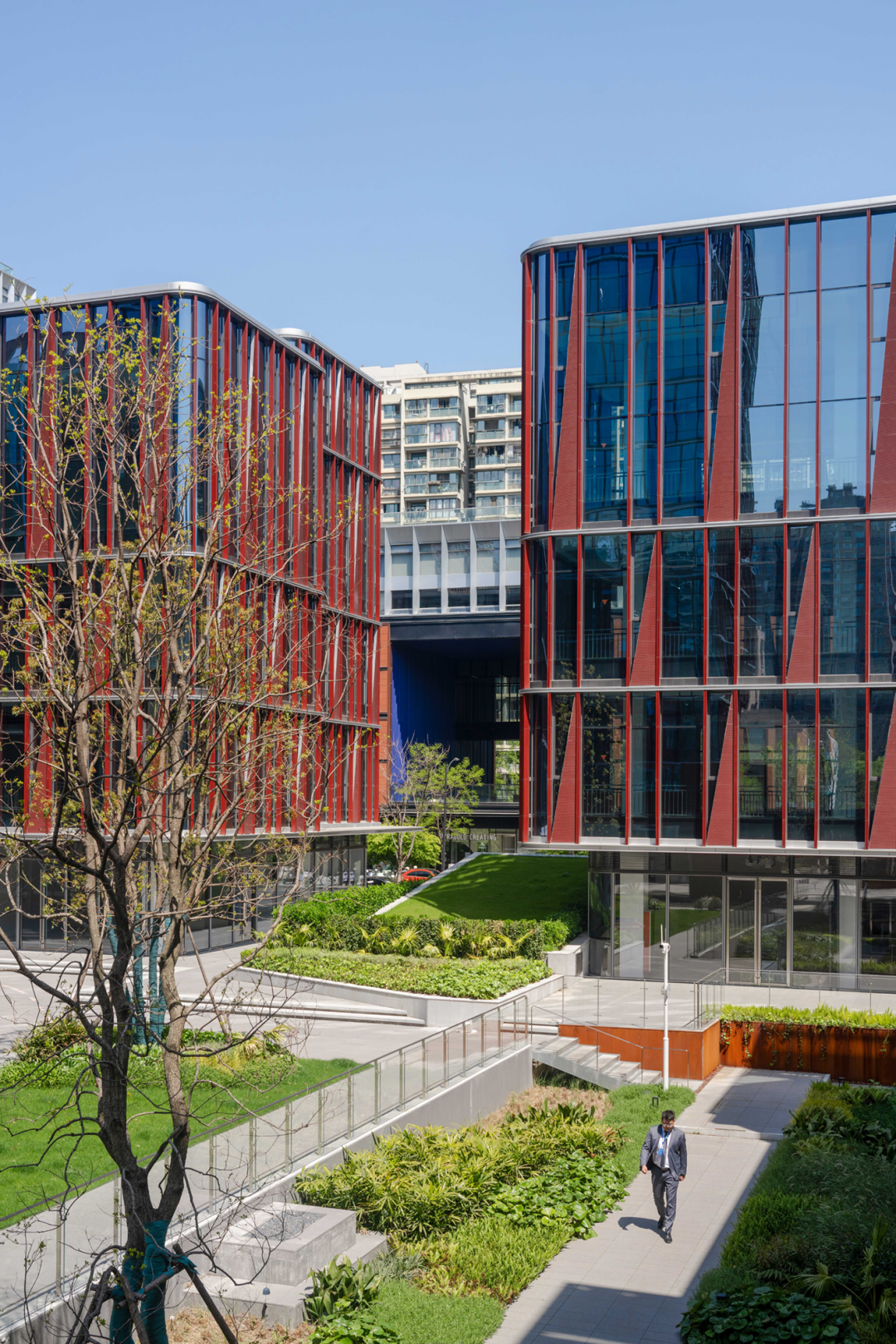
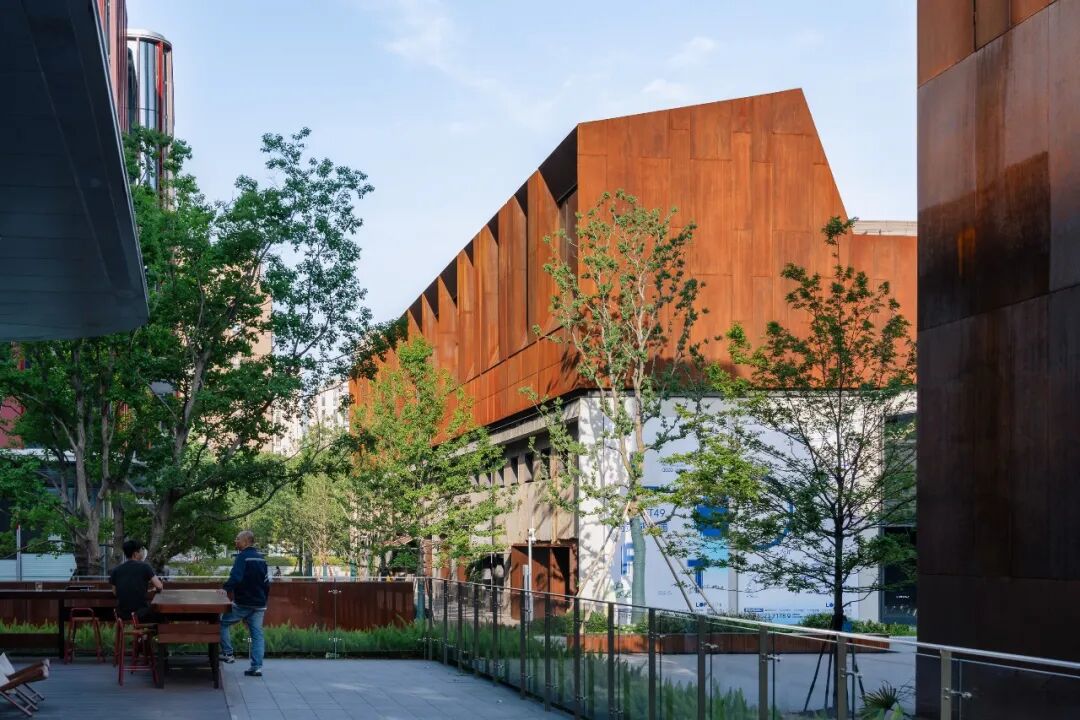
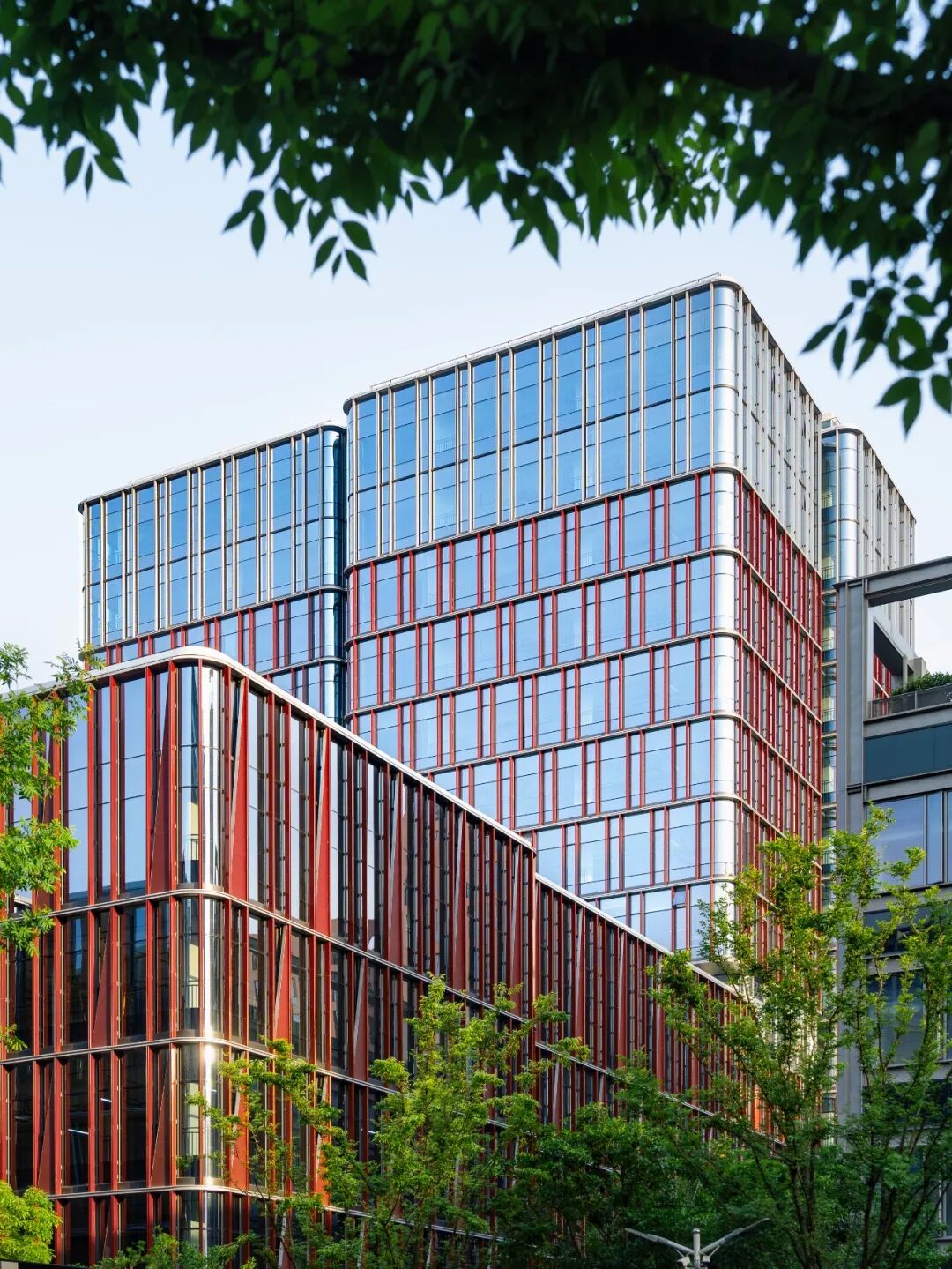
Medium-saturation glazed terracotta panels are used on the façades of the newly built peripheral buildings. Combined with the glass curtain wall system, they form external shading elements for concealed operable windows, visually establishing an overall relationship between the new and old volumes.
| Hybridizing the Interface
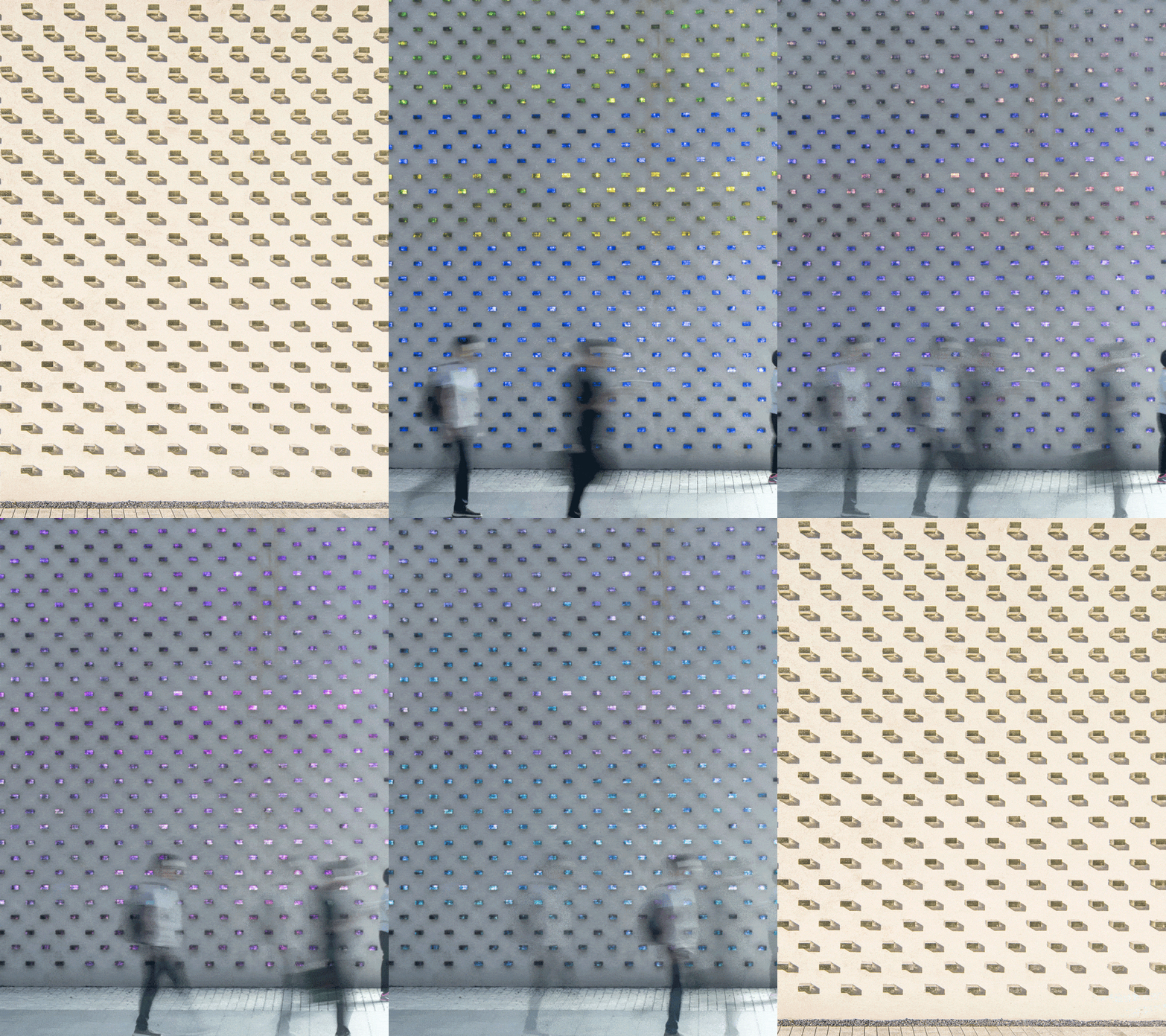
On the east and west façades of Building 10, part of the brickwork was replaced by glass bricks embedded with LED lighting modules. This creates a new expression within the old wall surface. Through short-cycle changes between day and night, and longer cycles of everyday life and holiday events, the wall presents varied light environments and spatial atmospheres.
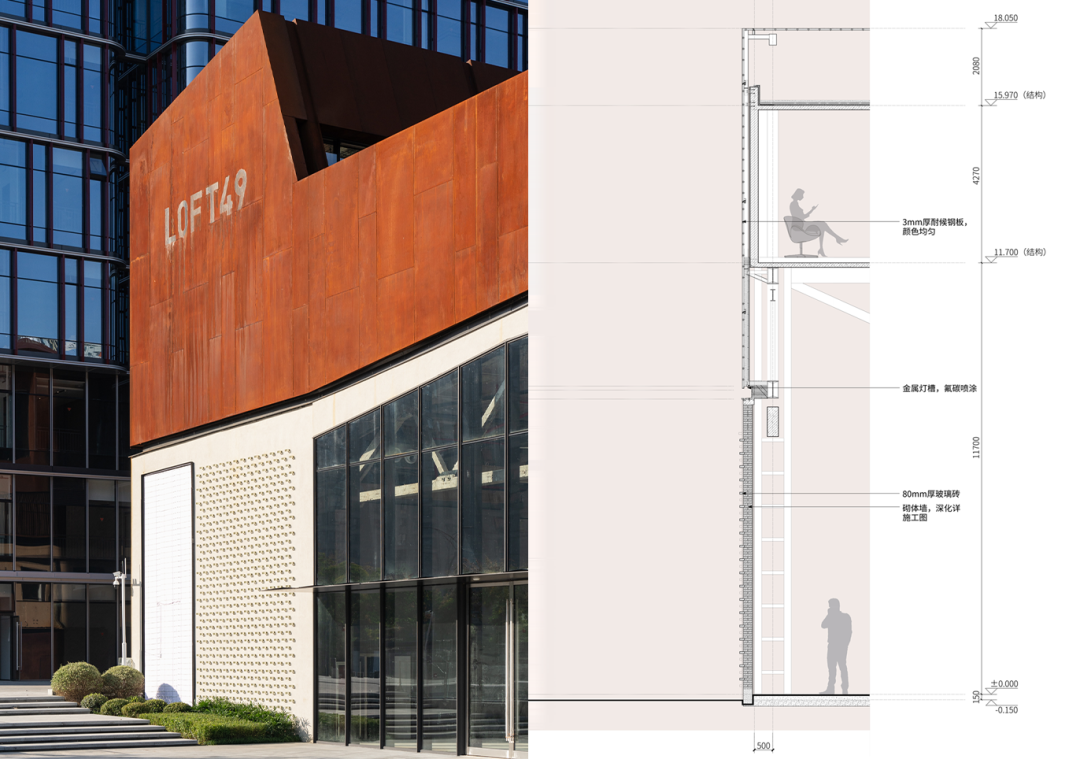
△ Wall section detail of Building 10
| Concealing the Equipment
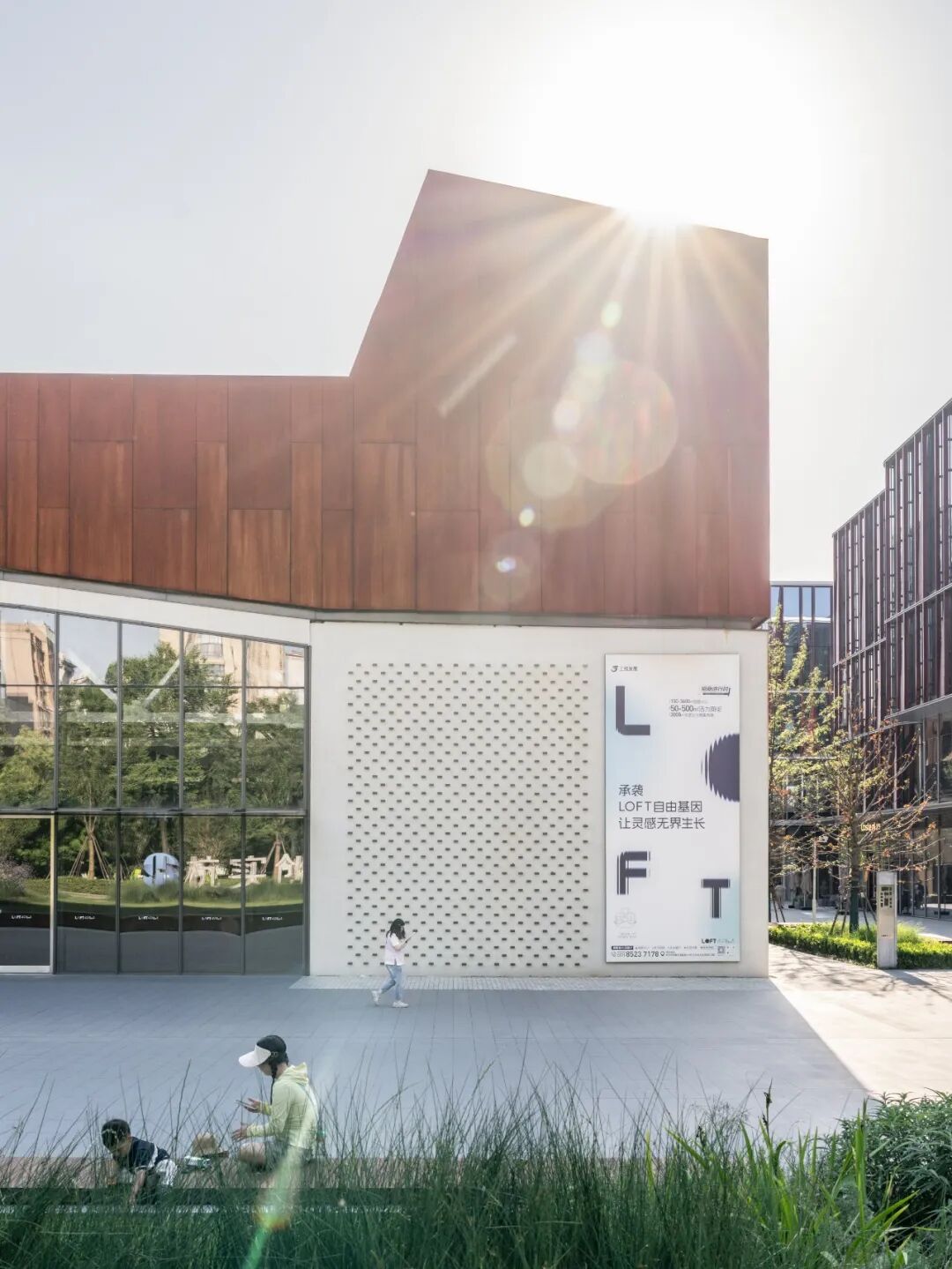
The space between Building 10’s weathering-steel addition and the original factory roof is used to house structural trusses, air-conditioning equipment, and other building services. By consolidating these systems within this hidden layer, the roof is freed up as a new destination within the park—an elevated “floating island” that accommodates outdoor retail, dining, relaxation, and social gathering across a series of public terraces.
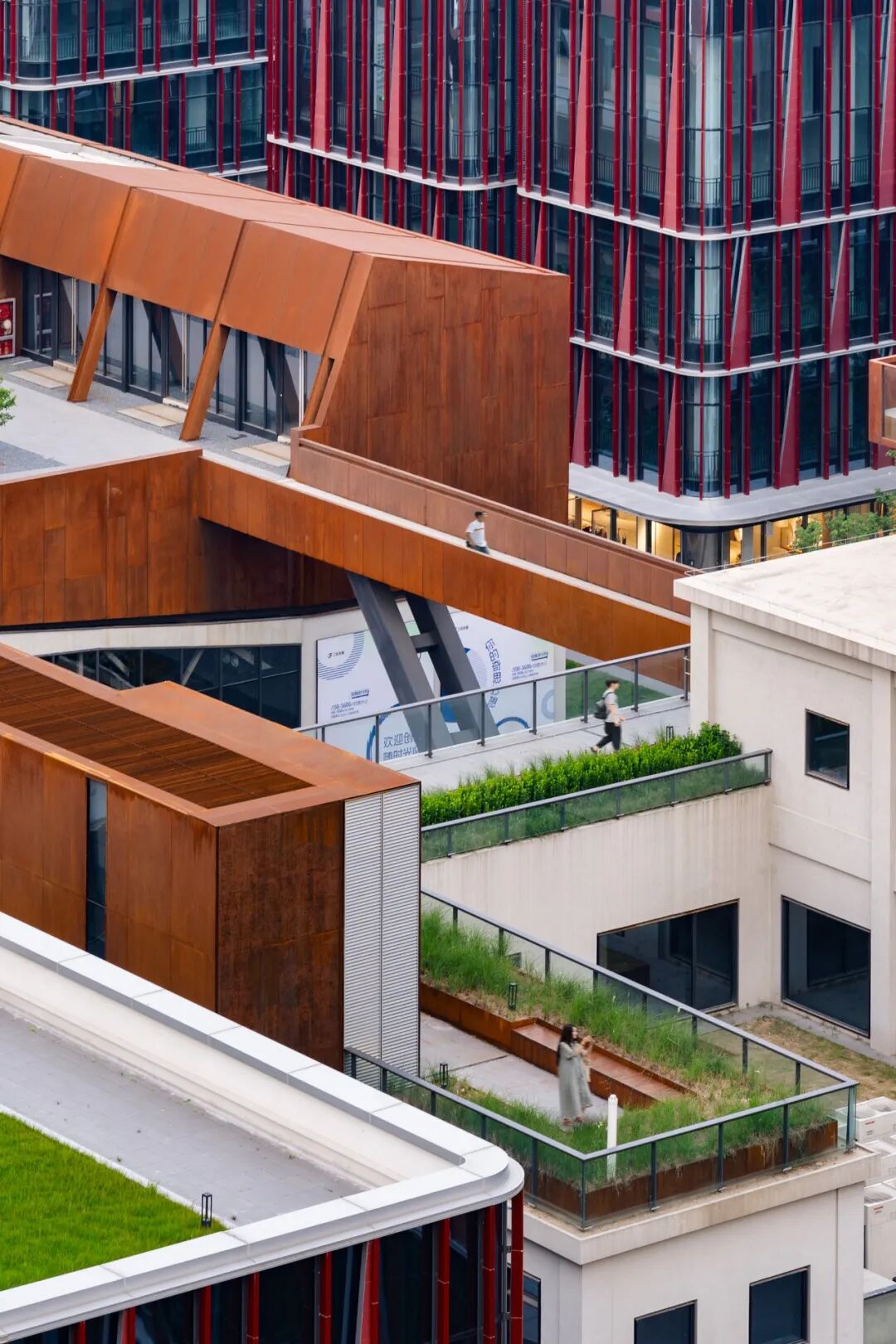
As industry declined in the area, LOFT49 gradually evolved into one of Zhejiang’s earliest hubs for creative businesses. Now, as urban renewal shifts toward a more nuanced and people-centered approach, the idea of Urban Jinshan extends beyond the physical transformation of space to the reimagining of how the park is used and experienced.
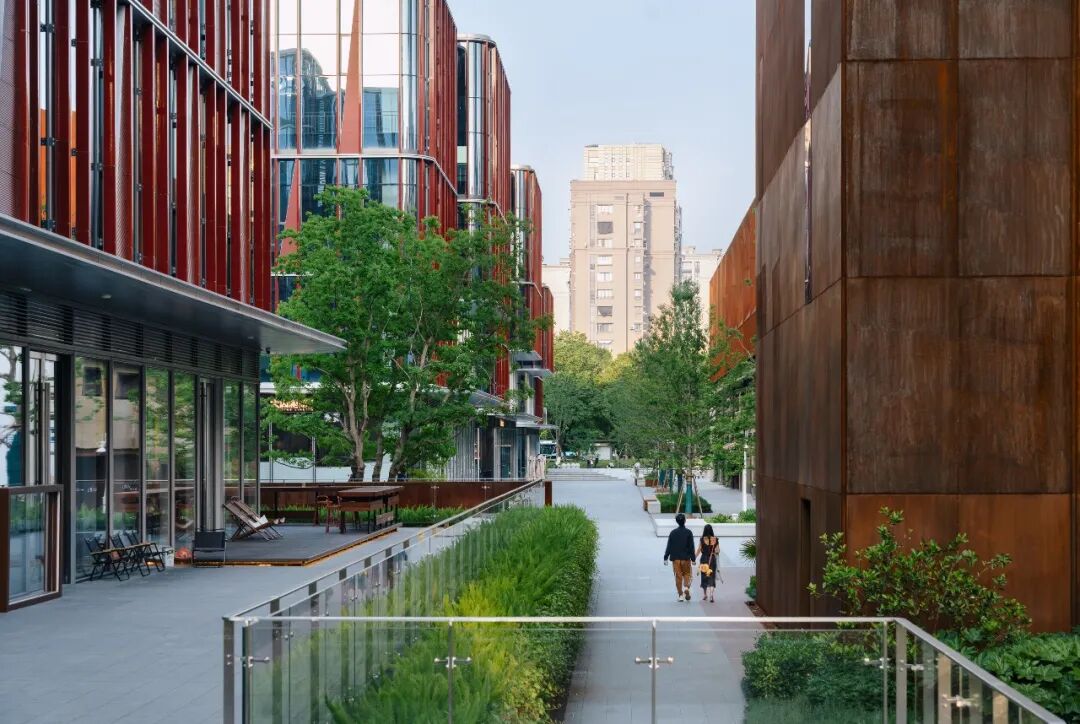
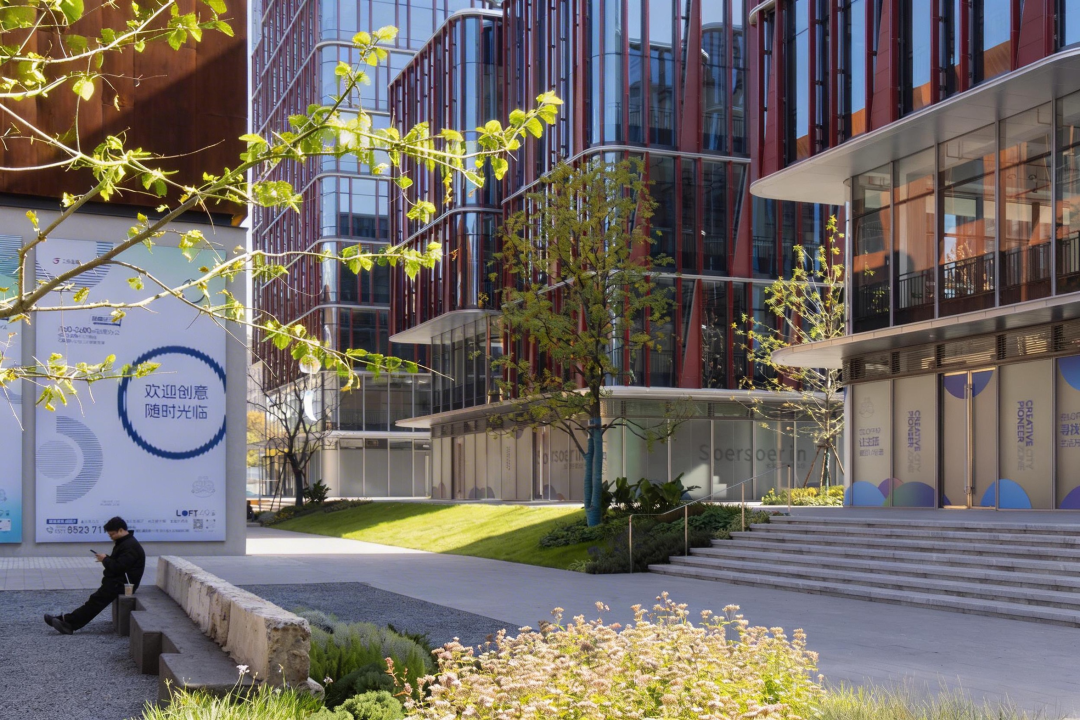
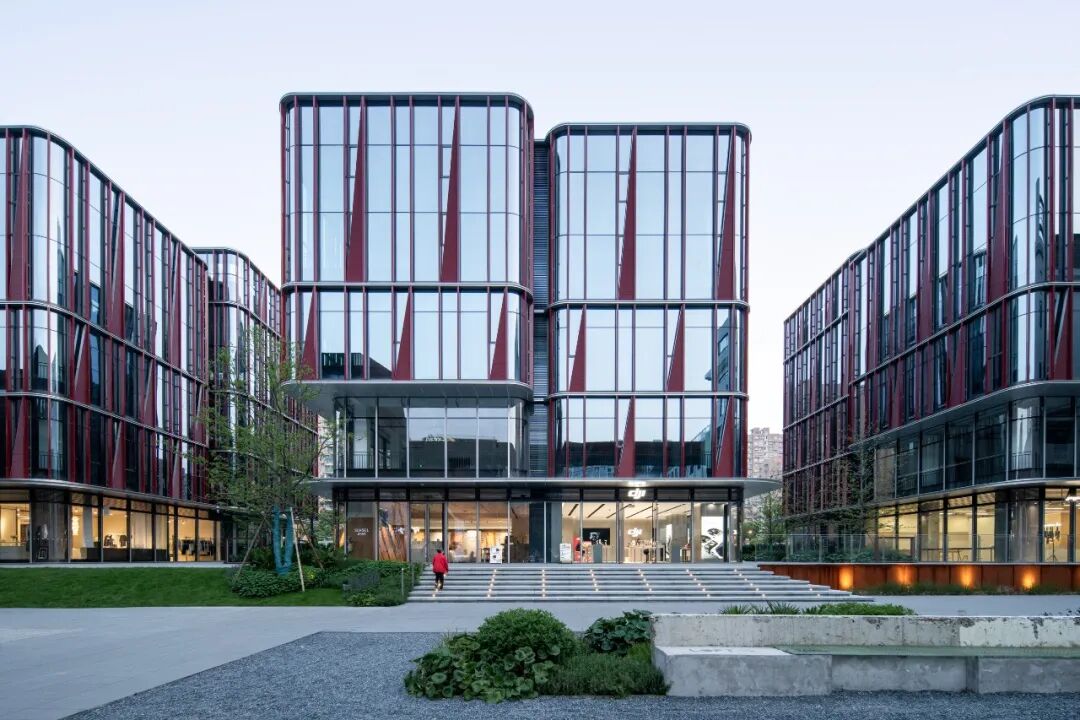
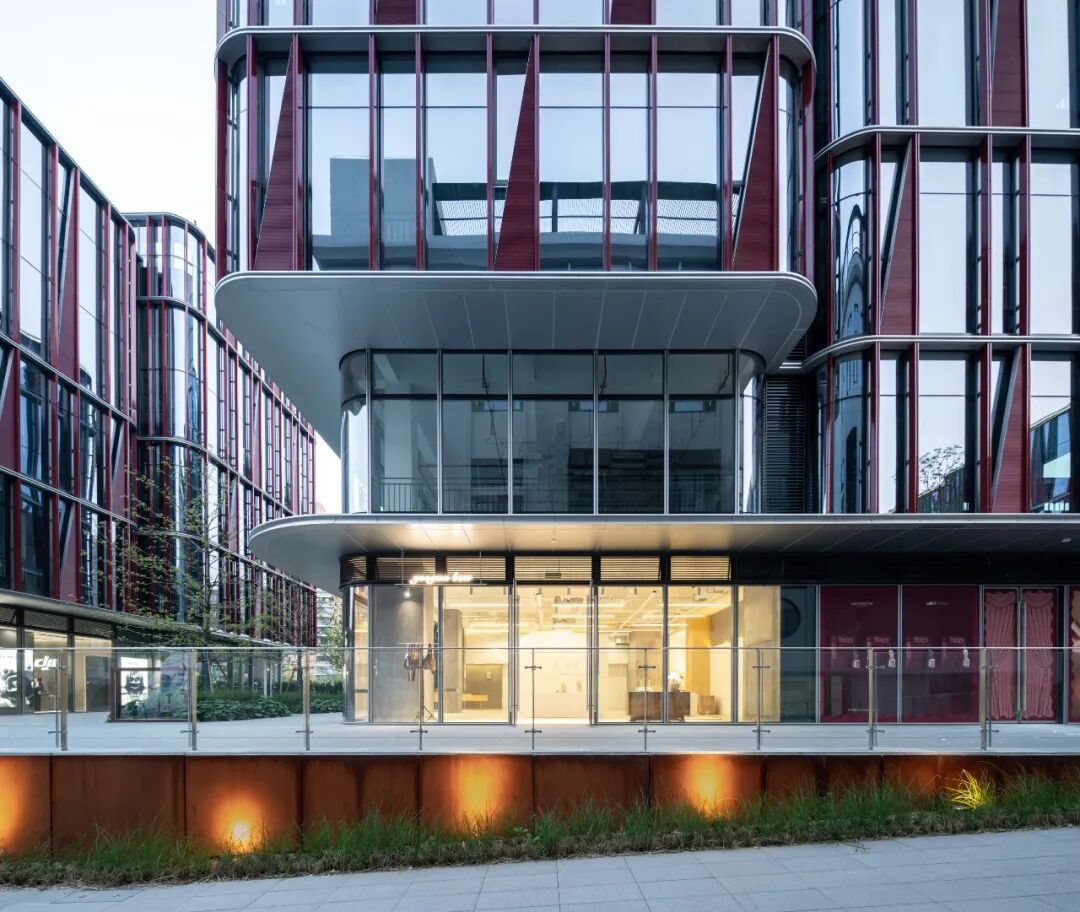
The new office buildings are arranged in a pinwheel-like configuration, creating flexible floor plates and leasing options that can accommodate a wide range of tenants, from startups to established companies. By breaking down the overall building mass into smaller volumes, the design also creates a scale that feels more comfortable and engaging at street level.
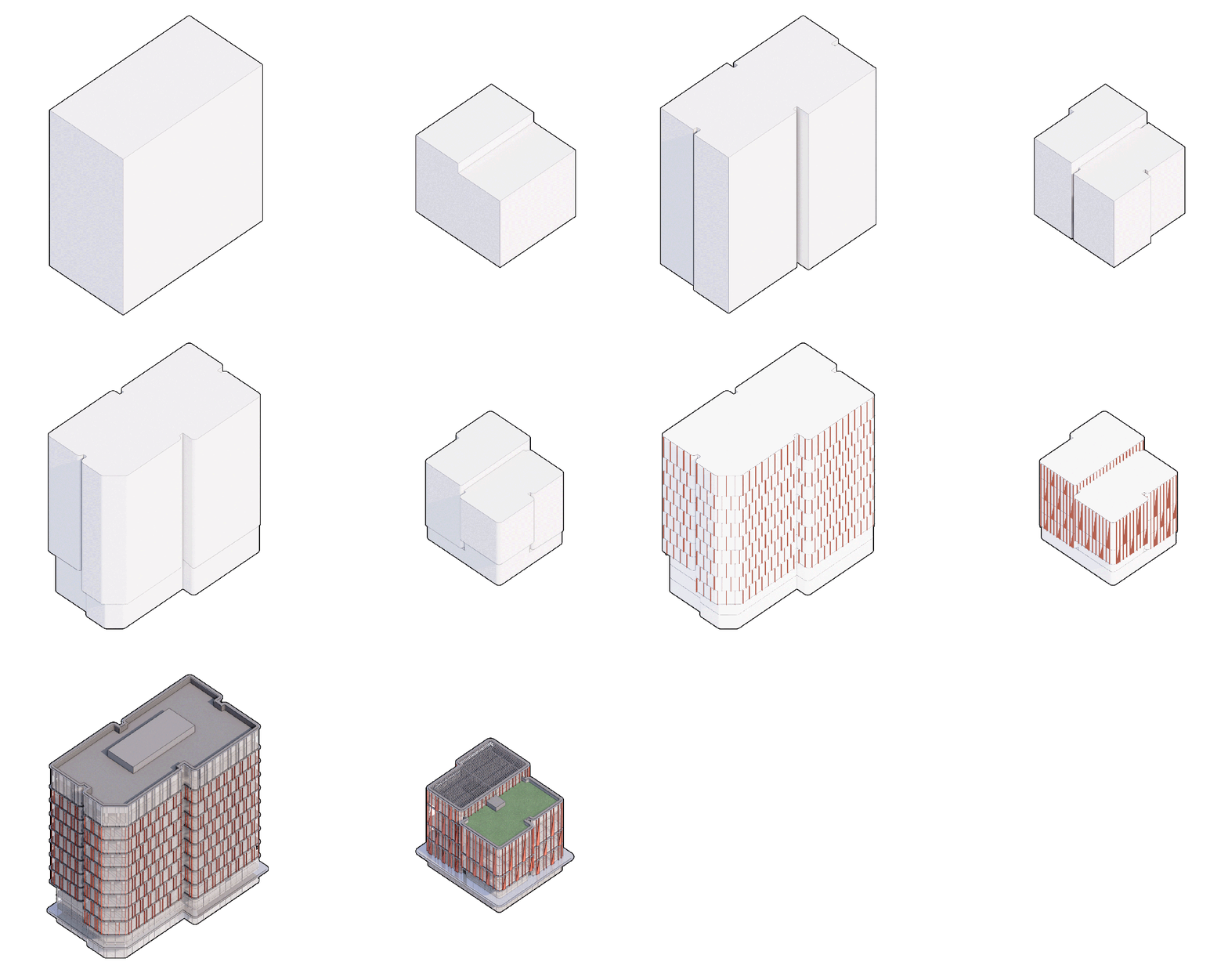
△ Façade generation analysis of the office buildings
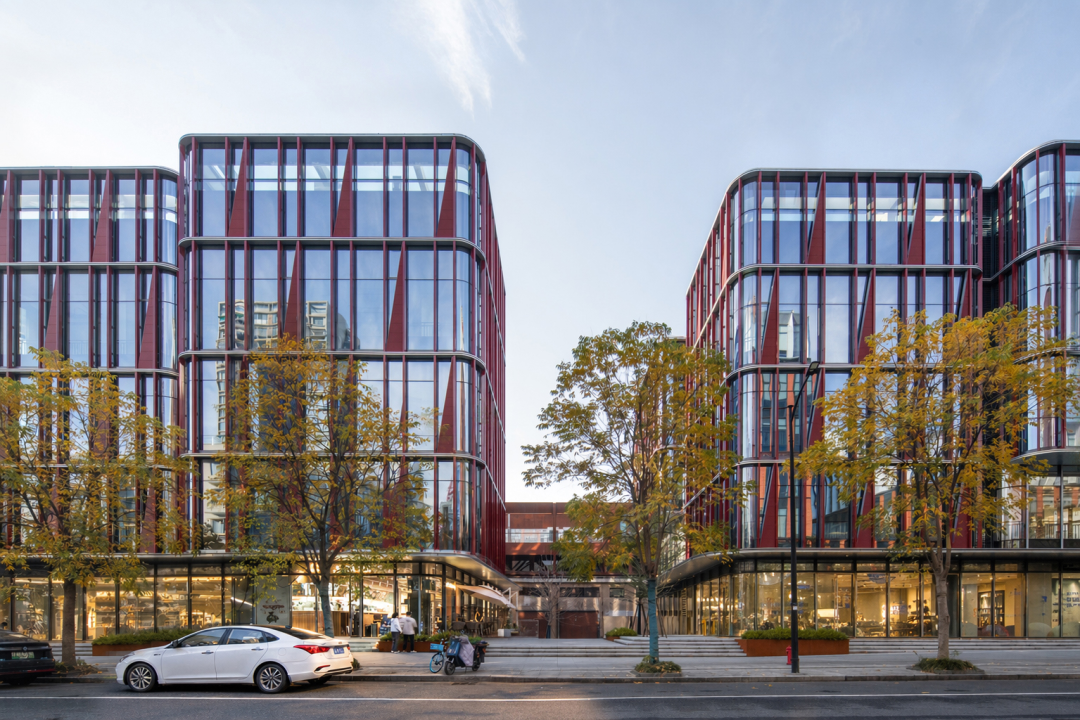
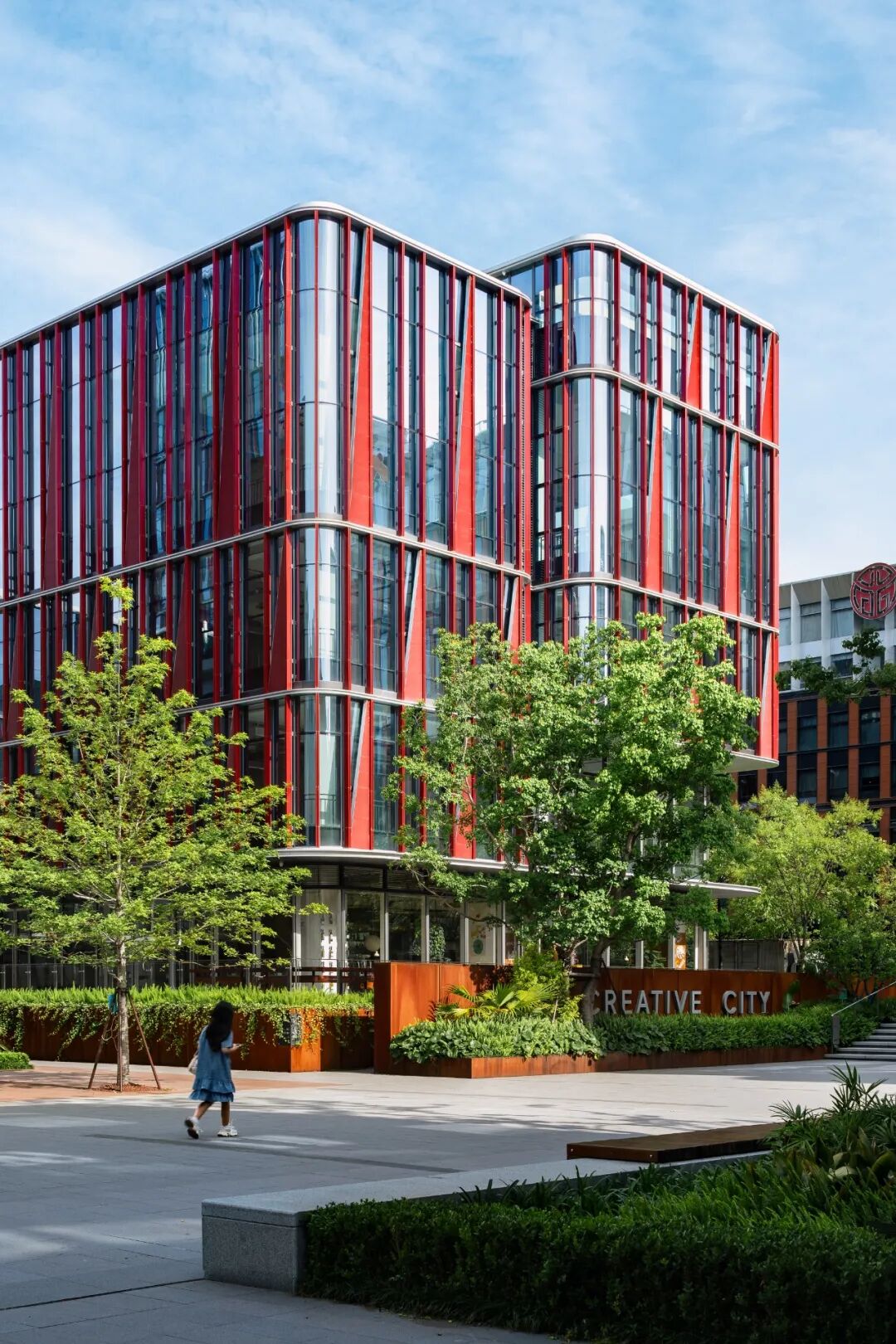
The façades use red glazed terracotta panels and baguettes of different saturations as the main materials. While responding to the regional color guidelines, they contrast with the grey industrial remains and, together with the surrounding park, form a continuous and layered block interface.
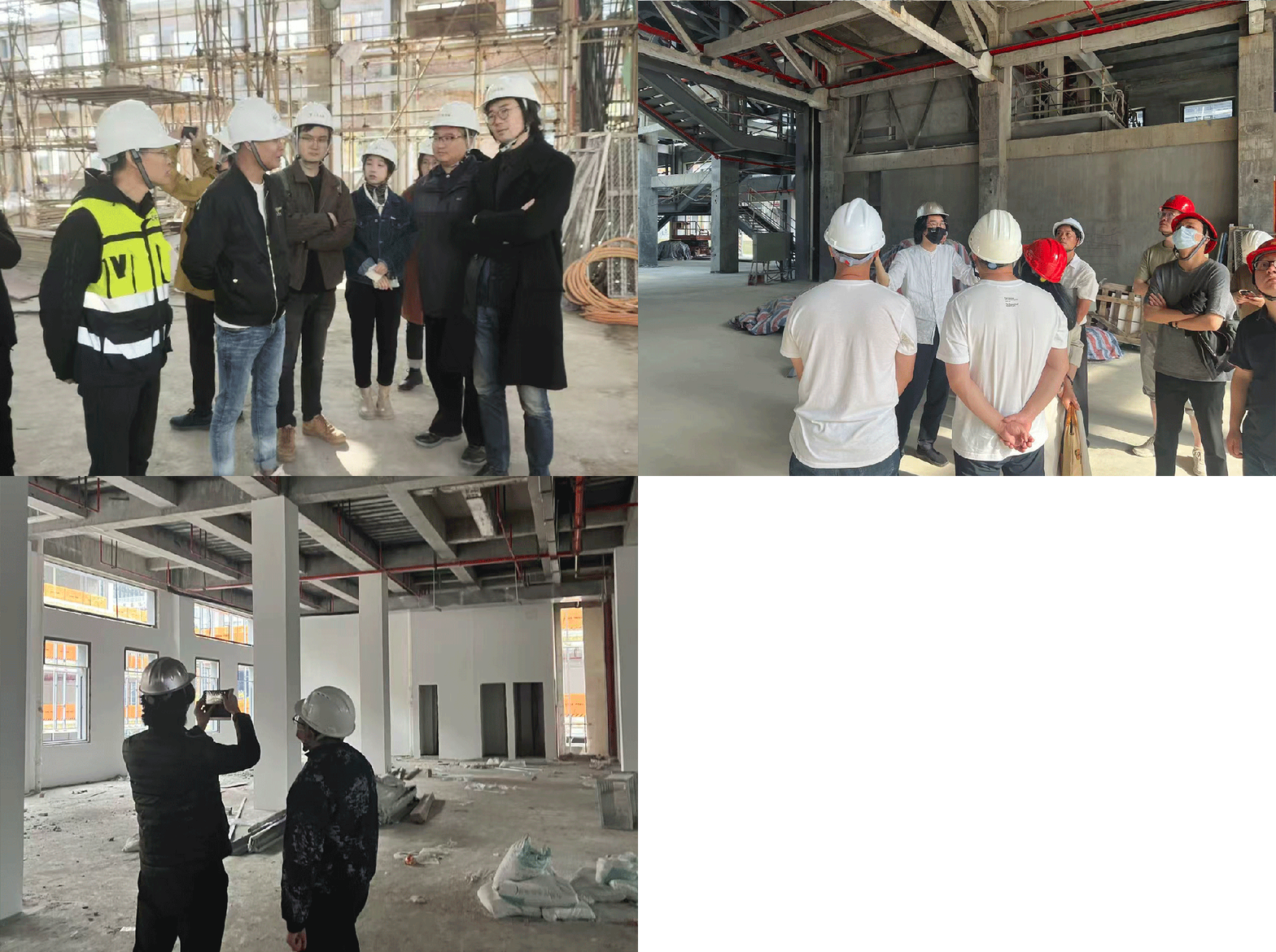
△ Construction-site control
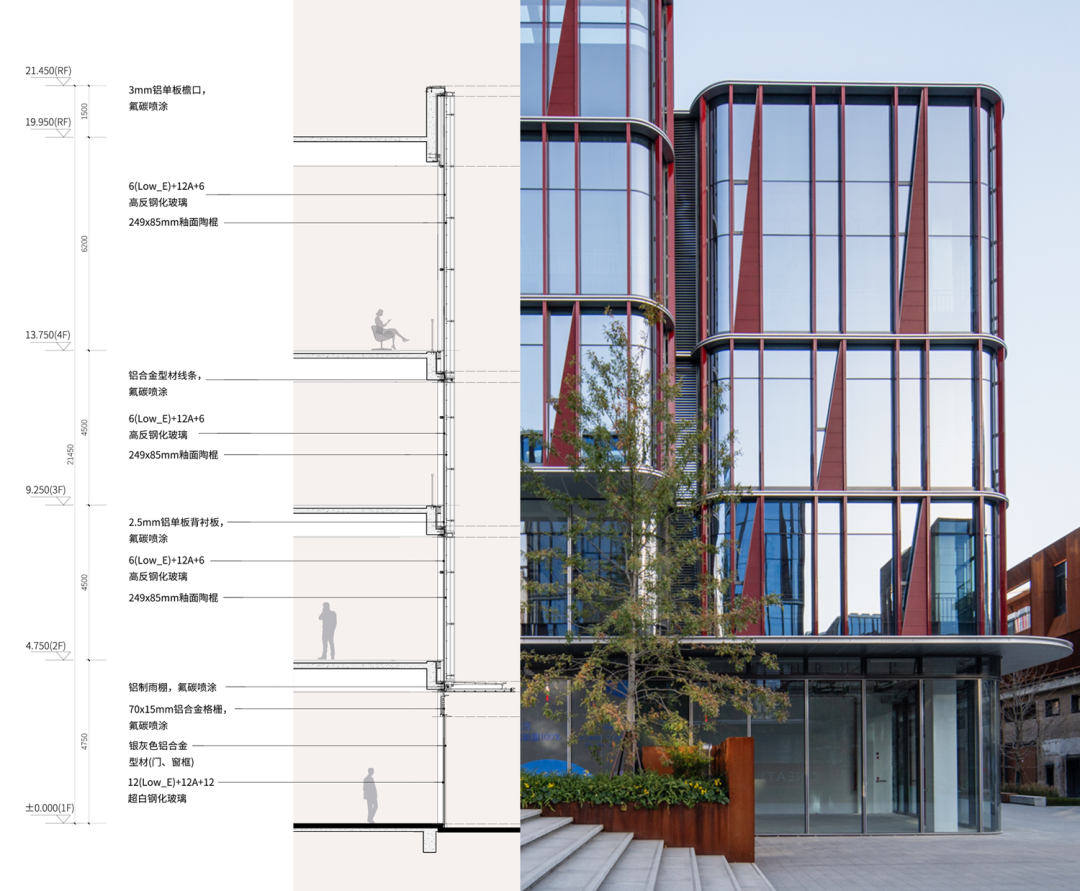
△ Wall section detail of the office buildings
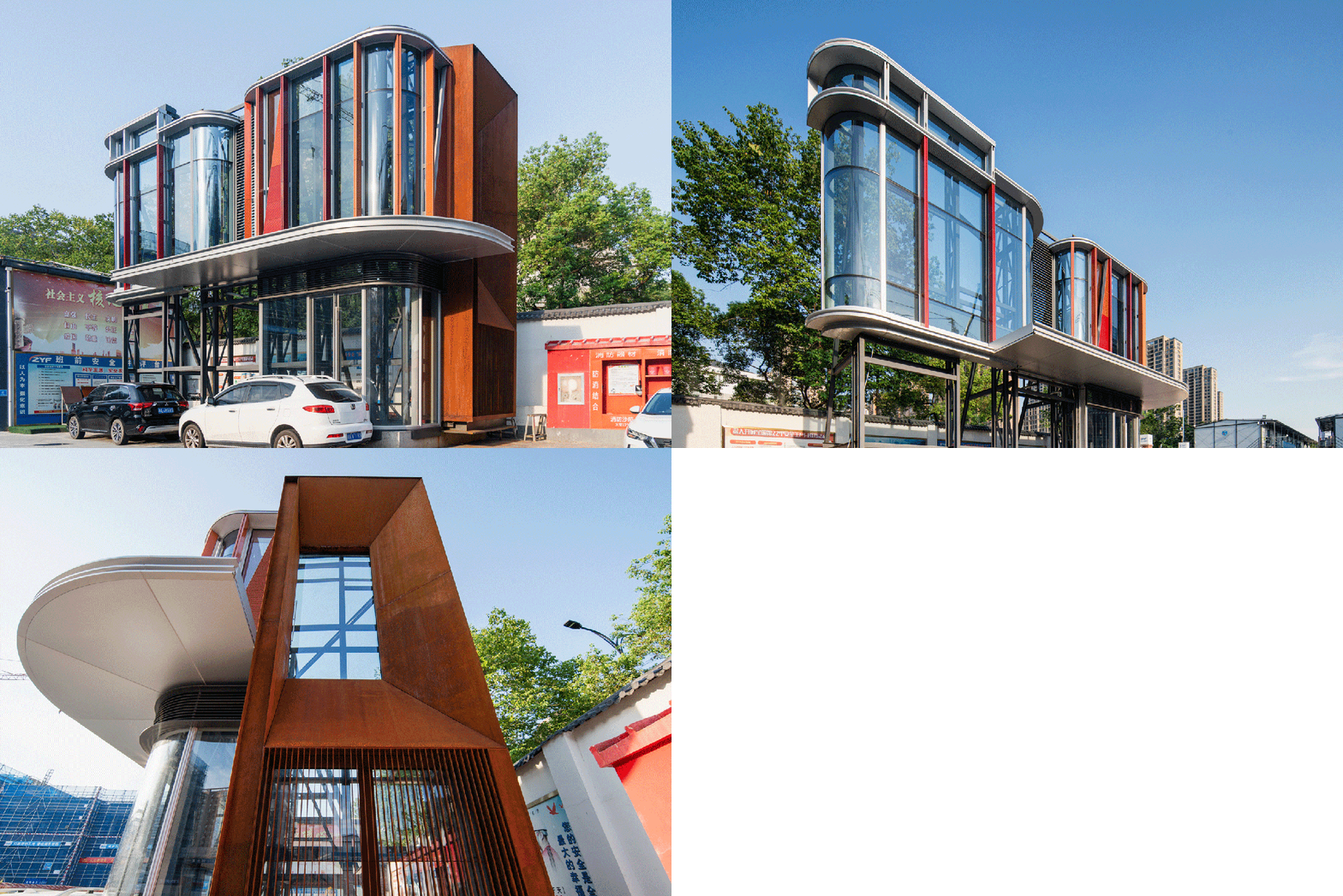
△ mock-up
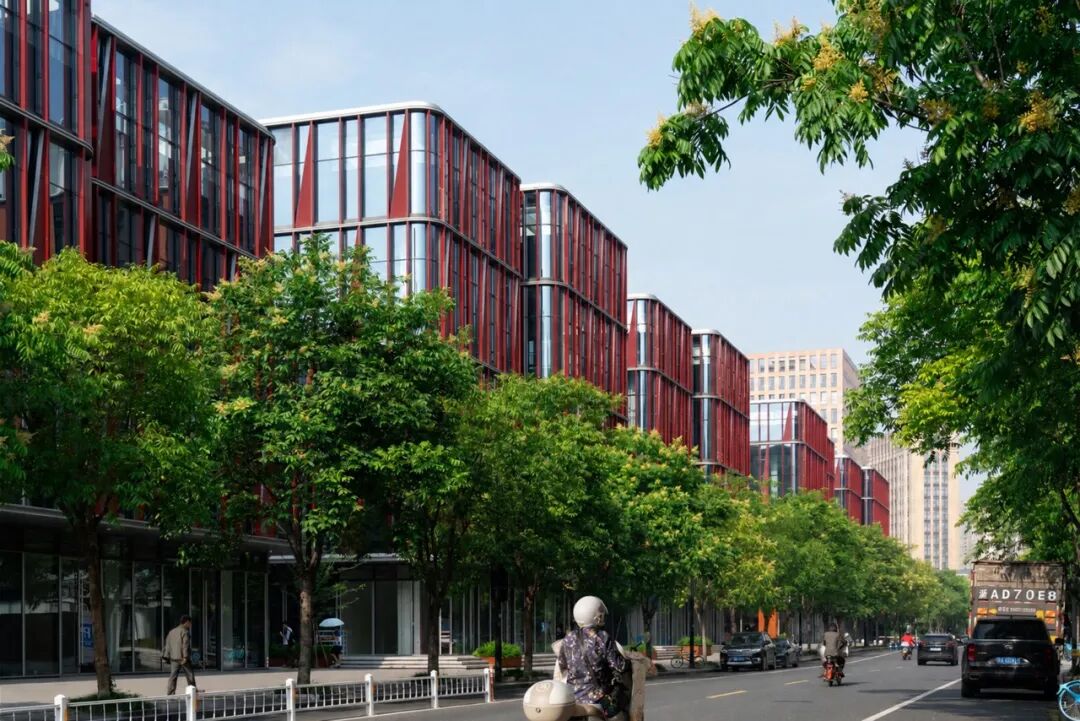
As brand spaces, creative headquarters, and lifestyle programs gradually move in, the renewed LOFT49 is beginning to take on multiple urban roles. It serves as an all-day public place that carries industrial memory, a gathering point for daily work and exchange, a new venue for leisure consumption, and a container for urban events such as exhibitions, performances, runway shows, and markets.
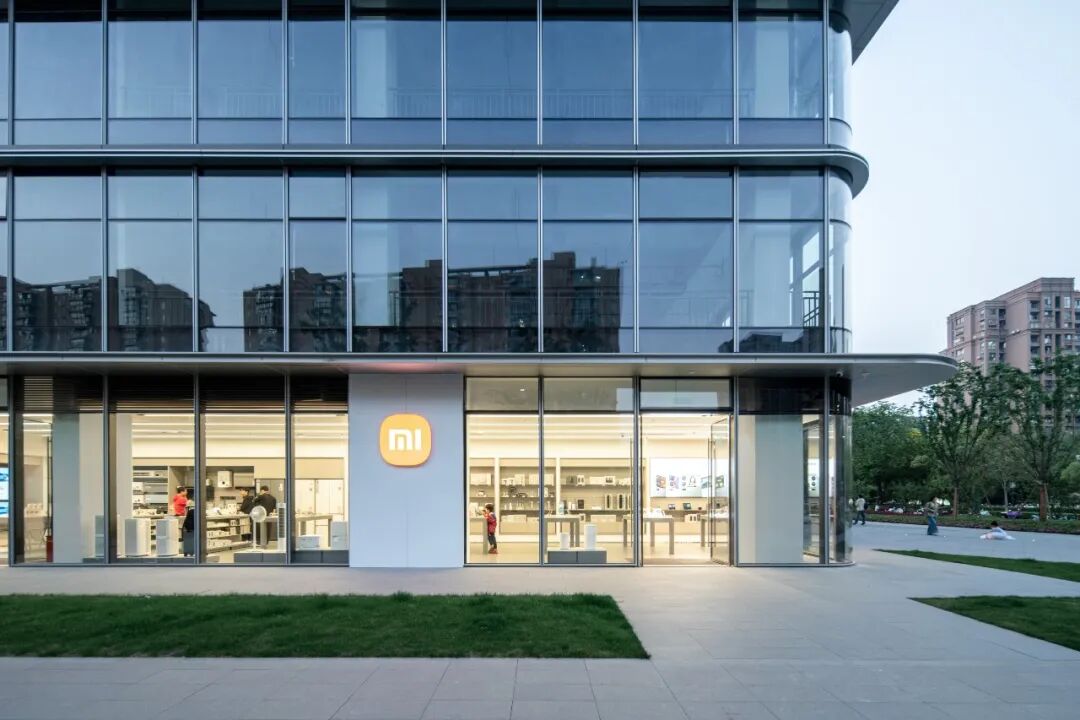
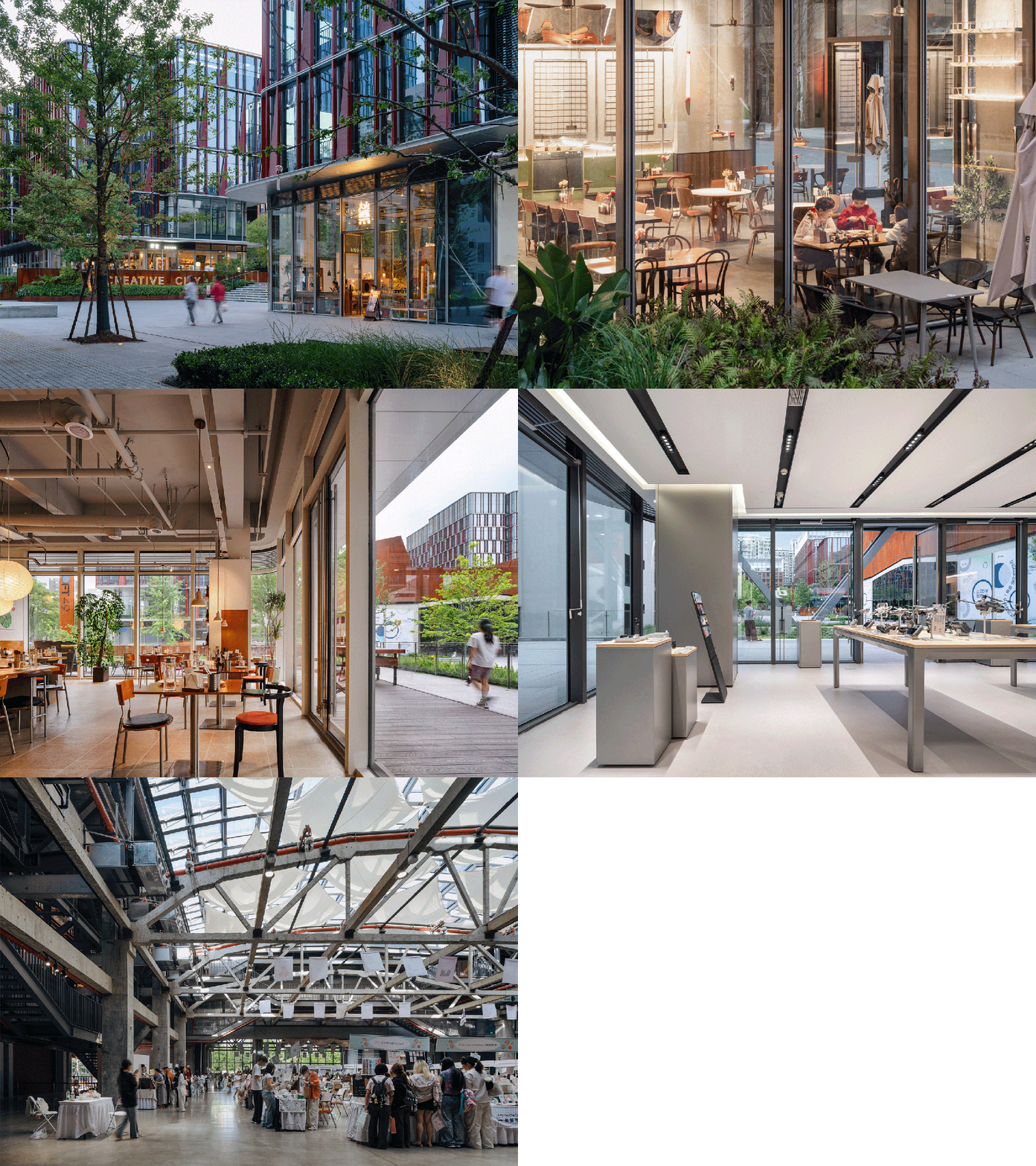
Work, life, and public life overlap throughout the district. Rather than emptying out after office hours, as many traditional industrial parks do, LOFT49 remains active throughout the day and into the evening. With its mix of uses and programs, it becomes a more open, flexible, and vibrant part of everyday city life.
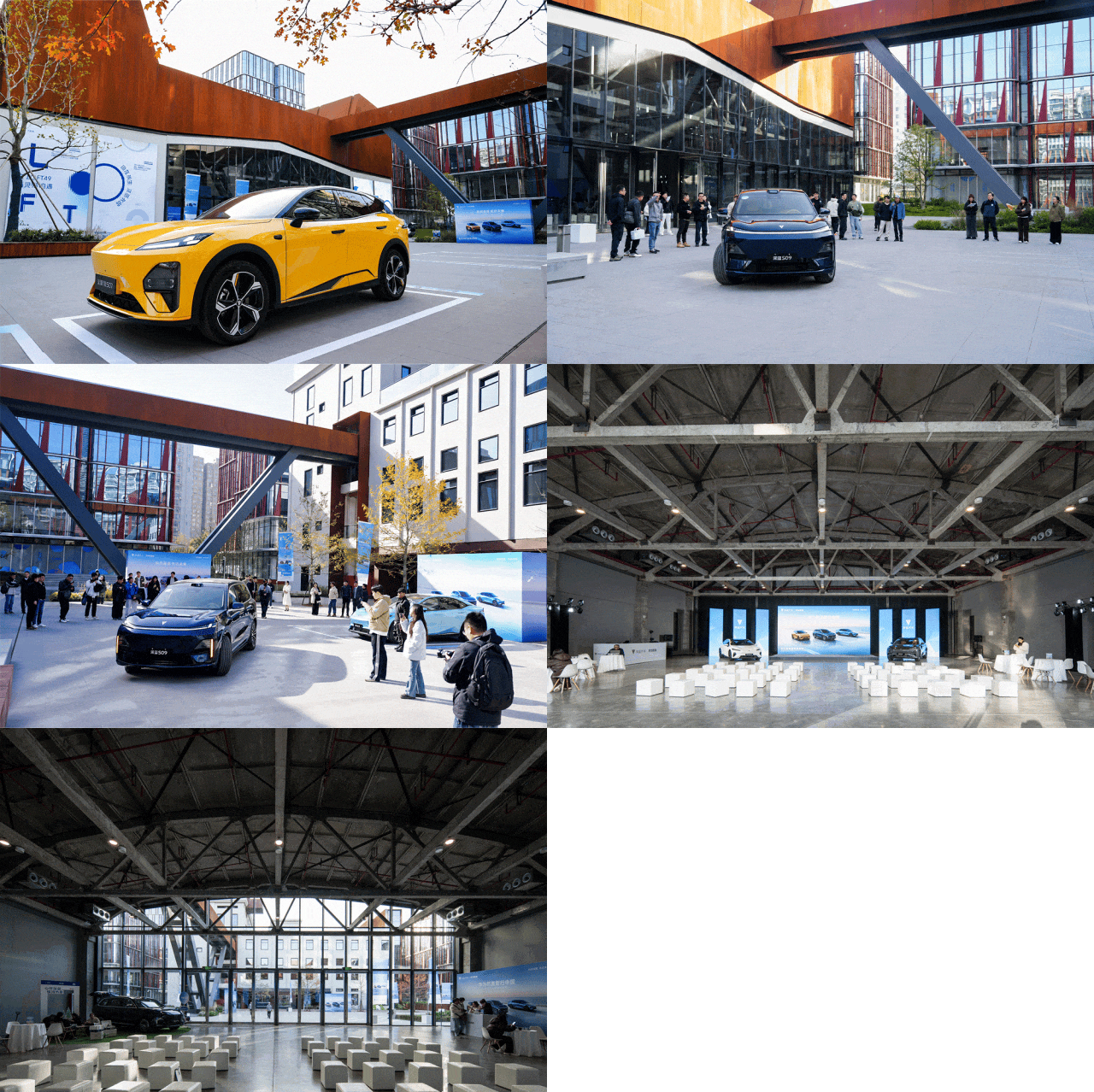
△ Diverse hybrid scenarios
As a major industrial heritage renewal project in the core area of Hangzhou’s Grand Canal district, LOFT49 Phase II has evolved through a long process of heritage assessment, operational planning, urban design, and architectural transformation. Realized through the close collaboration of the client, consultants, design teams, and construction partners, the project has now been brought to completion as envisioned.
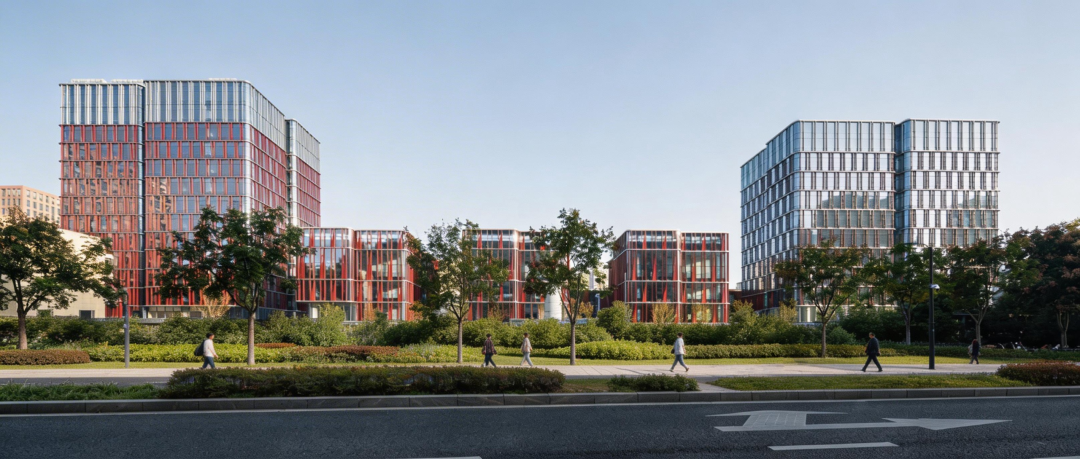
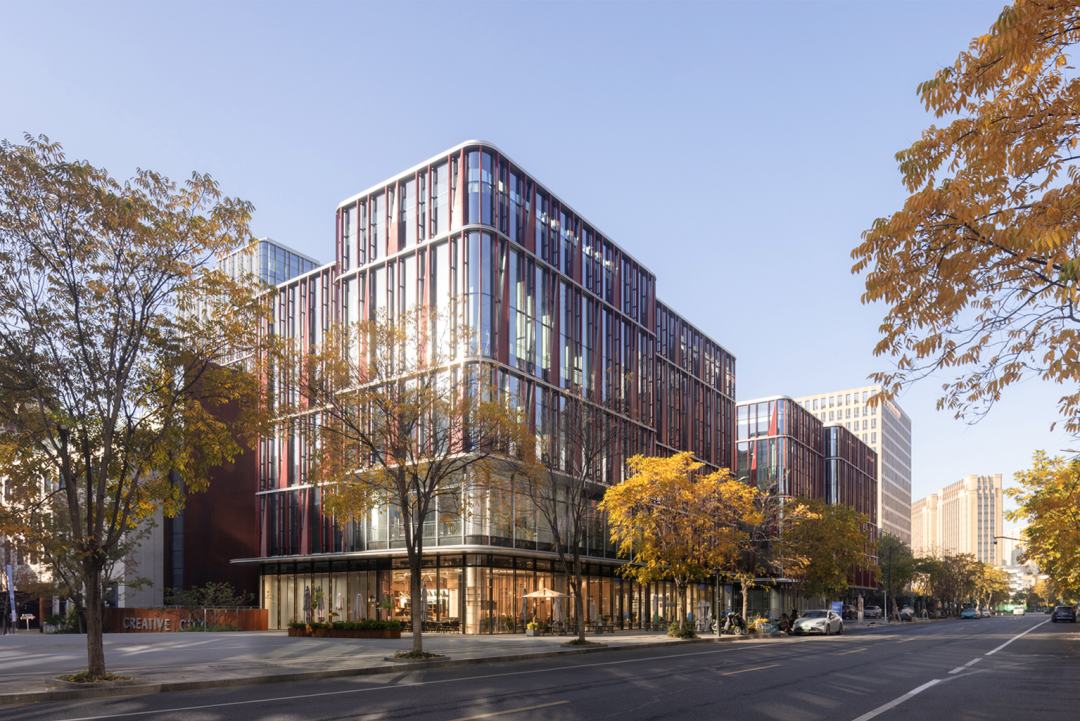
The project marks the first full-scale realization and public presentation of line+’s “Urban Jinshan” concept. It also offers a new approach to industrial heritage renewal in high-density urban contexts, balancing growth and operational needs with the preservation and reactivation of collective memory.
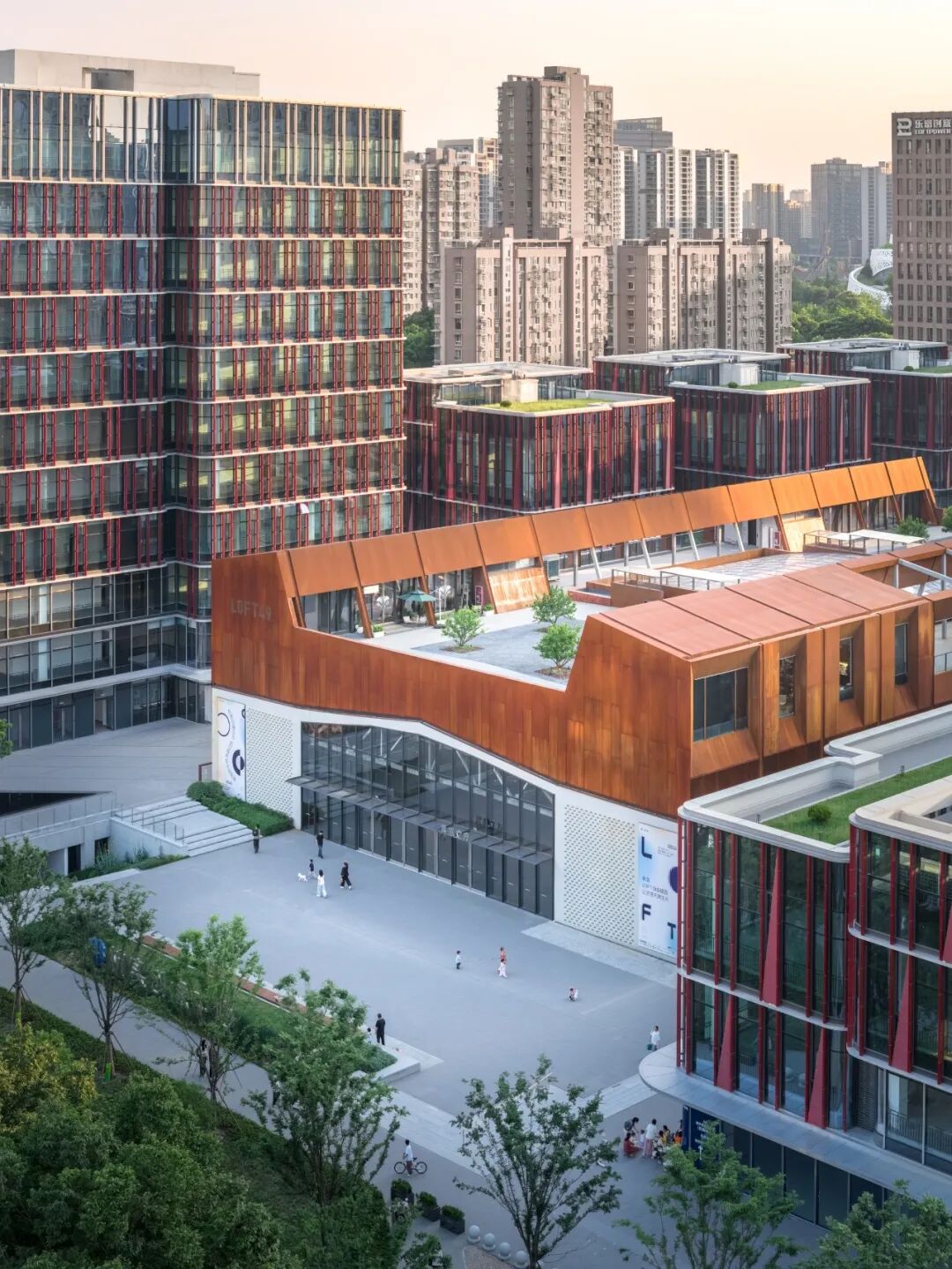
As former factory workshops are transformed into a shared urban district, history and the present are no longer experienced as separate layers. Through the approach of Urban Jinshan, industrial memory is carried forward into everyday urban life, allowing old and new to coexist within a continuously evolving environment. LOFT49 is forming an open community in continuous operation for developers, commercial operators, tenant companies, employees, local residents, and visitors... for operators, companies, employees, local residents, and visitors alike—one that remains rooted in its past while continuing to create new possibilities for the city.